
IRS scandal is Republicans’ zombie

Using a letter from the Treasury Inspector General, the GOP revives the scandal for another day -- but barely

Topics: IRS scandal, IRS, Taxes, Tea Party, Campaign Finance, Darrell Issa, Treasury Department,

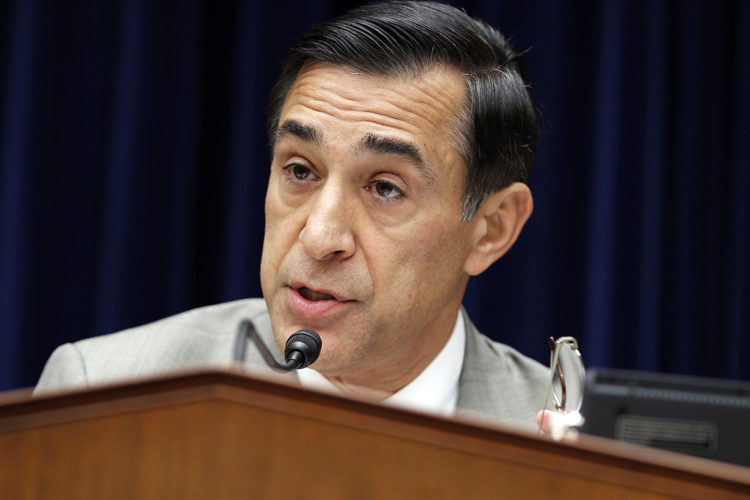
IRS scandal is Republicans' zombieCongressman Darrell Issa (Credit: © Jose Luis Magaua / Reuters)

Like a “zeke” in “World War Z” that just won’t die, the IRS scandal lives another day. We declared it dead on Monday — based on the information we had at the time — after we learned that the IRS had targeted progressive and Occupy groups in addition to Tea Party ones.

But today, Treasury Department Inspector General Russell George explained in a letter to lawmakers that while some liberal groups got extra scrutiny, they weren’t systematically targeted like conservative ones were. “We found no indication in any of these other materials that ‘Progressives’ was a term used to refer cases for scrutiny for political campaign intervention,” the IG wrote. While 100 percent of applications for groups with “Tea Party,” “Patriot” or “9/12″ in their name were processed as “potential political cases,” just 30 percent of progressive ones were.

So were Republicans right all along? Conservatives blogs certainly think so, writing that the report “obliterat[es] the Left’s shiny, new, and perfidious talking point.” A spokeswoman for the Republican-controlled House Ways and Means Committee, which oversees the IRS, said: “The evidence shows us that conservative groups were not only flagged, but targeted and abused by the IRS.”

Maybe, but this ignores the reality that progressive groups still were targeted along with conservative ones (the only group actually denied tax-exempt status was a progressive one), that some Tea Party groups deserved the extra scrutiny, and that the focus on conservative groups makes some sense in a historical context.


Indeed, new data from today’s letter gets at a point that liberals have been making from the very beginning of this controversy. The IRS’s job is to ensure that people don’t exploit tax-exempt status to do political work, but it’s never had a formal process of how to do that, so bureaucrats came up with the kludgey (and improper) workaround of targeting groups by their names.

During the time in question, May 2010 through May 2012, the IRS was flooded with applications for new conservative groups, thanks to the explosion of the Tea Party movement and the Citizens United decision. So it made some sense for the IRS screeners looking for political groups to start with them. If Willie Sutton robbed banks because that’s where the money was, then IRS screeners went after Tea Party groups because that’s where the new applications were.

And thank to the IG’s letter today, we now have hard numbers to show just how big that flood was. Six groups with “progressive” in their name were added to a list of applications to be given extra scrutiny, while another 14 “progressive” tax-exempt applications filed during the time period in question were not added to the list. That makes for a grand total of 20 “progressive” groups. Meanwhile, there were 96 groups with “Tea Party,” “9/12″ or “Patriots” in their name.

And the IG’s letter says that “progressive” was placed on a “historical” list of terms to “be on the lookout” for — perhaps from a time when progressives were the ones flooding IRS offices with new applications.

Calling the targeting abusive is also fallacious, since, as Joan Walsh wrote, many of these groups were pretty blatantly politicalAnd we still don’t have information on “Occupy” groups, which were also on the list and are perhaps a more accurate analog to “Tea Party” than “progressive.”

All that said, Republicans still managed to achieve their prime goal today: revive the scandal for another day, even if its life force appears to be waning.

Alex Seitz-Wald

Alex Seitz-Wald is Salon's political reporter. Email him at aseitz-wald@salon.com, and follow him on Twitter @aseitzwald.

Featured Slide Shows

7 motorist-friendly camping sites

close X
  • Share on Twitter
  • Share on Facebook
  • Thumbnails
  • Fullscreen
  • 1 of 9

Sponsored Post

  • White River National Forest via Lower Crystal Lake, Colorado
    For those OK with the mainstream, White River Forest welcomes more than 10 million visitors a year, making it the most-visited recreation forest in the nation. But don’t hate it for being beautiful; it’s got substance, too. The forest boasts 8 wilderness areas, 2,500 miles of trail, 1,900 miles of winding service system roads, and 12 ski resorts (should your snow shredders fit the trunk space). If ice isn’t your thing: take the tire-friendly Flat Tops Trail Scenic Byway — 82 miles connecting the towns of Meeker and Yampa, half of which is unpaved for you road rebels.
    fs.usda.gov/whiteriveryou


    Image credit: Getty

  • Chattahoochee-Oconee National Forest via Noontootla Creek, Georgia
    Boasting 10 wildernesses, 430 miles of trail and 1,367 miles of trout-filled stream, this Georgia forest is hailed as a camper’s paradise. Try driving the Ridge and Valley Scenic Byway, which saw Civil War battles fought. If the tall peaks make your engine tremble, opt for the relatively flat Oconee National Forest, which offers smaller hills and an easy trail to the ghost town of Scull Shoals. Scaredy-cats can opt for John’s Mountain Overlook, which leads to twin waterfalls for the sensitive sightseer in you.
    fs.usda.gov/conf


    Image credit: flickr/chattoconeenf

  • Nordhouse Dunes Wilderness Area via Green Road, Michigan
    The only national forest in Lower Michigan, the Huron-Mainstee spans nearly 1 million acres of public land. Outside the requisite lush habitat for fish and wildlife on display, the Nordhouse Dunes Wilderness Area is among the biggest hooks for visitors: offering beach camping with shores pounded by big, cerulean surf. Splash in some rum and you just might think you were in the Caribbean.
    fs.usda.gov/hmnf


    Image credit: umich.edu

  • Canaan Mountain via Backcountry Canaan Loop Road, West Virginia
    A favorite hailed by outdoorsman and author Johnny Molloy as some of the best high-country car camping sites anywhere in the country, you don’t have to go far to get away. Travel 20 miles west of Dolly Sods (among the busiest in the East) to find the Canaan Backcountry (for more quiet and peace). Those willing to leave the car for a bit and foot it would be remiss to neglect day-hiking the White Rim Rocks, Table Rock Overlook, or the rim at Blackwater River Gorge.
    fs.usda.gov/mnf


    Image credit: Getty

  • Mt. Rogers NRA via Hurricane Creek Road, North Carolina
    Most know it as the highest country they’ll see from North Carolina to New Hampshire. What they may not know? Car campers can get the same grand experience for less hassle. Drop the 50-pound backpacks and take the highway to the high country by stopping anywhere on the twisting (hence the name) Hurricane Road for access to a 15-mile loop that boasts the best of the grassy balds. It’s the road less travelled, and the high one, at that.
    fs.usda.gov/gwj


    Image credit: wikipedia.org

  • Long Key State Park via the Overseas Highway, Florida
    Hiking can get old; sometimes you’d rather paddle. For a weekend getaway of the coastal variety and quieter version of the Florida Keys that’s no less luxe, stick your head in the sand (and ocean, if snorkeling’s your thing) at any of Long Key’s 60 sites. Canoes and kayaks are aplenty, as are the hot showers and electric power source amenities. Think of it as the getaway from the typical getaway.
    floridastateparks.org/longkey/default.cfm


    Image credit: floridastateparks.org

  • Grand Canyon National Park via Crazy Jug Point, Arizona
    You didn’t think we’d neglect one of the world’s most famous national parks, did you? Nor would we dare lead you astray with one of the busiest parts of the park. With the Colorado River still within view of this cliff-edge site, Crazy Jug is a carside camper’s refuge from the troops of tourists. Find easy access to the Bill Hall Trail less than a mile from camp, and descend to get a peek at the volcanic Mt. Trumbull. (Fear not: It’s about as active as your typical lazy Sunday in front of the tube, if not more peaceful.)
    fs.usda.gov/kaibab


    Image credit: flickr/Irish Typepad

  • As the go-to (weekend) getaway car for fiscally conscious field trips with friends, the 2013 MINI Convertible is your campground racer of choice, allowing you and up to three of your co-pilots to take in all the beauty of nature high and low. And with a fuel efficiency that won’t leave you in the latter, you won’t have to worry about being left stranded (or awkwardly asking to go halfsies on gas expenses).


    Image credit: miniusa.com

  • Recent Slide Shows

  • Share on Twitter
  • Share on Facebook
  • Thumbnails
  • Fullscreen
  • 1 of 9

Comments

Loading Comments...