
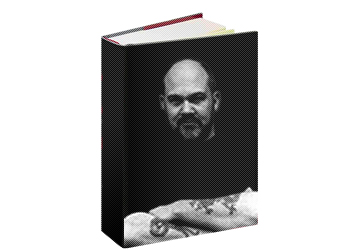

Few people make a successful career of contemplating death and suicide; fewer still approach the subject with the genuine ebullience and elegant despair of the prolific, criminally underappreciated writer Thomas M. Disch, who shot himself in his Union Square apartment, in New York, on the Fourth of July. Disch was a seminal figure in science fiction’s New Wave, the iconoclastic 1960s movement that gave the genre a literary pedigree and popularized the term “speculative fiction.” His books influenced writers such as William Gibson and Jonathan Lethem; his dystopias “Camp Concentration” and “334” are considered science fiction classics, along with his greatest novel, “On Wings of Song,” a beautiful, dark meditation on the power and limits of transcendence through art.
An openly gay man for most of his working life, Disch wrote mysteries, historical novels and neo-gothic satires; children’s books, including “The Brave Little Toaster” and its sequel; at least five collections of short fiction; 15 volumes of poetry, always as Tom Disch; plays and libretti; four volumes of nonfiction; screen adaptations, novelizations and one of the first interactive computer games. He edited anthologies; he wrote book reviews, theater reviews, art reviews, music reviews. He wrote collaboratively and pseudonymously; he kept a popular blog, Endzone, in which he shared new poems, some unpleasant post-9/11 screeds, and witty discourses on the meaninglessness and minutiae of life. In his most recent novel, he wrote in the voice of God, and on his publisher’s Web site answered questions from readers. He wrote and wrote and wrote and wrote, for the sheer joy of it and for an even more primal impulse: to tell a story to the dark.
“Storytelling is just absolutely natural to me. It’s my way of getting along with people, I guess,” he told an interviewer at the Web site Strange Horizons in 2001. He’d call friends and, after an exchange of pleasantries, ask, “May I read you something?” The answer was always yes and his voice would lift as he read a sonnet or villanelle, or perhaps the section from “The Word of God” where Disch’s deity wonders whether His father was in fact Thomas Mann.
He had a wonderful speaking voice, fluid and seductive. He sounded like John Malkovich, and he looked a bit like Malkovich too, in his prime. I grew up reading Disch’s work, starting with “The Roaches” as a 12-year-old and devouring the novels as I got older. I first met him casually in the late 1980s, but only got to know him and his partner, poet Charles Naylor, during the last eight years or so — far too brief a time. Tall and physically imposing, in public Disch could project a slightly threatening aloofness, with his shaved head, impressive tattoos, bodybuilder’s mass. The silken voice that emerged from that intimidating form made him seem even more dangerous, one of those wizards who is subtle and quick to anger.
But then he’d dissolve in laughter and it would all suddenly seem to be a pose, a disguise, part of a vast elaborate joke that you were in on — maybe. He could be irascible, scathingly dismissive; he held grudges and burned bridges. In recent years he’d put on weight, which exacerbated other problems: diabetes, sciatica, neuoropathy, depression. He had difficulty walking and was almost housebound.
And since the turn of the millennium he’d endured a Job-like succession of personal tragedies, beginning with a fire that severely damaged the apartment he shared with Naylor, his partner of 30 years; frozen pipes that caused a mold infestation at his house in Barryville, N.Y.; Naylor’s long illness and eventual death from colon cancer; and, finally, eviction proceedings begun by the landlord almost immediately after Naylor’s death.
During this siege Disch struggled with crushing grief and depression — only a real deity would not — yet he also had a humorous resignation that seemed very close to valor. He once said, “I am certainly a ‘death of God’ writer,” and much of his work seems fueled by the rage and sense of betrayal of a former believer, as well as a refined sense of the ridiculousness of religious institutions, and the ultimate, absurd realization that we all die alone. His best work builds on Eugene Ionesco’s dictum: “We are made to be immortal, and yet we die. It’s horrible, it can’t be taken seriously.”
Death was the subject Disch returned to again and again, in his fiction and his poetry. Sometimes it was murder, spurred by passion or twisted religious or political fervor. Sometimes, as in his early novel “The Genocides,” or his later satirical novel “The Sub: A Study in Witchcraft,” it was simply a detached, clinical adjustment of the biological status quo, with untidy or unnecessary humans disposed of like irksome insects. He wrote often about suicide, nearly always without melodrama. “Laughter is just a slowed down scream of terror,” he told Joseph Francavilla in a 1983 interview.
… thoughtful minds are free of pain
To the degree that they can think
And alchemize their thoughts to ink.
Happy the man who can declare
His angst with any savoir faire.— Tom Disch, “Waking New Year’s Day, Without a Hangover,” 1986
Born in Iowa in 1940, Disch spent his childhood and early teens in the Midwest before moving to New York, where he attended Cooper Union and New York University. He held the usual spate of desultory writers’ jobs, most memorably a brief stint in “Swan Lake’s” corps de ballet, where he encouraged the other male dancers to sing “I am, I am, I am a swan” under their breath while Margot Fonteyn expired as Odette. In 1962 he wrote his first story in lieu of studying for an NYU exam and promptly sold it to the science fiction magazine Fantastic. He subsequently dropped out of school to devote himself to writing.
A number of beautifully crafted stories date from these early years. Among the best: “Descending,” in which a man steps onto a department store elevator that only goes down, forever; the much-anthologized “The Roaches”; and the Kafkaesque “The Squirrel Cage,” in which a writer works feverishly, endlessly, on a horror story he cannot even see, and which no one will ever read: “The story has gone on far too long. Nothing can be terrifying for years on end. I only say it’s terrifying because, you know, I have to say something. Something or other. The only thing that could terrify me now is if someone were to come in. If they came in and said, ‘All right, Disch, you can go now.’ That, truly, would be terrifying.”
In the mid-1960s he knocked around Europe and North Africa before touching down in London’s Camden Town around 1967, where he became part of that movable feast of Anglo-American writers and artists associated with the New Wave: Michael Moorcock, John and Judith Clute, John Sladek (a future Disch collaborator), Pamela Zoline, M. John Harrison. “The Genocides” was published in 1965, a vision of Earth as an agribusiness run by extraterrestrials who sow the planet with a single vast plant crop, then methodically exterminate the human pests who infect their harvest. It ends badly. As Disch cheerfully pointed out in a 1990 interview published in the British journal Foundation, “Let’s be honest, the real interest in this kind of story is to see some devastating cataclysm wipe mankind out … My point was simply to write a book where you don’t spoil that beauty and pleasure at the end.”
His next major work, “Camp Concentration,” appeared in 1967 in New Worlds, the New Wave’s flagship magazine, and a year later was published in book form. Now regarded as one of the greatest SF novels, at the time “Camp Concentration” was overshadowed by Daniel Keyes’ “Flowers for Algernon,” which shared some themes and narrative structure. Inspired by the Faust legend, the novel unfolds as the journal of Louis Sacchetti, a schlubby poet interned at an American concentration camp for being a conscientious objector. There he and the other prisoners are injected with an experimental drug that boosts their intelligence even as it erodes their life span.
Samuel R. Delany wrote that “Camp Concentration” was “the first book within the s-f field I have read for which my reaction was simple, total and complete envy: ‘I wish I had written that.'” It remains in print and is probably Disch’s best-known book, though Disch was dismissive of it in the 1980 Foundation interview: “I think it was probably not strong enough to stand on its own outside the genre. Not as a work of literature.”
“On Wings of Song,” his 1979 masterpiece, is a work of literature. William Gibson called it “one of the great neglected masterpieces of late 20th-century science fiction”; Robert Drake named it part of “The Gay Canon.” A savage, politically charged bildungsroman, the novel presents the American Midwest as a fundamentalist police state where air travelers are forced through security checkpoints, books and works of art are considered seditionary, and Daniel Weinreb, a 14-year-old from Amesville, Iowa, is imprisoned for possession of copies of the Minneapolis Star-Tribune. After his release, he makes his way to Manhattan, a secular paradise, and struggles to become a bel canto singer.
The book’s defining metaphor is a form of virtual reality that enables practitioners to experience ecstasy. Not everyone achieves this transcendence, and the attempt can be dangerous: disembodied souls, nicknamed “fairies,” can be trapped and destroyed, their host bodies left in a vegetative state.
“Beauty is probably the antidote to evil — in practical terms for an artist,” Disch once remarked. “Because art is one of the routes of access to joy, and joy is always problematical the moment it stops happening. You’re always asking, ‘Where is it? Why can’t it be brought back?'” It was the essential question for Disch.
Later books explored the nature of evil in more satirical terms. Raised Catholic, Disch took the heretic’s glee in attacking church hypocrisy in works like “The Priest: A Gothic Romance,” which featured pedophile clergy and murderous antiabortion protesters, and his play “The Cardinal Detoxes,” which the Archdiocese of New York attempted to shut down. In Disch’s version of hell, the suicidal poet John Berryman is forced to haunt Minneapolis. He talked about writing a career guide for young girls titled “So You Want to Be the Pope”; the Supreme Being he channels in his just-published “The Word of God” is sensible and gossipy, as demonstrated by the answers He gives to readers on His publisher’s Web site:
Dearest God,
Since food is the most recent topic: Why have you made the pit in avocados so infernally Large? And along the same lines, what’s up with your pomegranate invention?
— Norman
You must have been kibbitzing with Proserpine. Her and her pomegranate diet. But as to avocado pits your guess is as good as mine. But did you know you can grow whole avocado trees from those pits? It takes a lot of patience, but they will grow all the way to the ceiling if you let them.
— God
Disch was an often brutal satirist who wrote a beloved children’s book about sweet-natured household appliances, an ironist who would cheer up a visitor by reading aloud poems ostensibly penned by Paddington the Bear, in Paddington’s voice. He reveled in coincidence, in life and art. With Naylor, he wrote a marvelous historical novel, “Neighboring Lives,” that explored the web of connections between Victorian thinkers and artists in Pre-Raphaelite London. Naylor gave him joy; “On Wings of Song” was dedicated to him.
Almost exactly a year after Naylor’s death in September 2004, Disch began writing a sequence of poems, an extraordinary efflorescence of grief he shared on his blog. Eventually there were 31 of them. He titled the sequence “Winter Journey” after Schubert’s lieder cycle “Winterreise” (a work Naylor loved). The poems are tragic, bitter, bleakly funny, romantic, heart-rending — and also accessible. I can imagine, by some divine fluke, the book becoming a surprise, posthumous bestseller — an irony Disch would have appreciated.
“The song does not end,” Disch wrote in the closing pages of “On Wings of Song.”
… and though he had written that song before he’d learned to fly himself, it was true. The moment one leaves one’s body by the power of song, the lips fall silent, but the song goes on, and so long as one flies the song continues. He hoped, if he were to leave his body tonight, they would remember that. The song does not end.
“Winter Journey” will be published this fall, along with four new collections of recent poetry and short fiction. “The Word of God” was released on July 1 by Tachyon Publications. All were scheduled for publication before Disch’s death.
