
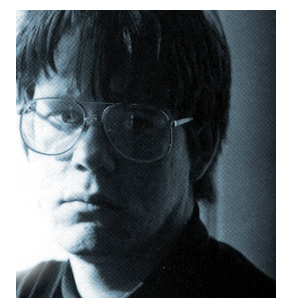

Novelist William T. Vollmann, author of a dozen books including “The Rainbow Stories” and “An Afghanistan Picture Show,” has a different perspective on the Taliban than most of us. Not only has he read the Quran at least twice, as he explained last year in a New Yorker article about the Taliban, he has also interviewed Taliban leaders face to face and spoken with many ordinary Afghans about the regime. His experience with Afghanistan goes back to the early ’80s, when as a young writer he joined the mujahedin in the mountains for several weeks. He did not actually fight, he said Wednesday in a phone interview with Salon — that is, he did not fire a gun “at anyone.” But he was very much with the fighters in their struggle.
Vollmann offered this sobering warning in that New Yorker piece: “Americans worry that Afghanistan has become a petri dish in which the germs of Islamic fanaticism are replicating — soon Afghans will be hijacking American planes and bombing embassies everywhere. And their fears are not necessarily unfounded. The Taliban are unemployed war veterans, ready and even eager to return to the battlefield. ‘In the nineteenth century, we beat the British more than once,’ Afghans often told me. ‘In the twentieth century, we beat the Russians. In the twenty-first, if we have to, we’ll beat the Americans!'”
To start with the obvious question, where were you on Sept. 11? And what was your reaction to the news?
I was in Bangkok. I don’t watch television, so I saw the news in the Bangkok Post on the evening of the 12th or the 13th. I felt very, very sad. I still feel extremely sad about it. In the Bangkok slum where I was conducting my research, I saw that a lot of the Thais were very, very happy, particularly some of the people I knew with ties to Muslims in southern Thailand. And I wasn’t a bit surprised. But it’s always painful and unpleasant. For the past few years, I’ve known better than the average American, I would say, how much we are hated around the world. Some of that hatred is justified, and a lot of it is just that we are the big kid on the block, and any time the big kid gets a punch, a lot of people are going to be happy about it. That’s human nature. It’s not even anything personal. But it’s still a little sad and unpleasant.
Back in 1982, you spent several weeks in the mountains of Afghanistan with the mujahedin fighting against the Soviet army. What was your impression of them?
They were my heroes. I’ve never met anyone who was so serenely confident of doing the right thing, so willing to sacrifice his life for his homeland, so brave and so disciplined. The case of Afghanistan vs. the Soviet Union is the clearest case of good against evil that I’ve seen in my lifetime. I thought it was terrific the way they got their country back. I’m deeply saddened by the fact we stopped helping them once we got what we wanted, which was for them to be a thorn in the Russians’ side. I feel like we sort of let them down.
At the same time, they obviously share some of the blame for their problems. They never could get it together to be unified, at least until the Taliban came along. They never have trusted each other. They are very quick to blame outsiders for all of their problems. Of course that’s partly justified. Outsiders have done a lot of meddling in Afghanistan through the centuries. The average person in Afghanistan has become very used to thinking of themselves as playthings of foreign powers. That’s what makes it so easy for them to think that our indictment of Osama bin Laden is some kind of great power strategy. That’s why I think it’s very important that we go the extra mile and explain to everyone what we’re doing and why.
How would you assess the U.S. approach so far in going after bin Laden?
The way I look at it, he’s either guilty or he isn’t. If he’s not guilty, we’re definitely doing the wrong thing. If he is guilty, we should be fighting one person instead of a lot of bystanders who are going to take his side if they think he’s innocent. It just seems like very elementary logic to me. We have repeatedly failed to make our case to the common Muslim in the street in Pakistan or Afghanistan and probably elsewhere, too. Maybe it’s not too late to make it. I don’t know. I don’t know what kind of proof we have. I was really disgusted when Condoleezza Rice said we have this proof but we didn’t see any need to give it to Afghanistan because that country does not follow our standards of jurisprudence. I hope we do have proof, and our radio stations should be broadcasting that to the people of Afghanistan as often as they can.
I’ve never met Osama. He’s probably a horrible person, and if those statements attributed to him are true, he’s probably very, very happy with what happened. Did he take part in it? Very, very possibly. If nothing else, he’s a poster boy. If there were lots of Latin American terrorists, say in the ’60s, going around and attacking us and they had a lot of Che Guevara posters, does that mean we should drop a nuclear bomb on Cuba? I don’t think so. I wouldn’t feel sorry if Osama bin Laden were harmed, but that’s as much as I can responsibly and fairly say.
I don’t want to sound like I’m completely negative about everything the government is doing. I didn’t vote for Bush, and I’m not happy particularly that he’s president. But I will say I’m impressed that he didn’t start bombing Afghanistan the day after Sept. 11. The more time that passes without him bombing Afghanistan, the more I respect him.
Day by day, we hear more about likely U.S. backing of the Northern Alliance in its Civil War with the Taliban. Do you think this is a good strategy?
I did interview Burhannudin Rabanni, years ago in 1982, and he seemed like as much of a fundamentalist as anyone. In terms of what they believe, compared to what the Taliban believes, it’s probably apples and oranges. But I say just look at it pragmatically. The Taliban controls 90 percent of the country. The Northern Alliance controls 10 percent. If you want to go and arm the 10 percent against the 90 percent, you’re going to cause untold misery. And who is to say the Northern Alliance won’t turn on us? To me it seems like a fairly pointless strategy. All it will succeed in doing is to piss everyone off.
How do you see this playing out?
It really depends on how much knowledge of Afghanistan the Bush administration sees fit to pick up. If we want to launch a frontal assault on Afghanistan, then we’ll have to be prepared for lots and lots of genocide. Maybe the only way to accomplish our aims is some kind of nuclear bomb, because everyone would fight, as they like to say, until the last drop of blood.
The Northern Alliance leader Ahmed Shah Masoud, the one assassinated recently, was a very brave fighter against the Soviets, like bin Laden. He was widely hated in the Taliban area and the northwest frontier with Pakistan, where I interviewed a lot of people. They said he was not only very corrupt but very cruel. I was often told that every potential Afghan leader was a war criminal.
The great thing about the Taliban was they took peoples’ weapons away. They’ve done lots of terrible things themselves, but from an ordinary Afghan’s point of view, it’s probably better to stay with what they have. It seems to me the best thing to do is to really try to explain our case to the Taliban, and to do it in company with the Pakistanis, who they listen to. Presumably the government of Pakistan is somewhat convinced of our case or they wouldn’t agree to do what they’re doing.
If we try to take our time, and do it right, and involve Muslim intermediaries as much as we can, that seems like the least risky thing to do. We don’t want them to declare a jihad and have everyone come to their aid like they did in their struggle against the Soviets. The ordinary Afghan is not guilty of anything, and is still grateful to us for all the assistance the CIA gave to the jihad against the Russians.
You quoted an Afghan rug merchant in your New Yorker article last year saying of the United States, “First you created one Osama. Now you are creating many, many Osamas.” I imagine you see that as being more true than ever now.
Right. It would probably be millions. Put it this way, suppose there’s someone you’re predisposed to like or to feel kinship with, because he has something in common with you, maybe someone you went to school with, and then suddenly the big bully comes and starts punching him. You’re probably going to take your friend’s side, because that’s all you know. That’s how these people feel. All they are hearing there is that the Americans are threatening Afghanistan, calling on the people to topple the Taliban. They are not explaining to the average person why they think Osama did this.
So the Afghanistan people, considering their paranoia about outsiders and the things they do, and the fact we have been extremely stupid in not making our case, are probably going to get awfully pissed off when we start bombing them. If we target any cities, I imagine we will kill lots and lots of innocent people. One aspect of their culture that made them so effective against the Soviet Union is they believe in blood feuds. I think it’s very, very easy by killing one Osama to make 10 more, and by killing 10 to make 100 more. Unless we lay out our case and let them know that justice is being done, we can expect a big blood feud.
Given all that you know about the Taliban, what’s your assessment of the regime?
I wouldn’t want to live in Afghanistan for the rest of my life. I’m an American, and I’m proud of the fact that I can keep guns in my house, I can listen to the radio, I can have whiskey and pork in the kitchen, I can have pornography, I can read “Mein Kampf.” I love the openness and relative freedom in my own country and the fact that I can have all these things. That being said, I respect the desire of Muslims who want to live under Islamic law. According to a lot of thinking, the Taliban government, for all its problems, is the most perfect manifestation of Islamic law. I know a lot of people are unhappy with the Taliban inside of Afghanistan. And a lot of people are unhappy with the Taliban outside of Afghanistan. It has done many stupid and brutal things. I talked to a doctor who was told he was not allowed to have anatomical diagrams to teach medical students.
When I was interviewing the Minister of the Interior, Mullah Abdul Razzaq, I asked him what should be done about the cases of widows with no family members, who therefore have to either work or beg on the street, both of which are illegal. He didn’t really have any good response. It sounded like basically they would just get arrested. I think that sort of thing is wrong. On the other hand, the majority of Afghan women have always been uneducated and illiterate, and the fact that education for them has been curtailed is not such a terrible thing for them as we more educated people might think. That’s not to be patronizing or condescending, you just have to look at it in pespective. From the Soviet invasion until the Taliban took over, women could be murdered, abducted and raped, and often were. Now the average woman is safe from being murdered and raped. People’s possessions are safe. One reason that the Taliban is quite popular is they took everyone’s weapons away. They said from now on we’re not going to follow my law or your law, we’re going to follow the law as laid down in the Quran.
Their interpretation of the Quran is very harsh. They are very, very strict. Maybe they are fanatics, but they are doing the best that they can. You have to remember that most of these people got their education in the religious schools, the madrasahs. That was the only education available. They would study in the schools in the winter and in the summer they would go and fight the jihad against the Russians, and a lot of them were killed. When you’re a soldier, things have to be black and white. When basically all you’ve learned is how to fight and how to die, and all your legal, moral, religious and social education comes from one book and maybe you can’t even read that well, then you’re going to end up being the equivalent of a Talib. You’re going to tend to see things in black-and-white terms. But the Taliban are very popular. I met so many people who said, “In 1979, I took up arms against the Russians for the Islamic jihad, and when the Taliban came to take away my arms, I was very, very happy, because the jihad had succeeded.”
Last question: Have you been flying the American flag?
I don’t own a flag. There are a lot of flags in the neighborhood. My little daughter, who is almost 3, really enjoys counting them as I take her down the street to get ice cream. And the good Muslim girl from Algeria who takes care of my girl is a little bit afraid, and in the house where she lives with another Muslim couple, they are flying the American flag.
