

Elections aren’t fair. This much you know, and if you’ve observed American politics at all, you’ve likely even drawn up a bill of particulars: Start with the Electoral College, which offers the loser of the presidential popular vote a chance to win. Add the absurdly undemocratic primary process, in which Iowa is accorded a greater role than California in selecting our leaders. Then, of course, there are the hackable voting machines, the wildly inconsistent state-by-state voting rules, the scandalous campaign finance loopholes, and … Every gear in the system grinds against the popular will, subverting the democratic mojo that we tell the rest of the world bleeds from our veins. George W. Bush got the White House because five judges and Ralph Nader put him there; if administered truth serum, would anyone, even Bush himself, call such a system fair?
Yet these are only the small problems. Even if you were to abolish the Electoral College, ban touch-screen voting, and institute public financing for campaigns, American elections — and not just ours — would be murky affairs still. That’s because trouble with voting is not entirely human. It’s also mathematical.
In 1948, the economist Kenneth Arrow chanced upon a surprising idea that would later help earn him the Nobel Prize. It concerns the basic difficulty of turning many people’s individual votes into a satisfactory choice for the whole society. Arrow proved that when people are selecting a leader out of more than two candidates — as happens often in presidential elections, if you count all the losers who run in the primaries — there is no voting system that can arrange the population’s preferences in a way that accords with a few basic rules of fairness. His idea — known as the Arrow Impossibility Theorem — gets at the unseen importance of the particular procedures we use to tabulate our votes. Elections aren’t just a matter of adding up what everyone wants; the way you add it up, and the way you determine what the additions mean, Arrow showed, can be just as important to the outcome as the votes themselves.
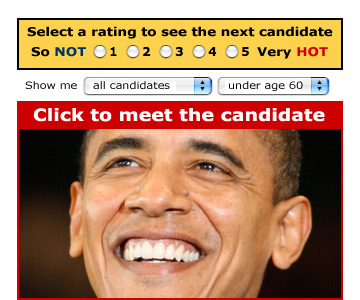
A mathematical proof seems a strange protagonist for a book about the length and breadth of American political chicanery. But in “Gaming the Vote: Why Elections Aren’t Fair (and What We Can Do About It),” William Poundstone gives math a leading place in politics. He uses Arrow’s theorem as a launching-off point for a comic and freewheeling, if a bit discursive, look at the ways political professionals have turned the quirks of voting rules into election victories over the course of a couple centuries. By the end of it, you’ve been pummeled by numbers, the bizarre outcomes of game theory, and the certainty that America votes in a completely bassackward way. Oh, and also this: Probably the best way to reform how we vote, per this book’s analysis, would be to adopt the method used on the bod-rating Web site Hot or Not.
Voting experts — academics who study what’s known as “social choice theory” — have long complained that the counting system the United States uses for most state and federal elections, called plurality voting, is probably the worst electoral system one can design. Arrow’s theorem shows that no method is perfect, but ours is particularly susceptible to the “spoiler effect.” The plurality vote awards the election to the candidate who gets the largest share of the vote, regardless of whether that share suggests any meaningful support in the population. If there are more than three people on the ballot, the candidates who share the most popular positions will split the vote, increasing the electability of the candidate whom the majority finds most objectionable.
Poundstone writes that in at least five of the 45 presidential elections that the United States has held since 1828 (the first year that presidents were picked through a popular vote), the plurality vote caused the second most popular candidate to win. The most recent such race, of course, was in 2000, when Nader siphoned off enough votes from Al Gore in Florida to hand the state, and thus the nation, to Bush (Nader won 97,000 votes there; Bush won by 537). Other spoiled elections occurred in 1844, 1848, 1884 and 1912. The 1992 race, starring Ross Perot, was also probably spoiled for George H.W. Bush, in Bill Clinton’s favor. With New York Mayor Michael Bloomberg considering a run this year, we might see another billionaire spoil the chances of a front-runner; Bloomberg, unlike Perot, would probably split votes with a Democrat, improving a Republican candidate’s prospects.
Considering this history of spoiled elections, Poundstone calculates at least “an 11 percent rate of catastrophic failure” for the plurality vote. “Were the plurality vote a car or an airliner, it would be recognized for what it is — a defective consumer product, unsafe at any speed,” he writes.
To understand the fundamental unfairness of vote splitting, cast your mind away from the world of politics and imagine, instead, a sporting event. What if the spoiler effect plagued golf? Say that after playing 18 holes, Tiger Woods leads Ernie Els by one shot. Then Phil Mickelson gets a birdie to finish his 18 holes, which puts him at fourth place, behind both Woods and Els. Mickelson’s birdie shouldn’t logically affect Woods’ or Els’ scores. But imagine that it does: What if Mickelson’s birdie flips the front-runners’ rankings, so that now Els is the winner? Before Mickelson lands his shot, Woods is the best golfer in the tournament. But the second that Mickelson’s ball goes into the hole, Els becomes the best golfer.
That would not be fair. Among the criteria that we humans use to judge whether a given contest is fair is something Kenneth Arrow called the “independence of irrelevant alternatives.” In my example, Phil Mickelson is the irrelevant alternative — the winner between Tiger Woods and Ernie Els should not depend on how well or poorly Mickelson plays. If such a thing ever happened in golf, fans would scream bloody murder.
Fortunately, that doesn’t happen in golf. Figure skating, however, is not immune to such bizarro outcomes. Poundstone points to the 1995 women’s World Championship meet, in which, at one point, skater Chen Lu was ranked first, Nicole Bobek was second, and Surya Bonaly was third. Then Michelle Kwan took the ice and came in fourth. But Kwan’s score caused Bobek and Bonaly’s positions to flip. After Kwan was done, Bobek, who had been in second, was put in third place, and Bonaly went from No. 3 to No. 2. Michelle Kwan, the irrelevant alternative, determined the winner between Bobek and Bonaly. Something very similar happened in the 1997 men’s European Championships, sparking an outcry in the skating world, and prompting the International Skating Union to change its ranking formulas in an attempt to eliminate what became known as the “great flip-flop.”
But the new rules didn’t work, and that’s the crux of Arrow’s Impossibility Theorem. Figure skating is a kind of election in which judges vote for the best of many possible candidates, the skaters. Such elections, Arrow proved, are prone to dramatic failure in unexpected ways. “To some extent, Arrow’s theorem refutes the notion of a ‘will of the people,'” Poundstone writes. “Arrow’s theorem says that there are situations where the ‘will of the people’ is ill-defined, where rational people are collectively irrational.”
Just as it strikes us as deeply unfair that Michelle Kwan’s performance should affect the ranking of the skaters ahead of her, it’s crazy that Ralph Nader’s participation in the 2000 race in Florida should matter to the contest between Gore and Bush. If Nader had not participated in that race, Gore would have won. Add Nader, and Bush wins. That’s not because Nader’s participation caused voters to change their essential views about Bush and Gore. Most of the Nader voters preferred Gore to Bush, with or without Nader in the race. Some Nader voters may not have bothered to go to the polls had Nader not run, but at least 537 would have; thus Gore, by any honest measure, had more support in Florida than did Bush. But plurality voting failed to register that greater support. The voting system caused collective irrationality.
Gaming the spoiler effect, Poundstone writes, is fast becoming a primary occupation of political consultants. In 2006, several congressional races across the country were plagued by spoiler candidates, folks who had no conceivable chance of winning, and whose sole purpose was to draw votes away from someone else. Supporting a spoiler to your opponent can be a very effective campaign maneuver; Republicans and Democrats have been seen to funnel cash, advertising help, and even killer oppo-research to spoilers on the other side of the aisle. Helping the enemy of your enemy is cost-effective, too. (Fans of “The Wire” will remember Tommy Carcetti using the trick to great effect in the Baltimore mayoral race.)
The spoiler effect is just the most pernicious of the many shortcomings of our current voting system. Another problem is strategic voting: Because we’re all hyper-aware of the power of spoilers, plurality voting pushes us to vote not the way we feel, but the way we expect others will vote. There were many voters in 2000 who ranked Nader first, Gore second and Bush third. But according to polls, a huge percentage of these people didn’t vote for their first choice — Nader — but, instead, for their second, Gore, because Nader had no chance of winning, and thus a vote for him was actually a vote for Bush. So Nader, like other third-party candidates, got short-changed. Though he may have appealed to a large slice of the electorate, his results underreported his popularity.
Such strategic thinking plagues voting. Romantics envision voting as a kind of mirror held up against the public mood. But really voting is a fun-house mirror. None of us is obligated to vote honestly, and in many circumstances voting the way you “feel,” rather than according to what you think will happen, can hurt your interests.
Poundstone’s book is a handy compendium of alternatives to plurality voting. They go by various names, some of which you’ve heard, some which you haven’t: There’s Instant-runoff voting, or IRV, in which voters rank their choices on a ballot (Nader is 1, Gore is 2, Bush is 3, say) that is then tallied to find the candidate who commands the majority of the vote. Or the Borda count, which converts people’s ranked preferences in a slightly different way (and is used by the sports press in voting for MVP trophies); or the Condorcet method, which uses rankings to find the candidate that could beat a majority of other candidates in two-way races. Another interesting reform is called approval voting. In this method, you simply vote for as many candidates as you approve of. The one who gets the most votes wins.
While many of these counts would represent an improvement over plurality voting, none would be perfect. Indeed, Poundstone writes that there is vehement disagreement within voting circles about which count would be the best reform. Many experts have taken sides, dug in their heels for one particular voting style or another, and have taken to calling every other method dangerous, capable of leading to the next election of Hitler or Mussolini (social choice theory, apparently, is a very rough discipline).
Take IRV, for instance, which has been adopted by a few large cities, including San Francisco. IRV undoubtedly represents a huge improvement over plurality voting, particularly because it reduces the spoiler effect. (With IRV you get to vote for Nader in Florida without helping Bush — if Nader finishes last among the three, your second-choice vote, for Gore, comes into play, and thus may help Gore win a majority of votes to win the state.) But IRV fails what mathematicians call the “monotonicity criterion” — that is, under rare circumstances, it is oddly possible for a candidate to lose an election by winning more voters. Yes, gaining support can turn an IRV winner into a loser — how this happens is complex; you can look it up here or trust me.
Which brings us to Hot or Not. After examining a raft of alternatives to the plurality vote with what sometimes seems like numbing attention to their details and flaws, Poundstone ends by suggesting a voting method that seems to evade Arrow’s impossibility theorem altogether. In virtually every way, under any condition, this voting system seems fair. What’s more, it didn’t grow out of the research on voting. It arose more naturally — on the Internet, out of the Web’s affinity for reviewing pop culture.
The method is called “range voting,” and it works in the same way you rate movies on Netflix, books on Amazon, or people on Hot or Not. When you go to vote, you give each candidate on the ballot a rating on a 10- or 100-point scale. Maybe you say Bush is 1 out of 10, Nader is 8, Gore is 5. The winner is the candidate who has the highest average score. Range voting has a number of advantages over how we vote today: Like IRV, it prevents spoilers, but it also obeys monotonocity (a winner can’t lose by getting more votes), it’s quite impervious to strategic voting (it’s hard to game the system by giving false ratings to your candidate or his opponents), and it’s “expressive” — you get to say not only that you like one candidate more than another, but by how much you like him.
Range voting is the pet project of Warren Smith, a mathematician who runs a very informative Web site on the subject. Unfortunately, it hasn’t progressed much beyond the Web. No major public institution uses range voting to elect officials.
This is a shame. There is much wrong with voting in America, but it could well be that what long seemed impossible to voting theorists — devising an election that voters consider fair — actually is possible. The best way to choose the president, it turns out, is the same way you decide whether the drunk sorority girl who just posted her picture on the Web has nice skin.
