
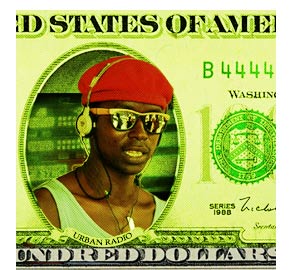

“How many CDs you need?”
The question confused the young program director. He had just taken over a small urban, or R&B, radio station down South; he was talking to a local independent record promoter, or “indie.”
It was confusing because, like programmers at music stations around the country who decide what songs get spun, the P.D. certainly didn’t need any more copies of the new single the indie was pitching on behalf of a record company.
“I said, ‘We got CDs,'” the P.D. recalls. “I didn’t know what he was talking about. So he says, ‘Oh, let me call you on your cellphone.'”
The programmer thought this was strange, too. Why would the promoter want to discuss the song on a cellphone?
The conversation continued on a wireless. “Anything I can do for you?” asked the indie. “Anything y’all need? How many CDs you need?”
The P.D. reiterated that the station had plenty of CDs on hand.
That’s when the indie took a moment to explain the ground rules to the rookie P.D. “He said, ‘You don’t understand the game, do you?'” the programmer recalls. “I was still green. I didn’t know how the system works. He shed the light.”
The programmer had always wondered how his previous boss, who made $35,000 a year, could afford a Lexus. But now, thanks to the educating indie, he knew that many urban programmers take illicit payments — bribes — on the side.
“There are code words they use,” he says today. “‘How many CDs you need?’ ‘CDs’ are $100 bills. He explained there’s a budget for this and a budget for that, and how much money people get paid for each record added” to a station’s playlist.
The young P.D. had been working at the station for some time, but hadn’t seen any of that money yet, because unbeknown to him a consultant working for the station had convinced record companies that he alone controlled the playlist, and was pocketing all the indie payments. When the P.D. confronted him, the consultant generously offered to let the programmer cash in too, by giving him control of two slots each week on the station’s playlist.
The P.D. declined, having learned an object lesson in the forces that rule in the world of urban radio: “It’s payola, basically.”
– – – – – – – – – – – –
As a recent series of articles in Salon has made clear, payola is alive and well in the music business. But urban radio remains a world apart, the Wild Wild West of the music industry. In the world of white pop and rock radio, virtually everything on the air is bought and paid for, but in an increasingly corporatized way, with the money going to the station’s budget. In urban radio, by contrast, the cash still goes into the personal bank accounts of powerful programmers and consultants, sources say.
Crucial airplay “reports” to the industry’s trade magazines, sources say, are up for sale. Some stations are paid for songs that are never even played on the air. And as for the money, these same sources say the business is rife with overnighted packages stuffed with cash and shipped off to recipients with phony names, or money orders made out to programmers and sent to home addresses. The practice is widely known in the mainstream radio industry, but almost never talked about, both because the white radio industry has its own payola problems and because of a fear of charges of racism, industry members say. And so far, this insular industry has rebuffed attempts by mainstream indies to penetrate it.
The result is a brazenly money-driven system that revolves around chronic payoffs; it actually costs artists earnings; and it is often indifferent to the songs it puts on the air. Says one source who left radio programming to work in promotion for an urban record company, “I didn’t realize how dirty it was until I went to the label side. Now I know.”
From the days of wildcat DJs and fly-by-night promoters in the 1950s and 1960s, black radio has always been a unique and passionate American institution. And while white mainstream radio has grown increasingly corporatized and monochromatic in recent years, the country’s nearly 300 urban outlets, whether spinning smooth crooners like Usher and Alicia Keys or bad boy rappers like Jay-Z and Ja Rule, have resisted co-optation.
That’s the good news. The bad news is that black radio’s hit music stations play by two rules: Everyone gets paid to play, and nobody ever talks about the first rule.
Flashback to the ’80s: Those rules used to hold sway in the world of pop radio promotion as well. In 1988, for instance, pop indie promoter Ralph Tashjian was charged with bribing programmers with cash and drugs, as well as tax evasion and obstruction of justice. He pleaded guilty to one payola charge and filing a false tax return, and admitted having sent a Fed-Ex package of cocaine to an employee at a Fresno, Calif., radio station.
More recently, Latin radio was rocked when the head of promotion for Fonovisa, the largest record label in the genre, pleaded guilty to illegally paying off DJs at Spanish-language stations to play its songs.
According to payola laws, it’s a crime for a station employee to accept payment for playing a song if the station fails to notify listeners about the financial arrangement.
Today, indie promotion for country, pop and rock remains influential but at least makes an effort to stay within the letter of the law. Following the government’s late-’80s crackdown, it has simply become much more corporate, with large indie operations — the best connected of which are Jeff McClusky and Associates and Tri State Promotions and Marketing — signing above-board deals with individual stations.
In exchange for paying the stations an annual promotion budget ($100,000 for a medium-size market), the indie becomes the station’s exclusive indie and gets paid by the record companies every time that station adds a new song. (Critics say it’s nothing more than a sanitized quid pro quo arrangement — station adds song, indie gets paid.)
Admits one Top 40 indie: “You can’t see it but you sense it’s out there — the kickback.” But pop and rock indies have their lawyers periodically pore over their books to make sure the transactions, while ethically questionable, remain technically legal.
Urban promotion, on the other hand, remains largely unchanged, or unchallenged, by any reform efforts.
As an industry practice, independent promotion is rarely discussed in public and press coverage is frowned upon. Yet even against that backdrop, the secrecy surrounding urban promotion has been deafening. Salon contacted scores of urban record-label executives and radio programmers for comment; all declined to be interviewed on the record.
How hush-hush is it? Consider the straight-arrow urban P.D. who turned a top-75 market station around. He got labels to pay for vacations for listeners who won call-in contests; he lured big-name artists to make in-person visits to the station; he even boosted employee morale by giving staffers custom station jackets.
How did he afford it? “The [promotion] checks were made out to the station, not Fed-Exed to a P.O. box number,” he says today.
When the station owner expressed amazement about what the programmer had done for the station, the P.D. simply explained the situation. “He didn’t know the previous P.D. was taking money,” the P.D. recalls now. That’s how hush-hush it is.
Pick up any music-industry trade guide and you’ll see dozens of independent promotion companies for rock, pop, country, even jazz listed. Only the major urban players are missing. They don’t advertise.
Nonetheless, some inside the world of urban radio and record promotion agreed to talk to Salon about how the business operates. All requested anonymity.
They suggest the problem of payoffs is widespread. “I think every reporting urban station is taking money,” says one format programming veteran. He’s referring to the 100-plus stations that, because of their audience size or influence, are asked to “report” their playlist each week to a trade magazine, such as R&R or Billboard.
Is the practice that widespread? “What do you mean ‘widespread’? It’s all the [urban] stations everywhere,” says another urban industry vet.
If a station reports, the monetary value of the playlist increases, since the songs chosen can affect the trade magazines’ weekly charts. And from a record-company perspective, radio is all about pushing singles up the chart.
According to an urban-radio programmer, if a station reports just to R&R, a song added to its playlist is worth roughly $500. If the station reports to both R&R and Billboard, it’s worth roughly $1,200. (In major markets that figure can go much higher.)
So for an urban station reporting to both trades, and adding five new songs a week, that’s $6,000 a week, or $300,000 a year in tax-free income. Whoever controls the playlist pockets that money. It could be the station program director, a consultant, a vice president from corporate programming or even the station owner.
As Salon has reported, virtually all the songs played on a typical commercial radio station — known as “adds” in the trade — are paid for. And while some traditional payola undoubtedly exists in the pop, rock and country world, more times than not that money goes toward the station’s bottom line to purchase promotional and marketing items (billboards, station van, etc.), or to help pay bands for an annual all-star concert.
What’s different in the urban world, according to format sources, is that most or all of the money goes directly into somebody’s pocket at the station.
Not surprisingly, with that sort of personal incentive, it’s tempting to stretch the truth. One urban P.D., whose station owner bragged about stashing away $10,000 each month in indie payments, recalls “adding” songs that the station never even played on the air. “Sometimes we add eight songs in one week. Half the songs would show up on the station, and the other half did not.”
But wouldn’t record companies fume if they found out a station wasn’t actually spinning songs it reported as added? After all, radio airplay is supposed to help sell records for artists. Yes, but radio promotion executives at record companies, already earning healthy six-figure salaries, often receive hefty bonuses based on how high singles climb the chart, or simply based on the number of stations that add a particular single.
So if fictitious adds, or “paper adds” as they’re called, help secure those bonuses, the record company exec won’t object too strenuously to the station’s sleight of hand. After all, everyone is happy: The label executive gets paid, the indie gets paid and the P.D. gets paid.
Who pays? The artist, for one. Most record companies recoup their costs for independent promotion from the artist’s CD royalties — which, of course, would be depleted by the lack of airplay. And, ironically enough, the stations pay as well, since money that might be used for promotions to build audience is instead diverted into programmers’ personal bank accounts.
Of course some urban acts have a more hands-on relationship with radio stations. According to a year-old affidavit reviewed by Salon, an executive at an urban outlet in New Orleans, WQUE, recently testified under oath that rapper Master P wrote the station a check for $23,000 to help it cover costs for a poorly attended concert it had sponsored. (The affidavit stemmed from a non-payola-related wrongful-dismissal suit.)
Within days, the station was spinning Master P’s rap songs throughout the day, from morning to afternoon drive. That despite the fact that the station’s policy was not to play any hardcore rap until after 6 p.m. (Many urban stations maintain a similar no-rap policy during the day in an effort to attract older-skewing advertisers.)
The show was not affiliated with Master P or his No Limit Records, and Master P wouldn’t comment about the check. An internal investigation by the station owner, Clear Channel Communications, looked into possible payola activity at the New Orleans station. It found none, although some employees there complained to Salon that the inquiry was halfhearted at best. (The company declined to discuss the matter.)
For instance, the affidavit recounted how a record rep from a small independent label visited the station, hoping to get some airplay for a new novelty single. The station’s music director told him the song might get played during the morning show, but not in regular rotation.
The record rep actually seemed relieved, exclaiming, “Rotation? I don’t have 5,000 fucking dollars to get this in rotation.” The implication is that the label rep knew exactly how much it cost to get a song added at the station.
Earlier this month, WQUE program director Gerod Stevens was fired and escorted out of the station. General manager Ed Turner, who took over WQUE in April, says the move had nothing to do with the Clear Channel investigation. He did add, though, that he wanted a programmer who had “a little more compassion for our friends in the record industry.”
– – – – – – – – – – – –
The current system is able to flourish partly because the major labels, reluctant to make waves inside the profitable format, have adopted a hear-no-evil, see-no-evil mentality, turning a collective blind eye to the corrupt transactions.
Even if the labels did want to alter it, the current system may simply be too firmly entrenched. That’s something McClusky and Tri State recently found out after trying, unsuccessfully, to crack the lucrative urban market. According to radio sources, both mainstream indie firms approached the country’s two most influential urban radio chains: Radio One, which owns 63 stations in 22 markets, and Blue Chip Broadcasting, which owns 19 stations in six Midwestern markets.
The indies proposed forming exclusive relationships with their stations, which meant promotion money would go to stations and not to individuals. The companies, sources say, declined, preferring to stay with the old system. (Executives for Radio One and Blue Chip Broadcasting did not return calls for comment.)
“It seems to be working, and if the money is flowing pretty well, why mess with it?” asks one source, noting that “Bill Scull [at Tri State] and McClusky can’t break in; they aren’t socializing with black P.D.s.” Both Scull and McClusky are white; most urban indies, label vice presidents and programmers are black. “Black radio is different, it’s like a brotherhood, a clique,” says the source.
Some inside the industry suggest that an element of racial unease has stopped executives from curbing the corruption. “That’s the reason that white guys at labels aren’t going to call them out on it. If you do, you’re called a racist,” says one source who’s spent the last 10 years in programming at a major-market urban station.
The source adds, “There is this layer of intimidation that hangs around [the format],” coming particularly from smaller, black-owned rap labels. “They says things like, ‘Add our product or there’ll be problems.’ They’ve intimidated us into putting records on the air.”
There are also stories of life in the urban promotion world that are outrageous even by radio’s fast-and-loose standards. The source recalls the time a rep from a rap label showed up at the station accompanied by bow-tied Fruit of Islam security guards. “He just parked them at the station and said we’re going to talk to the G.M.” Despite the fact that label reps were not usually allowed to meet with station management, the rep got in to see the G.M. “He said, ‘Your boys in the music department are not getting the job done.'”
(In his book about Death Row Records, “Have Gun Will Travel,” author Ronin Ro recounts the time gangsta label chief Suge Knight dragged a radio promotion executive out of a meeting and choked him in an adjacent office.)
In order for record companies to maintain deniability, to protect themselves against any allegations of wrongdoing, an extra layer of isolation exists that is unique to urban radio promotion. It’s called the “quarterback.” “They’re hired as a promotional or marketing company. That keeps the record companies in the clear,” says one source.
The quarterback receives a lump payment from the label to promote a specific single on radio. This is a legitimate and legal transaction. The Q.B. then turns around and either contacts stations himself or more likely hires local indies around the country who take the song to radio programmers they enjoy close relationships with. (“Certain P.D.s you have to take out to dinner. Others, you take them to strip clubs,” says one person who’s done the schmoozing for a living.)
The indie, at this point clearly in violation of payola laws, negotiates directly with whoever controls the station’s playlist (“How many CDs you need?”) and arrives at an agreed-upon price for the add. The indie relays that information, quoting from a sort of FM rate card, back to the quarterback, who OKs the cash payment. The indie then pays off whoever controls the playlist. And according to one record-company promotion executive who personally has sent out the deliveries, that includes overnight envelopes filled with checks or money orders.
So the money actually goes from the label to the quarterback to the indie to the programmer. The more hands that touch the money, the harder it is to trace.
Yet precisely because so many hands touch the money — and pocket their share — during the transaction, the payment scheme for urban is more freewheeling. Whereas pop and rock indies actually submit detailed invoices to record labels for services rendered (i.e., specific songs added to specific playlists), sources say on the urban side things are rarely put in writing.
For instance, according to an urban source who’s negotiated such deals, an indie might tell the quarterback that a station needs $1,200 for an add when the station requested only $800. The additional $400 either goes in the indie’s pocket or is split with the quarterback. Or a station will ask for $800 and that’s what the indie tells the quarterback. But the indie also lets him know that when the label comes back in a month and asks the station to increase its spins on the new song, the indie’s going to need $300 for “spin maintenance.” Most likely the station will never know about that $300 payment.
Three hundred dollars may seem like a small amount, but multiply that by the hundreds of songs added each year to the hundreds of urban stations and it adds up to millions and millions.
Pockets are clearly being lined, and some worry that radio is suffering in the process. “Somebody needs to do something, because stations are not being programmed to their fullest,” says an urban industry insider. “They’re just playing records that [labels] are paying them to play. It’s gotten so corrupt it’s ridiculous.”
