

The pursuit of happiness has always been a loaded concept for mothers. We constantly juggle our wants and our children’s needs in an uneasy balancing act. The struggle often leaves us quick to anger. Sometimes the mere mention of words like “motherhood” and “employment” or “breast” and “formula” in the same sentence can cause us to go a little feral.
Welcome to the “Mommy Wars.” The term was coined in the late 1980s by Child magazine to describe the tension and anger that existed between working and stay-at-home moms. But in the 20 years since then, the phrase has been overused by an eager media that seems intent on pitting women against one another.
Leslie Morgan Steiner, an advertising executive at the Washington Post, believes women are at war not because they really have a beef with moms who make different choices, but because they are insecure about their own decisions regarding work and family. It’s that internal catfight that leads to the external drama — the one media, advertisers and politicians love to cite for their own purposes. “Motherhood in America is fraught with defensiveness, infighting, ignorance and judgment about what’s best for kids, family and women,” Steiner writes in her new anthology, “Mommy Wars: Stay-at-Home and Career Moms Face Off on Their Choices, Their Lives, Their Families.” The book, with its provocative title and loaded subject matter, has attracted a lot of publicity both in the mainstream media — the “Today” show, “Good Morning America” and Newsweek have all covered it — and in the blogosphere. The attention demonstrates a fundamental truth: Point a finger of blame at another woman and you get noticed.
Yet Steiner is quick to point out she is no Linda Hirshman, the feminist flamethrower who provoked massive outrage and reams of discussion late last year by writing in the American Prospect that women should not stay home with their children because the domestic sphere is inherently inferior to the world of paid work. Steiner has no desire, she says, to tell women the proper way to lead their lives. Because for all the conflict embedded in the term “mommy wars,” the truth of most women’s lives is a lot more nuanced. That fact is reflected in the 26 essays in Steiner’s anthology, which offer a subtler reflection on the lives of modern mothers than the title might suggest.
Many of the writers in the collection have rotated in and out of the workforce and almost all profess understanding for those mothers who have made different decisions. But while their judgments may be muted, between the lines, even writers who say that their choices are best for themselves, not necessarily others, sometimes betray their beliefs. Take contributor Inda Schaenen, who says she believes that it’s great for other moms to work outside the home — but then, a few paragraphs later, adds that “It is impossible to bring your best self to two separate full-time jobs simultaneously.” What does that mean for “Lizzie McGuire” creator Terri Minsky, who took a one-year job on the West Coast while her family remained in their New York home? Her children would call her up and ask, “Mommy, do you love your television show more than us?” African-American journalist Sydney Trent ponders why the women in her husband’s white family seem uncomfortable with her decision to keep on working. “As a working mother, I often feel judged by whites and rarely by blacks,” she admits. Steiner doesn’t provide any answers. “In order to end this catfight and emerge united, we need to explain ourselves to one another,” she writes.
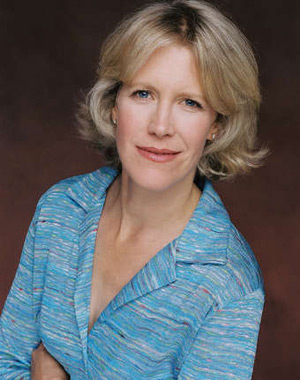
Steiner, 40, lives in Washington with her husband and three children. Currently on leave from the Post to promote “Mommy Wars,” she has started a blog on work-life balance on the newspaper’s Web site called On Balance. She met with Salon recently when she was in New York.
Why did you decide to do a book on the topic of working vs. stay-at-home moms?
I wanted moms to have a voice in the discussion over what’s best for women, working motherhood or stay-at-home motherhood. I was really frustrated by everything I read and saw about motherhood. The debate was dominated by politicians oversimplifying the issues to get elected and advertising executives creating diaper and laundry detergent ads, and academics too.
The more personal part of it is that I always knew I wanted kids and that I wanted to work. I’m sort of devoutly a working mother, and I was fascinated by stay-at-home moms. Although I wouldn’t have admitted this at the time, I was also jealous and angry, like, “How dare they be happy staying at home.” I just couldn’t believe they could be truly happy, without work and without their own financial independence. I couldn’t get stay-at-home moms to talk about it; they wouldn’t talk to me because I was a working mom. There was just a big divide.
Why do you think this whole issue of women and work choice has become such a hot topic recently? I’m sure you know about the Linda Hirshman piece…
I thought she made some really good points, and part of what she said I agree with and part of it I disagree with. I love the debate. We should be talking endlessly about these issues.
What did you agree with?
When she says it is a financial risk to stay at home with your children, to forgo your own earning capacity, she’s right.
Do you feel — like Hirshman — that these women are failing feminism by staying home?
I think that’s ridiculous. A lot of younger women today are choosing to stay home because they don’t feel they need to prove they can have it all in terms of work and family. And you know what? I think that’s great. That’s what I and a lot of other women worked so hard for.
Why do you think the subject of women and work arouses so much passion and anger?
Every woman, every mom in America, wants to feel good about herself. Everybody is a unique kind of mom, but there’s no message out there, anywhere in American society, that you are a good mom. If you can’t feel good about yourself the next best thing is feeling better than somebody else. Ask any seventh-grade girl. That’s what cliques are about; that’s what catty behavior is all about.
We’re taught from an early age not to compete with men, that that’s the worst thing in the world, that you’re an unlikable, unlovable person if you compete with men. So we compete with women, and bash women because we’re trying to feel good about ourselves.
Instead of saying, “You know what, she can do whatever she wants. It’s a free country and she makes some good points, but this is my life,” we just go crazy, and that’s why I was so angry at stay-at-home moms. How dare they be happy? What did I care? It’s great that they were happy. I didn’t feel that way before because I was insecure.
Over 40 percent of Americans work at least 50 hours a week. So we live in an environment where it is very hard to have two parents working. Especially without resources to hire a sitter to come in…
But it’s not just about outsourcing child care. People talk a lot about how little time we have and how manic we are: We’re eating fast food and we’re making our kids eat in the car and do their homework in the car and we’re so rushed. All of that’s true but the reason is because we’re expected to give so many sheer hours to our jobs.
It’s almost impossible in today’s world to have two people work and raise kids unless they’re self-employed or one’s an entrepreneur or they have a very understanding employer.
So, why do you think this is not discussed much? Instead, there’s so much, “She works, she doesn’t work, she works part-time, she ditched her kids with a nanny,” you know the things we all say.
We’re so opinionated in our heads. That’s one reason why this subject works in book form because you can write in private and you can read in private. You and I don’t have to confront each other by having that conversation. We don’t have to get in each other’s faces because the confrontation is pretty scary.
These issues should be talked about even more. But it’s taboo. A lot of people don’t want to hear it. Employers definitely don’t want to hear they’re not giving parents enough flexibility. The government doesn’t want to hear it, conservative politicians don’t want to hear it, that women with the most options, with the highest degrees of education and the most financial freedom are frustrated and unhappy. If those women are frustrated can you imagine what a woman who has to go to work every day and has to leave her kid in substandard day care, how she feels? She’s so frustrated that it’s a kind of prison, and she can’t speak out in large part because nobody is asking her what she thinks.
I’ve thought that, too, but then why is so much of this work-life balance talk focused on upper-middle-class women? And why are upper-middle-class women who do talk about these issues so often bashed?
When we say the mommy wars are only a problem of privileged women, to me that is getting back to the age-old problem of women looking for what divides us, not what we have in common. The moms in “Mommy Wars,” even though they are better educated and more economically stable than many others, are still tackling universal problems.
In this country we love to blame women; it’s part of our culture. We deify motherhood but then women are the first ones we blame when it comes to family life. You’ll never hear a man called overprivileged; you only hear women and children called overprivileged because it’s easy to single them out as a target — they can’t fight back as effectively, they’re not part of the dominant culture. Women bashing is a sport.
Why do you think women play into it then?
I wish they didn’t. I think that part of the answer to ending the fighting is that women have got to stick up for each other more. We should be fighting with men, we should be fighting with the government, we should be fighting with employers, and say this country would be better off and kids would be better off if women had more flexibility in terms of work and more support being mothers.
You included essays by three prominent African-American journalists — Lonnae O’Neal Parker, Sydney Trent and Veronica Chambers — as well as Latino activist Natalie Smith Parra. What was their take on the “Mommy Wars.”
African-American women don’t have the same issues as white women and I think it’s good for both groups to talk frankly with each other about the different solutions that they’ve found. In general, black women don’t have the same angst, they don’t have the history of having stay-at-home moms who turned it into a moral choice. They needed to make money. By and large, African-American women had moms who worked, and grandmothers who worked, and great-grandmothers who were slaves. So they see work, rightly so, as a very important way of providing for their kids and setting a model for their children and taking care of their kids.
Were there pieces you didn’t agree with?
I’m in the middle of the spectrum. If a hard-driving working woman is at one end and a devout stay-at-home mom is at the other, I’m in the middle because, with the birth of my first child I started scaling back and working part time and finding creative solutions. So the people who are really different from me are the ones I had the hardest time wholeheartedly agreeing with.
“Mother Superior,” by Catherine Clifford, comes to mind. She’s a passionate advocate for staying at home with your kids. It was hard editing that piece because she was so persuasive, and yet I didn’t agree with her.
Another one that was hard was Ann Sarnoff’s piece, “I Do Know How She Does It.” Ann is the chief operating officer of the Women’s National Basketball Association and she’s very ambitious. Her sights are set higher than mine. We’re similar in that we both have MBAs, but she hasn’t given up any of her ambitions since she had kids, and I’ve given up a lot of mine. It’s always hard to see, in other women, what you are giving up. Whether that’s giving up time at home with your kids because you’re not staying at home, or you’re giving up promotions and success at work because you’re leaving at 5 every day to be with your kids. It’s always hard to see someone who’s similar to you but who’s made different choices and pays a different price but also gets very different benefits.
Despite the title, the writers don’t really “face off” against each other … they don’t bash other women for their choices.
There’s not a single mom that wanted to write an entire essay about the conflict between working moms and stay-at-home moms. Every woman wanted to write about her own inner mommy war, her inner catfight, because that’s where the conflict is really taking place for women. I don’t think the book in any way makes up conflict or capitalizes on it … I hope readers will learn from this book that the real mommy war rages within each of us as we try to come to terms with our choices in a culture that doesn’t help us come to terms with them.
Then why did you choose a title that signals conflict?
The original title was “Ending the Cat Fight,” but Random House didn’t like it. We went through what seemed like a hundred titles before settling on “Mommy Wars” because people understand it right away and that is really valuable in a title. If we called it “26 Moms Explain Their Life Stories and How We Should Love and Support Each Other,” no one would buy it. “Mommy Wars” is shorthand for all the issues working moms and stay-at-home moms face. It has become a generic term.
Do you think the culture feeds on the so-called mommy wars?
Definitely. It’s good material. Politicians like to play women off each other. When they’re campaigning, they appeal to a certain group and we’re all susceptible to the message when it’s us vs. them, or good vs. bad, so politicians try to appeal to good moms and bad moms, depending on what your definition is. Advertising executives do the same thing. They tell us, “You have a problem, you’re not a good enough mom, and I have a product that will make you feel like a good mom.” We hear that a thousand times a day.
Why don’t employers try to help women more?
Corporate society is constructed on a very male model of success — you start work in your late teens or early 20s, work steadily for 20 or 30 years, and then retire. That doesn’t work for women who have children. So the corporate model has to change, but it’s very slow going. Things will only get better as women continue to rise to the highest levels and make changes.
Having said that, things are changing and we’re just too close to it to see it. If you look, you do see more flexibility and more on ramps and off ramps. It’s really only been in the last 50 years that the top business schools and law schools have even accepted women. It’s only been since the ’70s that most of the top colleges in the country went coed. Thirty to 50 years is only a nanosecond in time.
