Join Salon.com today | Help
Benefits of membership
Eat & Drink
Malaysia

The Julia Child of Malaysian food

James Oseland, editor in chief of Saveur magazine, talks about culinary colonialism, his love of home cooking and why Malaysian cuisine may be the next big thing.

Editor's note: To try recipes from James Oseland's new book click here.

By Tracie McMillan

Pages 1 2

Read more: Singapore, Asia, Indonesia, Malaysia, Life, Eat and Drink, Food and Travel

Dec. 12, 2006 | Pre-made sushi and pad thai may now be making appearances on American dinner tables from coast to coast, but mention Malaysian food to your Midwestern aunt, and you're still likely to get a raised eyebrow. James Oseland is on a mission to change that. Just as Julia Child's "Mastering the Art of French Cooking" brought French food into the hearts and hands of American housewives 40 years ago, Oseland's new cookbook, "Cradle of Flavor: Home Cooking From the Spice Islands of Indonesia, Singapore and Malaysia," is a comprehensive and charismatic attempt to introduce Americans to a great, global cuisine.

Oseland, who recently replaced Colman Andrews at the helm of Saveur magazine, first encountered the region's cooking in 1982 when he took a college friend up on an invitation to visit her family in Jakarta, Indonesia. Intoxicated by the cuisine's rich layering of spices -- in which nutmeg, lemongrass and tamarind frequently reside in the same dish -- Oseland began to return on a nearly annual basis. Along the way, he visited old friends and made new ones, learning from local cooks, carefully gathering their recipes and stories. The result of two decades of living research, "Cradle of Flavor" pairs Oseland's personal tales of exploration with detailed explanations of ingredients and cooking methods. Equal parts how-to manual and cultural guide, the 100-recipe volume bursts with both exotic specialties like fern curry with shrimp and some nearly all-American staples, like spiced roast chicken with potatoes.

Studiously authentic and respectful of traditional methods, Oseland's book fills a culinary vacuum created by the relative absence of Malaysian and Indonesian immigrants on American shores. Unlike the foods of Thailand and China, which entered the U.S. through waves of immigration, the dishes in "Cradle of Flavor" have had few native cooks promoting them on American soil. But while Oseland has found himself in a de facto ambassadorial role as a result, he's not looking to simply spark a trend. He leaves that, instead, to star chefs like New York's Zak Pelaccio -- whose Malaysian restaurant, Fatty Crab, has been crammed since opening in 2005 -- and to the Malaysian government, which in mid-November announced an initiative to promote its native cuisine by establishing 8,000 restaurants abroad by 2015. Instead, Oseland is betting that a cuisine's true staying power in the American melting pot will be measured by its presence on kitchen tables -- and it's there that he hopes to make his mark.

Salon recently stole in on one of Oseland's cooking classes -- and pre-class shopping trip -- at Manhattan's Institute for Culinary Education to get his take on the trouble with idolizing restaurant chefs and why the tastes of Malaysia aren't so foreign after all.

You spent five years writing this book, which gives an overview of more than two decades of traveling and eating. Why spend all that time and energy to bring a relatively obscure cuisine into the American lexicon?

When I started the book, Indonesia -- if it was known at all -- had become kind of a dirty word thanks to CNN sound bites about global terrorism. And that was so contrary to the place that I knew -- the warm wonderful place wasn't represented at all. So I thought, "OK, I'm going to give people something different."

The food in the book is the food that transformed my palate. I came from a basic meat-and-potatoes, chicken-pot-pie background and so finding this world of taste beyond what I knew was an astonishment. It was also a great entry point into understanding a place that was at times overwhelming and elusive for me.

It's a region of the world that was subject to centuries of colonialism. Do you think that history influences the cuisine?

Yes, although I tend to think that, because those transactions go on for so many thousands of years, we look for easy stories, like "the Indians influenced the Javanese." That seems a bit oversimplified. What if the reverse is happening? I've heard people say, "Vietnamese cuisine is so wonderful because the French were there." And that's actually kind of patently offensive. Basically there is French bread in the banh ml, those Vietnamese sandwiches, but that's about it.

So, it's just so flagrantly off. It's a Eurocentric vision of the world -- which is actually something I'm trying to shake up at Saveur, too. Italy and France are great, but they're not the be all, end all.

You focus a lot on home cooking, too. Why?

I think that in the part of the world that I'm dealing with, cooking reaches its apogee, its highest point, in the home. In a way, even the more famous street foods of the region -- the celebrated satays and the glorious noodles -- are made in stalls that are just a small outdoor extension of someone's home. So I just wanted to reflect that kind of relaxed, soulful idea.

A slow pace, a relaxed cooking style -- that's not how most Americans interact with food.

In the West a lot of times our model is about expediency first and foremost -- perhaps because of our growing dislocation to cooking and the convenience foods we were raised on. But there has also been an encroachment of an idea that restaurant cooking is the top of the top. It's what we strive for but, heck, we're probably never going to be able to realize it; after all, we all haven't spent two years at Culinary Institute of America.

I tend to think cooking at its highest is an expression of home and of family and its bonds. And I suspect that's one of the reasons that Malaysia produces such miraculous and pure cooking. It's chilled out. People connect to what they eat in as fun and relaxed a fashion as possible, and it ultimately tastes better.

What sets Malaysian food apart from other Asian cuisines?

I think probably the vigorousness of its flavors, the intensity, and the immediacy of the flavors involved. Cooks there have a wonderful way of layering on spice on top of spice on top of heat on top of sweet on top of sour on top of savory.

I adore a really good French sauce as much as the next person, but I think a lot of times in the West we conceive of flavor as this very fragile, poetic thing -- and it's almost a kind of miracle when we can sense the faintest essence of sage that once passed through a stock. At that point taste becomes an intellectual conceit more than a sensory one. So there's something about the bold taste of Malaysian food that's just immediately and passionately accessible.

How do Malaysian flavors blend into the American palate?

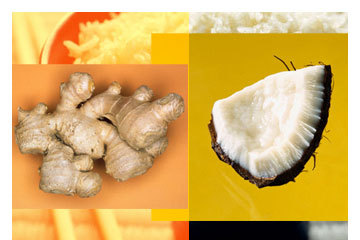
I've traveled extensively throughout Asia, especially Southeast Asia, and actually a lot of the common ingredients of the region are fundamentally American favorites: nutmeg, cinnamon, which is in fact cassia, and ginger, for example. And though certainly not deep and old in the American taste vernacular, there's also lemongrass, lime leaves and coconut milk, which are just immensely approachable tastes. I couldn't break that down into hard science, but I've felt it and I've seen it in other people, too. It's almost as though they have been etched into our genetic knowledge of flavor, our genetic palate -- as if subliminally we can immediately identify with the tastes of Malaysia in ways that we can't with those of Thailand, say, or Vietnam or even Japan or Korea.

Next page: There is a seismic shift happening in the way Americans see food

Pages 1 2