

Three months before the election, and the polls don’t yet show either Barack Obama or John McCain with a lead that exceeds the bounds of statistical noise. The fundamentals still favor a Democratic victory, but the outcome of presidential contests depends as much on candidate as on party. Hence the mounting message war between the two campaigns, as each candidate tries to sell the public two images, one of himself and one of his opponent. McCain tries to define himself as a battle-tested maverick and Obama as a battle-tested pop star, and Obama frames McCain as another helping of Bush and himself as an effective agent of change.
Given the size of this year’s political war chest, and the determination of the Obama campaign to carry the fight far beyond the old familiar swing states, this summer and fall many more Americans can expect to see political ads, with their competing narratives about the candidates, than saw ads in the elections of 2000 and 2004. For a take on who is winning the message war, Salon asked Kathleen Hall Jamieson, professor of communication at the Annenberg School for Communication at the University of Pennsylvania, to watch and grade three ads from the Obama campaign and three ads from the McCain campaign. Jamieson is the author or coauthor of 16 books on political media and advertising; her most recent is “Echo Chamber: Rush Limbaugh and the Conservative Media Establishment.” Salon spoke to her by phone.
Do you have a sense of which candidate or which side might be doing better so far in terms of better production or better appeals in their ads?
Until recently, the Obama campaign had ads that were more carefully crafted and more strategic. The McCain campaign has now closed that advantage in its recent advertising — probably within the last three to four weeks.
When you say the McCain campaign has closed the gap, how so? What indicates that it’s closed the gap?
One test of effective advertising is whether it piggybacks well on news content, to the extent that an ad can move very quickly into news commentary with material relevant to the news agenda. The McCain campaign has had trouble doing that until very recently. They just simply hadn’t been moving quickly enough off the block and engaging the news agenda to their advantage. They started doing that within the past [three] weeks, much, much more effectively.
With his ads, it seems as if McCain is trying to define Obama in McCain’s own terms. Do you think he’s succeeding?
Each campaign has tried to define the other. So the notion that one campaign is strategically moving to define the other but there isn’t response in kind from the other side is mistaken. The McCain campaign has tried to define Senator Obama. The Obama campaign has tried to define Senator McCain.
Many pundits have said some variation of the following: If the election is about John McCain, McCain loses. If McCain can make the election about Barack Obama, McCain wins.
I don’t agree with that. It depends on what about Senator McCain is the focus of the issue. If the focus is on Senator McCain and the issue is terrorism or the issue is anything that ties back to military and is focused on the “surge,” Senator McCain is advantaged. If the issue is how did we get into this war, then Senator Obama is advantaged. I think it may be a little too simplistic to say that if the focus is on Senator McCain, the issue agenda necessarily benefits Senator Obama and that the reverse is true. [T]he polls would suggest, at least on offshore drilling, an advantage to Senator McCain at the moment.
Why don’t we talk about specific ads now? What about the McCain Web ad “The One,” in which the McCain campaign mocks Obama by comparing him to Moses?
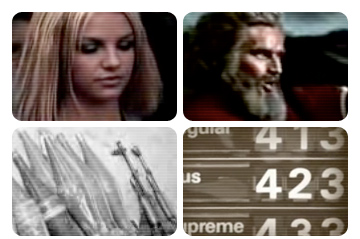
The first advantage that this ad has is that it’s using Senator Obama’s [own] statements in actual video clips. It heightens credibility. The second advantage to that ad is that its use of humor is effective. Charlton Heston as Moses is unexpected the first time you see the ad, and the juxtaposition with the theme of the Obama quotes on each side is effective. And so unlike the “Celeb” ad [featuring Britney Spears and Paris Hilton], in which the test of plausibility is immediate, in that you can begin to ask, what are these two women doing in this ad; you’re far less likely to ask that in “The One.”
Across those ads you’re seeing the same basic theme: Is Obama ready to lead? The Republicans have found their theme and the question becomes, is it a theme that is ultimately disadvantageous, [if] in the debates Senator Obama establishes that he is able to hold his own with Senator McCain. Debates provide a test of that. We’ve seen it historically across campaigns. John Kennedy was advantaged in 1960; that was the question being asked by Richard Nixon at the time. In the first debate, Kennedy established that he was as competent, not more competent, but as competent as Richard Nixon, and he was advantaged. John Kerry was advantaged in the same way in the 2004 election because after the scare tactics that were employed by the Republicans against him had potentially gained traction, the debate gave him a chance to step beyond the caricatures. So the danger in the Republican strategy is that it sets up an argument that can be rebutted by performance of the opposing candidate in a debate. Nonetheless, the ad called “The One” is an effective ad because its use of humor works, because its use of quotations by Senator Obama works. As a result it passes the plausibility test.
What about in terms of the history of political advertising — is this ad anything new, this sort of tone and focus?
I don’t know of a political campaign that has made this appeal in this way. But certainly the windsurfing ad used to attack Senator Kerry in 2004 is making the same underlying claim — the notion that the person is elitist and out of touch. One of the things that is interesting about this ad, by the way, is that it potentially draws forward a lot of arguments that were used against Senator Obama earlier in the primaries. It’s really unusual in politics for an appeal to emerge and gain traction in the short term very quickly. More generally what you see is that an argument gains some traction across time and you build on that.
The so-called bitter comment that was used against Senator Obama by Senator Clinton in the primary is premised on the notion that he is out of touch, that he is elitist. He doesn’t share the values of ordinary people. The notion that percolated in the primaries is being built upon in this ad without making any explicit reference to that earlier exchange. The most effective moments in politics are moments that build on an intuition that the electorate already has some reason to have.
Ad: “The One”
Effectiveness: A-
What about the “Celeb” ad, which features Britney Spears and Paris Hilton?
When you call it the “Celeb” ad you feature the fact that Britney Spears is in it. Paris Hilton is in it. You don’t feature the “Is he ready to lead?” tag at the end of the ad. You don’t feature the recasting of the audience in Germany. The amount of content in the ad that focused on [his being] ready to lead, much more of the ad focuses there.
Across the history of presidential politics, who is the real person underlying the candidacy is a stock question used in attack. When you call it the “Celeb” ad, you actually assert that he is a celebrity. When you ask who is the real Obama, you’re asking a different question. You’re suggesting that rather than being the empty suit, the person with the eloquent words that don’t translate, there may actually be a substantive Obama who has different policy positions than those you might want to grant him. The ad almost seems to be at war with itself as a result, because if the Britney Spears, Paris Hilton reference means anything, it means empty, it means superfluous, it means celebrity for the sake of celebrity, and that’s consistent with the line of attack the McCain campaign uses against the Obama campaign. “They’re eloquent words, but …” “He gives a great speech, but …” The ad, however, doesn’t stay with that position. At the end of the ad, what it’s trying to do is ask, Who is he really? In fact it’s suggesting the traditional Republican attack on Democrats — he’s going to raise your taxes, he has policy positions you wouldn’t support if you really understood them.
The other thing that interests me about this ad is that it is visually and verbally recasting the speech in Germany. And that is important because there is a view that is offered by the Obama campaign, largely reinforced in news and in the talking-heads commentary on cable, in which that speech is a symbol of Europeans expressing support for America’s role in the world and the form of leadership that Senator Obama would bring. If that is your view of the speech in Germany, then it’s a very positive signal.
If, however, that visual of the 200,000 people is transformed into not an affirmation of an important U.S. role in the world and a European willingness to embrace that role, and a willingness to embrace Senator Obama, but rather a crowd chanting his name and an audience transformed into a crowd [that] just looks like a large mass, [the image has] been stripped of some of its power and now there’s a vaguely menacing sense about the chant and about this undifferentiated mass audience.
That’s the argument this ad is making. That is a very different visual and verbal image than the one that was conveyed by the speech itself or the interpretation of it offered in news. And that part of this ad is very effective and largely unremarked on.
Ad: “Celeb”
Effectiveness: C-
With the “Love” ad, the McCain campaign sort of switched gears. What did you think of that one?
They open this ad with the 1968 pictures, and they’re using a reference point that much of the electorate has no experience with whatsoever. So the danger is it sets McCain into the distant past. What the ad is attempting to do is ally the Obama campaign with those images and those are not so much the positive images of Woodstock as images of Woodstock that make Woodstock and that era look more frivolous. Part of what happened in 1968 is you had another young generation protesting a war and that’s not what’s being recalled here. [McCain wants to] ally him with the Reagan tradition and [with] hope in a way that suggests that the message of hope is not one he’s going to cede to Senator Obama. That he’s not the candidate of the past, he’s the candidate of the future. The problem with the ad is it’s not forecasting pictures into the future in a way that lets you see that future. So the ad seems to be largely about the past, not largely about the future. But these are very effective, evocative images of the McCain past, making the argument that he’s a different kind of Republican. And associating him with Ronald Reagan, hence disassociating him with the image that’s being offered by the Obama campaign of Senator McCain as President Bush.
What about the message of him putting country before everything else? Does that come through effectively?
To the extent that you anchor that claim in his military heroism, it makes sense. If you then tie that into his claim in the ad or the announcer’s claim in the ad that he is a maverick, that he is a reformer, what you are essentially suggesting is that all of those things are in service of country, not partisanship. And as a result, he would be a president who would transcend partisanship. And act in the best interest of country. If that set of interests works for the audience, then that is a very effective set of moves. And that’s what the ad is trying to accomplish.
Ad: “Love”
Effectiveness: B+
How about an Obama ad? What did you think of the “National Priority” ad, which compares Obama’s energy policies with McCain’s?
The Obama ads are offering a high level of detail, a high level of policy details, high levels of issue specificity. And they are doing it for a number of reasons, but one of them is important in the context of a claim made by the McCain campaign. When the McCain campaign reprises the argument made by Senator Clinton that Senator Obama essentially is offering the rhetoric of hope and a rhetoric of change, but doesn’t have a history of delivering change, it is making a claim about inexperience and about a lack of legislative record. One way the Obama ads counter that is to offer high levels of details about the specific legislative past that Senator Obama has had to offer — the work with Senator Lugar in taking control of loose nukes.
The Obama ads come back with very specific policy claims — he will do this, he will do this, he proposes this. That move is a rebuttal. It [rebuts] the charge that the rhetoric is highly abstract and self-centered and narcissistic and instead says, Note what I, Senator Obama, am trying to do, with very specific policy details, very specific legislative proposals with tiny print on the screen citing details. The one overarching point that I take from the ads by the Obama campaign is that they are working aggressively to refute the charge that their rhetoric is empty.
Is this ad effective?
The most important thing an ad can do on an issue is to differentiate a candidate from the opposing candidate. Contrast ads are more effective than attack ads, because they both attack and make a case for the candidate. This ad is a contrast ad. It suggests that Senator McCain is part of the problem and Senator Obama is part of the solution.
That’s a classic challenger ad. You’re basically positioning Senator McCain in this ad as the incumbent and Senator Obama as the challenger. Now for practical purposes, neither one of these candidates is the incumbent. They are both, to some extent, challengers. But by indicting McCain for his long time in Washington, they tie the age issue to McCain, they make experience a negative and then, with the specifics identified against McCain, suggest what he has done with that time has not been advantageous. The beginning of that ad is very effective if the audience finds it plausible. The topic of the ad is important because this is the issue the American public is focused on at the moment. And by virtue of focusing on it, the candidate says, I care about this issue.
The difficulty for Senator Obama is on the issue of offshore drilling. He is on the wrong side of the polls. Depending on how people interpret his [recent] statements, he may be leaning closer to being on the same side as the polls. Senator Obama was in the difficult position on offshore drilling of either having to take on public opinion and tell the public that it was wrong in its inference that this was the best strategy, or shift his position so the public could hold its position and believe that Senator Obama’s position was consistent with it. I think he’s moved to that second posture.
The way people interpret ads is not in isolation. People interpret ads in the context of their lives, so what are they experiencing at the gas pump, and once we get into winter, what are they experiencing with home heating prices? And then what are they hearing in the news? And Senator Obama very effectively moved to take the windfall profits that were focal to [recent] news and translate them into a proposal for an energy rebate, which you’re seeing in a lot of his ads. As a result, they’re more tightly tied to news, and it’s the more effective ad because you’re able to say, Yes, windfall profits, yes that’s just outrageous, I heard about that in the news. I’m outraged and I’m standing at the gas pump as I’m experiencing this crisis, and what is Senator Obama doing but taxing those windfall profits, translating it into an energy rebate. He basically moved from a disadvantaged position on offshore drilling to reframe the debate on what to do with those windfall profits in that move.
Ad: “National Priority”
Effectiveness: B
What about Obama’s “Low Road Express” ad, which accuses McCain of misrepresenting his positions and fact-checks McCain’s statements?
This ad makes a character attack on Senator McCain. When you see fact-checking aggregated this way, and it is a common move, that is essentially a character attack. [When] you have a lot of the fact-checking outlets drawing the same kind of conclusions, you can expect an ad instantaneously using them. It says when you hear Senator McCain make statements in this topic area, don’t believe him. Reputable news outlets have said that [what he says] is false, is misleading. It’s not clear what exactly is false or misleading, but the inference you’re supposed to draw is you can’t trust Senator McCain.
Attacks on consistency or attacks on factual accuracy are very effectively deployed in ads when they have the backing of reputable news organizations. That’s what this ad is attempting to do. And then laying in place the specific alternatives that are the Obama campaign’s legislative agenda in this area. Effective ad.
What about Obama’s approach generally of seeming to take the high road in response to negative campaigning? Does that work?
When you’re attacking the opponent and attacking his positions and attacking his character by attacking the truthfulness of his advertising claims, they’re global attacks. You might ask the question, Are you not engaging in attack as well? And since there isn’t a specific statement of what these fact-checks found problematic about Senator McCain’s ads, haven’t you just engaged in low-road express advertising as well? If there is anything illegitimate about your attack, you raise the question of whether you’re engaging in the exact same tactics.
That being said, there’s always an advantage for a campaign when the major outlets that engage in fact-checking find something problematic about the attacks on the other side, as they did with a series of claims in McCain ads. And if you’re watching the news and you heard that there were fact-checking outlets that said some of the claims in the McCain ads were false, and you now see this in the Obama campaign’s advertising, you remember that you heard it on the news, you see it reinforced in ads, and the credibility of the claim as a result is enhanced. The Obama campaign is advantaged.
The question for the audience [about whether to believe a fact-check ad] always becomes, based on what else I know and what else I believe. Because audiences are most likely to selectively perceive what reinforces their existing beliefs. So they would selectively perceive the evidence to support their own side. The person who is the McCain supporter will look at that and look at it very, very critically. The person who is the Obama supporter will look at it and accept it at face value. And the reverse will happen when you see the ads for the other side.
If one wanted to really do an analysis with what voters do with advertising, one would simply make one statement: What voters do with advertising is ordinarily reinforce what they already believe. They selectively distort what they’re not disposed to believe and remember the most evocative visuals and what’s humorous.
Ad: “Low Road Express”
Effectiveness: B+
And finally, what about Obama’s bipartisan “America’s Leadership” ad, the one about loose nukes?
This is another very important ad for the Obama campaign. And the reason it is important is that the Republicans are arguing the empty rhetoric charge. The Republicans are predicating their claims about Senator Obama on the fact that he did not have a long or deep legislative record. Many of the Obama ads are drawing on work that he did in Illinois and did not do in Washington, D.C. The work with Senator Lugar is an accomplishment in D.C. It is an accomplishment that identifies a specific problem that can be tied back to the terrorist threat, hence to national security. The Obama campaign would like you to draw the inference from this instance that there are many other instances in which he has done the same.
What ads always hope you will do is overgeneralize their statements about the accomplishments of the candidate. Hence, the assumption that if he did this, he must be a person who reaches across the aisle, is the assumption that is being invited by the ad. To the extent that a voter grants that assumption, it’s a more powerful ad.
One of the things that’s notable in the Obama ads, is the extent to which he’s seen speaking. By contrast, you rarely see Senator McCain speaking in the McCain ads. To the extent that you are susceptible to the charge that what Senator Obama offers is just simply rhetoric and not a legislative path and ask for evidence and turn to the Obama ads, in the ads where Senator Obama is speaking, what you see is the eloquent speaker tied to the specifics.
Ad: “America’s Leadership”
Effectiveness: A-
