Berlin Film Festival

Polanski best director at Berlin film festival

Producer Alain Sarde accepts prize for "The Ghost Writer" on Polanski's behalf

  • more
    • All Share Services

The Turkish film “Bal,” or “Honey,” won the top Golden Bear award Saturday at the 60th annual Berlin film festival, whose jury also crowned Roman Polanski best director.

Polanski, whose film “The Ghost Writer,” debuted at the festival, was unable to attend the ceremony, as he remains under house arrest in his Swiss chalet in Gstaad.

Producer Alain Sarde, who accepted the prize on Polanski’s behalf, said the director told him he would not have attended the festival even if he had been free, “because the last time I traveled to accept an award I landed in jail.”

Polanski was arrested when he arrived in Zurich on Sept. 26 to receive a lifetime achievement award from a film festival. The Swiss must decide whether to extradite him to the U.S. to face possible further sentencing in a 32-year-old sex case.

A joint Silver Bear for best actor was awarded to the stars of the Russian film, “How I Ended the Summer.” Grigory Dobrygin and Sergy Puskpalis played opposite one another as an older and younger researcher who clash at a polar station on an island in the Arctic Circle.

Shinobu Terajima won the best actress for starring as a wife forced to tolerate the tyranny of her husband who returns disabled from the second Chinese-Japanese war in the Japanese film “Caterpillar.”

A Romanian film, “If I Want to Whistle, I Whistle” by Florin Serban of Romania was awarded the Silver Bear runner-up prize. It depicts the tough story of a youth who panics that his mother will flee the country with his younger brother while he is in a juvenile reform center.

The winning film, “Honey,” tells the story of a 6-year-old boy who stops speaking when his father disappears. It was filmed in the lush mountains of the Turkish countryside where the boy goes in search of his father, a beekeeper.

Director Semih Kaplanoglu said the award was “like a rebirth” and he hoped that it would be an inspiration to young filmmakers in Turkey.

“The Ghost Writer,” based on a novel by Robert Harris, stars Pierce Brosnan as a former British prime minister, Olivia Williams as his wife and Ewan McGregor as a ghost writer hired to complete his memoirs on a rain-swept island off the U.S. east coast.

The movie, Polanski’s first since “Oliver Twist” in 2005, was nearly complete at the time of his arrest.

Berlin Film Festival: Controversy, art, violence

The brutal noir of Michael Winterbottom's "The Killer Inside Me," and other highlights from the 2010 Berlinale

  • more
    • All Share Services

Berlin Film Festival: Controversy, art, violenceKate Hudson and Casey Affleck in "The Killer Inside Me"

I’ve been brought to Berlin to participate in the Berlinale Talent Campus, a program that brings in young filmmakers, screenwriters, composers, editors and even film critics from around the world for a week of workshops and, of course, moviegoing. During this past week, one subject that’s come up repeatedly with my colleagues and with the young professionals who have gathered here is the importance of having a life outside the movies. And still, the other day when I looked at my schedule and realized if I skipped a movie or two I’d actually have time to go to a museum, I hesitated. In two days’ time, the whole event would be over, and I’d feel the usual post-festival remorse about all the movies I hadn’t seen. Shouldn’t I really be checking out that Iceland-Hong Kong-Turkey co-production about the peasant boy who travels to the city and becomes a huge pop star, only to realize how desperately he misses his mother’s goat-eyeball stew back home?

In the end I said no to that (nonexistent, by the way) movie and instead got myself out to the recently opened Neues Museum, on Berlin’s “Museum Island” (or Museumsinsel), a large cluster of grand museums and galleries instituted in the mid-19th century to honor the arts and sciences. The Neues Museum is not exactly neue: Originally a magnificent neoclassical structure (it was built in the 1850s), it was heavily damaged by Allied bombs and lay in semi-ruins for decades. Attempts to reconstruct it over the years, including one by the East German government in the years before the Wall came down, crumbled away to nothing. But under the guidance of English architect David Chipperfield the building, reconstructed and reimagined after 11 years of planning and building, was reopened last October.

The project was somewhat controversial in Berlin: One contingent wanted the building to be restored to its former glory, as if bombs had never touched it. But Chipperfields’ design is far more in tune with Berlin’s anxious conscience, its sense of duty in remembering its not-so-distant past without whitewashing its uglier and more painful aspects. The result is a glorious building in which the new gives way to the old, and vice-versa. In a New York Times piece last year, Michael Kimmelman described it as “a modern building that inhabits the ghost of an old one.” The “new” building houses, as the old one did for so many years, a selection of antiquities including some extremely fine Roman statuary, cases full of forged-metal Viking diddly-doos and Egyptian relics that look so crisp and pristine they might have been carved yesterday.

What does an afternoon spent at the Neues Museum have to do with movies? I’ll get to that. In the meantime I could spend a lot of time telling you about the flawed but interesting Bosnian film “Na Putu” (“On the Path”), in which a young Muslim woman realizes she’s losing her boyfriend to religious extremism. (I’ve heard some people here decry the film for its failure to depict Islam in a fair light, though I think what the director, Jasmila Zbanic — who won Berlin’s Golden Bear in 2006 for “Grbavica” — has really made, whether she realizes it or not, is more a horror film than a treatise on the nuances of religious beliefs: It’s “Invasion of the Bodysnatchers” with burqas.) Or I could outline the numerous flaws of Rafi Pitts’ parched, minimalist exercise “Shekarchi” (“The Hunter”), a fictional drama about an Iranian man who resorts to violence after his wife and daughter are caught in a crossfire between police and protestors in the run-up to the 2009 election in Iran.

Instead, I’d rather focus on a picture that a greater number of people will actually have a chance at seeing, one that premiered at Sundance and has been picked up for distribution by IFC. Michael Winterbottom’s “The Killer Inside Me” is an adaptation of Jim Thompson’s grim 1952 noir classic, and so when I heard that it had provoked some outrage in Utah — specifically over two scenes in which characters played by Jessica Alba and Kate Hudson are brutally beaten by Casey Affleck’s psychotic Texas sheriff — I knew I had to wait and see for myself before I could parse the controversy. I’m not sure it would be admirable to mount a Thompson adaptation in which the violence is kept tasteful; sometimes brutality is simply what’s needed.

“The Killer Inside Me” is, at least to a certain point, extremely well-crafted. Shot by Marcel Zyskind (who has worked frequently with Winterbottom), it has a deceptively bright, decidedly un-noirish look: Its colorful vibrancy only adds to the aura of dread Winterbottom builds here. The performances are solid: Affleck, an actor I’ve never much cared for, uses that watery-decaf voice of his to great effect — he’s coolly, breezily unnerving. And Alba is both gloriously sensual and deeply touching, a distinctly human presence in a world gone wrong: Winterbottom seems to recognize that, and it’s safe to allow that his intention is to make us feel the full weight of the horrors that befall her.

Intentions are grand things to have. But my assessment of Winterbottom’s choices here — which I’ve had to make, under deadline pressure, just a few hours after watching Alba’s face being beaten into what one character describes as “stewed meat, hamburger” — is that he’s gone too far. Those of you who find bliss in remaining ignorant of every plot detail until you’ve seen a movie should stop reading here, although those of you who are particularly sensitive to movie violence might want to know what you’re in for if you venture into the unsettling, wormy tunnel that is “The Killer Inside Me.”

When I say that Winterbottom shows Affleck’s Sheriff Lou Ford beating Alba’s Joyce Lakeland in the face repeatedly, with closed fists, I don’t mean that he shows one blow and then cuts away, filling in the blanks with sound effects. And when I say that he shows her face, before, during and after the beating, I’m not indicating a few quick shots to give us an idea of the pain she’s suffering. The nutso sheriff throws perhaps some 20 punches; we see about six or seven of them land. (I’d have to see the movie again to give you an actual count, and that’s not something I’m looking forward to.) We see Joyce’s face, in lingering shots, at various stages of the beating. By the end, her head is lolling on her shoulders, and her face — which Winterbottom again shows us in shots lasting more than just a few seconds — is nearly unrecognizable. The point here isn’t that Winterbottom is courting sicko moviegoers who might get their jollies from a sequence like this (and a later one in which Kate Hudson gets a less horrific, but no less disturbing, beating). I’m not out to make the “People will get off on this! Sound the alarm!” clarion call. The movies don’t exist to police the behavior of the masses, and they can’t be tailored to the tastes of those who might potentially misread them.

But Winterbottom — a director whose work I greatly like and respect — has made a calculated misstep here. The camera has no conscience: You can point it at anything, and it doesn’t know by itself when to stop looking. Someone needs to tell it when to look away. A filmmaker has to find that point, even if he’s depicting unconscionable violence and cruelty, where “enough” jumps over the line to “too much.” Winterbottom sails past that point without giving us enough in return. There’s something irresponsible, almost arrogant, in the way he puts his craft above his character’s suffering.

But the scene with Alba isn’t the one that really tips Winterbottom’s hand. I’ve mentioned that later in the movie, Casey’s Ford also beats Hudson’s character. Yet, strangely but somewhat tellingly, her fate is barely mentioned by any of the characters, nor is it alluded to, even in some subtle way, by the filmmaking. After Hudson’s character serves her purpose, she’s dropped — the subtext is that she’s not as integral to the plot, or to the movie’s upcoming climax, as Alba’s character is, so what’s the point? The last time we see her, she’s lying unconscious on a kitchen floor in a puddle of her own urine. I’m still wondering what happened to her after that. Why does Winterbottom think it’s not important to tell us?

“The Killer Inside Me” isn’t a piece of junk; Winterbottom is a director who cares deeply about the quality of what he puts in front of us. But that doesn’t mean he’s above lapses in judgment. As well-made as “The Killer Inside Me” may be, it neither honors nor builds on the noir tradition. Its wayward violence, and not its twisted, melancholy soul, is what it’s likely to be remembered for. To conjure an image from “The Big Heat”: Winterbottom is so hung up on the scalding-hot coffee, he’s lost sight of Gloria Grahame.

——-

This is my last day in Berlin, and as I write this, propped up before me is a postcard of one of the most beautiful works of art in the word. The bust of Queen Nefertiti — supposedly made around 1340 BC by a royal Egyptian sculptor known as Thutmose — is a delicately colored little figure whose effect is almost mystical, and it’s one of the treasures of the Neues Museum. Nefertiti has her own little room there, and in the time I spent with her, I shared space with a considerable crowd that had gathered around her protective glass case. The queen’s gaze — not imperious, though certainly assertive — had pretty much intoxicated us all. I hated to leave her, but eventually, I had to. And though I thought she might reemerge later in my dreams, I saw her even sooner than that: Her image popped up in the very next movie I saw, “Rompecabezas” (“Puzzle”), a sweet but extremely dopey film by Argentine director Natalia Smirnoff about a married housewife and mother who, just as she turns 50, discovers her love of jigsaw puzzles. The movie is about as exciting as I’ve made it sound, but what astonished me is that the first puzzle the heroine assembles is an image of Nefertiti adapted from the very same work of art — or witchcraft — that I’d been looking at not two hours earlier. Nefertiti had followed me into the movie theater, not just from the outside world, but from more than 3,000 years in the past.

There has been some recent debate about Nefertiti’s true age: A Swiss art historian has charged that she may have been made many years later — specifically, in the early part of the 20th century. But even if that’s true, then Nefertiti — a figure of unquestionable star quality, regardless — is still only slightly younger than the movies themselves are, and I’m glad I saw her in person. Unlike most celebrity sightings, she didn’t disappoint. And she reminded me that you sometimes need to step outside of movies in order to find your way into them.

Continue Reading Close

Stephanie Zacharek is a senior writer for Salon Arts & Entertainment.

Movie News Now: Berlin, Apatow, Spidey and more

This year's Berlinale a bust? Scorsese and von Trier say "nein"; Cameron to help Spidey's 3-D reboot?

  • more
    • All Share Services

Movie News Now: Berlin, Apatow, Spidey and more

Reviewers at indieWIRE are so unenthusiastic about the Berlin International Film Festival that they’re deeming it a “two-star” festival. According to Shane Danielson, “There were some good films, though not a lot. But then, there weren’t many outright stinkers, either. The market hummed along without seeming to achieve much, either in terms of major sales or — to use that all-purpose industry index — ‘buzz’.”

Variety reports that Judd Apatow and Paul Feig, the duo responsible for the much-celebrated “Freaks and Geeks,” are set to produce a new film starring Kristen Wiig of “Saturday Night Live,” who also co-wrote the screenplay. Apatow will handle producing duties, while Feig will direct the movie rumored to be about “women competing to plan a friend’s wedding party.”

In other movie-collaboration news, it turns out Scorsese and von Trier are not discussing plans to make an updated version of “Taxi Driver.” The gossip gaining strength throughout the hype-incubator known as the Internet is “unequivocally false,” said Scorsese’s publicist, Leslee Dart.

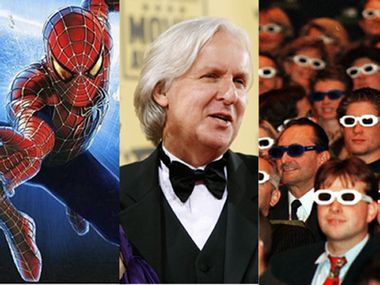
Although technically not a collaboration, Marc Webb, the man in charge of rebooting the “Spider-Man” franchise in 3D, is looking for guidance from the Na’vi progenitor, James Cameron. And from the sounds of it, Cameron’s glad to be involved with the cherished web-slinger as opposed to those lesser-known superheroes: “I feel there are too many superhero movies right now, I think Hollywood’s in a bit of a rut. They’ve done the good ones and they’re starting to get down to the second and third tier of superheroes — the guys that would not be asked to speak at the annual superhero dinner.”

Comic-book characters aren’t the only commodities bloating the movie industry. Too much of a good thing, it turns out, also applies to 3D movies. Unfortunately, there aren’t enough Imax screens for all of the new 3D films coming out, and the boost is turning into a bottleneck. Theaters aren’t willing to give up the “Avatar” juggernaut to allow screen time for Disney’s “Alice in Wonderland.” In other bad news for Tim Burton and Johnny Depp’s latest neo-Goth collaboration, cinemas in Britain are threatening to boycott the film altogether because Disney is planning to release “Alice in Wonderland” on DVD earlier than usual, thus cutting into the theaters’ potential profits.

With Quentin Tarantino’s “Inglourious Basterds” garnering both financial and critical success, as well as piling up Oscar nominations, the Guardian argues that the auteur will have unprecedented liberty with his next project. Or is the opposite true? In a healthy dose of movie dialectic, Cinematical counters that Tarantino has backed himself into a corner through overuse of homage. In the Los Angeles Times, Tarantino states: “Here’s my problem with this whole influence thing: Instead of critics reviewing my movies, now what they’re really doing is trying to match wits with me. Every time they review my movies it’s like they want to play chess with the mastermind and show off every reference they can find, even when half of it is all of their own making.”

Another film-adaptation of Mary Shelley’s “Frankenstein” is in the making, except this version will be based on the writings of Dean R. Koontz and set in New Orleans.

Scared? If not, check out a list of the 25 Most Disturbing Movies: Part I.

If you’re not a fan of frightening yourself, and you’d rather laugh instead, witness Wisconsin denizens pretend to be Na’vi in a sparse woodland area. It’s called LARPing — Live Avatar Role Playing — and it’s fun to watch.

Continue Reading Close

Paul Hiebert is an editorial fellow at Salon.

Berlin Film Festival report: Noah Baumbach returns!

The director rallies back from a slump with the affecting "Greenberg," one of the 2010 Berlinale surprises

  • more
    • All Share Services

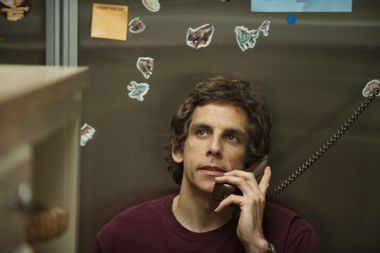
Berlin Film Festival report: Noah Baumbach returns!Ben Stiller in "Greenberg"

Berlin is a city that’s deeply and painfully in touch with its past: I’m here for the 60th annual Berlinale, and across the street from my hotel is a block’s worth of scrubby gray brush known as the Topography of Terror. This is the site of the former Gestapo and SS Headquarters, both largely destroyed by Allied bombs. (The buildings’ ruins were destroyed after the war.) A bricks-and-mortar museum on the site has been in the planning stages for years but keeps stalling out: This is a city that treats the horrific aspects of its history with grave seriousness and a great deal of deliberation. The spot is currently the site of an outdoor museum consisting of placards outlining the grim history of the area, but the chill that hangs over the place needs no narration. I’ve never seen this landscape in the summer, when I assume these now-desolate, snow-iced trees actually have leaves on them, but I can’t imagine that warmth and sunshine would make it any cheerier.

But Berlin is hardly a cheerless place. Coming in from the aiport, I noticed a Hooters not far from the Victory Column, in the section of the city known as Tiergarten. The Victory Column is, as you may recall, the spot in Wim Wenders’ “Wings of Desire” (filmed, before the fall of the Berlin Wall, in a Berlin that’s far more somber-looking than today’s) where angels congregate as they look over, and after, the city. I can’t say the Hooters typeface exactly enhances the landscape. But I do think a city that has has put so much conscientious and cautious effort into remembrance, restoration and atonement deserves to have some fun, too. I could never begrudge Berlin its Hooters.

There’s much more to Berlin nightlife than Hooter’s, anyway — not that I’d know. I’m here to see movies, and because a snowstorm in New York last week delayed my departure by several days, I missed several of the festival’s marquee features, most notably Martin Scorsese’s “Shutter Island” and Roman Polanski’s “The Ghost Writer.” (My colleague, Andrew O’Hehir, will be covering them later in the week.) I also missed Mat Whitecross’s “Sex&Drugs&Rock&Roll,” a biopic of the strange and wonderful Ian Dury (of Ian Dury and the Blockheads) starring Andy Serkis — it is, I hope, something to look forward to at another time.

After getting such a late start — I’m here as a guest of the Berlinale, attending in conjunction with the festival’s Talent Campus program — the only thing to do was to hit the ground running and attempt to see a reasonable portion of the 20 films in competition. I checked out “The Robber” (based on a Martin Prinz novel, which is in turn based on a true story), a German drama directed by Benjamin Heisenberg about an ex-con who, after some heavy in-prison training, becomes a marathon champ upon his release, but who also can’t stop robbing banks. The picture is well-crafted and well-acted (with a nicely wrought lead performance by Andreas Lust, who appeared in the arthouse hit “Revanche”); the drag is that it takes its “I run, therefore I am” meta-theme far too seriously. But immediately following “The Robber,” a very strange thing happened: Norwegians cheered me up. Hans Petter Moland’s “A Somewhat Gentle Man,” from Norway, stars Stellan Skarsgôrd as (yet another) recently released con who also faces plenty of frustration adjusting to the real world, including having to deal with a grumpy landlady who first plies him with tasty home-made dinner and then begins demanding sexual favors. This marks the first time I’ve ever seen nylon knee-highs, worn with terry houseslippers, as a seduction tool. And I hope it’s the last. But the picture is lively and congenial, and Skarsgôrd gives an easygoing, pleasingly subtle performance. This one also happens to stand a good chance of appearing sometime in an arthouse cinema near you, or barring that, showing up on Netflix.

But the one picture I’ve seen thus far that has truly surprised me is Noah Baumbach’s “Greenberg.” I’ve found Baumbach’s more recent films frustrating. “Margot at the Wedding,” in particular, made me wonder if we’d lost Baumbach for good — I found it hard to care about a group of characters so rapturously in love with their own quirks; they, and Baumbach, were more fascinated by their own problems than I was.

“Greenberg” features more characters with problems: There’s Ben Stiller’s fortyish Roger, the Greenberg of the title, who’s just been released from a mental hospital in New York and who now finds himself housesitting at his brother’s tony digs in L.A. While he hangs out there, acting strangely and often irresponsibly, spending his numerous spare moments writing kvetching letters to Starbucks, the New York Times, and American Airlines, Roger meets his brother’s assistant, Florence (played by mumblecore veteran Greta Gerwig). Florence, insecure but strangely forthright, takes a liking to Roger, even though he does everything in his power to rebuff her, often treating her cruelly, or at least thoughtlessly.

I know this sounds like one of those “damaged people fumbling toward love” movies and, well, it is. (The script is by Baumbach, from a story he co-wrote with Jennifer Jason Leigh.) And for much of the movie I couldn’t tell if these characters were driving me nuts or affecting me deeply. But in the end, “Greenberg” got me. For the first time in a long time, Stiller actually gives a performance instead of simply clamoring for attention. His Roger is skeletal, enervated; his eyes, hollowed out and pleading, look both dangerously intelligent and desperate. But Gerwig is the marvelous surprise here. Her Florence is one of those seemingly lost girls who wanders through the world looking gangly and awkward and who is yet, strangely, wholly at home within herself (even though she herself doesn’t know it). Her spaciness is the down-to-earth kind. “Greenberg” is self-conscious and knowing, and, as we’d expect from Baumbach, sharp-witted. But its self-involvement is capacious enough to include us. “Greenberg” has a soul, a heart, and most importantly a sense of humor — not just about the world, but about itself.

Continue Reading Close

Stephanie Zacharek is a senior writer for Salon Arts & Entertainment.

French lovers and Iraq vets

The Berlin International Film Festival offers a break from Starbucks-style cinema, and even Ren

  • more
    • All Share Services

French lovers and Iraq vets

Berlin is a city of many enchantments — for example, the little supermarket around the corner from my hotel, which is hardly super and barely a market. I’m sure there are lovely, softly lit, well-stocked supermarkets in Berlin, with canned music ringing through the aisles and cheerful clerks in logo-embroidered polo shirts. But this place — a ways down the street from the Potsdamer Platz, which is where most of the movies in the Berlin Film Festival are shown — has to be among the ugliest, dimmest, most somber and depressing shopping establishments I’ve ever set foot in, and I love it anyway. Its proper name is Aldi Markt, and I affectionately call it the GDR Mart, not because it’s literally a GDR remnant (it’s actually part of a large German chain), but because its no-frills decor and service make it seem like a relic of an earlier time. The place is clean but not cheerful; if you don’t bring your own bag, the cashier will glare at you. This year the city is celebrating the 20th anniversary of the dismantling of the Berlin Wall, and now, on both sides of that gone-but-not-quite-forgotten division, you can find all sorts of sparkling American fast-food and coffee chains, as well as their German or European equivalents. But there are no cheerful logos outside the GDR Mart, and you’d better bring your own bag, or else. Then again, some habits are worth preserving — or resurrecting.

One of the great things about film festivals is that they offer a chance to get away from Starbucks-style movies — that is, products that have been tested, packaged and marketed to make you believe that everyone in the world naturally ought to like the same things, and if you don’t, you’re out of step (which is pretty much how I feel about Starbucks coffee, the taste of which I loathe). Into the non-Starbucks category I’d put “Katalin Varga,” a Romanian/U.K./Hungarian coproduction directed by a British expat, Peter Strickland. In “Katalin Varga,” a young woman who we suspect has a troubled past (she’s played by a restrained, intense actress named Hilda Peter, who looks a little like a dark-haired Anne Heche) takes her 10-ish son and leaves her home on a horse-drawn cart, rumbling through the scrubby, rock-strewn terrain of the countryside. The peasant alarm went off in my head when I saw that cart. As I said afterward to my esteemed colleague Derek Malcolm, of the London Evening Standard, I usually have a low tolerance for simple stories about peasants. “I have a low tolerance for complicated stories about the middle class,” he said. But we both liked “Katalin Varga,” which may start out as a simple story about peasants but which ends up as something rich and dark and surprisingly invigorating, a movie about revenge and redemption that has the qualities of both a fairy tale and an all-too-real nightmare — it’s like a countryside noir as imagined by David Lynch. (The movie’s eerie, shivery electronic score reinforces the movie’s Lynchian qualities.) Strickland and his cinematographer, Mark Gyori, obviously working with a slim budget, make the most of their resources. In long shot they show us a herd of sheep grazing in a field, but they hold the camera there for so long that this otherwise typically dull pastoral image takes on a surreal quality: As the sheep root about in the grass, they begin to look like vibrating molecules seen under a microscope — perhaps a way of reminding us that even when a story about “peasants” seems faraway and remote from most of our lives, up close, we’re all made of the same stuff.

And then Stephen Frears’ adaptation of Colette’s compact but lush novel “Chéri,” which I was greatly looking forward to seeing, left me longing for the good, solid dirt of the Eastern European landscape. Michelle Pfeiffer stars as Lea de Lonval, the aging courtesan who takes up with a much younger lover, nicknamed Chéri (Rupert Friend), the son of one of her former rivals (played, with too much comic eye-rolling, by Kathy Bates). The production values are high: Shot by Darius Khondji, the movie has a satiny, candy-box look. But even though “Chéri,” was filmed partly on location in France, it’s the most un-French adaptation of Colette I could possibly imagine.

The problem isn’t that Frears is English: His “Dangerous Liaisons,” in which Pfeiffer also appeared, is perfectly, acceptably Gallic in tone, albeit with an English twist. But Pfeiffer plays Lea’s confident self-sufficiency with too much crispness; she needs to be flirtier, more devil-may-care (in the French way) and less “Let’s get on with it, shall we?” (in the English way). Her line readings are stagy and forced, though when she’s not speaking, she’s at least expressive enough around the eyes (if not, ahem, between them) to convey Lea’s emotional fragility. Still, this “Chéri” could have, and should have, been so much more. It left me feeling très bummed.

One of the strongest, most resonant pictures I’ve seen here in Berlin is Oren Moverman’s directorial debut “The Messenger,” which played at Sundance and, after its well-received appearance here in Berlin, will probably start getting the attention it deserves. Ben Foster stars as a wounded Iraq war veteran recently returned to the States. In his new assignment, he’s teamed with Woody Harrelson — a veteran of the “cushier” Gulf War — and entrusted with the difficult job of notifying the next of kin (or NOK, for short) that their loved ones have been killed in the line of duty.

In the autumn of 2007, when we saw the first rush of war-related pictures like “In the Valley of Elah” and “Rendition,” writers across the land (including me) were asked by their editors to grapple with the significance and meaning of these movies. The problem was that, with the exception of Brian De Palma’s passionate and disturbing “Redacted,” most of them were mediocre at best and gutless at worst. In terms of filmmaking, “The Messenger” marks a new beginning for the real work of dealing with the Iraq war mess. Moverman co-wrote Todd Haynes’ extraordinary Bob Dylan un-biopic “I’m Not There”; he also co-wrote Ira Sachs’ wry (if a bit too mannered) “Married Life.” Although Moverman doesn’t have a particularly strong visual sense, “The Messenger” is still a confident and effective directorial debut, partly because Moverman has good narrative instincts, but also because he shows a graceful touch with his actors. Maybe that’s no surprise with an actress like Samantha Morton, who plays a widow befriended by Foster. I’ve never seen Morton give a bad, or even a merely adequate, performance — she’s the only contemporary actress who can break my heart with nothing but the curve of her smile. But Foster, whom I found distressingly hammy in “3:10 to Yuma,” dials it way down here: He doesn’t show suffering on his face; he carries it in his bones, as if he realizes that the suffering after the fighting is the greater part of his duty. Moverman has made a tough, compassionate little picture — with some great and necessary dashes of black humor — that opens a new door into the world of damage, at home and everywhere, that we now need to face squarely.

Other mild disappointments and modest surprises: “London River” is Rachid Bouchareb’s first movie since his astonishing Oscar-nominated 2007 feature “Days of Glory” (or “Indigènes”), and while it’s a generous-natured exercise, it’s so unsubstantial it practically slips off the screen. Brenda Blethyn plays a farm woman from Guernsey who, right after the 2005 London bus bombings, goes to the capital in search of her missing daughter, and is shocked — shocked! — to find the place, as she puts it, “crawling with Muslims.” Naturally, she comes to learn that Muslims are people too, but it takes a while. The Malian actor Sotigui Kouyaté’s rich, understated performance, as a fellow traveler also searching for his child, at least gives the movie some ballast.

English director Richard Loncraine’s “My One and Only,” a feathery but not unpleasant period picture (set in the 1950s) that’s loosely based on the early life of the perpetually tan George Hamilton, has partially restored my faith in Renée Zellweger as an actress: Here, she’s playing a woman close to her own age — let’s say 40-ish — who’s trying to find a husband to support herself and her two sons, even as she realizes that her sexual allure may be on the wane. The performance is conspicuously lacking in the desperate cuteness Zellweger has been peddling these days (most recently in the aw-shucks romantic comedy “New in Town”) and suggests that, if she can only bring herself to be less adorable, she may once again be a pleasure to watch. Here’s hoping.

And with that thought, I leave the 2009 Berlinale. The mood here among distributors and deal makers has been understandably subdued. Given the grim global economic climate, the road ahead for foreign and small, independent pictures is obviously going to be bumpy. Then again, Variety reports a heartening increase in ticket sales among the public for the Berlinale: This year, the festival had sold 270,000 tickets by its halfway point, well over the 240,000 tickets sold during its entire run last year — suggesting that at least in some places on planet Earth, people are still excited about going to the movies. And while no one here is particularly upbeat about the future of film or journalism and criticism, it’s clear that no one is giving up, either. Meanwhile, let’s start small: It never hurts to bring your own bag.

Continue Reading Close

Stephanie Zacharek is a senior writer for Salon Arts & Entertainment.

Searching for Clive Owen

At the 59th Berlin International Film Festival, a disdain for Hollywood movies bumps up against a hunt for celebrities -- and wild boars.

  • more
    • All Share Services

Searching for Clive Owen

I came to Berlin in search of movies, Clive Owen and wild boars, though maybe not necessarily in that order. In my four days here, I’ve seen no wild boars — more on these elusive fellows later — and, sadder still, no Clive Owen. But now that I’m about halfway through the 59th Berlin International Film Festival, or the Berlinale, I can say I’ve seen quite a few movies — although, as I’ve found to be the case with any film festival, I’m haunted by the feeling that I’m not catching the right ones, or the best ones.

And yet three of my favorite movies of 2008 — Mike Leigh’s “Happy-Go-Lucky,” Johnnie To’s “Sparrow” and Fernando Eimbcke’s “Lake Tahoe” (which, after sitting in limbo for too long, is scheduled for a limited released stateside in March) — played the Berlinale last year. This is the second year I’ve attended the festival — once again, I’m here as a guest of the festival, participating in the Talent Press division of the Berlinale Talent Campus, where I’m spending a week coaching young film critics from around the world — and now that I have a better sense of the festival’s low-key but adventurous character, I can’t help seeing it as a hopeful barometer of the year ahead in movies. The Berlinale, which runs through next Sunday, most definitely begins and ends in winter, and yet somehow opens out into the more hopeful world of spring.

But it’s also a European festival, one that’s worlds away from the week-to-week routine of reviewing the likes of “Bride Wars” and “The Uninvited.” Here, if I only had the time, I could check out all manner of potential treasures and kicks in the head, from French provocateur Catherine Breillat’s “Bluebeard” to mumblecore veteran Andrew Bujalski’s “Beeswax.” In some ways, I’m as far from Hollywood as a critic can get.

And yet there’s no such thing as leaving it behind. I find that many of the European critics I speak with here — some of whom are dear friends and colleagues — have an even more conflicted relationship with Hollywood than their American counterparts do. On the one hand, the whole world, for better or worse, needs Hollywood: It still delivers, albeit with rather wobbly levels of efficiency — in that way, it’s not dissimilar to an unreliable drug — entertainment and beautiful people to look at. On the other hand, here in Europe there are plenty of reasons to hate Hollywood. Many of the journalists and critics who travel to the Berlinale from around the world arrive with the same directive from their bosses and editors, all of whom are desperate to attract readers in these tough times: “Screw those arty little pictures that no one will ever see. Just make sure you come back with a Kate Winslet interview.” (Winslet’s is one of the hot faces here this week, since “The Reader,” which opened in parts of the United States in early December, is included in the festival and is being seen for the first time by European critics and audiences.) Ultimately, everyone wants the same story — the hot interview with whomever — and the smaller stories, the ones told in the actual movies, can too easily get lost in the shuffle.

But in the past few days, I’ve found that those understandable frustrations have an uglier side, one that manifests itself as a disdain for anything that seems to European critics too commercially viable, too pandering, “too Hollywood” — whatever that might mean, given that not even Hollywood knows what’s truly “Hollywood” anymore. I began hearing the anti-Tinseltown drumbeat last Thursday, when German director Tom Tykwer’s strange and beautifully made thriller “The International” — starring Naomi Watts and the aforementioned Clive Owen — opened the festival. I’ll have a full review of the picture later in the week, but for now I’ll just confirm that, yes, “The International” is a Hollywood picture in the sense that it has relatively big stars and a major studio (Columbia) behind it. But the movie I saw and loved, even in my jetlagged state, at the press screening last Thursday felt “Hollywood” to me only in the best sense: Tykwer obviously had some money to work with here, and he spent some of it on the kind of elaborate, elegantly constructed set pieces that few mainstream directors know how to do anymore. (Wait until you see what he does with the Guggenheim Museum.) What’s more, “The International” is a leisurely thriller, which means it’s automatically a contradiction in terms: It can be called too slick, too boring, too “unlike anything else out there” and too “just like everything else out there” all at once. Those very conflicts are exactly what make it interesting.

I’ve heard numerous critics here complain that with “The International” Tykwer — whose brash, vital 1998 thriller, “Run Lola Run,” felt like a celebratory shot from a cannon, and whose last picture, the 2006 “Perfume,” floundered in the United States but did extremely well with European audiences — has sold out. I’ve heard others call it boring, which is at least a step toward some sort of valid critical assessment. But while it used to be a given that a talented director might like the opportunity to work in a variety of styles, and, when possible, with a budget of more than 85 cents, there are still plenty of critics (and not just European ones) who seem to believe that an earnest “little” picture inherently has more worth than an ambitious “big” one. No one who cares about movies, myself included, likes the fact that the world has become so thoroughly Hollywoodized. But for that, maybe the last place we should be laying the blame is on the pictures themselves. Is it possible that Hollywood is as much a state of mind as it is of movies?

While I’m on the subject of antagonistic critics (and I note here, as an olive branch offered to my colleagues, that antagonism lies in the eye of the beholder), I have to note, with both puzzlement and dismay, that one of the films I was most looking forward to seeing here, “Mammoth,” by the Swedish director Lukas Moodysson, was met with vehement hooting and booing at its press screening here on Sunday. Moodysson crashed onto the scene with the teen-lesbian love story “Show Me Love”" (its original title, “Fucking Amal,” was unusable in the United States). When Ingmar Bergman saw it, he reportedly said, “We are witnessing the birth of a master” — the kind of compliment that, coming from someone as revered as Bergman, could as easily be a curse as as a blessing, setting a standard that any young filmmaker would find it hard to live up to. Moodysson followed up with the intimate, ardent “Together,” set in a hippie commune, and then moved on to make tougher, more radical pictures like “Lilya 4-Ever,” about a Russian teen prostitute.

“Mammoth” is unquestionably more accessible: Gael GarcÍa Bernal and Michelle Williams play an extremely well-heeled Manhattan couple (she’s a surgeon, he’s a computer-game genius) who live with their young daughter in a SoHo loft. Because they’re extremely busy people, they employ a nanny, Gloria (Marife Necesito), who is from the Philippines, where she’s left behind a family of her own. Her goal is to save money to build a nice house — and a better life — for her two sons.

“Mammoth” is a movie with some problems: Moodysson breaks faith with the audience, perhaps unnecessarily, with a late scene involving an act of brutality against a child. And sometimes he’s too obvious in making his points, particularly in the way he draws parallels (and contrasts) between the ways the rich and the not-so-rich care for their children. There’s also another plot point that might make “Mammoth” unpopular: Bernal’s character, on a business trip to Thailand, first befriends a young prostitute, treating her kindly; later, he ends up sleeping with her. Depending on your view, that’s either morally reprehensible, or a suggestion of the way people — fallible creatures, all of us — feel a need for connection, even when it may be improper or ill-advised.

But “Mammoth” is the most affecting picture I’ve seen at the festival so far, one that at least tries to grapple with some very delicate ideas: among them, the reality that no matter how much we may feel we’ve succeeded in shrinking the world with technology, it’s still an impossibly large place — especially when the people you love are on the other side of it.

So why all the hooting? When I asked an English colleague about it, he said that perhaps this largely European audience felt that Moodysson, after making some rough, challenging movies, had gone soft in trying to make a picture that’s more acceptably Hollywood (there’s that ubiquitous adjective again). Maybe, he added, the perception was that Moodysson wanted to make some money (another term for “selling out”).

“Mammoth” may be unpopular here, but in the past few days I’ve seen much lousier pictures — including Bertrand Tavernier’s “In the Electric Mist,” an old-style Louisiana sorta-noir based on a James Lee Burke novel and starring Tommy Lee Jones — get a free pass. I shouldn’t beat up too much on “Mist”: The word is that it won’t be getting a U.S. theatrical release, instead going straight to DVD sometime in March. And it isn’t an arrogant picture — just an inept one. Sally Potter’s “Rage,” on the other hand — a bloated, self-important meditation on the nature of fame, wealth, celebrity and all that stuff — is definitely arrogant and possibly inept. “Rage” — which features a Robert Altman-esque assembly of actors including Judi Dench, Dianne Wiest, John Leguizamo, Eddie Izzard and Bob Balaban — didn’t go over too well at the press screening I attended. Still, no one booed, and I’ve also overheard some very kind, earnest defenses of what Tavernier was trying to do in “Electric Mist.” “Electric Mist” is well-intentioned, plodding and badly constructed; it’s good for about four minutes of discussion. “Mammoth” at least touches a hot button, and now that I’ve seen how much it has enraged and frustrated critics here, I’m curious to see what Americans will think of it — when, eventually, they get to see it.

But enough about movies. What about movie stars? What about Clive Owen? Owen is one of my favorite actors, and I made a very brief appearance at the festival’s opening night party for “The International,” just to see if I could get a closer look at that fabulous stubble. (A question to those of you who know about such things: Is there some sort of micromeasurement tool that you can use to make sure those little hairs have reached the proper length? Or do you just kind of “know” when it’s right?) But the party was crowded, filled with pretty young girls standing around waiting for something to happen, and no Clive Owen in sight. So I left.

From bores to boars: Some of you may have read, in the Wall Street Journal and elsewhere, that the city of Berlin is home to a surprising number of wild boars. (That Wall Street Journal article even includes a video with the enticing title “Wild Boars Invade Berlin” — now there’s a festival crowd pleaser for you.) For the most part, the boars live peaceably among the city folk, spending much of their time snorting around Berlin’s wooded parks, although they can be dangerous if provoked. Some locals feel protective of the beasts; others see them as a potential danger, particularly if their numbers, currently in the thousands, keep growing. According to the Journal article, the city has responded by appointing a number of “urban hunters” who are allowed to shoot the marauding miscreants.

Me, I just want to see one — but not too close. So I stay alert, particularly as I walk back to my hotel from nighttime screenings, looking for small, shining eyes and listening for those telltale grunting noises. I have four more festival days left. I hope the boars prove to be less elusive than Clive Owen. But I’m sure they won’t have better whiskers.

Continue Reading Close

Stephanie Zacharek is a senior writer for Salon Arts & Entertainment.

Page 1 of 2 in Berlin Film Festival