Space
Dragon arrives at space station in historic 1st
The privately-financed capsule is a milestone in commercial space-flight
This image provided by NASA-TV shows the SpaceX Dragon commercial cargo craft, top, after Dragon was grappled by the Canadarm2 robotic arm and connected to the International Space Station, Friday, May 25, 2012. Dragon is scheduled to spend about a week docked with the station before returning to Earth on May 31 for retrieval. (AP Photo/NASA) (Credit: AP) CAPE CANAVERAL, Fla. (AP) — The privately bankrolled Dragon capsule made a historic arrival at the International Space Station on Friday, captured by astronauts wielding a giant robot arm.
SpaceX is the first private company to attempt such a feat: the first commercial cargo delivery into the cosmos.
“Just awesome,” said SpaceX’s billionaire maestro, Elon Musk, of PayPal fame.
U.S. astronaut Donald Pettit used the space station’s 58-foot robot arm to snare the gleaming white Dragon after a few hours of extra checks and maneuvers. The two vessels came together while sailing above Australia.
“Looks like we’ve got us a dragon by the tail,” Pettit announced from 250 miles up once he locked onto Dragon’s docking mechanism.
“You’ve made a lot of folks happy down here over in Hawthorne and right here in Houston,” radioed NASA’s Mission Control. “Great job guys.”
NASA controllers clapped as their counterparts at SpaceX’s control center in Hawthorne, Calif. — including Musk — lifted their arms in triumph and jumped out of their seats to exchange high fives. The two control rooms worked together, as equal partners, to pull off the feat.
Although cargo hauls have become routine, Friday’s linkup was significant in that an individual company pulled it off. That chore was previously reserved for a small, elite group of government agencies.
Not only that, the SpaceX Dragon is designed to safely return items, a huge benefit that disappeared with NASA’s space shuttles. The vessel is the first U.S. craft to visit the station since the final shuttle flight last summer.
The unmanned capsule is carrying 1,000 pounds of supplies on this unprecedented test flight.
Two hours after the capture, the crew attached the Dragon to the space station as the congratulations poured in. They’ll start unpacking the capsule on Saturday.
“Now that a U.S. company has proven its ability to resupply the space station, it opens a new frontier for commercial opportunities in space — and new job creation opportunities right here in the U.S.,” NASA Administrator Charles Bolden said in a statement.
After this test flight, SpaceX — officially known as Space Exploration Technologies Corp. — has a contract to make a dozen delivery runs. It is one of several companies vying for NASA’s cargo business and a chance to launch Americans from U.S. soil.
SpaceX launched the capsule from Cape Canaveral on Tuesday with its Falcon 9 rocket. On Thursday, the Dragon capsule came within 1½ miles of the space station in a practice fly-by. It returned to the neighborhood early Friday so Pettit, along with Dutch astronaut Andre Kuipers could capture it with the station’s robot arm.
First, the capsule went through a series of stop-and-go demonstrations to prove it was under good operating control.
NASA ordered extra checks of the Dragon’s imaging systems as the capsule drew ever closer to the space station, putting the entire operation slightly behind schedule. At one point, SpaceX controllers ordered a retreat because of a problem with on-board tracking sensors.
Given that the Dragon is a brand new type of vehicle and this is a test flight, the space agency insisted on proceeding cautiously. A collision by vehicles traveling at orbital speed — 17,500 mph — could prove disastrous for the space station.
President Barack Obama is pushing commercial ventures in orbit so NASA can concentrate on grander destinations like asteroids and Mars. Obama’s chief scientific advisor, John Holdren, called Friday’s linkup “an achievement of historic scientific and technological.”
“It’s essential we maintain such competition and fully support this burgeoning and capable industry to get U.S. astronauts back on American launch vehicles as soon as possible,” he said in a statement.
Without the shuttle, NASA astronauts must go through Russia, an expensive and embarrassing situation for the U.S. after a half-century of orbital self-sufficiency. Once companies master supply runs, they hope to tackle astronaut ferry runs.
Musk, who founded SpaceX a decade ago and helped create PayPal, said he can have astronauts riding his Dragon capsules to orbit in three or four years.
The space station has been relying on Russian, Japanese and European cargo ships for supplies ever since the shuttles retired. None of those, however, can bring anything of value back; they’re simply loaded with trash and burn up in the atmosphere.
By contrast, the Dragon is designed to safely re-enter the atmosphere, parachuting into the ocean like the Mercury, Gemini and Apollo capsules did back in the 1960s. Assuming all goes well Friday, the space station’s six-man crew will release the Dragon next Thursday after filling it with science experiments and equipment.
Going into Tuesday’s launch of this Dragon, NASA had contributed $381 million to SpaceX in seed money. The company has invested more than $1 billion in this commercial effort over the past 10 years.
___
Online:
SpaceX: http://www.spacex.com
NASA: http://www.nasa.gov/offices/c3po/home/
Moon chips from Vegas casino mogul sent to NASA
The weird journey of moon rocks from the lunar surface to a Las Vegas cafe
LAS VEGAS (AP) — It’s been a long, strange trip for what appears to be several tiny chips of lunar rock that found their way into a casino mogul’s hands after being collected by the first men on the moon.
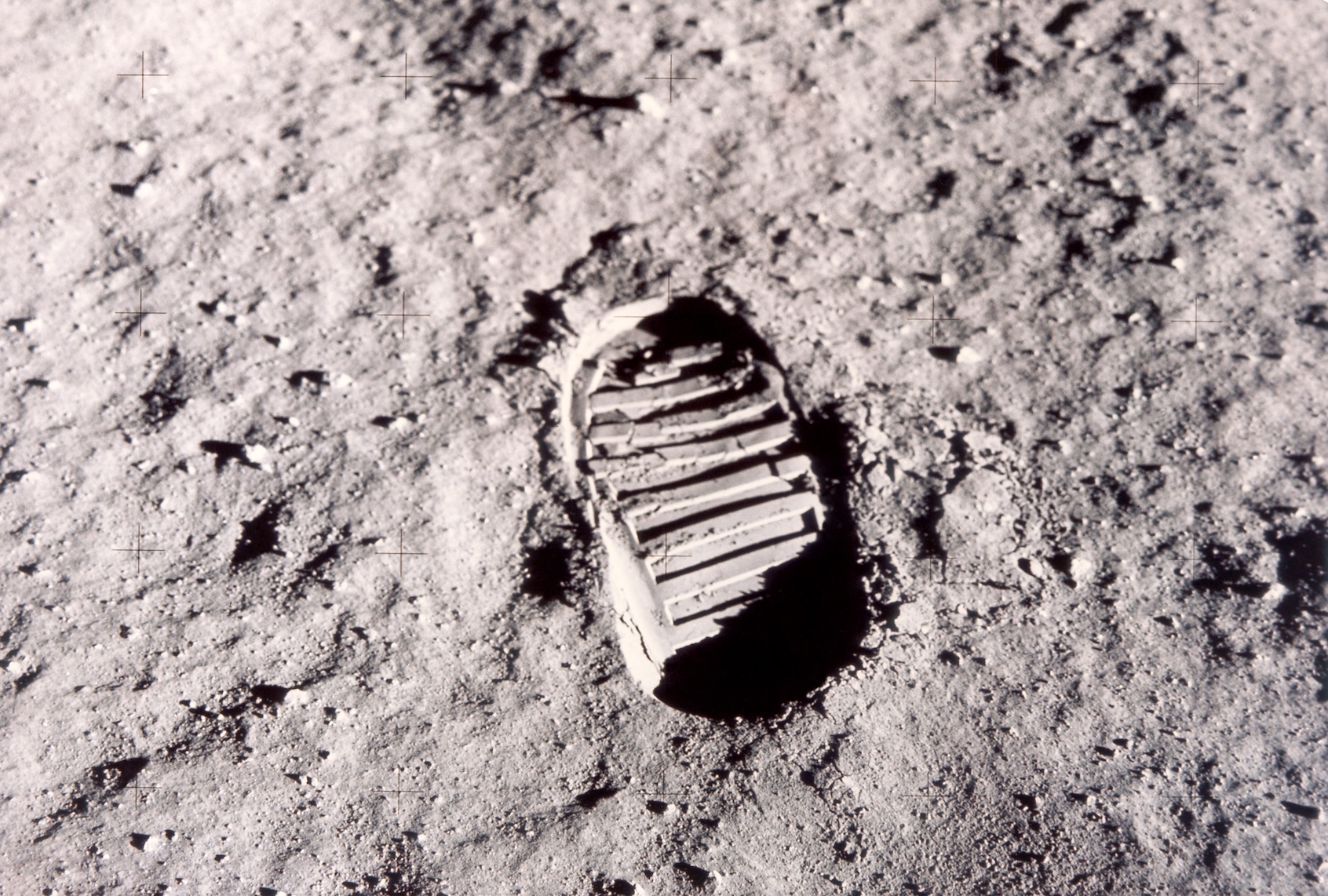
If they’re real, they were plucked from the lunar surface by Neil Armstrong and Buzz Aldrin, given by then-President Richard Nixon to former Nicaraguan dictator Anastasio Somoza Debayle, pilfered by a Costa Rican mercenary soldier-turned Contra rebel, traded to a Baptist missionary for unknown items, then sold to a flamboyant Las Vegas casino owner who squirreled them away in a safety deposit box.
Continue Reading ClosePreparing for the big one
It's only a matter of time before a large asteroid hits us again -- but, realistically, what can we do about it?
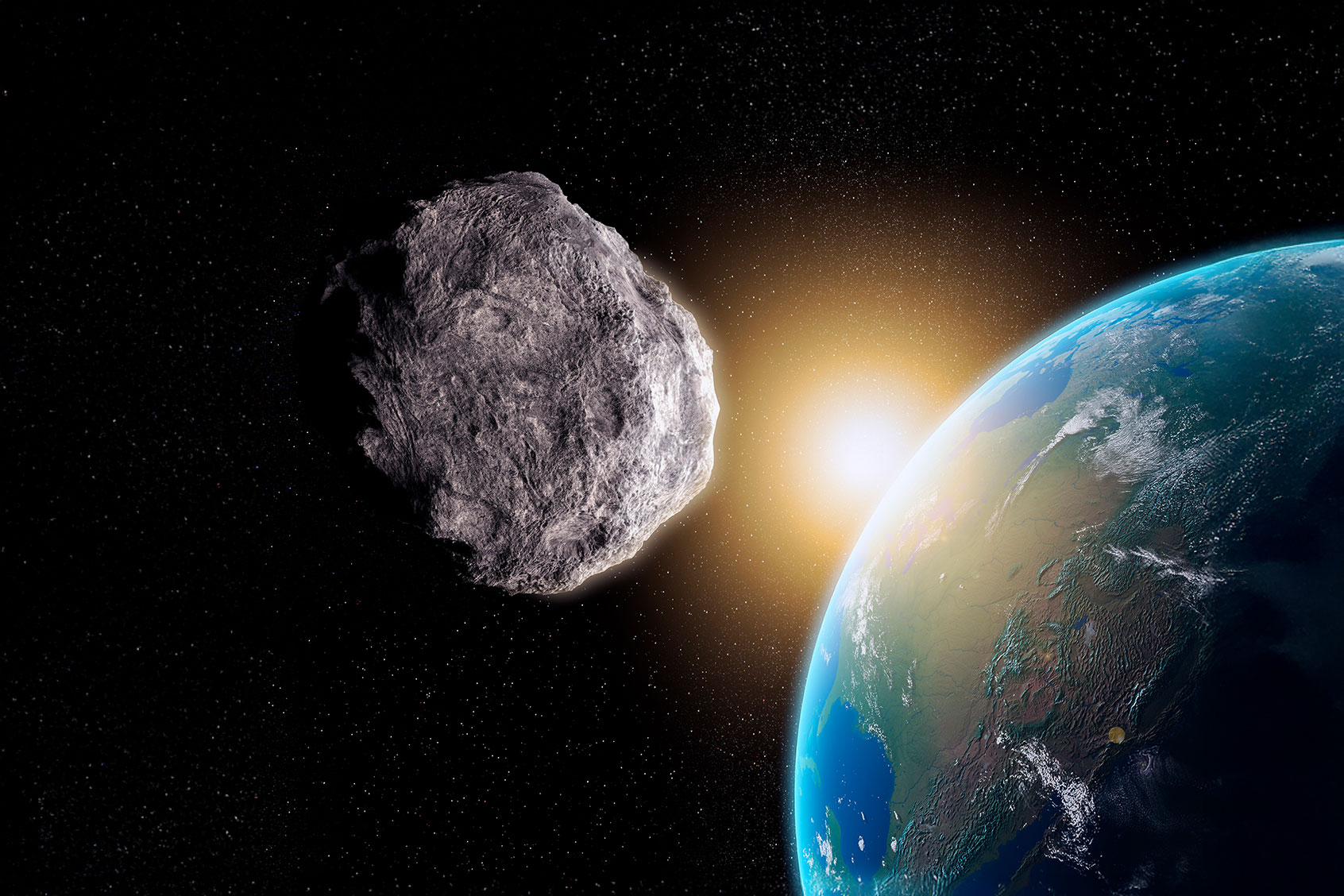
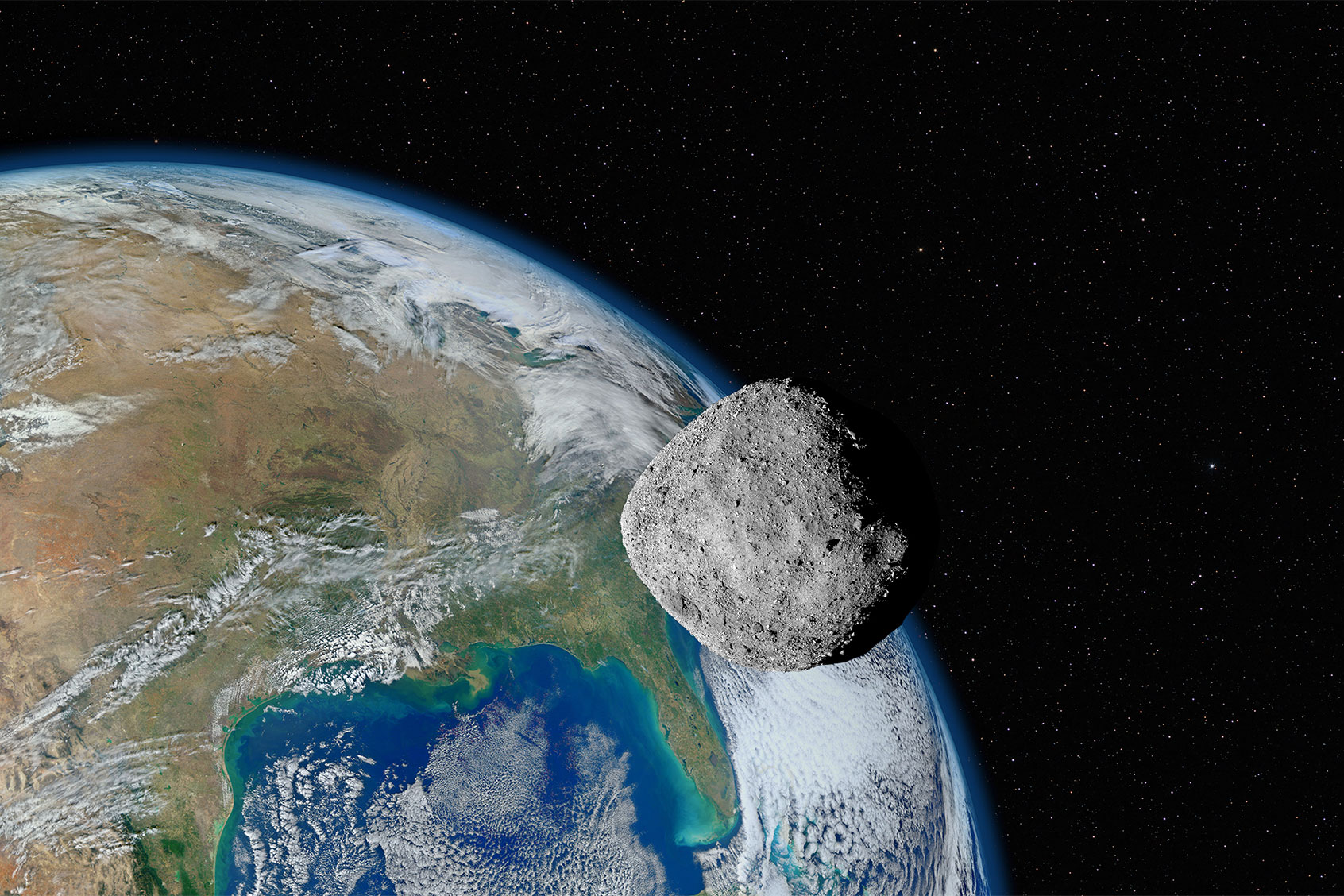
(Credit: Balefire via Shutterstock) A recent survey of how people are most likely to die rated asteroid impacts pretty low—something like 1 in 100,000. That’s statistically about the same probability as death by lightning or a tsunami. But there’s an obvious flaw in this predictive comparison. Lightning kills one person at a time about sixty times per year. Asteroid impacts, by contrast, probably haven’t killed anyone in thousands of years. But one really bad day, one little thwack could kill almost everyone all at once.
Chances are excellent that you don’t have to worry, nor most likely will any of the next hundred generations. But we can be absolutely sure that another big impact of the dinosaur-killing variety is coming someday, somewhere. In the next fifty million years, Earth will suffer at least one big hit, maybe more. It’s all a matter of time and probability.
Continue Reading CloseRobert M. Hazen is the Clarence Robinson Professor of Earth Science at George Mason University and a senior scientist at the Carnegie Institution's Geophysical Laboratory. The author of numerous books -- including the bestselling "Science Matters" -- Hazen lives with his wife in Glen Echo, Maryland. More Robert M. Hazen.
Rise of the Super-Earths
Astronomers have discovered a giant new kind of planet that could hold life -- and they could change everything
(Credit: Lukiyanova Natalia / frenta via Shutterstock) We love our planet Earth. We should — it is our home, and there’s no place like home. There can’t ever be a better place than Earth. Plenty of serious science literature supports that view in an emotionally detached manner. It is often called the “Goldilocks hypothesis”: the Earth is just the right size (not too big, not too small) and just the right temperature (not too hot, not too cold) for life to emerge here. Life is a rare thing. Perched on our little planet, we can’t see any other out there, or at least not yet — so a certain dose of Earth-centrism seems justified. Or is it?
Continue Reading CloseDimitar Sasselov is a professor of astronomy at Harvard University and the founder and director of the Harvard Origins of Life Initiative. His research has been covered by the New York Times, the Boston Globe and others. He lives in Boston, Mass. More Dimitar Sasselov.
The science of warp
From time travel to interstellar communication, an expert explains what sci-fi gets right and wrong
“Back to the Future,” “A Christmas Carol,” the “Terminator” series, “Star Trek,” “Rip Van Winkle,” “Hot Tub Time Machine,” “Terra Nova” — the list goes on. We, as a culture, have been mesmerized by the idea of traveling in time: going back to fix life-changing mistakes we regret; going forward to get a sneak preview at what we’ll become. Equally transfixing is the notion of traveling through space, exploring galaxies and unknown universes far beyond our sight’s reach.
Continue Reading CloseThe Internet: Triumph of human evolution
The Web is more than just a powerful tool, it's our greatest adaptation. An expert explains why
(Credit: RATOCA via Shutterstock) The Internet allows us to do all kinds of things we never imagined possible. It lets us communicate with people across the world. We can learn whatever we want at the click of a button. We can navigate roads using our iPhones, and translate languages within seconds. It makes us smarter, and more versatile, and faster than ever. But the Web isn’t just a truly extraordinary invention, it is the apex of human evolution — and the ultimate evolutionary adaptation.
It may seem strange to think of the Web as part of the process of natural selection, but Raymond Neubauer, a professor at the University of Texas, doesn’t think so. In his far-reaching new book, “Evolution and the Emergent Self,” he argues that technology should be seen as part of our planet’s grand evolutionary narrative. He claims that two evolutionary strategies — one, emphasizing simplicity and rapid reproduction (as in bacteria), and the other, emphasizing complexity and hyper-intelligence (as in humans) — have been hugely successful in dominating the planet. The book charts the ways those strategies have managed to pop up everywhere from the animal kingdom to cellphones.
Continue Reading Close
Thomas Rogers is Salon's Arts Editor. More Thomas Rogers.
Page 1 of 7 in Space