
Adam Hochschild

The great WWI battle Hollywood forgot

Out of the trenches, another war raged between those who saw the conflict as noble and those who saw it as madness

  • more
    • All Share Services

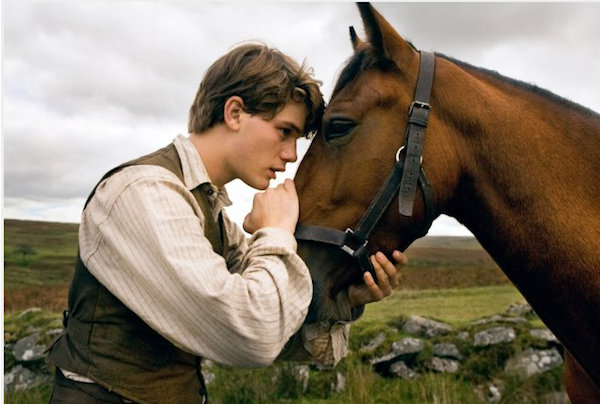
The great WWI battle Hollywood forgotJeremy Irvine in "War Horse"(Credit: IMDB)
This originally appeared on TomDispatch.

Well in advance of the 2014 centennial of the beginning of “the war to end all wars,” the First World War is suddenly everywhere in our lives. Stephen Spielberg’s “War Horse” opened on 2,376 movie screens and has collected six Oscar nominations, while the hugely successful play it’s based on is still packing in the crowds in New York and a second production is being readied to tour the country.

In addition, the must-watch TV soap opera of the last two months, “Downton Abbey,” has just concluded its season on an unexpected kiss.  In seven episodes, its upstairs-downstairs world of forbidden love and dynastic troubles took American viewers from mid-war, 1916, beyond the Armistice, with the venerable Abbey itself turned into a convalescent hospital for wounded troops. Other dramas about the 1914-1918 war are on the way, among them an HBO-BBC miniseries based on Ford Madox Ford’s ”Parade’s End” quartet of novels, and a TV adaptation of Sebastian Faulks’s novel “Birdsong” from an NBC-backed production company.

In truth, there’s nothing new in this. Filmmakers and novelists have long been fascinated by the way the optimistic, sunlit, pre-1914 Europe of emperors in plumed helmets and hussars on parade so quickly turned into a mass slaughterhouse on an unprecedented scale. And there are good reasons to look at the First World War carefully and closely.

After all, it was responsible for the deaths of some nine million soldiers and an even larger number of civilians. It helped ignite the Armenian genocide and the Russian Revolution, left large swaths of Europe in smoldering ruins, and remade the world for the worse in almost every conceivable way — above all, by laying the groundwork for a second and even more deadly, even more global war.

There are good reasons as well for us to be particularly haunted by what happened in those war years to the country that figures in all four of these film and TV productions: Britain. In 1914, that nation was at the apex of glory, the unquestioned global superpower, ruling over the largest empire the world had ever seen. Four and a half years later its national debt had increased tenfold, more than 720,000 British soldiers were dead, and hundreds of thousands more seriously wounded, many of them missing arms, legs, eyes, genitals.

The toll fell particularly heavily on the educated classes that supplied the young lieutenants and captains who led their troops out of the trenches and into murderous machine-gun fire. To give but a single stunning example, of the men who graduated from Oxford in 1913, 31 percent were killed.

“Swept Away in a Red Blast of Hate”

Yet curiously, for all the spectacle of boy and horse, thundering cavalry charges, muddy trenches, and wartime love and loss, the makers of “War Horse,” “Downton Abbey” and — I have no doubt — the similar productions we’ll soon be watching largely skip over the greatest moral drama of those years of conflict, one that continues to echo in our own time of costly and needless wars. They do so by leaving out part of the cast of characters of that moment.  The First World War was not just a battle between rival armies, but also a powerful, if one-sided, battle between those who assumed the war was a noble crusade and those who thought it absolute madness.

The war’s opponents went to jail in many countries.  There were more than 500 conscientious objectors imprisoned in the United States in those years, for example, plus others jailed for speaking out against joining the conflict. Eugene V. Debs had known prison from his time as a railway union leader, but he spent far longer behind bars — more than two years — for urging American men to resist the draft. Convicted of sedition, he was still in his cell at the federal penitentiary in Atlanta in November 1920 when, long after the war ended, he received nearly a million votes as the Socialist candidate for President.

One American protest against the war turned to tragedy when, in 1917, Oklahoma police arrested nearly 500 draft resisters — white, black and Native American — taking part in what they called the Green Corn Rebellion against “a rich man’s war, poor man’s fight.” Three were killed and many injured.

War resisters were also thrown in jail in Germany and Russia. But the country with the largest and best organized antiwar movement — and here’s where the creators of those film and TV costume dramas so beloved by Anglophile American audiences miss a crucial opportunity — was Britain.

The main reason opposition to the war proved relatively strong there was simple enough: in 1914, the island nation had not been attacked. German invaders marched into France and Belgium, but Germany hoped Britain would stay out of the war. And so did some Britons. When their country joined the fighting on the grounds that Germany had violated Belgian neutrality, a vocal minority continued to insist that jumping into a quarrel among other countries was a disastrous mistake.

Keir Hardie was a prominent early war opponent.  A trade union leader and Member of Parliament, he had, by the age of 21, already spent half his life as a coal miner and he never went to school.  Nonetheless, he became one of the great orators of the age, mesmerizing crowds with his eloquence, his piercing, heavy-browed eyes, and a striking red beard. Crushed with despair that millions of Europe’s working men were slaughtering one another rather than making common cause in fighting for their rights, his beard white, he died in 1915, still in his 50s.

Among those who bravely challenged the war fever, whose rallies were often violently broken up by the police or patriotic mobs, was well-known radical feminist Charlotte Despard. Her younger brother, amazingly, was Field Marshal Sir John French, commander-in-chief of the Western Front for the first year and a half of the war. A similarly riven family was the famous Pankhurst clan of suffragettes: Sylvia Pankhurst became an outspoken opponent of the conflict, while her sister Christabel was from the beginning a fervent drum-beater for the war effort.  They not only stopped speaking to each other, but published rival newspapers that regularly attacked the other’s work.

Britain’s leading investigative journalist, Edmund Dene Morel, and its most famous philosopher, Bertrand Russell, were both passionate war critics. “This war is trivial, for all its vastness,” Russell wrote. “No great principle is at stake, no great human purpose is involved on either side.” He was appalled to see his fellow citizens “swept away in a red blast of hate.”

He wrote with remarkable candor about how difficult it was to go against the current of the national war fever “when the whole nation is in a state of violent collective excitement. As much effort was required to avoid sharing this excitement as would have been needed to stand out against the extreme of hunger or sexual passion, and there was the same feeling of going against instinct.”

Both Russell and Morel spent six months in prison for their beliefs. Morel served his term at hard labor, carrying 100-pound slabs of jute to the prison workshop while subsisting on a bare-bones diet during a frigid winter when prison furnaces were last in line for the nation’s scarce supply of coal.

Women like Violet Tillard went to jail as well.  She worked for an antiwar newspaper banned in 1918 and was imprisoned for refusing to reveal the location of its clandestine printing press. And among the unsung heroines of that antiwar moment was Emily Hobhouse, who secretly traveled through neutral Switzerland to Berlin, met the German foreign minister, talked over possible peace terms, and then returned to England to try to do the same with the British government. Its officials dismissed her as a lone-wolf eccentric, but in a conflict that killed some 20 million people, she was the sole human being who journeyed from one side to the other and back again in search of peace.

Why We Know More About War Than Peace

By the war’s end, more than 20,000 British men had defied the draft and, as a matter of principle, many also refused the alternative service prescribed for conscientious objectors, like ambulance driving at the front or working in a war industry. More than 6,000 of them were put behind bars — up to that moment the largest number of people ever imprisoned for political reasons in a western democracy.

There was nothing easy about any of this.  Draft refusers were mocked and jeered (mobs threw rotten eggs at them when given the chance), jailed under harsh conditions, and lost the right to vote for five years. But with war’s end, in a devastated country mourning its losses and wondering what could possibly justify that four-year slaughter, many people came to feel differently about the resisters. More than half a dozen were eventually elected to the House of Commons and the journalist Morel became the Labour Party’s chief Parliamentary spokesperson on foreign affairs. Thirty years after the Armistice, a trade unionist named Arthur Creech Jones, who had spent two and a half years in prison as a war resister, was appointed to the British cabinet.

The bravery of such men and women in speaking their minds on one of the great questions of the age cost them dearly: in public scorn, prison terms, divided families, lost friends and jobs. And yet they are largely forgotten today at a moment when resistance to pointless wars should be celebrated.  Instead we almost always tend to celebrate those who fight wars — win or lose — rather than those who oppose them.

It’s not just the films and TV shows we watch, but the monuments and museums we build. No wonder, as General Omar Bradley once said, that we “know more about war than we know about peace.” We tend to think of wars as occasions for heroism, and in a narrow, simple sense they can be. But a larger heroism, sorely lacking in Washington this last decade, lies in daring to think through whether a war is worth fighting at all. In looking for lessons in wars past, there’s a much deeper story to be told than that of a boy and his horse.

To stay on top of important articles like these, sign up to receive the latest updates from TomDispatch.com here.

What will turn Americans against militarism?

The similarities between World War I and today's wars abound, but where is our sense of "never again"?

  • more
    • All Share Services

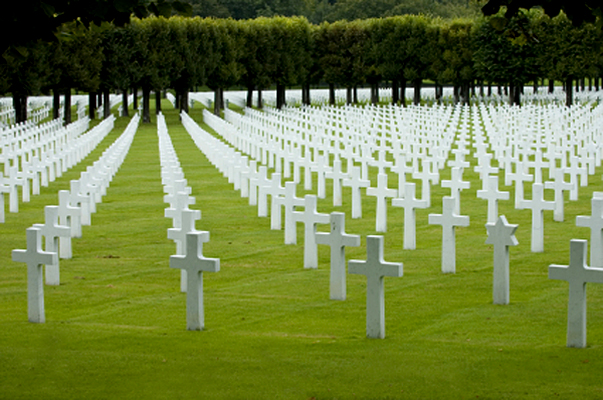
What will turn Americans against militarism?American WW1 cemetery near Verdun, France.

What if, from the beginning, everyone killed in the Iraq and Afghan wars had been buried in a single large cemetery easily accessible to the American public? Would it bring the fighting to a halt more quickly if we could see hundreds of thousands of tombstones, military and civilian, spreading hill after hill, field after field, across our landscape?

I found myself thinking about this recently while visiting the narrow strip of northern France and Belgium that has the densest concentration of young men’s graves in the world. This is the old Western Front of the First World War. Today, it is the final resting place for several million soldiers. Nearly half their bodies, blown into unrecognizable fragments by some 700 million artillery and mortar shells fired here between 1914 and 1918, lie in unmarked graves; the remainder are in hundreds upon hundreds of military cemeteries, still carefully groomed and weeded, the orderly rows of headstones or crosses covering hillsides and meadows.

Stand on a hilltop in one of the sites of greatest slaughter — Ypres, the Somme, Verdun — and you can see up to half-a-dozen cemeteries, large and small, surrounding you. In just one, Tyn Cot in Belgium, there are nearly 12,000 British, Canadian, South African, Australian, New Zealander, and West Indian graves.

Every year, millions of people visit the Western Front’s cemeteries and memorials, leaving behind flowers and photographs of long-dead relatives. The plaques and monuments are often subdued and remarkably unmartial. At least two of those memorials celebrate soldiers from both sides who emerged from the trenches and, without the permission of their top commanders, took part in the famous informal Christmas Truce of 1914, marked by soccer games in no-man’s-land.

In a curious way, the death toll of that war almost a century gone, in which more than 100,000 Americans died, has become so much more visible than the deaths in our wars today. Is that why the First World War is almost always seen, unlike our present wars, not just as tragic, but as a murderous folly that swept away part of a generation and in every way remade the world for the worse?

To Paris — or Baghdad

For the last half-dozen years, I’ve been mentally living in that 1914-1918 world, writing a book about the war that killed some 20 million people, military and civilian, and left large parts of Europe in smoldering ruins. I’ve haunted battlefields and graveyards, asked a Belgian farmer if I could step inside a wartime concrete bunker that now houses his goats, and walked through reconstructed trenches and an underground tunnel which protected Canadian troops moving their ammunition to the front line.

In government archives, I’ve looked at laconic reports by officers who survived battles in which most of their troops died; I’ve listened to recordings of veterans and talked to a man whose labor-activist grandfather was court-martialed because he wrote a letter to the Daily Mail complaining that every British officer was assigned a private servant. In a heartbreakingly beautiful tree-shaded cemetery full of British soldiers mowed down with their commanding officer (as he had predicted they would be) by a single German machine gun on the opening day of the Battle of the Somme, I found a comment in the visitors’ book: “Never Again.”

I can’t help but wonder: Where are the public places for mourning the mounting toll of today’s wars? Where is that feeling of never again?

The eerie thing about studying the First World War is the way you can’t help but be reminded of today’s headlines. Consider, for example, how it started. High officials of the rickety Austro-Hungarian Empire, frightened by ethnic nationalism among Serbs within its borders, wanted to dismember neighboring Serbia, whose very existence as an independent state they regarded as a threat. Austro-Hungarian military commanders had even drawn up invasion plans.

When a 20-year-old ethnic Serb fired two fatal shots at Austrian Archduke Franz Ferdinand and his wife at Sarajevo in the summer of 1914, those commanders had the perfect excuse to put their plans into action — even though the killer was an Austro-Hungarian citizen and there was no evidence Serbia’s cabinet knew of his plot. Although the war quickly drew in many other countries, its first shots were fired by Austro-Hungarian gunboats on the Danube shelling Serbia.

The more I learned about the war’s opening, the more I thought about the U.S. invasion of Iraq. President George W. Bush and his key advisors had long hungered to dislodge Iraqi dictator Saddam Hussein from power. Like the archduke’s assassination, the attacks of September 11, 2001, gave them the excuse they had been waiting for — even though there was no connection whatsoever between the hijackers, mainly Saudis, and Saddam Hussein’s regime.

Other parallels between World War I and today’s wars abound. You can see photographs from 1914 of German soldiers climbing into railway cars with “To Paris” jauntily chalked on their sides, and French soldiers boarding similar cars labeled “To Berlin.”

“You will be home,” Kaiser Wilhelm II confidently told his troops that August, “before the leaves have fallen from the trees.” Doesn’t that bring to mind Bush landing on an aircraft carrier in 2003 to declare, in front of a White House-produced banner reading “Mission Accomplished,” that “major combat operations in Iraq have ended”? A trillion dollars and tens of thousands of lives later, whatever mission there may have been remains anything but accomplished. Similarly, in Afghanistan, where Washington expected (and thought it had achieved) the most rapid and decisive of victories, the U.S. military remains mired in one of the longest wars in American history.

The Flowery Words of War

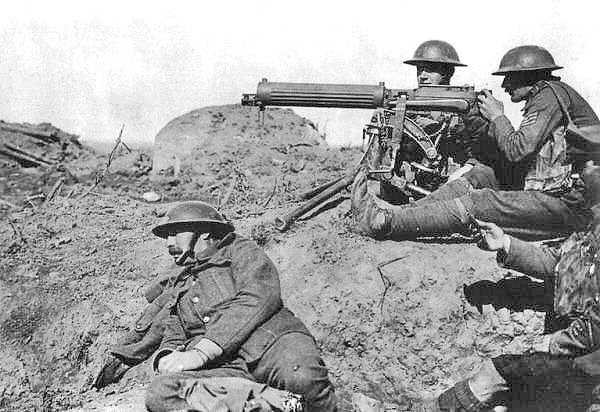
As the First World War made painfully clear, when politicians and generals lead nations into war, they almost invariably assume swift victory, and have a remarkably enduring tendency not to foresee problems that, in hindsight, seem obvious. In 1914, for instance, no country planned for the other side’s machine guns, a weapon which Europe’s colonial powers had used for decades mainly as a tool for suppressing uppity natives.

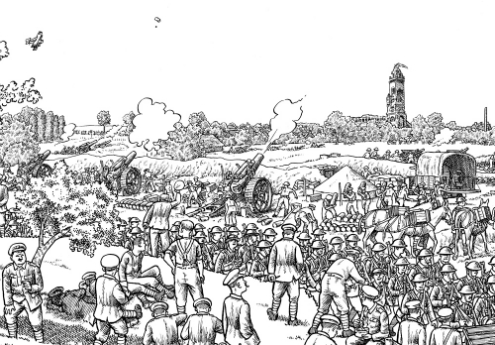
Both sides sent huge forces of cavalry to the Western Front — the Germans eight divisions with 40,000 horses. But the machine gun and barbed wire were destined to end the days of glorious cavalry charges forever. As for plans like the famous German one to defeat the French in exactly 42 days, they were full of holes. Internal combustion engines were in their infancy, and in the opening weeks of the war, 60 percent of the invading German army’s trucks broke down. This meant supplies had to be pulled by horse and wagon. For those horses, not to mention all the useless cavalry chargers, the French countryside simply could not supply enough feed. Eating unripe green corn, they sickened and died by the tens of thousands, slowing the advance yet more.

Similarly, Bush and his top officials were so sure of success and of Iraqis welcoming their “liberation” that they gave remarkably little thought to what they should do once in Baghdad. They took over a country with an enormous army, which they promptly and thoughtlessly dissolved with disastrous results. In the same way, despite a long, painfully instructive history to guide them, administration officials somehow never managed to consider that, however much most Afghans loathed the Taliban, they might come to despise foreign invaders who didn’t go home even more.

As World War I reminds us, however understandable the motives of those who enter the fight, the definition of war is “unplanned consequences.” It’s hard to fault a young Frenchman who marched off to battle in August 1914. After all, Germany had just sent millions of troops to invade France and Belgium, where they rapidly proved to be quite brutal occupiers. Wasn’t that worth resisting? Yet by the time the Germans were finally forced to surrender and withdraw four and a half years later, half of all French men aged 20 to 32 in 1914 had been killed. There were similarly horrific casualties among the other combatant nations. The war also left 21 million wounded, many of them missing hands, arms, legs, eyes, genitals.

Was it worth it? Of course not. Germany’s near-starvation during the war, its humiliating defeat, and the misbegotten Treaty of Versailles virtually ensured the rise of the Nazis, along with a second, even more destructive world war, and a still more ruthless German occupation of France.

The same question has to be asked about our current war in Afghanistan. Certainly, at the start, there was an understandable motive for the war: after all, the Afghan government, unlike the one in Iraq, had sheltered the planners of the 9/11 attacks. But nearly ten years later, dozens of times more Afghan civilians are dead than were killed in the United States on that day — and more than 2,400 American, British, Canadian, German, and other allied troops as well. As for unplanned consequences, it’s now a commonplace even for figures high in our country’s establishment to point out that the Afghan and Iraq wars have created a new generation of jihadists.

If you need a final resemblance between the First World War and ours of the present moment, consider the soaring rhetoric. The cataclysm of 1914-1918 is sometimes called the first modern war which, among other things, meant that gone forever was the era when “manifest destiny” or “the white man’s burden” would be satisfactory justifications for going into battle. In an age of conscription and increasing democracy, war could only be waged — officially — for higher, less self-interested motives.

As a result, once the conflict broke out, lofty ideals filled the air: a “holy war of civilization against barbarity,” as one leading French newspaper put it; a war to stop Russia from crushing “the culture of all of Western Europe,” claimed a German paper; a war to resist “the Germanic yoke,” insisted a manifesto by Russian writers, including leftists. Kaiser Wilhelm II avowed that he was fighting for “Right, Freedom, Honor, Morality” (and in those days, they were capitalized) and against a British victory which would enthrone “the worship of gold.” For English Prime Minster Herbert Asquith, Britain was fighting not for “the advancement of its own interests, but for principles whose maintenance is vital to the civilized world.” And so it went.

So it still goes. Today’s high-flown war rhetoric naturally cites only the most noble of goals: stopping terrorists for humanity’s sake, finding weapons of mass destruction (remember them?), spreading a “democracy agenda,” protecting women from the Taliban. But beneath the flowery words, national self-interest is as powerful as it was almost a hundred years ago.

From 1914 to 1918, nowhere was this more naked than in competition for protectorates and colonies. In Africa, for instance, Germany dreamed of establishing Mittelafrika, a grand, unbroken belt of territory stretching across the continent. And the British cabinet set up the Territorial Desiderata Committee, charged with choosing the most lucrative of the other side’s possessions to acquire in the postwar division of spoils. Near the top of the list of desiderata: the oil-rich provinces of Ottoman Turkey that, after the war, would be fatefully cobbled together into the British protectorate of Iraq.

When it comes to that territory, does anyone think that Washington would have gotten quite so righteously worked up in 2003 if, instead of massive amounts of oil, its principal export was turnips?

Someday, I have no doubt, the dead from today’s wars will be seen with a similar sense of sorrow at needless loss and folly as those millions of men who lie in the cemeteries of France and Belgium — and tens of millions of Americans will feel a similar revulsion for the politicians and generals who were so spendthrift with others’ lives. But here’s the question that haunts me: What will it take to bring us to that point?

Adam Hochschild is the San Francisco-based author of seven books, including “King Leopold’s Ghost.” His new book, “To End All Wars: A Story of Loyalty and Rebellion, 1914-1918″ (Houghton Mifflin Harcourt), has just been published.

Continue Reading Close

The Rape Of Nankin

Adam Hochschild reviews Iris Chang's book "The Rape Of Nanking: The Forgotten Holocaust Of World War II".

  • more
    • All Share Services

Colonial Williamsburg, the meticulous restoration of a Virginia village of several centuries ago, was built in the 1930s. For several decades, tens of millions of tourists enjoyed the spinning wheels, the working blacksmith’s and cobbler’s shops, the guides in period costumes. But it was not until after 1970 that a visitor could easily learn a crucial fact: Half the population of the original Williamsburg were slaves. Today you can see slave quarters and other exhibits showing what the daily life of slaves was like.

Some horrendous outbursts of cruelty, like slavery, endure for centuries; some are over in a few hours or weeks. But all of them raise two questions. First, what makes human beings capable of mass savagery? Second, what makes great acts of violence remembered or forgotten — or, as in Williamsburg, officially forgotten for a long time and then abruptly remembered?

Both questions are raised by Iris Chang’s “The Rape of Nanking.” The 29-year-old Chang published the book in late 1997, then unexpectedly saw it give birth to a storm of praise, denunciations and controversy that still continues. A paperback edition of the book has just appeared.

In brief, the book is the story of the almost unbelievable orgy of violence unleashed over several months by the Japanese army after it occupied Nanking, the capital of Nationalist China, in December 1937. There is dispute about the death toll, but most serious scholars place it in the hundreds of thousands. Chinese men were forced at gunpoint to rape their mothers and daughters. Japanese soldiers gang-raped women by the tens of thousands. They nailed women to trees. They drove stakes through their vaginas. They bound the hands of Chinese men, lined them up in long rows, and machine-gunned them into huge burial ditches. They bayoneted babies in front of their mothers. They buried people alive. Soldiers had “killing contests” and boasted to Japanese reporters of their scores. Some of the carnage was recorded on film. An American missionary (the United States was not yet at war with Japan) took movies, and a colleague smuggled the footage out of the country sewn in his coat lining. Japanese soldiers took still photos, then brought their film for developing to Chinese photo shops where horrified employees, at great risk, surreptitiously made extra prints.

Chang vividly, methodically, records what happened, piecing together the abundant eyewitness reports into an undeniable tapestry of horror. Driven mainly by an understandable outrage, she does not do such a good job of analyzing why the Japanese acted with such extraordinary sadism — not just in Nanking, incidentally, but in so many other places they conquered as well. Although, in fairness, perhaps not even the greatest of philosophers can fully explain the gas chambers at Auschwitz or the spectacle of a Japanese soldier tying a man to a tree and using him for bayonet practice, while other soldiers watch, laugh and take pictures.

The Nanking atrocities were well publicized throughout the world at the time, and are usually mentioned in the standard Western histories of World War II. But along with wartime Japan’s other vast, wanton sprees of murder, rape and looting, it has drawn far less attention in recent years than the Holocaust, Stalin’s gulag and other mass murders of our day. “The Rape of Nanking” is the first book on the subject in English in more than 50 years. Many Japanese still deny that so much blood was shed. Six conservative historians held a Tokyo press conference to denounce Chang, and the Japanese ambassador to the United States, Kunihiko Saito, criticized the book as “full of errors, biased and a one-sided view.” Imagine the uproar if a German ambassador had denounced “Schindler’s List” as “one-sided.”

The most unexpected part of Chang’s story, and the reaction to it, has to do with the curious politics of memory and forgetting. In contrast to the extensive war crimes trials in Europe, begun by the Allies and later continued by the Germans themselves, trials in Japan were few and finished very quickly. Confiscated Japanese military records, a potential gold mine of information for war crimes and much else, were returned to Japan by the United States in the 1950s without even being fully copied. The U.S. saw the economic powerhouse of Japan as its key anti-Communist ally in Asia, and, throughout the Cold War, made no effort to force Japan to come to terms with its actions during World War II.

Furthermore, both Nationalist and Communist China, competing for Japanese trade and favor, have been reluctant to press the issue of Nanking and war crimes. Japan is the largest aid donor in the world. Most of that aid goes to Asia; Japan has loaned Beijing many billions of dollars on favorable terms. Although the memory of the rape of Nanking remains very much alive in the city (today known as Nanjing), it was not until 1985 that the government permitted a museum of the atrocities to be built there, and it has repeatedly prohibited demonstrations against visiting Japanese.

Not only did Chang’s book become a bestseller, it has been the inspiration for several conferences, a TV documentary, a museum now on the drawing boards in Los Angeles and a planned Hollywood film. If she had written it 20 or 30 years ago, most likely none of this would have happened. What made the difference? Two things above all: the end of the Cold War, and the rising influence, and number, of Americans of Chinese descent. Many of them, like Iris Chang, grew up hearing the stories of events like Nanking, and want to see that history on paper at last.

Publicly remembering painful parts of the past is always a political act, and almost always takes place against enormous obstacles. Those obstacles do not just concern distant places like China and Japan. If Rosa Parks had not sat down in the front of the bus, if Martin Luther King Jr. and thousands of others had not marched and endured beatings and jail, Colonial Williamsburg would still display no slave quarters today.

Continue Reading Close