Where do you start with Brazil, that massive, sprawling swath of South America, a republic founded in 1889 on the principle — or fantasy — of “order and progress,” but forever caught between crashes and calamities, coups and dictatorships? (In 1961, Time magazine wrote that Brazil’s mercurial new president, Janio Quadros, had “burst on the world like Brazil itself — temperamental, bristling with independence, bursting with ambition, haunted by poverty, fighting to learn, greedy for greatness.”) What to make of the national “myth of racial democracy,” the poverty and favelas, the prison riots, the burning Amazon, the new world rising in Brasilia, the population exploding in São Paulo? And what about samba, Tropicália, Cariocas, Carnival and soccer? Yes, soccer: the “beautiful game,” the uniquely Brazilian ballet that gave the world Pelé, Garrincha, Zico, Socrates, Romario and Ronaldinho? And what about Lula, the Landless Movement, Chico Mendes, Sonia Braga and Rio’s dreaded City of God?
I could go on; clearly, when it comes to Brazil, I suffer from a case of mental and sensory overload. I first went there in the summer of 1986, for a graduate-level course at the Catholic Pontifical University in São Paulo, a four-week seminar on U.S. and Brazilian social history and politics. Two decades of military dictatorship were beginning to wind down, though I can’t say I noticed much beyond the classroom and the caipirinha-fueled excursions to samba clubs at night. I did, however, absorb something of the country’s complex past: the Portuguese colonial rule; slavery, and the plantation economies built on sugar and coffee, rubber and cacao; the saga of its immigrants — Lebanese and Syrians, Italians, Germans, Eastern European Jews, and Japanese; the blending of indigenous Indians, blacks, whites and every complexion in between.
After my class, I traveled a bit — to the coast to Santos (where Pelé had played his club soccer), up to Belo Horizonte and, finally, Salvador de Bahia. Along the way, I had my share of adventures: I was mistaken for an Argentine drug-runner in Santos; I spent a night sleeping out on a bench at the Belo Horizonte bus station; I met a transvestite somewhere along the way who took me to her one-room shack (it’s hard to remember — really). And I arrived in Salvador just in time to experience a minor riot, with tanks rolling through a central plaza. But it wasn’t until five years later, after a short vacation carousing in Rio with a friend, that my fascination with Brazil was rekindled and I vowed to seek a deeper connection to the country through its literature. (Needless to say, that trip had been eventful, too: There was the near drowning episode at Ipanema; the snatched passport; the infatuation with “Laura,” an erotic dancer at a Copacabana club called Barbella’s.)
Jorge Amado, Brazil’s most celebrated novelist, was, like the country, larger than life. His novels (“Gabriela, Clove and Cinnamon” and “Dona Flor and Her Two Husbands” were reissued this past fall by Vintage; “Tent of Miracles” and “Tieta” in 2003 by University of Wisconsin Press) burst with energy — rollicking, robust, earthy tales from the northeast port cities of Ilheus and Salvador, of worker strikes, rubber booms and busts, and mulatto beauties. (The film versions of “Dona Flor” and “Gabriela,” incidentally, are classic ’70s softcore fare, starring the sumptuous Sonia Braga.) Amado, embraced in the U.S. during the Latin boom era of the ’60s and ’70s, had been pumping out hardy, proletarian-style novels since the ’30s, though by the ’50s they had turned more comic, lighthearted and bawdy.
The late-19th-century author Machado de Assis wrote stylish, whimsical portraits of modern bourgeois life that made him a literary phenomenon of his time (his novels were often first serialized in popular women’s magazines). Machado de Assis is an original — witty, erudite, deft and acrobatic, and endlessly inventive. You’ll be won over instantly by his “Epitaph of a Small Winner” (1881), republished in 1997 as “The Posthumous Memoirs of Brás Cubas” by Oxford University Press, and translated by Gregory Rabassa — a titillating, quasi-philosophical reckoning on a life of missed opportunities, narrated from beyond the grave by the eccentric Brás Cubas himself. De Assis’ novels cleverly anticipated the mental games and mazes of major 20th-century writers like Borges, Cortázar and Kafka.
Speaking of Kafka, equally bewitching is the Brazilian-Jewish writer Clarice Lispector, whose modernist, heavily metaphysical works have often been compared to those of the Czech master himself. Lispector, who immigrated to Brazil from a Ukrainian shtetl in 1920 when she was just 2 months old, wrote some of the most lively, raw and dizzying internal soliloquies of the past century. “I shall be as light and vague as something felt rather than understood, I shall transcend myself in waves, oh God, and may everything come and fall on me, even the incomprehension of myself at certain blank moments,” she rhapsodizes in her first novel, “Near to the Wild Heart,” “for I need only fulfill myself and then nothing will impede my path until death-without-fear; from whatever struggle or truce, I shall arise as strong and comely as a young colt.”
“Near to the Wild Heart,” published in 1944, is studded with pure, gemlike epiphanies of a young girl’s coming-of-age, loveless marriage, and wrested moments of self-discovery. “The Hour of the Star,” released just before she died of cancer in 1977, is a heartbreaking tale of Macabéa Cubasa, a lonely, anonymous typist from the northeast, lost in the hustle and rush of Rio. Even more achingly personal are Lispector’s “Selected Cronicas” and “The Foreign Legion,” which collect her short, flights-of-fancy newspaper dispatches, written between 1967 and 1973. Lispector’s cronicas are a combination of sketches, meditations and portraits, penned as the mood hit her — oblique, almost clairvoyant observations on such subjects as food and travel, motherhood, race, flowers and writerly states of grace.
Lispector, who was raised in the north in Recife before moving to Rio as a teenager, is often criticized for restricting herself to a very cloistered, white, middle-class milieu. (Black maids and cooks do make appearances and, particularly in her cronicas, Lispector can be seen straining to read their thoughts.) But a whole other side of Rio explodes off the pages of Paulo Lins’ novel “City of God,” a sweeping, gritty, shoot’em-up accounting of three decades in the life of one of the city’s most notorious favelas, or slums. Published in Brazil in 1997, “City of God” was a labor of love for Lins, an urban anthropologist who grew up in the neighborhood himself — an exhaustive study that morphed into a novel, became a bestseller in Brazil, and then came to international attention as the acclaimed 2002 hit film by Fernando Meirelles.
Based on stories from Rio’s grim underbelly — as the drug business spiraled into violent turf wars in the ’80s — “City of God,” the novel, reads more like a news flash, a bulletin from the front lines of Brazil’s social ills. Peter Robb’s “A Death in Brazil,” part travel memoir, part current affairs chronicle, arrives in a similar vein, but is chock-full of digressions on national dishes, drinks and folklore, while still managing to cover the historical legacies of fugitive slave communities and the Landless Movement, the sordid fall and impeachment of Fernando Collor, and the rise, stumble and rise again of Lula da Silva, Brazil’s current president. Alma Guillermoprieto’s “Samba” (1990), meanwhile, sways along with the crowds right into the middle of Carnival preparations with the Mangueira samba school of Rio, offering still another glimpse of the overlapping worlds of crime, drugs and poverty, as well as the irrepressible spirit, of the City of God.
At the nexus of music, art and politics, on the other hand, is Caetano Veloso’s memoir, “Tropical Truth: A Story of Music and Revolution in Brazil” (2002). Veloso, the honey-voiced wonder at the heart of the Tropicália movement of the late ’60s, writes passionately and intelligently of those heady days — the anthemlike songs, the collaborations, the protests, the culturally omnivorous and bohemian spirit (even of his poignant encounters with the reclusive author Clarice Lispector). He also writes of the military’s crackdown, his two months in prison and exile in London, as well as the shimmering cast of other artist-iconoclasts of Tropicália: Gilberto Gil (now minister of culture), Gal Costa, Maria Bethania and Chico Buarque, among others. (Buarque, by the way, is also the author of several Kafkaesque novels of his own — most recently “Budapest” (2003), a wordy, cerebral tale of a Rio ghostwriter haunting the streets of the baroque Hungarian capital.)
But, finally, no portrait of Brazil is complete without at least an attempt to fathom the national sport — to surrender to it, exult in it, be transported by it. Take Alex Bellos’ “Futebol: Soccer, the Brazilian Way” (2002). In the lead-up to the 2002 World Cup, Bellos, a British foreign correspondent, immersed himself in the game’s culture as a way into the Brazilian psyche: He travels to Brasilia and the Amazon to catch matches; he attends monster-car soccer rallies; he makes a pilgrimage to the dirt-poor hometown of the gifted but self-destructive dribbling wizard Garrincha; he investigates allegations of fixing and fraud in the Rio big leagues; and he marvels at the sheer pull the sport exerts over the country’s collective self-image. Transcendent beauty, as well as pathos and a mass of contradictions — it’s all there: in the feverish rush of Lispector, the hypnotic voice of Caetano, the pirouettes of Ronaldinho. What more can you ask for from one country?
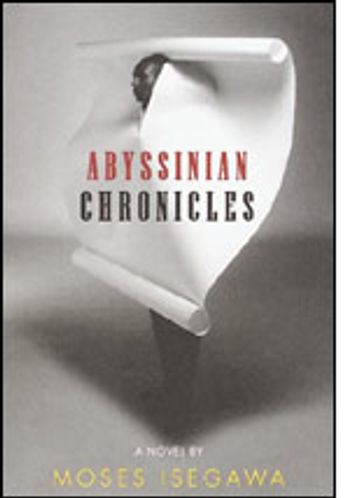
Big, bulky and messy, “Absyssinian Chronicles” arrives with all the lumbering grace of a buffalo. Not that Moses Isegawa’s saga of late 20th century Ugandan life isn’t full of fascinating material. Idi Amin, for example, plays a pivotal but passing role, galvanizing the middle of the book before the crushing family dynamics of the main plot overtake his story. But Isegawa’s unwieldy first novel sags under the weight of the multiple, competing strands of narrative, both familial and national, and it’s the explosive social landscape that’s ultimately more interesting.
Mugezi Muwaabi, the restless narrator, and his calamitous, far-flung family are never quite as gripping as, say, the characters of Somali novelist Nuruddin Farah. But as Isegawa’s title suggests, the book is an ambitious attempt to capture the pathos of an entire country. “Uganda was a land of false bottoms where under every abyss there was another one waiting to ensnare people,” Mugezi’s father postulates, “and the historians had made a mistake: Abyssinia was not the ancient land of Ethiopia, but modern Uganda.”
The overburdened story takes the form of a long, winding journey. Mugezi is born in 1961, a year before Ugandan independence (like the narrator of Salman Rushdie’s “Midnight’s Children,” he’s practically the same age as his country), and grows up in a village compound dominated by his grandfather, a clan elder of fading power, and an assortment of troubled relatives. But Mugezi rails mainly against the tyranny of his parents: his father, misleadingly called Serenity; and his mother, whose nickname, Padlock, crudely reflects her born-again rigidity. They are the “despots” against whom Mugezi wages his own “guerrilla war,” while his younger siblings, whom he has to clean and care for, are “the shitters.” Thus are hatched the two principal metaphors Isegawa flogs all through the book: Growing up in this household (and, more generally, in Uganda) in the ’60s and ’70s, Mugezi laments, is to be tyrannized and shit-smeared.
In time the family moves to noisy, crowded, overheated Kampala, a “brewery of motion, dreams and chaos.” Amin has taken power in 1971 — at first hero-worshipped by Mugezi as an answer to the smug authority of his parents as well as of A. Milton Obote’s corrupt government, but soon recognized for the power-mad monster he is. (“Inside him growled the whales of dominance.”) In illuminating flashes, Isegawa describes Amin’s “Africanization” campaign and the painful expulsion of Indians from the country. Here, in the Kampala of the ’70s, culminating with Amin’s fall in 1979, Mugezi watches his nation come undone; as he observes, “There were far too many fault lines along which seismic activity could erupt.” And later, looking back: “These were some of the saddest days in the history of the country; worse things had occurred, but it was the small happenings that exposed the extent of the rot.”
The rot continues through the ’80s, with the abuses of Obote’s reinstated regime, the protracted guerrilla fighting in the Lowero Triangle region, the pillage and rape of the country and the new specter of AIDS. Mugezi’s years at seminary school and Makere University are so colored by the violence in the country around him that he speaks even of his tainted love affairs in the language of warfare: “Lovemaking itself is an act of war, an expression of the tension ripping the country apart”; “As I thrust deeper into the marshes of love and the triangle of life …” As you can see, metaphors working double duty can wear thin pretty quickly.
After so much experience — and so many characters and so much digression — a reader may feel a bit cross-eyed. Unlike Rushdie’s masterful epic, and unlike Gabriel Garcma Marquez’s “One Hundred Years of Solitude” — two novels the book has been compared to by effusive reviewers in the Netherlands, where it was first published and where Isegawa now lives — “Abyssinian Chronicles” doesn’t quite synthesize the jumble. Instead, the reader is left, like Mugezi at the end, alone, a bit wobbly and haunted from such a long journey.
Continue Reading
Close
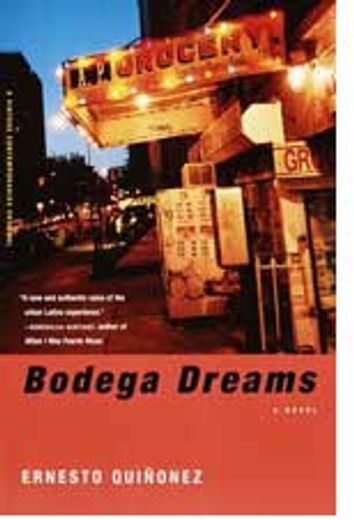
“It was always about Bodega and nobody else but Bodega,” Chino, the narrator, says at the beginning of “Bodega Dreams,” Ernesto Quiqonez’s fast-paced uptown noir. That’s Willie Bodega he’s talking about — former Young Lord, later a drug kingpin and Latino visionary, an “unforgettable blend of nobility and street, as if God never made up his mind whether to have Bodega be born a leader or a hood.”
Bodega’s dreams lie at the center of Quiqonez’s story, and the action revolves around Bodega’s dangerous trajectory. “Willie Bodega didn’t just change me and Blanca’s life, but the entire landscape of the neighborhood,” Chino realizes. But, his words to the contrary, it’s not just about Bodega. An even more vibrant, thrilling character looms over all the others: Spanish Harlem itself. It is this neighborhood, its history and geography, that propels Quiqonez’s pulsing, cinematic narrative (and, yes, the film is already in production).
But then again, in a sense Bodega represents Spanish Harlem. He dreams of owning its buildings and uplifting its people even while financing his plans for an East Harlem “Great Society” with filthy drug money. “Bodega was a lost relic from a time when all things seemed possible. When young people cared about social change. He had somehow brought that hope to my time,” Chino thinks. He is cautiously impressed at first: Bodega is busy restoring apartments and sending kids to college to become the future foot soldiers in his war on Latino poverty.
There’ll be a hitch in these grand schemes, however (beyond the cops and a rival mobster from the Lower East Side), and that, naturally, will involve a woman: Vera, an old flame from Bodega’s radical days. Fortunately, the backdrop of Spanish Harlem keeps Quiqonez’s story from becoming stock and keeps the action poppin’ and the characters snappin’ — on one another, on Latino pride and dreams and on the Man, who keeps those dreams on ice. There’s Sapo, Chino’s childhood pana, or homeboy, who becomes Bodega’s strong-arm man (with a penchant for taking dog-size bites out of his victims). And Blanca, Chino’s holy and sanctified wife, and her trash-talking sister, Negra. And Nene, Bodega’s slow-witted bodyguard, who speaks in song lyrics. (“Come on people, now smile on your brother,” he hums at one point when things get a little tense between Bodega and Chino.) And Bodega’s frontman and partner in crime, the slick and mighty lawyer Nazario, who knows that “a single lawyer can steal more money than a hundred men with guns.”
Quiqonez is at his freshest evoking the Young Lords, the International Museum of Salsa (which opened in a bodega on 116th Street) and the old Italian turf of East Harlem on Pleasant Avenue. Spanish Harlem infuses the novel with history and adds a political edge; it gives this dark tale heart and redeems it with rooftop reveries and New World hopes. Bodega tells Chino in a dream:
What we just heard was a poem, Chino. It’s a beautiful new language. Don’t you see what’s happening? A new language means a new race. Spanglish is the future. It’s a new language being born out of the ashes of two cultures clashing with each other.And speaking of poets, many of the luminaries of Puerto Rican — or, rather, Nuyorican — lit make walk-on appearances: Pedro Pietri, Miguel Algarin, Miguel Piqero and Piri Thomas, among others.
Quiqonez’s tale is feisty and hard-hitting (the chapters are called “rounds”); the characters are vivid, sharp-mouthed and wiseass. But the soft soul of the novel is in the ‘hood, and in what it means to Chino, for example, to gaze on it while returning from a meeting with a Queens mobster:
It was getting dark and the Fifty-ninth Street Bridge loomed ahead. Manhattan at night seen from its surrounding bridges is Oz, it’s Camelot or Eldorado, full of color and magic. What those skyscrapers and lights don’t let on is that hidden away lies Spanish Harlem, a slum that has been handed down from immigrant to immigrant, like used clothing worn and reworn, stitched and restitched by different ethnic groups who continue to pass it on.Here’s an edgy, streetwise first novel wrapped in the magnificent and tattered hand-me-down cloth of dreams that remains Spanish Harlem.
Continue Reading
Close
Be forewarned: You are entering the dense, bewildering forests of Somalian novelist Nuruddin Farah’s imagination. You will be startled by shape shifters who straddle the human and animal kingdoms. You will be oppressed by elaborate self-reflection. (Here is how “Maps” begins: “You sit, in contemplative posture, your features agonized and your expressions pained … Yes. You are a question to yourself.”) You will feel the blade of circumcision (both male and female), taste menstrual blood (again, strangely, both male and female). You will find every sexual taboo — rape, incest, homosexuality, sex with animals and young boys — overturned.
This is a singular place where Kierkegaard collides with spirit-world djinns, where Jungian dreams and local folklore converge with the rattle of modern fax machines and the gunfire of clan violence. You will find here the shifting realities of the Horn of Africa, but not brought to you by National Geographic or CNN: Farah sets off on a warping exploration of Somalian life and consciousness that, as one critic has put it, “manages to be both pre-Islamic and post-modern.”
In his bold approach to questions of modern African identity and sexuality, Farah — who was awarded the 1998 Neustadt International Prize for Literature, which ranks just below the Nobel in literary prestige — is arguably the most important African novelist of the late 20th century. As Arcade reissues the first two volumes of his “Blood in Sun” trilogy this month (“Secrets,” the final volume, came out last year), it is worth adding that with the feverish and bodacious language of which he is a master, he is also the most astonishing, inventive, exuberant and mind-blowing.
After being exiled as a result of his first trilogy (aggressively titled “Variations on the Theme of an African Dictatorship,” it was reissued by Graywolf Press in 1992), Farah said that his goal was “to keep my country alive by writing about it.” And though recent Somalian history is indeed etched into this second trilogy — “Maps” takes place during the 1977 Ogadan border war with Ethiopia, and “Secrets” unwinds on the eve of civil war in the early ’90s — it’s the personal crises of his characters that engulf the reader. A good deal of social and political baggage travels along with the personal dramas, of course. “Maps” dwells on the effects of Somalia’s historically carved-up borders; “Gifts” cleverly exposes the motives behind the “gift” of aid to the Third World.
But Farah’s obsessive search for identity — personal, familial, social, national — echoes through the series. “Maps,” the most innovative and challenging of the three books, follows Askar, an orphaned wonder-child who has visions of his own birth (and his mother’s death) and whose mouth bleeds as if menstruating. Askar grows up in the nurturing — and titillating — embrace of his Ethiopian guardian, Misra, until he sets off to study in Mogadishu, the capital, and is shaken by the war that took his father’s life. The boy’s growing self-awareness is informed in part by the maps he uses to trace the shape of his people’s land and his own allegiances.
“Gifts,” the most linear of the books, concerns a single mother’s battle for independence and self-fulfillment. The story revolves around the discovery of an abandoned baby and the riddle of its parents. “Secrets,” the trilogy’s final volume, extends the themes of mysterious paternity and consuming social ties. In this novel, Kalaman, a 33-year-old Mogadishu computer programmer, struggles against the pull of ethnic loyalty. (“I was no member of a clan, I was a professional,” he insists.) Kalaman’s search into his family’s hidden history is complicated by the return of his childhood playmate, Sholoongo, who long ago cast a spell on him by serving him her menstrual blood in a thimble. (As I said, it gets weird.) Yet the more Kalaman digs into the secrets of his origins, the more the looming national crisis consumes his own: “I saw death being forecast, death being anticipated, I saw death stalking the entire country, pursuing it with the determination of an elephant gone amok.”
As a rule, the most fascinating and complex of Farah’s characters are women. There is Misra in “Maps,” the Ethiopian outsider (and possible betrayer of the Somalian cause) who raises Askar. There is Duniya in “Gifts,” the single working mother, widowed and divorced, experiencing love for the first time. And of course there is Sholoongo in “Secrets,” the sexual sorceress just returned from America (where she presided over the All-America Shape-shifters’ Union).
While subverting traditional gender roles, Farah also exposes the strong undercurrents of sexuality in Islamic society. Askar’s cosmopolitan Mogadishu uncle, Hilaal, ends a soaring riff on life, the cosmos, and Freud with the blunt nugget of insight “Truth is body”; more to the point, he adds, “Sooner or later, sex.” And the sex Farah reveals is unashamedly polymorphic. In the closing scene of “Secrets,” Sholoongo “takes” — in multiple creative ways — Kalaman’s grandfather, Nonno, and quite literally screws him to death. The scene is disorienting, tragic, maddening: vintage Farah.
While African writing as a whole has been suffering an extended drought (with the exception of Nigeria’s Ben Okri and a fistful of South African authors), Farah has been breaking remarkable new ground. What he calls the “pastures of the imagination” comprise, for him, a redrawn map of Africa, of the Somalian psyche, of individual abandonment and belonging. And yet they also include modern Somalia, “a nation with a split personality,” at war with itself, exploding with ancient hatreds and modern feuds. Nuruddin Farah is something of a literary shape shifter himself. Following the trail of these three books into the pastures and the forests of his strange imagination will surely put you under his spell.
Continue Reading
Close
“Memory, let’s make a pact long enough for a sketch.” Patrick Chamoiseau, the acclaimed Martinican author of “Texaco” and “Solibo Magnificent,” offers this invocation at the outset of his latest memoir, which covers the years just prior to “School Days,” his earlier reminiscence. Neither his memory nor his imagination disappoints him as they lead him back through the colorful streets and markets, the blinding heat and the pouring rain of a long-vanished Fort-de-France. “Memory, are you taking off?” he asks later, in a light-infused riff that echoes the Vladimir Nabokov of “Speak, Memory.”
And memory does take off in this buoyant, mischievous portrait of the novelist as a little boy, in the years when his life revolved around the daily rhythms of his four siblings and his epic mother, Ma Ninotte, whom he calls “the Prime Confidante.” From his perch at the window of their “noble” and “dusty” house (“situated in the midst of the city, it filtered the city”), the young Chamoiseau absorbs the sights and sounds, the wretchedness and wonder, of a modernizing Fort-de-France “that was beginning to cement its eyes shut.” From the Syrian shopkeepers to the bewitching storytellers steeped in an oral tradition, Chamoiseau catalogs the myriad impressions of Caribbean life and celebrates the rich conglomeration of influences that made up the Creole culture of his island world.
“Neither Europeans, nor Africans, nor Asians, we proclaim ourselves Creoles,” the writer and his colleagues Jean Bernabé and Raphaël Confiant declared emphatically in “L’Éloge de la Créolité,” their literary manifesto of 1989. Now, looking back, Chamoiseau introduces us to the people behind that idea — the country-bred figure of his neighbor Jean-Yvette, for example, whose spellbinding nighttime stories “came to us from Caribbean memories, from the swarming of Africa, from the diversities of Europe, from the festering of India, from the quakes of Asia, from the vast touch of the peoples in the prisms of the open islands, the very sites of Creolity.” Boldly and happily, Chamoiseau’s Creole synthesis dances atop the ruins of both the French colonial past and the shopworn, confining negritude — the race-centered aesthetic of many French-speaking black intellectuals — propounded by Martinique’s poet-president, Aimé Césaire.
“Childhood” is a beautifully etched memoir, as engaging and inventive as the shape-shifting Creole language (“a universe of canny resistance, of salvational cruelty, rich with several genies”). And while Chamoiseau is certainly enjoying his ascension in the realms of Francophone literature (“Texaco” won the 1992 Prix Goncourt in France), he continues to fashion himself, with a knowing wink, as more “Word Scratcher” than accomplished author. Yet there is certainly the touch of a Caribbean Rabelais in his riotous voice. With such champions as John Updike and Milan Kundera trumpeting his significance, it looks like he has just begun to stir things up on a grand scale. Chamoiseau, one might ask: Are you taking off yet?
Continue Reading
Close
“What sort of a nation is this?” The plaintive words of Ken Saro-Wiwa, the Nigerian activist-author who was executed in November 1995, echoed from the final pages of Wole Soyinka’s 1996 book of essays, “The Open Sore of a Continent: A Personal Narrative of the Nigerian Crisis.”
What sort of a nation is this? repeated Soyinka, the exiled 1986 Nobel laureate for literature (and the first from black Africa), as he pondered Nigeria’s pockmarked postcolonial legacy of corruption, repression and division and ticked off the recent traumas of his country: the Biafran civil war, the 1993 military coup of Gen. Abacha, the Ogoniland rebellion in the oil-rich but impoverished southern Delta region, the hanging of Saro-Wiwa and eight other activists. What sort of a nation? A filthy, bleeding, wounded one.
Now, with “The Burden of Memory, the Muse of Forgiveness,” based on three lectures he delivered at the W.E.B. DuBois Institute at Harvard, Soyinka has broadened his canvas. He reflects on the whole of Africa as it comes to terms with its past, and by extension, on much of the rest of the modern world (Germany, Chile, the former Soviet Bloc countries) as it unearths historical skeletons. Soyinka considers the models of the South African Truth and Reconciliation Commission and the Rwandan war crimes tribunals and ponders the relationship of healing and forgiveness to the verse of Senegalese “poet-priest” Liopold Sidar Senghor and the mid-century Negritude literary school. Since these 1997 lectures, of course, Soyinka’s country has taken another turn: Gen. Abacha died unexpectedly in June and, with elections slated for February and a return to civilian rule promised in May, Soyinka, a vocal pro-democracy activist, has gone home.
So there is an added relevance to his deliberations as his acrobatic mind encircles the multiple dimensions of truth and reconciliation (and reparations). Are these mellifluous terms contradictory or compatible, attainable or utopian? And what models are applicable not only to Nigeria but to other African countries haunted by the ghosts of their own reigns of terror — Amin’s Uganda, Mobutu’s Zaire, Doe’s Liberia? While ruminating elaborately on issues of nationhood and memory, of healing and vengeance, Soyinka cautions against the path of “revolutionary justice” in such countries as Jerry Rawlings’ Ghana, where he witnessed firsthand “the processions of a baying student population … plunge into the abyss of unreason: Kill! Kill! Blood! Blood! More blood! Let the blood flow! More! More!”
Though at times Soyinka’s language can be cumbersome (as in most lectures, there are spells that inspire heavy-liddedness), he concludes with a lively discussion of the pitfalls of Negritude’s African humanism. “A tiger does not proclaim his tigritude,” the young Soyinka famously caricatured the movement. In late middle age and with a Nobel Prize under his belt, Soyinka is a tiger parading his own stripes, but as an eloquent, emboldened and much-needed fighter for the future of his beleaguered country and continent.
Continue Reading
Close