Anne Trubek

A Holocaust fable

A new novel paints a folk tale-inspired story of a Jewish village in Romania during World War II

  • more
    • All Share Services

A Holocaust fable
This article appears courtesy of The Barnes & Noble Review.

Ramona Ausubel’s “No One Is Here Except All of Us” combines two currently popular forms of Jewish-American storytelling: the Holocaust novel and the Yiddishkeit homage. We have no dearth of Holocaust-themed novels, of course, and authors such as Dara Horn, Shalom Auslander and Jonathan Safran Foer have been reimagining Aleichem’s and Singer’s fabulisms through novels set in an otherwise quotidian present. Ausubel gambles by combining the two forms in this singsong parable about the life of a Jewish village in Romania during World War II.

Barnes & Noble ReviewThe conceit she devises is initially charming, though it strains credulity, even in a world carefully imagined as a vessel for the narrative magic of a folk tale. It is 1939, and the hundred villagers in secluded Zalishik, an island hamlet surrounded by a river, learn about the war when a stranger washes up on the shore with news of approaching horrors. With history becoming nightmare, the villagers decide to isolate themselves, cut off contact with the outside world, and start anew. Lena, then 11, proposes that to do this they must re-create the world entirely. The child’s precocious insight becomes the template for an audacious communal enterprise: Forget all they knew before and start over from scratch. The early chapters unfold day by day, Genesis-style.

But war does come, and it first takes Lena’s young husband, who becomes a character in an odd Mel Brooksian parody of POW life in Italy. Then it takes the village, though Lena escapes with her two sons, roaming and starving until she is taken in by a Russian farmer and his wife. When she leaves their home, she is alone, pregnant and carrying papers and money to get her to America.

The plot, though, is not the story. Neither is character: Lena and her husband, Igor, are flattened by the mythmaking that lays a heavy somnolence over the novel — a mood strangely at odds with the desperate situation in which these people find themselves. Its dreamy pages are instead concerned with vagaries, longing, family and the nature of stories writ large. Separated parents and children write each other notes: “This is how I love you.” “I almost remember who you are and I definitely love you.”

Ausubel’s sepia-toned characters vaguely remember in the language of nouns: cabbages, river, mother, husband. Why? Jarringly, the “answer” to the novel is found in the back of the book, in Ausubel’s “A Note From the Author.” She tells us her grandmother told her stories of her upbringing in Romania. “The stories were fables to me,” she writes. She asked her grandmother to tell those stories into a tape recorder and look at pictures with her. “We went through the photo albums full of pictures of men and women who all looked the same …” She wrote her grandmother’s story “in the dark. The legends were nothing more than points of light in a night sky. My territory, my work, was the dark matter, the emptiness of what is not known, what is unthinkable yet can still be felt.”

Generations removed from events, Ausubel explains her tale’s misty obscurity. It is a lovely story, full of a diffuse sadness, but I look forward to her future works of fiction — stories hopefully written in a sharper light.

Booker Prize winner: “The Finkler Question”

This year's recipient is a disarming work of fiction that takes on the most controversial issues facing modern Jews

  • more
    • All Share Services

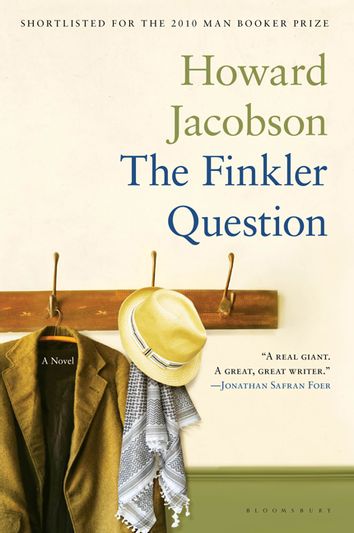
Booker Prize winner: The Finkler Question by Howard Jacobson

When you begin reading Howard Jacobson’s “The Finkler Question” — just announced as this year’s winner of the Man Booker Prize — you may worry that you are headed into a polemic disguised as a novel. The characters spend a lot of time talking about Gaza, swastikas and “never forgetting.” As you keep reading, however, the brilliance of the book comes clear: Jacobson is using the novel form precisely in order to help us limn these polarizing issues through the consciousness of a flawed character as an excuse, freeing himself — and us  — from the conventions of argumentation.

Barnes & Noble ReviewAlthough strong positions on Israel, Zionism and anti-Semitism comprise the bulk of this talky book, they are expressed through characters who each, eventually, change their minds. More impressively, behind these characters it is impossible to find any puppet master. You cannot deduce an authorial stance, only evidence of a frighteningly smart and insightful thinker and stylist. Jacobson — an established British author who has been terribly under-known this side of the pond — has written a brave book. Even more welcome, he has written a seriously funny one.

Jacobson exploits the nonthreatening veneer of a novel — “it’s just a story” — to make fun of everybody, defusing with an appealing lightness the heady political discussions the characters cannot stop themselves from having. “I wonder whether we feel nothing,” says a main character about Jews, “precisely because we rehearse our feelings on the subject too freely and too often?” “Crying Wolfowitz, you mean?” responds another character, “with a wild laugh.”

The novel revolves around Julian Treslove, a former BBC producer turned celebrity look-alike. Treslove is a textbook Romantic: he longs for an Ophelia, a lover who will die young and beautiful, so he can mourn her. His daydreams end this way: “The curtain always came down on Treslove’s fantasy of happiness with him crying ‘Mimi!’ or ‘Violetta!’ and kissing the cold dead lips a last goodbye that would leave him inconsolable forever.” It’s not much of a surprise that Treslove has never married, but has instead been involved with a string of women whose names all begin with “Ju” (or, as he later wonders, “Jew”), the only syllable he could hear a psychic utter when he had his romantic fortunes foretold.

Julian Treslove (or, perhaps, “Jewlian Very Love”) was childhood friends with Sam Finkler. Finkler was the first Jew Treslove ever met, and Finkler did not quite live up to the stereotype. Then, “he supposed a Jew would be like the word Jew — small and dark and beetling.” The two develop an intensely homosocial relationship straight from the British school-chums genre, but with a twist. For Treslove, Finkler represents the mysterious, desirable Other; he represents Jews, that is. Hence the novel’s title: Since he first met his first Jew, Treslove has called all Jews Finklers — but only to himself, wondering and mulling the age-old question of what it means to be Finkler.

Finkler, meanwhile, grows up to become a hugely successful pop philosopher, writing self-help books such as “The Socratic Flirt: How to Reason Your Way into a Better Sex Life.” Raised Orthodox, Finkler has fallen away from any faith, and is so anti-Zionist Treslove wonders if he is at heart anti-Semitic. When Finklers’s wife, Tyler, a convert, dies young, Finkler mourns — as Jews always are doing, at least in Treslove’s romantic imagination — but he also feels guilty (perhaps also as Jews are always doing). Finkler was an inconstant, distracted husband, is still a poor father, and spends his nights with zaftig Jewish mistresses or playing online poker. He holds the most outrageous political views in the book, and he is also the least likable member of a cast of characters who, although fascinating, are not always sympathetic. He is the kind of person who, at a restaurant, always asks the waiters for more hot water, “no matter how much hot water had already been brought. It was his way of asserting power, Treslove thought. No doubt Nietzsche, too, ordered more hot water than he needed.”

Finkler is also, of course, very funny. Treslove endlessly and unsuccessfully tries to crack the code of Finkler humor. It is all in wordplay, he concludes, but you also have to time the linguistic cleverness correctly. Poor Waspy Julian’s jokes are usually met with confused stares.

Treslove and Finkler are also linked by a mutual teacher from their childhood, now recently widowed and bereft, named Libor Sevcik, a Czech who has become, of all things, a celebrity journalist. With this trio of lost, mourning men at the center of the story, Jacobson sets himself a tough task. How will a novel in which these men meet, talk and fight about Gaza be engaging? Somehow Jacobson makes it work, in no small part because it’s funny.

Whenever the three get together, Libor and Finkler debate the state of Israel. Libor always pronounced it “Isrrrae.” Treslove analyzes his pronunciation: “Whenever Libor said the word Israel he sounded the ‘r’ as though there were three of them and let the ‘l’ fall away to suggest that the place belonged to the Almighty and he couldn’t bring himself fully to pronounce it. Finklers were like that with language, Treslove understood. When they weren’t playing with it they were ascribing holy properties to it.” Finkler, on the other hand, refuses to pronounce the word at all, calling the country Palestine: he “spit out Israel-associated words like Zionist and Tel Aviv and Knesset as though they were curses.”

Treslove mainly listens and envies the witty, headstrong Finklers. After Finkler and Libor become widowers, Treslove is only more jealous: now they have even greater tragic auras! Finkler, in turn, always competes with Treslove, and perhaps wishing for himself a less troubled past, envies Libor his memories of a better marriage, and therefore his greater share of grief.

The action that sets the plot into motion is hilariously inconsequential: Treslove is mugged. The improbable consequence is his decision to convert to Judaism. He learns Yiddish, a language Finkler considers “the lost provincial overexpressiveness” of his Orthodox father. He visits a blogger who is trying to grow his foreskin back to discuss circumcision and sexual pleasure. What was his “Jewish thing” really? asks the Jewish woman he falls in love with. “A search for some identity that came with more inwrought despondence than he could manufacture out of his own gene pool? Did he want the whole fucking Jewish catastrophe?”

With anti-Semitic attacks on the rise in London, Libor also undergoes a change of heart, as all the English Jews find themselves wondering of a swastika here or a smear of bacon grease there, “Was it something or was it nothing?” As the debates migrate from past times or faraway places to the streets of the diaspora, the characters all find themselves surprised by their own reactions.

Rare is a work of fiction that takes on the most controversial issues facing Jews so directly — and with enough humor, intelligence and insight — that it changes a reader’s mind. Be warned: “The Finkler Question” will probably distress you on its way to disarming you. Can we pay a novel any greater compliment?

Continue Reading Close

“The Great Divorce”: The dark side of the Shaker religious sect

I grew up thinking they were a quaint group in my hometown. A new book shows their sinister take on womanhood

  • more
    • All Share Services

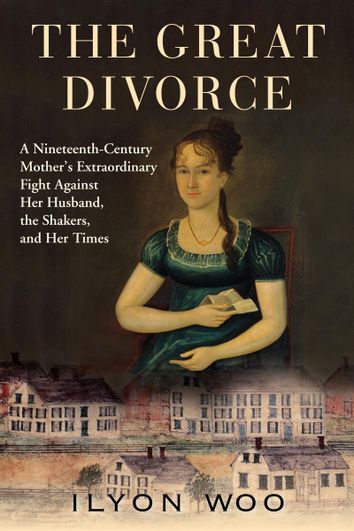
The Great Divorce by Ilyon Woo

I live in Shaker Heights, Ohio, a town named after the religious sect that settled here. Every year the local schools hold “Shaker Day,” and the scene outside my house is of kids walking to school wearing home-spun-looking clothes and white bonnets. It is very charming. Or it used to be, before I read Ilyon Woo’s “The Great Divorce.”

Barnes & Noble Review“The Great Divorce: A Nineteenth-Century Mother’s Extraordinary Fight Against Her Husband, the Shakers, and Her Times” plays havoc with our image of the Shakers as good, plain, industrious folks who made great furniture. We have integrated their vows of celibacy and their jerky dancing into a vision of quaint, sentimental Americana, and selectively forgotten less simple Shaker precepts, such as the double doors in every building that segregated men from women, and their insistence that converts relinquish all familiar relations. If a father chose to have his children raised as Shakers, the mother had no way to claim custody. Even if the children had been unwillingly abducted from her.

That is what happened to Eunice Chapman, the complicated heroine of Woo’s myth-smashing tale. Chapman was a woman born in post-Revolutionary America: therefore, she was dead. Civilly dead, that is, in the harrowing terms of the law, which regarded her as nonexistent. A woman in the early 1800s had fewer legal rights than a freed male slave. The law considered a married couple a single legal entity, and that entity was de facto male. Women could not own property, vote, earn wages or sign contracts. “So wholly did the law consider man and wife united that spouses were not allowed to testify against each other, on the grounds that to do so would be an act of self-incrimination.”

Born Eunice Hawley, this small and supposedly striking woman married an abusive alcoholic, James Chapman, in 1804, when she was 26 — an age verging upon spinsterhood. The couple had three children before James abandoned the family. He eventually joined the Shakers, moving into their colony in Watervliet, N.Y.. James wanted Eunice to join him (though were she to, they would never be able to touch each other again). Eunice, who opposed Shaker beliefs, refused. Her decision left her, however, in an untenable, humiliating position: she had to support her children but she was unable to make money. At one point she had to “throw her children on the town.” For support. She tried to live near the Shakers, and then with them, but refused to submit to their “bondage.” James, incensed, snuck back to their old house, which had been emptied of all belongings to pay off his old debts, and took the children. The Shakers claimed the children, asked them to denounce their mother, and Eunice had no legal way to retrieve them.

Unless she got a divorce. Eunice spent five years battling to regain custody of her children, a process that involved attempting to make it the Shakers, not women, who were civilly dead due to “religious delusion” and writing, self-publishing and hand-distributing copies of her story to each New York state assemblyman. She organized mobs to confront the Shakers and try to take the children back. She became a crusader in all senses of the term, fighting righteousness with righteousness: to the Believers, she wrote, she was “COLLECTING MY FORCES FOR A NEW INVASION.” In her own eyes, she was “an instrument in the hands of God.”

No one who has lived through a lawsuit will be surprised to learn that Eunice’s case dragged on for years. Opponents feared empowering women: “By passing this bill … we shall give boldness to the female character,” said one assemblyman; women would “become emboldened, and would be haunting the members — for divorce!” The final decision was precedent-making. But Eunice’s victory was incomplete: Her first reunion with her children, who had been taught to renounce family ties, required her to fight again, this time for their love.

It would have been easy to tell this story as a polemic or a melodrama, but Woo never lets us settle into mere indignation or pity. When we are set to root unconditionally for proto-feminist Eunice, Woo hints that her zeal verged on deranged hysteria. Nor are the Shakers simple villains: Woo points out that for some women who were abandoned by their husbands, they provided a refuge. With “The Great Divorce,” as with most divorces, there are too many variables to easily apportion blame or victimhood. As for the Shakers? After school on Shaker Day, I see the children walking back home, funny hats in hand. Usually, a mother or father accompanies them. That they go home at the end of the day is important to remember, and celebrate.

Continue Reading Close

Was joint custody a mistake?

Eight years after my divorce, I am a single parent with half a child

  • more
    • All Share Services

Was joint custody a mistake?

When my son was 7, he asked me how to spell “onomatopoeia.” I was getting dressed in my room; he in his. I closed my eyes to see the word in my head, and yelled each letter as best I could across the hallway. Later, I wondered whether I had gotten the o-e-i-a sequence right. I looked it up in the dictionary sitting on my desk. On my way to onomatopoeia I found “onus.” Here is the entry:

Onus NOUN, the onus of single parenting. BURDEN, responsibility, liability, obligation, duty, weight, load, charge, mantle, encumbrance; cross to bear, millstone round one’s neck, albatross.

This dictionary, edited by famous and culturally in-the-know writers, has chosen single parenting to best capture the meaning of onus. To understand what it means to have a cross to bear, a millstone around one’s neck, an albatross, liability, mantle, imagine being a single parent.

I am a single parent. Apparently, I have an onus. (Think about the word long enough, and it might just well become onomatopoetic.)

If “onus” sums up single motherhood, “amicable” sums up how one should divorce. It is recited so ubiquitously it takes on a talismanic quality. The word resonates in my head to the point of nonsense, like any word you say over and over again until it becomes strange, a word you don’t know, an incantation in a foreign language said by penitents of some other religion. Crowds chant Allah on their knees in mosques; in my head I hear friends, family, helping professionals whispering amicable, amicable, amicable.

For reasons I cannot yet fully explain (hence I seek etymology and incantations, look things up), I accepted the terms my husband laid out when he left me: Fifty-fifty.

Psychologists write books about children dealing with divorce, and friends are quick with “children need both parents” quips. The truth is, no one will know, at least for some time, whether joint custody was the right choice for my son, or for me. What I do know is that it means I am an albatross-wearing social ill half the time. Or, as my therapist once put it, I have “half a child.”

I used to wander the parenting-memoir section of bookstores on my nights “off” from mothering. As I scanned the titles I felt like the one kid on the jungle gym not invited to the play date. The allure of reading these books is to find something that resonates with one’s own experience, but they do an end run around single moms. Authors profile moms from the North and from the South, moms who are in the 10 percent tax bracket and moms in the 35th percent, moms who are evangelical and moms who are pagan. But they rarely choose a mom like me. My experience appears in lines like this one, from Judith Warner’s “Perfect Madness: Motherhood in an Age of Anxiety”: “[N]ot having had a working (hence, absent) mother is not the thing most mothers today cite as the cause of their mom-related psychological woes. It’s having an unhappy mother. A divorced mother, perhaps, who was crippled with worry over money.”

There seems a huge cultural premium put on encouraging these myths. There is a mommy cabal out there. Caitlin Flanagan writes: “Every morning a child should wake up to see her mother’s face.” Does this mean, since my son awakes every other morning to his father’s face, I am a bad mother? It takes an act of will, or repression, to publish so many books about contemporary motherhood that contain so little about mothers with joint custody of their children.

TV tells me a different story than does mommy-lit. On TV, wives are to become indignant when men have affairs and say things like, “You do that again and I’m going to take the kids and leave you.” We are meant to root for these mothers. You go, girl. If he screws around, then you get the kids.

But what about the “onus” part? We mothers are supposed to fight to have our children with us when their fathers go bad, but then we are to be pitied, schlepping around those millstones and bearing those crosses while also slinging baby on our backs, shoulders hurting from the too-low stroller handles.

When my husband had his affair I did not ever once say, “I’m going to take Simon.” I had my reasons, good ones, I think, but ones that only can sound self-righteous when explained: I thought the best thing for my son would be to be with his father too. I sacrificed time with him so he could have time with Dad.

I feel relentlessly guilty about this decision, perhaps because I read too much mommy-lit and watch too much TV on the nights Simon is with his dad. Eight years later, a life with my ex now unimaginable and the marriage no longer mourned, I still have not resolved the question of joint custody. It gets right into the crux of motherhood; of what we should do, who we should be. I keep wondering why I wasn’t like those women on television. Sometimes I hate them and scream at them from the couch; sometimes I sink further into the pillows to escape the threats, the insinuations: I should have packed that kid into the car and driven away. Shouldn’t I?

When Simon was 3, he used to call the time after the lights were out and before he fell asleep “the talking dark”; it was one of those pitch-perfect childhood phrases coined to describe an experience not found in grown-up parlance. In the talking dark, Simon talked himself to sleep. In the talking dark, bad guys were defeated, weather was commented upon, stuffed ducks waddled into ponds. He also got two of everything that year: two bedrooms, two sets of toys, two different jammie rotations. Dad’s house and Mom’s house were very separate places in his consciousness, a firewall built between them so thick that once, when he was with his dad and ran into me on the street, he introduced us to each other. “Mommy, this is Daddy. Daddy, Mommy.” But he had one talking dark. One consciousness to inhabit and one narrative machine with which to invent stories out of the tracks of his days.

Simon will be a very tall, broad man someday. Today, 5 feet tall and chasing 100 pounds, he asks me to lift him up. My back hurts afterward, but it’s good exercise. Simon giggles as I toss him around. He’s not so heavy.

Anne Trubek teaches at Oberlin College and writes a literary column for GOOD magazine. Her book, “A Skeptic’s Guide to Writers’ Houses,” will be published in fall 2010. 

Continue Reading Close