August Heffner

Embracing ’90s typography

I hated graphic design from my youth. Now that's making a comeback, I've discovered it's not so bad

  • more
    • All Share Services

Embracing '90s typography

ImprintI hear you. My teenage years ended abruptly at the turn of the century. This means I was born the year MTV went on the air and my entire teenage years were spent in the 1990s.

It’s no wonder that upon leaving college as an official graphic designer, I was at odds with the decades I was reared in. I hated all of the styles I’d known. I hated the ’80s. I hated Memphis. I hated April Greiman posters. I hated Neville Brody. I hated the ’90s. I hated Raygun. I hated Emigre.

Styles always return. It’s a boring subject but it’s true. Just check out Rookie Mag and watch today’s teenagers fall in love with Blossom. Or see Beavis and Butt-Head returning to MTV. Or, like me, after seven years of not owning a TV, watch “Seinfeld” again. It is amazing and it is really, really ancient.

A resurgence is always hardest for the people who were young during the time the styles were created. I had a rough time with the return of hints of these two decades in design and typography, but I let go of the nostalgia (or I embraced it?) and it feels great.

If you are having a hard time, try now to look into the forms and what they mean. And while I can’t put my finger on what makes a lot of today’s work feel like those two decades I have decided there are two ideas that feel lifted from the past and returned with an excitement: primitivism and customized type. If you are like me, and you’ve ignored it all these years, go look at “The Graphic Language of Neville Brody”; it’s splendid and the most contemporary-feeling book on my shelf.

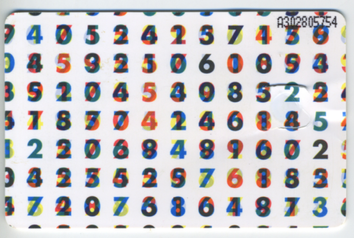
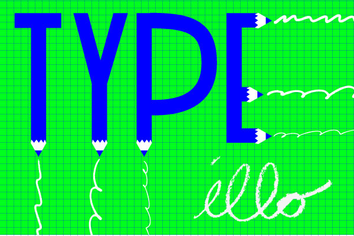
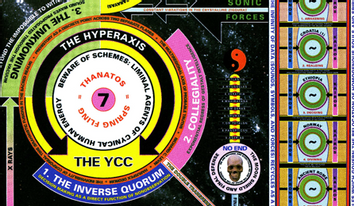
Here are some pieces from the amazing (and contemporary) David Rudnick that made me feel particularly excited about what I thought I used to hate. Turns out it’s totally fucking* fun!


* I used to love swear words as a teen

Copyright & Footer:

Copyright F+W Media Inc. 2011.


Salon is proud to feature content from Imprint, the fastest-growing design community on the web. Brought to you by Print magazine, America’s oldest and most trusted design voice, Imprint features some of the biggest names in the industry covering visual culture from every angle. Imprint advances and expands the design conversation, providing fresh daily content to the community (and now to salon.com!), sparking conversation, competition, criticism, and passion among its members.

Design for the people!

Our lack of public works may put American graphic artists at a disadvantage

  • more
    • All Share Services

Design for the people!

ImprintA few weeks ago I was lucky enough to see Karel Martens speak at a lecture hosted by the  New York chapter of the AIGA. It was the most inspired I’ve ever felt after seeing a graphic designer speak.

If you don’t know him, Martens is the godfather of graphic design in the Netherlands and, through his teaching at Yale and founding of the Werkplaats Typografie in Arnhem, the hero of a generation of young designers who are being influenced by his work every day, whether they know it or not.

Martens and other Dutch designers, notably Mevis and van Deursen, represent, to me, something terrible that may be happening in American graphic design. Carin Goldberg‘s cover for Fast Company (below) helped me to believe I might not be alone. She attempts to list “The United States of Design” while only listing designers born and possibly educated in other countries.

Fast Company

Martens, in his talk, mentioned that he balances his time between personal work, commercial work and public works. At first I thought he just meant commercial work that was available to the public, like a building facade or something. And then it hit me. He meant work FOR THE PUBLIC! Like, as in, not paid for by a corporate client, but rather, by the people? The government?

My American head is spinning. My socialist heart is racing. My passion for education is worried. So worried! If our students learn design, as I did, with the knowledge that the only design that you can make a living from is the design that sells a product then we may fall well behind our peers in other countries. Peers who are educated in a world where design is appreciated for what it is, not just how much it can sell.

Of course, this is totally up for debate, and I really encourage anyone to talk me down from my worry. It may just be my jealousy of Martens’ work that is leading me to blame my entire country. But could it be that we are staring down the wrong path, again?  To be continued, I hope…

Copyright F+W Media Inc. 2011.


Salon is proud to feature content from Imprint, the fastest-growing design community on the web. Brought to you by Print magazine, America’s oldest and most trusted design voice, Imprint features some of the biggest names in the industry covering visual culture from every angle. Imprint advances and expands the design conversation, providing fresh daily content to the community (and now to salon.com!), sparking conversation, competition, criticism, and passion among its members.

Continue Reading Close

Hand lettering hits the Web

The Internet provides a surprising number of resources on the old-school art of painting perfect letters

  • more
    • All Share Services

Hand lettering hits the Web


This summer I went on a relaxing vacation (a new experience for me) and decided to sit on the porch all day and draw letters. Perhaps the years and years I’ve spent in complete awe and jealousy of Steve Powers final built up and I thought, this time, I’m going to do it. I’m going to train my hands to paint perfect letters. So after stocking up on brushes and inks I decided I needed some books, if I was to be self-taught. I hunted throughout New York City, a city I believe to have an enormous number of books per capita, and couldn’t find anything worth buying.

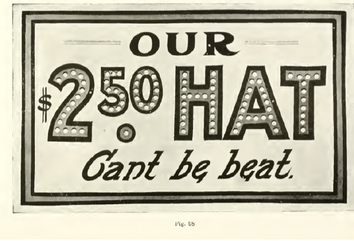
Enter the Internet. A quick search on Archive.org (prompted by the hand-letterer’s forum) provided tons of full scans of amazing hand-lettering instruction books from the late 19th century through the mid-20th. I brought these books with me and had an amazing time learning. Please enjoy my favorites: “The Sign Painter” (1916), Lettering (c1916), “Elements of Lettering and Sign Painting; (1899) and the extensively named “The Art of Show Card Writing: A Modern Treatise Covering All Branches of the Art … With One Hundred and Fifty-three Illustrations and Thirty-two Lettering Plates, Comprising All the Standard Ancient and Modern Styles” (1922).

Copyright F+W Media Inc. 2011.

Salon is proud to feature content from Imprint, the fastest-growing design community on the web. Brought to you by Print magazine, America’s oldest and most trusted design voice, Imprint features some of the biggest names in the industry covering visual culture from every angle. Imprint advances and expands the design conversation, providing fresh daily content to the community (and now to salon.com!), sparking conversation, competition, criticism, and passion among its members.

Continue Reading Close

Why I still work with my hands

Most of my job now takes place on a computer, but it can't replace what you learn when you use your fingers

  • more
    • All Share Services

Why I still work with my hands

When I left a design studio that I was a part of for over three years to go to a branding agency, my boss/mentor gave me a bone folder. “They won’t have any of these where you’re going!” he said.

He was right. My first assignment was for an apparel brand and in trying to create some imagery I famously asked where “the ribbon drawer” was. It was met with some confused looks. I was all: “You know, where you keep your grosgrain, your silk, your different sized ribbon.” I was almost fired on the spot.

These days I work “in-house” and “at my house.” I’ve moved from designer, senior designer, design manager to assistant creative director, and I haven’t forgotten what a bone folder is, yet. That is to say, even though most of my days are meetings, emails and spreadsheets, I try to work with my hands as often as possible. If, for a period of time, I don’t do so at work, I’ll do it at home, no big deal.

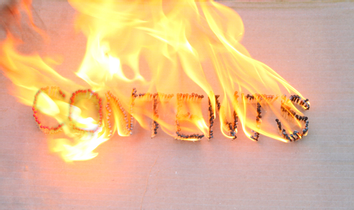
Last week I made some type with matchsticks (see sketch above). I learned a lot. I learned it’s easy to poke a matchstick into a base if you just give it a few turns in a pencil sharpener. I learned that 250 matchsticks makes a pretty big flame. I learned that when shooting fire always set your camera to rapid fire. I learned that assistants are great for even the seemingly small jobs. I haven’t learned this much with my hands since I was working with sand (see below).

Point is, I learned. I learned a lot with my hands. I learn a lot every day doing creative director stuff, but I’d lose a lot if I used these fingers for emails only.

There a new book about this, “Handmade Type Workshop.” It’s great and full of awesome lessons, for your hands, not your head. I’ve even got a capital “E” on the cover of the American edition, made out of grosgrain ribbon (see below). And even though my name is spelled incorrectly on the inside, I’m proud to be among the many makers in there.

Copyright F+W Media Inc. 2011.

Salon is proud to feature content from Imprint, the fastest-growing design community on the web. Brought to you by Print magazine, America’s oldest and most trusted design voice, Imprint features some of the biggest names in the industry covering visual culture from every angle. Imprint advances and expands the design conversation, providing fresh daily content to the community (and now to salon.com!), sparking conversation, competition, criticism, and passion among its members.

Continue Reading Close

The intersection of food, design and politics

A look at how a group of radical thinkers in '60s San Francisco used food as part of their art and message

  • more
    • All Share Services

The intersection of food, design and politics


Free City posters

Here in Brooklyn, we’ve seemed to hit an apex of food enthusiasm. Its seems like every weekend this summer a new food-related event happens and every weekend my wallet is emptied by $20 lobster rolls or an even more expensive indulgence.

Happily though, the food movement of today is part of a nice history of food appreciation and reaction to the food industry with roots in a freer (read cheaper!) group of ideas.

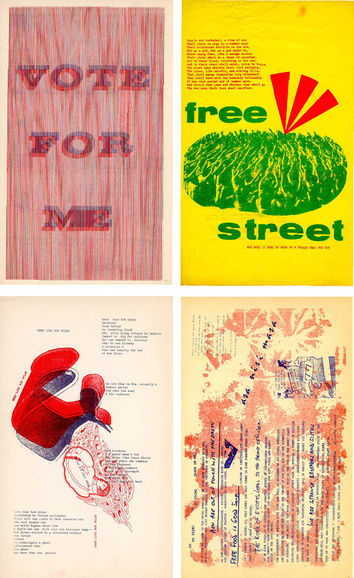
Above and below are some samples from The Diggers Archive, a group of radical thinkers from 1960s San Francisco that used food (free healthy food!) as part of their art and political message. These pieces are from their newspaper FREE CITY NEWS, that showcased some pretty cool hippie graphic design.

Sadly, things like access to education and healthy food still seem financially out of reach even in our very enlightened urban environments. Happily, new groups are forming every day to challenge these economies including free classes and inexpensive meals that support art (full disclosure/shameless plug: I’m involved in one of these groups and we are cooking up some delicious food soon, pay-as-you-wish!)

Free street poster Free City posters Free City posters

All images courtesy of the Digger Archives

Copyright F+W Media Inc. 2011.

Salon is proud to feature content from Imprint, the fastest-growing design community on the Web. Brought to you by Print magazine, America’s oldest and most trusted design voice, Imprint features some of the biggest names in the industry covering visual culture from every angle. Imprint advances and expands the design conversation, providing fresh daily content to the community (and now to salon.com!), sparking conversation, competition, criticism and passion among its members.

Continue Reading Close

The case against vacation photos

When I started sketching instead of using my camera, it revolutionized my travel experience

  • more
    • All Share Services

The case against vacation photos

A few years ago, I stopped bringing a camera on vacation. It has been an amazing experiment and I haven’t regretted it once. Traveling to a foreign country without a camera feels like that recurring nightmare of showing up to school with no shoes on. At first you feel unprepared, naked and as though you are missing some of the greatest photo opportunities in the world. It is scary but you have to be brave.

Soon, you relax and realize you are actually seeing the greatest photo opportunities in the world. And, instead of digging through your pack to grab a camera, turn it on, and unconsciously freeze all the light in front of you into a small digital file only to be dumped onto your computer then Flickr page, you are actually, well, thinking about what’s going on. (OK, so my girlfriend/travel buddy is an amazing photographer and brings a camera or two, which puts me at ease, but stay with me on this). Taking a photograph of the Eiffel Tower, for example, seems ridiculous. There are millions of photos of the Eiffel Tower. If I were to take my own photo, I doubt I could pick it out from a crowd. By drawing, though, I would spend about 25 minutes looking at the Eiffel Tower, rather than 1/30 of a second, burning it into my brain rather than the digital sensor.

I know this sounds heavy-handed but I encourage everyone to try it on their vacations. I’ve substituted photograph making (like a smoker would use chewing gum) with a notebook and pens. Every time I feel the urge to take a photograph, I pull out my notebook and draw the scene. I’ve learned a lot more about the places I’ve been and, in every country I’ve traveled to, this method usually created a mob of children around us in any public park. These interactions have been some of the best cultural travel experiences I’ve had, beating any and all museums in the world.

Of course, I learned this method of substituting the pen for the camera from two of my heroes. Jason Polan, the amazing artist whom you may know from his New York Post fame as the man who is trying to draw everyone in New York, has been a huge influence on me. His ability to capture scenes in just a few lines is an obvious talent that lies not in his hands, but in his ability to see (more posts on Jason in the future). Maira Kalman is my favorite living artist. Her painted blog for the New York Times brings me to my knees and proves not only her amazing mind, but her ability to understand and communicate a message through a combination of words and painted images.

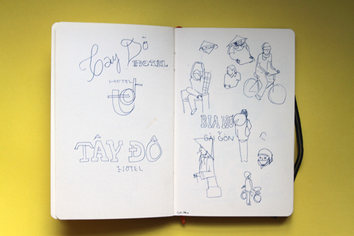
Below are some scenes from the sketchbook I took to Vietnam last summer — scenes I had a distinct urge to photograph but drew instead. Looking back at these drawings while planning our next trip, I’m flooded with memories and environments rather than accurate depictions of where I was. Of course, I also look at my girlfriend’s photos a lot, to remember what it actually looked like.


*All illustrations by August Heffner

Copyright F+W Media Inc. 2011.

Salon is proud to feature content from Imprint, the fastest-growing design community on the Web. Brought to you by Print magazine, America’s oldest and most trusted design voice, Imprint features some of the biggest names in the industry covering visual culture from every angle. Imprint advances and expands the design conversation, providing fresh daily content to the community (and now to Salon.com!), sparking conversation, competition, criticism, and passion among its members.

Continue Reading Close

Page 1 of 2 in August Heffner