Billy Sothern

“If God Is Willing and da Creek Don’t Rise”: Spike Lee’s riveting look at New Orleans, now

The filmmaker's new documentary suggests that the troubled, extraordinary city holds the key to our redemption

  • more
    • All Share Services

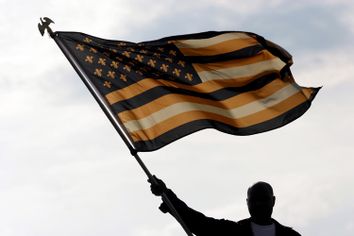
30 May 2010. New Orleans, Louisiana, USA. Lower 9th Ward. Flag waving on the levee wall on the set of Spike Lee's latest movie for HBO. 'If God is Willing and the Creek Don't Rise.' Photo; Charlie Varley.(Credit: Charlie Varley)

Five years after Hurricane Katrina, New Orleans remains one of the most troubled places in the United States. Its woes are a consequence of the civic collapse that preceded Katrina, the devastating levee failures following the storm, and most recently, the unrivaled environmental devastation from the BP oil disaster. But New Orleans also remains the heart of American culture. It’s a place unrivaled in vernacular richness where people come from world around to eat, drink, listen and see — to live for a few days like many of us here live every day. Is it possible that the national seat of American tragedy can also redeem this country by refusing to give up its bon temps while fighting for its survival?

Spike Lee gives his answer in a new documentary, “If God Is Willing and da Creek Don’t Rise,” a loosely structured, four-hour meditation on everything right and wrong with New Orleans five years after Katrina. It premieres Aug. 23 and 24 on HBO.

The tensions are on display from the film’s opening. Its first scenes include, in sequence, an angry and defiant poem (“No more use of our Gulf Coast waters, wetlands, heritage and soil/ No more ‘Up yours Louisiana,’ because we all know there’s blood in that BP oil/ If God is willing and the creek don’t rise”) read by the star of Lee’s earlier New Orleans documentary, Phyllis Montana-LeBlanc (now a star of David Simon’s “Treme”); images memorializing Katrina’s devastation; and the joyous celebrations of the Saints’ improbable 2009 Super Bowl victory. Interviewed in a throng of people following the Saints win, an unnamed woman sums it up, “Four and a half years ago we lost our home during the flood, and we are so privileged and honored to be here. Living in New Orleans is a privilege. It’s not easy, but it’s a privilege and a blessing.”

The claim that it is “not easy” to live in New Orleans turns out to be one of the very few understatements in the documentary, which dwells at length on the many things that create this dis-ease — separate and aside from the storm that drew the country’s attention and the oil spill that refocused it. The viewer is led through policy debates and critiques and personal stories highlighting the demolition of New Orleans’ public housing projects and consequent housing crisis; the collapsed healthcare system (New Orleans’ public hospital remains shuttered because of political wrangling about the future of healthcare); the mental health crisis that has been responsible for murders, suicides and less-than-joyous substance abuse and drinking since the storm; the incompetence of FEMA in providing post-storm assistance to the city and the agency’s mismanagement of its emergency housing plan; the civil engineering missteps by the Army Corps of Engineers that made the city vulnerable to flooding and that have degraded our wetlands; the shattered education system; the out-of-control crime and violence that have plagued the city; the police corruption and history of police violence that have led to numerous federal murder and conspiracy indictments for officers involved in several, separate incidents; and deregulation that provided the opportunity for corporate greed’s fouling of the Gulf.

Any New Orleanian living here during the past five years will be familiar with these issues from their daily lives and from the news on the front page of the Times Picayune. They are issues that you live when you can’t find a place to rent that you can afford, when you cannot find a school where your child will receive a decent education, when you wake in the middle of the night to hear gunshots and know that someone’s life may have just come to an abrupt and violent end. These are the daily challenges of living here. And it’s useful to recall, in watching this documentary, that our individual efforts to overcome these obstacles are not just personal but part of a collective effort to keep this city alive.

The people telling the story in this documentary are many of the same people whose names appear in the paper. Some are policy wonks; others, activists or artists; but nearly all are fervent New Orleanians. Some of them speak in a strongly held hyperbole that hints at madness or mania, both about the good and the bad here. There are angry words, never precisely defined, about “the powers that be” and their efforts at “ethnic cleansing” on the one hand, and on the other, references to the Saints’ Super Bowl win that suggest a local belief that the victory was an act of God, as if New Orleans, like the long-suffering Job, had been rewarded for its faith. This is the bipolar parlance of life here, stemming from the widely held belief that the city is vastly better than, worse than, and not really a part of the rest of the country. Most of these sentiments are presented in the documentary without any evident endorsement from Spike Lee, who seems more enamored with his subjects’ intense feeling for their homes and threatened way of life than with the specifics of their claims. He is particularly interested in their suspicions about race, the government and corporations. The firmness of the beliefs held by so many people here is just as important as the accuracy of their claims.

But implicit in the framing of the documentary, and of most of the engaging books and films to come out of New Orleans since the storm, is the notion that the challenges that define life in post-Katrina New Orleans are the same vexing national crises on which the quality and success of 21st-century America will be, and should be, judged; that the same problems also exist in Lee’s beloved native Brooklyn and so many other places in this country. Despite Lee’s critique of the political and social realities that made the Gulf’s twin disasters possible, despite the seemingly endless images of dead bodies — human and animal — that we see in this film, “If God Is Willing and da Creek Don’t Rise” shows that Lee is not without hope.

He is clearly a partisan of this city, a place where real recovery and reconciliation are the daily work of thousands of people. The efforts of the people of this city and region appear to have given him reason to believe — despite the ever-present risk of rising water — that something better may yet emerge from the tragedies along the Gulf.

“Treme” feels like home to me

In New Orleans, we were braced to be misunderstood again, but David Simon's drama gets our city -- and yours, too

  • more
    • All Share Services

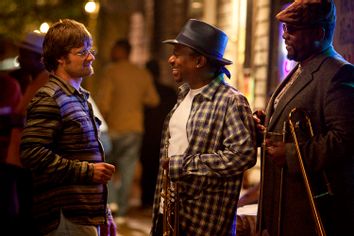
Steve Zahn, Kermit Ruffins and Wendell Pierce in "Treme."(Credit: Skip Bolen)

I watched the first episode of “Treme” sitting on a couch that DJ Davis, the real-life version of one of the show’s main characters, peed on after a hard night of drinking. Everyone in the room knew the guy “from around,” so it was slightly odd to watch Steve Zahn’s performance as DJ Davis. But it turned even weirder when Steve Zahn’s character ran into the real-life DJ Davis, who gave a nod and a wink, in a bar where some of us had sat drinking with the real-life DJ Davis before.

I am an old fan of David Simon, the show’s creator, and spent Friday nights in college obsessively watching “Homicide: Life on the Streets,” the detective show based on his book. But my anticipation of “Treme” had been fraught with concern: Would “Treme” get the city right? What kind of effect would it have on the city? Could it possibly manage to capture the fact that we are so lucky to live here — and yet that residing here comes at great risk and cost? A few weeks ago, I had a conversation about my worries out on the streets of New Orleans’ Central City, a largely unflooded, historic neighborhood whose shotgun homes have recently heard as many fatal gunshots as any neighborhood in North America. It was Super Sunday, an annual Mardi Gras Indian “holiday,” and men, women and children packed the streets in vividly detailed, painstakingly stitched, brightly colored full-body Indian suits. I talked with a veteran civil rights lawyer, Mary Howell, in the middle of a normally busy street. After seeking to end police abuse against Mardi Gras Indians and other New Orleanians for years, Howell was present this day as a legal observer. We talked about Toni Burnette, the character in “Treme” based on Mary and depicted by the terrific Melissa Leo, who captured her characteristic diction and gestures with great aplomb in the premiere, and how the show might impact next year’s Super Sunday: Would “Treme” open the floodgates to hipsters and cultural tourists, Americans longing for a non-homogenized version of community?

Our passionate discussion of the future of the city, with a backdrop of crumbling homes, festive music, and Mardi Gras Indians, could have been a scene from the premiere. Indeed, just that day I had run into actor Clarke Peters, who plays Indian chief Albert Lambeaux, enjoying the day (in plainclothes) just before I ran into Mary. I can only guess that his real-life doppelgänger must have been there somewhere. And me, a transplanted New Yorker living in New Orleans for the past decade with the fervor of a convert, could have easily been mistaken for Davis, especially after ordering a few gin and pineapples (“No tonic, sorry”) out of an impromptu bar beneath the lift gate of an SUV on the parade route.

For New Orleanians, watching “Treme” can be a bit like a local version of Philip Seymour Hoffman’s unrealized play in Charlie Kaufman’s odd “Synecdoche: New York,” in which a mad, detail-oriented genius sought to create a constant and simultaneous performance of the quotidian lives of an entire city’s residents. The show is made by people who clearly adore and understand the city, and it takes great pains to get the details right. I recognize myself and my neighbors in these characters, these archetypal New Orleanians, and Americans will finally see this dynamic culture that’s mostly been obscured by cartoonish depictions of New Orleans in media like the short-lived show “K-Ville.” But I was surprised that the show isn’t just introducing America to real life here and instead presents something that transcends the unique geography and character found within the city’s borders.

That more significant reality is that New Orleans, for all its exceptionalism — its Hubig pies and Carnival — is the canary in the coal mine of American democracy. While its architecture, music, food and unique wonders provided a cogent argument for the country’s investment in its rebuilding following the storm (well expressed in the fine “Why New Orleans Matters” by “Treme” writer Tom Piazza), the seeds of its near demise are present in every part of the country from Baltimore, Md., to Richmond, Calif. You may not be able to get a good bowl of gumbo in your town or state, but there are very few places in America where you cannot drive half an hour to the nearest neighborhood with decaying infrastructure, crime, poverty, failing schools and other plagues and find the essence of the pre-Katrina New Orleans. What happened following the storm, “a man-made catastrophe, a federal fuck-up of epic proportions, and decades in the making,” according to John Goodman’s character on the show (based loosely on New Orleans blogger Ashley Morris), simply exposed our pre-storm desperation. That catastrophe, not the storm, flooded tens of thousands of homes, most of which were suburban, mid-20th-century ranches where regular families, like the real-life family of Wendell Pierce, who plays trombonist Antoine Batiste, lived.

So when Albert Lambeaux walked into his flooded concrete house in the premiere, a couple of  inches of muck beneath his feet, his heartbreak has nothing to do with the elegant, crooked, old wood-frame homes that people visualize when they think of this city. It has nothing to do with why New Orleans, and not some other place, matters, but instead relates fundamentally to our common conception of home, and what protections we ought to expect as citizens of this terribly rich country. (I wrote about coming home to my wind-damaged, roofless, 19th-century New Orleans home in Central City, two weeks after the storm, for Salon.)

Similarly, when we see Khandi Alexander’s character, Ladonna Batiste-Williams, find out that her brother is lost among the inmates who were left to die in Orleans Parish Prison before they were transported willy-nilly across the state without regard to the insignificance of their purported offenses, we are hearing a true New Orleans story (which I wrote about for the Nation). But the subtext is that we are a country that relies on incarceration to lock up a greater percentage of its population than any place in human history, of which a disproportionate share are young black men. Again, New Orleans simply represents the razor’s edge of a problem that is a defining issue in modern American life.

In this way, the show, like Dave Eggers’ recent “Zeitoun,” uses post-Katrina New Orleans to present a convergence of pressing American crises alongside some of the very things that redeem this country. In “Treme,” the roar of a trombone wandering down Governor Nicholls Street sweetens the bleak realities presented by both David Simon’s earlier show of urban American horrors, “The Wire,” and the post-Katrina disaster that horrified Americans watching on CNN. But the joy of that music, of the celebration, does not obscure, in the show or in real life, the reality of police brutality, mothers who cannot pay for groceries, fathers who eschew their parental responsibilities, crime and staggering violence on the streets, and terrifying disinvestment in American infrastructure.

New Orleans is exceptional, and it does matter. It has Mardi Gras Indians, Sazeracs, po’ boys and red beans. But, in addition to those treasures, the New Orleans in “Treme” presents the post-Katrina magnification of the woes that this country faces in nearly every community. While your town is not likely to have a second-line parade anytime soon, civic collapse could be coming your way. That’s why New Orleans should matter to you.

Billy Sothern is a New Orleans attorney and author of “Down in New Orleans: Reflections from a Drowned City.” He wrote a series of articles for The Nation about life in the New Orleans following Hurricane Katrina and blogs at Imperfectly Vertical.


Continue Reading Close

The Saints are America’s team

New Orleans' great Super Bowl hope represents everything that's good about this tragedy-stricken city

  • more
    • All Share Services

The Saints are America's teamNew Orleans Saints fans show their spirit.

Two weeks ago, the New Orleans Saints played the Minnesota Vikings for the National Football Conference Championship. My wife and I couldn’t watch the game alone — we didn’t want to bear the burden of defeat or experience the thrill of victory alone. Near kickoff, we drove the city’s streets just before the game started and they were eerily void of people just as I remembered them when I returned to the city days after Hurricane Katrina struck. We arrived at the uptown home of some friends, just blocks from quarterback Drew Brees’ house, and nervously ate the food and drink of this town. Our host had made a pot of gumbo, using a chicken he had fried and a dark roux. I separated yolks from egg whites, poured gin, heavy cream, simple syrup and orange flower water into my cocktail shaker and shook like crazy for a full minute to confect a round of Ramos gin fizzes, a drink invented in New Orleans more than a century ago. Despite our efforts, things looked grim in the fourth quarter. With the score tied and very little time on the clock, the Vikings had the ball, were in field goal range, and could take the game with a decent field goal kick. But we sipped our fizzes for good luck and a flag was thrown against the Vikings for something called “12 men in a huddle,” an unlikely mishap for the polished team, driving the Vikings back beyond field goal range, which forced overtime, where the Saints won possession on the coin toss and took the game with a field goal.

We ran out onto the streets and our cries of “Who dat!” — the cry of the Saints fan — were answered back with who dats from neighbors engaged in their own celebrations. We drove home through streets rich and poor that were now filled with revelers spilling out of bars or screaming from their front porches. We honked at cars, families and jovial street mobs to share our joy. When we got home, the honking, yelling and fireworks (or were they gunshots?) were audible for hours. The New Orleans Saints had defied expectations and were going to the Super Bowl for the first time ever.

The winning field goal occurred in New Orleans’ emblematic Superdome, a giant concrete spaceship that landed in New Orleans’ business district a few decades ago and which had been, up until Hurricane Katrina, principally indentified as the home field of the hapless Aints, as the Saints were known during their early history of defeat and disappointment. The city of New Orleans has been, as observed recently in the New York Times, in a simultaneous struggle since the team’s inception. It lost 200,000 residents during the team’s first four decades, huge areas of the city were surrendered to blight and crime, the city lost almost all of its big businesses, and racial divides cleaved the city’s residents and divided the mostly black city from its mostly white suburbs. And this was all before Hurricane Katrina when the Superdome became the site of one of America’s biggest failures when desperate, mostly black citizens, abandoned in a city that had succumbed to catastrophic flooding, due more to poorly maintained and engineered levees and infrastructure than to the storm’s might, gathered for the world to see. Rumors of murders and rapes among the masses in the Superdome circulated quickly. By the time FEMA and the National Guard arrived and evacuated the entire city, the Superdome was no longer a sports field, it was a memorial to America’s persistent failure to address racial inequality, human misery and civic collapse.

I have beat this drum for almost five years since the storm, trying to tell anyone who will listen that the things they saw after Hurricane Katrina, the things that disgusted and disappointed them, were not created by the storm but exposed by it and that similar ugliness existed not far from their homes, in forgotten cities from Richmond, Calif., to Camden, N.J., and everywhere in between. And I still insist that New Orleans’ recovery is a bellwether for American democracy and, as New Orleans goes — good or bad — so goes the country. All of this is why it is difficult for me to say that a winning field goal kick in a football game has changed things at all. But it has. The kick brought the citizens of this city and region together in a way that the common experience of displacement and loss following Hurricane Katrina had failed to do.

Whether you are listening to the black talk radio station, WBOK, where hosts are apoplectic about the possibility of the election of a white mayor, as seems likely, or WWL radio, whose white flight listeners seem to never tire of calling in to disparage the city, everyone comes together about the Saints. The Times Picayune, where the politics of the “white vote” and the “black vote” have been written about a lot recently, ran the headline, “New Orleans Saints Fans Build Color-blind Bonds in Who Dat Nation,” with the lede,

In a place where music and food can break down racial barriers but true dialogue between the groups is rare, nearly universal joy over the Saints’ newfound success has created a new common language and solidified a shared identity.

The entire region rallied this week in mass, anti-corporate mania when the NFL tried to claim that “Who Dat” was the intellectual property and registered trademark of the NFL and threatened several New Orleans retailers who sold Who Dat merchandise. After receiving nothing but bad press and condemnation — summed up by a smart blogger’s exclamation, “Hey NFL, Bleaux Me”  — the NFL backed down and local T-shirt shops sold out of anything with the words “Who Dat” on it.

Hurricane Katrina exposed our deepest divides, and the “recovery,” such as it is, has in many ways only heightened the balkanization of this town and region. Things are not “better” here. The murder rate remains out of control, the city’s coffers are empty, the levees remain questionable, the wetlands that buffer the city from hurricanes are deteriorating, and the viability of many of the city’s neighborhoods is very much in doubt. But the Saints have, at least momentarily, brought us together and given people a sense of common purpose.

After the game, on Monday, or Tuesday, or Wednesday, or whenever the postgame celebration or sad hangover of loss ends, we all know that the city and region will still be laden down with problems and animosities. But on Sunday, the streets of New Orleans will empty again and people will huddle around televisions in the company of fellow Saints fans, people of all stripes including old school Who Dats and recent convert New Dats, like my wife and me. Our team, like our city and its people, are the underdogs in the game. So we will eat gumbo and hope. And if we are lucky, if we get another good coin toss after all of the bad ones for so many years, we will drive home again watching strangers hug in the streets, seeing everyone joyous and together, without regard for the usual divides, and the city can shake off some small part of what it struggles with and what has so fractured it. As with all the tragedy here, if some measure of unity and recovery can happen in New Orleans, it’s possible anywhere in this country.

So forget the Cowboys. These Aints turned Saints are America’s team. Root for them and root for yourselves. 

Continue Reading Close

Why can’t the NYT and WP agree on Haiti?

How the media's conflicting coverage of race, class and the earthquake evokes memories of Hurricane Katrina

  • more
    • All Share Services

Those of us who lived in New Orleans during Hurricane Katrina are all too familiar with reading stories in the press, written by people unfamiliar with this town, its politics, geographies and citizens who descended just for the big story, that misunderstood either the details of our complicated city or what it and our neighbors endured here.

As we saw in New Orleans, much of what people got wrong was driven by their preconceptions about the city, with some quickly accepting as truth false rumors of unthinkable violence by the poor people abandoned in the city and others failing to realize that the flood destroyed upper-middle-class white and black neighborhoods, along with middle-class white and black neighborhoods, before stranding the city’s poorest (flooded and unflooded) residents, who became the most visible face of a much more complicated disaster. (People from other places still sometimes express surprise about this when I explain that a rich, white neighborhood was one of the first to flood.)

So it is unsurprising to see the American media struggle to get the story straight in Haiti, a country that many of the journalists now there were likely completely unfamiliar with a week ago.

I hadn’t quite grasped this reality until I saw competing headlines, one in the New York Times on Sunday and another in the Washington Post on Monday, telling stories about the impact of the storm on the rich in Port-au-Prince that seem completely at odds with one another.

The New York Times, on the cover of Sunday’s paper, carried the headline, “Earthquake Ignores Class Divisions of a Poor Land.” The story is summed up in the following paragraphs:

Earthquakes do not respect social customs. They do not coddle the rich. They know nothing about the invisible lines that in Haiti keep the poor masses packed together in crowded slums and the well-to-do high up in the breezy hills of places like Pétionville.

And so it was with the devastating temblor that tore through Port-au-Prince, the Haitian capital, last week, toppling houses large and small, and trapping and traumatizing residents no matter where they stood on Haiti’s complicated social scale.

The story in yesterday’s Washington Post carried the headline “Haiti’s Elite Spared Much of the Devastation” and tells a far different story:

Although Tuesday’s 7.0-magnitude earthquake destroyed many buildings in Port-au-Prince, it mostly spared homes and businesses up the mountain in the cool, green suburb of Petionville, home to former presidents and senators.

A palace built atop a mountain by the man who runs one of Haiti’s biggest lottery games is still standing. New-car dealers, the big importers, the families that control the port — they all drove through town with their drivers and security men this past weekend. Only a few homes here were destroyed.

I have never been to Haiti, no less Port-au-Prince or Petionville, but I don’t see how both stories can be accurate. But, especially for those of us who have seen a complicated and nuanced place reduced to generalities by someone without sufficient grasp of the place to begin with, it should be a reminder that, from this distance and in the midst of a crisis, it is hard to get any real read of the texture of a place as complex as Haiti.

I suppose it should also come as no surprise that both these stories about Petionville, and so much of the press about New Orleans, seem especially off-base about issues of class and, in New Orleans, the intersection of class and race. While such divisions are, of course, very often visible on the surface of a city, the dynamics are always much more complicated. Take New Orleans, which commentators suggested was segregated between black areas and white areas when in fact the historic city was integrated by design and remains much more racially diverse in its neighborhoods than most American cities, a fact that does little to change that it is also stunningly racially polarized.

While I admire some of the reporting I have seen from Haiti and feel like I am getting a picture of what is happening there (while having to hold back tears at the horror of some of the things that I am seeing), it is worth remembering that there will be things, like the “Babies Getting Raped in the Superdome” story after Hurricane Katrina, that may not hold up under the clear light of day, which will hopefully come soon for Port-au-Prince and Haiti.

Billy Sothern a criminal defense attorney and writer in New Orleans. He is the author of “Down in New Orleans: Reflections from a Drowned City.”

Continue Reading Close

Carondelet Street or bust

Driving all night back into occupied New Orleans, a man finds exhausted cops, a stray dog named Sancho Panza, and rotten chicken in his Katrina-damaged house. But nothing will keep him away from the city where the beer never stops flowing.

  • more
    • All Share Services

Carondelet Street or bust

It was such a fine spring day,
down Louisiana way,
with fragrance divine, oh baby,
and such magnificent regalia,
oh so fine, Azalea.

I’ve got to go back there
and find that blossom fair,
I always dream of,
’cause with you who can be a failure.
My first love, Azalea.

– Louis Armstrong and Duke Ellington, from “Azalea”

A week ago Sunday, I saw the sunrise over the Mississippi River from my roof on Carondelet Street in New Orleans. I was up there with Wallace, a fellow refugee I had met the day before in Oxford, Miss.

I had vaguely recognized Wallace when I saw him in Oxford the previous day, but I couldn’t place him. We talked for a minute and he mentioned that he was a teacher and I was able to remember him. He was the hip English teacher at a struggling all-black high school in New Orleans where I had taught street law to “at risk” kids. He had John Coltrane posters on his classroom walls and tried to teach his students radical history. He made an impression on me when I taught his class because his students, who didn’t hear much, listened to him. He, in turn, listened to his students, who weren’t used to being heard.

Wallace proposed that we attempt to drive the six hours down to New Orleans in his old white Econoline van, in which he used to tour with his band, to assess the damage firsthand, to fix our homes if necessary, and to retrieve precious belongings that we had left behind. We had each just received nearly $700 in Wal-mart credit from the Red Cross, so flush with cash, we stormed the Wal-mart hardware section nervously buying anything that we thought might be useful on our trip, a trip that we had no precedent for and no way to have foreseen.

Wallace bought a set of battery-charged power tools, walkie-talkies for times we anticipated being separate, canned pineapples and water. I bought blue tarps, bungee cords, the biggest Maglite on the market and energy bars, and tried in vain to find rubber boots.

We left Oxford in his van at about 10 p.m., filled with nervous energy and hoping to slide into New Orleans just before dawn, as we had been told by friends that the security checkpoints were not up until sunrise.

There was no traffic at all as we passed through Jackson and approached Hammond, La. We had a steady stream of conversation through the night, talking about our wives, both artists, both far away, progressive politics, and our hopes and concerns for New Orleans. Occasionally one of us would note the possibility that our 12-hour drive to New Orleans and back might be in vain because we could be turned back at the city limits. But we would quickly skip over this point and again rehearse the work-related pretexts we intended to pitch if we were stopped. Maybe 10 times on the drive, one of us said, “That’s my story and I’m sticking with it.”

We had a quarter tank of gas and two full five-gallon gas cans in the back of the van when we stopped for gas in Hammond, about 60 miles outside the city. We figured it would be our last chance for gas before New Orleans and we were not sure we would make the 120 miles back and forth with the gas we had. It was the only gas station open when we pulled off Interstate 55 at 2 in the morning and it was so jammed full of cars that I assumed it was a gas line full of southern-bound New Orleanians, like ourselves.

However, it turned out that teenagers, mostly black, hung out at the gas station in their cars until late at night, playing loud, bass-heavy music and talking to friends. I figured this out quickly after watching five police cars simultaneously converge on the gas station, lights ablaze, to close down the place and chase off the kids. We pulled into the now-empty gas station after circling the block and letting the dust settle. The pumps had been turned off so I walked up to the little gas station store. The glass door was locked and I stood staring in at the clerks until one came up to the glass and told us that they were closed.

In the weeks since evacuating New Orleans with my wife and two dogs and having no place to live, I have gotten used to asking for favors, begging and saying please and thank you. Through the glass, I told the clerk my “sad story.” I told him that I was from New Orleans and trying to get back into town, that I had seen a satellite photo of my roof and that it was damaged and getting worse, and then busted out the wild card that works with most men in most situations. I told him that my wife had her heart set on my getting her wedding rings and the diaries of her sister who passed away and that it would break her heart if I didn’t make it home to try to find these things and bring them back. I wasn’t lying and he could tell. He asked me if I had cash and when I said yes, told me that he would let me fill up. I thanked him, sincerely, not in the manner that I do in my normal life, when people do little more than is required.

Within minutes of getting back on the Interstate, we saw flares and police cars parked ahead on the highway, blocking the road. Wallace and I checked in on our story once again and slowed to a stop next to a tired-looking, middle-aged white police officer.

“How you doing, officer,” Wallace said.

He asked us where we were going and we explained that we were going to New Orleans, that I was a lawyer and that I had legal business related to the storm, a half truth. We showed him our identification. He responded simply, “I’m too tired to care. You can do what you want. He commented that our car smelled of gas and chemicals: “What, you got drugs in there?”

We explained that we had cans of gasoline in the back of the van. He responded kindly, “Gas? You know that’s not really safe … get out of here.”

We drove through the checkpoint and up onto the causeway, the elevated highway that runs through the swamps toward New Orleans. Since the balance of the ride back into the city would be on this two-lane road, there would be little opportunity for anyone to send us back now. We were almost home.

On both sides of the causeway, we could see the glow of the massive factories, cities of industry now back in action, spewing flames.

We were quiet for a while, eager to see our homes, our city, and knowing it had changed. We were also exhausted.

We cut around the city to the south and onto Highway 90, the old highway into the city, on the West Bank. The West Bank is part of Jefferson Parish, the white-flight suburb surrounding the city. It is the part of the city that throngs of people tried to flee into, over the bridge from the convention center, only to be turned away by armed sheriffs. Only a few days later, two white men in a van, we were trying to go the opposite direction.

The West Bank was in remarkably good shape. We passed a bingo hall with blinking lights. The Burger King was opening up, getting ready to sell egg sandwiches and Tater Tots. All of this minutes away from New Orleans. It seemed impossible.

As we approached the bridge, we reached another roadblock, manned by the Crescent City Connection Bridge Police. The officer standing guard was bleary-eyed and looked as if he were about to fall over. He hardly listened as we told him why we were traveling into the city. He had no objections. Wallace asked him how he was doing. His pain poured out. He told us that he had lost his house, that the floodwater had risen to the roof, and that it was destroyed. He said that the insurance adjuster said that his policy didn’t cover flood. He told us that his wife and kids were in Florida, that he was worried about them and wanted to be with them but only managed to talk to them for a few minutes at a time because he was worried about roaming charges on his phone and because cellphone service was constantly cutting out. He told us about a classic Bronco that he had just finished restoring and about the huge tree that had fallen on it. We asked him when he would be relieved so that he could take care of his home and his family, and he laughed. He explained that there weren’t many officers on his detail and that they were all working 18 hours a day, unsure if they were even going to get paid. Wallace asked him whether his union was doing anything to help him. He laughed again, saying, “Union: You’re not even allowed to say that word around here.”

We thanked him, sincerely, and drove off. As we pulled away, I saw him go back to sit with his fellow officers, none of whom could probably bear hearing each other’s sad stories another time. Each, perhaps, waiting to talk to the next couple of guys trying to pass into town who were willing to listen.

The city was dim as we passed over the bridge. We could see a big military ship docked on the side of the river next to the convention center. Within minutes, we reached my house, five blocks from the Superdome. It was still dark.

I inspected the house with my flashlight, and it looked the same as I had left it. I unlocked the door and walked into my high-ceilinged living room, and could smell the aroma of home, slightly stale, a little sour, but distinct. No water had come in; the flood had not reached us. I drank some water from the cooler I had left stocked with four five-gallon jugs, then went upstairs, where I did not know what I would find.

I crept up the stairs, almost blind in the dark with my flashlight off, but knowing the steps, because I was finally home. At the top of the stairs I reflexively switched the light on, to no avail. I flipped on my flashlight and saw that my ceiling had collapsed from above. From the right angle, I could see the night sky through the wound in my roof. There was soggy sheetrock and wet bits of insulation, made of shredded newspaper, everywhere. I wanted to start cleaning up then and there but realized it was absurd, that there was still more to see. I crossed through my wife’s studio, unblemished, with her paintings on the walls, and then into our bedroom, where the ceiling had also collapsed onto our new pillow-top mattress, which we had talked about with joy every night since its purchase as we got into bed.

I climbed the narrow ladder up into my attic, walked carefully along the rafters, then climbed through the hole in the roof I had seen from below. I nervously walked up the back face of my double-pitched roof and could see with the flashlight that large portions of the roof were damaged and exposed. Jitters passed through my body. I had been awake for almost 24 hours, I was standing on my roof in the middle of the night in my abandoned city, and I felt nauseated. Even under the best of circumstances, I have no business out on a roof. But anticipating the damage, I had brought up a tarp, some screws, and Wallace’s new drill. I tried to secure the tarp over some of the damaged areas, but I began to feel my feet slipping on the remaining roofing tiles beneath my feet.

Knowing that I was a danger to myself, I slid back down the hole and made my way downstairs and told Wallace what I had seen and what I tried to do. He told me that he was good on roofs — he would come up with me. We made our way back up. He did most of the work. He explained that we weren’t really accomplishing anything but that it was good to try, that I could tell my wife that I had tried to repair the roof in the middle of the night, and I would be a hero. I felt pathetic and scared but comforted.

Before making our way back downstairs, we watched the city come awake. New Orleans never had the early-morning hustle and bustle of other American cities but, instead, a few people heading to work, a few stragglers still trying to find their way home. In New Orleans, sunrise meant “go to sleep” about as much as it meant “wake up,” even among many of us who lived there. Now, however, with the city empty of its citizens, sunrise signified only wakeup time to the soldiers who, that morning, occupied the high-rise apartment building on St. Charles Avenue, the great Mardi Gras parade route, a block behind my house. They wandered out the building, absent-mindedly gazed up at us on the roof, and got down to the business of brushing their teeth and shaving with little cups of water in their hands.

Back downstairs, I cleaned up what I could and packed some things and brought them down to the van. I found the rings and the journals but had lost the list my wife had given me. I panicked, knowing that I was in no state to make decisions. Everything seemed pointless by this time. Miraculously, I got through to my wife on my cellphone.

“Nikki, I can’t find the list. I’ve lost it. All I can remember are the rings and the journals,” I told her.

She could hear in my voice that I was not well, that I hadn’t eaten, and that I was exhausted. She said, “Billy, you got everything that matters. Go downstairs, eat some beans from a can, and sit down for a minute. Promise.”

She has said these kinds of things so many times in this house as we restored it from a shell, as I worked myself into the ground with my job, and her words put me back together, a little bit anyway. We got off the phone and I grabbed as much as I could remember, neglecting her advice for the time being.

Before we left, Wallace handed me two garbage bags and told me that I should clean out my fridge. It hadn’t occurred to me. I opened the door and began to retch at the smell. I tried to wrap a cloth around my face, but it kept dropping down. The worst were the chicken cutlets in the freezer that turned to mush when I grabbed them and then leaked through the cellophane wrap, all over my hands. I dragged the garbage bag through my house to the curb. Immediately flies swarmed to it. Wallace sprayed bleach on the floor in my living room and cleaned up where the bag had leaked. I will love him forever.

When I got my bearings, Wallace introduced me to two dogs that had come up to him while I was upstairs. They were already peacefully resting in the kennels he had brought with him in case we ran into strays. They knew that they had hit the jackpot and weren’t going to do anything to mess it up. He had already named one of them. The black Lab puppy was Sancho Panza, after Don Quixote’s sidekick. He asked what the names of the cross-streets were on my block, as Carondelet, the name of the street, didn’t seem like an appropriate dog name. I told him that they were the names of muses, Clio and Erato. He named the baby pitbull Clio, the muse of history.

We got into the car and drove to his house. On the way, we looked for my Jeep, which I had parked in a garage to protect from flooding, but it was gone. It had been liberated. I hoped that whoever took it made it out of town with their family. Maybe they will drop me a postcard from El Paso, or where ever they are, when they are done using it. No hard feelings.

Wallace’s house was in much better shape than mine, and he made quick work of packing, cleaning out his fridge, and getting us back on the road. I could tell that he felt kind of bad that his house wasn’t damaged like mine. I was just glad that I didn’t have to go up on another roof.

As I waited for Wallace, I met two young guys from the Oregon National Guard who had come up to the house, thinking that we were holdouts and intending to encourage us to leave. They were very sweet and I offered them cigars, a recently acquired vice, which they initially declined. They had both signed up for the National Guard before Sept. 11 to help pay for college. While I could tell that they both had their hesitations about the “war on terror” and their pending deployment to Afghanistan, they were patriots, in the best sense. One of them, a lieutenant, told me about their temporary barracks in an old neighborhood high school. He told me that he was disgusted that kids ever went to school there and that in Oregon the place would have been bulldozed and rebuilt so that kids could have a proper place to learn. He seemed troubled that all of this was happening in America. He realized that many of the problems that he was seeing in New Orleans existed before the storm and wanted to know why people had put up with it and why they hadn’t voted the people out of office who let this happen. I told him I didn’t know but that maybe we could change things in New Orleans in the future. He seemed hopeful. I felt less certain.

I introduced them to our new dogs, who were happy to have a little attention. One of the guardsmen told me that there were dying dogs everywhere, and it made him incredibly sad. He said, blankly, “These starving dogs are the saddest thing … after the dead bodies.” They quickly changed the subject.

After being yelled at by holdouts, the police and their commanders, they had made their first friend in New Orleans. I told him how to pronounce the street names properly and what each neighborhood was called and what they were like. I stressed that Esplanade Avenue is pronounced like “lemonade” and that they should correct any of their superiors who say it otherwise. They both laughed. I offered the cigars again and they accepted. As they were walking away, one of them accidentally bumped my leg with the barrel of his M-16. He was embarrassed, as though I might not have noticed the massive guns that both of them were carrying. To ease the tension, I said to them, “You’re the only two 22-year-old men to ever come to New Orleans and not get drunk or laid.” They laughed hard and started walking away again.

“What we wouldn’t give,” they said.

I told them to come back and visit when it was a city again and that they would surely have a better time.

Wallace and I got back in the van and started to head out of town. Before we left his neighborhood, Bywater, we came across some scrappy-looking guys and we pulled over to see if they wanted any of the water or food that we had left in the van. They introduced themselves, saying, “They call us holdouts.” They turned down the water and food, saying they had plenty of canned food and that they had gallons of water in their hot-water heaters. They explained that they had been bathing in the Mississippi but that “it was beginning to get nasty.” They wanted bleach to keep things sanitary, but we didn’t have any. They settled for some Orange Clean, cat food that we had brought for strays, and a five-gallon can of gas for their generator. They told us to tell others to come home: “Bring people back. Tell them that it is OK. That you can make it here.”

We drove off and left our occupied city. I slept most of the drive back as Wallace, still solid, drove. I woke up as we were approaching Oxford and told Wallace to pull into a convenience store so that I could get some beer. It was around 8 at night and we had been on the road for a full day. I brought a six-pack of Budweiser to the register, and the cashier told me that they couldn’t sell beer on Sundays anywhere in Lafayette County. Broken-hearted and shocked, I told her my sad story, but she was inflexible. I thanked her and left, with new resolve to return home to New Orleans as soon as possible.

Continue Reading Close

Dreams unrealized

The nearly uniform complexion of New Orleans' victims is as clear an illustration of the failure of the civil rights movement as anything I've ever seen as an attorney for the poor in the city.

  • more
    • All Share Services

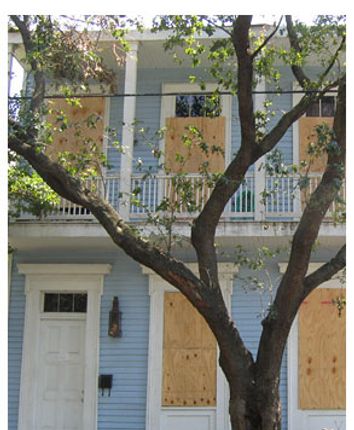
I left New Orleans for Oxford at 5:30 in the morning on Aug. 28 with my wife, my best friend, two dogs and a cat in a crappy Volvo sedan. I had spent the night at the top of a 24-foot ladder, drilling plywood into the window frames of the 1850s Greek Revival townhouse that we had resurrected from the brink of collapse over the past three years. We were tired, scared and reluctant to believe that our flight and all of our preparations were vaguely justifiable.

The three of us had moved to New Orleans from New York City four years earlier to do social justice work. Mike and I came to do death penalty work, representing poor people on Louisiana’s death row. Nikki, my wife, came to teach art in the city’s impoverished public schools. As much as we came to New Orleans to “do good,” we also came because we were drawn to the city — a deeply flawed but beautiful town. Nikki and I would often talk about how New Orleans fit into the pantheon of our most loved objects — it was a fleur du mal, a profound and elegant flower growing from extreme poverty and struggle.

When French Quarter tourists come to this city, they rarely see beneath the Disneyland Gomorrah that is projected as “N’Awlins,” a term I have never heard a local use and a place, as far as I can tell, that I have never been to despite my years in the city. On the occasions when I have ventured onto Bourbon Street, I have seen seemingly average, white, middle-class Americans whooping it up without any thought to the third-world lives of so many of the city’s citizens lying right beneath their noses.

How is it that this husband and wife, clad in khaki shorts, feather boa and Mardi Gras beads well out of season, can behold and clap along to a child tap-dancing on the street for money without considering the obvious fact that this is an early school-day afternoon and that the child should be learning to read, not dancing for money? How do they fail to see the crumbling buildings that the city’s poor live in when they travel by cab to Commander’s Palace from the French Quarter?

I think they look past these things in the same manner travelers in the developing world do, with a passing thought that “the poor will always be among us,” or some other comforting platitude. It is the hardhearted view that we all must adopt when confronted with the manifold misery that exists in the world, that the world can’t seem to exist without. And perhaps the tourists believe that such misery can be similarly viewed in the American South, rationalizing that, in the wake of the civil rights movement, the South has washed its hands of the stain of slavery, Jim Crow and racism.

In recent months, the media has focused on the racism in the most egregious cases of the past, such as the Edgar Ray Killen trials in Philadelphia, Miss., and the reopening of the Emmett Till case. While justice should be served in these cases, the media focus on these historic events obscures the reality that racism is alive and well here today. If anything, we should be scrutinizing the past to see how little progress has been made since the civil rights era and how the dreams of the great leaders of that day are largely unrealized.

Here in Oxford, and in cities across the South, the New Orleans diaspora watches on television as the city we love floods, burns and is turned upside-down by its fearful citizens. The nearly uniform complexion of the remaining victims is as clear an illustration of the failure of the civil rights movement as anything I have ever seen in my work as a civil rights and social justice attorney.

New Orleans has the worst major public education system in the country and one of the highest poverty rates of any American city — how could a couple of generations be adequate to endow complete personal freedom and mobility to this population? A blog for displaced New Orleanians stated that the “animals” have chosen to loot the city, and thus we should punish them by abandoning them in the cesspool. Perhaps such a threat would have more sting if it had not already been so completely delivered on since the white urban exodus from New Orleans after the civil rights era and, more recently, last Sunday night.

While it may be easy for American tourists to turn a blind eye to their own third world, a steady stream of young Australians and Europeans have been coming to Louisiana, Mississippi, Texas and the rest of the deep South for years to serve the needs of the indigent people throughout these states. As the co-director and recruiter for Reprieve U.S., an organization that sponsors and places volunteers at poverty law offices, it is always mildly surprising and embarrassing to me to hear these bright and passionate people explain that they are applying either to work for the poor in the criminal justice system in Texas or to help build shelters in Guatemala, and are unable to determine where the needs are greater. What seems most shocking to our volunteers is the complete disregard that the U.S. government has paid our clients throughout their lives, failing to provide housing, healthcare, education and other basic needs.

Given that our government, the richest in the world, has failed to provide the basic tools for its citizens for generations, we should not now be surprised that the poor and stranded in New Orleans have no reasonable expectation that the government will do anything to serve them and have taken things into their own hands. Perhaps if the government had made adequate investment in our citizens and our city’s infrastructure in the first place, we could have avoided this mess.

However, that did not happen, so instead I hope that in the event that my house is still standing and above water, someone has the good sense to loot it; there are 20 gallons of bottled water in the kitchen, some food in the cupboard and a bunch of old Atlantic Records LPs and CDs with the great rhythm and blues of New Orleans.

The patron saint of my temporary hometown, William Faulkner, said of Dilsey, the strong black servant of “The Sound and the Fury”: “They endured.” I trust the same will be true of New Orleans and the half a million people who, while struggling, have always been proud to call it home. I think we can be certain that New Orleans, a city that has had more than its fair share of the strange fruits of American racism, has not grown its last beautiful flower of evil.

Continue Reading Close