Bomani Jones

Crazy for Jay-Z

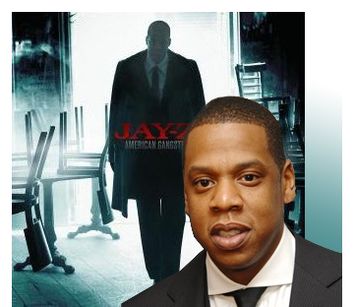
The hip-hop icon's inspired new release, "American Gangster," is his best album in years -- and the best rap album of 2007.

Five minutes into Ridley Scott’s “American Gangster,” a biopic on the rise to power of Harlem heroin dealer Frank Lucas, it becomes easy to see how Jay-Z would be so inspired by the film that he made an album, one with the cumbersome disclaimer “inspired by the motion picture.” The film begins with the death of legendary gangster Bumpy Johnson. Johnson’s funeral was a star-studded event, attracting luminaries in sports, entertainment and government.

It’s easy to imagine a similar scene when Jigga’s time is up. Once a dope dealer himself, Jay-Z is hip-hop’s omnipresent figure, the commercial force in a genre that can’t be discussed without its being referred to as a “commercial force.” No genre is so capitalistic, so reflective of how free enterprise brings out the best and worst in people, so intrigued by its own hustle and the spoils that come with it. Considering Jay’s the biggest star in that world, a star that stopped being hip-hop’s exclusive property long ago, his funeral would probably be the stuff of Willy Loman’s dreams.

However, the album that Scott’s film has inspired, also titled “American Gangster,” isn’t a clichéd celebration of Jay’s place in the game, as was his last LP, “Kingdome Come.” Instead, it’s a fresh, hungry record full of memories of Jay’s upbringing in Brooklyn’s Marcy projects and his pre-rap life in the trade of street pharmaceuticals. Its energy would make you think “American Gangster” was recorded by a young buck, if any one of the new crop of emcees could sound so legitimately self-assured. This is the album dedicated fans, the ones who fell in love with him on his classic debut, “Reasonable Doubt,” have clamored for.

“American Gangster” is Jay at his best — smooth yet gritty, edgy yet intelligent. It offers the insights into the emotions of a hustler that Scott’s Lucas, played by Denzel Washington, never shares in the movie. On the screen, “American Gangster” is about a drug dealer. On record, “American Gangster” is about the man selling dope. It’s a subtle difference, but one that makes this album far more fulfilling than that film.

But delving beyond the superficial isn’t what made Jay-Z a multimedia force. He reached that point by blatantly catering to listeners, always making music with an eye on the mainstream. His third album, the five-times-platinum “Vol. 2, Hard Knock Life,” was an instruction manual for going from hood superstar to pop icon. It wasn’t a soft record by any stretch, and it certainly had highlights. But it was so clear that Jay’s goal was to chart instead of craft great, inspired songs that he might as well have put a copy of the marketing plan and specific “thank yous” to each target demographic in the liner notes.

It’s hard to knock him for it, though. He has masterfully toed the line between dominating the marketplace and oversaturating it, cranking out albums annually and guest appearances almost weekly, by simplifying his music in exchange for commercial success. Jay admitted as much on his last record before “retiring” in 2003, “The Black Album.” On the song “Moment of Clarity,” he says, “I dumbed down for my audience to double my dollars/ They criticized me for it yet they all yell ‘holla.’” And the world has yelled “Holla,” “Hova,” and everything else he told them to since 1996. The music could be boring, but Jay always got paid. Every album he has released is certified platinum.

“American Gangster” is Jay’s first album that doesn’t explicitly reach for success. As he says on the track “No Hook,” “this is not for commercial usage.” Gimmicks are few and far between. No song sounds like a single. There is no true “club banger” — even though the catchy “Roc Boys” could be that song. “American Gangster” is hardcore hip-hop, unvarnished lyrics over brilliantly muscular ’70s soul beats. The album’s beat-makers, most notably Diddy’s Hitmen and Jermaine Dupri (also pioneers in hip-hop’s move toward the center), created a hybrid of the production Kanye West and Just Blaze gave Jay on his 2001 release “The Blueprint”; most of the tracks on “American Gangster” combine Kanye’s gift for identifying fantastic melodies and Just’s ability to stimulate subwoofers. Though absent on “American Gangster’s” track list, the sonic architects of “The Blueprint” are there in spirit.

Where Jay takes his game to another level is selling the emotion of every song. He could always make flossing seem fun, but explaining the pains of the game hasn’t always been his strong suit. Even “The Blueprint,” Jay’s most emotional album, wasn’t totally sincere. That’s not a problem on “American Gangster.” “American Dreamin’” uses Jay’s personal knowledge of a hustler’s ambition to offer emotional solidarity to those stressing the struggles of the dope game. Jay’s rhymes on “Success,” which borrows an Eminem line on the hassles of prosperity for its title, are just as impassioned as the wailing organ No I.D. uses as the track’s foundation (same goes for the track’s guest, Nas). “Fallin’” is the closing lamentation of the worst parts of the game — in the same vein as “Regrets” and “You Must Love Me,” the last tracks on “Reasonable Doubt” and “In My Lifetime, Vol. 1.” But unlike those older tracks, “Fallin’” is totally believable; it sounds like what’s in his heart rather than what should be there.

The one song that seems out of place is “Ignorant Shit,” which began as a leftover from “The Black Album.” Its use of a sample of the Isley Brothers’ “Between the Sheets” is a sharp deviation from the blaxploitation soundscape of the rest of the album, but it speaks about the essence of this album. If the album were a DVD, this song would serve as director’s commentary. “I make some thought-provoking shit/ You question if he’s falling off,” Jay says on the track’s intro. “I’m only trying to give you what you want/ Fuck, shit, ass, bitch, you like it, don’t front,” goes the hook. It’s almost as if he’s explaining why he’s done on this record what he hasn’t done since “Reasonable Doubt” — craft an artistic statement instead of an appeasement of popular demand. Then, for good measure, there’s a scathing verse on the unfair blame placed on hip-hop during the Don Imus controversy. “Are you sayin’ what I’m spittin’/ Is worse than these celebretante’s showin’ they kitten/ You kiddin’?” Jay asks. “Let’s stop the bullshittin’/ ‘Til we all without sin, let’s quit the pulpittin’.”

If there is a misstep, it’s “Hello Brooklyn 2.0,” featuring Lil Wayne. Not that there’s anyone that wouldn’t want Weezy on his track, but considering that it has become almost obligatory in 2007 to have him on your album, it’s the closest thing to mainstream capitulation on “American Gangster.” And, perhaps not coincidentally, it’s the weakest track on the album.

Finally, after publicly threatening to quit rapping at least twice, Jay-Z seems retired. It may seem counterintuitive to say that just as he’s releasing his best album in six years. But “American Gangster” sounds like something Jay would do for free, even if no one were listening, even if no one were paying to hear it. He’s saying what’s on his mind, not what he thinks the world wants to listen to.

Jay-Z’s “American Gangster” is the best rap album of 2007. Granted, there isn’t much competition for the crown other than Kanye West’s “Graduation,” but Jigga has given the world a banger, an artistic statement from the man whose influence has done more to mute fresh, unbridled expression in the mainstream than anyone else.

It’s a deviation from what we’ve come to expect from Jay-Z. It’s what hip-hop fans, many of whom hate the paint-by-numbers affair rap music has become — an affair Jay helped create — have spent years hoping Jigga would record.

And it’s certainly worth the wait.

Along came Jones

For the last 10 years, Andruw Jones has been the best disappointment in baseball. Finally, he's delivering on his incredible promise.

This is the Andruw Jones we’ve been waiting for.

This Andruw Jones, the one whose home run binge gives him a realistic chance of spoiling Derrek Lee’s Triple Crown dreams, is who the world expected to see when, at age 19, he homered in Game 7 of the 1996 NLCS, making him the youngest man ever to homer in a postseason game. This is the guy the world was ready for after he hit home runs in his first two World Series at bats — in Yankee Stadium, no less — that same year.

And this year, Jones is finally delivering on that early promise. He’s leading the majors with 35 home runs. He’s driven in 87, third best in the National League, and is fifth in slugging at .595.

For the last 10 years, no player has been as good as Jones while also being a colossal disappointment. Perhaps that’s not his fault, but he made an unforgivable mistake: Even if only for a moment, he was too good at a sinfully young age for people to not jump to conclusions. He was Dwight Gooden without the dope. Doc’s demons led him toward mountains of cocaine; Andruw’s were far more benign but just as professionally disastrous. Worse than whatever drove him to receive “VIP service” at an infamous Atlanta strip joint called the Gold Club, something in Andruw’s head told him to swing at any pitch he could reach.

Pitches up in his eyes? Easier to see, I guess. Jones’ hitting eye has been so bad that he was probably the only Brave that didn’t complain when Eric Gregg called every pitch inside the batter’s box a strike during Livan Hernandez’s record-breaking “performance” in the 1997 NLCS. It didn’t matter that he was easily the best defensive player in baseball or that he consistently hit 30 home runs per season. He was perpetually compared to the legend he was expected to be from the beginning, something that was as unfair as it was unavoidable.

Braves fans expected Willie Mays. Jones might be the best defensive centerfielder since Mays — easily the best these relatively young eyes have seen — but expecting Jones to be Mays fell somewhere between optimism and delusion. Mays was a great hitter in every way, a disciplined hitter who struck out more than 100 times only once in 23 seasons while putting up big power numbers. Jones has fanned in the triple figures in each of his full major league seasons. Mays hit .300 ten times and .296 twice. Jones has hit .300 once and never more than .277 in another season; his career average is .269. A nice catch here and homer there does not Willie Mays make. That’s like thinking everybody with a hairy chest can sing like Teddy Pendergrass.

A few years ago, the Atlanta Journal-Constitution’s Mark Bradley urged readers to realize that Jones wasn’t Mays and that being Andruw Jones should have been enough to please the masses. At the time, he was fairly right. He was — and still is — the only irreplaceable player the Braves had, the only one that couldn’t be seamlessly replaced without anyone noticing that he was gone. Think about it — Greg Maddux, Tom Glavine, Javy Lopez, and a host of others have left, and hardly anyone notices that they’ve left. The Braves brought in new junk ballers to replace Maddux and Glavine and haven’t missed a beat. They fleeced the Phillies for Johnny Estrada — acquired for Kevin Millwood, who became mighty irrelevant after throwing a no-hitter for the Phils in 2003 — and no one has mentioned Lopez much since he left.

The same could never be said about Jones, though. The Braves have always known that Mike Cameron or another of those perpetually available centerfielders could never come close to replacing what he brings. No one else, not even Torii Hunter, can eat up doubles like Jones. As far as intangibles, he gives fans a seemingly inexhaustible reservoir of hope. Trading Jones could turn Braves’ G.M. John Schuerholz into the fool he’s made of other G.M.’s that did business with him. Not even a hitting approach that looked as though Jones was getting paid by the swing could get Schuerholz to send him out of town.

But that doesn’t change the fact that Jones’ lack of plate discipline has been painful to watch. To be happy with that Andruw Jones was to condone underachievement, to tolerate rally-killing strikeouts and indefensible dribblers on first-pitch sliders. More damning, saying what he did then was good enough was like saying first-round playoff exits were good enough. Not even Braves fans who remember the dreadful late ’80s believe that, so how could they think Andruw was good enough?

Fast-forward to now and look what’s happened. He’s doing two things this year that seemed inconceivable this time last year — he’s carried the team, and he’s learned the difference between balls and strikes. He’s obscured Schuerholz’s worst personnel decision in eons, the poor upgrades of corner outfielders with a kaput Raul Mondesi and the creaky Brian Jordan. Teams have been criticized for pitching to Jones since the Braves’ lineup is so depleted, but I’m guessing that other teams are just as shocked that Jones is showing restraint as I am. The old Jones could stretch an intentional walk to a full count. His new eye has softened the blow of losing Chipper Jones for most of the year and helped create a situation where the Braves can bring kids like Jeff Francoeur to work without worrying that they would break something.

This year, Jones has done what the Braves have done for the last 15 years — he’s maintained a standard of excellence. Much is made of the fact that John Smoltz is the only Brave remaining from the 1991 roster, but Smoltz, Chipper, and Andruw are the only Braves that have stayed in Atlanta since 1999, the last time Atlanta made the World Series. More is made of how the Braves have stayed the same while constantly changing, and Jones deserves a great deal of credit for that (along with manager Bobby Cox and pitching coach Leo Mazzone).

So what if he’s not Willie Mays? At least he’s not Darryl Strawberry, a prodigy who started as quickly as Jones but fizzled post-haste.

But juxtaposing Jones against past icons is meaningless. He’s at a better place than he’s ever been. He’s not yet a Hall of Famer, but he’s everything the Braves have needed this year.

He’s Andruw Jones. Finally, that’s truly good enough.

Continue Reading Close

White supremacy

Blacks have a better chance surviving a slasher movie than making it to the end of a reality TV show.

Last year we witnessed the remarkable ouster of Tamyra Gray from “American Idol,” which left the far less talented Kelly Clarkson and Justin Guarini to vie for the show’s top prize (and the honor of being financially screwed by the show’s producers). Many were stunned when Tamyra, and her multi-octave range and vulnerable delivery, waved a tearful goodbye. Many will be equally devastated tonight if the extravagantly talented Ruben Studdard gets cast off by America, too.

But they shouldn’t be surprised.For one thing, anyone stunned by what happens on “American Idol” is measuring idolatry by a fairly irrelevant variable — talent.

Over the past half century, how many teen idols have really been that talented? Elvis Presley, for all his charisma, never wrote a song and had a vocal range of three notes, at best. The ’70s brought us Leif Garrett and a TV show centered on Donny Osmond. The ’80s brought us Boston’s New Kids on the Block, Caucasian clones of another group with nearly the same name. The ’90s? Britney, et al. ‘Nuff said.

The commonality between all of those idols is that they were cute and white. That’s how teen idols tend to look. Talent? There wasn’t a New Kid that could hold a vocal candle to New Edition’s Ralph Tresvant, but outside the black community, how many can name four of N.E.’s five black members? But while N.E. came and went, New Kids were a brief, but very bright, pop phenomenon — one managed by New Edition’s old manager, coming from the same city as N.E., and essentially a whiter and less talented version of the original. And people were actually surprised that Tamyra got the boot?

Reality TV is holding a mirror to American attitudes on race, and anyone paying attention has to be a little uneasy about what is reflected. On this year’s “Mr. Personality,” the mandatory mask could not cover one gentleman’s black skin color — and he was the first to get the gate. No black contestants on “The Bachelor” or its clones have come close to a final round. Yes, Vecepia Towery won “Survivor” last year. But most blacks have been voted off quickly. Let’s not mince words: Blacks have a better chance surviving a slasher movie than making it to the end of a reality show.

MTV’s reality programming has been particularly painful to watch through the years. The first four seasons of the “The Real World” had clichéd black roommates; each one had aspirations of being an entertainer. More followed with the same goal. But more often than not, they were characterized by disagreeable (to put it mildly) behavior. Writer Kevin Powell became infamous for his aggressive behavior on the show’s first season. The second season saw David Edwards tossed out for pulling castmate Tami Akbar’s blanket off — and getting tossed from the show. There have been house meetings called because New Orleans’ David was being an “asshole” and because Hawaii’s Teck let his cadlike behavior interfere with his duties on the job. Aneesa (Chicago), Arissa (Las Vegas) and Ayanna (Road Rules, “Semester at Sea”) all got into fights, with Ayanna getting booted from a show after whacking a Nordic castmate who used a racial epithet without realizing exactly what he was doing. Edwards made a return engagement in this spring’s “Real World/Road Rules Battle of the Sexes,” only to completely melt down after a fight with another castmate (the notorious Puck) and to leave the show in ignominy.

MTV’s latest? Tonight will feature the heavily promoted episode of “Fraternity Life” in which Stephen — the lone black pledge among the 12 profiled on both “Fraternity Life” and “Sorority Life” –seemingly goes nuts, vandalizing a fellow pledge’s room and earning the loathing of his fellow pledges.

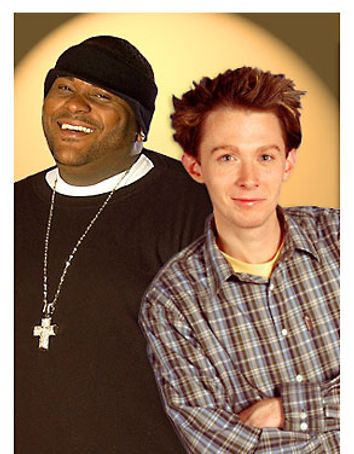
Those shows take place in a vacuum-tight fantasy world. (“The Real World” takes place in a world where no one has to pay rent — as close to heaven as is attainable on earth.) “American Idol,” on the other hand, is as real as these shows can get. Studdard, Clay Aiken and Kimberley Locke have not been “cast” as roommates, for example. They’re entertainers competing for a greater share of the market, in prime time, with viewers voting in real time. Like any other budding stars, they have been required to jump through hoops. The quest for a record deal is typically a series of performances for people who may love you or hate you, all dependent on their predispositions. And you are required to give a damn about what they think.

No matter what mathematics may say — that the odds are against one white competitor facing two black competitors — there is a fantastic likelihood that Clay Aiken, talented but intangibly unimpressive, will be crowned American Idol. And the clearly superior Ruben (and nominally superior Kimberley) will get the shaft.

The best description of Aiken may have come from Africana.com’s J. Danielle Daniels, who dubbed him “technically perfect, emotionally empty.” Accurate as that description may be, it’s curious that such a statement would fit a man who states on the “American Idol” Web site that the last concert he attended was James Taylor’s, and his favorite song is “Unchained Melody.” None of the simply expressed yet poignant emotional resonance of Taylor’s work is present from Aiken, who seems as free and comfortable moving onstage as a man playing the guitar tied to a chair.

Aiken had a hard time squeezing fun out of “Build Me Up Buttercup.” Comparing the feeling in his rendition Tuesday night of “Unchained Melody” to the Righteous Brothers’ classic is a task I won’t dare undertake, and I can’t begin to think of Aiken and Al Green’s definitive cover of the song at the same time. But not to call him the odds-on favorite of this competition would make you a fool.

Just keep in mind last year. No matter how much Ruben sounds like a young Luther Vandross, his time is probably up. Incomprehensibly, he’s already been in the bottom two of the voting. (Perhaps that was punishment for his bizarre decision to sing “Sweet Home Alabama” on country-rock night? Let’s just hope Ruben doesn’t really think the folks in Alabama “all did what they could do” about George Wallace.) The comparison to Vandross easily starts with his size — reminiscent of Luther in the early ’80s — but the similarity runs deeper. Vandross was able to evoke a sweetness in his voice rarely heard in misery-laden R&B. Each note Luther sang rang with a sense of optimism, a rare and beautiful quality that helps set Ruben apart from the “A.I.” field, just as it set Luther apart from every other singer of the past 20-plus years.

But there’s a strong possibility that Wednesday could be his last night on the “American Idol” stage. Should that happen, déjà vu could set in with those who followed the show in both seasons. Kimberley Locke is biracial, making this nearly the same scenario from which Clarkson emerged last year. And Locke, who got back in Simon’s good graces by relaxing her hair — a suggestion that is curious at best and offensive at worst — is not likely to win (like Justin Guarini before her), because of her inability to milk any passion out of the songs she sings.

This is where the human measurement comes into play. Those voting on the idol are future fans. And considering all the research done on the digital divide, there’s little doubt who’s stuffing the online ballot boxes. So it’s not a stretch to predict Aiken will be the winner before he sings another note. That is a function of “A.I.” reality. Would white teenagers have preferred to hear and see Elvis Presley or Jackie Wilson? Jerry Lee Lewis or Little Richard? New Kids or New Edition? A young John Lennon or Chuck Berry? History has shown us that the white star was preferred in each scenario. Yes, there’s been some teen-idol exceptions — Michael Jackson, Beyoncé Knowles and Lil’ Bow Wow come to mind. But on a show as realistic as “American Idol,” there’s no reason to expect any difference.

That’s not insidious in the way the precast reality shows are, where casting directors appear to follow a template, looking for people to fit certain roles, with “angry young black man” a perennial favorite. There’s something strangely alluring about these contraptions, reality as conceived by television producers (and we all know how grounded they are) that pose interesting “what if” scenarios and allowing the world to watch them play out. They’re experiments in human psychology, both for the “cast members” and viewers. Cast members are willing guinea pigs, thrust into situations that are typically different from their own lives. And viewers are prodded along by shows that tap into their predispositions and prejudices on a number of topics, including, invariably, race.

But all these shows help cement a perception of who would make a better pop idol, husband, even who would make a better roommate. And the actions on both sides of the tube indicate a grim reality, a country that still submits to its most visceral reactions more often than it would care to admit.

“American Idol” is no different. History gives me a hunch that Clay Aiken will soon be a millionaire with a recording contract. If for some reason if he’s not, it wouldn’t just be an upset. It would be unreal.

Continue Reading Close

Pepsi’s sticky race war

Ozzy Osbourne vs. Ludacris! Bill O'Reilly vs. Russell Simmons! Beneath the goofy grudge match over those Pepsi TV ads lies some real racial hypocrisy.

In 2003, hip-hop is more tolerable to the masses than it has ever been. These days, rappers are often better known than contemporary rock stars — even emcees not named Eminem. Seeing rappers doing commercials for major consumer products still gives pioneering hip-hop journalist and “media assassin” Harry Allen pause. “I’m one of those people that, to this day, when I hear hip-hop in a commercial, I’ll write down the name of the commercial and the product, just as a form of recording it,” Allen says. “I remember very clearly when you didn’t hear that.”

White kids have jumped on hip-hop the same way that their parents and grandparents did with Little Richard. But there are still curmudgeons, just as there were in the days of early rock ‘n’ roll. The obvious example has been Fox News pundit Bill O’Reilly, rap’s most visible critic over the past six months. His first attack on the genre came against Pepsi’s choice of rapper Ludacris as its spokesman. O’Reilly and his viewers managed to get the spots pulled, ostensibly over Luda’s foul language. Later, O’Reilly attacked Jay-Z when the rapper was named Principal for a Day at schools during his latest tour. Both actions were made under the auspices of protecting “morality,” and that is certainly O’Reilly’s prerogative. But when Pepsi chose Ozzy Osbourne — full-time legend, shock-rocker emeritus, and current winner of the Cleaver/Huxtable TV Dad of the Year Award — O’Reilly was notably silent.

Russell Simmons, CEO of Island Def Jam Records and head of the Hip-Hop Summit Action Network, duly noticed that silence. Simmons considers Pepsi’s choice of Osbourne as a spokesman, mere months after dropping Ludacris, to be hypocritical. In a statement issued Feb. 5, Simmons called for a boycott of Pepsi by “all artists and supporters of hip-hop culture.” The boycott will continue, he says, until Pepsi apologizes to Ludacris, donates $5 million to the emcee’s charitable foundation and returns his commercials to the air.

Framing this initiative in the context of “the hip-hop community” is necessary for Simmons to further the agenda of his group — and his record label, which boasts Ludacris on its roster — but it also ignores the real issue. Yes, Ludacris is a rapper, but O’Reilly would have protested his ads just as vehemently if he were an R&B singer. (Think you’ll be hearing R. Kelly’s “I Believe I Can Fly” in a commercial anytime soon?) The reason Osbourne’s ads were tolerable and Luda’s were not has nothing to do with musical form and everything to do with race. Simply put, Ozzy’s white and Ludacris is black, and that makes the former more tolerable — yes, even now — than the latter. By not looking at this in terms of race, Simmons can make his point without alienating the millions of white kids that keep his label afloat or offending the white power brokers with whom he hobnobs at cocktail parties. But it lets O’Reilly and his followers off the hook.

It’s clearly silly for anyone to think that Ozzy Osbourne, the self-described “prince of fucking darkness,” is of higher moral fiber than Ludacris. Osbourne made his name with Black Sabbath, crafting some of heavy metal’s most disturbing (and, yes, brilliant) records, where the only thing darker than Geezer Butler’s bass lines were the songs. Much of the hype surrounding Ozzy’s lyrics has been overblown, but his embrace of satanic imagery is not exactly the kind of thing that makes the Fox News crowd feel warm and fuzzy. Consider this stanza from 1970′s “Black Sabbath”:

Now I have you with me under my pow’r
Our love grows stronger now with ev’ry hour
Look into my eyes, you’ll see who I am
My name is Lucifer, please take my hand.

On paper, such a line seems no different from anything in “Sympathy for the Devil,” but Ozzy’s lyrics never had Mick Jagger’s allegorical smirk. Where the Stones chose “Sympathy” to deliver an anarchic social message, Sabbath seemed more concerned with startling listeners with their loose rhythm section and Ozzy’s spooky lyrics (although “War Pigs,” from the album “Paranoid,” is a fine moment of political commentary). What always made Ozzy an easy target was that his work — pre- and post-Sabbath — never had a sense of humor that might have dulled the connotations of his lyrics.

By contrast, Ludacris is basically a barrel of laughs, clearly not meant to be taken seriously. His cartoonish, larger-than-life image has elicited chuckles since he was the DJ on WHTA-FM’s evening show in Atlanta. Rather than the diaries of a gangster, Luda’s albums sound more like the confessions of a class clown. Titles like “Move Bitch” and “Stick ‘em Up” seem to affirm O’Reilly’s gripes, but both of those songs — and countless others — are fundamentally, well, ludicrous. Yes, gunplay is mentioned, but never in a way that seems serious. To say Ludacris represents a threat because he talks about guns is like saying Mini-Me is a violent thug because he threatens to beat people up.

When you get right down to it, the current public personas of Ludacris and Osbourne are remarkably similar. Thanks to MTV, Osbourne has gone from being the Prince of Darkness to a lovable dad, a benign and harmless old coot who wouldn’t harm anything except a carton of Marlboros. In his own MTV appearances, Ludacris is one of the rare rappers who comes off as a smiling, happy presence.

In reality, it’s almost always a waste of time to discuss “morality,” but O’Reilly made the argument necessary by his anti-rap campaign. If he’s on a crusade to purify the spokespeople that corporations hire for commercials, his voice should have come through loud and clear the day after Super Sunday, when the Osbourne Pepsi spots debuted. O’Reilly, of course, claims he only takes up a charge at the behest of his viewers. Those same viewers who besieged him with e-mails about Ludacris’ “vulgar” music must not have done the same with Ozzy, even though I suspect more of them own copies of “Blizzard of Oz” than “Word of Mowf.” That’s the double standard at work.

But if the double standard is on the basis of race, not age or genre, how successful can Simmons’ campaign against Pepsi ever be? The money in hip-hop remains largely in the hands of white people, and those same white teenagers that buy up Def Jam releases from Ja Rule, Jay-Z and others also helped make “The Osbournes” a phenomenon. Can Simmons persuade those white suburban kids to stop drinking Pepsi? Can he make them understand the racial hypocrisy at work here? Probably not, and maybe that’s not his job. It’s understandable that Simmons avoided any direct mention of race in his call for a boycott. But racism, or at least racial anxiety, is clearly what lies beneath the whole Ludacris-Ozzy affair.

If Simmons can generate enough of a stink to make the right people take notice, Ozzy will be off the air before any of us can say “Iron Man.” But if Pepsi does that, it’ll be because its corporate honchos decide the metal god’s continued presence might damage the bottom line. Like most other things in America, this dispute comes down to money. One thing Bill O’Reilly and Russell Simmons seem to share, at least in their public postures, is the expectation that big corporations do things for reasons of morality or integrity. (In fact, I’m sure they both know better.)

Pepsi admakers chose Ludacris because they felt he would help them sell sodas, and that’s the same reason they later chose Ozzy. They don’t care who buys the soda — black, white, brown, yellow or green — as long as the can in their hand is blue instead of red. So as long as the Osbourne ads have high Q ratings and Pepsi flies off the shelf, we’ll be left with the most disturbing image of Ozzy’s entire career: getting cuddly with Florence Henderson. Can we talk about something else now?

Continue Reading Close

“Oh Pleez GAWD I can’t handle the success!”

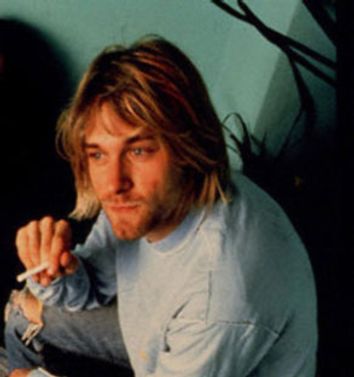
Excerpts from Kurt Cobain's journals (published in Newsweek) reveal an oddball genius battling severe physical pain -- and imagining a Nirvana reunion tour sponsored by Depends.

Even with a perplexing soon-to-be war brewing, Newsweek has chosen to give its cover to a man who’s been dead for eight and a half years. While the stench of international conflict taints the air we breathe and the pages we read, the notoriously boring newsmagazine has sprayed Teen Spirit air freshener upon the world. The result will have half of the nation waiting with bated breath for a man’s diary to hit the shelves. They have also amplified a point that, apparently, was only hinted at before.

Simple and plain, Kurt Cobain was a fuckin’ genius.

In its Oct. 28 issue, now on newsstands, Newsweek has published excerpts from “Journals,” an upcoming collection of diaries by Cobain, who was simultaneously the messiah, martyr and Pontius Pilate of ’90s pop. To say that Cobain expanded the definition of a rock star goes without saying. As Axl Rose was in the process of transforming himself from a menacing thug — a racist, homophobic one, at that — into a misunderstood, tender, yet bombastic man whose muse was Elton John, so Cobain made depression and introspection vogue in a way that no singer-songwriter had previously done. A crushing sound with an interesting pop sensibility created the perfect backdrop for Cobain’s lyrics, the portrait of a thoughtful, confused and compelling young man with acute difficulty dealing with the pain — physical, emotional and mental — in his life.

Nearly 10 years after his death, Cobain is not viewed quite like the other members of the 27 club — artists who departed at that age or earlier (Hendrix, Joplin, Morrison and others). Where so many died from their excesses, excess drove Cobain to take his own life. He hated being famous, was cursed by his fascination with the Beatles and their obvious influence on his music. The adoration of fans — a love it always seemed he didn’t get enough of in his personal life — drove him to put a shotgun to his head. Apparently, there is such a thing as too much love.

But now that he’s only a part of most memories — though many would contend he holds a place in their souls — “Journals” may become his most enduring body of work. If Cobain’s life was a movie, “Journals” is the director’s cut, the musings and contemplations of a mad genius. More than that, these passages are some of the most interesting reading I’ve come across in years, and I boldly predict they will stand the immeasurable test of time. At root, they are the musings of a confused, picked-on kid with a whole lot to say, even if it didn’t make any sense. Consider this passage (quoted directly from Newsweek’s excerpts, which chose not to correct Cobain’s erratic grammar and idiosyncratic spelling):

“I like punk rock. I like girls with weird eyes. I like drugs. (But my body and mind won’t allow me to take them.) I like passion. I like playing my cards wrong. I like vinyl. I like to feel guilty for being a white, American male. I love to sleep. I like to taunt small, barking dogs in parked cars. I like to make people feel happy and superior in their reaction towards my appearance. I like to have strong opinions with nothing to back them up with besides my primal sincerity. I like sincerity. I lack sincerity … I like to complain and do nothing to make things better.”

Scatterbrained yet concise. Impassioned yet ambivalent. Intelligent yet incoherent. (And incredibly similar to the song “Lithium,” off “Nevermind.”) Such confusion was part of what made Nirvana’s music so interesting, almost the way the lack of clarity in Monet’s work allowed the connoisseur to decide what he was really trying to paint. “A mulatto, an albino, a mosquito, my libido.” Yeah? Made absolutely no sense, and that was cool. In a similar way, so is the above passage.

Though it has yet to be seen what the complete version of “Journals” will look like, Newsweek’s excerpts focus on two major points — fame and drug addiction. Considering that fame was the focus of the suicide note that Courtney Love read at a public memorial service after this death, it was a predictable topic, as was heroin addiction. What could not have been predicted was the detail in which Cobain’s addiction — or lack thereof, as he maintained — was described and the insights into mega-stardom he had to contribute.

After Vanity Fair’s allegations in 1992 that Love used smack while she was pregnant with her and Cobain’s daughter, it was hard to have a discussion about Cobain without talking about the white lady. As was common knowledge to many, Cobain took heroin to deal with incapacitating and undiagnosed stomach pain. While he would go so far as to write that he was “not a junkie,” later passages describe the pain and travails of drug withdrawal, his way of telling whoever he thought might read his words not to shoot up.

While in rehab, Cobain meticulously detailed his history of heroin use, a sad memoir that foreshadowed his demise. After a prescription mix-up, Cobain writes, “I instantly decided to kill myself or stop the pain. I bought a gun but chose drugs instead.” Though the proximate cause of his heroin use was physical pain, it’s hard to avoid the conclusion that there was more emotional pain at the root of his malaise than is made clear in “Journals.”

Most entertaining are his travails with fame and superstardom, something with which Cobain never felt comfortable. His favorite bands were fairly broke and pretty obscure, and he felt as though he had betrayed them, as though his music was intended to be niche-oriented and was tainted by his alliance with David Geffen and their mutual goal of mass distribution.

“If we were going to be ghettoised, I’d rather be in the same slum as bands that are good like Mudhoney, Jesus Lizard, the Melvins and Beat Happening rather than being a tennant of the corporate landlords regime … I would love to be erased from our association with Pearl Jam or the Nymphs and other first time offenders.”

But that was a deal that Cobain had made with the Man. Though he and bandmates Krist Novoselic and Dave Grohl (who seems to be quite comfortable with fame) initially disliked the polishing that the record company gave to “Nevermind,” they went along with it. It was a deal Cobain couldn’t back out of, and as a result, he was unable to find the balance between being a great rock musician and being a rock star.

“Oh Pleez GAWD I can’t handle the success! The success! And I feel so incredibly guilty! For abandoning my true commrades who were the ones who are devoted who were into us a few years ago. And in 10 years when NIRVANA becomes as memorable as Kajagoogoo that same very small percent will come to see us at reunion gigs sponsored by Depends diapers, bald fat still trying to RAWK at amusement parks. Saturdays: puppet show, rollercoaster & Nirvana …”

It never got to that point, and a gander at these diaries makes it clear that it never could have. Cobain writes that he hopes he’ll have died before he becomes Pete Townshend (the most morbid yet fall-down funny line in the available excerpts). But the comparison is instructive: Cobain started out with Townshend’s more mature, softer side, but never abandoned the hard-rocking angst with which Townshend began. Where the Who’s critics have accused the band of smoothing out their music as time went on, there was always a tender accessibility to Cobain’s dismay. But Nirvana’s members never quarreled among themselves about it. Novoselic and Grohl did not violently oppose Cobain’s softer side the way John Entwistle, Keith Moon and Roger Daltrey often did with Townshend.

This was just who Kurt Cobain was, a tortured soul whose pain was more identifiable than he wished it was. The insecurities he wrestled with turned out to be less bizarre than he thought — check the record sales! — a fact that would be cathartic to most. It created a fame that was more than his “enemeic [sic], rodent-like body” could handle. David Geffen didn’t create Cobain’s persona; it was what circumstance, nurture and his body predetermined for him.

Cobain didn’t have to create a character like Townshend’s Tommy. He was his own walking opera. If Newsweek’s snippets are a true indication, the sheet music to that opera will be made available to the public, open for our discussion, contemplation and explication. Debate will erupt over the public’s right to pore over a dead man’s soul as though it were a fossil or an archaeological treasure. (Cobain even mentions in the journals that the kind of thing I’m doing now amounts to “rape.”)

But that discussion is moot now. “Journals,” better than any biography could hope to be, will make essential reading for anyone looking to understand the 1990s’ most important pop star. It’s more compelling than “The Rose That Grew From Concrete,” the posthumous book of poetry by Cobain’s hip-hop counterpart, Tupac Shakur, since it provides a much more intricate look at a figure so complex he couldn’t even figure himself out.

One thing is easy to see while reading “Journals” — great pain can make for great art, and it has a strange way of shedding light on brilliance. It also makes for short lives.

Continue Reading Close

Who’s bad?

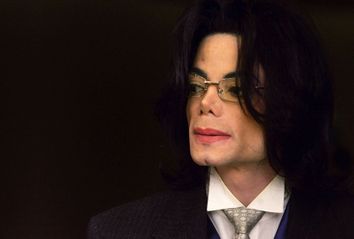
Amid a messy $200 million dispute with Sony, Michael Jackson adopts temporary blackness and summons Al Sharpton to his cause. But racism hasn't torpedoed your career, Michael: Your music sucks.

Sony has just realized something that’s been apparent to everyone else for about a decade now: Michael Jackson is washed up. Jackson has yet to take the hint, but he hasn’t released a cutting-edge album in 20 years or an above-average album in 15. Even so, he’s been treated like the megastar he once was, a reception that subjects us to a semi-decennial promotional campaign that overloads the world with images of a man in his prime. But when the Wizard emerges from the curtain, he’s revealed as a performer on his last legs. So Sony and Jackson have decided to part ways on less than amicable terms, the record company only requiring three new tracks and a greatest-hits compilation from Jackson.

But months after the release of Jackson’s sixth solo album, “Invincible,” the details of the self-appointed King of Pop’s catfight with his record label have come to light. The battle apparently centers on a rumored multimillion-dollar debt, a $25 million promotional campaign that Jackson found to be insufficient and one of the most lucrative publishing catalogs on Earth. If that isn’t juicy enough for you, Jackson has summoned Johnnie Cochran and Al Sharpton to his side. Oh, goody.

The Associated Press has reported that Jackson may owe Sony up to $200 million, a condition created by the star’s penchant for borrowing money and the massive costs put into readying his albums for release. Jackson asserts that Sony underpromoted “Invincible,” citing the fact that only one video was released from the album (for the lackluster opening single, “You Rock My World”) as an example of negligence.

Jackson — along with many music-industry observers — feels that the squabble may really be over the rights to the Beatles catalog that Jackson acquired in the mid-1980s (and who could ever forget the squabble with Paul McCartney that caused?). By underpromoting Jackson’s work, Sony could hypothetically force Jackson into such massive debt that he’d have to sign over the portion of that catalog that he owns. (Sony already owns the rest.)

In response, Cochran and Sharpton have become players in the controversy, reaffirming Jackson’s place in the halls of fair-weather blackness, his bust sitting right alongside O.J. Simpson’s. Jackson’s racial, shall we say, confusion has always made for interesting spectator sport. Whether his loss of pigmentation in the last few decades was natural or artificial is up for debate, but what’s unquestionable is the rush of pride he seems to feel in his race when things are going bad for him in the court of public opinion.

When things are all good, though, he’s hanging with Elizabeth Taylor and gallivanting through Europe. At this point, all I can say is that Jackson better hope Cochran and Sharpton own a record company.

That Sony is trying to strong-arm Mike is a plausible theory, but not one worthy of much discussion. Even those who are not fans of A Tribe Called Quest are familiar with Q-Tip’s Industry Rule No. 4,080: “Record-company people are shaaaady.” No one is likely to be surprised by such a thing. What is surprising, though, is that Jackson seems to think that Sony is responsible for his last album selling just 5 million copies worldwide. You might argue it’s even more surprising that Sony is still pumping zillions of dollars into Jackson’s career, all based on glory attained during the Reagan administration.

Wake up and smell the coffee, folks. Michael Jackson is done. Ten years ago, Sony would not have been in a position to dream about bullying Jackson, then the biggest star in the universe. But really, didn’t we all know he was done when “HIStory” was released in 1996? People should have noticed how resistant the supposed Jackson-loving masses were to that year’s media blitz.

Anyone who has heard Jackson’s last three albums should also have noticed that he stopped being a trendsetter and has settled into the role of music’s slowest-reacting follower. “Dangerous” was a new jack swing album that seemed just a tad outdated when it hit the streets. No one seems to be able to tell what “HIStory” was, and I’m willing to hypothesize that the album wouldn’t have sold half as well as it did if not for the collection of classics that came along with the CD. And as “neo-soul” became the style du jour, Jackson released “Invincible,” a slick, urban pop/R&B album that was completely out of place in the contemporary music landscape.

This isn’t the sort of awkwardness that indicates a man ahead of his time; instead, it’s the manifesto of a man whom the game has blown past. Twenty years ago, of course, Jackson was nothing short of a pop visionary. On the heels of “Off the Wall,” an album so successful that people wondered if Jackson could ever approach its standard again, His Royal Popness returned with “Thriller.”

Little can be said about “Thriller” that hasn’t been said ad nauseam, but it remains true that few albums ever have so thoroughly melded the entire pop landscape, often doing so within one song, in Beatle-esque fashion. Remember, “Beat It” was a wildly successful merger of contemporary black music with hard rock, one that came three years before Run-DMC had even heard “Walk This Way.” And while Funkadelic released many classic albums based around the electric guitar, none were smooth enough to get mainstream radio play. Combine that with the rest of the album — “Billie Jean,” which dominated the airwaves for what seemed like months and had kids from the inner city to college campuses trying to decipher its lyrics; that groundbreaking “Thriller” video with the Vincent Price narration — and it’s clear how far ahead of the curve Mike really was.

Well, that was 20 years and three presidencies ago. People don’t wear acid-wash jeans anymore, and Michael Jackson is no longer a star of that magnitude. Where he once set the trends, the trends now set him. Imagine Jackson and his pristine image using an archived verse from Biggie Smalls 10 years ago. But since the world is into hip-hop, so is Mike. His reactions have gotten slow, though — that Biggie verse is no less than six years old — a fact that may be a reflection of his insistence on taking five years to complete one album.

While still trying to be the star he was in 1982, Jackson doesn’t seem to realize that he’s become the antithesis of today’s stars in so many ways. Though bubble-gum pop has made a massive comeback thanks to Jive Records’ holy trinity of Britney, Backstreet, and ‘N Sync, the strange and reclusive superstar isn’t much appreciated today. Look at two of the biggest superstars of the last 10 years: Kurt Cobain and Tupac Shakur. Strange, yes. Reclusive, no and yes. While Cobain was not a partying-in-public sort of rock star, his music had a confessional tone that gave a glimpse into his soul. Shakur was an open book, even though it was clear he was a rough draft.

In contrast, it seems like Mike hasn’t come outside since he let Oprah in to do that interview at Neverland. His music is pure pop, and his lyrics are a window into a gumball machine. While most successful R&B is full of intensely personal and easily identifiable lyrics, Jackson sings cookie-cutter love songs that the public isn’t buying in 2002.

Is that what Sony thinks will recoup $25 million in promotions? And then, after his record company spent all that money, Jackson somehow believes that one more video would have dramatically boosted sales? (All right, it’s true that the sparkling “Butterflies” deserved a better fate.) Since when did Michael Jackson need that much help to sell records? Good albums don’t need help. With a scant promotion budget, unknown singer-songwriter Jill Scott went platinum with her debut album, “Who Is Jill Scott? Words and Sounds Vol. 1.” Word of mouth will sell a good album by a nobody, let alone by Michael Jackson.

Somebody, one presumes, will sign Jackson now that the divorce with Sony has been finalized. Arista founder Clive Davis, now at the helm of J Records, his “instant major” label, had great success resurrecting Carlos Santana’s career. The results were not as stellar when he tried to do the same with Prince. But Davis seems like the best bet to give Jackson the kind of money the self-important former superstar would be willing to accept. If Davis isn’t keen on the idea, it could be a long time before we see another album from Jackson.

Perhaps some time off will make one thing clear to Michael Jackson: His album didn’t sell because people didn’t like it. It’s debatable whether the world wants to see a 43-year-old man doing what now looks like a Justin Timberlake impression, even if music buffs and historians understand that the former Britney beau is himself a vanilla disciple of Jackson. Sony may have spent its $25 million poorly, but nothing could have saved “Invincible” from its own mediocrity. The question now becomes whether Jackson himself — or someone who cares about him and can penetrate his seclusion — can save the dethroned King of Pop from whatever has driven him into irrelevance.

Continue Reading Close

Page 1 of 2 in Bomani Jones