Carmela Ciuraru

Kristen Wiig’s very good year

The charming comedian had a string of successes -- and made 2011 better for the rest of us

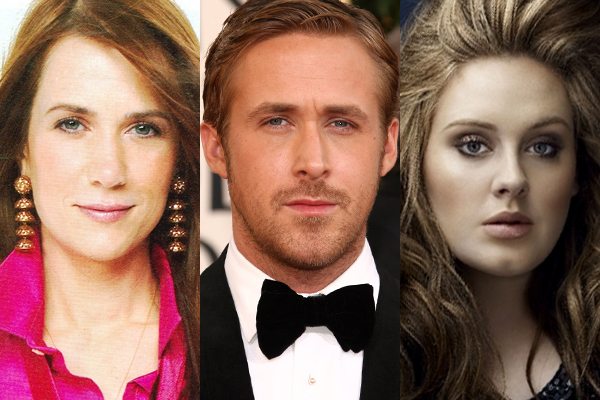
Kristen Wiig, Ryan Gosling and Adele. (Credit: AP/Salon)
As we looked back on 2011, a handful of obsessions came to mind, so we asked several writers to share their big crush of the year. To read other posts in the series, click here. Who did you fall for this year? Let us know in the comments.

This was a pretty good year for Kristen Wiig. She remained one of the few funny, or even tolerable, cast members on “Saturday Night Live.” She was described by producer Lorne Michaels as being among the “top three or four” “SNL” performers ever. She co-wrote and starred in the movie “Bridesmaids.” Directed by Paul Feig, it was a spectacular success, earning rave reviews and taking in more than $280 million worldwide. (That figure doesn’t include $47 million in domestic DVD sales.) Wiig also scored two Golden Globe nominations (Best Actress and Best Comedy) — and, however far-fetched — she got some Oscar buzz, too. If all that weren’t enough, Wiig recently joined the pantheon of uni-named celebrity couples such as TomKat and Brangelina. “FOTOGS FOILED BY WIIGETTI,” reported the New York Post, after she was allegedly caught —what else? — canoodling with Strokes drummer Fabrizio Moretti.

The 38-year-old is often compared with her talented former “SNL” peers Tina Fey and Amy Pohler, but Wiig’s performances are more layered, detailed, and extreme in their intensity. (This is evident in such idiosyncratic characters as Target Lady and the compulsively one-upping Penelope.) As an actor, Fey is limited, and even she has half-jokingly admitted, “I got nothing. All I got is two versions of me — Kristen has a deep reserve of these characters.” Also, Fey’s brand of humor is self-satisfied with a side of smug. Poehler is an adorable ham, yet it’s unclear whether she has the impressive emotional range that Wiig displayed in “Bridesmaids.”

As the broke, unhappily single Annie, whose childhood best friend, Lillian (Maya Rudolph), is getting married, Wiig pulled off goofy, bereft, hysterical, lonely, humiliated, furious, bemused and sly — sometimes within the same scene. In all the right moments, her performance was realistic and subtle; when the opposite was required tonally, Wiig took things all the way and then some. (Think of her inspired boozy tirade, on the bachelorette party flight to Las Vegas, which would get Annie and her friends kicked off the plane.) She is a brilliant comedian, but she once told a reporter that she enjoys dramas and wished she had been cast in the 2007 downer “Into the Wild.”

In any case, Wiig proved this year that she could carry a whole movie, one that appealed to men and women alike. Having dazzled in too-brief appearances in other people’s movies (“Knocked Up”), and having shown her ease in oddball indie film roles (“Adventureland”), with “Bridesmaids” she entered the realm of full-on blockbusterdom. By the end of 2011, her life looked very different than it had the year before: Wiig found herself much wealthier, more famous, and enjoying some highly coveted Hollywood clout.

If you saw “Bridesmaids” — and, based on its box office earnings, chances are that you did  — you may have laughed to the point of respiratory difficulty. Yet the movie, set in Milwaukee, also beautifully captured truths about women’s friendships: that these bonds are, among other things, intimate, ambivalent, competitive, vicious, and sustaining. I wish only that Wiig and her writing partner, Annie Mumulo, had not acquiesced to their producer’s demand for a certain over-the-top scatological scene. But their producer was Judd Apatow, so what do I know? “Bridesmaids” is the highest-grossing film he has ever produced.

Critics have often described “Bridesmaids” as a “Hangover” or “Wedding Crashers” for women. Aside from the ensemble comedy aspect and the vaguely similar theme, this label is misguided as well as insulting. Wiig wrote a much smarter, darker (and funnier) film than either of those chronicles of arrested male development. If anything, the subversive “Bridesmaids” served as a kind of critique and satire of them. And to dwell once again on Wiig’s bold performance: just look at how many different expressions pass across her face as best friend Lillian shares the news that she’s just gotten engaged. Lillian asks her to serve as maid of honor. In response, Annie displays a burst of clenched joy for the benefit of her friend, but she’s on the edge of a panic attack — and, in the next scene, she lies alone in the dark, utterly depressed.

Throughout the film, the hapless Annie can’t seem to catch a break, and she is surprised at the number of times, and the variety of ways, she’s able to hit rock bottom. After the failure of her bakery business, she’s stuck working at a dinky local jewelry shop. Her bitterness reduces her to insulting a snooty teenage customer who pushes all her buttons. Annie’s hostility escalates (“Call me when your boobs come in!”) until she utters the line that will get her fired. She can’t stop sabotaging herself. Even as Wiig cracks you up, she makes you feel terribly sorry for Annie.

Earlier this year, Wiig said in an interview, “I never considered myself to be funny — maybe because socially I can be a little shy sometimes. I just didn’t think that you could be both.” Those incongruous qualities are partly why she’s so charming, and so good at doing quiet, dramatic scenes and outrageously comedic ones. She’s incredibly sexy and delightfully strange, off-kilter and self-possessed, the fool and the smartest person in the room. If you watched “Bridesmaids” more than once, as I did, you may have found it more hilarious and poignant with each viewing. I am hoping for a sequel. In a world where “Hangover 2” is possible, this does not seem unreasonable.

It’s great that Kristen Wiig had such a transformative year — but laughter, the kind that makes your sides hurt, is no small gift, and for that reason she made 2011 a whole lot better for those who adore her, too.

The secret family life of Keats

A new biography explores the intense sibling bond that helped nurture the famed poet's work

This article appears courtesy of the Barnes & Noble Review.

The Keats Brothers,” by the Stanford University professor Denise Gigante, is an account of the lives of the English Romantic poet John Keats and his brother George — yet it’s also a love story of sorts. In her preface, Gigante advises readers to “prepare for adventure.” Although that may sound like overselling, it isn’t. Her book, with its transatlantic sweep and epic narrative — including cameos from John James Audubon, Emerson, and more — offers a detailed study of the stunning vicissitudes of the brothers’ lives. Even those familiar with the poet’s timeline will see it anew through the lens of this intense sibling relationship.

Barnes & Noble ReviewJohn was the oldest of four siblings (another died in infancy), but it was his vital bond with George, two years his junior, that sustained him and nurtured the poetic work that began to emerge in his teen years. As Gigante notes, until now George Keats has played a peripheral role in biographies of his famous brother, or he has been portrayed as a cruel, self-absorbed figure who, when John needed him most, abandoned him in pursuit of moneymaking in America. The real story, she writes, has “gone unsung.”

The Keats children, John, George, Thomas, and Fanny, endured tragedy early on, beginning with their father’s death in 1804. (He fell from a horse following a night of carousing.) Only a few weeks later, their mother remarried, then ran off with another man, and eventually gave up her parental responsibilities. She died in 1810.

The year 1818 was one of emotional exhaustion and loss for John — one of the most difficult periods of his brief life. George, along with his new wife, Georgiana, set sail from Liverpool for America; and a few months later, their brother Tom died of tuberculosis — the disease that George would later call the “Family Complaint.” As Gigante writes, John had no idea how he would go on “without the ballast of George” to support him as confidant and caretaker. “John’s two greatest enemies — distance and disease — were phantoms one could not battle,” she writes.

George could not forgive himself for leaving England, but he nevertheless made the leap, convinced it was worth the risks, emotional and otherwise. (That the surname of the ship’s captain was Coffin did nothing to assuage his anxiety about the long ocean voyage ahead.) In his brother’s absence, John was bereft: “But what, without the social thought of thee, / Would be the wonders of the sky and sea?” he wrote in a sonnet titled, “To My Brother George.” In a letter, he admitted that “George has ever been more than a brother to me, he has been my greatest friend.”

Gigante is careful to portray George as an honorable man, rather than a villain who carelessly abandoned his brother. She notes that he was sympathetic to the price of his brother’s genius — a “sensitive and hypochondriacal” nature, someone who was “devoted and affectionate” but suffered from a “nervous morbid temperament.” George understood well that he served as “his brother’s safety valve, to release pressure when his passions threatened to explode.” Although John persevered, he craved his brother’s physical presence. “God bless you,” he wrote in a letter to George, in a passage that suggests the intensity of their bond. “I whisper good night in your ears and you will dream of me.”

In fact, George’s emigration was fueled by a magnanimous motive: the desire to comfortably support his whole family, including his brother, if needed. He also wished to make a significant mark in life, so that his role as “John’s brother” would not be his only legacy.

This story cannot end happily, and indeed it does not. Although John dreamed of someday visiting George and his wife in America, in the winter of 1821 he died of tuberculosis at the age of twenty-five. However much he had fallen headlong “quickly and irreversibly” in love with a flirtatious eighteen-year-old named Fanny Brawne, George was the great love of his life. In any case, John’s poverty and ruined health assured that his romance with Fanny was doomed from the start.

The latter half of “The Keats Brothers” explores George’s ambitious but failed business ventures in America. He eventually landed in Louisville, Kentucky, where he became mired in debt from a poorly run sawmill operation, helpless to send money to John. George felt haunted by the knowledge that “his friends back home misread his character” and judged him harshly for not coming to the bedside of his dying brother. He blamed himself for John’s death.

Twenty years later, on Christmas Eve, 1841, George too died of tuberculosis. At forty-four years old, he had at one point amassed the considerable wealth he had been seeking for so long — only to be left penniless in the end as the American economy plummeted.

As she unravels the compelling story of John’s and George’s lives, Gigante easily overturns stereotypes about academics churning out dry prose. She has the descriptive power of a novelist or poet: “Not until the ship was out on the vast expanse of the Atlantic would the liquid element lose its translucence and transform into a dark, fathomless blue.” Just as impressive is her empathetic perspective and meticulous research. “The Keats Brothers” is a major accomplishment, one that will surely influence biographies of Keats yet to come.

Continue Reading Close

The decline of the pseudonym

False names have allowed many famous writers to make a new start -- but the digital era is changing that

Stephen King

At its most basic level, a pseudonym is a prank. Yet the motives that lead writers to assume an alias are infinitely complex, sometimes mysterious even to them. Names are loaded, full of pitfalls and possibilities, and can prove obstacles to writing. Virginia Woolf, who never adopted a nom de plume herself, once expressed the fundamental and maddening condition of authorship: “Never to be yourself and yet always—that is the problem.” She was describing the predicament of the personal essayist, but identity can seem crippling to any writer. A change of name, much like a change of scenery, provides a chance to start again.

To a certain extent, all writing involves impersonation—the act of summoning an authorial “I” to create the speaker of a poem or the characters in a novel. For the audacious poet Walt Whitman, it was possible to explore other voices simply as himself. He embraced his multitudes. (“Do I contradict myself? / Very well then, I contradict myself.”) But some writers are unable to engage in such alchemy, or don’t want to, without relying on an alter ego. If the authorial persona is a construct, never wholly authentic (no matter how autobiographical the material), then the pseudonymous writer takes this notion to yet another level, inventing a construct of a construct. “The cultivation of a pseudonym might be interpreted as not so very different from the cultivation in vivo of the narrative voice that sustains any work of words, making it unique and inimitable,” wrote Joyce Carol Oates in a 1987 New York Times essay. “Choosing a pseudonym by which to identify the completed product simply takes the mysterious process a step or two further, officially erasing the author’s (social) identity and supplanting it with the (pseudonymous) identity.” Elide your own name, and imaginative beckoning can truly begin. As the French journalist and writer François Nourissier once noted (in a piece titled “Faut-il écrire masqué?”), a nom de plume provides a space in which “obstacles fall away, and one’s reserve dissipates.”

The merging of an author and an alter ego is an unpredictable thing. It can become a marriage, like a faithful and sturdy partnership, or it can prove a swift, intoxicating affair. A clandestine literary self can be tried on temporarily, to produce a single work, then dropped like a robe; or the guise might exist as something to be guarded at all costs. The attraction is obvious and undeniable. Entering another body (figuratively, ecstatically) is almost an erotic impulse. Historically, many writers have been lonely outsiders, which is why inhabiting another self offers an intimacy that seems otherwise unobtainable. In the absence of real-life companionship, the pseudonymous entity can serve as confidant, keeper of secrets, and protective shield. The term “alter ego” is taken from Latin, meaning “other I.” This suggests the writer is not so much wearing a mask as becoming another person entirely. Have the two selves met? Maybe not, and it’s probably better that way. Sometimes there’s no reason to explore how or why the other half lives. Knowing that it does is enough.

In his influential 1974 book “The Inner Game of Tennis,” author Timothy Gallwey applied the notion of doubleness to the tennis player, describing how each self hinders or enhances performance. With almost no technical advice, he provides a prescriptive guide to mastery. He focuses on what he describes as two arenas of engagement: Self 1 and Self 2. When his book was first published, Gallwey’s ideas were so radical that thousands of readers wrote to express their gratitude, saying that they’d successfully applied his principles to pursuits other than tennis, including writing.

Gallwey, who majored in English literature at Harvard University, portrays Self 1 as “the talker, critic, controlling voice,” and notes its “persistence and inventiveness in finding opportunities to get in the way.” Self 1 berates you, calls you an incorrigible failure. But the nonjudgmental Self 2 represents liberation in its purest form. As Gallwey writes, Self 2 is “much more than a doer. It is capable of a range of feelings that are the most uniquely human aspect of life. These feelings can be explored in sports, the arts … and countless other activities. Self 2 is like an acorn that, when first discovered, seems quite small yet turns out to have the uncanny ability not only to become a magnificent tree but, if it has the right conditions, can generate an entire forest.” In the context of authorship, the freeing of an alternate identity (Self 2) can reveal not just a forest but new worlds, boundless and transgressive, thrilling beyond one’s wildest dreams.

A pseudonym may give a writer the necessary distance to speak honestly, but it can just as easily provide a license to lie. Anything is possible. It allows a writer to produce a work of “serious” literature, or one that is simply a guilty pleasure. It can inspire unprecedented bursts of creativity and prove an antidote to boredom. For that rare bird known as the commercially successful author, there is typically less at stake in toying with a pen name. If the book produced by an ephemeral self fails, it will be viewed as a silly misstep. All is forgiven when an author retires a pen name and returns to giving critics and fans exactly what they want: the familiar. Lesson learned, let’s move on. If you’re writing the equivalent of high-fructose corn syrup, perhaps it’s unwise to serve up organic spelt, even under a different brand name.

For best-selling authors like Nora Roberts (a truncated version of her actual name, Eleanor Robertson)—who has written more than 200 novels, including those under the pen name J.D. Robb—having a transparent or “open” pseudonym is a savvy marketing strategy, a way to keep up her busy production line and show off her versatility. Roberts had initially resisted writing as someone else, but her agent had talked her into it by explaining, “There’s Diet Pepsi, there’s regular Pepsi, and there’s Caffeine-Free Pepsi.” It’s all about brand extension.

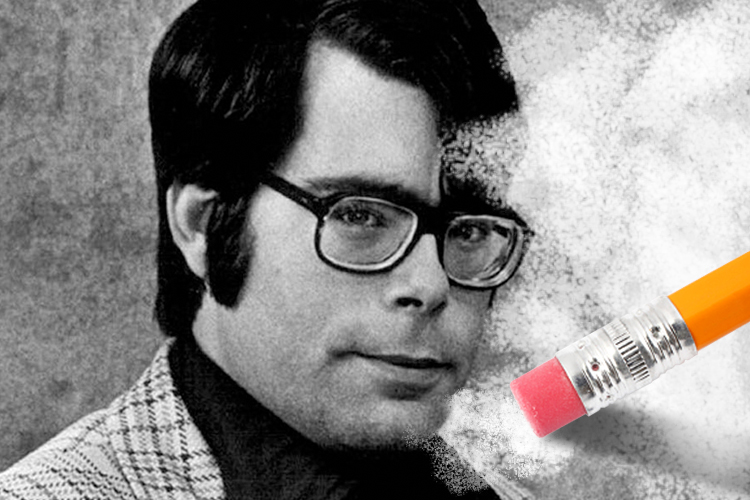
A new work by Stephen King, whose books have sold more than 500 million copies worldwide, is a reassuring promise of success to his publisher. It’s also critic-proof. Yet in the late 1970s, feeling hemmed in by his phenomenally prolific output, King introduced the pen name Richard Bachman. As he later said, it was easy to add someone to his interior staff:

The name Richard Bachman actually came from when they called me and said we’re ready to go to press with this novel, what name shall we put on it? And I hadn’t really thought about that. Well, I had, but the original name—Gus Pillsbury—had gotten out on the grapevine and I really didn’t like it that much anyway, so they said they needed it right away and there was a novel by Richard Stark on my desk, so I used the name Richard, and that’s kind of funny because Richard Stark is in itself a pen name for Donald Westlake, and what was playing on the record player was “You Ain’t Seen Nothin’ Yet” by Bachman Turner Overdrive, so I put the two of them together and came up with Richard Bachman.

King’s practical measure to avoid saturating the market (and avoid openly competing with himself for sales) was a success. But in 1985, a bookstore clerk in Washington, D.C., did some detective work and exposed King’s secret. The author subsequently issued a press release announcing Bachman’s death from “cancer of the pseudonym.” King dedicated his 1989 novel “The Dark Half” (about a pen name that assumes a sinister life of its own) to “the late Richard Bachman.”

Prominent writers such as Robert Ludlum, Joyce Carol Oates, Anthony Burgess, Anne Rice, Michael Crichton, John Banville, Ruth Rendell, and Julian Barnes are also known to have indulged in pseudonymous publication. The Nobel laureate Doris Lessing, who tested out a nom de plume in the early 1980s, learned that she was better off sticking with her own identity. One of her aims had been a respite from the public’s perception of her work; she sought to upend preconceptions of what it meant to read a “Doris Lessing novel.”

In the 19th century, the curious phenomenon of pseudonymity reached its height, and as early as the mid-16th century, it was customary for a work to be published without any author’s name. It is interesting that the decline of pseudonyms in the 20th century coincided with the rise of television and film. As people gained more access to the lives of others, it became harder to maintain privacy—and perhaps less desirable. In today’s culture, no information seems too personal to be shared (or appropriated). Reality television has increased our hunger to “know” celebrities, and even authors are not immune to the pressures of self-promotion and self-revelation; we are in an era in which, as the biographer Nigel Hamilton has written, “individual human identity has become the focus of so much discussion.”

This is not entirely new, but with the explosion of digital technology, things seem to have spiraled out of control. Fans clamor to interact, online and in person, with their favorite writers, who in turn are expected to blog, sign autographs, and happily pose for photographs at publicity events. Along with their books, authors themselves are sold as products. Even though the practice of pseudonymity is still going strong, it has lost the allure it once had, and for the most part it is applied perfunctorily in genres such as crime fiction or erotica. Today, using a pen name is less often a creative or playful endeavor than a commercial one. Reticence is not what it used to be.

Carmela Ciuraru is not a pseudonym. Her anthologies include “First Loves: Poets Introduce the Essential Poems That Captivated and Inspired Them” (Scribner) and “Solitude Poems” (Alfred A. Knopf/Everyman’s Library). She is a member of the National Book Critics Circle, and has written for a number of publications, including the Los Angeles Times, the San Francisco Chronicle, the Wall Street Journal, the Boston Globe, the Washington Post and Newsday. This article is an adapted excerpt from her new book, “Nom de Plume: A (Secret) History of Pseudonyms.”

Continue Reading Close
www.salon.com/writer/carmela_ciuraru/index.html