Damien Cave

King baby

Walter Yetnikoff talks about running CBS Records in the '70s, Michael Jackson's strange habits -- and Janet Jackson's breasts.

Walter Yetnikoff holds up a photocopied picture from rock ‘n’ roll’s cocaine ’80s. Quincy Jones, having just produced Michael Jackson’s “Thriller,” laughs in the background; stars and media moguls fill out the frame as a bearded Yetnikoff stands center stage beside a tall, leggy blonde with feathered hair.

“That’s Boom Boom,” he says, referring to his old girlfriend. “She actually wasn’t that pretty.”

Yetnikoff, now 70, isn’t that pretty either, but at least he’s alive after some hard-drinking, hard-drugging years at the top. Velvel, as his grandmother called him, moved from a hardscrabble Brooklyn youth to Columbia Law School, then to CBS Records, where he became president in 1975. Over the next 15 years, CBS’s revenues swelled from $485 million to a whopping $2 billion. Yetnikoff oversaw the biggest growth spurt in record-industry history at the biggest label in the world — he merged CBS Records into Sony in 1987 — and became notorious in the process. His partying and cruelty became almost as well known as his profitability.

Today he’s a changed man. The beard, which he used to dye, is gone. The open-chested shirt has been exchanged for a crewneck pastel sweater, and the life of highs, glitz and glamour are nowhere to be seen. Yetnikoff now lives simply and soberly in an Upper East Side high-rise apartment; his living room lacks a single wall decoration. Papers rather than CDs cover most surfaces.

It’s a transformation of extreme proportions, which receives an epic (and Epic) telling in Yetknikoff’s new autobiography, “Howling at the Moon: The Odyssey of a Monstrous Music Mogul in an Age of Excess.” Written with David Ritz, the book traces in dishy detail Yetnikoff’s tear through women and the record industry.

The era’s biggest music stars all make guest appearances: Mick Jagger matches wits with Yetnikoff over his contract; Michael Jackson produces “Off the Wall,” “Thriller” and “Bad” while trying to make Yetnikoff the loving father he never had. Bruce Springsteen, Elvis Costello, Paul Simon, Barbra Streisand, Billy Joel and Marvin Gaye — all CBS artists — have their hilarious, sad, fascinating run-ins with Yetnikoff, and along with moguls like Larry Tisch (“the little dwarf,” in Yetnikoff parlance), they complete the ensemble cast of a story that’s been compared to Robert Evans’ Hollywood melodrama, “The Kid Stays in the Picture.”

Today, Yetnikoff seems to have mixed feelings about his past. He’s clearly humbled: “I used to believe that with this mighty right arm and this great brain, I was going to run the universe,” he says. “Instead I ran myself through the jaws of death and into the mouth of insanity.” But in a lengthy interview with Salon, Yetnikoff also revealed that he’s still a fighter, a raconteur who now wields his power through words. Boom Boom may be gone, but the old Yetnikoff has emerged in a new version.

You dealt with a lot of artists in your time, but there’s none more curious than Michael Jackson. What do you make of Jackson these days?

I don’t know the answer to what’s going on right now. I don’t know what the facts are. But he used to refer to me as Big Pop. He was like a baby, a very talented baby, and part of that is that he would get me to do stuff that he didn’t want to do. So he made me get him out of a deal with Geffen to use one of Michael’s songs for “Days of Thunder.” And a tour with his brother Jermaine.

But I think he faces other problems. One is that he’s not the No. 1 artist in the world anymore. There are people who have managed to deal with the fact that their careers went down a tiny bit. Barbra Streisand has done real well with it; she seems to be a happy lady. Springsteen: His career, recordwise, is down significantly. I don’t think “The Rising” was a big record. It’s not a very good record either, but the tour is still sensational, so he’s managed to deal with what MTV recently called rock and wrinkles. Bowie, he’s on tour and he’s quite good.

But Michael, I don’t think, can deal with this. People who have to be No. 1 don’t really feel that way. I used to get calls from Michael in the middle of the night. “Walter, the record is not No. 1″ — and this was “Thriller” — what are we going to do?” I said, “We’re going to go to sleep and deal with it tomorrow.”

Then of course it went down after that. You had “Bad.” You had “Dangerous.” Those two did OK, then you’re slipping significantly with “History” and “Invincible.” And anyone that names their record “Invincible” doesn’t feel invincible.

In “Howling at the Moon” you talk about your ability to speed-read contracts and your skills as a businessman. You also say that you weren’t really a music man. Do you think you could have been successful in another business?

I said in the book that I was tone-deaf. I shouldn’t have used those words. What I meant is that I hear like other people hear. I don’t hear like a musician hears. But the people who buy records and make hits and listen to the radio hear like I hear. So sometimes over-hearing is not necessarily good. An example I always use is when I went to Springsteen once and said, “Let me mix this record, please.” He said, “No, no, the snare drum is out; it’s not doing well.” I said, “Nobody cares, actually. People hear your voice. Show me the voice button and I’ll bring it up.”

That’s what I meant. But there have been a couple of times when I heard things right. There was a time when Billy Joel had “Piano Man,” then a record that didn’t do so well called “Turnstiles.” He was out of favor for a while and then he was doing a record called “The Stranger.” I saw him on the road. I was not even looking at him; I was looking at the audience, which I had a habit of doing — that’s my A&R staff. And there was magic going on, and his wife-manager was there, so I said, Jeez, this is great, keep him on the road. She said, “I can’t, I have no money.” I said, “What do you need? Why don’t you ask?”

She said, “I did. They turned me down.” I said, “Ask again tomorrow. You’ll get it.” And of course, “The Stranger” was a big giant record that sent Billy off on his career. So there were times when I loved what I heard. In a different context, when I heard “Off the Wall,” I said, ah, something is going on here. And when Springsteen did “Nebraska.” He was very nervous, but I thought it was a great record; I thought the songs were interesting. I thought it was an example of an artist maturing into something else. Some people might have turned that down and said, “I want a rock ‘n’ roll record. Bring back the E Street Band.”

So what happened was that the skills I did have were particularly apropos for the time. I got into the business end in 1969. That’s when the business exploded, and there I was. I was also good at the legal business side of things, and I had an affinity for the artistic temperament. Not being a musician, I had this weird kind of thing involving creative people: I was both in awe of that process, because I couldn’t do it, and I think I understood what made them tick. It was an ego/vulnerability. People criticize performers — “Oh, what an ego.” On the other hand, if you really look at it, when you have a performer onstage saying “Love my music,” what he’s really saying is “Love me.” Well, what happens when you don’t? You have to have a pretty big ego to put up with that, but on the flipside of that is a certain amount of vulnerability — which I think most performing artists have, and cover up with a bit of ego. I understood that.

And yet, it all came crashing down, as you admit. Which artists do you still keep in touch with? Is there anyone you’d like to reconnect with?

I talk to Billy Joel all the time. I probably should call people like Springsteen because I don’t think it was his fault that our relationship fell apart. It did, but I was carrying on and saying terrible things. I always admired him. And I don’t think it was him. I think it was Landau [Springsteen's longtime manager and producer, Jon Landau]. But I ought to call him.

You say in the book that you refused to take Springsteen’s calls because he was doing a concert for Amnesty International, which you saw at the time as anti-Israel. What’s your take on today’s state of Middle East politics?

There was a time when I had a solution for everything. I don’t anymore. But I have a very emotional relationship to Israel. I used to be very friendly with the people at the Simon Wiesenthal Center. I’ve spoken to them, and they think this Iraq thing was good. You’ve eliminated one of the implacable enemies of the state and you’ve intimidated another one called Syria. They’re scared shitless. And you’ve probably also gotten Saudi Arabia to stop funneling money around, because they’re scared, so in that sense, it was probably good for the Israelis. Whether it was good for the world, this is beyond me. It certainly didn’t work as Bush planned.

Have you seen “The Passion”?

I haven’t seen it, but my feeling is that the American Jewish community should just leave it alone. It’s Mel Gibson. He has a right to his own opinion. The whole [FCC] thing is getting a little scary. You now have CBS, which was the Tiffany of networks — it really was, because I was there at the time — and now look what you have: You have what appears to be “60 Minutes” paying Michael Jackson another million dollars to come on a show he’s going to control. Does that sound like “60 Minutes”? Like Edward R. Murrow? There was really a very highbrow approach to the news, sometimes too much; they thought they were the kings of the cock house.

Now, you have Janet Jackson who shows one of her tits and there’s this great big fuss about it destroying her career. It’s too much. Big deal. She doesn’t even have big tits! I’m concerned as a citizen. I don’t know any other place where that happens, and some of this is a little scary.

Can you give me an example of someone you’ve tried to reconcile with since you’ve become sober?

I went to Clive Davis and apologized for some of the things that happened way back, not recently. And I went to a lot of family people — not to too many artists, because I think I did OK with artists. It was personal stuff more than business stuff.

Well, there was at least one artist who you clearly didn’t get along with — Paul Simon.

Yeah, I don’t like him.

But if only as a businessman, don’t you regret losing him? He did some great work after he left CBS — he sold a lot of records.

No, he didn’t. You’re wrong. The first record was something that had a song called “Allergies” on it. That went pfft. Then he did “Graceland,” and I maintain that it was more the South Africans than him. Then he did one with the Brazilians. Then he did something called “The Capeman” that may have lost all the other money that he earned. Then he did this wonderful movie called “One Trick Pony.” You think he’s made money on all that?

He’s just so self-important. He has a Napoleonic complex. He thinks he is the roving troubadour of the world. And do you think his activities with Art Garfunkel were very loyal? No way.

Your history of loyalty isn’t exactly stellar, either. In your book, you make it clear that your times of craziness with drugs and corporate power are over. But what about women?

I have a girlfriend asleep in the other room.

So has anything changed?

I haven’t quite figured it out. I know what the driving force was all those years, and it wasn’t sex. I mean, that was OK. It was more a search for love. For example, people say, “You slept with 40 million women.” It’s not true. “You were with hookers.” Also not true — well, maybe twice in my whole life.

But I think I was on a search for — I hate to talk this way, with this psychodrama — the unconditional love I didn’t get because my mother wanted me to be successful. “We love you if you do; we won’t if you don’t.” So that explains the empty feeling. I think there was also a perfectionist kind of thing. I had to get a 100 on my test. Well, what’s getting a 100 with a woman? Making her come, maybe 25 times. I think that was behind it all. And also the whole licentiousness of the time — sex, drugs and rock ‘n’ roll. The world was my enabler.

So yeah, it’s changed. I am now thinking along a different path — where’s real love? I know that’s corny, but it’s true.

Hilary Rosen, who went on to head the Recording Industry Association of America, once told a story about entering a meeting where the first thing you said was “Nice tits…”

I still do that. That hasn’t changed. Does she have nice tits? I don’t remember. I guess they can’t be that great if I don’t remember them. But that doesn’t have anything to do with her tits. It was my own King Baby routine. Part of that outrageousness is a call for attention. It’s my own childishness.

Do you think today’s record industry is run with more maturity?

I think it’s run very badly. I think you have executives who are holding on to their positions at all costs because they’re overpaid. Not everyone is in that bag. But look at Tommy Scumola [Mottola]. He was let go. They wouldn’t give him a label. That’s understandable. I’m told they didn’t give him a severance. I don’t know that for a fact, but if true, something’s wrong. The Japanese don’t do that; like American WASPs, they like for things to look right. If they didn’t pay him a severance there’s something weird, really weird.

But that’s not even what I’m talking about; I’m talking about people like Donny Ienner [head of Columbia Records, a Sony label]. They get giant bonuses and they’re not letting go so quick. And do you see any new music that’s really very different? There’s very little. Why?

Well, some would argue that it’s a hangover from your era — when major labels like CBS grew fat on old artists and the move to CDs while forgetting to develop exciting new acts…

So how did all these little artists get big — like Billy Joel and Bruce? They didn’t start out as superstars.

I know what people say, but that’s not the truth. The truth is that there were plenty of artists who were developed. Living Color, the Beastie Boys — there are plenty of artists that were developed, despite what these pundits talk about. But now you don’t see that because there’s too much money at stake for both the executives and the corporations. Therefore you look through the rearview mirror and you do what you did yesterday. You can’t be criticized for doing what you did yesterday. They don’t want to take a chance. And radio is not so different. Neither is MTV. So you have copies of copies of copies. You get what you expected.

The great artists have always been different. The real good artists always had something that would make them stand out. Do you think Bob Dylan would get a record contract today? Probably not. It’s greed really. And all the record companies are saying, “It’s the fault of the Internet. I wish it would go away.” Sales are down, what, 8 percent. Not 100 percent.

I don’t want to blame the artist but, in part, it’s their fault too. How many records do you have with 10 great songs on it? You don’t have many. It’s two or three produced by fancy producers and the rest is filler. I am not talking about every artist, but a lot of them. I don’t condone illegal downloading. I’m a lawyer. But when you have an album and you want a kid to pay $10, $12, and you have two songs that they’ll want to listen to, you’re encouraging them to download the two songs.

In the rare occasion when something new comes up that people want, they’ll buy it. Norah Jones is a good example; it’s something different, something out of whack. I’m not even a fan of Norah Jones but the point is still the point — people will buy it, downloading or not. But everyone is in this wimpy mode. No one wants to take a chance anymore. You get what you expect, relatively boring music, and then they blame the consumers!

But when you were in charge, you did the same kind of thing. You fought Sony when it started selling double-cassette decks and when the industry wanted to move to CDs.

I threatened them, actually, saying, I’m not releasing CDs, fuck you, I’m not releasing them. We all kvetched. We said, Oh my god, they’re going to get rid of tape. We’ll have to get rid of our tape factories and what are people going to do with their tape machines until they buy CDs? Nevertheless, the industry embraced CDs and it saved everyone’s ass for a few years. So maybe the industry ought to intelligently embrace the Internet. There is a way to use it. I think you can harness the Internet. If the record companies were serious — but they’re in denial. They’ve turned it over to Apple.

Your book also has a few examples of ways that labels rip off artists, most notably by paying royalties on 85 percent of sales and claiming that the other 15 percent was damaged. What role did you have in perpetuating these kinds of accounting tricks?

It’s been going on forever. I tried to ameliorate some of them actually; all of them, no. I was not paying particular attention. I was aware of it, more than most. But this is not what a chief executive focuses on. You don’t think Ahmet Ertegun or David Geffen was looking at contracts. That’s not really what we were doing. But I was aware of them, and some of them I tried to change — like foreign royalties were being paid on all kinds of bases, which were really not called for by the contract. So I said let’s get off the way we’re doing things and get a little more kosher.

But it started a while ago … and there’s still some stuff floating around. There are a lot of artists who want to audit. And they’re coming to me to be their consigliere. There’s a guy named Steve Popovich — Sony is going to hate this, they’re going to have a conniption. What do I care? He’s a friend of mine and he had a thing called Cleveland International, which had a participating interest in Meat Loaf. A long time ago, Steve came to me when I was still working there, and wanted an audit. It was one record, “Bat out of Hell.” But the statute of limitations had run out. I said “Forget it, you’re a friend. Go ahead, audit. Whatever we owe you, we owe you.”

Sony refused to let him do it. He came to me and I wrote him a letter saying I agreed to do this and I have the authority. Then I get a letter from Sony’s law firm, and I said, Don’t ever do that again because you’re really looking for trouble. I’ll go public with stuff that you’re really not going to like it.

I never heard from them. They engaged in litigation and Steve’s like the coal miner’s daughter — his father was actually a coal miner; he does not have enormous resources. And he said, “What am I going to do here, they’re beating me up.” He’s a little guy; they’re a big company. I said, “They’re going to settle on the courthouse steps; they’re not going to trial for that.” So they did. He signed a confidentiality agreement — they’re very nervous about things over there — but he got paid over $5 million in settlement! I didn’t hear it from him; I heard it from someone else, but I know it to be true. That’s for him alone, forget Meat Loaf. So what do they owe the industry?

Your book is, of course, full of crazy stories, but many of them made me want more information. For instance, there was barely a paragraph about Studio 54. What did you leave out?

There were a lot of drugs. I was good friends with Steve Rubell and it was an interesting cultural phenomenon. I’m not sure what it did for the music business; it was more disco than anything else. But it was a place to be. What they first did was get a bunch of cute bartenders with cute little behinds and had them tend bar. That attracted the gay crowd and the gay crowd — it’s hip, it’s in, they’re the tastemakers often — and that attracted the social climbers.

One of the weirdest things that happened is, I had a girlfriend that year named Boom Boom. We went to Acapulco. There’s an enclave there that goes from the town to the Las Brisas hotel and it’s owned by a Mexican. Boom Boom and her husband — who has passed away — used to go down there and they would receive their drugs. And when the Mexican came to Los Angeles, he would get his.

Now she got divorced and the Mexican’s not talking to her. So we’re at the New Year’s Eve party there — she came as a cat, and I came as the cat-keeper with a velvet rope around her neck — and she says, that’s the guy over there who wouldn’t talk to me.

I, of course, went up to him and said, “What kind of fucking asshole are you? You were so friendly, now you won’t talk?” And he says, “Hey Señor, is this worth it? Look.” And I looked and saw a couple of guys with guns. “OK,” I said, “you’re right.”

Well then I ran into him — he was wearing a white tuxedo — in Studio 54. “You remember me?” I said. He said yes. “And there’s nobody with a gun over your shoulder, right?” He said no, so I hit him as hard as I could in the stomach. He fell down. Studio 54 was my turf.

What about celebrity lawyer Allen Grubman who got his start with you. You failed to mention in your book that he’s the father of Lizzie Grubman. What was your reaction when you heard that she backed her SUV into a crowd in the Hamptons and became a tabloid mainstay?

Like father, like daughter. There’s something very strange about that case. How come the cops didn’t take a Breathalyzer test? Isn’t that weird?

But Grubman, to me, is a whole different story. There were two stories taken out of the book, for literary reasons. The writer, Ritz — who is a very nice guy, very different from me, he’s very calm — and he said, It doesn’t look good. The stories make you look like a schmuck.

What were they?

One of them was completely innocuous. He was representing me in a deal with Steve Ross, which almost happened, and I had to pee in a bottle because I was taking medical tests. I had to pee in the bottle at all times. It was late at night and we ducked into a hallway on Park Avenue, and I said, “I’m going to pee in the bottle, you hold the bottle.” And I spritzed him a little. And he says, “You’re spritzing a lawyer!” I said, “A lawyer like you I can spritz.” It’s like a joke!

The other one is not true, but it wouldn’t have to be true because the point of the story was true. I said that I made him take his dick out to continue a meeting and this little gray thing came out. I made it up, but it was to make a point — that nothing is beneath his dignity. Nothing. He used to come into my office — and this is true, he cops to that — and kneel in front of my desk and say, “Puhleeze, puhleeze.” He once followed me into the bathroom when I was taking a shit to make a deal. That’s pretty undignified, even for a lawyer.

His business is getting very bad now; he must be getting very nervous. Billy Joel sued him, you remember … But that’s not the story. His first wife Yvette had M.S. He knew that when he married her. And it started to deteriorate — this is the mother of his children.

This was more than 15 years ago. It was starting to deteriorate, and the night he left her, he was staying at the Regency, the Tisch hotel. And I bought him a bunch of bagels. I went over to see him. He was waiting for a hooker — to show you how good my memory is — named Corolo. How you spell it, I don’t know.

But I said, “Allen, I’m surprised you left. You didn’t have to. You can do whatever you want.” I know a hooker he patronized for years and years and she lived on Gramercy Park near my girlfriend at the time, who was not a hooker. This was a saint of the fields, but they’d walk the dogs together. So whatever Allen told her, she told this girl and the girl told me, so anyway, I’m a fount of information.

So I said, “Allen, I’m surprised you left. You can do whatever you want.” And he said, “She didn’t keep her part of the deal.” I said, “What was her part of the deal?” [He says] “She was supposed to look good on my arm, and she doesn’t look good on my arm anymore.”

I said, “You know Allen, I don’t side with women generally. But you know, that’s over the top even for me.”

That’s what we’re talking about. That’s the antecedent to Lizzie. And it’s only one story of many.

But again, with Mottola and Grubman, you made these guys.

Yes, I did. But I was drunk and I plead mental defectiveness. But they were different. Neither is stupid. [Tommy] Mottola, in my view, is more pathological. But he played me. He became my brother. He’s very good at male bonding. Grubman is not good at male bonding. But Tommy was very good at male bonding, and he was very successful at it. And he was very persuasive. He persuaded Mariah Carey to marry him.

I imagine you haven’t seen Mottola recently.

He seems pretty chubby.

But what would you say to him?

Nothing. I wouldn’t talk to him. There’s no need. What am I going to say? I know what he’s going to do. He’s going to come running over. He’ll try to kiss me — and I don’t want to have to go to the doctor right after that. He’s going to say, “Oh, Walter, it’s so nice to see you, I’m glad you’re doing so well, congratulations on your book.” That’s what he’s going to do. There’s a level of bullshit that I don’t have to listen to.

What’s life like for you today? How often are you still going to addiction meetings?

Four or five times a week. And I’m active in service. On Thursdays, I do meetings at the Bowery Transitional Center on Avenue D and Fourth Street. It’s not a program thing. There’s not recovery there; it’s just a shelter. And I do the thing out in New Jersey with the priest, Monsignor Puma, who might have been a bishop, but he’s crazy. And he’s one of the most altruistic people in the world. We’re the odd couple; I grew up as an Orthodox Jew and he’s a Catholic priest. But he’s been very, very helpful to me.

I also sponsor a couple of people and I’m on the board of Caron, an addiction treatment facility in Pennsylvania that just opened up an office in New York — a whole building designed for the needs of young people, because it’s hard for kids to get sober.

Do you still feel angry at your dad, who used to abuse you?

There’s still a bit of resentment about what a schmuck he was. There’s still a lot of legacy from that. Like, I have a chapter in the book called “Sparring With Daddy” — and Mommy too. Well, a lot of that aggression probably comes from the fact that there was a schmuck I was powerless against. Now there are a lot of schmucks who I’m not quite powerless against and I probably want to get even. There’s probably some psychodrama like that because I still have an aggressive kind of thing. I almost punched a guy out at Heathrow airport, which is not a smart idea. I wanted to kill this guy. I got into a fight in a plane coming back from Texas because there was a woman with a baby screaming on the plane, and I told her off. The stewardess came over and said, “That’s inappropriate behavior.” I said, “You know, you’re nothing but a waitress. Go away.”

So it doesn’t ever disappear, but it goes down.

When you come home today from a tough meeting, or a fight at the airport, what kind of music do you listen to?

I’m listening to a lot of things. People give me things. I’m putting out a bunch of soundtracks, so I’m listening to cool jazz. When new artists come, I listen to that. I listen to goofy stations, like Fordham has a station. It’s a great station because they have interesting programming. It’s not exactly Mariah Carey.

Are there any bands that you’d try to sign if you were in the business today?

Is Pearl Jam free? Aren’t they out of their contract? Maybe I should go talk to them. And David Bowie I saw at Madison Square Garden, and he looks good and sounds good. He’s got a better facelift than Paul McCartney, and I just admire him. I think he’s great.

Wish upon a star

Bush-bashers are hoping that entertainment celebrities will turn out crucial first-time voters. But the audiences aren't sold.

Janeane Garofalo strolls across a Boston stage, feeding anti-Bush humor to about 1,000 seated fans. As the host of the Tell Us the Truth tour that’s taking aim at media consolidation and free trade — with Audioslave’s Tom Morello, Billy Bragg and Steve Earle doing the musical heavy lifting — Garofalo is about two hours into the show and she’s clearly warmed up. After attacking Bush’s “war on the English language” and his war in Iraq, she moves on to new material and a new target: Bush supporters.

“Every time someone says, ‘I’m a George Bush Republican, I hear them saying, ‘I’m a dick,’” she says.

As for the so-called red states that voted for Bush, well, says Garofalo, dressed in jeans and a black T-shirt, “I call them the ‘pee-on-me states.’” The level of self-loathing required to vote for George W. Bush, she says, calls for a drastic solution. “We should hire a dominatrix — just to get it over with.”

The audience response, though, is decidedly mixed. An enthusiastic shout of “he is crazy” comes from the front, but then I spot a few people standing up to leave. A tall woman with red hair, standing near the exit, tells me that she’s had enough musical activism for the night.

“Something in that room doesn’t really represent how I feel,” says Helen Sheldon, 30, an Aveda salesperson. “I’m very far left, but [Garofalo's] jokes were representing exactly what I don’t like about the Bush administration. She didn’t have any facts to back up what she was saying; it was uneducated and pompous.” Two other women say that they are also fleeing in protest — but not because they’ve been offended by Garofalo. “I enjoyed her,” says Melissa Perkins, 26. “We just wanted more information about how to be more involved.”

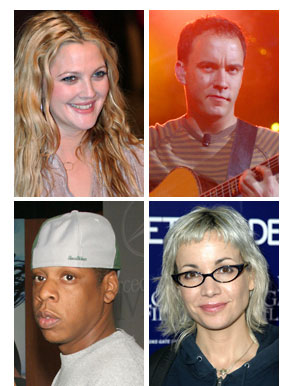
Millions of dollars, big egos and an election are wrapped up in large-scale liberal entertainment tours aimed mainly at bringing the 18- to 30-year-old voter to polls next November. In addition to Tell Us the Truth, events are being planned by Russell Simmons’ Hip-Hop Summit rallies, the now veteran Rock the Vote, Punkvoter.com and Norman Lear’s multimillion-dollar Declare Yourself — not to mention invariable celebrity testimonials for specific candidates. With the election less than a year away, the left has become dependent not just on celebrity money, but also action. Today, pop culture and Democratic politics are more unified than Outkast. Even once-complacent stars such as Jay-Z, Natalie Maines, Dave Matthews and Drew Barrymore are giving their time and reputations to liberal causes.

But in interviews with more than 30 fans attending the Tell Us the Truth tour in New York and Boston, two criticisms repeatedly emerged. First, concert-goers were turned off by the shrillness of the political rhetoric. Second, they wanted to know how to become more politically active; they weren’t content with simply being in the audience. Such is the tricky challenge for today’s political stars: satisfy large, diverse crowds — from radicals to skittish new converts — and productively turn the experience into action, all without getting in the way of an entertaining show.

Can the stars pull it off — and if they do, will it make a difference? Absolutely, says Donna Brazile, Al Gore’s 2000 campaign manager: “Their ability to get out the vote could make the difference in the upcoming election, which is going to be close.” And yet, if informal polling of young fans is to be believed, pop politics still has a lot to learn. Tell Us the Truth may be a sincere first attempt, but it’s also a warning to other tours heading out on the road: Bush-bashing, acoustic guitars and a few petitions might not be enough to galvanize a youth movement.

Tell Us the Truth began as an attempt to lobby against media consolidation. In March, Jenny Toomey, executive director of the Future of Music Coalition, a Washington nonprofit focused on musicians’ rights, tried to persuade Billy Bragg to play a November media conference in Madison, Wis. When his manager suggested something broader, the idea for the tour was born. Globalization was included both because the cause appealed to Bragg and because the Free Trade of the Americas meetings (and protests) would be taking place in Miami only a few weeks after the tour started. “It seemed to make a lot of sense to us,” says Toomey. “It seemed like it fit together.”

The other artists, Steve Earle, Jill Sobule, Lester Chambers, Boots Riley from the Coup and Audioslave’s Tom Morello, generally agreed, as did the key funders, the AFL-CIO and Common Cause, a liberal lobbying organization in Washington. Both groups had already lobbied against corporate globalization and media consolidation, respectively; supporting the tour made sense.

Over the course of the three-week tour, however, the message moved beyond these two issues. Earle, Morello and Bragg agreed to play the same number of songs — five, six or seven — but otherwise artists had complete freedom to sing and speak. Many focused their attention on Bush’s litany of failures, from Iraq to poverty and the environment. Even before Garofalo joined the tour in Philadelphia, “We all let our freak flag fly,” says Morello, who played solo. “It’s just a matter of what works, what you feel like playing. This tour is really a way of finding out how to do this.”

Morello, like the other artists, tried to do more entertaining than preaching. He avoided his darkest songs, and occasionally skipped political speeches. (In New York, he did take time out to tell the crowd that, according to a friend in Baghdad, “Every man, woman and child said, ‘We want every damn American to get the hell out of here.’”)

The musical mix also morphed and changed. Mike Mills of R.E.M. played a set in Indianapolis; Jill Sobule added her heartfelt humor to the tour in Philadelphia. Riley, a rapper and spoken-word poet, also “really shook things up,” says Bragg. Along with inspiring Bragg to go electric, he brought a hip-hop element to the show that was otherwise lacking. When he agreed to stay beyond the four shows he’d signed up for, the show became less folky. “He kept us from being Crosby, Stills and Nash,” Bragg says.

But not completely. Even with Riley, the shows in New York and Boston were dominated by solo acoustic sets, mellow songs and angry protest. Earle, after playing songs like “John Walker’s Blues,” typically spoke about economic inequality. Morello mixed talk of the Miami protests with songs reminiscent of Johnny Cash, while Garofalo hurled insults at Fox News, Bush, Cheney and all Republicans.

When I caught up with the performers at the New York show’s after-party, in the VIP balcony of Webster Hall — where Woody Guthrie’s grandson was also hanging out — they all seemed happy with the mix. Morello told me, between plastic cups of Jameson, that “tonight felt electric.” Garofalo said that she saw in the crowd “that look of ‘we can have a better life, we can work toward social justice’” — a thought that was no doubt encouraged by the after-party experience, where fans praised the stars before asking for autographs.

But whatever the source, their optimism is not unique. Other artists who are digging into politics this year sound equally sure of their own influence. When I interviewed Dave Matthews before Thanksgiving, he said that stars and fans are already moving toward “a point at which there’s just a general outrage.” Russell Simmons told me in person and on the phone that politics is now “in style” for young people, while Moby, co-founder of MoveOn.org’s anti-Bush ad contest, argued that “it’s not like we have to convince people that Bush is a bad man. All we have to do is tell the truth.”

Beltway strategists are also confident in the power of celebrity influence over the much-hyped first-time voter, the 18- to 30-year-olds who didn’t vote in the last election. Already “there has been an awakening that, A) the election matters and B) they can affect the outcome,” says Michael Feldman, a former senior advisor to Al Gore who now consults for Norman Lear’s Declare Yourself campaign. With celebrities pushing them toward the polls, says Feldman, young people have the potential to become a powerful voting bloc, not unlike the ballyhooed soccer moms of 1996. NOFX’s Mike Burkett (aka Fat Mike) agrees. He says that he founded Punkvoter.com because he believes that music and its fans can keep Bush from reelection.

Young fans, however, won’t necessarily be easy to convince.

I’m standing near the back of New York’s Webster Hall, by the radical bookstore’s table, when Morello appears onstage with his acoustic guitar. Most of the dozen young people I’ve met so far have come to hear Morello, so I expect mostly praise from the crowd of sources who surround me. Instead, Mike Levin — a sideburned graduate student at New York University — tells me that he’s not pleased. “I feel alienated by it,” he says. Morello’s speech — including the reference to Iraqis wanting Americans to leave, and a tale of being tear-gassed at the Miami FTAA protests — seemed “kind of preachy,” says Levin, 28. “Kind of clichéd.” His cousin Kate, 22, a politically active intern at the Nation magazine, agrees: “It seemed like he was trying to make the music fit the politics.”

Four of six fans I speak to offer a similar critique — Morello and the other artists seem a retread of ’60s counterculture that’s not quite able to fuse politics and music into a persuasive whole. Some critics simply see holes in the content; Jason Lyons, a tall 24-year-old in baggy jeans, says that he doubts that all Iraqis, or even most, actually want U.S. troops to leave immediately, as Morello claims. Similarly, in Boston, Sheldon found the rhetoric fast and loose. “It wasn’t driven by factual evidence,” she says. “It was driven by their opinion.”

Said Lindsay Sullivan, a fan I met in the Webster Hall stairway: “There’s a great message and I agree with it, but there isn’t anything new.” Her friend Anna Hurley agreed: “There’s not much inspiring going on.”

According to Danny Goldberg, CEO of Artemis Records and the author of “Dispatches From the Culture Wars: How the Left Lost Teen Spirit,” stars tend to alienate their fans “if they become preachy, didactic, too predictable.” Despite the artists’ best efforts, this seems to be what happened, at least at times, during Tell Us the Truth.

This also points to a key generational split. To those who were alive during Watergate and Vietnam — including Morello and Garofalo, who are both pushing 40 — government can’t be trusted, and angry emotional pleas are the best way to rally opposition. “That go-get-’em tough stuff really gets us going,” says Daniel M. Shea, a political science professor at Allegheny College and the author of “Mass Politics: The Politics of Popular Culture.” But, he warns: “It’s not like that for young people. Hardcore partisan attacks just don’t resonate with these folks.”

In fact, research shows that 18- to 30-year-olds have more faith in government than they did in 2000, and they are increasingly registered as independents. The angry negativity that spurs older liberals to action only turns young people off, says Feldman. “Kids don’t want to be preached to, period,” he says, citing a comprehensive Declare Yourself survey on young people’s voting patterns. “They want to arrive at conclusions themselves.” Which is why Declare Yourself stresses its “nonpartisan, nonprofit” credentials, and its spoken word/concert series next year is expected to be high on entertainment and voter registration information — and low on political agitprop. Drew Barrymore attended the group’s launch in November as spokeswoman, but kept any fiery rhetoric to herself.

That’s not to suggest that no rhetoric works. Many Tell Us the Truth attendees interviewed appreciated the subtler, comic approach of Jill Sobule. “I fell in love with her,” says Stephanie Ferrara, a student at Montclair State College in New Jersey. “She was, by far, the most entertaining performer.” Other concert-goers agreed. The model should be “The Daily Show”: “Comedy good, overt bashing bad,” Hurley says.

Fans I spoke to also said that they didn’t mind pure political speech, as long as the message was focused and informative. “I think the message has to be represented uniformly to be strong enough to inspire people,” says Hurley, a contributor to MoveOn.org’s anti-Bush ad contest. Stars speaking out should go deep, fans argue, rather than wide. Build an argument with information and multimedia sources, says Kate Levin, the Nation intern. Tell Us the Truth, for example, could have suggested alternative media Web sites and “done some cool A/V stuff, too — like a ‘Bowling for Columbine’-esque series of clips of all of the administration’s lies about the link between Saddam and 9/11,” Levin says. “It would have made it a little more interesting and added more substance to the tour’s theme.”

Finally, the young fans I interviewed — most of whom were already registered to vote — say that they also wanted more direction. Sure, Billy Bragg ended his sets with mention of petitions people could sign on their way out, and suggested that people write letters to Congress about radio consolidation. But the artists “could have said more about how to get active locally,” says Julia Kowal, 27, publisher of activist media materials in Connecticut. “People have to feel that there’s something to join up with.” In other words, signature drives alone are not enough. Discuss local action groups or meet-ups run by the sponsor, Common Cause; point people to organizations seeking volunteers. “There are already a lot of young people who go to rallies,” says Kowal, at the end of the Boston concert. “You have to get grass-roots stuff going.”

Toomey stresses that the tour did more than concert-goers might have noticed. Artists didn’t just play music and speak from the stage; they also marched with union workers in Miami, met with a co-op in North Carolina and regularly held press conferences that focused on politics in depth. “People are criticizing the effectiveness, but we had almost sold-out shows with very little coverage,” she says. “In Chicago, we didn’t have one preview in the three arts weeklies. And yet, people found these shows. There wasn’t a single night when there wasn’t an encore. So how are we not effective?”

Garofalo struck an even more defensive note. Critics, she says, are simply trying to avoid responsibility. “It’s a way to let yourself off the hook,” she says. “It’s easier to be cynical and walk out of here and say I didn’t get it because then you can emotionally disengage and pretend that you’re a liberal.”

And yet, even if the fans I spoke to are not representative of the whole — with less than half praising elements of the show and half condemning it — it’s clear that the tour didn’t exactly mobilize its audience. The anti-FTAA referendum that Bragg mentioned from the New York stage, for example, collected only 94 signatures from a crowd of close to 1,000. This is about 14 more than organizers, using four volunteers, usually gather outside a Whole Foods supermarket on a Saturday afternoon. Common Cause, which says it was happy with the tour and would sponsor another, also failed to gather its goal of 400 signatures per concert. About 300 people per show signed the group’s petition, which called for tougher laws on media concentration.

Next time, Bragg says, the musicians from Tell Us the Truth will do a better job. “I would say more — from the beginning — about what people can do to get involved,” he says. Toomey also admits that she learned a thing or two from the tour, including the fact that if you list a concert under a title (like Tell Us the Truth), Ticketmaster doesn’t necessarily publish the names of the artists involved. But for Boots Riley, a more substantive change might be in order. “If you want to get new people involved, you can’t have us all together,” he says. “Have one of us, maybe, but we need artists who aren’t so similar in their views.”

At this point, fans seem to agree.

Continue Reading Close

Cuba confidential

Ann Louise Bardach talks about the fading of Fidel, the end of the embargo, and the drive for democracy -- and why exile leaders aren't happy about any of it.

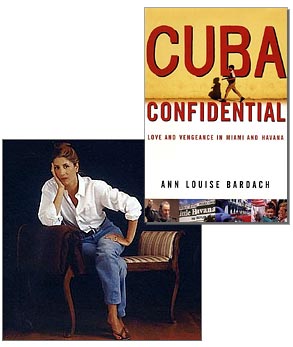
Ann Louise Bardach calls her obsession with Cuba “una enfermedad,” a sickness. Checking the wire-service news every day, exchanging gossip with friends in Havana and Miami, devouring each year’s harvest of Cuba-related books and movies — these are just a few of the illness’ symptoms. And while it’s true that others have been equally stricken — Ernest Hemingway being the most prominent casualty — few of history’s Cuba-philes have managed to contribute as much as Bardach has to today’s ongoing Cuba debate.

For the past decade, Bardach, now a columnist for Newsweek’s international edition, has been the most vigorous reporter on the Cuban scene. Everything from Cuba’s post-Soviet lunatic paradoxes to Miami’s tolerance for terrorism has been the subject of her investigative attention. In the midst of a world filled with intrigue and polarization, she’s always managed to be an equal opportunity critic. Leaders on both sides of the Florida Straits have learned to fear her efforts.

“Cuba Confidential: Love and Vengeance in Miami and Havana,” Bardach’s latest book, will likely continue that trend. Much of the reporting comes from Bardach’s old assignments, and scholars of Fidel Castro will probably find few new insights that haven’t already been discussed at length elsewhere. But the book is nonetheless fascinating and important. A family portrait of Cuban and Cuban-American dysfunction, “Cuba Confidential” offers both a scathing profile of Fidel Castro’s cold, cruel psyche and a comprehensive behind-the-scenes account of how exile leaders have ruled Miami with an iron fist. Even the section on the Elián González saga — a tawdry affair that few of us would like to revisit — comes alive again thanks to Bardach’s extensive reporting and critical insight.

With the advent of the increasingly popular Proyecto Varela referendum, how close is Cuba to democratic reform? Why are some leaders of the Cuban exile community so dead-set against change? How long will the U.S. embargo, or for that matter Fidel himself, last? And what will the future of a Cuba without Castro look like? Salon spoke to Bardach about her present feelings on the Cuba condition.

Oswaldo Payá, Cuba’s most famous dissident, visited Miami last week and received a mixed welcome. Exile leaders denounced him for legitimizing the regime while polls showed that 68 percent of Miami exiles support him. What do you make of Payá and his visit?

Let’s put it this way. The first person to make a dent into Fidel Castro, successfully, is Oswaldo Payá. This is the first successful organized opposition — but I don’t think you ever want to forget that Elizardo Sanchez and many other dissidents have paid big dues. But Payá has really gone to the mat with this one.

Jimmy Carter also hit one out of the ballpark. When he gave that speech on live Cuban TV in Spanish, he gave legitimacy to the Proyecto Varela [a peaceful opposition movement that has collected more than the 10,000 signatures required for a referendum on democratic reform in Cuba]. Remember, before Carter, the only people who knew about it were the people who signed it. After Carter, everyone on the island knows about it. It went from 11,000 people who knew about it to 11 million.

That speech totally trumped the Bush administration. To a Cuba watcher like me, the Carter speech was a really big event because it trumped the hardliners in the White House. They tried to sabotage Carter’s visit with that whole thing about Cuba having biological and chemical weapons. That was done to discredit him. They let Carter go [to Cuba] thinking, what could Jimmy Carter do? He’s a pathetic little peanut farmer from Georgia?

Who knew he was going to transform the Cuba debate? And on top of that, it gets Jimmy Carter the Nobel Prize. It gets Payá the Sakharov Prize [Europe's most prestigious human rights award] — and I think Havel has nominated him for the Nobel. Now that’s not bad for 20 minutes in Havana. It just tells you what can happen with constructive engagement.

I’ve yet to hear, however, that more people are signing on to Varela now that it’s better known. Have you heard anything about the effects of Carter’s speech in Cuba?

Everybody knows about it. Let me give you a story. I wrote an editorial about a person involved in this. It talks in veiled terms about a friend of mine who was going to sign it. This is a person who was very involved in the government, at the very top. And you have a person like this saying that the Varela Project is the most important thing to happen in the last decade and [this person] is desperate to support it. This is such a telling anecdote. This is a person who was making explosives to export the Cuban Revolution around the world. When people like that, on this level, are ready to support it, then discontent, at varying degrees, exists from top to bottom.

What do you make of the exile leadership’s decision not to support Payá?

Well, in fact some of the leadership did support him, and it really shows the split that I talk about in the last chapter of “Cuba Confidential”: how serious this is going to get. The fact that you now have the [Cuban American National] Foundation supporting Payá and the polls show that 70 percent of Cubans in Miami support him, but then you have Lincoln Diaz-Balart and Ileana Ros-Lehtinen [South Florida's Republican representatives, both of them Cuban exiles] saying he’s illegitimate because he’s part of the whole Castro government deal.

I don’t know if you know this, but they were pressuring the administration to disavow Payá and actually criticize him when he went down to Miami on May 20 last year. But Bush didn’t do that; he in fact embraced [the project], which stunned me. He gave a thunderous anti-Castro speech down there, but he embraced the Proyecto Varela. This must be what they call a knife in the heart — un puñal en el corazón, as they like to say dramatically — for Lincoln and Ileana. And you can see that this is a big problem. Even the famously cowardly publisher of the Miami Herald has embraced Proyecto Varela.

Remember that the Varela Project is Catholic based. So you have a lot of the tradition of Augustine and a lot of the Jesuit liberation theology in this. And of course, that’s a great way to deal with Castro because it’s hard for him to get a handle on that one. It’s very brilliant. And I really think that Lincoln Diaz-Balart and Ileana, they shot themselves in the foot this time.

The problem with Lincoln and Ileana is this: They are both mentored by their fathers — two men who are deeply embittered hard-liners who basically will not be happy unless Fidel is hanging by his heels à la Mussolini in Calle Ocho. That is their bottom line. It’s about vengeance, which is why I wanted that subtitle on my book — “Love and Vengeance in Miami and Havana.” It’s all about vengeance. It’s not about, let’s get this over with, let’s get this moving, let’s get a good solution, let’s get as much as we can. It’s about, we must achieve some level of vengeance here.

And Fidel, as you point out, is the same way.

Absolutely. Because they’re all coming out of this machista ethic. That’s the whole tragedy of the Cuban debate: Cubans leave Cuba but they take Fidel Castro with them. The politics of denunciation, which were to a large extent created in the revolution with CDRs [Committees for the Defense of the Revolution] and snitching and such, was exported to Miami. You have the same process. You have the big three radio stations doing the same thing, denouncing people to keep them straight, functioning as Big Brother of Miami.

One of the reasons that vengeance is the response you get from so many older hard-liner Cubans is that Fidel Castro has a way of emasculating people. His policies, particularly in a machista culture like Cuba’s, make people feel emasculated and humiliated. That’s why they want a pound of flesh afterwards.

If you stay in Cuba a long time and hang out with Cuban friends, you see that what they go through on a daily basis is humiliation: to have to beg for this, to beg for that. You try to get in this hotel or that one — it’s a humiliating cycle and it’s never really been explained, even though they do not have the privations of, say, Guatemala or the atrocities we saw in Chile or Argentina even.

Castro has kind of institutionalized begging. Even though you don’t have the death squads and the disappearances and the torture, when you make people feel like they’re beggars, that’s where you get that kind of rage. I wish I had spent a bit more time writing about that.

The level of rage in Miami, however, seems to be diminishing. Polls show that an increasingly high percentage of Cuban-Americans, for example, no longer support the U.S. embargo. And as you mentioned, there’s been a split in opinion over Payá. When did this shift get its start?

You cannot underestimate how things unraveled after Jorge Mas [Canosa, the head of the Cuban American National Foundation] died. You basically had Mas holding things together with the force of his personality. Of course, he had a huge amount of charisma and no one crossed him. From the minute he died, it’s been a free-for-all.

I actually think that Jorge Mas never would have gambled on Elián González. He would have right away sized that one up and walked away from it. Trying to tell the American public that a father should have his son taken away because he lives in Cuba is not really winnable. I don’t think Mas would have done this out of any virtue or anything. I think he would have looked at it and said, what would it take to take the kid away from the father? And he’d say, we’re not going there.

I think that Jorge Mas Santos, the son, doesn’t get nearly as much credit as he should. It takes no courage, no bravery, to rail against Fidel Castro in Miami. That takes nothing. But it takes a lot of guts to say, let’s try this a different way. Jorge Mas Santos has been willing to do that, even in the shadow of his father. People forget that he fought very hard to bring the Latin Grammys and all that it meant to Miami.

How do you think the Bush administration will handle this shift, given the importance of Florida to national politics?

Somebody who is very close to this White House said to me at a party recently, “OK, you’re the expert on Cuba: What do I tell this administration about how to get rid of this turkey?” How do we get rid of this embargo and get it over with?

This is from an ideologue on the right. This is before the 2002 election in October. And I said, if I were George Bush and I were thinking about this, I guess I would do whatever I had to do to get my brother elected and hold on to my base for the next election. Then I would cut them loose.

Because if you don’t cut loose on this embargo, you’re hemorrhaging every day. Every day you’re losing people in the Senate and the House. If they keep going against this, they’re going to drag this turkey to the next election. And how much time and how much capital and how much money do you want to use to hold on to this thing that there’s no support for among the general population, or our allies? There’s even an erosion of support every day in South Florida.

Let me be clear: I’m not against embargoes. I think sometimes embargoes work. We have to thank an embargo for the shift in South Africa that gave the disenfranchised the right to vote. Sometimes embargoes work. I think you can give an embargo around 10 years; if you’re really patient, you give it 15 to 20 years. You don’t give an embargo or any policy 43 years without meeting your goals or at least some of your goals. All we keep doing is tightening it and we’re getting less and less and less.

At some point you say, this is insane, we’re not achieving anything. The U.S. has to step back and say, OK, we lost, he won, how do we shift this? There has to be strategic, cool-headed thinking about how to bring democratic reform to Cuba and not about achieving vengeance and getting a pound of flesh.

But given the circumstances, do you think it will ever happen? Do you think we’ll see an end to the embargo, say before the next election?

They’ve got their hands really filled with North Korea and Iraq. How can they waste capital and time on Latin America and Cuba?

I think what they’ll do is give lip service to the [old guard]. They’ll say, “Oh God, in our heart we feel for you,” and they’ll keep pushing them to the side, giving a wink and a nod to the Republican free-traders who are the majority and who just in principle want to trade with Cuba. They’ll let them put together a veto-proof thing and they’re going to attach it to some bill and be over with it. Remember, it was Kissinger in 1976 — a Republican — who was ready to toss our Cuba policy out.

What do you predict for the next decade in Cuba?

The central player remains Fidel Castro. But Fidel Castro is nothing if not a survivor. He’s eaten 10 American presidents for breakfast. He’s chewing on his 10th president. He will give ground only based on what he needs to give ground. He can only save his bacon with tourism. And the nature of tourism is that you have to let foreigners come in. So he has to graduate tolerance and openness — a loosening of the belt.

0n the other hand, I must say, I thought I’d seen and heard it all in Cuba. But when Jimmy Carter left after that big speech and everyone knows about Varela and suddenly Fidel Castro smashes through that referendum to make [socialism] permanent: That was such spectacularly bad behavior even by his standards. I just thought, the sheer insult to Carter! I just thought he would wait awhile and do it in a less obvious way. It just showed that he so desperately needed to show who was in charge.

I remember the first time I met Fidel Castro, I said to him, why don’t you do something like Holland and Sweden and just do some kind of socialism? You lost the Russians; why not can the hardcore communism? You don’t have the money to pay for it anyway, so make it a mixed economy, which of course it is now.

But he’s afraid of losing control. What he lives and breathes is the fear of what happened to Gorbachev, who he — actually in the film I just saw ["Comandante," Oliver Stone's new documentary] — describes as this well-intentioned man who destroyed his country. That’s what he believes; that perestroika before glasnost is what doomed Russia. He was in there until the bitter end trying to convince Gorbachev not to open it up.

The collapse of Russia haunts Fidel Castro. It just made him become more convinced that he couldn’t yield. But as we see, he yields every day, as needed.

When I first started doing this 10 years ago, all the smart people, the really smart disenchanted nomenklatura, the dissidents, all said, you don’t understand: It’s really simple, Fidel can’t stay in power without the embargo. I said, don’t be ridiculous, all he does is rant every day about the imperialistas. And they said, you don’t understand.

And then sure enough, as I tried to show in my book, at every critical juncture, he pulled the plug on ending it. Just look at it: Who is the winner from the U.S. embargo? There’s only one winner here, and it’s him.

What about after Castro? What do you think will happen?

I don’t see anyone having an appetite for bloodshed. The only people who have an appetite for bloodshed are a few people in Miami. And the thing about them is, it’s never going to be their blood. I think it’s very interesting that Lincoln Diaz-Balart criticizes Oswaldo Payá for selling out to the regime, but he’s not willing to be in Cuba and go to prison. I love how they like to criticize people from their nice homes in Miami — people who have been in solitary confinement. It’s amazing to me. The hubris! They’re sitting there in Miami Beach and criticizing people who have really made a difference, like Elizardo Sanchez, who spent 11 years in prison. It’s outrageous.

Continue Reading Close

Reel world domination

If young film buffs choose Tarantino over Antonioni, are they culturally illiterate? Some of their elders, self-appointed guardians of the cinematic canon, think so.

At Kim’s video store on St. Marks Place in Manhattan’s East Village, the “Employee Picks” section is on the third floor, right in front of the registers and next to the new releases. In the midst of a labyrinth that only Magellan could navigate, the location of this display is one of the few things in the shop that makes sense. Not only does it give Kim’s a chance to market the store’s institutional knowledge to customers waiting in line; it also offers employees the chance to lure the ignorant away from blockbuster schlock and toward more complex classics.

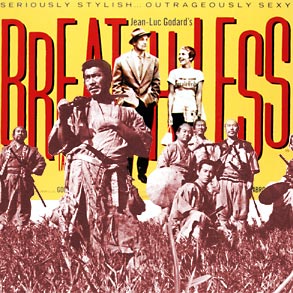
Forget “Changing Lanes,” the film buffs argue from their pedestals behind a tall maroon counter. For a real dose of class struggle, grab Brando’s “On the Waterfront.” Ignore “Star Wars,” they demand; instead watch its epic predecessor, “The Seven Samurai.”

Snobby cultural up-selling is exactly what you’d expect from a place that has “cult,” “classics” and “independent” sections that each occupy twice the space allotted to new releases. But still, the rack of Kim’s employee picks is full of confusing choices. If the group of 44 films is meant be a microcosm of film geek opinion, a democratic canon of the best classics new and old, then much of what was once considered important appears to have been lost.

The films standing on the worn wooden shelves hail from various eras and countries. But the so-called gods of cinema are nowhere to be found. Not a single work by Italian film royalty — Michelangelo Antonioni, Federico Fellini — has penetrated the hearts and minds of today’s self-declared film aficionados. There are no Ingmar Bergman films, nothing from classic Hollywood giants like Howard Hawks and John Ford. Jean-Luc Godard? Alain Resnais? They’re not there either — nor are they among the employee picks in the uptown branch of Kim’s near Columbia University. Most of the students who rent films from the stores avoid anything made before 1970.

I ask the woman behind the counter in the East Village store — Rachel Nelson, a 20-year-old Pace University education student with a nose ring — why the once-essential anchors of historic cinema now seem so pass&#233. Doesn’t anyone care about Hollywood’s pioneers or the complicated psychological work of French New Wave masters like Truffaut and Godard?

“I don’t really like French movies,” Nelson says. “A lot of them seem pretentious.”

“It’s easier to see something that my friends have seen,” adds a 27-year-old college-educated customer standing nearby. Renting old movies, he says, “is too much of a shot in the dark.”

To older film buffs and critics — particularly baby boomers who came of age during the American film renaissance of the ’60s and ’70s — such apparent lack of interest is appalling. It’s nothing less than a brand of cultural illiteracy. How could anyone with a love of film remain indifferent to Godard? What kind of buffoon fails to acknowledge the genius of Ford? Clearly, pronounce the self-designated deans of film ed, the celebrity-obsessed media, MTV and college film departments — awash in postmodern relativism that makes Spielberg as important as Bergman — have lobotomized Generations X and Y.

“In the ’60s and ’70s, there was a spirit of ‘challenge me, show me new limits.’ People enjoyed the feeling of being lost, of not getting it,” says Columbia professor Richard Peña, chairman of the New York Film Festival. “Now, ‘I didn’t get it’ is what’s said in frustrated desperation.”

Is the 16-to-30-year-old crowd intellectually lazy? Not necessarily. Today’s young film fans are very willing to watch the meandering montage of a film like Fellini’s “8 1/2.” They see the work of yesteryear’s auteurs quite often, in fact, both in their film classes, which are more popular than ever at many universities, and on their own, via the Internet, cable, video or DVD. But some of these young viewers are unwilling to worship Fellini and his contemporaries with the passion of their elders. Their lack of effusive praise for the “classics,” as designated by their predecessors, should not be misinterpreted as a failure to see, understand or appreciate films that were once breathlessly described as perfect. Even if they don’t gush at the first frame of a black-and-white dream sequence, most young film geeks have likely learned to value Fellini, Godard, Bergman and the others who regularly appear on film critics’ top 10 lists.

Today’s young fanatics, like the ones who came before them, simply connect more intensely, and prefer to focus on, their own discoveries. They follow their favorite directors’ influences; they find their own favorite styles and masters. Just as the employees at Kim’s demonstrate impressive depth in their selection of obscure films from Germany, Russia and Japan, youthful film buffs are digging into the past — distant and recent — for classics of their own definition. Instead of eschewing the canon, they’re expanding it. Film illiteracy is a concept subject to generational interpretation. Could it be that the old school, in clinging stubbornly to threadbare favorites, is losing its command of the cinematic language it claims to have invented?

Columbia University’s introductory film class meets at 9:30 a.m. in a darkened screening room with 72 seats. Most of the students who shuffle into the class — a half-dozen arrive late, with coffee — seem to have just climbed out of bed. There are denim-clad freshmen without majors, and unshaven seniors who see the class as a break from their other lab or text-based courses. Shifting quietly in their seats, they all seem only mildly interested in the classic films that form the traditional backbone of cinematic history. Getting them to answer questions requires repeated prodding from Larry Engel, their compact, bright professor who spends about an hour going over last week’s film, Sergei Eisenstein’s silent communist propaganda vehicle “Battleship Potemkin” (1925).

But when Engel starts screening the day’s films — clips of Charlie Chaplin’s “Modern Times” (1936) and “M,” Fritz Lang’s dark 1931 thriller — the class seems to perk up. Eyes are wide open, students laugh at all the right places and take notes whenever Engel pipes in a comment like, “That opening is one of the best openings to a sound film, anywhere, anytime.”

During the break and after class, I ask a half-dozen students what they think of older films and the idea of film literacy. A couple have a hard time explaining why they took the class, perhaps because they’re half asleep or afraid to admit that they thought it would be an easy A. The others’ opinions range from complete disgust with modern movies — “I’m far more interested in the classics,” says Jeansun Lee, a sophomore computer science major — to a nuanced appreciation for certain aspects of the old.

Chris Wells, a bespectacled freshman who is considering a film major, admits that the older films are sometimes difficult to watch. “We have to learn a new language; it’s like being taught to read all over again,” he says. And yet, while the experience can be especially trying (he cites Godard films as an example), Wells says that he and many of his friends have learned to recognize the value of older films. “They’re important because every movie today uses elements from the past,” he says. “They help you understand movies of today.”

Wells’ interest in film started in high school when an enthusiastic English teacher screened Ernst Lubitsch’s “Trouble in Paradise” (1932) and Charles Laughton’s “The Night of the Hunter” (1955) — one a romantic comedy, the other a Gothic tale of greed, both of them produced under the old Hollywood studio system. Wells immediately realized that classic cinema had something to offer. Soon he was exploring on his own, going to repertory houses, renting videos and making vigorous use of the Internet.

“The Net helped me a lot,” he says. “You can find out anything about a movie from IMDB.com [the Internet Movie Database]. And what’s great is that one thing leads to another. If you like one movie, you can go online and find other movies it was influenced by. There are so many paths you can go down and it’s really interesting to connect the dots.”

A similar level of inquisitiveness thrived in a film class for nonfilm majors at New York University. In fact, at universities across the country — Oberlin, campuses in the University of California system, Boston College, Pomona, to name just a few — film classes are some of the most popular offerings on campus. And like Wells, many students seem to be self-educating, connecting their own dots.

This comes through not just in face-to-face and telephone interviews with scholars and students but also, as Wells suggested, through the Internet. I posted a series of questions on message boards at IMDB.com, Google Groups, Yahoo and other sites that focus on the issue of whether old movies are still important and whether Generation X and Y lack appreciation for the “classics.” The response was overwhelming. From all over the country, college students, recent graduates and high school students wrote to say that yes, most young filmgoers would rather watch “The Matrix” (1999) than “The Conversation” (1974), Francis Ford Coppola’s take on the dangers of surveillance, but a growing minority want to see both.

Consider J.M. Gallegos, a recent graduate of Western Connecticut State University. Like many people his age, 25, he discovered a passion for classic cinema accidentally. “I came across ‘The Third Man’ one night on TV — I think it was AMC — about three or four years ago,” says the former English major, in an e-mail he sent after finding one of my posts. “I started watching it, and as soon as I could, a day or so later, went out to rent it. It was unlike anything else I had seen before, and it opened my eyes to what film can be. After that, just like when I was introduced to classic literature in college, I began exploring older/classic films as often as I could; everything from ‘The Birth of a Nation,’ to ‘Modern Times,’ to ‘Lawrence of Arabia,’ to ‘Chinatown.’” Now, Gallegos says, his favorites are not blockbusters but rather, “the works of Chaplin, Welles, Kurosawa, and Kubrick.”

The group I met online included other equally passionate fans of classic cinema: people like J.W. Mathews, a 17-year-old high school senior in Amherst, Mass., who lists Truffaut’s “The 400 Blows,” Kurosawa’s “The Seven Sumurai,” and Welles’ “Citizen Kane” on his list of top 20 favorite films; and an anonymous teenager who wrote to say that he has seen every film on the American Film Institute’s list of the 100 Greatest American Movies of All-Time.

A. Madison, an archaeology major at Arizona State, said that “most of what I know about movies I learned on my own — either through watching them or reading something about them.” There was also a 16-year-old high school student who, after watching “The Apartment” in class, says that now “encouraging classic film appreciation among my peers is a secret agenda of mine”; and Kyle, an 18-year-old college freshman, who insisted that “to appreciate film’s full capabilities you should see the widest varieties of genres and nationalities. American, German, Italian, Japanese, French, British — you name it, any kind of cinema.”

All of these people in their teens and 20s — along with a handful of older film scholars who argue that today’s young people are at least as fascinated by classic films as their predecessors were — say that their appreciation can be attributed to the availability of film and a process of acquired taste that comes from exposure to an eclectic bunch of movies. With cable, video, DVD and the rise of restored film prints like those put out by Rialto Pictures, “kids can self-educate,” says Jeanine Basinger, head of the film program at Wesleyan University. “They didn’t have film Ph.D.s when I was learning about film in the ’50s,” and film buffs had to explore on their own, Basinger says. “Today’s kids are returning to that ideal.”

Today’s students of film are coming of age in a time when independent cinema has catapulted out of the art houses and into the mainstream. The movie industry’s burgeoning faith in independent and edgy film has brought everything from “sex, lies, & videotape” to “Mulholland Drive” to local cineplexes, creating a willingness in young audiences to see films that, in an earlier era, might have been categorized as dull or incomprehensible.

“The more popular contemporary movies in my circle of friends are the movies that are more challenging; the ones that are doing something offbeat or different in a narrative or visual sense — like anything by David Finch or Wes Anderson, or Richard Linklater’s ‘Waking Life,’” says Kate Brokaw, a freshman at Pomona College in Claremont, Calif. “We’re part of that trend that’s looking for something different, and it makes us more willing to dig back into the past for older innovative work.”

Most students and recent college graduates are lured back to traditional classics by their interest in current hits or cult films. They discover a contemporary director that they like, then trace his or her influences. Wes Anderson’s “Rushmore,” for example, led Wells back to the directors of the French New Wave — Godard, Rivette, Chabrol, Varda. “The success of Tarantino’s work raised up Asian cinema,” says Bruce Jenkins, director of the Harvard Film Archive. “People weren’t talking about John Woo before ‘Reservoir Dogs.’ And ‘Run Lola Run’ is a great film that knits together German legend with a very contemporary subject. If the director [Tom Tykwer] can do what he did with an old subject, people wonder, what was [F.W.] Murnau [the director of "Nosferatu," a 1922 vampire story that was also the subject of 2000's "Shadow of the Vampire"] doing in the ’20s?”

But if German and Japanese films are hot — which is the case not just at the Harvard Film Archive but also at the Pacific Film Archive in Berkeley, Calif., and at universities such as Wesleyan — what kinds of films are they replacing? Have classics considered crucial by aging film buffs fallen from favor?

The students, professors and young film geeks I queried admitted that Bergman, Antonioni, Fellini and Godard had lost their status in the classics lineup. However, Ray Carney, a film professor at Boston University who maintains a comprehensive Web site on film and other arts, believes that simply citing names doesn’t fully explain what’s happening. It’s a certain style of film that today’s audiences seem unable to grasp, he says. The “spiritual” films have been shoved aside, explains Carney — those that offer “a transformative experience,” those that “expose us to new ways of being and feeling and knowing.”

It isn’t so much about the directors, says the film professor; it isn’t just the old ones who get the boot. While Antonioni’s and Bergman’s work from 40 years ago fit Carney’s description of unfavored films, he also cites the work of ’70s indie heroes like John Cassavetes and relative newcomers like Abbas Kiarostami (“A Taste of Cherry,” 1997), Mike Leigh (“Secrets and Lies,” 1996) and Todd Haynes (“Velvet Goldmine,” 1998).

The key issue with these films, Carney says, is that “you don’t get easy gratification out of them. You’re often left puzzled or frustrated. You may have to see them a second or third or fifth time.” And precisely because they’re difficult, says Carney, a caustic critic of academic multiculturalism and the press, they’re eliminated from curricula and today’s updated canon. Film culture’s gatekeepers (except at Boston University, Carney says) favor films that fit easily into a political agenda — Who’s being oppressed? What would Marx think? — or have an ironic, pop-cultural and literal sense of art. A film like Cassavetes’ “A Woman Under the Influence” — the story of a woman’s struggle with mental illness and her husband’s unorthodox attempts to keep her sane — can’t be explained by these postmodern theories, Carney says, so it’s dropped.

“I was at the Stanford film department, at Middlebury, at the University of Texas, and no one recognized [Cassavetes'] work,” says Carney, who was a personal friend of the filmmaker. “It wasn’t, ‘Oh, we show it sometimes’; it was blank stares. They all thought he was just an actor in ‘Rosemary’s Baby.’”

To Carney, the contemporary filmmakers that many students cite as their favorites — Wes Anderson, Richard Linklater, Todd Solondz — lack depth. Just as kids in the ’60s were attracted to “Bonnie and Clyde,” “Easy Rider” and other anti-establishment pictures, today’s kids are attracted to movies that show what Carney calls “the dirty underwear of American culture.”

“It’s not bad in itself,” Carney says. “‘Magnolia’ is a better film than ‘Titanic.’ But it reveals an institutional bias to show films that pander to the youthful desire to drop out, or believe that the world is a load of crap.”

Other insightful critics, like Peña at Columbia, agree with Carney’s pessimistic take on today’s budding film buffs. And they seem to be correct in pointing out that scores of young film fans fail to worship the baby boomers’ gods — Bergman is a classic example — with the same intensity their parents did. “Even Fellini, who was who I loved when I was young, isn’t as relevant anymore,” says Richard Breyer, a film professor at Syracuse.

It’s also true, as Carney suggests, that some undergraduate film programs have shifted their curriculum to fall in line with what students and academics now find attractive. Syracuse, for example, now offers a Shakespeare-in-film class because students have become fascinated with recent bardic adaptations like Baz Luhrmann’s “Romeo + Juliet.”

Meanwhile, Bergman and Antonioni films, says Breyer, “are out of the house.” Even at NYU, the introductory film course I visited was not a broad survey of brilliance but rather a study of Hitchcock’s films, which are still popular today in part, if Carney is to be believed, because they’re suspenseful enough to hold students’ attention.

Carney’s larger argument about German and Japanese films — that they’re favored because they’re less challenging — isn’t entirely off base, either. As Basinger at Wesleyan points out, films from both of these countries are closely related to the Hollywood style we’ve been trained to watch. Early Japanese movies like Kurosawa’s “The Seven Samurai” (1954) resemble refashioned westerns, and the style of German expressionism essentially became part of the Hollywood repertoire when Hitchcock, and Austrians like Billy Wilder (“Double Indemnity,” 1944) and Fritz Lang (“The Big Heat,” 1953), emigrated to join the studio system.

And yet there are several holes in the pessimists’ theory. The idea that German and Japanese cinema is inherently superficial because it’s familiar and Hollywood-like — an overgeneralization in its own right — is a bit like saying that “The Great Gatsby” is shallow because it resembles British Victorian novels that concerned themselves with class and social striving. And even if German and Japanese cinema works within a tradition that young Americans easily comprehend, can it be inferred that the films themselves are less “spiritual” or important? If students are finding those films interesting, does it mean they’re less willing to watch other kinds of difficult older films?

Rather than cutting out the older classics from curricula in favor of films that are easy to watch or politically relevant, colleges (and high schools) have actually added films to class viewing schedules — and film courses to their catalogs. Even small schools like Oberlin have recently made film a fully developed, expansive major so that these days, if students haven’t already seen Fellini or Howard Hawks films on their own — and many of them have, according to Basinger — they’ll likely get the chance to catch up in architecture in film, which is being taught at Cooper Union, or the Italian realists class at Columbia.

And even if there are some students who won’t watch any Godard in their films of Weimar Germany class at the University of Montana, there are others who will be introduced to “Vivre Sa Vie” (1963) — Godard’s episodic tale of a Paris prostitute — in NYU’s Hitchcock class, where professor Richard Allen uses the film to show what can be done with ambient sound. Sure, in some cases, the films will be seen through the lens of political theory, feminist theory or Jacques Derrida’s frustrating form of deconstruction, but the films are still being seen — and that includes the “spiritual” ones that Carney feels have fallen into the abyss. As Annette Insdorf, chairwoman of Columbia’s undergraduate film program, points out, “There is renewed interest in mavericks like John Cassavetes, now that the independent American cinema is virtually a genre.”

So why are baby-boomer critics panicking about the film literacy of younger film addicts?

Partly, says Basinger, it’s simply nostalgia: “There’s always the assumption that the younger generation A) has no intellectual curiosity; B) won’t explore the past; and C) won’t notice something good when it’s put in front of them.”

Older critics who came of age during the era of revival houses, like those described in Theodore Roszak’s brilliant novel “Flicker,” may also be mistaking shifts in technology for shifts in literacy. “What they remember about the ’60s and ’70s was that excitement, and revival houses and community,” Basinger says. “The fact that kids pop in a DVD and watch it quietly — it seems different. But it is the same, in a different form. They’re missing the group camaraderie, but that doesn’t mean that passion isn’t there, or the interest isn’t there.”

In addition, the shift away from European directors that Syracuse’s Breyer described seems to have been misinterpreted. It’s not that students don’t watch Fellini anymore. As Bruce Goldstein, director of repertory programming at FilmForum in New York, points out, the mix of young and old for a Fellini retrospective today is essentially what it was 25 years ago. But certain films seem to age better than others. “Nights of Cabiria” was a favorite of many students I interviewed, while “8 1/2″ was off their radars. Both are available on DVD, so it’s not a distribution issue. But critics who hear a student disparaging the latter often take this to mean that today’s young audiences are unable to appreciate Fellini. And yet there are other explanations: Perhaps, for instance, “Cabiria’s” Forrest Gump-like inginue simply resonates more intensely than the Freudian tale of a frustrated filmmaker in “8 1/2.”

At the same time, is Gallegos (the one who accidentally discovered “The Third Man”) film illiterate because, as he puts it, “I have always been as receptive to Far Eastern cinema (Kurosawa and Ozu) as most film buffs have been to European cinema”? After all, he still watches and understands Fellini; he just doesn’t like it as much as his elders do. At what point does criticism of what people read or watch become an excuse to pressure us all into liking the same books or movies? At what point does the idea of a canon cease to be an educational tool, becoming instead a shackle of approved taste? Or a bid for legitimacy from an older, and increasingly cranky, generation of film fans?

Gallegos and other smart 16- to 30-year-old film geeks, don’t much care. They simply emphasize that they’re seeking their own examples of greatness. Not content to just see and appreciate what their parents loved, they’re aiming to deify their own directors, create their own canon.

Which brings us back to the bin at Kim’s. It’s chock-full of Asian, German, African and Russian cinema. Documentaries, once shunned as less artistic than features, are also there. And with choices ranging from “Come and See,” a 1985 Soviet film about World War II, to “The Tokyo Olympiad,” a lengthy documentary about the 1964 Olympics, the display presents not just options, but intelligence. Are they spiritual? Probably depends on who you ask. Are they important? Same answer. At least they’re undiscovered, says Nelson, the nose-ringed clerk.

“The picks are a way to suggest movies people probably haven’t seen,” she says. “People know Godard — they want something new.”

Continue Reading Close

Dying for God

The author of "The Martyrs of Columbine" on the strange and sometimes violent collision of religion and politics.

Remember Columbine? A year after the terror attacks of last Sept. 11, as the country gears up for a war with Iraq that will likely claim a heavy toll in American lives, it’s easy to forget Eric Harris and Dylan Klebold and the 13 victims they murdered in 1999. But for many in the evangelical Christian community, Columbine has yet to fade from view. Two of the teenage victims — Cassie Bernall and Rachel Scott — reportedly professed their faith in God before being shot, and preachers all over the country still invoke their names to win converts and argue for prayer in schools.

“The Martyrs of Columbine: Faith and the Politics of Tragedy” (to be published Nov. 9) meticulously documents this enduring use of martrydom for political purposes. Author Justin Watson, a religious professor at Le Moyne College in Syracuse, N.Y., explains how the two girls have become contemporary Daniels in the lion’s den: how their stories have been exploited for political purposes by both the left, which saw Columbine in terms of weak gun laws, and the right, which argued that Harris and Klebold were the direct result of secularization.

The attacks of Sept. 11 and the violence in the Middle East remind us that politics aren’t just local but also, in many cases, religious. Watson is something of an expert in the area of political religion. His previous book, “The Christian Coalition: Dreams of Restoration, Demands for Recognition,” was praised for its balanced but critical take on the paradox of a movement that’s looking for recognition within the system of American religious pluralism while it also tries to destroy the very tradition of tolerance that lets it mobilize in the first place. In “The Martyrs of Columbine,” he once again approaches the evangelical movement with a fair but skeptical eye. Watson emphasizes that it’s doubtful Cassie or Rachel actually replied yes when asked if they believed in God by one of the shooters — and yet, he says, their families and defenders continue to traffic in their stories as if they’d never been discredited. The pull of martyrdom, the attraction to the story of someone dying for her faith, he argues, is too compelling to pass up.

But is there danger in glorifying death for a religious cause? Is there a relationship between the way the American right wing exalts Cassie and Rachel and the way many Palestinians exalt suicide bombers? What role, if any, should religion play in politics?

Salon chatted with Watson about God, martyrs and the way they mix with political and social conflict.

Your book is about how quickly a martyr story spreads and how it’s able to overcome facts that discredit it. But it’s been several years since Columbine. Why does this message matter?

As an example of how a martyr story develops and how it’s used, even generations afterward. It’s still something quite relevant. The formative power of martyr stories in Christianity and in other traditions is still very much with us. Think of this as a case study: The lessons from it can be applicable in other places.

What are some of the lessons you learned from the case of the Columbine martyrs?

The largest lesson I gained from it is about how the politics of the tragedy of martyrdom, of the loss of life, of sacrifice, is still politics. It becomes used not as something set apart, as a sacred thing; it instead becomes used for political purposes.

Is this a new trend or has it always been this way?

I see it as essential to the concept of martyrdom itself. The definition of martyrdom that I’ve used involves a notion of ideological conflict between communities. The martyr becomes the great representative, the crystallization of the values of a community in conflict with others. So there’s an inherently political aspect to martyrdom.

Your definition argues that martyrdom is an attempt to use religion to break through ideological and sociological boundaries. Does this kind of religious weapon tend to work? Is it viewed as more powerful now than it was it the past?

The ability to break through boundaries has always been there and it continues to be. The essential martyr stories are things that really touched hearts and moved people. What’s different today is how fast a story can become known and how widespread it can be. Another thing that’s changed, say from early Christianity, is that we have more tools to interrogate that story and find out whether or not it’s true. The work that Dave Cullen did in Salon in September 1999 [debunking the Cassie and Rachel myth] is an excellent example of that. The viability of these stories can be endangered by the same means that help them become so widely distributed.

And yet, in the case of Cassie and Rachel, these martyr stories tend to transcend the facts. Despite the debunking done by Cullen and your book, the martyrdom of these girls is still used in sermons, books and other media, as you point out. If facts can’t weaken these legends, is there anything that can put these stories out of circulation?

The fact that this story can make meaning of what is potentially a meaningless event has tremendous power and appeal. Speaking for myself, I would rather that the martyr stories at Columbine be true rather than false. I would prefer that someone looked down the barrel of the gun and told the gunman what he didn’t want to hear. To me, to tell the truth is a very admirable act. So the stories have a certain inherent power to help us imagine human possibilities.

However, to wade into the details to figure out where all the facts are, that’s a tedious and difficult business. Most people don’t want to do that about a story that means something in their heart, so they don’t.

Is the urge to create and believe in martyrs human nature?

Certainly, the act of human beings laying down their lives for something, for a cause, a community, is one of the most remarkable things about us as a species. The religious system that it may be a part of, the political cause that it may done for, the communities are different; the means of committing it may be different. But the fact that someone loves a truth more than a life is something of tremendous power.

I would tend to think that it waxes and wanes according to our needs at a particular moment. In the immediate aftermath of Columbine, there was a personal need for something inspiring by many people. Anyone who, say, had a child in school found a particular need answered by the martyrs. Over time, a lot of folks were able to disengage from that and take a more critical look at those stories.

The same is true in the aftermath of 9/11. Trying to make sense of something so devastating, people need someone like Todd Beamer [who reportedly led the charge against the Flight 93 hijackers] to make sense of that time. And again, now we’re seeing the process of people pulling back and taking a more critical look at those kinds of stories. The Flight 93 story really embodies the search for heroes — people who band together and fight back. And if you look at the Beamer book ["Let's Roll"], his personal faith is very much a part of that.

At what point does the use of a martyr become exploitative — just politics rather than harmless passion?

To those whose loss is immediate and direct — Lisa Beamer, Darrell Scott [Rachel's father], Misty Bernall [Cassie's mother] — I would never say to those individuals, “Don’t exploit this,” because this is their way of making meaning from that loss, making sure that it’s not in vain.

However, it’s different for others who stand farther from that pain, who go, “This is an excellent example of what we’ve been talking about all along,” the ones who pick that up and use it for a political purpose. That’s exploitative. Again, the politics of tragedy is still politics. By pointing that out, I’m not saying to be cynical of politicians or other people who tell these kinds of stories. All I’m saying is, understand how the game is played, understand what the meaning-making business is all about.

In each of these cases, with Columbine, with Todd Beamer, and also with the so-called martyrs of 9/11 and some of the Palestinian suicide bombers, religion is the root cause. Is martyrdom culture unique to those with extreme religious beliefs? Is it what unifies militant Islam with militant Christianity?

I’m hesitant to use those kinds of labels because at the very heart of all religions is the kind of assertion that life is not just about what we see before our eyes. There is something of higher or ultimate value. Martyrdom is a potential in all religions or in any community that asks individuals to sacrifice their lives for the community, for others. So I’m suspicious of the tendency to say something about certain kinds of religions, to in a sense call them extremists and say that’s why martyrdom appeals to them.

But this kind of martyr worship isn’t found as intensely in secular culture, say among atheists, right?

Well, you can look at atheistic systems that exalted those who laid down their lives for that community or cause. One thinks of Stalinist Russia with its heroes, or American patriots who have regretted that they only had one life to give to the cause. So I don’t think by getting rid of religion you get rid of extremism. In fact, if you get rid of religion, you get rid of an important resource for questioning all forms of extremism — a resource that helps society put in a larger, wider perspective.

Another example is the Buddhist monks who immolated themselves to protest in Vietnam in the early 1960s. Buddhism is not a religion you would associate with that. But given the political context that religious communities find themselves in, they may find it necessary to use political violence, self-directed or directed at others.

Do you think that religions need to reform their ideas of martyrdom, whether that means adhering to facts rather than legend, or simply ceasing to encourage and pay for the kind of martyrdom sought by Palestinian suicide bombers? To many of us, the idea of martyrdom seems to have gotten out of control.

Certainly, it’s a very volatile thing that can get out of control. But many religions will reform that by turning toward a kind of martyrdom in inner life: asceticism or sainthood. But religions can’t reform themselves in isolation. Religions will turn to either using political violence or using victims of violence as symbols when violence is part of the political reality, when they have no other outlet for changing the world. Then, the resort to sacred power to break through boundaries is the result.

That sounds like a justification for encouraging the practice of martyrdom. Aren’t you assuming that religions and religious leaders always exhaust previous resources before resorting to either martyrdom or martyr exploitation?

It could be used as a justification for that, but if you really look at how religiously based violence plays out over time, it’s clear that you end up with madness. You end up destroying what you’re trying to preserve. With some wisdom, [religious figures] tend to see that they have to pull back from that. Figures like Gandhi, in his struggles against Britain, and even the use of nonviolent protest in the civil rights movement in the U.S., show an understanding that the result of violence would be madness — and a situation far worse than one could imagine.

And you’re confident that those who ultimately judge which tactic is best — in most cases, religious leaders and/or political leaders — will make the right decision?

If one is willing to base a new, just society on a pile of bodies, then I suppose you can make that judgment and use violence. Communities and individual political actors have to make that kind of choice, but there’s always some reflection that the means you choose will affect the ends. If you’re going to use political terror to create a society, an element of terror remains in the society that you’re going to create.

Our ability to hear what’s going on inside these religious communities is very limited. The communities we hear from are the ones who make a noise. They seem to be the ones we focus on. But go to any number of churches in America and ask them, does Jerry Falwell speak for Christianity? and they will give you a resounding no. But he has been a popular figure for years, so the media returns to him. There are very complex processes going on inside these religions. They’re in dialogue with their political and cultural realities. So I’m a pessimistic optimist. In the short term, meaning my lifetime, my future children’s lifetime, I’m fairly sure that human history as we’ve experienced it — with all its tragedy and bloodletting — will be pretty much the order of the day. But there’s an intuition I have, some people might call it faith, that that’s not all there is to our future existence. In an ultimate sense, I have a hunch I should be optimistic.

Continue Reading Close

MOSEX opens doors — earth doesn’t move

Overserious, rushed and muddled, the Museum of Sex comes across like an awkward adolescent on a first date.

The first thing I noticed about the Museum of Sex during a visit last Sunday, a day after it opened, was the monochromatic color scheme. The place looks bleached. White paint, still smelling freshly applied, graces every wall, every ceiling, floor and corner. Even the speakers that offer audio commentary for the museum’s first exhibit, “NYC Sex: How New York City Transformed Sex in America,” are the color of snow.

Clearly, founder Daniel Gluck would like us to believe this is a museum that will make sex clean, fresh, sanitized — intelligent and academic. Ignore the frosted windows that keep passersby from seeing what’s inside. This is a cultural institution with a mission “to preserve and present the history, evolution, and cultural significance of human sexuality.” (Note: Salon has a marketing relationship with the Museum of Sex.)

Titillation is not the goal. Unlike the Sex Museum in Amsterdam, with its brothel-like red walls and lights, New York’s lily-white Museum of Sex aims to inform — and its first exhibit has several Ph.D. advisors to prove it.

Raising sex from the gutter is perhaps a noble and important goal. If the museum manages to inspire an intelligent debate about America’s ongoing struggle with sexuality and sexual policy, everyone with sexual instincts will probably be better off. But in its first iteration, the museum has overreached. “NYC Sex” feels rushed, overeager in its seriousness and just plain haphazard. The curators have unearthed a handful of extremely interesting aritifacts — antique tin condom containers from the ’30s, for example — but they don’t hold together as a coherent, focused exhibit. There’s potential here, lurking in the comprehensive collection of text, object, video and sound, but the exhibit feels not quite mature, like an adolescent who’s groping a lover for the first time.

Part of the problem comes from the topic itself. An exhibit on sex in New York is a bit like an exhibit on art in Paris — there’s just too much ground to cover. The show starts in the 1840s, with the murder of a prostitute in a downtown brothel, and moves progressively through the “terror sex” that followed Sept. 11. Between these two poles there lies Anthony Comstock (the vice crusader Congress empowered in 1873 to close down brothels and rid the country of pornography); Margaret Sanger and her birth control advocates; the rise of the Ziegfeld Follies, burlesque, then stripping in the ’30s and ’40s; stag parties and films; pictures of early butch/femme lesbian culture; Paul Cadmus’ male nude photographs; Christine Jorgensen, a male G.I. turned 1950s female media sensation; “the kink of Wonder Woman”; fetish wear and its move from the fringe into the mainstream, as seen in Catwoman’s black leather outfit.

This is sex in New York before the 1960s. By the time the show reaches the era of the sexual revolution, two and a half floors have been filled. Only one room is dedicated to the ’60s through the present, which is a shame, because it relegates AIDS to a single panel filled mainly with letters from city officials to bathhouse owners, who rebelled against being shut down. Pornography, and the rise and fall of its critics, garners only a few feet of display space as well. “Deep Throat” is mentioned as a turning point in America’s relationship with porn, but was New York a hotbed of appreciation or criticism? And where did the critics go — did porn change or have feminist values changed instead?

These inquiries are left unanswered. Other unanswered questions also came to mind as I traipsed through the museum. The most basic was simply, where am I supposed to go next? The exhibit was organized in rows that followed a chronology (I think) but there was no directional guidance. At one point, I found myself reading about how “the Minskys” were closed down before I discovered that they were four brothers who cornered the stripping market in the late ’20s; at another point, my audio guide was telling me about brothels while I stood in front of a skull that was ravaged by syphilis.

Much of the disorganization can probably be chalked up to opening-exhibit jitters. A sign near the entrance asks viewers to excuse the museum’s appearance because it’s still a work in progress — a point I was glad to have seen while exiting, if only to explain the empty display cases that I kept wondering about.

It should also be noted that curating an exhibit on sex in New York is nothing like curating an exhibit on Picasso, where the works can be easily found and borrowed with the right connections. Finding a way to display references to an act most often done in private — in a city that often erases its past to make room for the future — is no easy task, particularly if you work for the only museum dedicated to this kind of thing.

From this perspective, the show looks like an achievement. After all, there are several fascinating items and tidbits of information. The small array of Paul Cadmus photographs, for example, look crisp and beautiful, both intimate and artful. The information tying butch culture to the jazz singers of the ’20s, particularly Ma Rainey, also came (to me at least) as an interesting surprise. And most visually impressive of all was the sexual apparel: the early S/M leather, the royal blue satin Playboy bunny outfit, and my personal favorite, an antique burlesque gown studded with gold cosmetic jewels and diamond-shaped mirrors. I also couldn’t stop staring at an intriguing black-and-white photograph from the ’70s that showed a group of preppy men and women drinking and smoking while watching a naked woman masturbate on a sheetless waterbed. (Talk about capturing the sexual revolution on film!)

But what’s frustrating about “NYC Sex” is that these significant informative gems end up buried. The show’s overambitious breadth, lack of organization and the noise (every single display case seems to come with a blaring speaker) drown out the items that have something to teach, even as the pristine white walls and humorless curating let nearly everything recede quickly into oblivion. Viewers would have been better served by a focused exhibit on, say, sexual clothing — the coverups we’ve considered a turn-on from the 19th century on.

I hope at some point the Museum of Sex will tackle this kind of narrow, visual subject. But in the meantime, visitors are treated to a sprawling survey of sex that’s wide in scope and occasionally interesting, but ultimately shallow. The potential for brash color, coy sensual genius and yes, academic inquiry is all there. But for now, the white walls dominate.

Continue Reading Close

Page 1 of 39 in Damien Cave