Daniel Reitz

Edmund White

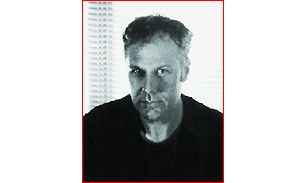
Daniel Reitz interviews Edmund White, author of 'The Farewell Symphony,' 'A Boy's Own Story' and 'The Beautiful Room is Empty.'

  • more
    • All Share Services

edmund White’s sprawling new novel, “The Farewell Symphony,” is a nostalgic tour through the promiscuous 1970s and 1980s and an elegy to loved ones dead from AIDS in the 1990s. Equal parts erudition and rough sex, it is an epic of contradictions. As it happens, “The Farewell Symphony” is also the final chapter in an autobiographical trilogy — the earlier, widely acclaimed “A Boy’s Own Story” charted White’s gay adolescence, and “The Beautiful Room is Empty” was an account of his early adulthood. Taken as a whole, these three books chronicle not just White’s own sensual education but an entire generation’s immersion in the sexual excesses of the last three decades.

First published in England last year, “The Farewell Symphony” has already created a major stir. The book provoked a vehement response from Larry Kramer, one of America’s most strident gay activists, who was turned off by the book’s multiple sex scenes. (“Surely life was more than this, even for — especially for — Edmund White,” Kramer wrote. “He did not spend 30 years with a nonstop erection and an asshole busier than his toilet.”) Reaction to the book in the U.S. has also been mixed. Writing in the Wall Street Journal, James Wolcott called White a “wan exhibitionist … presenting his posterior to posterity before it sags.” Many other reviewers — and White himself — defend the book as an honest chronicle of an era.

White himself is highly personable, charming, polite, well dressed. He speaks quickly, well and in great bulk, revealing a wide range of knowledge, as befits a man whose career has embraced everything from a major biography of Jean Genet to several novels and books of essays and short fiction to “The Joy of Gay Sex.” Like his work, the man is an epic of contradictions: He can talk as knowingly about fisting as about Flaubert. At 57, he is an expatriate who has lived in Paris since 1983. He told me he’s restless to come back to America again — which he will, to teach at Princeton in the spring.

I’m curious about the passage in your book in which the narrator, who is HIV-positive, rapes a young guy in the heat of a sexual encounter.

Is that in the American version? I don’t think it is. It was in your proof, but I took it out.

- – - – - – - – - – - – - – - – - – - -

Did you? Well, in that passage you wrote, “Corrupted by a life of pleasure-seeking, coarsened by an anarchic indifference to other people’s welfare, I’d been unable to restrain myself.”

(Laughs) Well, I published that in the English version, and I got so much crap for it that I took it out of the American version. I thought: I just can’t face a month answering that question. I thought, straight people will say to me, “How does it feel to be a criminal?” I just lost my nerve.

Do you think Larry Kramer’s recent attack on you and your novel in the Advocate has anything to do with the fact that you make no bones about all that pleasure seeking?

He attacked me because of that, sure. We have an old history. We were founders of the Gay Men’s Health Crisis. I’ve never been an admirer of his writing. Way back in the mid-’80s I wrote a piece about AIDS in art that was in Artforum, and I called his play ["The Normal Heart"] a melodrama — which I think it clearly is, with the deathbed marriage and so on. And he was furious with that. Then we were together in January for an AIDS and literature conference, and they asked me to make the keynote address, and he was very irritated that he hadn’t been asked. Then he attacked me from the stage but while patting my knee under the table so that nobody could see, sort of like, “This doesn’t really matter.” He’s one of those people who off-stage is very friendly but onstage is a bear. Now I’m just fed up with him. I figure that the good thing about his article is that I no longer have to ever speak to him or pretend I like his work.

His attacks do seem off the mark. He lambastes you for being irresponsible in writing “The Joy of Gay Sex” on the eve of a plague, for instance. But as you’ve pointed out, that book was published in 1977.

Yeah — as though anybody would even know they were on the eve of something. I mean, it’s not as though it were the French Revolution where you could see it coming. With the AIDS crisis, there was no way of seeing it coming. It just came one day. So even if you published “The Joy of Gay Sex” on the day before, you couldn’t be held responsible.

There’s a trendy new lesbian and gay activist group called Sex Panic. Kramer himself, along with various other writers like Andrew Sullivan, Michelangelo Signorile and Gabriel Rotello, have been attacked by this group, which claims that these writers are guilty of reactionary, authoritarian thinking with regard to AIDS prevention, promiscuous sex, recreational drug use, etc. And Kramer himself has said that “nature extracts a price for sexual promiscuity.” Do you think it’s a fair criticism to level at Kramer that he’s become hysterical and dogmatic?

It’s interesting that you can go from being a radical to being perceived as a reactionary within the space of a year, but I think it is true. Larry Kramer’s writing in his novel “Faggots,” which was published in 1978, was already very sex-negative. The problem with American puritanism is that it can actually promote unsafe sex. Because if you say that the only kind of safe sex is monogamy — if you tell a 20-year-old that, he’s gonna say, “Well, I’ll never meet those standards because I want at least 10 years of fooling around, so forget it.”

There does seem to be nostalgia for the pre-AIDS days — nostalgia in those who lived it and envy in those who didn’t. Brad Gooch called it “The Golden Age of Promiscuity” in his last novel. Was it so golden?

Well, my character, the narrator, never went to Studio 54, never could get laid enough, never met the right guys, was sort of a doofus. There were plenty of people who weren’t A-list. I was certainly not. It was extremely competitive. I remember once being out on Fire Island at the height of the season in the summer of ’77 and saying to myself, “This is a race that no one is winning.” In New York — not so much in other cities — not only do you have to be beautiful and a sex machine and popular, but you also must be rich. I always thought that the burdens that were placed in traditional society on either women and on men all fall on gays — that they have to be as beautiful as women and as successful as men.

You’ve said the more sex you had …

The more you want. And I mention that a shrink who worked with gay males said that was the one complaint he heard the most — that people weren’t getting laid enough, people who were having sex three and four times a day. I also said that I think that a life entirely devoted to pleasure is rather melancholy.

What amazes me is the amount of time and energy it must have taken to have that much sex. How could you possibly write as much as you did and have as much sex as you had? Didn’t one or the other have to suffer?

No. I was always so poor, and I was writing to survive. I worked for Time-Life Books from 1962 to 1970, and when I quit I went freelance. Except for teaching gigs here and there I never really had a job again, so I had to write to make a living. Most of it was ghostwriting textbooks and other really crappy jobs. When I began to have something of a name, I began to do journalism — Condé Nast pays the bills very well. And then I had this burning ambition. That would keep me going, too. I mean, there are a lot of hours in the day.

But have you ever felt that the pursuit of your intellectual life and the pursuit of your sexual life created conflict?

In the ’70s, gay male life in New York was both very sexual and very brainy. It was a hinge between the ’60s and the ’80s. The old-style homosexual felt that he had to be very cultured and know something about Maria Callas or Nietzsche — it was an elitist world. Then there’s the populist world of gay life today, which is very gym-oriented. I meet tons of gays now who don’t read at all, which would have been if not unthinkable among working-class gays … well, there weren’t many working-class gays who called themselves gays in the ’50s and ’60s. What you had was a kind of shadowy army of working-class guys who fooled around with each other but didn’t really acknowledge their homosexuality publicly because they couldn’t afford to, economically or socially. Then you had a tiny elite who lived in New York and Paris and places like that who could afford to call themselves gay but only among themselves. They would have little parties and the price of admission to that world was to be very cultured. In the ’70s you had a newly emerging clone culture that was body-oriented and had rough sex and all that, but they were also still drawn to an older generation of cultured gays and so they thought that they had to do both. That made it a very dynamic and interesting period.

Have you been marginalized for being a gay writer?

If anyone has benefited from the label “gay writer,” I have. Maybe I wouldn’t have been known at all if I hadn’t been called a gay writer. I think I really rode that wave, which in a way I also created. The very first novel I ever wrote, in 1954, when I was 14, was a gay novel, and my nephew, who’s my biographer, said, “If you’d published that then, it would have been an absolutely unprecedented work.” He’s read it, it still exists. But I didn’t have the nerve to even submit it. People often say to me, “You’d have a much bigger audience if you wrote heterosexual novels.” The truth is, I did write two heterosexual novels, “Caracole” and “Forgetting Elena,” and they were enormous flops commercially.

There’s a disturbing line of thought among some younger gay people, but also an older generation that should know better, that protease inhibitors are the new miracle drugs that make AIDS a manageable disease. The necessity of condoms, the reported dangers of oral sex — to them it’s all been taken care of with these drugs.

Several doctors have said to me that the biggest problem is convincing young people that there is life after 40. If you say you’re going to be dead by 40, they say, “So what? There’s no gay life after 40, anyway.” Especially in France, but even here. You can easily be a gay in his 20s and never meet a gay over 40 because you don’t see them in the bars. They don’t go out, they’re not part of your world, and if you do see them, you consider them pathetic.

In the book you talk about the debate of monogamy vs. promiscuity, which seems a never-ending argument for gay men. What is the continuing struggle about?

It’s based on an even deeper thing between assimilation and the idea that gays have a special destiny. A tremendous number of gays are especially vocal now, like the group that you mentioned, who would like to have gay marriage instituted so that gays could adopt children and live in the suburbs and be indistinguishable from their neighbors. And there are other people like me who feel that gays have a different way of living than straights, and more power to them, because the heterosexual institutions are inferior and don’t work, anyway. In the 18th century, the idea was that you married somebody who’d be suitable to have children with, for your economic advantage and for your dynastic ambition, and that was it — there was no question of love. It was only in the 19th century that people married for companionship, so you were trying to marry your best friend, and you were trying to bring together sex, friendship and love. I think that it doesn’t work. And that’s why there’s a more than 50 percent divorce rate. And virtually anybody who can afford to get divorced does divorce. It’s only the people who can’t afford it who stay married. To hold that up as an ideal for gays is absurd. Why do they want to imitate an institution that doesn’t work?

And are intellectuals really the best sex, as you say? Are Susan Sontag and Alfred Kazin that hot-to-trot?

I’m sure Susan is; I don’t know about Alfred Kazin. I mean, Susan used to be a good friend of mine. We had a falling out. But I think she must be a very passionate woman. I based a character in “Caracole,” a character called Mathilda, on her, and I was surprised she disliked it because to me it seemed like a very flattering portrait. I portrayed her as somebody who was both very brilliant and very passionate, and that seemed an ideal combination, and a rather unusual one.

Why is gay culture in general — literature, movies, theater — so bad? It’s embarrassing sometimes to go to these gay film festivals and see these terrible movies, and you see such terrible gay theater in New York and L.A. It makes me feel marginalized by association.

A lot of people of talent haven’t really come into these fields. They’ve stayed away because they felt it was minor and it was going to cripple their chances for success. For instance, it’s interesting that only now that gay literature has been around for so long have some really big guns come into it, like Allan Hollinghurst, who I think is England’s best writer, straight or gay. He’s completely explicit about the homosexuality but he also has this enormous culture which lends resonance to his work and makes it the most important writing being done today.

In spite of itself, your novel is very elegiac, almost old-fashioned in a way, with its extravagance of detail. You yourself seem steeped in an old-world elegance. And you live in Paris. So where does the raunch and debauchery fit in?

Hmmm … well. Sade was a marquis. It’s nice to live in the country of Celine, Sade and Genet because, for one thing, you don’t think that you have to be a nice person in order to be a writer. You certainly don’t have to be politically correct. It’s a country that celebrates transgression as a literary principle, probably because, otherwise, people are so conformist that they would have no bumps in a completely smooth road.

Do you consider this book to be a culmination of your life’s work?

I do, yes. I’ve been more attentive to the reception of this book than any other, partly because I feel I put so much of myself in it. When people say they don’t like the book, I feel like they’re saying they don’t like me. When Julian Barnes wrote a bad review of “Caracole,” we went off to dinner that night and laughed about it. I didn’t care because I saw it as an objective work of art that you could take or leave. Obviously I had a lot invested in it because I spent five years writing it, but on the other hand, I could be objective about it. “The Farewell Symphony” I’m not at all objective about because, first of all, I feel it’s a good book. It’s also new in many ways that are sort of unsettling. You mentioned that it has an old-fashioned quality, but it also has a very modern quality. It combines a high cultural context with a lot of heavy-duty sex. But the sex isn’t really pornographic because it’s not meant to arouse. It’s meant to be a description of what people do when they have sex. It’s a panorama of two decades, and it is very much a statement of what I became. If “A Boy’s Own Story” is about what I was as a child and what was imposed on me by adults, this is a book about what I freely chose to become.

Can we continue to explore AIDS in fiction or have we reached an impasse?

That’s a very good question. I think it’ll probably be parallel to the Holocaust. There was a glut of Holocaust books, mostly nonfiction, after the war, and then there was a long silence because people had just had it. Now in recent years there’s been a re-exploration of the whole subject, and some very good novels like “Schindler’s List.” AIDS inspired a flurry of novels, from early on, on the heels or even during the event, more than any other phenomenon I can think of. Usually works of art trail way behind. DeFoe’s “Journal of the Plague Year” was written 100 years after the plague. But because AIDS is such a devastating thing, and so many gay people are writers and artists, there’s been this enormous artistic response to it. I think it’s frivolous to hand out grades to these works of art that are being done. It’d be like people coming out of Auschwitz with little scrawled pictures of dead bodies. What if they’d been bad drawings? Who cares? They’re precious documents. And I feel that way about AIDS writing. Maybe 30 or 50 years from now there will be the great AIDS novel written, but for the moment it’s a different kind of phenomenon. It’s an effort to memorialize those who died, to put down what really happened, and to make sense or a work of art out of all this suffering.

SALON Daily Clicks: Newsreal

Now that Andrew Cunanan is out of the way, gays can go back to their old narcissistic, self-absorbed ways, all in the name of "pride."

  • more
    • All Share Services

Andrew Cunanan died just in time. Old friends in his former stomping ground of San Diego were able to proceed with their annual gay pride festivities this weekend without a hitch — no pesky sniper fire, no ominous sightings of the smirking spree-killer, no murderous “visits” to old acquaintances. Breathing a collective sigh of relief, the denizens of the Hillcrest neighborhood indulged in such pride-inspiring activities as “The Harbor Cruz,” “Circuit Daze” and “The Zoo Party” without once looking over their bare shoulders. And of course, where would gay pride be without the Parade? The theme of this year’s was “Share the Vision.” That just about covered everything in one big souffli of solidarity.

But can the San Diego festivities overcome the legacy of the area’s most notorious homosexual so soon after his demise? Cunanan was ultimately responsible for his own pathology. He was an |ber-queer, the quintessence of sadism and bad form. But if you magnified him a thousand times you might find him emblematic of any number of witless queers I have known: clinically narcissistic, intent in the pursuit of hedonism, zealous in avoidance of consequences and unfeeling in the extreme.

Still, as in San Diego, and in New York and San Francisco last month, the beat goes on, the parade floats go up and the boys come out flaunting a “pride” too often based on the false sense of self gay people acquire when they allow their entire identities as human beings to be submerged in their sexuality — I fuck, therefore I am.

Take, for instance, the Chelsea Clones — a bunch of brainless gym bunnies residing in an area of Manhattan north of the West Village and south of midtown. To the Clones — identical slabs of femmy beefcake who lounge around the Big Cup Caf fresh from a workout and steam-room wank session — being out and proud means being one in a crowd. Their contempt for the aging invert is as thick as their health shakes; they dismiss with a smirky, self-satisfied turn of the head any and all lesser physical specimens. The only reading they do is the free queer classifieds, which they don’t really read at all but use as a prop to cruise some pansy pod person over their grande Mocha lattes. These are the same queers who, at every gay pride parade, nude from the waist up, waist down in skin-tight Ray Dragon bike shorts, embrace each other and get all misty-eyed during the moment of silence for all the brothers dead from the big A. As if that makes up for the other 364 days of mind-numbing self-absorption.

Pride begins and ends with self-realization and acceptance. I think of myself at 11, facing with dread the awareness that I was what no one but evil perverts choose to be, and yet I didn’t choose; I was guilty of a “crime” I didn’t commit, and the punishment, I thought, was a life sentence of silent suffering and self-loathing, with no parole. It took me years to realize I had an innate sense of my ability to survive, and I came to draw on reserves of strength that most heterosexuals don’t have a clue about; and that’s something you can’t parade down the avenue once a year.

But I also part company with those who believe that merely existing as a gay man or woman is, in and of itself, something to be proud of, any more than being born black or a woman. Being born wasn’t your doing. Neither was being gay. So why should you be “proud” of something you didn’t even do?

In last month’s New York Pride Parade, the hottest float (partly because of the go-go boys dancing on it) was an advertisement urging uninfected gays to keep themselves HIV negative. You wouldn’t think that such a message needs to be advertised 16 years after the epidemic made itself known, but there it was, replete with hip-hop attitude and club music accompaniment: It’s cool to be sane! Living is sexy! That’s not pride, it’s self-preservation, and in 1997 gay men shouldn’t need to be reminded that you need to “play safe.” The message really means that in 1997, we’re guilty of the same behavior we exhibited in 1977 — self-gratification at any price — and that is not something to be proud of.

In the context of our continued self-annihilation, Andrew Philip Cunanan was a speck. We have to realize that we are all potential killers. It’s not enough to shake our asses on a parade float. It’s not enough to echo mawkish platitudes about murderous old acquaintances — “That’s not the Andrew I knew,” some left-behind friend in California declared in all his pious banality. And it’s certainly not enough to think we’re making progress when we still have to convince ourselves of the merits of not fucking each other to death.

Continue Reading Close

SALON Daily Clicks: Newsreal

Finally, a serial killer we can really hate.

  • more
    • All Share Services

recently a fellow fag, some flunky script reader for some indie film company, held his nose over a film script of mine, in which a queer man takes revenge on a Jersey hood who bashed him and his lover, sniffing that “gay men … don’t stray into hate-crime violence.”

As I write this, a week has passed since Gianni Versace, world-renowned fashion designer and homosexual, was shot twice in the head by another homosexual, psycho spree killer Andrew Phillip Cunanan. I don’t know about you, but it seems to me that this particular example of serial killing might qualify as a hate crime, if not in the usual political sense. Andrew Cunanan is pissed about something, and I don’t think it was haute couture that prompted him to shoot, bludgeon, stab and slash his way across the country.

My guess is that he’s tortured by the revelation of his HIV-positive status, and the bloody trail he’s been leaving since April is his way of mourning his lost fly-girl lifestyle by making other fags pay, as well as the occasional heterosexual who just happens to be in possession of the perfect getaway vehicle.

Thinking about the pass-the-smelling-salts delicacy of the above-mentioned script reader, I reflect on a glorious tradition of gay men treating other gay men to their own special brand of endearment: For example, the legacy of club queen Michael Alig — who shot his gay roommate due to a dispute over rent and then threw him into the river — will live on in homo hearts forever. I’m also reminded of something Spike Lee once said: Black people are incapable of racism. Seemingly, this kind of idiot’s logic has worked its way into the PC conscience of certain homosexuals who simply can’t believe that all us “gays” aren’t living in a fairy paradise of Shabby Chic sofas, post-workout iced mocha lattes, George Clooney look-alike lovers and a closet full of Gianni Versace.

Of course, there is far more anonymous, if less sensational, violence played out on a daily basis behind more gay and lesbian doors than we care to think about. I’ve witnessed a fair share of it myself; I’ve even doled it out. I’m aware that, to many gay folks, image equals credibility. After the Versace killing, a cultured homosexual gentleman of my acquaintance groaned, “Why does he (Cunanan) have to be gay?” The fact that most of the victims were gay didn’t seem to enter into it. After all, what is the sound of a queer tree falling in a hetero forest?

Why is this? Partly because we seem to have embraced that utopian myth that gay people don’t — can’t — actually hurt each other, unless of course it’s consensual. Sure, we argue, we get drunk, we get flirty with strangers at a bar, a little carried away with our fave drugs or debt. But such peccadilloes never make us violent. How could they? We are, as the word implies, gay.

We might be better off if we tossed out the batter-bowl of mushy, fluffernutter queer correctness that still dictates how we’re supposed to come across to the world. Rather than thinking about what a Cunanan does to our collective image, we would do well to face the fact that we’re as capable of the same destructive behavior as everybody else. I used to think during the glory days of ACT-UP and Queer Nation that we queers were all in it together. I realize now how ridiculously naive a notion that was. I have seen more instances of bad behavior perpetrated by one gay person against another than I have space to describe; usually, it’s in a “harmless” social context — rampant selfishness, egotism, dishonesty, power plays, head games. But sometimes it isn’t so “harmless.” And there’s no gay bashing, emotional or physical, like one from a “brother.”

At this point, I’d like to vent on the weasel Andrew Phillip Cunanan. Obviously you can’t apply Emily Post’s rules of etiquette to psychopaths, but Cunanan is the most obnoxious kind of spree killer to have driven down the Florida freeway: prissy, pouty and preppy. With all due respect to the families of Jeffrey Dahmer’s victims, I had more sympathy for Dahmer’s sickness than for Cunanan’s. At least Dahmer, when he spoke of being relieved that he was finally behind bars and away from a world vulnerable to a psychosis he couldn’t control, showed that some embers of humanity still glowed within him. All evidence seems to indicate that Cunanan wants to be caught, too. But as I look at his smarmy, smirking smile flashed on TV and read the newspaper accounts, all I see is a squinty-eyed, ostrich-eating, champagne-swilling, social-climbing whore who barely worked a day in his life, who flirted and fucked his way to nowhere but the next gay pit stop, who just couldn’t get over the fact that he wasn’t born a Kennedy, that his father didn’t own a sugar plantation in the Philippines but was just a sad, allegedly crooked loser who deserted the family, and who’s furious at the world for being HIV-positive.

Then there was the other image splashed across my TV screen — the ambitious, excessive, hedonistic, sexy, celebrated Gianni Versace being rushed down a sun-drenched Miami street on a stretcher, his handsome white head thick and dripping with blood. And for a moment it was easy to forget (especially for the FBI) about Cunanan’s other victims, who were not necessarily friends of Madonna and Naomi and Courtney, the lesser-known ones like Jeffrey Trail, David Madson, Lee Miglin, William Reese. Or maybe it’s all just a bad dream. After all, we’re not violent. As the script reader insisted, we’re lovers, not killers.

Continue Reading Close

Page 4 of 4 in Daniel Reitz