David Gilson

Arnold’s body issues

Should California voters worry about Schwarzenegger's past steroid use? Depends on whether you believe scientists -- or tales of 'roid rage.

  • more
    • All Share Services

Arnold's body issues

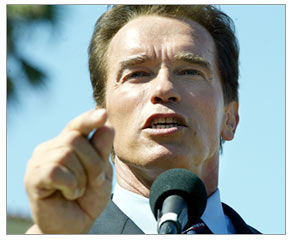
Of all the California gubernatorial candidates, only one has inspired a nickname for a Schedule 3 controlled substance. The candidate is Arnold Schwarzenegger, and the substance is anabolic steroids, or — as some illicit users have dubbed them — “Arnolds.” It’s only fitting that Schwarzenegger is immortalized in this way, since he epitomizes the promise of steroids: monstrously big muscles that can morph a scrawny nobody into a ripped he-man with health, wealth, popularity — and maybe even a shot at running the most populous state in the country.

The past steroid use of the seven-time Mr. Olympia, five-time Mr. Universe, and one-time Mr. World is no secret. Schwarzenegger portrays his doping as a youthful indiscretion that, despite its career-enhancing effects, he would prefer to put behind him. Appearing on “Larry King Live” in August, he said that using steroids “was stupid, because it was in the late ’60s, early ’70s, when we didn’t know any better.” Campaign spokesperson Karen Hanretty explains that “Arnold has made it clear that if he knew then what he knows now, he wouldn’t have taken steroids.” (Not that he’s always been remorseful: In 1996, he told the Los Angeles Times, “It was a risky thing to do, but I have no regrets. It was what I had to do to compete.”)

For over a decade, Schwarzenegger has condemned all athletic and cosmetic steroid use. As the head of the President’s Council on Physical Fitness under George Bush the elder, he urged kids to stay off steroids and instead rely on hard work to reach their athletic goals. “There are no shortcuts,” he told USA Today in 1990. And according to Schwarzenegger’s personal Web site, his Arnold Classic bodybuilding competition was the first of its kind to require drug testing.

His anti-steroid message is pretty standard “Just say no” stuff: Steroids are unsporting and, since 1990, illegal. But when it comes to talking about what steroids can do to you, Schwarzenegger steers clear of specifics. Talking with King, he explained, “In the late ’70s and in the early ’80s, research was done and you found out that it’s actually damaging, that it causes side effects and it is bad for your health.” He wasn’t inclined to elaborate on how that might relate to him personally. In a 1988 Playboy interview, he insisted that steroids hadn’t harmed him: “I don’t worry about it, because I never took an overdosage. I took them under a doctor’s supervision once a year, six or eight weeks before competition. I was always careful and checked, and I never had any side effects.”

He repeated his claim of a clean bill of health a few years ago to the Los Angeles Times, referencing one rumored ill effect of heavy doping. “I have no health problems,” he said. “No kidney damage or anything like that from using them.”

Schwarzenegger has good reason to be cagey when talking about the long-term effects of anabolic steroids. More than a dozen years after Congress outlawed their nonmedical use and put them in the same category as amphetamines and barbiturates, the verdict on their ultimate health consequences is still out. Researchers and doctors say they have good reason to believe steroids can cause serious harm, but despite decades of dire warnings, they’re still scrambling to find scientific proof. On the other hand, there’s surely no solid evidence that pumping up with steroids is exactly good for you, either.

Anabolic steroids, more accurately known as anabolic-androgenic steroids, are synthetic versions of testosterone. Though they have legitimate medical uses, they are best known as a way to beef up in a hurry. In the 1930s, researchers discovered that when fed to animals and humans, these compounds made muscles bulge and fat melt away. Though rumor has it that German athletes took testosterone in the 1936 Berlin Olympics, the first documented use of performance-enhancing hormones by an athlete involved an aging racehorse named Holloway in 1941. By the time Schwarzenegger discovered steroids in the late 1960s, humans were in on the action, too. Competitive athletes from NFL linemen to East German swimmers regularly popped, injected and openly praised them. The editor of Track and Field News hailed steroids as the “breakfast of champions.” Over the next three decades, their use spread from pro athletes to high school jocks, gym rats, and ordinary guys who just wanted to transform their paunches into six-packs.

From the start, it’s been clear that synthetic sex hormones can come with a slew of undesirable side effects. Men who take them may lose hair, grow breasts, and develop acne. If that weren’t enough, steroids can, as the hardcore bodybuilding mag Muscular Development puts it, “make your testes the size of peanuts.”

Women who take steroids may grow unwanted hair and see their breasts shrink and clitorises grow to what one dismayed user once termed “embarrassing proportions.” Steroids can also fuel aggression — not necessarily an undesirable outcome for competitive athletes or Hulk wannabes. As Dr. Charles Yesalis, a professor of public health at Penn State and an expert on nonmedical steroid use, recalls, “An All-Pro NFL player said to me, ‘If you’re an asshole before you use steroids, you’re a bigger asshole after you use them.’” In rare cases, heavy users may become unpredictably violent, a psychological condition popularly known as ‘roid rage.

Most of these unsightly and antisocial side effects subside when users stop dosing. But other effects worry members of the medical community more. “[Using steroids] blows the hell out of your good cholesterol,” says Yesalis. Over time, such a drop could lead to trouble. “If [low good cholesterol] is maintained for protracted periods of time, we know from studies of non-steroid users that it will increase your risk of heart disease and stroke,” he explains.

Common sense suggests that heavy steroid use is likely to increase those risks. “As the evidence emerges,” says Yesalis, “you can make a stronger argument that higher doses for longer periods of time can lead to significantly worse health effects — that’s not rocket science.”

But the most alarming evidence of the life-threatening dangers of steroids remains anecdotal. Doctors and researchers have documented hundreds of horror stories. In their luridly titled book, “Death in the Locker Room II,” Dr. Bob Goldman and Dr. Ronald Klatz recount tales of steroid users cut down in their prime: a 33-year-old body builder who had a stroke and underwent a triple bypass, a high school football star who dropped dead of a heart attack, another bodybuilder in his 30s who came down with a rare kidney tumor and died months later. The book warns that “anabolic steroids bestow few benefits, and none worth the terrible risks of taking them.” But Klatz now concedes that estimating the long-term risks of steroids is “like saying Iraq had weapons of mass destruction — a distinct possibility, but so far nothing’s turned up.”

“A lot remains in realm of conjecture,” says Dr. Harrison Pope, a Harvard psychiatrist. There’s been plenty of research on steroids’ effects on lab animals, but no one has done the kind of controlled, longitudinal epidemiological study in people that would show how these drugs affect users 20 or 30 years later. A major problem, says Pope, is money. “It’s too expensive to research. It would cost millions do that type of study.” Pope should know: In his 2000 book “The Adonis Complex,” he announced that he and his colleagues were starting a study of middle-aged subjects who used to juice up regularly. But the funding for the study, he says, has evaporated.

Another problem is finding willing subjects. Pumping human subjects full of steroids would be unethical, and actual users aren’t lining up to volunteer in the name of science. “Very few people are doing studies of human steroid abusers at all because they are very hard to recruit,” explains Pope. “It is a very secretive subculture, and it’s hard to get people to come forward.”

Perhaps the best-known steroid user to go public was Lyle Alzado. Shortly before his death from brain cancer at age 43 in 1992, the two-time All Star defensive lineman suggested that his illness might have been caused by years of doping. “I know there’s no written, documented proof that steroids and human growth hormone caused this cancer,” he wrote in Sports Illustrated. “But it’s one of the reasons you have to look at. You have to.” Former NFL drug advisor Dr. Forest Tennant predicted ominously at the time that “Alzado will be the first of a lot of big names to come down with cancers.”

Football players didn’t start dropping like flies, but unconfirmed reports of steroid-induced afflictions continue to follow former NFL players, WWF wrestlers and Olympic athletes. Concerns resurfaced with the sudden death of Olympic sprinter Florence Griffith Joyner in 1999. While she was alive, there was grumbling that Flo-Jo’s accomplishments on the track were boosted by steroids, which in turn led to rumors about the true cause of her death.

Schwarzenegger’s health has inspired its own fair share of gossip. In 1997, at age 49, he had two aortic valves replaced, a procedure that he maintained was an elective fix for a congenital problem. That didn’t stop a Berlin heart specialist from predicting the imminent demise of “a well-known Austrian actor” due to steroid-induced heart problems. Schwarzenegger responded to the uninvited prognosis with a lawsuit, and was awarded $10,000 by a German court. In 2000, he launched a $50 million defamation suit against the Globe tabloid for alleging that he was a “ticking time bomb,” eventually settling out of court and receiving a retraction. But the rumors weren’t terminated so easily. A 2001 Premiere magazine exposé on the actor quoted an unnamed doctor who speculated that Schwarzenegger’s heart condition was brought on by anabolic steroids. Team Schwarzenegger rushed to deny the claim, insisting it was “bogus.”

The murkiness surrounding steroids feeds this kind of sensational speculation, while also providing cover for former users like Schwarzenegger. The confusion is compounded by hardcore bodybuilders and trainers who insist that, when taken responsibly, anabolic steroids can be safe and even prolong life. “We emphasize use, not abuse!” asserts Sam “Doc” Phillips, whose Web site, AnabolicBeast.com, promises to help customers “get BIGGER and MORE RIPPED than ever, while reducing side-effects.” Phillips’ business partner, Author L. Rea (who also goes by the nickname “Beast Maker”), has made a name for himself in the bodybuilding world by promoting a complex regimen of controlled doping cycles. Philips is sanguine about the risks. “There aren’t any ‘long-term’ effects because steroids are naturally occurring chemicals and hormones in the body,” he claims, though he notes that steroid abuse may cause prostate growth, tweak cholesterol levels, and kill the libido. But overall, he says, the media, doctors and anti-drug groups have vastly exaggerated the dangers.

That view is echoed by Rick Collins, a New York defense lawyer who has been involved in more than a thousand steroid cases and is the author of the steroid-law handbook Legal Muscle. Collins says that stigmatizing steroids has exposed illicit users to greater risks. “One question is whether those potential health problems are made worse by the 1990 law,” he says. “The answer is a resounding yes.” Since the federal and state crackdown on steroids, most users no longer get their supply from doctors, as many old-school bodybuilders like Schwarzenegger did. “Instead of being screened and monitored and being checked for bad effects,” says Collins, “basically users either get [steroids] from Internet Web sites or from Big Louie in the back of the gym.”

What really remains to be seen is the long-term effects of steroids on one’s political fitness. So far, the only available case study is that of wrestler-turned-Reform-Party maverick Jesse “The Body” Ventura. In his 1999 autobiography, released two months after his election as Minnesota governor, Ventura admitted that he’d taken testosterone during his previous career as a boa-wearing bad guy. The disclosure had little impact on his political career — the implosion of which appears to have been triggered by his abnormally pumped-up ego, and temper.

So should Californians care that Schwarzenegger has taken steroids? Schwarzenegger rep Hanretty emphasizes that he’d prefer to focus on weightier subjects, like the economy. “These are the issues that matter most to Californians,” she says.

Phillips, of AnabolicBeast.com, is adamant that steroids shouldn’t be a political issue. “If one can become the president and have DUIs, then I certainly hope and pray that Arnold’s past steroid use wouldn’t be, or shouldn’t be, an issue. Especially since he used it during a time when it was legal.”

Similarly, researcher Yesalis finds scrutiny of Schwarzenegger’s steroid use “disingenuous” given the lifestyle choices of other political figures. “What do I think of him as a role model? I don’t think he’s a terribly good one, but I was about a hundred times more offended by Bill Clinton,” he says, suggesting that Clinton’s hormone problem was on a different moral scale than Schwarzenegger’s. If the media is going to examine Schwarzenegger’s health, he suggests putting his recall rivals under the same microscope. “The leading cause of death is heart attack and strokes,” he says. “Let’s look at [Lt. Gov. Cruz] Bustamante. He looks like he’s eating a lot. He looks like he’s more than 30 pounds overweight — that’s obese.”

However, comparing the roly-poly Bustamante with the Austrian Oak is a bit like comparing apples and orange Gatorade. Bustamante’s body says little about who he is or what he stands for. But Schwarzenegger’s body represents who he is, everything he’s achieved: If he didn’t have a great physique, would we even know who he is? Probably not. Anabolic steroids may or may not have affected Schwarzenegger’s health or his suitability to be an elected official. But it’s not too much of a stretch to say that he is still experiencing their effects. Look no further than his newfound political muscle.

Michael Savage’s long, strange trip

How a Jewish kid from the Bronx went from swimming naked with Allen Ginsberg to spewing the ugliest bile on talk radio.

  • more
    • All Share Services

Michael Savage's long, strange trip

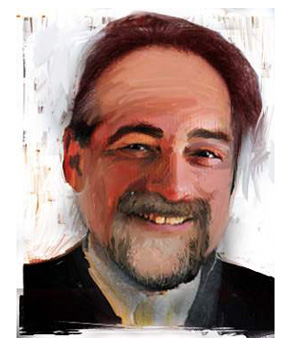
At first glance, Michael Alan Weiner seems like an improbable candidate to be America’s angriest, most vicious conservative radio host. Born 60 years ago in the Bronx, Weiner has lived in Northern California for most of his adult life, making a living as an herbalist and nutritionist. He communed with Fijian traditional healers, got married in a rain forest and studied ethno-medicine at the University of California at Berkeley. He swam naked with Allen Ginsberg, dreamed of being the next Lenny Bruce and wrote a rambling novel about a half-mad alter ego. His son’s middle name is Goldencloud. For years, he made a name cranking out a pile of books on alternative medicine, recommending bizarre remedies such as using vitamin C to stop AIDS and kicking cocaine with coffee enemas.

These days, Weiner’s more interested in purging the body politic. Using the pseudonym Michael Savage, he’s launched a one-man mission to save America from its enemies at home and abroad, which on any given day includes liberals, gays, academics, the homeless, the Clintons, immigrants, feminists, CNN, the American Civil Liberties Union, Muslims and other minorities. Broadcasting three hours a day, five afternoons a week, from a rented studio in downtown San Francisco, he gives voice to the right wing’s darkest fantasies. He muses about launching preemptive nuclear strikes on the Middle East (“I wish to God the hatches were open and the missiles were flying!”), suggests gunning down illegal immigrants (“If we had a government, we’d blow them out of the desert with airplanes!”), dreams of dispatching with “commies, pinkos and perverts” and other undesirables (“I say round them up and hang ‘em high!”) and even paraphrases a remark attributed to Nazi leader Hermann Goering (“When I hear someone’s in the civil rights business, I oil up my AR-15!”)

Woe be unto those who label him racist, sexist or homophobic — or even worse, threaten his livelihood. When an Oregon group started a boycott of his advertisers last summer, he became downright apoplectic. “I’m more powerful than you are, you little hateful nothings!” he screeched, before intoning darkly in his trademark New-Yawk accent: “I’m gonna warn you again: If you harm me — and I pray that no harm comes to you — but I can’t guarantee that it won’t.” Just last week, Savage fumed about the “brownshirt groups” who dare to criticize him: “You stinking rats who hide in the sewers! … You think I’m going to roll over like a pussy? You’re wrong!”

Such vitriolic ranting is over the top, even by the ever-declining standards of talk-radio decorum. Yet, in this time of war fever and hyperpatriotism, inflammatory rhetoric draws conservative ditto-heads and liberal rubberneckers alike, and that translates into big ratings. Since launching “The Savage Nation” on San Francisco’s KSFO 560 AM more than eight years ago, Savage has gone from being just another right-winger with a big mouth, a hyperinflated ego and a sizable chip on his shoulder to becoming the nation’s fifth most-popular talk-radio personality, a host with enough leverage to land Vice President Dick Cheney as a guest. His book, “The Savage Nation: Saving America From the Liberal Assault on Our Borders, Language and Culture,” has been perched at the top of the New York Times bestseller list for over a month, and now he’s slated to get his own program on MSNBC.

Michael Weiner’s long and circuitous road has taken him from being a scientist and entrepreneur, through stints as a hipster, novelist and aspiring comedian, to becoming the personification of straight white male rage. Today he likes to play up his unconventional career path, to an extent. He’s the kind of guy who never lets anyone forget he has a Ph.D. His Web site reminds visitors that he is a “World Famous Herbal Expert” and the author of 18 books. But just as his gap-toothed grin has been replaced by a row of airbrushed pearly whites on the front cover of his new book, he gives his audience a whitewashed version of his past. The real story is far more interesting, not just for its ironies and contradictions, but for the often disturbing clues it provides about the man now so well known as Michael Savage. He’s gone through at least one political makeover. He’s turned on old friends, or they’ve turned on him. If his semi-autobiographical novel is any guide to his own life, he’s keeping a few skeletons in his closet.

In the end, the picture that emerges from his books, from interviews with past and current associates, and from his radio show is that “The Savage Nation” is just the latest undertaking of a man who’s spent his life trying to get the world to notice him.

Savage’s office said he was too busy preparing for his TV show to be interviewed for this article. Earlier interview requests by phone and e-mail prompted an irritated phone call from a woman named Janet, who announced that Savage would not speak with me. Asked if she was his wife — who happens to be named Janet — she said she was not. “I am not affiliated with him,” she insisted. “I’m just a fan.” After a few minutes of testy back and forth, she suggested that it would be unfortunate if my e-mail address and phone number were somehow posted across the Internet.

Savage has come a long way since he emceed school assemblies at P.S. 42 in the Bronx. His father, a Russian Jewish immigrant, made a living selling antique bronzes on Orchard Street. An imposing figure who died of a heart attack in the early 1970s, he is the frequent subject of his son’s on-air stories. Speaking at a convention sponsored by the trade magazine Radio & Records in March 2001, Savage recalled getting his first lesson in politics — and cynicism — from his dad. “[H]e explained politics to me very clearly. He said, ‘You see, this is how the world works … In this beautiful country of ours there are two bands of thieves: the Republicans and the Democrats.’”

Though Savage waxes nostalgic about such father-and-son moments, it appears that his parents were no Ozzie and Harriet. “I was raised on neglect, anger, and hate,” he writes in “The Savage Nation.” But growing up with little parental approval or praise was a good thing, he says. “Frankly, that’s why I’m driven the way I am.”

Savage, who now decries “propaganda about America being the Land of Immigrants,” isn’t ashamed of his own immigrant parents. However, his Jewish upbringing is strictly taboo. And he often makes Joseph Lieberman, Barbra Streisand and Larry King the butt of stale ethnic jokes. Brad Kava, radio columnist for the San Jose Mercury News and a longtime Savage critic, thinks Savage’s ambivalence toward Jews is a misguided attempt to pander to conservative Christians. “He’s Jewish, but he always acts like he’s Christian,” he says. In his book “The Savage Nation,” for example, he complains of an anti-Christian bias in America. When Kava, who is Jewish, “outed” Savage several years ago, Savage reported him to the Anti-Defamation League. Dr. Robert F. Cathcart, a longtime friend of the talk-show star, speculated in a telephone interview that Savage says little about his background so that he appears more “neutral” when he discusses Israel or religious topics.

Everyone who has ever known Michael Weiner seems to agree that he has always been a big talker. One of his classmates from Jamaica High School in Queens, which Weiner graduated from in 1959, recalls him as a garrulous character: “He was on the short side, and he was intense — a fast talker, and always hatching some scheme or other.” “The fellow I knew was a natural comic and as reliable as a clock,” remembers another classmate, who says the teenage Weiner was “non-political.” His yearbook page notes his participation in the Chemistry Lab Squad, school government, and the Rifle Squad, presaging his interest in science, politics and firearms.

Weiner was also something of a dreamer, and he hoped to follow in the footsteps of his hero, the naturalist Charles Darwin. After getting a biology degree from Queens College, he went as far west — and as far from home — as possible, winding up in Oahu, Hawaii, where he earned master’s degrees in anthropology and botany from the University of Hawaii. Throughout the late 1960s and early 1970s, he traveled to Tonga, Fiji and other South Pacific island nations to study traditional herbal medicine. His new wife, Janet, and their young son, Russell Goldencloud, often accompanied him on his travels. Local healers warmly welcomed him, and he became passionately convinced that their expertise could be used to cure modern ailments. Thus began a quest to salvage– not savage– this “ethnic wisdom” before Western influences destroyed it. His research on the sedative kava kava and other Fijian medicinal plants served as the basis for his doctoral work at U.C. Berkeley. His 1978 dissertation, on file in the U.C. Berkeley library, shows his degree was in nutritional ethnomedicine. However, the bio in the back of Savage’s book and on his Web site says it was in epidemiology and nutrition science.

In 1974, Weiner moved to the San Francisco Bay Area. His family first settled in Fairfax, a sleepy town in Marin County that Michael Savage would lambaste three decades later as “un-Fairfax,” hometown of “Taliban Rat Boy” John Walker Lindh. From there, he started making trips into San Francisco to hang around the North Beach literary scene. According to Stephen Schwartz, who was then a left-wing activist and writer, Weiner carried an unusual letter of introduction. “He had met Allen Ginsberg in Fiji,” he recalls. “He had this photograph of himself swimming naked with Ginsberg.” Poet and biographer Neeli Cherkovski says Ginsberg and Lawrence Ferlinghetti, the owner of City Lights Bookstore, introduced him to Savage in 1976. “All I knew was that he was this hip guy who’d been traveling in the South Seas, finding ways to use tropical plants to help end diseases,” he recalls. The two became friends. “We had a lot of fun times. He’s very smart, intelligent and very lively,” says Cherkovski, who is now writer-in-residence at San Francisco’s New College. Weiner told Cherkovski that he dreamed of becoming a stand-up comic in the mold of Lenny Bruce and they talked of doing a comedy routine together.

But he didn’t make the big splash he had hoped for. Schwartz says Weiner’s increasingly bizarre behavior eventually alienated him from the North Beach crowd. “After he had been there a while, his personality began to change. He became much more aggressive. He would collar you and demand that you eat with him, listen to him,” he says. According to Schwartz, Weiner openly carried a gun and made public scenes when he ran into his former friends and acquaintances. “He would come into Cafe Trieste and start yelling at me that I was a nobody and he was a somebody.”

Today, Savage still has few kind words for his old lefty literary friends. In “The Savage Nation,” he writes off City Lights as “that once-famous communist bookstore” and rips into an unnamed beat poet, calling him “latrine slime.” “Now he just screams at us in the streets,” sighs Ferlinghetti, who once went to Hawaii with Weiner and his family. He views Weiner’s reincarnation as Michael Savage as “total opportunism,” the crowning achievement of someone who was “always looking to make a fast buck” and “always trying to think up new schemes to get famous.”

Weiner did have a knack for combining the promise of herbal medicine with good old-fashioned hucksterism. From his home, he started vanity projects such as the Fund for Ethnic Medicine and the Alzheimer’s Research Institute, which he plugged on his book jackets and in letters to the New York Times. He concocted feel-good beverages like Tea of Life and Herbal-Seltzer and sold a line of herbal supplements from a Web site called Herbs That Heal. Visitors to the now-defunct site were welcomed with photographs of Weiner collecting herbs in the South Pacific, soulfully soaking in the culture of what Michael Savage belittles as the “turd world.” The 1992 edition of “The Herbal Bible,” published by his wife’s imprint, Quantum Books, modestly noted that its author was “credited with starting the herbal revolution.”

He was also a prolific writer, churning out 18 titles in 20 years. “[D]on’t assume for a minute that they were junk books and marginally published,” he snaps in “The Savage Nation.” “They weren’t. They were top of the line. They were the Rolls-Royce of the field.” “Earth Medicine — Earth Foods” and “Weiner’s Herbal” are well-respected references and are still cited widely on herbal and homeopathic Web sites. Most of his books, with their glorified lists of plants and their properties, are about as dry as a handful of powdered dogwood root (which, according to Weiner, makes a good tonic for treating fevers). But buried in the details is a sprinkling of flaky affirmations and kooky assertions.

For example, in “Plant a Tree: a Guide to Regreening America,” Weiner wrote dreamily about our “plant allies” and suggested that every state appoint its own “tree czar.” “Dictators seem to like trees,” he ruminated. “Who knows what a benevolent, nature-loving tyrant might do for the retreeing of America?” In “The Way of the Skeptical Nutritionist,” he ventured that a person’s ideal diet should be determined by his or her ethnicity. “Getting Off Cocaine: 30 Days to Freedom” promised blow addicts “an alternative plan for getting ‘high’ — legally and naturally!” The treatment involved ingesting a daily cocktail of Sudafed, vitamins C and E, and amino acids, as well as self-administering the occasional coffee enema. “Use a good quality coffee,” Weiner advised. “Not decaffeinated or instant.”

Michael Savage’s homophobic rants against what he calls “anal rights” were foreshadowed by the 1986 book “Maximum Immunity.” In it, Weiner glommed onto some of the wilder ideas about AIDS that were circulating at the time. He called for mandatory nationwide AIDS testing and suggested using massive doses of vitamin C to slow down and even reverse the disease’s progress. When he was done suggesting cures, he looked for scapegoats. He demanded that gays “accept the blame” for the rise of AIDS, then grumbled, “Those who practice orgiastic sex, with many partners, and use street drugs are not likely to respond to reason.”

“Maximum Immunity” also hinted that its author was dealing with some heavy issues of his own. In one passage, Weiner wrote about his decision to take up jogging so that he might avoid his father’s untimely fate. Everything went well until he started hearing things. “An inner ‘voice’ began to demand, ‘Stop … I can’t take this anymore.’” he wrote. Fearing a “nervous collapse,” Weiner traded his running shoes for a bike and soothed his jangled nerves by curling up on the sofa with a mug of passionflower herbal tea and ingesting “megadoses” of vitamins. Feeling much better, he concluded: “I learned to calm the inner debate that had threatened to drown me in madness!”

Such extreme mood swings are regular occurrences on “The Savage Nation.” Even the phrase “I can’t take this anymore!” (usually shouted at full volume) has become a Savage catchphrase. James Hilliard, who produced “The Savage Nation” at KSFO for nearly three years in the late 1990s, says that talk radio provided Savage with an outlet for his unpredictable temperament. As he recalls, “The show was really driven by Michael’s mood. At times, he could be very quiet, mellow, low-key, and then be a maniac on the air.”

This maniacal tendency, and the roiling emotions that fueled it, were laid bare in “Vital Signs,” Michael Weiner’s first and only book of fiction, published in 1983. A collection of confessional, stream-of-consciousness stories, it follows the exploits of Samuel Trueblood, who just happens to be a 40-ish New York Jew, an herbalist and writer with a tumultuous personal life, a substantial assortment of inner demons and a bit of a Napoleon complex. “I am physically not tall, but my eyes burn with fire,” he states. “Two black fires of Hell.” Trueblood narrates a series of misadventures, from procuring an illegal backroom abortion for his fiancée to beating the stuffing out of an abusive cop.

Trueblood describes his life as one long search for inner peace. He blames much of his discontent on his “childhood beneath tyranny,” during which he was cowed by his bullying father. Trueblood describes how his father mocked him with “brutal jokes and chides, ‘gentle’ kidding: ‘You’re not a fag, are you Sam?’ the little man would say each time the boy dared wear a colorful shirt or flashy trousers.” Unable to shake his dead father’s disapproving influence, the adult Samuel is tortured by feelings of weakness and inadequacy. “I am filled with fears,” he admits, “nearly all the time feeling I am about to become totally insane.”

Even after moving to mellow Marin County, becoming a successful herbalist and starting a family, Trueblood remains plagued by his “underlying sadness.” Not even trusty passionfruit tea can bring him off this bummer. In one passage, he almost loses it in front of his wife and two young children:

“Inner voice screaming at me for years, first rational, then crazy, telling me to do mad things. Every form of relief tried, painting, psychotherapy, running, diet, vitamins, etc., etc. Almost uncontrollable now. Impulses to stab children, strangers, wife, self with scissors.”

Eventually, Trueblood seeks solace in chasing skirts. (Though he admits to being drawn to “masculine beauty,” he confides that “I choose to override my desires for men when they swell in me, waiting out the passions like a storm, below decks.”) While his wife stays home with the kids, he beds a young “cockswell” with a “dykish haircut” and skin “[s]ofter than that Northern Indian prostitute in Fiji whose covering was as soft as that of my own penis.” And so it goes for another 50 pages.

No doubt the anti-abortion, anti-gay, pro-family Michael Savage would disapprove of such a perverted excuse for literature, with all its gratuitous references to illegal abortions, repressed homosexuality and shameless philandering. But it’s impossible not to notice the similarity between Trueblood, the tormented seeker, and Savage, a man whose “inner voice” precipitated an existential crisis over jogging. Neeli Cherkovski says that the chapter in “Vital Signs” about Trueblood’s father is based on Weiner’s own life, recalling that he went with the author back to the Bronx to see the site of his father’s store. But Cherkovski won’t speculate about the rest. “I think he [Weiner] is a person who had a lot of wild experiences,” Cherkovski says. “He tested a lot of waters.” Even the book’s dedication, to Weiner’s wife, suggests that he wasn’t making everything up: “Who would listen to such tales and live with he who lived them but she, the unshakably faithful Janet.”

For most of the 1970s and 1980s, Weiner focused on curing people’s illnesses, not society’s ills. “For 10 or 15 years, I was the revered herbal doctor,” he recollected at the Radio & Records convention. “I was Mr. Nice Guy Nutritionist. Nobody knew my politics. I was talking about healing and I’d go to health food conventions and I’d give speeches about vitamins and herbs. Nobody ever saw this as controversial … They liked me!”

But beneath the surface, Weiner was becoming more and more conservative. Stephen Schwartz, who went from being a self-described Trotskyite to neoconservative and is now senior policy analyst at the Foundation for the Defense of Democracies, says that Weiner was a “typical left liberal” in the 1970s. Neeli Cherkovski, who is gay, notes that Weiner was not homophobic when they first met. However, he says Weiner’s shift rightward coincided with his increasing aversion to gay activism. Robert Cathcart, who’s been close to Weiner since the mid-1980s, says he’s always known his friend as an outspoken conservative, at least in private.

Since Weiner’s conservative leanings took a hard right turn, he’s complained that he was held back because of his race, gender and political beliefs. He currently gripes that no institute of higher education would hire him, despite his qualifications. “I discovered I could not gain a professorship even after applying many times,” he writes in “The Savage Nation.” “My crime? I was a white male.” The résumé he has presented over the years tells another story. On air, he’s mentioned that he was once affiliated with Harvard. On the back of his books, he has boasted of being a faculty member at U.C. Santa Cruz, a visiting scholar at the Hebrew University School of Pharmacy and a senior research fellow at the University of Heath Sciences at Chicago Medical School. He’s also claimed to have done “important research” for the National Cancer Institute at the National Institutes of Health. Not bad for someone who’s been blacklisted from the ivory tower.

The last straw apparently came in 1994, when publishers rejected Weiner’s latest manuscript, “Immigrants and Epidemics,” which contended that infectious diseases such as T.B. were being brought into the U.S. by Southeast Asian immigrants. Fed up, Weiner rented a recording studio in Sausalito and produced a mock talk show with his wife and a couple of buddies playing callers. Michael Savage was born.

In his new job, Savage employed all the self-promotional tricks he had picked up while going from Charles Darwin wannabe to world-famous herbal expert. In early 1996, he applied to become dean of the U.C. Berkeley Graduate School of Journalism. Unable to appreciate the journalistic qualities of Savage’s radio program or his 18 books, his alma mater denied him an interview, instead hiring China scholar and journalist Orville Schell. Savage sued Berkeley with the help of a conservative legal fund started by David Horowitz (who wrote approvingly of the case in Salon), accusing it of discriminating against a conservative in favor of a man he has called a “front for the communist Chinese mafia.” The case never went to trial. During the run-up to the 2000 election, Savage laid claim to the phrase “compassionate conservative,” and said he planned to sue George W. Bush for intellectual property theft. Like many of Savage’s threats of imminent litigation, this one soon faded away. But sure enough, he had self-published a book called “The Compassionate Conservative Speaks” in 1995 and, ever the savvy businessman, had trademarked the term in 1998.

Even Savage’s two kids were swept up in his relentless drive for publicity. His Web site advertised Rockstar, a liver-cleansing beverage marketed by his son that enables its drinkers to “party like a rock star.” Last spring, Savage told his listeners about a third-grade teacher in San Diego, Calif., who had saved a child from choking, and demanded that the state school superintendent give her an official commendation. “If she was a minority teacher and picked up a paper clip on the floor, then a commendation would be in order,” he sniped. He neglected to mention that the “hero teacher,” Rebecca Lin Yops, was in fact his daughter, who had changed her last name after her recent marriage.

Armed with his natural loquaciousness and a kill button, Savage’s love affair with the sound of his own voice deepened. Obsequious fans obliged him by calling him “Doctor Savage,” prompting him to expound his theories on how gays and immigrants spread disease and were corrupting the nation. “It’s the greatest revenge there is, having a talk show,” he crowed in “The Compassionate Conservative Speaks.” And as his rhetoric became ever more grandiose and outrageous, his ratings — and political clout — grew. “The Savage Nation” became the Bay Area’s No. 1 drive-time radio program. Savage lunched with Democratic San Francisco Mayor Willie Brown and started landing big-name conservative guests such as Benjamin Netanyahu and Vice President Dick Cheney, who, apparently unaware of the show’s usual host-centered format, commended Savage for “providing a forum where we can have a good discussion.”

Looking for a way to leverage his newfound influence, Savage founded the Paul Revere Society, a political club whose goals have included the imprisonment of antiwar activists for sedition, loyalty oaths for immigrants and the eventual establishment of “a haven for compassionate conservatives” called “Revere-Town.” A fee of $40 gets new members a Savage Nation baseball cap and an anti-affirmative action pamphlet called “The Death of the White Male.” There’s also the promise that one day they might get to meet the founder and executive director in person. But given Savage’s reclusiveness, they may have to wait a while. The group’s last major event took place in November 2000, when it held its fifth annual “Compassionate Conservative Convention” in San Rafael, not far from Savage’s home. Since then, Savage made himself available to fans only at dinner parties, and only after they forked over more than a hundred bucks. Meanwhile, according to papers filed with the IRS, this nonprofit “educational organization” took in over $150,000 in donations in 2001 and expects to take in $250,000 this year.

The success of “The Savage Nation” and its spinoffs is the culmination of a lifelong quest for attention, fame and money. And that raises the question of whether Michael Savage is just a persona created to milk conservatives and taunt liberals. Robert Cathcart thinks his old friend intentionally exaggerates his politics and personality to get a rise out of his audience. “It’s showmanship,” he says. “He makes enemies of everybody. He doesn’t believe half the stuff he says. On air, he’s the ultimate type-A personality, but he quiets down at home.” Former “Savage Nation” producer James Hilliard concurs. “I think Michael does have an excellent sense of putting on a show,” he says. “I think he learned or was told at an early point that this is an entertainment medium, and he thought of himself as an entertainer.”

However, as Savage rips into another hapless caller or gets exercised about the latest liberal atrocity, it often feels like he’s crossed the line between public shtick and personal catharsis. On the air, he lets everything hang out, truly living up to the warning of “psychological nudity” advertised at the beginning of every show. This is what makes “The Savage Nation” so simultaneously maddening and fascinating — as Savage heads over the brink one more time, you have to wonder whether someday he’ll go over for good. Cathcart and Hilliard are right when they say the show is not just about politics. But it’s not just about entertainment, either. It is about one man grappling with his ambitions and fears while America listens. For Michael Weiner, talk radio is the ultimate talking cure.

Continue Reading Close