David Paul Kuhn

All eyes on Turd Blossom

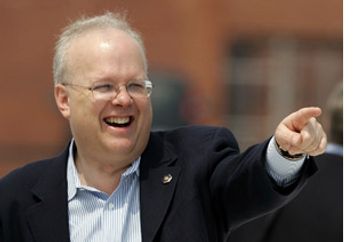
Beltway insiders are consumed by one question: Did Karl Rove do it?

  • more
    • All Share Services

All eyes on Turd Blossom

When Karl Rove was little known outside Texas political circles, he was fired from George H.W. Bush’s 1992 reelection campaign for leaking information to syndicated columnist Robert Novak. According to newspaper reports at the time, Rove was terminated for passing information to Novak from a meeting of the president’s chief advisors. Rove denied he was the leaker.

Today, with another Bush in office, a journalist is being jailed to protect a source that led Novak to name a CIA operative, Valerie Plame. There is fevered speculation that Novak’s source was, once again, Karl Rove.

If Rove, George W. Bush’s deputy chief of staff, knowingly revealed Plame’s name, he could be charged with committing a felony. The same source that revealed the operative’s name to Novak reportedly also spoke to two other journalists, Time magazine’s Matthew Cooper and Judith Miller of the New York Times. Rove’s attorney, Robert Luskin, confirmed to reporters on Saturday that Rove spoke with Cooper days prior to the publication of Novak’s column in July 2003. But Luskin denied that Rove named Plame.

Miller was jailed on Wednesday for refusing to reveal her source, the latest step in a drawn-out investigation by federal special prosecutor Patrick Fitzgerald that has culminated in the most heated showdown between the media and the federal government since the Vietnam War. Time handed over Cooper’s notes last Friday, and Cooper agreed on Wednesday to testify before the grand jury in order to avoid jail. Cooper says his source gave him permission “in somewhat dramatic fashion” to reveal his identity.

Rove isn’t the only name being thrown around as the possible leaker. Speculation has long centered on Dick Cheney’s chief of staff, I. Lewis “Scooter” Libby. But at least one critic, Valerie Plame’s husband, says either way, Rove bears some responsibility for what happened — for fanning the story’s flames. “I have no idea whether [Rove] was the source or not,” former Ambassador Joseph Wilson told Salon on Wednesday. “But certainly he was part of the effort to push this story, including his phone call to ['Hardball' host] Chris Matthews.” Wilson claims that Matthews told him that Rove had called days after the Novak column ran and said that Wilson’s wife, Plame, was “fair game.” Matthews has testified in the Plame case, though publicly he has neither confirmed nor denied Wilson’s statement.

“In my judgment, [Rove's] behavior, even if it is not criminal, it is certainly below the standards of ethics we have a right to expect from our senior White House leadership,” Wilson said. “It’s an outrageous abuse of power.”

Meanwhile, Rep. John Conyers Jr., D-Mich., is reportedly circulating a draft letter to his colleagues calling on Bush to demand that Rove either come clean about his role in Plame’s outing or resign. “Notwithstanding whether Mr. Rove intentionally violated the law in leaking information concerning former CIA operative Valerie Plame, we believe it is not tenable to maintain Mr. Rove as one of your most important advisors unless he is willing to explain his central role in using the power and authority of your administration to disseminate information regarding Ms. Plame and to undermine her husband, Ambassador Joseph Wilson,” Conyers wrote.

“Democrats are getting a little too giddy in trying to get [Rove],” said Chuck Todd, who edits the National Journal Hotline, an subscriber-based service considered the go-to point in daily political news. “It’s a grand jury investigation. I think Democrats better keep their powder dry on this.”

Conservatives allegedly targeted Plame as payback for an Op-Ed column Wilson wrote for the New York Times in 2003, which contradicted claims made in Bush’s State of the Union address earlier that year. In that pre-Iraq war address, Bush said that Saddam Hussein had sought uranium from Niger. Bush administration officials spent months denying that the claim was erroneous. In his July 2003 Times column, Wilson revealed that he had been sent by Vice President Dick Cheney to West Africa in 2002 to investigate the Niger intelligence and had reported that it was “bogus.” The Bush administration eventually retracted the Niger uranium claim.

In the months after Novak named Plame, the Beltway scuttlebutt was that Rove was the leaker. That speculation flared up again last weekend, when a loose-lipped MSNBC political analyst, Lawrence O’Donnell, said on Friday’s taping of “The McLaughlin Group” that Cooper’s source was Rove.

“I know I’m going to get pulled into the grand jury for saying this,” O’Donnell said, seemingly unfazed by the federal prosecutor’s unusual intent to force journalists to reveal their sources. “But the source for Matt Cooper was Karl Rove, and that will be revealed in this document dump that Time magazine is going to do with the grand jury.”

It may be wishful thinking on the part of Beltway journalists itching for a good story — and even more so for liberals itching for revenge — that the impresario of George W. Bush’s presidency could be led away in chains. But we have yet to find out if O’Donnell was right. Grand jury investigations are supposed to be confidential.

Yet when O’Donnell named Rove on “The McLaughlin Group,” the lines between rumor and reporting started to blur. O’Donnell continues to serve as a political analyst for MSNBC, though he spends much of his time today as a producer of the NBC drama “The West Wing.” “I timed the announcement to coincide with Time’s delivery of Matt Cooper’s e-mails to the special prosecutor,” O’Donnell told Salon. Speaking by phone, shortly past midnight Thursday morning after arriving from Los Angeles into Washington, D.C., O’Donnell was keen to defend himself.

“Had I reported it months ago when I discovered it, I would have been throwing sand in the gears of the case as it progressed all the way to the Supreme Court. And it probably would have created the ridiculous sideshow of me being dragged in front of the grand jury and asked to reveal how I knew that Karl Rove is the source who Matt Cooper was protecting.”

But the pundit’s move has triggered questions and criticism. “If [O'Donnell] really had his facts straight, why didn’t he report it on MSNBC? And if he didn’t, why is he saying it on the ‘McLaughlin Group’?” asked Janice Castro, who directs the Medill School of Journalism’s graduate program. Hotline editor Todd calls O’Donnell’s move “just Lawrence grandstanding, wanting to exaggerate his access because he doesn’t have the same access that he used to. Maybe he had special knowledge, but it had the feel of grandstanding and he is certainly someone who had the reputation of grandstanding.”

“Of course it was grandstanding, absolutely!” O’Donnell countered proudly. “I was grandstanding. I had something to grandstand about. I have the fact that every reporter in Washington wanted to have and could not get.

“Every minute of the ‘The McLaughlin Group’ is grandstanding for every one of us,” the onetime Beltway journalist continued. “Television is for grandstanding. That’s what men in Washington get in makeup to do, grandstand.”

O’Donnell is standing by his statement, which set off a flurry of “Is it Rove?” stories and blog posts over the weekend. On Arianna Huffington’s Huffington Post, O’Donnell has continued to blog about “breaking” the story that Rove was Cooper’s source, and likely Novak’s as well. After naming Rove on the PBS program “Friday,” O’Donnell proceeded to say, “When [Bush] finds out it’s Karl Rove, the question becomes, What does the president do then?”

“It was a deliberate act that I was planning for months,” O’Donnell told Salon. “What I’ve been doing with the HuffingtonPost is simply staying abreast of the story while it was evolving, and it turns out that a blog is an absolutely perfect way to do that,” he said. When asked about his sourcing, O’Donnell replied: “I will not characterize my sourcing in anyway.” Then he added, “After my public revelation of it, I obtained yet another highly authoritative source on this matter, on the same thing. That Rove is the person Matt Cooper is protecting — had been protecting up until today.”

But central to the investigation is whether Cooper’s source was Novak’s source. That remains unclear. O’Donnell acknowledged this point. “I don’t know anything about Novak’s source,” he insisted. “They talk to similar people. They’re on the same beat. Judy Miller isn’t on the same beat those guys are on. They are on a White House political beat. And they cover campaigns, Novak and Matt Cooper. And campaigns are the place where you get to be close to guys like Karl Rove.”

Should Fitzgerald ultimately conclude that Rove was Novak’s source, and that he knowingly exposed Plame, the aftershocks could hardly be overstated. It is considered a near axiom among political analysts that Bush owes his presidency to Rove. Following Bush’s second-term victory, a gleeful president said Rove was the architect of his triumphant presidential campaign.

Rove’s attorney says that the government has assured him that his client, while a party to the investigation, is not the “target.” Rove’s attorney, Luskin, did not return repeated calls from Salon. Whoever Cooper’s source was, the Time magazine journalist told U.S. District Judge Thomas Hogan on Wednesday that he had been ready to accept the sanctions for not testifying, but that his source told him today that he was released from his ethical obligation protect him or her.

Addressing the Plame case at a White House press briefing on Oct. 1, 2003, White House spokesman Scott McClellan told reporters, “I made it very clear that [Rove] didn’t condone that kind of activity and was not involved in that kind of activity.”

A reporter persisted: “But just to be clear, whether Rove condoned it or not, he also did not participate in that type of activity, as far as you’re aware. Is that correct? Did you ask about that?”

McClellan responded: “Look, there is an investigation going on to pull together all that information. I’ve answered this question, and we can ask it a million different ways, but my response is still going to be the same.”

Ever since, the White House response has remained the same. One year after McClellan insisted that Rove was not the leak, Rove testified before the grand jury. President Bush and Vice President Cheney have also given testimony, along with Novak and a myriad of other journalistic and political insiders.

Novak says, like Cooper on Wednesday, that his source also released him from their confidentiality agreement. But Novak has refused to speak publicly about the investigation, beyond denying that he is to blame if reporters are jailed. With the jailing of Miller on Wednesday, the intertwined circle of journalists and politicians in Washington will certainly discuss whether Miller is paying for Novak’s decision to identify Plame.

Collateral damage: The Earth

Observers say the bombings won't derail the G8's talks about African aid, but global warming will be a loser.

  • more
    • All Share Services

While London police hunted for bombers in the wake of the deadly, coordinated terrorist attacks on the city Thursday morning, it remained unclear how the bombings would affect the G8 summit in Scotland. Some observers expected the summit to remain focused on the matters at hand — especially aid to Africa — while others expected the attacks to decrease the already unlikely prospect of an agreement on combating global warming.

Prime Minister Tony Blair, who immediately returned to London from the G8 after reports of the attacks, seemed resolved not to let the bombings affect the gathering of the world’s wealthiest nations. “Just as it is reasonably clear that this is a terrorist attack or a series of terrorist attacks, it is also reasonably clear that it is designed and aimed to coincide with the opening of the G8,” Blair told reporters in Scotland. He said that he intended to return to the talks in Gleneagles, Scotland, Thursday evening after rushing to London in the wake of the bombings.

Blair’s exit followed the opening of the summit, which paused to uniformly condemn the blasts in London as “an attack on civilized peoples everywhere.” The G8, which actually encompasses the world’s nine leading industrialized nations — Canada, France, Germany, Italy, Japan, the United Kingdom, the United States, Russia and the European Union — already had postponed discussions of global climate change and the world’s economy until Friday.

While trade and aid to Africa are expected to be the focus of Friday’s talks, it is still unclear how Thursday’s attacks will affect the annual meeting.

“[Blair's] presence is key, because of course he’s the one who made the Africa issue the top of the agenda,” said Princeton Lyman, a former U.S. ambassador to South Africa and Nigeria. “The summit will continue to finish its agenda on Africa and climate change but I think the tone and the public focus will now shift somewhat to terrorism,” added Lyman, also a senior fellow at the Council on Foreign Relations.

“At least I’m hoping they will continue the agenda on Africa, in which they are in close overall agreement,” he continued. “I think there is now a general consensus on increasing aid to Africa.”

But will there be time to develop a concrete strategy? “Well, obviously [the attacks] will have diverted the leaders’ attention and delayed their deliberations,” said Susan Rice, former assistant secretary of state for African affairs in the Clinton administration. “They were working on some important and difficult issues which they were far from resolution on.”

Just days after last weekend’s worldwide Live 8 concerts, where leading musicians applied further pressure to the G8 leadership on the subject of aid to Africa, the subject was expected to top the agenda. And Blair has played a pivotal role — he has hoped to double G8 development assistance to Africa by 2010, and triple it by 2015. “The Europeans hope and expect that the U.S. will do at least as much as they are,” Rice said.

The British prime minister’s proposal would require $25 billion in additional annual aid by 2010. Bush was expected to pledge to increase overall U.S. assistance to Africa from $4.3 billion in 2004 to at least $8.6 billion by 2010. European nations have pledged $17 billion so far.

“The question is what is the aggregate increase,” said Rice, speaking to the gap between U.S. and European pledges. “It’s the increment [between $8.6 billion and $4.3 billion] that counts against the $25 billion, and it’s the additional $17 [billion] compared to what the U.S. pledged over their existing levels.”

Rice added that it was “unlikely” the focus of the meeting could entirely shift to terrorism, thereby derailing efforts to form a consensus on African aid and global warming controls. “One, Blair has stacked so much on this agenda,” Rice said. “And two, that would be construed as a concession to the terrorists. So I think they will go out of their way not to appear to be knocked off their game while adding time and attention to the terrorism question.”

Expectations of a consensus on combating climate change were lower among experts prior to the attacks, but the bombings in London have decreased prospects. “[The attacks] will certainly mean less attention to global warming,” said David B. Sandalow, former assistant secretary for oceans, environment and science, in an interview with Salon. “There is a gulf between the G8 leaders and President Bush on the seriousness of global warming,” he added.

Experts agree that differences are greater on the topic of climate change, in comparison to combating poverty in Africa. And indeed, talks closed on Thursday without a consensus having been reached, as was hoped. Heeding Bush’s refusal to join the Kyoto Protocols to fight climate change — the United States is the only country at the summit that isn’t a signatory to the 1997 Kyoto treaty — Sandalow said that G8 nations were focused on domestic climate controls that the Americans could accept.

“President Bush will be pushed by some of his G8 colleagues to support mandatory steps to control gas emissions,” Sandalow said, but added that he was not wholly optimistic that the G8 agenda would proceed as planned. “There will be a determination to march forward,” he insisted. “But inevitably, the attacks mean that global warming and other issues will receive less attention.”

Continue Reading Close

“A nightmare for liberals”

The departure of Sandra Day O'Connor sets the stage for a nasty judicial confirmation battle -- and could tip the Supreme Court decisively to the right.

  • more
    • All Share Services

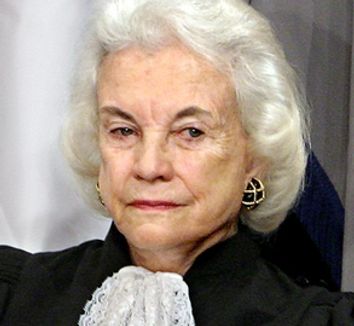
The announcement of Justice Sandra Day O’Connor’s retirement Friday morning set the stage for what is likely to be the most bitter congressional confrontation until the midterm elections of 2006. O’Connor was the critical swing vote in many of the U.S. Supreme Court’s most divisive rulings of the last two decades. President Bush’s nomination of her replacement virtually ensures a partisan high-court confirmation battle this summer.

Most of the high-court tea-leaf reading in recent weeks has focused on the possible departure of the ailing 80-year-old Chief Justice William Rehnquist. While a momentous occasion for sure, a Rehnquist retirement would not have necessarily tipped the ideological balance of the Supreme Court. President Bush would have likely replaced Rehnquist, a conservative justice, with yet another conservative justice. The resignation of the more moderate O’Connor is a different story, especially since Rehnquist’s future on the court remains up in the air and a second court departure remains possible.

“The retirement of O’Connor is a nightmare realized for liberal groups,” said Jonathan Turley, a constitutional law professor at George Washington University Law School. “It is hard to overstate the impact of replacing O’Connor with a consistent conservative vote,” Turley added. “We’ve had decades of 5-4 votes, and in a majority of those important cases it has been O’Connor who has supplied the fifth vote.”

While considered a moderate conservative, O’Connor has often sided with liberal justices in some of the most heated decisions since Ronald Reagan nominated her 24 years ago to be the first female high-court justice.

O’Connor has been a swing vote in cases upholding the federal right to abortion; upholding affirmative action in higher education; allowing terror suspects to challenge their confinement in Guantánamo Bay, Cuba; and striking down Texas’ anti-sodomy law.

Most analysts believe that Bush’s choice to replace O’Connor would have ruled, and will rule, differently. Her replacement, unlikely to be announced until Bush returns from Europe July 8, will likely be in a position to affect decisions for decades to come. “It’s just an enormously consequential departure,” said Richard Fallon, professor of constitutional law at Harvard University. “One has to think that people on every side of every issue will think that the stakes here are very high.”

Indeed, the battle has already begun. O’Connor’s stepping down represents the first Supreme Court vacancy in 11 years, and liberal and conservative activist groups have been planning for the upcoming battle for a long time.

On Friday, MoveOn.org published an Internet ad arguing that the Republicans’ heavy handling of the Terri Schiavo case shows that Bush’s nominee will likely be out of touch with American mores. Even prior to Friday’s news, the conservative organization Progress for America began running ads criticizing the approach liberals would take in the nomination battle.

After spending $45 million to reelect Bush, Progress for America boasts an $18 million war chest for the impending judicial nomination battle. Though the liberal People for the American Way recently spent $5 million to fight the unsuccessful efforts by the Republican leadership to do away with the judicial filibuster, the organization expects to be outspent by conservatives.

“We will never be able to match the radical right as far as deep pockets of money,” said Ralph Neas, president of People for the American Way. “Considering who the president is and who is in the United States Senate,” he said, his organization is resigned to the hope for a “bipartisan consensus candidate that is a moderate conservative.”

Speaking on Friday, Bush said he hopes to have a replacement approved by the Senate before the Supreme Court term begins in October. To accomplish this, following what are expected to be fierce Judicial Committee hearings, Bush will have to pressure some Democrats to support a vote on his nominee.

Republicans have 55 seats in the Senate, which has the constitutional authority to give “advice and consent” on all White House nominations. But Democrats maintain the right to filibuster to block a vote on the nominee. It takes 60 votes to stop a filibuster.

Before reporters, Bush said in the Rose Garden that the confirmation hearings should be “characterized by fair treatment, a fair hearing and a fair vote.”

Following O’Connor’s announcement, Democrats went on the offensive. “If the president abuses his power and nominates someone who threatens to roll back the rights and freedoms of the American people, then the American people will insist that we oppose that nominee, and we intend to do so,” Sen. Edward Kennedy, D-Mass., a member of the Senate Judiciary Committee, told reporters.

Saying, “I have voted for judges that have been pro-life,” Kennedy promised not to apply a so-called abortion litmus test. But it remains unclear how Democrats will view any candidate that is outspokenly opposed to the federal right to abortion.

Conservatives were probably thinking on Friday of the scuttled nomination of Robert H. Bork, a former justice on the U.S. Court of Appeals for the District of Columbia Circuit. Republicans believe President Reagan’s nominee in 1987 was voted down largely because he was a staunch conservative.

The perceived migration of Justices O’Connor and David Souter, as well as John Paul Stevens and Anthony Kennedy, toward moderation on the court has further mobilized the political right. Those justices were all nominated by Republican presidents. Social conservatives are now determined to appoint a firmly entrenched conservative.

“For the White House, the nomination of someone who is unknown or uncertain would be viewed as a clear betrayal to conservative groups that rallied to the president in the last election,” Turley said. “Conservative groups expect nominees in the model of Justice [Clarence] Thomas and Justice [Antonin] Scalia.” About one possible Bush nominee, Turley said, “Attorney General [Antonio] Gonzales is not that model. Gonzales would enter carrying water on both the left and the right. On the right he is viewed as unreliable, and on the left he is tainted by the torture scandal.”

Though Gonzales is floated as a possible nominee, both because he is close to Bush and because the administration has long sought to make public overtures to Latinos, conservatives view Gonzales as exactly the unpredictable justice they hope to avoid. As a Texas Supreme Court justice, Gonzales upheld the landmark 1973 Roe vs. Wade ruling in a parental notification case.

Several other names have been suggested as possible high court nominees, including Samuel A. Alito of the Philadelphia-based 3rd U.S. Circuit Court of Appeals; Emilio Garza, Edith Brown Clement and Edith Hollan Jones of the New Orleans-based 5th U.S. Circuit Court of Appeals; J. Michael Luttig and J. Harvie Wilkinson III of the Richmond, Va.-based 4th Circuit; Michael McConnell of Denver-based 10th U.S. Circuit Court of Appeals; and John G. Roberts of the U.S. Court of Appeals for the District of Columbia Circuit.

Conservatives want their Bork in 2005 — but confirmed this time. And liberals will be just as determined to achieve the opposite goal. Ironically, the more probable resignation of the conservative Rehnquist, ailing from thyroid cancer, would have likely led to a far less contentious nomination battle. Liberals would have liked to save their political capital.

“Rehnquist was a staunch conservative,” Fallon said. “Having someone younger than Rehnquist would make a difference in the long run, but immediately in the short run it would not make too much difference at all.”

For this reason, both Democrats and Republicans had hoped to postpone Senate confirmation hearings for O’Connor’s replacement. Though expected to retire because of her husband’s failing health, O’Connor herself is a relatively healthy 75.

“This is far more controversial, even though the same nominee might have been put forward had Rehnquist resigned. That nomination would have simply been symbolic,” Turley said.

“It’s a just a bad mix for Washington,” he continued. “One, the city doesn’t have a lot to do during the summer. Two, you’ve got a symbolic nominee stepping down. Three, there’s a lot of money and a lot of people that will be brought to bear. Clearing his throat, Turley added, “We have the makings of a long hot summer.”

Continue Reading Close

Republicans ride the third rail

GOP members of Congress are floating watered-down versions of Bush's Social Security plan in an attempt to save the party's domestic agenda. But the Democrats aren't biting.

  • more
    • All Share Services

Republicans ride the third rail

Perhaps it was President Bush’s confidence, political hubris or a sincere intent to make his historical mark after winning a hard-fought second-term election. He stood there, blue suit and red tie, at his February State of the Union address and told the firmly Republican Congress that he was going to take on the so-called third rail of politics: Social Security.

Bush mentioned the pension program by name 18 times that night, arguing that the best way to ensure solvency was to partially privatize one of the most successful public-policy programs of the modern American era. It was to be his National Park Service, his New Deal, the domestic hallmark of his presidency.

Historians were to write: President Bush took on terrorism and saved Social Security.

But six months later, after more than 30 related speeches — he’s made more speeches about Social Security than the war in Iraq since his State of the Union — after traveling to dozens of states to bully from the White House pulpit, the president’s efforts have come to nil.

And with the likely resignation of the United States’ ailing 80-year-old chief justice, William Rehnquist — and the possibility that other, more liberal justices will also step down — the path is paved for a bitter judicial nomination battle in Congress. Such a battle, by most expectations, would surely smother the domestic debate on Social Security through the August recess, if not this entire session of Congress. In short: President Bush is racing against the clock.

In an effort to buy time last week, congressional Republicans put forward a watered-down version of Bush’s proposals. A House and Senate proposal would establish private accounts utilizing the Social Security surplus only, as opposed to Bush’s broader use of private accounts. But Democrats still did not bite. Social Security reform remains stymied. And Republicans are increasingly livid.

“We haven’t had one Democrat step forward on this,” a frustrated Sen. Charles E. Grassley said by phone from his farm in Iowa. As chairman of the Senate Finance Committee, Grassley is charged with forging a plan that can unite Republicans and woo a half dozen Senate Democrats. “Since everybody knows something needs to be done about it, the statesmanlike thing would be to step forward,” Grassley continued. “Since they haven’t done the statesmanlike thing, then we are heading towards trying to embarrass them into trying do something, because we’re doing it and they aren’t and they ought to feel guilty about that.”

Democrats don’t feel guilty. They flatly refuse to back any Social Security reform that includes privatizing the 70-year-old federal pension program.

“We are going to stand and fight to kill the privatizing approach,” said Rep. Earl Pomeroy, D-N.D., a leading House opponent to privatization. “Once that’s done, we have an agreement, maintaining the existing benefit structure. We decide how we fix the long-term solvency structure so that in 2041 we don’t run out of money.”

The reality of 2041 is possibly the only part of the Social Security debate not in dispute. It is then, according to government actuaries, that Social Security is expected to become insolvent.

To Republicans, Bush is attempting to deal with a problem today in order to avoid a crisis tomorrow. To Democrats, the president’s proposal worsens the problem, bringing tomorrow’s crisis to bear this decade.

As for the American people, they don’t see the same crisis as the president does, let alone believe the program should be fundamentally rolled back. A New York Times/CBS News poll this month found that four-fifths of those surveyed believed it was the government’s responsibility to provide “a decent standard of living for the elderly,” fully two-thirds questioned the president’s ability to make sound decisions on Social Security, and half said they were not confident in their ability to make good investment decisions in the stock market, as Bush’s Social Security plan entails.

It is this public skepticism that empowers Democratic opposition to Bush’s proposal and prevents GOP lawmakers from uniting behind one Social Security proposal. Of the Republican proposals, only the House and Senate bill led by Sen. Jim DeMint, R-S.C., has gained some Republican momentum. DeMint hopes to use the Social Security surplus, which is scheduled to run out in 2017, to dole out individual accounts as soon as 2006. To DeMint, his plan is a compromise for Democrats because it does not attempt to privatize the program beyond the surplus. For now, that is.

“I firmly believe that the first time Americans get a statement and it shows real money in it, they are going to get engaged and ask why the accounts aren’t bigger,” DeMint said in an interview. “They’re going to ask why they don’t have more choices of investment, and then they are going to see why this is so important to move on Social Security this way.”

DeMint dismisses criticism that his plan dilutes the surplus, providing cash to people now while not addressing the shortfall after 2017, when Social Security taxes will begin to bring in less money than the program pays out in benefits.

DeMint and his fellow sponsors argue that payroll taxes are going to bail out government spendthrifts. “Democrats do not want individual Americans to own and control their own Social Security,” DeMint said. “They want to own it, control it, and keep spending it.” Democrats argue Bush’s tax cuts equally deplete government coffers. This is the divide. The policy debate is no longer over solvency, but how to get there.

“The biggest challenge facing Social Security is solvency,” said Democratic Sen. Mark Pryor of Arkansas, in an interview. As a Democratic senator in a “red state,” Pryor is exactly the type of Democrat Bush is hoping to woo his way. Yet Pryor questions the very assumption of DeMint’s plan. “Do we really have a Social Security surplus when the money is obligated to first purchase government bonds or government debt, and then to extend the solvency life of Social Security?” he asked.

Republicans like DeMint are at least content that Democrats like Pryor are recognizing publicly that the Social Security fund will be exhausted after the baby boom generation retires. But that is as far as Democrats will go under the current congressional bills. “The superficial appeal of their latest proposal is basically, privatize Social Security and we’ll stop spending the money,” argued Pomeroy, who as a member of the Ways and Means Committee opposes the House version of DeMint’s bill. “Well, that’s a trade-off the American people don’t have to make,” he added. If privatization is taken off the table, Democrats say they will work with Republicans to address long-term solvency.

Another GOP proposal, from Sen. Robert Bennett of Utah, focuses solely on solvency and doesn’t deal with the controversial issue of private accounts. Bennett does not have the open support of the White House or congressional leadership, but both are welcoming him to test the legislative waters. Not yet a bill, Bennett’s proposal would call the Democrats on their legislative bluff, Republicans say. “The only thing I resent about [that argument],” Bennett said, “is that it implies that my sole purpose here is political. I may be old-fashioned, but my purpose here is to solve the problem. Every expert that’s looked at it agrees that it will. And it meets the one stated criterion that the Democrats have laid down when they say, we won’t vote for anything with personal accounts in it.”

Bennett’s plan proportionally reduces monthly benefits as the life expectancy for recipients grows. The reduction would keep the payouts from the Social Security coffers steady and ensure Americans continue to receive some Social Security benefits as they age. The second component includes progressive indexing, which Democrats have called a benefit cut.

Generally, because wages grow faster than inflation, payouts for wealthy retirees would be based on prices instead of wages. Benefits for low-income workers would continue to be calculated using wages. For those in the middle, the rate would combine the equations.

For now, two factors outside pure partisan opposition keep a Democrat from joining with Bennett. Primarily, Democrats refuse to take the plan seriously until the Republican leadership backs it. And they don’t believe the GOP will. Both sides see the other as bluffing.

“The entire history of the Bush administration and Republican majority in Congress is to reward the affluent at the expense of everyone else,” Pomeroy said. “Now to suggest they are suddenly going to have a total change of heart on Social Security and keep everyone else secure, reduce the program for the affluent, in my opinion, it will be unlikely.”

Pomeroy’s problems with the proposal don’t stop with his belief that the Republican leadership won’t support it. He has a second issue. A long-standing Democratic principle is that Social Security succeeds because, unlike welfare, it benefits the broad American public.

“This is a program that has hung in for seven decades, and that’s not an accident,” Pomeroy said. “It’s because it is constructed in a way where we all have a stake in it. You reduce the stake of the most affluent in Social Security, I think you place the program in future jeopardy.” Are Democrats really defending lessening the financial burden on the rich? In this case, yes. Cuts for one group, Pomeroy insists, would be the beginning of the end of the program.

Republicans say this is a bit much. At some point, they say, painful decisions will have to be made. Yet Democrats refuse to believe that the pain has to be felt in the form of reduced benefits. Pomeroy suggests keeping the estate tax for those with more than $6 million in net worth. There are other options, the minority party argues.

Bennett recognizes that he stands alone. “The president has said very clearly he is not backing away from personal accounts,” Bennett said. “However, he has encouraged me to put forth an alternative proposal in an effort to keep the debate moving forward.”

But that is what Democrats are complaining about. If Bennett’s plan is only for debate, and not what the Republican leadership will support, then why take it seriously? “The president believes that voluntary personal accounts are an important part of any solution, but it doesn’t mean we won’t consider other plans that don’t include it,” said David Almacy, a White House spokesman. “It meets the Democrats’ main excuse,” Almacy added, referring to their stance against personal accounts.

DeMint applauds Bennett’s proposal. Calling it the “all pain” plan, DeMint and Bush stand by some variant of personal accounts. While Bennett agrees with Republicans on privatizing Social Security accounts, he’s resigned to leaving that option for a later session of Congress if Democrats will engage him on solvency solutions. So far, they will not.

To the White House, Bennett’s plan is at least a beginning. “It’s like saying what’s the best way to stay warm,” Almacy said of the president’s position. “We could use a sweater, we could use a jacket, but it’s better to use both.”

So Bennett waits. “Democrats got a political calculation and decision to make,” the Utah senator said. “Do they look better going into the 2006 election with nothing on the table?” Democrats have refused to put out an alternative plan until Republicans back a plan that takes private accounts off the table. “They have teed this up,” Pomeroy said. “It is their principal responsibility.”

Pryor agreed. “What I am looking for on this is presidential leadership,” the Arkansas senator said. “This is something that is very puzzling to me; if [Bush has] made it his No. 1 domestic priority, why doesn’t he come to the Congress with a plan?”

For now, Bennett acknowledges that without Republican leadership behind him, Democrats are not likely to consider proposing alternatives to his plan. Although Bennett believes his proposal to be a genuine olive branch, he recognizes that skeptical Democrats consider his bill a “bait and switch,” meant to lure them into the debate in conference committee, where the House and Senate bills would be reconciled.

The Democrats’ position is that the president and Republican leadership must vow to not force through privatization or any form of personal accounts when the upper and lower chambers reconcile the two bills in conference: an occasion few on either side of the aisle see as likely.

“The Democrats are hoping this is Bush’s version of Hillary-care, where President Clinton invested an enormous amount of capital into a very contentious, highly emotional issue, and ended up losing 52 seats in the House,” Bennett said. “The Republicans are saying this is Tom Daschle revisited. Tom Daschle did everything he could to frustrate Bush prior to the 2002 election when he was majority leader and ended up losing his majority. He took the position in the next two years that the one thing he had done wrong was not be tough enough on Bush and let’s stop everything in the Senate. And he was awarded with the loss of his own seat.”

DeMint, too, fears that “if we don’t pass something like this, I think 2006 could be pretty messy.” He added: “We’ll be out there arguing about what we might do, instead of what we’ve done.”

What DeMint would like to do is create personal accounts that amount initially to 2.2 percent of income in 2006 and gradually decrease to 0.22 percent by 2016. An individual making $50,000 annually would have $1,100 to put into an account in 2006; a decade later, that amount would decrease to $110, according to the Social Security Administration. After that point, the Social Security trust fund will become exhausted.

DeMint’s plan — there’s a similar bill in the House — does not deal with the fact that by 2017 the pension program will be spending more money than it takes in.

R. Kent Weaver, a political scientist at Georgetown University and a longtime policy analyst for the Brookings Institution, calls it a “terrible plan” that “doesn’t address the long-term solvency problem of Social Security.” While the point about solvency is not in dispute, DeMint argues that “what we’ve been trying to do is swallow the apple whole,” and his bill is only a beginning. What matters to DeMint is that this proposal “stops the raid” on the Social Security surplus. In other words, it’s a beginning.

“Republicans want to take the focus off long-term solvency because they control both houses of Congress and are setting the agenda, and needless to say, nobody wants to set the agenda when all the alternatives are unpleasant,” Weaver said. “Understandably, they want to focus on the individual-accounts issue, which is the part that sounds nice.”

DeMint thinks Americans will want his plan. “I think by trying to do it all at the same time we probably sent mixed signals to the American people,” the senator said. “For instance, having personal accounts don’t cause the need for benefit cuts or tax increases.”

Yet DeMint’s plan could dramatically expand an already record deficit. The bill would increase the federal debt by about $600 billion in 2016, because revenue credited to the government would be credited to private accounts, according to the Social Security Administration. Seventy-five years later, that debt burden is estimated by the Social Security Administration to decrease to $90 billion. Yet to DeMint, the calculation is a misnomer. “That is completely absurd,” he said. “All it does is reveal a deficit that we already have.”

That is true. Yet critics point out that such a drastic increase in the expressed deficit could lead investors in the currency markets to be increasingly wary of investing in the dollar. On the other hand, new savings could increase. For this reason, the economic impact of the higher deficit remains murky.

DeMint’s plan would delay the possibility of allowing individuals to invest in the stock market. Initially, the money from the breakup of the surplus would go to treasury bonds, but the door is left open to revisit that mandate and to allow greater percentages of the surplus to be invested privately at a later date, as well as investments to be moved to the stock market.

One of the minds behind Republican efforts to restructure Social Security, American Enterprise Institute economist Alex J. Pollock, strongly supports DeMint’s effort to put forward the “idea of being able to have a personal account with treasury securities in it, so that you have real assets,” he said. “If you look at regular Americans, if you make this treasury bond proposal purely voluntary and you give regular Americans the chance to decide to have their own account,” Pollack speculated, “I’m very confident a very large amount of people, probably a majority, will chose to.”

Emphasizing that the treasury bonds are indexed to inflation, he added, “What I like so much about the treasury argument is that it takes the risk away. In my view it is the ideal compromise of the two positions.” But like DeMint, Pollack believes Americans should eventually have the option to also invest their savings in private accounts.

Some Democrats have called for increasing the tax contributions of wealthier Americans to help Social Security’s solvency. And one Republican, Sen. Lindsey Graham of South Carolina, broke with the party and proposed raising the income level, currently capped at $90,000, subject to the 12.4 percent Social Security payroll tax. But Republicans balked at tax hikes for the wealthy. And Graham now backs DeMint’s plan.

“The key to solvency is saving money that people put into Social Security,” DeMint argued. “If solvency means just cutting benefits and raising taxes, I don’t want any part of it.”

Therein lies Grassley’s problem as chairman of the Senate Finance Committee. Democrats are not going to back Bennett’s bill, if they will at all, until the Republican leadership sponsors it. “But for every Democrat you pick up because [the Bennett bill] doesn’t have personal accounts,” Grassley said, “you probably lose one Republican.”

To Grassley, who said it is taking “a lot of effort” to forge a Republican consensus on how to proceed, the problem lies in the issue itself. “This being the third rail of politics, no one wants to deal with it. It’s just difficult to reach any judgment on it at all,” he said. “And we wouldn’t even be here if it wasn’t for the president. So praise the Lord the president even brings this issue up. I suppose I could say the same for Carter in ’77, Reagan in ’89 and Clinton in ’98.”

The Congress “wouldn’t have been here,” because both parties are worried about the 2006 midterm elections, as well as the 2008 presidential contest. Democrats don’t want to hand the White House and Republicans a massive social-policy victory along terms they see as intolerable. Yet, without Social Security reform, Republicans may have little to campaign on next year, especially with victory in the war in Iraq not in sight. “There is a Republican effort to try and keep the momentum from grinding to a complete halt,” Weaver said. “But it doesn’t look good if you get a Rehnquist resignation and Congress is occupied by a new Supreme Court justice.”

All the while, Republicans in Congress also fear being lambasted in upcoming campaigns for supporting tax hikes and benefit cuts. In the primary contests, it may reveal an opening for challenges from the right flank. In the general election contests, Democrats could attack from the left, having avoided putting forward their own plan on Social Security.

“It’s so polarized at this point, I don’t see any agreement being reached before 2006 and probably not until after the 2008 election,” Weaver continued. “Nothing has yet emerged that is likely to break Democratic unity. House Republicans are reluctant to move first because they don’t want to take the tough action of proposing major benefit cuts and then have the Senate do nothing, because they are sitting out on a limb, and Democrats in the midterm elections will come and saw off that limb.”

Continue Reading Close

Mission continued

Facing a public opinion quagmire, President Bush stuck to his guns on Iraq Tuesday night -- but offered no clear plan for winning.

  • more
    • All Share Services

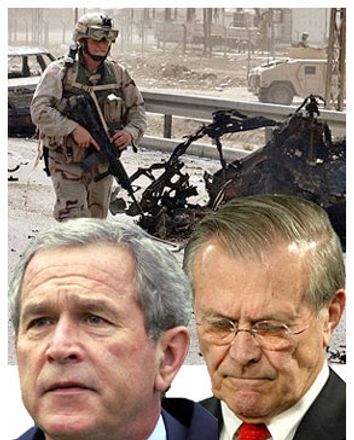
As the American public increasingly questions the war in Iraq, and with a growing chorus of critics calling for a clear exit strategy, President Bush stuck to his guns in a speech at Fort Bragg Tuesday night. He stayed with his core theme of fighting the terrorists for the sake of freedom, and asked Americans to stay the course in Iraq.

Bush said that the war there is difficult and dangerous, that he sees the images of violence and bloodshed and that every picture is horrifying and the suffering is real” — but the president failed to explain how he hopes to end that bloodshed, and at what point the enemy is overcome enough to declare victory and bring U.S. soldiers home.

There was little reference to the war’s length, now at two years and three months. Bush spoke respectfully of the more than 2,000 Iraqi security forces lost in the line of duty, though he did not mention by number the more than 1,700 American lives lost since the war’s onset, nor the far greater tally of U.S. injuries and Iraqi civilian fatalities.

Is the sacrifice worth it? President Bush asked the nation. Assuredly, he answered, It is worth it.

It was a speech made for television. Though President Bush stood before 750 soldiers at the North Carolina military base tonight, he spoke directly to the American people, hoping to rally an increasingly skeptical public as much as the elite troops in front of him. He asked Americans to see beyond the carnage in Iraq, to an abstract time in the future when Iraqis stand up so that U.S. soldiers can stand down.

We are hunting down the terrorists, the president said, looking out over row after row of green dress uniforms and red berets. We are helping Iraqis build a free nation that is an ally in the war on terror. We are advancing freedom in the broader Middle East.

Senator Russ Feingold wanted to know how America was going to win, and how victory would be defined. Watching from his home in Washington D.C., the Wisconsin Democrat and longtime critic of the commander in chief’s war strategy, was discouraged.

The speech in my mind was a complete failure by the president to give us any vision of how this mission was to be accomplished and how this mission can end, Feingold said exhaustedly, in a phone interview immediately following the speech. I wanted to hear the president more candidly acknowledge how difficult this insurgency is, and to some extent, how our choices have increased the terrorist threat in Iraq and around the world. And I wanted him to lay out some sense of the timeframe for our goals, some sense of how long the troops will be there.

But clearly Bush’s goal on Tuesday night was not to address his detractors; his primary mission was to halt the tumble in public support for the war. A soaring speech might have bought more time for his game plan in Iraq — unclear to the public though it may remain — as well as for his flagging domestic agenda. A president with approval ratings well below 50 percent is hardly in a position to cow maverick Republicans and dissenting Democrats.

But a dramatic bounce in Bush’s poll numbers after the speech remains unlikely. The public does not believe that the 135,000 American troops are winning the war in Iraq, nor losing it. The question appears to be whether the public perceives a protracted stalemate: According to a Washington Post-ABC News poll released the day of the president’s address, 24 percent of Americans believe the insurgency is strengthening, while 22 percent of Americans say the insurgency is getting weaker.

Strikingly, for the first time, 52 percent of respondents said the administration deliberately misled the U.S. public before the war. If there was any encouraging news for Bush in the latest poll, 52 percent of Americans agreed with the president that the war has “contributed” to U.S. long-term security, a five-point increase since early June.

It is the long-term that consumes Feingold. There just doesn’t seem to be any clear sense about what we are trying to do here, he said. Are we simply trying to stabilize the situation to allow the Iraqi people and the Iraqi government to put down an internal problem or are we going to be there indefinitely because we see this as a battleground for the international terrorists and continue to get us mired in this situation and play into the hands of al-Qaida?

The president’s speech gave no answer.

Setting an artificial timetable would send the wrong message to the Iraqis — who need to know that America will not leave before the job is done, Bush said, sticking to his prepared remarks almost word for word, and diligently reading the prompters. It would send the wrong message to our troops — who need to know that we are serious about completing the mission they are risking their lives to achieve. And it would send the wrong message to the enemy — who would know that all they have to do is to wait us out.

We will stay in Iraq as long as we are needed, Bush pledged, and not a day longer.

The military setting for Bush’s speech was no accident, of course, one year after the U.S.-led coalition handed over sovereignty to Iraqis. Bush has always been most comfortable amid the baritone grunts of support from U.S. soldiers, as they respond to his persistent optimism, his halftime-style speeches. Yet his tone and message seemed in odd contrast. His voice was somber throughout, while his message was determinedly upbeat.

Feingold, like many concerned Americans, wanted more than a than a rousing speech.

When you don’t know where you are in the game, one of the biggest reasons is that nobody has a sense of how long things will take, he said. And so the president used the same old tired clichis in order to avoid the real question, which is, why isn’t there a clear plan for the administration? And what would be wrong with [offering] a sense of in what timeframe he thinks it can be accomplished?

Feingold plans to offer a Senate resolution prior to the August recess that calls for President Bush to put forward a timetable for military withdrawal. Adding to the pressure on Bush, five House members, two of which are Republicans, have already proposed that Congress require the president to begin withdrawing U.S. soldiers by October 2006.

Tuesday’s speech came on a day when an influential Shiite Muslim member of parliament, Dhari Ali Fayadh, was killed in Iraq. But President Bush remained adamant with his time-tested message.

We are fighting against men with blind hatred, and armed with lethal weapons, who are capable of any atrocity, Bush said. They wear no uniform; they respect no laws of warfare or morality. They take innocent lives to create chaos for the cameras. They are trying to shake our will in Iraq — just as they tried to shake our will on September 11, 2001.

In invoking the attacks of September 11 several times, in alluding to Osama bin Laden as much as Saddam Hussein, President Bush continued to focus on equating the war in Iraq with the war on terrorism. While Bush’s critics acknowledge that terrorists are in Iraq today, and that it could turn into a pre-September 11 Afghanistan, Feingold emphasized that they see it as a conflict of the president’s own making.

There is no clarity about the policy, there is a terrible lack of candor, Feingold said. The continued pretension that this situation is better than it really is, really causes people to doubt.

But Tuesday night Bush would have none of it. If the public has doubts, he seemingly does not. We will stay in the fight until the fight is won, the president pledged, earning the one sustained applause of the address. And though Bush did not detail how Americans will know when the United States has won in Iraq, he seemed to be aware that time could become as great a threat to the cause, and to U.S. military strength, as the insurgency itself.

To those watching tonight who are considering a military career, there is no higher calling than service in our Armed Forces, he said near the end of his speech, in what seemed a clear nod to the military’s rising recruitment problems. While insurgents in Iraq appear able to replenish their numbers, there is growing worry about whether the Pentagon can maintain overall troop levels, as fewer recruits sign up.

Every generation has produced patriots willing to serve a cause greater than themselves, Bush said. Yet as the war goes on, the question now is whether enough Americans will continue to believe that there remains a cause worth fighting for in Iraq.

Continue Reading Close

Dissent within the ranks

Antiwar lefties aren't the only ones criticizing Bush's Iraq policy these days. Republicans concerned about their own political future are more openly opposing the unpopular war.

  • more
    • All Share Services

Dissent within the ranks

There is an unmistakable sound in Washington as politicians gear up for midterm elections: Amid plummeting public support for the war in Iraq, a growing chorus of congressional voices is opposing the Bush administration’s policy.

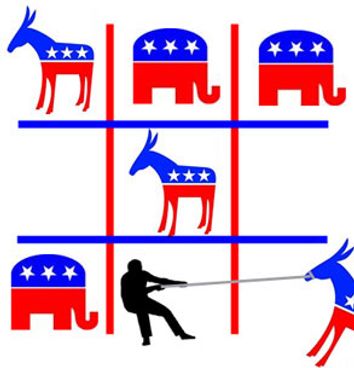
Alarmingly for President Bush, the dissent isn’t coming just from Democrats. Leading Republicans are increasingly expressing their frustration with the war effort — and this may only be the beginning of Bush’s problems within GOP ranks as Republicans assess whether they’ll run as allies or critics of Bush’s policy in 2006.

The Bush administration, publicly at least, still insists the war in Iraq is proceeding as planned — even as U.S. casualties continue to mount and the insurgency shows no indications of letting up. Bush spokesman Scott McClellan told reporters at the White House on Tuesday that “the facts on the ground show that the Iraqi people are making important progress on the political front to build a free and democratic future.” The next day, McClellan said that success in Iraq was critical because “wherever you stood before the decision to go into Iraq, I think we can all recognize that the terrorists have made it a central front in the war on terrorism.”

But increasingly, key Republicans do not see the same Iraq Bush sees, even if the GOP leadership remains lockstep behind the commander in chief. Over the weekend, Republican Sen. Chuck Hagel of Nebraska said in an interview with U.S. News & World Report that “the White House is completely disconnected from reality … The reality is that we’re losing in Iraq.” On Sunday, Sen. John McCain was asked on NBC’s “Meet the Press” whether Vice President Cheney’s comments last week that Iraq is in the “last throes” of the insurgency were correct. “No,” McCain tersely replied.

That frank sentiment comes on the heels of a well-publicized reversal from an early outspoken supporter of the war, Rep. Walter Jones, R-N.C., who coined the term “freedom fries” to express his outrage with France. Perhaps more than many of his colleagues, Jones faces potential electoral fallout from the war in Iraq: He has three major military bases in his district at the eastern end of the state, and counts tens of thousands of veterans among his constituency.

Few Republicans seem prepared to follow Jones in a call for troop withdrawal. Yet their alternative is equally problematic. If Republicans maintain their support for President Bush, they will be hard-pressed to convince voters, as support for the war nears lows of 40 percent, that the war was worth the cost in lives as well as the hundreds of billions in U.S. tax dollars. And with a stalled domestic legislative agenda added to the mix, this could all add up to electoral trouble for Republicans.

“You are looking at a political problem right now,” said the chief of staff of a Republican House member on the International Relations Committee, who spoke on background in order to be candid. “Iraq is conceivably a very big problem. It’s one of the top three or four issues and it’s not going well; the casualties are mounting and it is costing a lot of money, and the light at the end of the tunnel isn’t there.”

But the problems go beyond Iraq, the advisor said. “There has been no real good news in anything the Congress has done this year, and the polls are showing dissatisfaction with the president. And Republicans are starting to worry about their reelection.”

And with good reason. With ethics questions dogging House members, most prominently GOP House Majority Leader Tom DeLay, the president’s plan for Social Security reform not gaining momentum, and his choice for U.S. ambassador to the United Nations stalled in the Senate — not to mention anemic poll numbers — Republicans are wondering what they’ll run on next year. “There is no piece of bright news that you can build a campaign around,” the GOP advisor said. The lack of “bright news” gives Republicans an opening to criticize the administration, or may force them to, on Iraq and other issues, with a great deal less political risk than in 2002.

“There comes a point where the leverage of the administration in the second term becomes mighty small,” the chief of staff said, “and they will go out and display their own feelings more openly.”

Democrats are already doing just that, becoming progressively more vocal in their demands that President Bush alter his strategy in Iraq and define his objectives to the American people. Sen. Joe Biden of Delaware called on Tuesday for Bush to set “clear benchmarks and goals” that speak to “security, governance and politics, reconstruction and burden sharing,” and to “report on the progress toward these goals every month in public testimony.”

In arguably the most detailed address yet by a leading member of Congress on an alternative strategy in Iraq, Biden also chided Bush for “misleading statements and premature declarations of victory” in the war effort, stating that Bush was remiss for arguing that Iraqi oil would pay for reconstruction and warning that unless the administration’s strategy is amended, Iraq could fall into civil war.

Yet Democrats vocal against the war also remain in a tenuous political position. The party is trying to walk a fine line: voicing dissent on the policy while not appearing to politically capitalize on U.S. casualties. To do this, Democrats consistently reaffirm their support for U.S. soldiers as a qualification to any criticism of the war effort.

But last week, demonstrating how Republicans intend to target antiwar Democrats, several in the GOP criticized a statement by House Minority Leader Nancy Pelosi, D-Calif., that the war in Iraq was a “grotesque mistake.” Across the aisle, House Speaker Dennis Hastert, R-Ill., said, “Leader Pelosi and the Democratic leadership should support our troops instead of spreading inflammatory statements.”

Inflammatory or not, Pelosi’s comments were exactly what antiwar Democrats seek from their leadership. Seconding Pelosi, Rep. Barbara Lee, D-Calif., who sits on the House Committee on International Relations, said in an interview that, “this is a war that is ongoing, for an unspecified time, with unspecified amount of money.”

While most congressional Democrats, including Biden, agree with the vast majority of Republicans that the military must continue to engage in Iraq — that scheduling the withdrawal of U.S. troops would empower the insurgency and destabilize the region — about 40 House Democrats have formed an “Out of Iraq” caucus calling for a set U.S. troop withdrawal date.

And herein lies another political risk for Democrats. Even if they can largely agree in their opposition to Bush’s policy, they haven’t reached consensus on how it should be fixed. So while Democrats could gain some political traction with rising public opposition to the war, there is a question of whether their inability to join in calling for a solution could lead to party in-fighting and undermine their message.

To Lee, the California Democrat who is a member of the “Out of Iraq” caucus, Biden’s request for a policy shift was “not nearly enough.” Lee, who originally opposed the war, added: “We are not saying cut and run, or withdraw tomorrow, but we are saying as soon as possible. You know the president should develop a plan to begin to get our young men and women home.”

Much of the caucus has thrown its support behind a House resolution sponsored by two Republicans and two Democrats that calls for the removal of U.S. troops in Iraq to begin by October 2006. One of the Republican sponsors of the resolution was Rep. Walter Jones.

With the 2006 midterm elections on the horizon, Democratic congressional leaders held a rare meeting on Wednesday hoping to further delineate their position on the war in Iraq. Between Biden’s calls for loyal opposition and Lee’s demands for total opposition, the Democratic Party remains far from united politically on the best strategy to win the peace. Lee, herself, was quick to emphasize that “you can’t view the loss of life in a war in the context of elections.” But of course, both parties are doing just that.

A rising star among Democrats, Rep. Harold Ford, D-Tenn., recently launched his Senate campaign with a television advertisement calling for U.S. military forces to return home. “Let’s work hard to bring them home soon, and with honor, and make them as proud of us as we are of them,” Ford says in the ad, marking the upcoming Fourth of July holiday. Ford’s advertisement may serve as a harbinger of some campaigns in which Democrats call for troops to return home, especially in the South where support for the military runs deep but so do the scars from ongoing casualties.

Polls suggest Americans are more and more receptive to this message. Two CNN/USA Today/Gallup surveys in June found that for the first time since the onset of hostilities in Iraq, a majority of Americans are against the war. In early June, 56 percent of Americans said the war was not worth fighting. The latest mid-month survey found opposition to the war had increased to 59 percent. An equal percentage of Americans now also support a partial withdrawal of troops from Iraq.

Bush is tentatively expected to address the American people on Iraq next Tuesday, but the White House has not said if it will be during prime time. Tuesday marks the first anniversary of the U.S.-led coalition’s transfer of sovereignty to the interim Iraqi government. Earlier this week, standing beside two European leaders, Bush did not speak to public disapproval of the war effort.

“The report from the field is that while it’s tough, more and more Iraqis are becoming battle-hardened and trained to defend themselves,” Bush said on Monday, the same day that 32 Iraqis died in Iraq, including 13 Iraqi police officers. “And that’s exactly the strategy that’s going to work.”

The president is scheduled to join 80 other world leaders in Brussels this week at a conference on rebuilding Iraq’s infrastructure. As it commenced, Iraqi interim Prime Minister Ibrahim Jafari called on the international community to honor billions of dollars in pledged aid. Speaking about the Brussels meeting, Biden urged Bush to also accept offers from Egypt, Jordan and France to train moderate numbers of Iraqi forces.

Biden said the White House should create an “accurate measure of the basic quality of life and the delivery of essential services,” in order to demonstrably gauge Iraqi sentiment, stating there was a “direct correlation” between popular Iraqi discontent and instability in the country. The Delaware senator added that an “improvement” in Iraqi “standard of living” must be understood as necessary to the ability of U.S. and Iraqi forces to put down the insurgency. Biden added that he continues to “believe we can still succeed in Iraq” and that “failure would be a disaster.”

But publicly, failure is far from the minds of the Republican leadership. Speaking to reporters on Tuesday, DeLay was resolute that the situation in Iraq was improving and blamed the media for misconstruing the war.

“You know, if Houston, Texas, was held to the same standard as Iraq is held to, nobody’d go to Houston, because all this reporting coming out of the local press in Houston is violence, murders, robberies, deaths on the highways,” the Texan told reporters. “And if you took that as the image of what is a great city that has an incredible quality of life and an incredible economy, it’s amazing to me. Go to Iraq. And see what’s actually happening there.” DeLay proceeded to insist, “Everybody that comes from Iraq is amazed at the difference of what they see on the ground and what they see on the television set.”

Currently, the U.S. military death toll in Iraq has exceeded 1,700, with more than 12,000 wounded. The civilian death toll is estimated to be far greater than that of U.S. forces, possibly numbering in the tens of thousands.

Having recently returned from his fifth trip to Iraq, Biden criticized comments like DeLay’s, which echo those of the Bush administration. “The disconnect between the administration’s rhetoric and the reality on the ground has opened not just a credibility gap, but a credibility chasm,” he said. “Standing right in the middle of that chasm are 139,000 American troops.”

Though Biden is the ranking Democrat on the Senate Committee on Foreign Relations, his address could also be taken as one of the first forays into the 2008 presidential campaign. Hoping to deflect accusations of partisanship, Biden pledged on Tuesday not to criticize Bush if the president modifies his policy on the war.

But Biden warned that should the president maintain his course, Iraq may fall into further turmoil and the United States may be forced to withdraw U.S. troops, while supporting Shiite and Kurdish efforts to defeat the insurgency, much of which is supported by the Sunni minority. “Our bottom-line national security interest,” he said, is “preventing a new springboard for terrorism.”

Continue Reading Close

Page 1 of 3 in David Paul Kuhn