Ehren Gresehover

Antipop Consortium vs. Matthew Shipp

Two outstanding releases in the avant-jazz Blue Series, plus the solo debut by APC rapper Beans, take hip-hop/jazz fusion to new places.

  • more
    • All Share Services

Antipop Consortium vs. Matthew Shipp

Anyone familiar with the names involved with “Antipop Consortium vs. Matthew Shipp” could be forgiven for having mixed feelings about what they might find when taking off the shrink wrap. Antipop Consortium, or APC, was among the more deft and adventurous of the red-hot Brooklyn underground hip-hop scene before disbanding in December 2002. Pianist Matthew Shipp, especially through his work directing Thirsty Ear Records’ avant-jazz “Blue Series,” is rapidly becoming one of the most prominent figures of New York’s downtown jazz scene. But no matter how skilled the performers, rap hybrid records have always had a tendency to be bland (Branford Marsalis’ “Buckshot Le Fonque”) or awkward (Guru’s “Jazzmatazz” series).

Fortunately, the title of the first song, “Places I’ve Never Been,” proves to be a good indicator of what’s in store. Instead of merely adding window dressing to the rhymes, Shipp’s quintet (Khan Jamal on vibes, Daniel Carter on trumpet, Guillermo Brown on drums and William Parker on bass) is an equal partner, providing engaging melody, danceable grooves and trick-shot percussion to replace APC’s trademark space age production. The MCs are similarly inventive on the mic, dropping metaphysical rhymes while experimenting with meter and tempo. At times (like on the infectious “Staph”) they even freely improvise with Shipp and Parker as if they were members of the band and, for the most part, it sounds fresh and remarkably organic.

Shipp continues in the same vein on his most recent Blue Series solo record, “Equilibrium.” He is back with Parker and Jamal, and brings in Gerald Cleaver on drums to round out his quartet. Also present is gearhead Chris Flam, who has worked with hip-hop experimentalist DJ Spooky and played on Shipp’s previous Thirsty Ear release, “Nu Bop.” The music on “Equilibrium” is among Shipp’s finest work, his compelling lyricism on piano sharing space with propulsive grooves, electronic effects and even breakbeats. The effect is stunning — an improvisational jazz record that is beautiful, danceable and approachable.

Beans is the first former APC member to step out on his own with “Tomorrow Right Now.” Released on the same label (Warp) and working with the same producer (Earl Blaize) as the last two APC records, Beans’ solo debut is pretty much what it claims to be: a glimpse of a possible hip-hop future where oscilloscopes and titanium drumbots make the new funk. Blaize contributes a vibrant mix of Nintendo samples and angular beats, while Beans, the self-described “New Wave Vandal,” varies his delivery between old school beat box and beat poetry on one hand and breathless Deltron bombast on the other.

“Antipop Consortium vs. Matthew Shipp” and “Equilibrium” are out now on Thirsty Ear Records.

“Tomorrow Right Now” is out now on Warp Records.

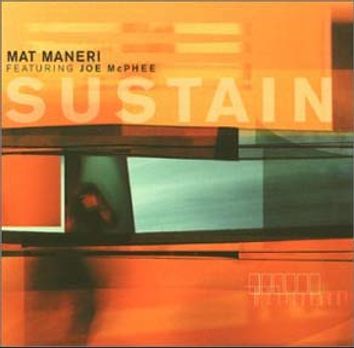
Mat Maneri Quartet: “Sustain”

Avant-garde violinist Maneri's latest release is an ambitious work of thoughtfully constructed free jazz.

  • more
    • All Share Services

Mat Maneri Quartet:

New York jazz violinist Mat Maneri made his reputation as a cerebral composer and spirited performer trying to push jazz into new territory. His latest release, “Sustain,” is an ambitious work of dizzyingly diverse musical ideas that is as thoughtfully constructed as it is affecting. “Sustain” is part of the Blue Series on the Thirsty Ear label. Not unlike the ’60s imprint Impulse Records, the Blue Series — directed by avant-garde pianist Matthew Shipp — attempts to provide an atlas of the far-flung elements of free jazz.

Maneri’s current quartet of Craig Taborn (keyboards), Gerald Cleaver (percussion), and William Parker (bass) is supported by like-minded multi-instrumentalist Joe McPhee, whose soprano sax and theoretical bent mesh perfectly with the group. The nine songs on “Sustain” are arranged with an almost architectural sensibility: Four ensemble tracks alternate with solo pieces by each of the five players. The solos have the word “alone” in the title, a good indicator of the lonely mood that pervades the record.

Indeed, everything about the music seems to evoke distance, from Maneri’s haunting Chinoiserie on the first solo to McPhee’s Andean reminiscence on the last. The decidedly more uptempo ensemble pieces show the players’ remarkable sophistication, creating a dense but economical performance with a surprising vulnerability just below the surface.

“Sustain” is out now on Thirsty Ear Records.

Continue Reading Close

Yo La Tengo: “Nuclear War”

The versatile New Jersey indie rockers team up with a varied cast for four enchanting remakes of Sun Ra's antiwar classic.

  • more
    • All Share Services

Yo La Tengo:

Yo La Tengo
“Nuclear War”

Out now on Matador Records

Yo La Tengo (Ira Kaplan, Georgia Hubley and James McNew) are something of a rock ‘n’ roll Swiss Army knife: murmuring love songs, epic organ freakouts, sweetly chiming pop, avant-rock noise assaults — they can do it all. However, unlike many of the postmodern sound-collage artists working today (Fatboy Slim, Beck) their music is rarely ironic and their stylistic diversions, even those furthest afield, usually sound natural and unforced. That’s why their four remakes of eccentric bandleader Sun Ra’s “Nuclear War” work so well.

Sun Ra originally recorded the song in 1982, three years after the nuclear disaster at Three Mile Island (Ra’s “Arkestra” was based in nearby Philadelphia), and with the Cold War at full chill. Perhaps the most underrated composer and pianist in the history of jazz, Sun Ra’s recording of “Nuclear War” was almost impossible to find over the last decade until Atavistic reissued it in 2002, shortly before the song started showing up in Yo La Tengo’s live shows.

The first of Yo La Tengo’s four adaptations is all drums and chanting, and serves as the foundation for various (and you can’t get much more various) guest artists to build upon. The second track features a regular children’s crusade of the band’s giggling nieces and nephews that chant the response to the lyrics. And then there is the spookily taut remix of the kiddie version by New York hip-hop phenomenon Mike Ladd, without the giggles.

Guesting on the third version is a whole slew of New York jazz musicians. Unsurprisingly, this track comes closest to the original. Joining McNew and Hubley are Josh Modell (of Antietam) on bongos and percussionist Susie Ibarra, who maintains a low, seasick rhythm under the main groove. Roy Campbell (trumpet), Sabir Mateen (sax), and Daniel Carter (sax) make up the horn section and trade some loose, melodic solos before coming together in an all-too-short three-way jam, after which the song trails off to an elegiac finale.

You don’t buy a Swiss Army knife for the tiny tweezers, and “Nuclear War” is certainly not the most essential record in the Yo La Tengo catalog. It’s a lot of fun, though, and makes an worthy addition to an already attractive package.

Continue Reading Close