Ellen Cantarow

Fracking: The new front of Occupy

In New York, protesters unite to stop the poisonous oil-extraction process before it starts

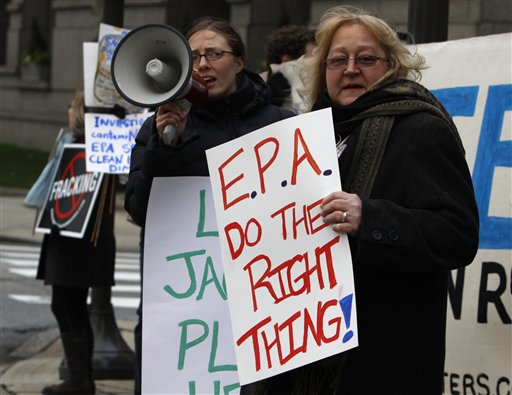
Protesters in front of the Academy of Natural Sciences in Philadelphia before an appearance by Environmental Protection Agency (EPA) Administrator Lisa Jackson Friday Jan. 13, 2012 (Credit: AP Photo/Jacqueline Larma)
This originally appeared on TomDispatch

This is a story about water, the land surrounding it, and the lives it sustains. Clean water should be a right: There is no life without it. New York is what you might call a “water state.” Its rivers and their tributaries only start with the St. Lawrence, the Hudson, the Delaware and the Susquehanna. The best known of its lakes are Great Lakes Erie and Ontario, Lake George and the Finger Lakes. Its brooks, creeksand trout streams are fishermen’s lore.

Far below this rippling wealth there’s a vast, rocky netherworld called the Marcellus Shale. Stretching through southern New York, Pennsylvania, Ohio and West Virginia, the shale contains bubbles of methane, the remains of life that died 400 million years ago. Gas corporations have lusted for the methane in the Marcellus since at least 1967 when one of them plotted with the Atomic Energy Agency to explode a nuclear bomb to unleash it. That idea died, but it’s been reborn in the form of a technology invented by Halliburton Corporation: high-volume horizontal hydraulic fracturing — “fracking” for short.

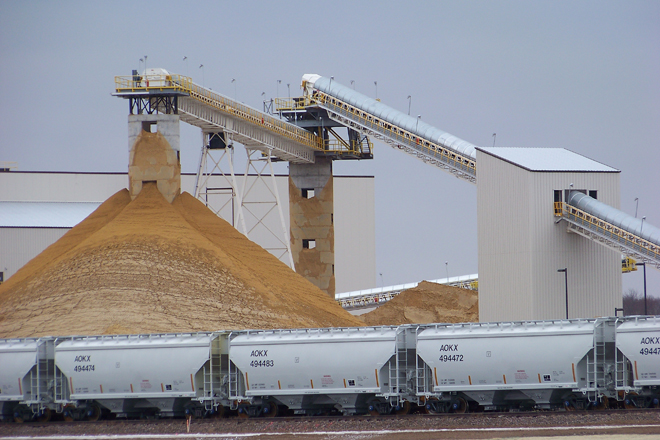
Fracking uses prodigious amounts of water laced with sand and a startling menu of poisonous chemicals to blast the methane out of the shale. At hyperbaric bomb-like pressures, this technology propels five to seven million gallons of sand-and-chemical-laced water a mile or so down a well bore into the shale.

Up comes the methane — along with about a million gallons of wastewater containing the original fracking chemicals and other substances that were also in the shale, among them radioactive elements and carcinogens. There are 400,000 such wells in the United States. Surrounded by rumbling machinery, serviced by tens of thousands of diesel trucks, this nightmare technology for energy release has turned rural areas in 34 U.S. states into toxic industrial zones.

Shale gas isn’t the conventional kind that lit your grandmother’s stove. It’s one of those “extreme energy” forms so difficult to produce that merely accessing them poses unprecedented dangers to the planet. In every fracking state but New York, where a moratorium against the process has been in effect since 2010, the gas industry has contaminated ground water, sickened people, poisoned livestock and killed wildlife.

At a time when the International Energy Agency reports that we have five more years of fossil-fuel use at current levels before the planet goes into irreversible climate change, fracking has a greenhouse gas footprint larger than that of coal. And with the greatest water crisis in human history underway, fracking injects mind-numbing quantities of purposely-poisoned fresh water into the Earth. As for the trillions (repeat: trillions) of gallons of wastewater generated by the industry, getting rid of it is its own story. Fracking has also been linked to earthquakes: eleven in Ohio alone (normally not an earthquake zone) over the past year.

But for once, this story isn’t about tragedy. It’s about a resistance movement that has arisen to challenge some of the most powerful corporations in history. Here you will find no handsomely funded national environmental organizations: some of them in fact have had a cozy relationship with the gas industry, embracing the industry’s line that natural gas is a “bridge” to future alternative energies. (In fact, shale gas suppresses the development of renewable energies.)

New York’s “Little Revolution”

While most anti-fracking activists have been responding to harms already done, New York State’s resistance has been waging a battle to keep harm at bay. Jack Ossont, a former helicopter pilot, has been active all his life in the state’s environmental and social battles. He calls fracking “the tsunami issue of New York. It washes across the entire landscape.”

Sandra Steingraber, a biologist and scholar-in-residence at Ithaca College, terms the movementthe biggest since abolition and women’s rights in New York.” This past November, when the Heinz Foundation awarded Steingraber $100,000 for her environmental activism, she gave it to the anti-fracking community.

Arriving in the state last October, I discovered a sprawl of loosely connected, grassroots groups whose names announce their counties and their long-term vision: Sustainable Otsego, Committee to Preserve the Finger Lakes, Chenango Community Action for Renewable Energy, Gas-Free Seneca, Catskill Citizens for Safe Energy, Catskill Mountainkeeper. Of these few (there are many more), only the last has a paid staff. All the others are run by volunteers.

“There are so many people working quietly behind the scenes. They’re not in the news, they’re not doing it to get their names in the paper. It’s just the right thing to do,” says Kelly Branigan, co-founder of the group Middlefield Neighbors.  Her organization helped spearhead one of the movement’s central campaigns: using local zoning ordinances to ban fracking. “In Middlefield, we’re nothing special. We’re just regular people who got together and learned, and reached in our pockets to go to work on this. It’s inspiring, it’s awesome and it’s America — its own little revolution.”

Consider this, then, an environmental Occupy Wall Street. It knows no divisions of social class or political affiliation. Everyone, after all, needs clean water. Farmers and professors, journalists and teachers, engineers, doctors, biologists, accountants, librarians, innkeepers, brewery owners. Actors and Catskill residents Mark Ruffalo and Debra Winger have joined the movement. Josh Fox, also of the Catskills, has brought the fracking industry and its victims to international audiences through his award-winning documentary film “Gasland.” “Fracking is a pretty scary prospect,” says Wes Gillingham, planning director for Catskill Mountainkeeper. “It’s created a community of people that wouldn’t have existed before.”

Around four years ago, sheltered by Patterson’s stay against fracking, little discussion groups began in people’s kitchens, living rooms and home basements. At that time, only a few activists were advocating outright bans on fracking: The rest of the fledgling movement was more cautiously advocating temporary moratoria.

Since then a veritable ban cascade has washed across the state. And in local elections last November, scores of anti-fracking candidates, many of whom had never before run for office, displaced pro-gas incumbents in positions as town councilors, town supervisors and county legislators. As the movement has grown in strength and influence, gas corporations like ExxonMobil and Conoco Philips and Marcellus Shale corporations like Chesapeake Energy have spent millions of dollars on advertising, lobbying and political campaign contributions to counter it.

Shale Shock

Autumn Stoscheck, a young organic apple farmer from the village of Van Etten just south of New York’s Finger Lakes, had none of this in mind in 2008 when she invited a group of neighbors to her living room to talk about fracking. She’d simply heard enough about the process to be terrified. Like other informal fracking meetings that were being launched that year, this was a “listening group.” Its ground rules: listen, talk, but don’t criticize. “There was a combination of landowners, farmers like us and young anarchist-activists with experience in other movements,” she told me. Stoscheck’s neighbors knew nothing about fracking, but “they were really mistrustful of the government and large gas corporations and felt they were in collusion.”

Out of such neighborhood groups came the first grassroots anti-fracking organizations. Stoscheck and her colleagues called theirs Shaleshock. One of its first achievements was a PowerPoint presentation, “Drilling 101,” which introduces viewers to the Marcellus Shale and what hydraulic fracturing does to it.

When Helen Slottje, a 44-year-old lawyer, saw “Drilling 101” at a Shaleshock forum in 2009, she was “horrified.” She and her husband David had abandoned their corporate law careers to move to Ithaca in 2000. “We traded corporate law practice in Boston for New York State and less stressful work — or so we thought. New York’s beauty seemed worth it.”

When news reports about fracking started appearing, the Slottjes thought about leaving. “I kept saying, ‘What’ll happen if fracking comes to New York? We’ll have to move.’” “Drilling 101” made her reconsider. Then she visited Dimock, Pennsylvania, 70 miles southeast of Ithaca and that sealed the deal.

By 2009, Dimock, a picturesque rural village, had become synonymous with fracking hell. Houston-based Cabot Oil & Energy had started drilling there the year before. Shortly after, people started to notice that their drinking water had darkened.  Some began experiencing bouts of dizziness and headaches; others developed sores after bathing in what had been their once pure water.

For a while, Cabot trucked water to Dimock’s residents, but stopped in November when a judge declined to order the company to continue deliveries. The Environmental Protection Agency was going to start water service to Dimock in the first week of January, but withdrew the offer, claiming further water tests were needed. Outraged New Yorkers organized water caravans to help their besieged neighbors.

p>“When I went to Dimock,” says Slottje, “I saw well drilling, huge trucks, muddy crisscrossing pipeline paths cutting through the woods, disposal pits, sites of diesel spills, dusty coatings on plants, noisy compressor stations — you name it. So I decided to put my legal background to work to prevent the same thing from happening where I lived. We’d been corporate lawyers before. We know the sort of resources the energy corporations have. The grassroots people have nothing. And they have this behemoth coming at them.”

In May 2009, the Slottjes became full-time pro bono lawyers for the movement. One of their first services was to reinterpret New York’s constitutional home rule provision, which had allowed local ordinances to trump state laws until 1981.  In that year, the state’s Department of Environmental Conservation Division of Mineral Resources exempted gas corporations from local restrictions.

“I spent thousands of hours on the research,” saysSlottje. “And then last August we were brave enough to go public and say the emperor has no clothes.” The Slottjes’ reinterpretation of the provision was simple enough: the state regulates the gas industry; towns and villages can’t regulate it, but what they can do is keep its operations off their land through the use of zoning ordinances.

Zoning Out Fracking

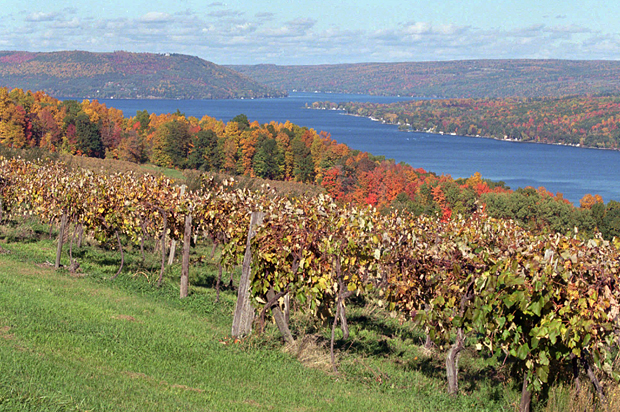
The town of Ulysses is nestled in the heart of the state’s burgeoning wine country in the Finger Lakes region. In 2010, a grassroots group, Concerned Citizens of Ulysses (CCU), asked the Slottjes to speak with members of the town board, which controls Ulysses’s planning and its zoning laws.

The board members opposed fracking, but couldn’t see how to prevent it. While the board talked with the Slottjes, CCU activists drafted a petition. If enough registered Ulysses voters signed on, the board would have the popular backing it needed for declaring a ban. Ann Furman, a retired schoolteacher who helped found CCU and write the document, recalls, “The petition was pretty specific: ‘We the undersigned want to ban hydrofracking in the town of Ulysses.’” A six-month-long door-to-door campaign followed.

“There was a lot of education going on in Ulysses at the town board and at forums, as we were going house to house. Even people who would sign the petition would say, ‘Tell me a little bit more about it.’ And in that next 15 to 20 minutes you would do a whole lot more education.” In the end, 1,500 out of 3,000 registered voters signed. This past summer the Ulysses town board voted to ban fracking.

Middlefield, 119 miles east of Ulysses and home of the grassroots group Middlefield Neighbors, enacted a similar ban. So did Dryden, 22 miles east of Ulysses. An out-of-state gas corporation that leased land for drilling in Dryden is suing to get the zoning ban declared illegal. A Middlefield landowner is suing that town on the same basis. The cases are pending.

Meanwhile bans proliferate. Six upstate New York counties have zoned out fracking, including Binghamton, which declared a ban in December. An organic brewery in Cooperstown, the Ommegang, mobilized 300 other businesses, including Cooperstown’s Chamber of Commerce, to support more bans in the region.

Chefs for the Marcellus, a group headed by Food Network star Mario Batali, has urged Governor Andrew Cuomo to ban fracking at the state level. “Call it home-rule democracy,” says Adrian Kuzminsky, chair of the Cooperstown-based organization Sustainable Otsego. “If local communities can seize control over their destinies, a giant step will have been taken toward a sustainable future.”

This past October, activists were preparing to take on the state’s Department of Environmental Conservation (DEC). That agency finds itself caught in a perpetual conflict of interest: on the one hand, protecting the environment; on the other, regulating the industries that exploit it.  In fact, the 1981 legislation exempting gas corporations from New York’s home rule had been written by Greg Sovas, then head of DEC’s Division of Mineral Resources.

Guidelines for the hydraulic fracturing industry were first issued by the department in late 2009 and rejected in 2010 under withering public criticism. Then-Governor David Paterson declared a moratorium on fracking in the state pending DEC revisions. Revised guidelines appeared this past September in the form of 1,537 mind-numbing pages bearing the title, “Supplemental Generic Environmental Impact Statement,” aka the “SGEIS.”

A World of Water

In study groups and online tutorials, activists prepared to write letters of commentary and protest to the Department of Environmental Conservation and Governor Cuomo, and to speak out in public hearings the department was organizing around the state. Thousands attended these. Pro-gas speakers predictably stuck to the twin themes of the jobs fracking would produce and the economic renewal it would bring about.

Opponents included an impressive line up of scientists (among them Robert Howarth, co-author of last year’s landmark Cornell University study, which established the staggering greenhouse-gas footprint of fracking), engineers, lawyers and other professionals. A letter sent to Cuomo by 250 New York State physicians and medical professionals deplored the DEC’s failure to attend to the public health impacts of fracking.

Part-time Cooperstown resident James “Chip” Northrup, a retired manager for Atlantic Richfield (ARCO, America’s seventh largest oil corporation), in one public agency hearing called the performances of pro-gas speakers “disgraceful” and the SGEIS “junk science.” Citing an industry study that shows 25 percent of frack wells leak after five years and 40 percent after eight, he said, “Everybody in the industry knows that gas drilling pollutes groundwater… It’s not… whether they leak. It’s how much.”

As 2012 began, the movement was demanding that the department withdraw the SGEIS. In mid-January, DEC spokesperson Lisa King said that once all the comments are tallied, “We expect the total to be more than 40,000.” Earlier, agency officials had told the New York Times they didn’t know of any other issue that had received even 1,000 comments. (Ten thousand letters were mailed from the Catskills’ Sullivan County alone on January 11th, just before the commentary deadline.) Gannett’s Albany Bureau has reported that anti-drilling submissions outnumber those of drilling supporters by at least ten to one.

Sustainable Otsego’s website lists 52 serious and fatal flaws in the document. A letter posted at the website of Toxics Targeting, an environmental database service in Ithaca, elaborately details 17 major SGEIS flaws. By January 10th, when the Toxics Targeting letter was sent to the DEC and the Governor, it had more than 22,000 signatures representing government officials, professional and civic organizations, and individuals. (The DEC counts this letter with its signatures as only one of the 40,000 comments.)

At a November 17th rally in Trenton, N.J., to celebrate the postponement of a vote on allowing fracking in the Delaware River Basin, Pennsylvania and New York activists pledged future civil disobedience. “The broad coalition of anti-frackers has been operating on multi-levels all at once,” says Sustainable Otsego’s chair, Adrian Kuzminsky. If the governor approves the SGEIS “there will be massive disillusionment with the state government and Cuomo, and from what I’m hearing there will be ‘direct action’ and civil disobedience in some quarters.”

At the moment, in fact, the anti-fracking movement in the state only seems to be ramping up. Should the government approve the SGEIS in its current form, lawsuits are planned against the Department of Environmental Conservation. And a brief “Occupy DEC” event that took place in the state capital, Albany, on January 12th may have set the tone for the future. Meanwhile some activists, turning their backs on established channels, are already working on legislation that would criminalize fracking.

This past November, Sandra Steingraber told a crowd of hundreds of activists why she was donating her $100,000 Heinz Award to the movement. The money, she said, “enables speech, emboldens activism and recognizes that true security for our children lies in preserving the… ecology of our planet.”

She raised a jar of water. “This is what my kids are made of. They are made of water. They are made of the food that is grown in the county that I live in. And they are made of air. We inhale a pint of atmosphere with every breath we take… And when you poison these things, you poison us. That is a violation of our human rights, and that is why this is the civil rights issue of our day.”

To stay on top of important articles like these, sign up to receive the latest updates from TomDispatch.com here.

The ugly truth about energy

Our "safe" Canadian oil imports are much more dangerous than we'd like to believe

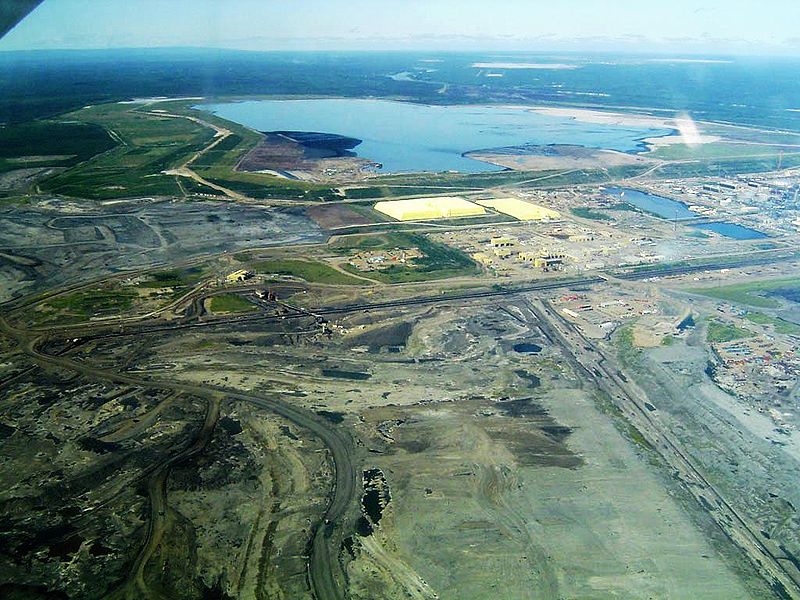
Syncrude's Mildred Lake mine site and plant near Fort McMurray, Alberta. It is the biggest oil sand mining facility in the world.

This piece originally appeared on TomDispatch.

For years, “not in my backyard” has been the battle cry of residents in Cape Cod who stand opposed to an offshore wind farm in Nantucket Sound. The giant turbines will forever mar the beauty of the landscape, they say.

Energy is ugly. Some forms more so than others, as nuclear near-meltdowns in Japan, the BP disaster in the Gulf of Mexico, and deaths in a West Virginia Coal Mine explosion have driven home in the last year. Energy kills plants, plankton, and people. It imperils the environment, poisons the oceans, and is threatening to turn part of Japan, one of the most advanced nations on the planet, into a contaminated zone for decades to come.

David Daniel knows this all too well. He built his dream home on 20 acres of lush wilderness, alive with panthers, wild boar, and deer, in Winnsboro, East Texas. Then a nightmare called tar sands appeared on his doorstep.

Tar sands are sandy soils laden with a tar-like substance called bitumen. Getting oil out of them is a dirty, dangerous, and deadly process. Daniel knew none of this when a neighbor phoned in the fall of 2008 to say that he’d seen trespassers on the property. “I went back [from work] and I found survey stakes that cut my property in half,” he recalls. Several months later, an eminent domain letter arrived, telling him that a pipeline carrying oil from Canada’s “oil sands” would cut through his pristine property. When he complained to TransCanada, the company in charge, its lawyer responded with a veiled threat: “Should I put the letter in the ‘cooperative’ or the ‘uncooperative pile?’”

So began the Daniel family’s struggles with TransCanada, whose powerful US backers include Koch Industries (best known for its stealth attacks on the federal government, and big spending on climate-change-denial campaigns). By the time TransCanada’s surveyors entered the Daniels’ lives, the corporation was already hard at work pushing a pipeline that would run from the Canadian border to Texas’s Gulf Coast, along the way slicing through the Daniels’ land and the properties of countless other Americans.

At no time did TransCanada’s representatives volunteer information about tar sands, leaving Daniel to do his own research. When he asked how tar sands oil would affect the pipeline, TransCanada responded only that the effects would be determined after the pipeline was put in place. “They made us feel like lab rats on our own property,” he says.

Behind his painful schooling in corporate arrogance lies a startling fact: Canada is the leading oil-supplier of the United States. Let me repeat that: the U.S. imports more oil from Canada than (yes) Mexico, which ranks second, and (believe it or not) Saudi Arabia, which ranks only third. Tar sands are largely responsible for Canada’s new petro-status. Nearly a million barrels of tar sands oil arrive in the U.S. every day. By 2025, Canada is expected to be producing 3.5 million barrels of tar sands oil daily. Most of that, says Ryan Salmon of the National Wildlife Federation, will be imported to the U.S. And believe me, when it comes to energy ugly, tar sands could take the cake.

Not Tar, Not Oil

In fact, “tar sands” is a colloquialism for 54,000 square miles of bitumen that veins sand and clay beneath the boreal forests of Alberta, one of Canada’s western provinces. Black as it is, bitumen isn’t actually tar, though it looks and smells like tar, and has its consistency on a very cold day — hence, that term “tar sands.” (The corporations that produce the stuff prefer “oil sands.”)

Unlike oil, bitumen does not flow. Gouged and steamed out from under the forest, it is wrenched from the soil, barreled, and then refined into synthetic crude oil — at shattering environmental costs. The tar sands industry has ravaged Alberta’s forests, poisoned its air and water, and wrecked the livelihoods of its indigenous peoples. Moreover, producing synthetic crude from a barrel of bitumen generates at least twice as much greenhouse gas as producing a barrel of normal crude oil. At 1.5 million barrels of tar sands oil a day, that’s a lot of global warming.

But for corporations intent on profits in a world rocked by Middle East and North African uprisings that might threaten global oil supplies, and by declining reserves of normal crude, environmental catastrophe is trivial collateral damage. The tar sands’ great selling point in the U.S. is that it comes from a friendly neighbor. Russ Girling, president and CEO of TransCanada, typically touts tar sands as improving “U.S. energy security and reduc[ing] dependence on foreign oil from the Middle East and Venezuela,” At a White House meeting in early February, Canadian Prime Minister Stephen Harper assured President Obama that “Canada is the largest, the most secure, the most stable, and the friendliest supplier of that most vital of all America’s purchases: energy.”

A complex alchemy turns bitumen into synthetic crude. Canadian journalist and tar sands expert Andrew Nikiforuk calls this final product “the world’s dirtiest hydrocarbon oil.” Canada used to transform bitumen from its rawest into its ultimate form, sending synthetic crude through pipelines to the U.S. Now, however, with Canada’s refineries maxing out, U.S. refineries are increasingly taking up the task of turning bitumen into the mock crude that makes even my Prius environmentally unfriendly. That means what’s coming to Americans in ever increasing quantities is a very raw form of diluted bitumen called DilBit, whose transport will make lab rats of us all.

Under jaunty names like “Lakehead,” “Alberta Clipper,” and “Keystone,” a vast pipeline network is already pumping this diluted bitumen to the Midwest and into the American heartland. The 1,900-mile-long Lakehead pipeline, owned by Canada’s Enbridge Inc., skirts one of the world’s largest stretches of fresh water, the Great Lakes.

Last June, Enbridge’s main competitor, TransCanada, opened a $5 billion, 2,147-mile pipeline it dubbed Keystone I, which plunges from Canada straight through the eastern parts of the Dakotas and Kansas to the Gulf Coast. Now, TransCanada is pushing hard for an extension, the Keystone XL, the one that will run through David Daniel’s land on its way to the Gulf coast.

In February, 2011, a landmark report by the National Resources Defense Council (NRDC) noted that diluted bitumen is “the primary product” carried by the Keystone I. The proposed Keystone XL, write the report’s authors, will be dedicated only to DilBit whose “combination of chemical corrosion and physical abrasion can dramatically increase the rate of pipeline deterioration.” So imagine this recipe for pipelines from hell: take thick, raw, corrosive, acid-ridden bitumen and add volatile natural gas to propel it since the bitumen doesn’t flow by itself; next, crank up the temperatures and pressures far higher than those needed to move ordinary crude oil (again, to help the stuff on its way). It doesn’t take a rocket scientist to understand some of the possible dangers of moving tar sands oil in this state through our communities.

The Tar Sands Come to Kellogg’s

Last July, as BP’s catastrophe in the Gulf was making news around the clock, the U.S. experienced its first big DilBit moment. Part of Enbridge’s Lakehead line broke, oozing black gunk into a tributary of the Kalamazoo River near Battle Creek, Michigan, iconic home to cereal-maker Kellogg’s. Twelve hours passed before workers responded to the surge of sludge, which by then had passed from the tributary into the river itself. The dark slop could be seen from bank to bank in the Kalamazoo, making its way to Lake Michigan.

High levels of benzene filled the air and local residents had to be evacuated from their homes. When the sludge passed through Battle Creek, the Kellogg’s factory even stopped making cornflakes. The spill was arrested before it could reach Lake Michigan, but not before a million gallons of DilBit had fouled a 30-mile-long stretch of the Kalamazoo, one of the biggest spills in Midwest history.

This was, however, no “ordinary” oil spill, as DilBit spills are much harder to clean up. Once DilBit hits water, the bitumen in it doesn’t float; it quickly sinks into river sediment. Exposed to sunlight, it forms a dense, sticky substance hard to remove from rock and soil.

Special dredging and other equipment is needed for any effective cleanup. The booms you saw skimming the Gulf last summer are inadequate, and the U.S. doesn’t yet have DilBit cleanup technology. So while cleanup crews worked on the Kalamazoo and its banks after the spill was discovered, they left a whole lot of DilBit behind. Adequate cleanup isn’t expected until at least late 2011, according to the NRDC’s Susan Casey-Lefkowitz.

At the time of the Kalamazoo spill, Enbridge’s CEO, Patrick Daniels, claimed that there had never been a leak “of this consequence” in the company’s history. According to Enbridge’s own reports, however, between 2000 and 2009 the company was responsible for 610 pipeline spills in Canada, totaling 5.5 million gallons. (Not all were DilBit, which makes the picture worse, not better, since ordinary crude is less corrosive and volatile than DilBit.) In Michigan, 12 spills from Enbridge’s pipelines preceded the larger one in the Kalamazoo. Two months after that spill, another part of Enbridge’s Lakehead pipeline leaked 256,000 gallons of DilBit into Romeoville, a suburb of Chicago.

Keystone’s underground pipeline to the Gulf Coast, which opened only nine months ago, has already leaked seven times. They have been small leaks, but significant nonetheless as they point to larger, more distressing problems. “It seems odd to us that a brand-new pipeline would have these little spills throughout,” says Casey-Lefkowitz. “It raises questions about the quality of construction.”

“TransCanada is building its pipelines according to strength regulations designed for conventional pipelines decades ago,” adds Anthony Swift, co-author of the NRDC report. Swift says the company “has not yet provided a meaningful strategy for dealing with some of the characteristics of diluted bitumen.”

The proposed Keystone XL, also underground, would carry up to 900,000 barrels of DilBit (37,800,000 gallons) south every day, passing through some of the most sensitive ecosystems in the U.S., including rivers, wildlife preserves, and wide expanses of prairie. In addition, it would run through the Ogallala aquifer, a 174,000-square-mile expanse of water that lies under eight states from the Dakotas to Texas and provides 30% of the nation’s irrigation for agriculture, as well as drinking water for 82% of the people within its vast boundaries.

The pipeline would pass through areas where landslides and earthquakes are known threats. Part of Keystone I already traverses an area of seismic activity in Nebraska, where a recent tremor — 3.5 on the Richter scale — shook the ground throughout the southeast part of the state. It also runs through the easternmost part of the Ogallala. Before Keystone I was built, a National Wildlife Federation report warned, “Some portions of the aquifer are so close to the surface that any pipeline leak would almost immediately contaminate a large portion of the water.”

TransCanada cannot begin constructing Keystone XL without both a presidential permission and a State Department environmental impact statement (EIS), made necessary because the project crosses international borders. The State Department issued that EIS in April, 2010 in the wake of public hearings in towns along the pipeline route. Environmental organizations, landowners, and the Environmental Protection Agency (EPA) were sharply critical of the EIS. Among other things, says the NRDC’s Anthony Swift, the statement failed to demonstrate “the need for the pipeline, its safety, and its greenhouse gas impacts.” Especially troubling, according to Susan Casey-Lefkowitz, was the failure to consider an alternate pipeline route that would not slash through the Ogallala aquifer.

Last month, under pressure from mounting opposition to the pipeline by a coalition of grassroots groups, the State Department held further meetings in Washington to hear their grievances. (The EPA also met with coalition leaders.) Ben Gotschall, a fifth generation Nebraska organic rancher, called the State Department’s environmental statement “insulting.” It suggested, he said, neither that stronger than normal pipeline materials should be used, nor that there might be alternative routes to the one currently proposed. TransCanada’s only concern, he insisted, was cost, while at stake was the “life and livelihood of millions of people.”

“My family has been producing grass-fed beef for five generations,” said Gotschall. “We do this organically, without chemicals and with minimum fossil fuel inputs… Nebraska farmers and ranchers were producing food long before we had the benefit of fossil fuels and we can and will find a way to produce food long after fossil fuels are gone. But we will never be able to produce food without clean water. To me, this pipeline is an issue of national security that threatens our domestic food and water supply.”

If the pipeline goes through, a handful of giant corporations will profit, among them Koch Industries which handles about 25% of tar sands imports to the U.S., and is among the biggest of U.S. tar sands refiners. Meanwhile, the grassroots opposition uniting farmers and ranchers, environmentalists and scientists is growing in the heartland states.

Last month, the coalition demanded that the State Department issue a supplemental environmental impact statement. On March 16th, Ben Gotschall e-mailed: “If you haven’t heard already, the State Department has called for a supplemental draft EIS… This is a victory for all of us who have been fighting this from the beginning.” On March 24th, 25 mayors sent a letter to Secretary of State Hillary Clinton: “We are concerned,” they wrote, “that expansion of high carbon projects such as the proposed Keystone XL tar sands pipeline will undermine the good work being done in local communities across the country to fight climate change and reduce our dependence on oil.”

Yet in the wake of the Fukushima nuclear disaster, domestic fears over nuclear energy are spiking, while months of turmoil in the Muslim world have highlighted a growing U.S. dependence on Middle Eastern oil. As a result, it will surely become harder to derail the efforts of TransCanada and Koch Industries to ram a pipeline filled with toxic tar sands oil right through David Daniel’s property.

Will a pipeline leak one day kill off his old growth hardwood trees, foul his three natural springs, and poison the deer now roaming his land? If TransCanada’s checkered history is any guide, it’s a real possibility. Energy kills. In Japan. In the Gulf. In Appalachian mines. And in the Corn Flake capital of the world. If Winnsboro, East Texas, is added to the list, it won’t be a surprise, not to David Daniel anyway. He knows what we all know now: in the hands of corporations whose only concern is profit, energy is ugly.


Ellen Cantarow is a journalist whose work on Israel/Palestine has been widely published for 30 years, including at TomDispatch. Her long-time concern about climate change, related to both political and environmental disaster in the Middle East, has recently led her to explore big oil territory.

[Note on sources: Thanks to both Michael Klare, who suggested the tar sands topic, and Andrew Nikiforuk, who shared information by e-mail. Nikiforuk's book Tar Sands: Dirty Oil and the Future of a Continent should be required reading on this topic. Thanks also to Anthony Swift and Susan Casey-Lefkowitz of The National Resources Defense Council for supplying additional information about the differences between DilBit oil spills and ones. NRDC's crucial report, "Tar Sands Pipelines Safety Risks," can be read in .pdf format by clicking here.]

Continue Reading Close
www.salon.com/writer/ellen_cantarow/index.html