Ellen Chesler

The deep roots of the war on contraception

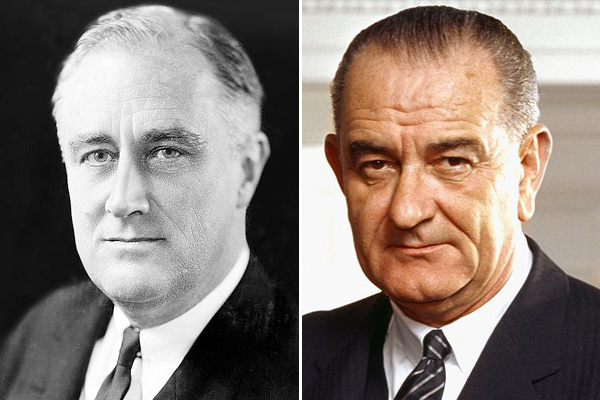
The uproar over Obama's decision stems from tensions between Democrats and Catholics that date back to FDR and LBJ

(Credit: Library of Congress/The White House)
This piece originally appeared on New Deal 2.0.

Republicans for Planned Parenthood last week issued a call for nominations for the 2012 Barry Goldwater award, an annual prize awarded to a Republican legislator who has acted to protect women’s health and rights. Past recipients include Maine Senator Olympia Snowe, who this week endorsed President Obama’s solution for insuring full coverage of the cost of contraception without exceptions, even for employees of religiously affiliated institutions. And that may tell us all we need to know about why President Obama has the upper hand in a debate over insurance that congressional Tea Partiers have now widened to include anyone who seeks an exemption.

It’s a long time ago, but it is worth remembering that conservative avatar Goldwater was in his day an outspoken supporter of women’s reproductive freedom — a freethinker who voted his conscience over the protests of Catholic bishops and all others who tried to claim these matters as questions of conscientious liberty and not sensible social policy. With Goldwater on his side, Obama sees a clear opening for skeptics wary of the extremism that has captured Republican hopefuls in thrall to the fundamentalist base that controls the GOP presidential primary today. Holding firm on family planning — even if it means taking on the Catholic hierarchy and other naysayers by offering a technical fix that would have insurers cover costs instead of the churches themselves — is a calculated political strategy by the Obama campaign, not a blunder as it has been characterized by many high powered pundits, including progressives like Mark Shields of PBS and E.J. Dionne of the Washington Post.

Recent public opinion polling on the subject is worth reconsidering. For years, it has been perfectly clear that a substantial majority of Americans see the value of expanding access to contraception and reliable sex education as essential tools to prevent unwanted pregnancy and abortion and to help women balance the competing demands of work and family. But unlike a zealous minority on the other side, these moderates have not necessarily privileged these social concerns over important questions of economics or national security that mattered more to them at election time.

That’s what seems to be changing. With his now-famous “nope, zero” response last spring, President Obama simply shut down Republicans in Congress who wanted to defund family planning as part of a deal to reduce the federal deficit. The action elicited a sudden surge in his popularity, especially in the highly contested demographic of women voters between the ages of 30 and 49 who voted for him in 2008 but wound up frustrated by failed promises and disappointing economic policies. Campaign polling has since uncovered a big opening for Obama with this group because they are furious over Republican social extremism. An astonishing 80 percent of them disapproved of congressional efforts to defund Planned Parenthood last spring. Polling among Catholics in response to last week’s controversy shows identical patterns, with 57 percent overall supporting the Obama “compromise” to ensure full coverage of contraception, according to reporting by Joe Conason in The National Memo, and cross-tabs demonstrating much higher margins of support from Catholic women, Latinos, and independent Catholic voters — all prime Obama election targets.

If the numbers are so persuasive, why then have Republican conservatives strayed so far from the greater tolerance of the Goldwater age? Why have they allowed the family planning issue to tie their candidates up in knots in 2012? The answer is in just how outsized the influence of a minority viewpoint can be on a political party, so long as it represents the base of that party’s support.

A bit of history going all the way back to Franklin Roosevelt’s New Deal is instructive. Back then, birth control was still illegal in this country, still defined as obscene under federal statutes that remained as a legacy of the Victorian era, even though many states had reformed local laws and were allowing physicians to prescribe contraception to married women with broadly defined “medical” reasons to plan and space their childbearing.

The movement’s pioneer, Margaret Sanger, went to Washington during the Great Depression, anticipating that Franklin Roosevelt, whose wife Eleanor was her friend and neighbor in New York, would address the problem and incorporate a public subsidy of contraception for poor women into the safety net the New Deal was constructing. What Sanger failed to anticipate, however, was the force of the opposition this idea would continue to generate from the coalition of religious conservatives, including urban Catholics and rural fundamentalist Protestants who held Roosevelt Democrats captive, much as they have today captured the GOP. It was Catholic priests, and not the still slightly scandalous friend of the First Lady, who wound up having tea at the Roosevelt White House.

The U.S. government would not overcome moral and religious objections until the Supreme Court protected contraceptive use under the privacy doctrine created in 1965 under Griswold v. Connecticut. That freed President Lyndon Johnson to incorporate family planning programs into the country’s international development programs and into anti-poverty efforts at home. As a Democrat still especially dependent on Catholic votes, however, Johnson only agreed to act once he had the strong bipartisan support of his arch rival Barry Goldwater’s endorsement and also the intense loyalty and deft maneuvering of Republican moderates like Robert Packwood of Oregon in the Senate. Packwood, in turn, worked alongside Ohio’s Robert Taft, Jr. in the House and a newcomer from Texas by the name of George H. W. Bush. Bush would remain a staunch advocate of reproductive freedom for women until political considerations during the 1980 presidential elections, when he was on the ticket with Ronald Reagan, accounted for one of the most dramatic and cynical public policy reversals in modern American politics.

Reagan had supported California’s liberal policies on contraception and abortion as governor, and Bush as Richard Nixon’s Ambassador to the United Nations had helped shape the UN’s population programs. But Republican operatives in 1980 saw a potential fissure in the traditional New Deal coalition among Catholics uncomfortable with the new legitimacy given to abortion after Roe v. Wade and white southern Christians being lured away from the Democrats around the issue of affirmative action and other racial preferences. Opposition to abortion instantly became a GOP litmus test, and both presidential hopefuls officially changed stripes.

Fast forward to 1992 and the election of Bill Clinton as America’s first pro-choice president, coupled with the Supreme Court’s crafting of a compromise decision in Planned Parenthood v. Casey that put some limits on access to abortion but essentially preserved the core privacy doctrine of Roe v. Wade. The perceived double threat of these political and judicial developments unleashed a new and even more powerful conservative backlash that took aim not only at abortion, but at contraception and sex education as well.

Exploiting inevitable tensions in the wake of profound social and economic changes occurring across the country as the result of altered gender roles and expectations — changes symbolized and made all the more palpable by Hillary Clinton’s activist role as First Lady — conservatives, with the support of powerful right-wing foundations and think tanks, poured millions of dollars into research and propaganda promoting family values and demonizing reproductive freedom, including emotional television ads that ran for years on major media outlets. A relentless stigmatizing of abortion, along with campaigns of intimidation and outright violence against Planned Parenthood and other providers, had a chilling effect on politicians generally shy of social controversy. And Bill Clinton’s vulnerability to charges of sexual misconduct left his administration and his party all the more defensive.

Since the welfare reform legislation of 1996, aptly labeled a “Personal Responsibility Act,” not only has access to abortion been curtailed, but funds for family planning programs at home and abroad have been capped. Hundreds of millions of dollars have been allocated to the teaching of sexual abstinence, rather than more comprehensive approaches to sex education. Just as tragically, U.S. programs addressing the crisis of HIV/AIDS — admirably expanded during the presidency of George W. Bush — were nonetheless made to counsel abstinence and oppose the use of condoms and other safe sex strategies, leaving women and young people all the more vulnerable to the ravages of the epidemic.

Empirically grounded studies over and over again undermined the efficacy of these approaches, which also flew in the face of mainstream American viewpoints and basic common sense. With Barack Obama’s election they have largely been revoked, enflaming the conservative base that put them in place and has lived off the salaries supported by government funding for faith-based social policy.

Even more disheartening to conservative true believers is the promise that the Affordable Care Act will vastly expand access to contraception by providing insurance coverage for oral contraceptives. This guarantee, endorsed by all mainstream health advocates, also includes emergency contraception, popularly known as the morning-after pill, that holds the promise of further reducing unwanted pregnancy and abortion and was meant to offer common ground in an abortion debate long defined by a clash of absolutes. The strong dose of ordinary hormones in emergency contraception act primarily by preventing fertilization, just like daily contraceptive pills, but in rare instances may also disable a fertilized egg from implanting by weakening the uterine lining that it needs for sustenance, causing opponents to vilify it as an abortifacient.

Supporting the Obama policy changes, on the other hand, is a new generation of progressive activists in reproductive health and rights organizations, energized by the intensity of the assaults against them, and now well-armed to educate and activate their own supporters by using traditional grassroots strategies and more sophisticated social networking. No institution has been more important in this effort than Planned Parenthood, with its vast networks of affiliates and supporters in every state, millions more supporters online, and a powerful national political and advocacy operation based in Washington D.C. that has been put to use to great effect in recent months.

The strength of the Planned Parenthood brand, coupled with the organization’s demonstrated ability to rally hundreds of thousands of supporters when it is attacked, has helped overcome traditional political reticence on reproductive justice issues. The Planned Parenthood Action Fund is already out with a strong new appeal warning politicians that women are watching. “Enough is enough. Back off on birth control,” is the new advocacy mantra.

Mindful of the numbers — and with the added ballast of what now amounts to a daily drumbeat of progressive television talk and comedy that delights in pillorying Republican prudery — Democrats are intensifying their resolve to take on this fight. Two things we can be sure of: Whoever emerges from the bloodbath of the GOP contest will try and backtrack from the birth control extremism of the primary. And Obama supporters, backed up by the advocacy community, will in turn stand ready to pounce on this inevitable flip-flopping.

Both sides may well summon the spirit and words of Barry Goldwater, who cautioned against allowing faith-based extremism to gain control of the Republican Party. “Politics and governing demand compromise,” he told John Dean, who reports on the conversation in his 2006 book, “Conservatives Without Conscience.”But these Christians believe they are acting in the name of God, so they can’t and won’t compromise. I know. I’ve tried to deal with them.”

Was Planned Parenthood’s founder racist?

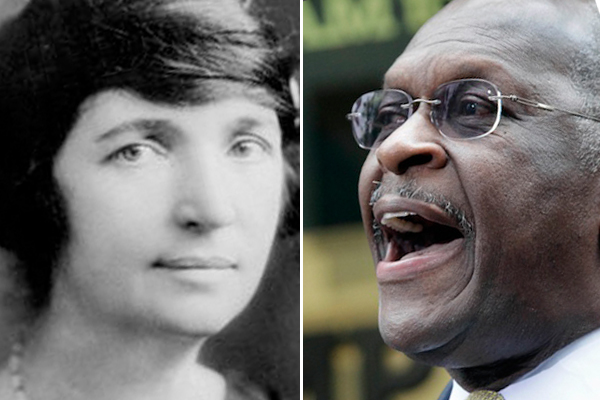
Cain is hardly the first abortion foe to smear Margaret Sanger with such accusations. Here's the real story

(Credit: Wikipedia/AP)
This piece originally appeared on New Deal 2.0.

Birth control pioneer Margaret Sanger is back in the news this week thanks to GOP presidential candidate and abortion rights opponent Herman Cain, who claimed on national television that Planned Parenthood, the visionary global movement she founded nearly a century ago, is really about one thing only: “preventing black babies from being born.” Cain’s outrageous and false accusation is actually an all too familiar canard — a willful repetition of scurrilous claims that have circulated for years despite detailed refutation by scholars who have examined the evidence and unveiled the distortions and misrepresentations on which they are based (for a recent example, see this rebuttal from The Washington Post’s Glenn Kessler).

It’s an old tactic. Even in her own day, Sanger endured deliberate character assassination by opponents who believed they would gain more traction by impugning her character and her motives than by debating the merits of her ideas. But when a presidential candidate from a major U.S. political party is saying such things, a thoughtful response is necessary.

So what is Sanger’s story?

Born Margaret Louisa Higgins in 1879, the middle child of a large Irish Catholic family, Sanger grew into a follower of labor organizers, free thinkers and bohemians. Married to William Sanger, an itinerant architect and painter, she helped support three young children by working as a visiting nurse on New York’s Lower East Side. Following the death of a patient from a then all-too-common illegal abortion, she vowed to abandon palliative work and instead overturn obscenity laws that prevented legal access to safe contraception.

Sanger’s fundamental heresy was in claiming every woman’s right to experience her sexuality freely and bear only the number of children she desires. Following a first generation of educated women who had proudly forgone marriage in order to seek fulfillment outside the home, she offered birth control as a necessary condition to the resolution of a broad range of personal and professional frustrations.

The hardest challenge in introducing Sanger to modern audiences, who take this idea for granted, is to explain how absolutely destabilizing it seemed in her own time. As a result of largely private arrangements and a healthy trade in condoms, douches and various contraptions sold under the subterfuge of feminine hygiene, birth rates had already begun to decline. But contraception remained a clandestine and delicate subject, legally banned under obscenity statutes, and women were still largely denied identities or rights independent of their relationships with men, including the right to vote.

By inventing the term “birth control,” Sanger brought the practice — and by implication, women’s entitlement to sexual pleasure — out into the open and gave them essential currency. She went to jail in 1917 for opening a clinic to distribute primitive diaphragms to immigrant women in Brooklyn, New York, and appeal of her conviction led to a medical exception that licensed doctors to prescribe contraception for reasons of health. Under these constraints she built a network of independent local women’s health centers that eventually came together under the banner of Planned Parenthood. She also lobbied for the repeal of federal obscenity statutes that prevented the legal transport of contraception by physicians across state lines, which were struck down in federal court in 1936.

Sanger sought and won scientific validation for various contraceptive methods, including the birth control pill, whose development she supported and found the money to fund. In so doing, she helped lift the religious shroud that had long encased reproduction and secured the endorsement of contraception by physicians and social scientists. From this singular accomplishment, which some still consider heretical, a continuing controversy has ensued.

Sanger always remained a wildly polarizing figure, which clarifies the logic of her decision after World War I to jettison “birth control” and adopt the more socially resonant term “family planning.” This move was particularly inventive but in no way cynical, especially when the Great Depression brought attention to collective needs and the New Deal created a blueprint for bold public endeavors.

Some have falsely charged that Sanger defined family planning as a right of the privileged but a duty or obligation of the poor. To the contrary, she showed considerable foresight in lobbying to include universal voluntary family planning programs among public investments in social security. Had the New Deal incorporated basic public health and access to contraception, as most European countries were then doing, protracted conflicts over welfare and health care policy in the U.S. might well have been avoided.

Having long enjoyed the friendship and support of Franklin and Eleanor Roosevelt, Sanger also had ample reason to believe the New Dealers would fully legalize and endorse contraception as a necessary first step to her long-term goal of transferring responsibility and accountability for voluntary clinics to the public health sector. What she failed to anticipate was the force of opposition family planning continued to generate from a coalition of religious conservatives, including urban Catholics and rural fundamentalist Protestants, that held Roosevelt Democrats captive much as today’s evangelicals have captured the GOP.

The U.S. government would not overcome cultural and religious objections to public support of family planning through its domestic anti-poverty and international development programs until the late 1960s, after the Supreme Court protected contraceptive use under the privacy doctrine created in Griswold v. Connecticut. At this time, Planned Parenthood clinics became major government contractors, since there were few alternative primary health care centers serving the poor. Today, one in four American women funds her contraception through government programs, many of them still run by Planned Parenthood — a number likely to rise under the Affordable Care Act.

Sanger’s eagerness to mainstream her movement explains her engagement with eugenics, a then widely popular intellectual movement that addressed the manner in which human intelligence and opportunity is determined by biological as well as environmental factors. Hard as it is to believe, eugenics was considered far more respectable than birth control. Like many well-intentioned reformers of this era, Sanger took away from Charles Darwin the essentially optimistic lesson that humanity’s evolution within the animal kingdom makes us all capable of improvement if only we apply the right tools. University presidents, physicians, scientists and public officials all embraced eugenics, in part because it held the promise that merit would replace fate — or birthright and social status — as the standard for mobility in a democratic society.

But eugenics also has some damning and today unfathomable legacies, such as a series of state laws upheld in 1927 by an eight-to-one progressive majority of the U.S. Supreme Court, including Justices Oliver Wendell Holmes and Louis Brandeis. Their landmark decision in Buck v. Bell authorized the compulsory sterilization of a poor young white woman with an illegitimate child on grounds of feeble mindedness that were never clearly established. This decision, incidentally, was endorsed by civil libertarians such as Roger Baldwin of the ACLU and W.E.B. Dubois of the NAACP, both of whom Sanger counted among her supporters and friends.

For Sanger, eugenics was meant to begin with the voluntary use of birth control, which many still opposed on the grounds that the middle class should be encouraged to have more babies. She countered by disdaining what she called a “cradle competition” of class, race, or ethnicity. She publicly opposed immigration restrictions and framed poverty as a matter of differential access to resources like birth control, not as the immutable consequence of low inherent ability or character.

As a nurse, Sanger also understood the adverse impacts of poor nutrition, drugs, and alcohol on fetal development and encouraged government support of maternal and infant health. She argued for broad social safety nets and proudly marshaled clinical data to demonstrate that most women, even among the poorest and least educated populations, eagerly embraced and used birth control successfully when it is was provided.

At the same time, Sanger did on many occasions engage in shrill rhetoric about the growing burden of large families of low intelligence and defective heredity — language with no intended racial or ethnic content. She always argued that all women are better off with fewer children, but unfortunate language about “creating a race of thoroughbreds” and other such phrases have in recent years been lifted out of context and used to sully her reputation. Moreover, in endorsing Buck v. Bell and on several occasions the payment of pensions or bonuses to poor women who agreed to limit their childbearing (many of whom enjoyed no other health care coverage), Sanger quite clearly failed to consider fundamental human rights questions raised by such practices. Living in an era indifferent to the obligation to respect and protect individuals whose behaviors do not always conform to prevailing mores, she did not always fulfill it.

The challenge as Sanger’s biographer has been to reconcile apparent contradictions in her beliefs. She actually held unusually advanced views on race relations for her day and on many occasions condemned discrimination and encouraged reconciliation between blacks and whites. Though most birth control facilities conformed to the segregation mores of the day, she opened an integrated clinic in Harlem in the early 1930s. Later, she facilitated birth control and maternal health programs for rural black women in the South, when local white health officials there denied them access to any New Deal-funded services.

Sanger worked on this last project with the behind-the-scenes support of Eleanor Roosevelt and Mary McLeod Bethune, founder of the National Council for Negro Women and then a Roosevelt administration official. Their progressive views on race were well known, if controversial, but their support for birth control was silenced by Franklin’s political handlers — at least until he was safely ensconced in the White House for a third term, when the government rushed to provide condoms to World War II soldiers.

Sanger’s so-called Negro Project has been a source of controversy first raised by black nationalists and some feminist scholars in the 1970s and later by anti-abortion foes. Respecting the importance of self-determination among users of contraception, she recruited prominent black leaders to endorse the goal, especially ministers who held sway over the faithful. In that context, she wrote an unfortunate sentence in a private letter about needing to clarify the ideals and goals of the birth control movement because “we do not want the word to go out that we want to exterminate the Negro population.” The sentence may have been thoughtlessly composed, but it is perfectly clear that she was not endorsing genocide.

America’s intensely complicated politics of race and gender has long ensnarled Sanger and all others who have sought to discipline reproduction. As many scholars of the subject in recent years have observed, much of the controversy proceeds from the plain fact that reproduction is by its very nature experienced individually and socially at the same time. In claiming women’s fundamental right to control their own bodies, Sanger remained mindful of the dense fabric of cultural, political, and economic relationships in which those rights are exercised.

In most instances the policies Sanger advocated were intended to observe the necessary obligation of social policy to balance individual rights of self-expression with the sometimes contrary desire to promulgate and enforce common mores and laws. She may have failed to get the balance quite right, but there is nothing in the record to poison her reputation or discredit her noble cause. Quite the contrary.

The Reverend Martin Luther King, Jr. may have put it best in 1966, when he accepted Planned Parenthood’s prestigious Margaret Sanger Award and spoke eloquently of the “kinship” between the civil rights and family planning movements. Here is what he said, since it bears repeating:

There is a striking kinship between our movement and Margaret Sanger’s early efforts. She, like we, saw the horrifying conditions of ghetto life. Like we, she knew that all of society is poisoned by cancerous slums. Like we, she was a direct actionist — a nonviolent resister… She launched a movement which is obeying a higher law to preserve human life under humane conditions. Margaret Sanger had to commit what was then called a crime in order to enrich humanity, and today we honor her courage and vision; for without them there would have been no beginning.

Continue Reading Close
www.salon.com/writer/ellen_chesler/index.html