Jaclyn Friedman

How CNN turned me into a sex scold

Despite being an advocate for women's sexual power, I ended up on TV wagging my finger over "raunch" culture

Jaclyn Friedman

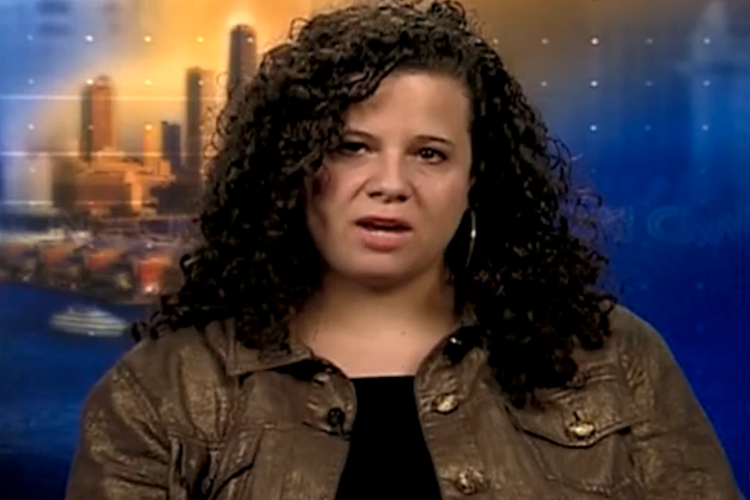
I didn’t recognize the talking head on CNN scolding girls for drinking and having sex. The woman on the television screen looked and sounded a whole lot like me — in fact, she was me – but she appeared to be saying things that, as a feminist activist and co-author of “Yes Means Yes: Visions of Female Sexual Power and a World Without Rape,” I would never say.

This is what it’s like to see yourself quoted out of context and turned into a sock puppet on national TV.

It’s not every day I get a call from CNN. Until a few weeks ago, it had happened just once: last fall, when a student at Hofstra University accused fellow students of raping her, and then recanted a few days later. Her accusation hadn’t made much of a media ripple, but the withdrawal was suddenly international headline news, and CNN wanted a comment from me to include in its story that afternoon.

Two hours later, a cameraman was setting up lights in my office while I tried to act like this happened all the time. Applying a final layer of makeup, I rehearsed my main talking points: False rape accusations are rare. We don’t know that she was lying, just that she withdrew the charges. Rape is an epidemic on college campuses. Why does the media only pay attention when a woman’s credibility is called into question?

The interview itself went well enough. I could tell the producer wanted me to say something harsh about the young woman in question, to accuse her of making things worse for “real” victims. But I refused, taking the time to explain that we have no way of knowing whether or not she was a victim, just that she no longer wanted to press charges. As the cameraman packed up, I beamed with pride: I’d just given a thoughtful, thorough, articulate 20-minute interview to CNN, an interview that had the power to shape American opinions about sexual violence. I called my mom, blasted the info via Facebook and Twitter, and waited eagerly to see the clip.

And then, there it was. I was on-screen for the span of exactly one sentence — a sentence used so entirely out of context it sounded like I had done the exact thing I had spent 20 minutes refusing to do: criticize the young woman at the center of the story. I blamed myself. How could I have been sloppy enough to give them a quote they could use that way? I was crushed, mortified and, more than anything else, I wanted to write that woman — every woman — an apology. Whenever we blame a woman for the damage rape does to women, we make it that much easier for rapists to get away with it in the future.

But I decided to keep my mouth shut. After all, it was just one producer, one bad story. I have a message I want to spread, and I wanted CNN to call me again.

A few weeks ago, a different producer from a different CNN show, “American Morning,” contacted a colleague of mine about a story they were developing about Ke$ha and the supposedly dangerous and new trend of pop culture encouraging girls to get very drunk and be “raunchy.” My colleague couldn’t do it, but she sent them to me along with assurances that this producer and reporter team were coming from a feminist place. I jumped at the chance to redeem myself with “the Worldwide Leader in News.”

During the interview, I did my best to debunk the frame, insisting that binge drinking isn’t just a women’s issue, nor is sexual behavior. I also pointed out that none of this is new, and that holding men responsible for violence against women is a heck of a lot more effective and fair than clutching our pearls about girls these days. The reporter seemed genuinely interested in my perspective, if not entirely convinced. The next morning was like Groundhog Day. There I was again: spouting but two sentences and appearing to make the exact point I’d taken great pains to oppose. The transcript reads like so:

[Reporter Carol] Costello: When it comes to binge drinking, experts say, sadly women are up to the challenge. According to Southern Illinois University, in 1996, 33 percent of women admitted to binge drinking or having five drinks in one sitting in the past two weeks. In 2008, that percentage shot up to nearly 41 percent.

Jaclyn Friedman, Editor, “Yes Means Yes”: It’s a really troubling message.

Costello: That’s disturbing to feminist editor Jaclyn Friedman. She says women having fun or making stupid mistakes is one thing, but adopting destructive, raunchy behavior is scary.

Friedman: When it comes to sexual assault, most rapists use alcohol to facilitate sexual assault.

Was I a fool to imagine it would go any differently the second time? Who knows. But in the aftermath of the story, as the feminist Web spleened justified outrage and I tried to express my fury, I kept returning to one thought: I think the producer and reporter had the best of intentions.

Thing is, even media behemoths like CNN are composed of people, most of whom had higher aspirations than to be corporate cogs when they decided on a career in journalism. I believe the reporter and producer I worked with are worried about girls. They want to help parents who’re worried about girls. They want girls to be safe. And one more thing is true of them, something we tend to forget when stuff like this happens: They’re not just media producers. They’re media consumers.

When I think about the mainstream media’s victim-blaming, I’m reminded of that old Palmolive ad: You’re soaking in it. The “Bad Girls” story, in which young women who drink and are sexual are victims of their own bad decisions and must be educated into safety, and in which male predators are treated as inevitable forces we can do nothing to stop, has been told so many times that it seems not only true, but like the only possible true thing. Most people don’t even think of it as a viewpoint, at least no more than they think of gravity as really weighing them down. CNN employees certainly aren’t immune to this phenomenon.

But every iteration of the “Don’t Bad Girls Know They’re in Danger?!? ZOMG!” story makes it harder to overcome all the ones that came before. Meanwhile, hundreds of thousands of women are raped every year in the U.S. Most of those assaults are never reported, in no small part because victims expect that if they speak up, their behavior, not their attacker’s, will be questioned — and they’re right. This often leaves rapists free to find new victims — an average of six each.

If we’re ever going to break these deadly serious victim-blaming assumptions, someone’s going to have to figure out how to get an alternative viewpoint represented correctly on CNN. Maybe it will even be me — I did at least manage to get them to publish a counterpoint on their blog this time around, and I’ll probably say yes again if they call. But not without sending them this article first.

CliffsNotes to the food revolution

The co-founder of Bitch magazine talks about living the Michael Pollan way and the gender politics of the kitchen

Mention the name Lisa Jervis in certain feminist circles, and you’ll be met with the kind of breathlessness and swooning more often lavished on the Jonas Brothers. Jervis is the co-founder and former editor of Bitch magazine, for many the defining publication of a new generation of feminist critique.

Since leaving Bitch in March 2006, Jervis has stayed largely out of the public eye. But now she’s returned to publishing with a different and somewhat unexpected project — a cookbook.

Cook Food” is what you would get if you combined CliffsNotes of Michael Pollan’s foodie insta-classic “The Omnivore’s Dilemma” with the vegan parts of Mark Bittman’s “The Minimalist” cooking column in the New York Times, added a healthy pour of DIY attitude and ran it all through a blender. The book’s subtitle calls it a “manualfesto,” and that’s just about right — it’s a nitty-gritty how-to with a political agenda: to give those of us with good intentions but limited budgets, skills, confidence or time a chance to participate in the burgeoning local food revolution.

 Jervis’ approach to what she calls “healthy, light-footprint eating” is refreshingly non-doctrinaire. She confesses her own food sins up front (“I indulge my junk food cravings when I really want to, and I end up eating cheese of unknown provenance much more often than I’d like to admit”) and takes an informal, let’s-just-do-our-best tone throughout. She’s still a food geek — from her detailed shop talk about kitchen equipment to her “novellini on the art of roasting vegetables,” you can tell she’s clocked plenty of hours thinking about, cooking and eating food — and loving every minute of it. But she doesn’t expect you to share her obsession. She just wants you to put aside your resistance long enough to share her technique for sautéeing dried herbs in oil, and her recipes for “chili-style beans ‘n’ greens” and “spicy brownies.”

So how does a gal go from feminist icon to food writer? I caught up with her (disclosure: I’ve worked with Jervis on several projects) recently to ask — appropriately enough, right around dinnertime, when she was snacking on almonds and preparing a hasty, nonfoodie meal: whole wheat pasta with sauce from a jar.

 So how does a feminist pop culture critic become a locavore cookbook writer?

 First, she likes to eat a lot. And likes to cook.

I’ve always been extremely skeptical of mainstream messages about what’s healthy and acceptable and also very skeptical about the profit messages behind those messages. I mean, the diet industry is a multi-billion-dollar industry that tells people that having a larger body makes them automatically unhealthy, that they have the capacity to change their large body through different food choices and that if they just follow the “right” plan, they will be successful in that. And all of those things are basically lies, and all of them are things that ultimately result in profit for pharmaceutical companies and diet food companies.

The sensibility I bring to food and cooking and thinking about what’s healthy is very feminist, in that it’s all about: How does this make my body feel? I really don’t care about how it makes my body look. I’m interested in giving people the tools they need to eat what makes their bodies feel good and function better.

How is “Cook Food” different from all the other locavore/food ethics books out there right now?

 I think the main thing is that it actually has instructions. You can’t read “The Omnivore’s Dilemma” and then go cook dinner unless you already know how to cook dinner. It’s really hard to make better choices if you don’t have basic cooking skills.

It seems like the stereotype of the person who cares about these issues is a white, upper-middle-class liberal NPR listener with two small children who eat nothing but organic. Why does the pro-food movement come off as precious and smug so much of the time?

 Farmers’ markets do tend to spring up in places where middle-class and upper-middle-class people live. There’s some truth to that. Organic food is obviously just more expensive than conventionally grown food.

As far as smug goes, one element of the current pro-food culture is that there’s this focus on fancy ingredients and celebrity chefs and complicated preparations, and it makes people feel like cooking is this really specialized skill set. So I think people are intimidated by the idea that, if I’m going to cook, it has to be something special, and I have to have an excellent palate to see what’s good. And you know what? You’ve been eating all your life. You know what’s going to taste good to you. That is good food. It doesn’t have to be what Alice Waters thinks is good food. What I really set out to do is to show people that it’s in fact incredibly easy to put together a simple meal with fresh ingredients.

But it’s not always that easy. Tonight I had to choose between going to the gym and cooking myself a healthy meal, even with all your handy easy recipes. Should I have planned better? What is going on there?

What’s going on there is that you’re a busy person, and a lot of people are busy, and we do have to make choices. I told you what I’m going to make for dinner, and that’s because I had long day at work, and then I had a meeting, and now I’m having another meeting. We can’t do everything every single day. And I’m all about accepting that, and being like, OK, this is how it is today, but tomorrow I can make beans and greens and have it for the rest of the week. Lightening your footprint and feeding yourself more healthy, whole foods is something that you have the opportunity to do three times a day, every day. That doesn’t mean that you’ve failed if you aren’t able to take that opportunity three times a day, every day.

For me, the concept of harm reduction is key. There’s no way to feed, house or clothe yourself without doing some level of damage to the environment or other beings — but reducing that harm in whatever way you can is still meaningful. I’m a fan of “aspiring,” as in “aspiring locavore” or “aspiring vegan.”

When Michael Pollan recently called for Americans to get back into the kitchen, a lot of feminists pointed out that, given the division of labor in American households, that would likely mean women getting back into the kitchen. Are you at all worried about the gendered implications of your work?

I love Michael Pollan, but the way that he talked about American feminists’ attitude toward cooking was incredibly reductive and, frankly, pretty ahistorical. Articles like Pollan’s (and anything that makes people feel like they are failing their obligations to themselves and their families by not cooking) produce a lot of guilt, and that guilt is gendered. That is a problem.

But I don’t think the solution to that is to stop trying to get people to cook. The solution is to make sure that the household work is distributed more equitably. And I say that with full understanding of how little things have changed since the ’70s, in terms of getting men to fucking do their share around the house. And I also think that it’s no accident that the kind of rarefied, chef-dominated cooking discourse that I was talking about earlier, that often makes people feel like they can’t cook rather than helping them feel that they can, is very male-dominated. Whereas the quotidian meal prep in this country is still mostly female-dominated. The feminist movement has generated a lot of good analysis around that. However, we have not moved the needle very much. I don’t have an answer for that.

I also have a lot of frustrations with the way Pollan talks about “obesity.” He talks about how obesity rates rise as rates of cooking fall. And I’m sure that’s true, but it doesn’t actually matter. Because obesity is not a good measure of health.

What really saddens me about the state of the pro-food discourse about obesity right now is that when Monsanto says genetically modified soybeans are not an environmental problem or a health problem, the pro-food movement is extremely skeptical, and they call that out as total bullshit. Whereas when the medical industry says “fat kills,” they’re not like: Actually, no, diabetes may kill, but the cause and effect relationship between the two is not as uncomplicated as you’d have us believe.

Speaking of Monsanto, doesn’t all of the talk about individual meal choices distract us from focusing on the big-picture problems with our food supply, at the industry and policy level?

 I see this cookbook as an organizing tool. People get very overwhelmed when they start talking about food politics and they feel like, well, I don’t know what to do about this. It goes back to — this is something that people do three times a day every single day. That adds up to a lot of actions. I am no fan of market solutions as a rule, but we’re still living under capitalism. There has to be a market component to any support for local farmers. So encouraging people, and giving them the concrete tools they need in order to purchase fresh food locally and use it well — that adds up to a lot as far as concrete support for local food economies. Ditto giving people the tools they need if they want to cook animal-free meals. Movements are made up of individual actions.

Let’s talk about the kinds of people who may be resistant to your message. What would you say to someone who hates to cook?

 I would want to know what they don’t like about it. Do they feel like they’re going to produce something that’s not good? Are they nervous about the result? Does their hand cramp when they hold the knife? Are they afraid they’re going to cut themselves? Are they too tired at the end of the day? Maybe it’s lonely in the kitchen. There are solutions to a lot of those problems.

What about someone who doesn’t live near a grocery store?

That is a really tough one. I was in Detroit recently, and there are no big grocery stores in the entire city of Detroit. But there are also 600 community gardens in Detroit right now. That’s one solution — start a garden. Another one is: Get to know your neighbors, find out who has a car, try to figure out ways to band together with other people to source some better food for your neighborhood. These answers are not going to be realistic for everybody. But as awareness is raised about these issues, there are more and more places to turn to get help with this stuff. I’d recommend foodfirst.org and healthycornerstores.org to start.

And someone with a severely limited food budget?

A lot of farmers’ markets take food stamps — that’s really important to know. Also, dried beans are your friend. They’re incredibly cheap, and they’re actually better for you than canned. If you can go to a market where stuff is available in bulk, you’ll pay a lot less. Again, team up with your friends. Have a potluck cooking fest where everyone just brings one ingredient. You get together and you can make a really hearty meal and you may even have leftovers.

People do talk a lot about how expensive fresh food is, but packaged food is really expensive, too. A box of cereal is like five or six dollars, and that’s crazy when you think about what you’re paying for. You could get several times more breakfast for that money with just a bag of rolled oats, some nuts and some dried fruit.

Where did you learn how to cook?

I spent a lot of time as a kid and even as a teenager hanging out in the kitchen with my mom, watching her cook, talking to her about it, learning stuff about how food works. (And I have to point out here that my father always cleaned up after dinner, because my mother always says when you talk about it like that, you make it sound like we had this totally gender-normative household. And we didn’t. My father is an ace kitchen cleaner.) And my mom’s pretty improvisational, too; she’ll turn leftovers into several different meals just by adding things. So I really learned to trust my instincts in that way. From so much observation and helping.

But a lot of it was also trial and error. I did not emerge from my parents’ household knowing how to cook. I spent a lot of time making bad stir-frys in my early 20s.

Continue Reading Close