Jeff Yang

Sarah Palin’s real soul mate

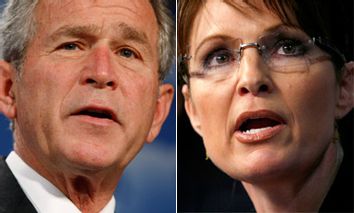
McCain's veep choice is the reincarnation of George W. Bush, as channeled by Karl Rove.

  • more
    • All Share Services

Sarah Palin's real soul mate

As the storm-shrunk Republican National Convention winds to a close, pundits have commented on the eerie absence of the man who, until Thursday evening, remains the party’s nominal head: Other than his brief first-day message by satellite, our sitting president, George W. Bush, has been MIA from the St. Paul festivities, mentioned by few and eulogized by even fewer.

But Bush’s ghost-at-the-feast status is hardly a sign that the Republicans have abandoned the recipe that won them consecutive terms in the Oval Office. Indeed, last night’s official unveiling of Sarah Palin as their presumptive veep proved that the only change they’re offering is savvier packaging. In Gov. Palin, the GOP has its new Bush, same as the old Bush, but more polished, more presentable, more user-friendly than the original ever was — and, they hope, still fresh and unencumbered enough to run as a “maverick” against the legacy of Dubya 1.0′s failures.

Mirror, Mirror

On the face of it, the duo seems as different as two individuals could be — one, an Ivy-educated scion of a political dynasty, raised in wealth and privilege in the deep South, the other a defiantly blue-collar “hockey mom” born and bred in the Union’s northernmost state — but the deeper parallels are uncanny, in career arc, character and political positions, in strengths and flaws.

Both Bush and Palin hail from oil-rich Western expanses — the second-largest and largest states in the nation, respectively — whose size and rugged history encourage a particular kind of frontier sensibility: Stubborn, close-mouthed, self-deterministic and paradoxically capable of both hard-partying Saturdays and holy-roller Sundays. (And given that, it’s hardly a surprise that both were wild and experimental in their youth, only to embrace deeply fundamentalist Christian convictions later in life.)

Both became governor of their states while still political neophytes, triumphing over veteran opponents despite slender résumés (six years as a part-time small-town mayor for Palin; a failed congressional campaign for Bush) and staggering odds against them. In their gubernatorial campaigns, they emphasized bold ideas and reform, even touting their lack of experience as an asset rather than a liability; while in state office, they became extraordinarily popular, thanks to deft populist instincts and immense personal magnetism, as well as an unusual ability to project an aura of moderation and post-partisanship (“I reached across the aisle”; “I’m a uniter, not a divider”) even while engaged in viciously political behavior.

Part of what helps them preserve that firewall is the human cocoons with which they’ve surrounded themselves, tight circles of devoted long-term insiders whose primary virtue is unflagging loyalty, and who find themselves under furious attack should they, like Palin’s ex-brother-in-law Mark Wooten, and a litany of former officials for Bush, dare to break ranks or spill secrets.

It’s an environment that encourages a with-us-or-against-us, win-at-all-costs mentality, a mind-set that has been expressed in both their politics and their governance: More than any reforms she has brought to bear, it’s Palin’s streak of vindictiveness that has alienated her from Republican colleagues in Alaska, while Bush’s reflexive belief that the world is the setting for a divine crusade of friends against enemies, good versus evil, is at the core of many of his administration’s disastrous foreign policies. (Bush’s simplistic reading of the global landscape seems to be echoed by Palin, who has referred to the Iraq war as a “task from God.”)

Boy (and Girl) in the Bubble

If there’s a common cause for Bush and Palin’s less-than-complex worldview — one that should disturb the security minded of both parties — it’s their profound disinterest in understanding or even experiencing other countries and cultures.

Prior to assuming office, Bush, despite having a father whose career included ambassador to China, director of the CIA and president of the United States, could recall only three times that he had ever gone overseas — a trip to China with his dad in which he admittedly spent most of his time “trying to date Chinese women, unsuccessfully,” and two ceremonial trips as governor, to the Middle East and Gambia, though he later amended this list to include a number of vacations and business trips he’d taken prior to holding public office.

Palin, meanwhile, applied for her first passport less than a year ago, in 2007 — and then only to make a routine visit as governor to Alaska National Guardsmen stationed in Kuwait and Germany (with a refueling stopover in Ireland, a country that her spokespeople nonetheless included in her list of foreign visits).

And this, even more than Palin’s wafer-thin résumé, is what makes her such a damning choice for McCain. Lack of foreign policy experience isn’t a guarantee of foreign policy failure in our chief executive office — Harry Truman, cited by Palin in her convention speech, performed ably abroad when he took up the presidency on FDR’s passing, despite having spent much of his life as a haberdasher, farmer and local official. But Truman — a Democrat — was a thoughtful and voracious consumer of facts and opinions, particularly those related to foreign affairs, and his years as a U.S. senator gave him considerable opportunity to gather them on a global level prior to ascending to the executive — the same opportunities afforded Sens. John McCain, Barack Obama and Joe Biden.

Palin, meanwhile, is notable for having told the press that she was so focused on her state that she “hadn’t focused much on Iraq” — despite the upcoming deployment to that country of her son, Track, an infantryman based in Fort Wainwright, Alaska. Her parochial mind-set — Alaska First! Alaska Always! — and willful ignorance regarding the greatest international issue facing our nation matches Dubya 1.0′s famous dismissal of newspaper reading for lack of intellectual curiosity.

It’s also worth noting another inartful aspect to Palin’s Harry Truman shout-out: Truman became president when Roosevelt died suddenly of a massive cerebral hemorrhage, just 82 days into his final term in office. He was 63 years old — almost a decade younger than McCain will be if he’s elected.

Rovian Rope-a-Dope

What’s ironic is that, according to Sidney Blumenthal, John McCain selected Palin as his running mate in an effort to distance himself from the president, and to undercut the Democratic line of attack that he was running as Bush’s third term. Allegedly, says Blumenthal, he made the pick over the objections of both Bush and Karl Rove, now a key McCain advisor. But in doing so, he has selected the president’s closest possible analogue, gender and geography aside. Which means that, in running from Bush, he essentially ran into Bush’s arms.

And given the complete takeover of McCain’s campaign by Rove and his disciples, it’s hard not to think that the selection wasn’t a fantastical piece of rope-a-dope on the part of master manipulator Rove, who by pushing Romney, terminating Lieberman and “begrudgingly” accepting Palin, now has the ingredients to reconcoct his Dubya success: a folksy, seemingly harmless outsider with rock-ribbed evangelical credentials, big-money connections and outsize ambitions, ready to be groomed to run for the Oval Office herself, or to stumble in by accident in the event of presidential tragedy.

In short, far from being angry at McCain’s insubordination, Rove is undoubtedly rubbing his hands. Out with the old Bush, in with the new. Br’er Rove is in his laughing place; the Palin briar patch is where he wanted to be all along.

Quiz: Palin or Bush?

See if you know your hockey mom from your Dubya.

  • more
    • All Share Services

On rocking the boat

1. I’ve got a reason for running. I talk about a larger goal, which is to call upon the best of America … It’s reform and renewal. Part of the renewal is a set of high standards and to remind people that the greatness of America really does depend on neighbors helping neighbors and children finding mentors. Palin or Bush?

2. I am convinced we have to reform — we’ve got to not embrace the status quo and just be going along to get along … We are going to reform and we are going to be serving for the right reasons. Bush or Palin?

On political hiring (and firing)

3. Well, a couple of lawmakers are pretty angry with me for replacing … at-will political appointments … it is my prerogative, my right, to appoint members whom I believe will do best for the people whom we are serving. So I look forward to any kind of investigation or questions being asked because I’ve got nothing to hide. Palin or Bush?

4. You want somebody who can do the job. That’s the most important criterion, somebody who is qualified, somebody who can get a job done. And on this particular issue, the one you’re referring to, they serve at my pleasure … There had been no credible evidence of any wrongdoing … And there will be more hearings to determine what I’ve just said. Bush or Palin?

On the fourth estate

5. [The media] hasn’t always been fair to me … I would say, at first, I intrigued people. And now I think we’re settling into a traditional relationship with the liberal media … My only answer is, I’d rather be underestimated. Palin or Bush?

6. I’m not a member of the permanent political establishment. And I’ve learned quickly, these past few days, that if you’re not a member in good standing of the Washington elite, then some in the media consider a candidate unqualified for that reason alone. Bush or Palin?

On experience, and why it doesn’t matter

7. I don’t have 30 years of political experience under my belt … that’s a good thing, that’s a healthy thing. That means my perspective is fresher, more in touch with the people I will be serving. I would use that as an advantage. Palin or Bush?

8. I think that’s the old … game of trying to tear somebody down. I’ve been through this before. “Can’t possibly do the job. Never held office.” And my answer then was “Give me a chance. Give me a chance to lead” … If you want somebody who has had — you know — life experiences that may not be — conforms to the Washington mind-set — give me a chance. Bush or Palin?

On sweet, sweet crude

9. To confront the threat that Iran might seek to cut off nearly a fifth of world energy supplies … or that terrorists might strike again at the Abqaiq facility in Saudi Arabia … or that Venezuela might shut off its oil deliveries … we Americans need to produce more of our own oil. Palin or Bush?

10. Oil prices have risen sharply, and that increase has been reflected at American gasoline pumps. Now much of the oil consumed in America comes from abroad … Some of that energy comes from unstable regions and unfriendly regimes. This makes us more vulnerable to supply shocks and price spikes beyond our control — and that puts both our economy and our security at risk … Our nation must produce more oil. And we must start now. Bush or Palin?

Answers

1. George W. Bush

2. Sarah Palin

3. Sarah Palin

4. George W. Bush

5. George W. Bush

6. Sarah Palin

7. Sarah Palin

8. George W. Bush

9. Sarah Palin

10. George W. Bush

Continue Reading Close

Brand-aid

Global marketing execs agree -- America's image is in the toilet. The cure? One presidential candidate has what it takes, they say, to save Brand USA.

  • more
    • All Share Services

Brand-aid

There’s no way to put this delicately, so I won’t: America’s global image is in the crapper. Last year, the BBC World Service conducted a poll of over 26,000 individuals in the world’s 25 largest countries and found that more than 52 percent thought the U.S. had a “mostly negative” influence on the world. Fifty-three percent of respondents to a survey by the Chicago Council on Global Affairs felt America could “not be trusted.”

Which means that, on top of everything else it represents, the current presidential election is something like an ad agency review — a chance to put a set of potential stewards for “Brand America” through their paces, to see the creative and strategic directions in which they’d take our product.

What’s at stake is more than just popularity. As Keith Reinhard, chairman emeritus of the globe’s second-largest ad agency, DDB Worldwide, notes, “How we’re perceived in the world has profound implications. We rely on human intelligence to alert us to threats: We need friends willing to whisper in our ear that someone’s planning to blow up jetliners … Economically, the Commerce Department estimated that we’ve lost over $100 billion in tourism revenues since 2001. For every share point we lose in that sector, you’re talking about $12.3 billion and 150,000 jobs, gone! The bottom line is that we need a world that likes America.”

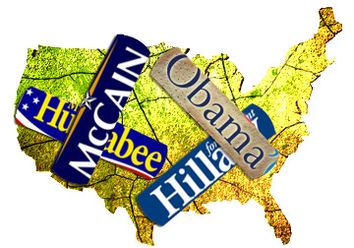
Candidate Slogan Unifying Theme Underlying Values If He/She Were a Brand…
Hillary Clinton The Strength and Experience to Bring Real Change “I’ve been there” Competence; experience; professionalism
John McCain Straight Talk Express “I’ll go there” Resilience; candor; courage
Barack Obama Change We Can Believe In “I’ll take you there” Inspiration; inclusion; iconoclasm
Mike Huckabee Faith. Family. Freedom “Let’s go back” Earthiness; populism; humility

Given the beating our image has taken during the last eight years, getting back to “like” is an uphill climb — but not an impossible one. Over the past six months, I’ve seen this process firsthand, as part of a team of researchers exploring the tarnishing of America’s “brand” in the global marketplace. The word from our network of immersed observers in 14 countries: Even as American politics and policies have become a lightning rod for global anger, America’s core underlying values retain their appeal. The problem is that, in the eyes of millions of people around the world, we’ve simply stopped living up to them.

“The virulent strain of anti-Americanism we’re seeing now can be ascribed directly to the fact that we’ve reneged on our promise to the world,” says Dick Martin, former executive vice president of public relations for AT&T, and author of the book “Rebuilding Brand America.” “That’s why it’s ultimately a branding problem. At its root, a brand is a promise. KFC is a brand that promises finger-lickin’-good chicken; America is a brand that promises life, liberty and the pursuit of happiness. But unlike KFC, we’re not delivering.”

“Brand America needs a relaunch,” says Reinhard. “And this year, this election, is the best opportunity we’re going to get.”

Convention holds that presidents need at least 100 days to find their footing, establish their policies, and shift the nation out of the previous administration’s inertia. But observers point out that because this cycle’s presidential contenders are the most cleanly packaged and clearly differentiated since Kennedy and Nixon, America’s makeover will begin even before inauguration. As soon as a winner is announced on Nov. 4, 2008, he or she will, for all intents and purposes, be Brand America.

So which of the candidates has a brand that best addresses the perceived deficits in our country brand?

Is it Brand Clinton, the name you can trust; familiar, experienced and rich with the mmm-mmm-good aroma of America’s last big boom? Or Brand Huckabee, whose folks ‘n’ faith message promises down-to-earth values combined with hands-to-heaven purity? Is it Brand McCain, tough enough to get it done, an off-road vehicle unafraid of both traffic and muck. Or, perhaps, Brand Obama — the think-different, just-do-it candidate who combines all-in-one packaging with big, streamlined ideas?

“Let’s look at what the world appreciates about us: Our youthful enthusiasm, our optimism, our diversity,” says DDB’s Reinhard. “And then, our negatives, which are very consistent across the world: No. 1, the perception that we are exploitative — we take what we want, and don’t give back in fair measure. Two, that we’re corrupt — we promote values that are not in concert with the social mores or religions of others. And three, that we’re arrogant: We’re self-absorbed, we’re loud, we’re rude.” To fix our nation brand, Reinhard suggests we need to steal a page from Johnny Mercer: “Accentuate the positive, eliminate the negative.”

Although his campaign has largely been written off as quixotic, Brand Huckabee has some unexpected merits, notably a certain self-deprecating humility that’s missing from the other candidates’ personas. “I was in Frankfurt a few weeks ago, at a panel about the U.S. elections hosted by the American Chamber of Commerce, and that day, the International Herald Tribune had run an article about Huckabee’s sense of humor, and about how it’s become such a part of his brand,” says Reinhard. “And even the Germans were acknowledging, when it comes to personal style, you have to give him full marks.”

Branding consultant Patricia Martin, author of “Renaissance Generation: The Rise of the Cultural Consumer,” agrees: “Huckabee is what I’d call a ‘compassion brand,’” she says. “He’s a man of the people. He laughs, and people laugh along. He makes people feel comfortable.” (On the other hand, notes Dick Martin, “Huckabee’s religious demeanor gives the world pause; it’s hard to underestimate the degree to which people outside of the U.S. are confused by our approach to religion. It bewilders people that more people believe in the Virgin Birth in the U.S. than in the theory of evolution.”)

The ability to soften the die-cast lines of pre-scripted identity, to engage with humor and spontaneity rather than reason and rhetoric, have only belatedly become a part of Brand Clinton — and, note commentators, perhaps too late and too halfheartedly to save her campaign. “Hillary built herself into an ‘anxiety brand,’ a brand that depends on uncertainty or fear to succeed; the whole appeal of familiarity and experience is rooted in this notion that the unknown is frightening,” says Patricia Martin. “And when it was clear that that wasn’t working, she was able to get some traction by exposing her emotions — by laying out a little compassion. But her brand was out there so early and already established so solidly that it hasn’t been enough to right the ship.”

And while Clinton’s aura of competence and professionalism (not to mention the global popularity of her husband) would smooth out some of the rough, clumsy edges of America’s current global image, her brand would inevitably feel more like a retread than the reinvention the world is hoping for. “Even the fact that Hillary is a woman isn’t going to be seen as a significant breakthrough,” says Harvard Business School professor John Quelch, author of “Greater Good: How Good Marketing Makes for Better Democracy. “Many countries have already elected and been led by women, so this is simply America playing catch-up rather than a statement of change in the cultural mind-set. There’s also that lurking suspicion overseas that, had she not married as she had, she wouldn’t have gotten as far as she has.”

Brand McCain is even more squarely planted in the “anxiety brand” space than Clinton: His straight-talking, muscular-contrarian persona (not to mention his shoot-from-the-lip rhetoric about a “hundred-year occupation” of Iraq) are designed to make him look strong, firm and unyielding in the face of challenge. The problem is that from abroad, “unyielding” looks a whole lot like “arrogant,” while “maverick” translates into “unilateralist,” both of which are fundamental sore points in the way America has presented itself to the world over the past eight years.

Being anointed Brand Bush’s heir via endorsements from both H.W. and W. only exacerbates global fears that McCain is the same-old, same-old candidate — accent on the “old.” “For McCain, age is a brand attribute he can’t control,” says Mark Newsome, senior vice president and CMO of marketing agency Chernoff Newman. “He’s in his 70s, and as much as that’s an asset as far as experience and wisdom is concerned, he can’t help being seen as the kind of status-quo patriarch that just isn’t going to play in 2008 like it did eight or 10 years ago — especially if he’s up against a 46-year-old opponent.”

Which brings us to the candidate that marketers universally agreed has the secret sauce that Brand America needs to regain its appeal.

“From Day One, Obama was talking about how we have to think outside of the Beltway box — how we need to enact positive change in a fresh way,” says Siegel + Gale’s Alan Siegel. “His brand is about uplift, it’s about humanity; he uses the pronoun ‘we’ so naturally. People knock him for style over substance, but the truth is that he just has a tremendous ability to cut through the noise. He’s distilled his brand proposition into a single theme, ‘authentic change,’ and it has resonated with people both here and abroad.”

While change — the notion of a break with the past — is central to Obama’s brand essence, the other values he incorporates are no less important. “Obama represents a lot of what America stands for, at its best: Diversity, opportunity, community,” says Dick Martin. “I don’t think it’s a coincidence that when asked about his qualifications, he talks about being a community organizer; he’s emphasizing that his experience is in bringing people together. I think, strictly from the point of view of changing attitudes towards America around the world, electing him is the most powerful thing we could do. He’s the embodiment of the American dream. Having him as president would say to the rest of the world that America has renewed its promise.”

There’s another factor that Obama has in his favor, which no other candidate this cycle — or, for that matter, in American history — can lay claim to, and it might be summed up as “trade dress.” His name, his appearance, his parentage: All of these are factors that have an immediate, visceral impact, even to those who know nothing else about him. Pundit Andrew Sullivan, guesting on “The Colbert Report,” summed it up as follows: “Just show the face of Barack Obama on television to some teenager in Lahore, Pakistan, who has a vision of America that’s been determined by the Bush-Cheney years, and suddenly, more than any words, his opinion and views of this country will change.”

For Obama, this advantage is almost unassailable. Short of announcing Tiger Woods as a running mate, none of his rivals has a way to force a recalibration of America’s image through peripheral attributes alone. It’s a big reason why he’s captivated global attention, to an extent that Americans might not even be aware. Indeed, the very things that snipers from the right have used to cast doubt on Obama’s red-white-and-blue propers — his schoolboy years in Indonesia, his refusal to engage in acts of symbolic patriotism, his stated willingness to sit down and engage with enemy world leaders, even the Drudge-distributed image of Obama in native Somali garb — these are the things that have the world trembling with anticipation over an Obama victory in November.

“I was just in Doha, Qatar, for the Brookings Institution’s annual U.S.- Islamic World Forum, and one of the moderators asked the non-Americans in the audience, ‘If you could vote for one of the U.S. presidential candidates, who would you vote for?’” says Keith Reinhard. “The number of hands that shot up for Barack Obama far outnumbered those for anyone else. So in that part of the world, at least, there’s no question at all.”

And in other parts of the world as well. “In Germany, they’re fascinated with him, they call him ‘Der schwarze Kennedy,’ the ‘black Kennedy,’” says Dick Martin. “They feel he has the same aura about him.” In fact, just a few weeks ago, Germany’s leading newsmagazine Der Spiegel ran a cover feature on Obama, illustrated by a paired set of images — Barack on the left, JFK on the right — and asking whether America will “finally have the chance to be loved again.” The issue’s cover line raised the stakes to a new level: It read, simply, “The Messiah Factor.”

That’s because, in Europe, and in Asia, Latin America and Africa as well, the perception is that an Obama presidency represents the potential for catharsis after nearly a decade of frustration with the U.S. “Our brand has been hammered recently, but beneath the anger, there’s this underlying hope among people around the world that we can do better,” says Patricia Martin. “And we can. We reinvent ourselves. It’s what we’re known for: We’ve had more comebacks than Frank Sinatra. I think that’s why you have people in every country eating up every little turn in this election’s story. This election, the whole world is watching.”

Continue Reading Close

Killer reflection

Cho and other Asian shooters were portrayed as "smart but quiet" and "fundamentally foreign." What do these stereotypes reveal, and what do they obscure?

  • more
    • All Share Services

Killer reflection

Like everyone else, I first reacted to the news of the April 16 shootings at Virginia Tech with shock — visceral and blinding. Sick with horror, but hungry for information, I went through what has become a ritual exercise whenever tragedy or catastrophe strikes — 9/11, the tsunami, Katrina. I turned on the television, sorted through the cascade of conflicting details on competing news sites, and began exchanging rapid-fire e-mail and instant messages with friends of every background, from regions around the world. With each new revelation, we shared our common emotions: grief for the victims and their families; rage at the murderer; bitterness at the ready availability of weapons capable of exacting such a devastating toll.

Then came the word that the killer, this faceless stranger responsible for a crime of historic lethality, was Korean American, and the tenor of the messages changed dramatically. Suddenly, most of it was from Asian American friends and colleagues, with a fresh and unique range of concerns. Some expressed guilt, inexplicable and unwarranted, that a child of our community might be responsible for such mayhem: “As a Korean, I do feel partly guilty and responsible,” said CeFaan Kim, an associate producer at NY1 News. “Every person I’ve spoken to who’s Korean, and that’s a large number, feels the same way. It’s a cultural difference, but the fact that our community shares this feeling is simply fact.”

Some expressed reluctant empathy: “Ours is not always a forgiving culture,” said Jenny Song. “There’s a lot of pressure to make it in the top 5 percent — be it schools, jobs, society, etc.; we tend to have an overall closed culture in which you’re either ‘in’ or ‘out,’ with very little room for those who are a little different or don’t fit in with standard norms. I can’t help but wonder if there are certain aspects of our culture that may have compounded his feelings. I can’t help feel as though this incident is also a wake-up call for Korean society in many ways.”

And others wrote words of fear and alarm, decrying the constant representation of the Asian-born but American-raised perpetrator Seung-Hui Cho as a foreigner, pointing to blog postings attacking Asians as an inscrutable, unassimilable threat from within, and noting unconfirmed reports of backlash — a South Korean flag being burned in Fort Lee, N.J.; a Korean American student in Manhattan threatened by white classmates.

“Most of the perpetrators of mass school killings have been white,” said Paul Niwa, a journalism professor at Emerson College. “After those shootings, do you think white people felt guilty that the shooter was white? Do you think white people felt that since the shooter was white, that the shooter would give society a bad impression of whites? A shooter can be white and nobody thinks that race played a part in the crime. But when someone nonwhite commits a crime, this society makes the person’s race partially at fault.”

Reading these comments, I found myself caught in a dilemma. I want to think that race is not a factor in the toxic mix of rage and psychological disturbance that has occasionally discharged as this kind of violence. And, certainly, in most cases it isn’t: Teenage angst is colorblind, and the triggers for crimes like these have included parental abuse, schoolyard persecution, romantic obsession — phenomena that exist beyond culture or ethnicity.

But professor Niwa is right: When race enters the equation — when the perpetrator of a crime of this type is black, like “Beltway Snipers” John Allen Muhammad and his ward Lee Boyd Malvo, or Asian, like Cho — it rises to the surface and stays there, prompting inevitable discussions about whether “black rage” or “immigrant alienation” were somehow to blame; whether in some fundamental fashion, color of skin, shape of eye, or nation of origin lie at the seething, secret heart of such tragedies.

There have been two other widely reported school shooting sprees by Asian perpetrators. One of them, the case of University of Iowa exchange student Gang Lu, even served as the inspiration for Chen Shi-zheng’s new film, “Dark Matter,” which won the Alfred P. Sloan Prize at this year’s Sundance Film Festival. On Nov. 1, 1991, Lu, a promising, Beijing-born physics student, brought a pair of pistols into a department meeting and opened fire, killing five people and paralyzing a sixth, before shooting himself fatally in the head. A New York Times article on the film quotes Vanderbilt University physics professor James Dickerson as saying that Asian students are often the victims of “unstated racism” and the preconception that they are smart, hardworking and unlikely to complain. “As a result they wind up as cogs in the research machine and remain isolated from the rest of the community and the culture,” says Dickerson. “It’s something not widely discussed in the physics community.” It then goes on to quote Harvard math professor Shing-Tung Yau on the “high expectation” placed on children by Chinese families. “When they realize that they cannot achieve it, they get very upset,” he says. “They also compete among themselves severely.”

The other case is that of Wayne Lo, a Taiwanese-born student who moved to Billings, Mont., with his family at the age of 13, then attended Simon’s Rock College in Great Barrington, Mass. Accounts of his case — which took place a little over a year after Gang Lu’s rampage, on Dec. 14, 1992 — carefully use his intelligence (he was accepted at Simon’s Rock on the W.E.B. DuBois Minority Scholarship!), his exquisite talent in classical music (he excelled on violin!), and his previous history as a quiet, unassuming individual to counterpoint his bloody rifle attack, which killed two and wounded four others. Here’s a typically lyrical quote, from a feature by the New York Times’ Anthony DePalma: “Only Mr. Lo knows what led him to turn away from the classical music he once loved and instead embrace the violent, discordant music known as hardcore, and a surly group of students who were equally entranced by it. Only he knows how the same fingers that danced with such agility and emotion over the strings of a violin could, as the police say, have pressed the trigger of a semiautomatic assault rifle, shattering the campus silence and ripping through several lives.” As with Lu, news reports also emphasized Lo’s foreign birth — sometimes implying, sometimes outright stating that Lo’s cultural difference may have led to his sense of isolation, of being disrespected, of social exclusion, and ultimately, to his deadly eruption.

The degree to which these paired memes — “smart but quiet” and “fundamentally foreign” — are repeated in the coverage of these two crimes is striking. In Lo’s case, it was enough to prompt attorney Rhoda J. Yen to write a paper titled “Racial Stereotyping of Asians and Asian Americans and Its Effect on Criminal Justice: A Reflection on the Wayne Lo Case” for Boalt School of Law’s Asian Law Journal, in which she raises the theory that this racial imagery may have tainted Lo’s ability to receive a fair trial.

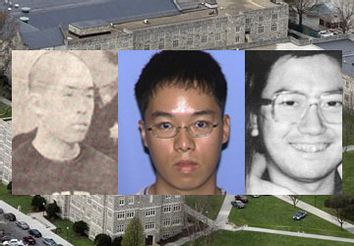
The reporting around Seung-Hui Cho seems to have followed the same through-line: Right here on Salon, Joe Eaton reported one of Cho’s high school classmates calling him “a quiet guy, a really, really quiet guy,” but also a “‘supersmart’ student known for his math skills.” Most news reports have also referred to him as a “resident alien,” a legally proper but semiotically complex term that seems to emphasize difference — while a “legal permanent resident” sounds like someone who belongs in this nation, an “alien” doesn’t even sound like he belongs on this planet. It’s a word that seems designed to be followed by “invader” — a phrase whose appropriateness is underscored by the pictures of Cho, scowling and fisting guns at the camera, that now stare out from every news site.

There’s no excusing Cho’s crimes, or those of Lu and Lo before him. All three were guilty of heinous acts, of ruining and ending lives, and merit no apology for what they did. The point of bringing up all three is not to defend them, but to ask whether media and society have too easily conflated them, bundling their individual cases in a convenient packaging that subtly evokes those hoary, oddly contradictory typecasts of the “model minority” whiz kid and invading “yellow peril.”

One contributor to the legal group blog De Novo, who actually attended college with Wayne Lo and was close friends with one of his victims, has gone so far as to draw a direct comparison between Cho and Lo. While acknowledging Rhoda Yen’s journal article and disavowing any intent to suggest that race was a primary reason for those two slides into murderous violence, “Dave” nevertheless notes that “across the board, college shooters seem to be males under some pressure for success, academic and/or sexual, which would seem to include many Asian males.” Dave then admits that this suggestion itself rests on a “model minority” stereotype. And that’s a quandary we often find ourselves in when invoking race here — or really, anywhere: It’s challenging to talk about it in a complex and constructive fashion, so it’s often tossed out, or put into play via crude and simplistic clichés.

Excluding race from the equation entirely eliminates some very real criteria we might use to better understand why acts like this occur, and how to perhaps prevent them in the future. Parental expectations among Asian Americans, particularly within immigrant families, are indeed great; racism and casual discrimination does exist; social isolation may be more likely if you’re in a situation where the people around you mostly don’t look like you or share your background.

Perhaps most important, there are wide differences between cultures in how mental illness is perceived, with Asian cultures largely rejecting the concept of psychological disorder as a disease — to the point of refusing treatment, ostracizing sufferers, and even suppressing discussion of the topic. Could this attitude, combined with a lack of culturally sensitive counseling, have resulted in the inner turmoil of Lu, Lo and Cho being overlooked or underplayed? “Asian immigrants are not as liberally educated about mental illness as others in the U.S.; they feel it is something strange, something you shouldn’t deal with or discuss,” says psychiatrist Dr. Damian Kim, who has practiced clinically for 35 years, and who has written a book on mental health for immigrants that is available in both Korean and English. “For them, seeking treatment is an indication that there’s something wrong with you.”

But focusing on race, particularly using the lens of stereotype, flattens individuality, and obscures other factors that are more meaningful and important. “Pressure for success, academic and/or sexual” isn’t in and of itself a reason for someone to go out and commit mass murder. I know hundreds of young Asian males who experienced that kind of pressure as adolescents, who grew up silent, studious and socially awkward; who were perceived as different, to the point of being excluded or taunted; who had unusual hobbies and obsessions — and who’ve never shot off anything except their mouths.

I’m one myself. While attending St. Ann’s School in Brooklyn, N.Y., back in the mid-’80s, I worked on a student film with my equally weird friends called “Burnout,” a horror-comedy that recast our high school as “Sat-An’s School,” an institution run by a group of diabolical cultists who manipulate a young, misanthropic student to murder his peers and teachers in various silly and bloody ways. We launched the production with the cooperation of faculty and administration, some of whom played themselves. The film was never finished — SATs and parental expectations got in the way.

But I wonder, if I proposed that script as a high schooler today, a quiet Asian American male with few friends and odd interests, would I be automatically dropped into a box marked “potential spree killer”? And if I were tagged with that combination of model minority and yellow peril as a result, if I found myself surrounded by people appalled that a “good, quiet Asian boy” might write a gory slasher flick about a student maniac … would that help or hurt?

Continue Reading Close