Wednesday, May 9, 2012 6:45 AM UTC
By Jim Gomez, Associated Press
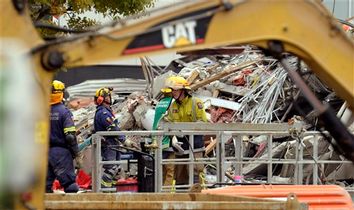
Firefighters battle the blaze in an early morning fire Wednesday, May 9, 2012 in Butuan City in Mindana island, southern Philippines. The inferno at the three-storey clothing store killed at least 17 employees, most of whom were women who were asleep and trapped on the top floor, officials said. (AP Photo/Erwin Mascarinas)(Credit: AP)
MANILA, Philippines (AP) — An inferno at a three-story clothing store in the southern Philippines early Wednesday killed 17 employees, most of whom were women who were asleep and trapped on the top floor, officials said.
The fire in the Butuan city store broke out at 3:55 a.m. and raged for five hours. Firefighters and police scouring the gutted building found 17 bodies, said city police chief Pedro Obaldo.
Store employee Mylene Tulo, who escaped with two co-workers, said she was roused from sleep as the fire spread rapidly in the third-floor office where they slept. Amid the inferno and yells for help, she managed to dash out with her colleagues. They sustained minor burns on their arms.
“We wanted to rouse others from sleep, but the fire was already too strong,” a stunned Tulo said.
At least 20 employees, mostly women, were sleeping at the store when the fire broke out, Obaldo said. Many stores in the Philippines allow their employees to sleep over, especially those with faraway homes.
Relatives and friends, most of them in shock and tears, gathered in search of loved ones in front of the building, where police stood before body bags with the victims’ remains.
Obaldo said investigators were trying to determine what sparked the fire and if the owners violated fire regulations.
The building in Agusan del Norte province in the southern Mindanao region was a theater before being turned into a commercial center with several stores, including the Novo Jeans and Shirts, where most of the victims died.
A lack of firefighting equipment and personnel coupled with safety violations has resulted in major fire disasters in the Philippines, especially in shantytowns. A 1995 inferno that gutted the Ozone Disco Pub in Manila, the capital, killed 162 people.
Butuan is a city of more than 300,000 about 790 kilometers (500 miles) southeast of Manila.
Wednesday, May 9, 2012 4:15 AM UTC
By Jim Gomez, Associated Press
MANILA, Philippines (AP) — An inferno at a three-story clothing store in the southern Philippines early Wednesday killed at least 16 employees, most of whom were asleep, officials said.
The fire in the Butuan city store broke out at 3:55 a.m. and raged for five hours. Firefighters and police scouring the ravaged building found 16 bodies and were looking for more, said police Chief Inspector Reynante Sibayton.
Store employee Mylene Tulo, who escaped with two co-workers, said she was roused from sleep as the fire spread rapidly in the third-floor office where they slept. Amid the inferno and yells for help, she managed to dash out with her colleagues. They sustained minor burns on their arms.
“We wanted to rouse others from sleep, but the fire was already too strong,” a stunned Tulo said.
Relatives and friends, most of them in shock and tears, starting to gather in search of loved ones in front of the building, where Sibayton stood before 16 body bags with the victims’ remains.
He said that investigators were trying to determine what sparked the fire.
The building in the southern Mindanao region was a theater before being turned into a commercial center with several stores, including the Novo Jeans and Shirts, where most of the victims died.
Those who died were recovered from the third floor near the fire escape.
At least 21 employees were sleeping at the store when the fire broke out, said a store supervisor who refused to give his name.
Many stores allow their employees to sleep over, especially those with faraway homes.
Continue Reading
Close
Thursday, Apr 12, 2012 3:00 AM UTC
By Jim Gomez, Associated Press
MANILA, Philippines (AP) — Philippine and Chinese diplomats scrambled Thursday to find a possible compromise to end a tense naval standoff in the disputed South China Sea that could save face for both sides and avoid increasing tensions.
Philippine officials proposed an arrangement to break the impasse at the Scarborough Shoal off the northwestern Philippines, where a Philippine warship tried to detain Chinese fishing boats but was stopped by two Chinese surveillance craft. The standoff entered a third day Thursday.
China, through its ambassador to Manila, Ma Keqing, was expected to respond to the proposal at the earliest on Thursday, when both sides were to resume talks, two Philippine officials said.
The officials, who were monitoring the talks, spoke on condition of anonymity because they were not authorized to discuss the negotiations with the media.
They did not give details of the proposal, but said it was a pragmatic way to solve the standoff. The Chinese fishermen were not expected to be able to stay at the uninhabitated shoal for a long time because they may run out of food and other provisions.
Philippine Foreign Secretary Albert Del Rosario said late Wednesday that he and Ma were working on a possible solution but declined to give details.
“We have an issue here that we’re trying to address in a civilized and friendly way. I’m hopeful that our long-standing friendship will make us arrive at a diplomatic solution faster,” he said.
While they worked toward a compromise, both China and the Philippines also flexed their muscles. Del Rosario said after the first round of talks Wednesday that he warned China’s ambassador that “if the Philippines is challenged, we are prepared to secure our sovereignty.”
The Chinese Embassy said the fishing boats had taken shelter from a storm in the lagoon and accused Philippine troops of harassment.
“Two Chinese marine surveillance ships are in this area fulfilling the duties of safeguarding Chinese maritime rights and interests,” it said in a statement. It said the shoal “is an integral part of the Chinese territory and the waters around it the traditional fishing area for Chinese fishermen.”
Philippine navy chief Vice Adm. Alexander Pama said a second Philippine ship was due to arrive Thursday morning at the shoal.
Philippine authorities also were trying to identify an aircraft that flew over the shoal Wednesday in what could be a surveillance mission, he said, adding that the situation nevertheless remained relatively calm.
Philippine President Benigno Aquino III said Wednesday that “nobody will benefit if violence breaks out” and instructed his diplomats to find a diplomatic solution to the most serious standoff in years in the waters where several nations have overlapping claims.
The South China Sea is home to myriad competing territorial claims, most notably the Spratly Islands south of the shoal, which are believed to be in rich in oil and gas. The region is also prime fishing ground and one of the world’s busiest sea lanes.
The United States said it was concerned by the increased tensions in the South China Sea. “We urge all parties to exercise full restraint and seek a diplomatic resolution,” a State Department spokesperson said on customary condition of anonymity.
___
Associated Press writers Hrvoje Hranjski and Teresa Cerojano in Manila, Scott McDonald in Beijing and Matthew Pennington in Washington contributed to this report.
Continue Reading
Close
Thursday, Apr 12, 2012 2:45 AM UTC
By Jim Gomez, Associated Press
In this handout photo dated April 10, 2012 released by the Philippine Navy shows Filipino Navymen look at giant clam shells on board a Chinese fishing vessel at the disputed Scarborough Shoal at the South China Sea, near the Philippines. The Philippine government said Wednesday it agreed with China to diplomatically resolve a tense standoff involving a Philippine warship and two Chinese surveillance vessels in the disputed South China Sea, the most dangerous confrontation between the sides in recent years. (AP Photo/ Philippine Navy, HO)(Credit: Philippines Navy)
MANILA, Philippines (AP) — Philippine officials say Filipino and Chinese diplomats are working to find a possible compromise to end a tense naval standoff in the disputed South China Sea.
Philippine officials proposed an arrangement to break the impasse at the Scarborough Shoal off the northwestern Philippines, where a Philippine warship tried to detain Chinese fishing boats but was stopped by two Chinese surveillance craft. The standoff entered a third day Thursday.
Two Philippine officials say that China, through its ambassador in Manila, is expected to respond at the earliest on Thursday, when both sides resume talks.
The officials, who are monitoring the talks, spoke on condition of anonymity because they were not authorized to discuss the negotiations with the media.
Tuesday, Jan 10, 2012 5:27 AM UTC
By Jim Gomez, Associated Press
Barefoot Catholic devotees jostle to kiss the cross being borne by the wooden statue of the Black Nazarene, center, as they gather at the Rizal Park Monday, Jan. 9, 2012 during it's annual festival in Manila, Philippines. More than 3 million devotees paraded the charred Christ statue, believed to have healing powers, through the Philippine capital despite a warning from President Benigno Aquino III that terrorists might target the gathering. (AP Photo/Bullit Marquez)(Credit: AP)
MANILA, Philippines (AP) — The Philippines lifted a terrorist alert in the capital Tuesday after millions of Roman Catholic devotees ended a 22-hour parade of a Christ statue that authorities feared was a tempting target for Muslim extremists.
Authorities had deployed a massive police cordon after the president warned over the weekend that terrorists might target the raucous annual procession. After the parade ended, they declared the event a success and lifted the security alert in Manila.
The government did not have specific intelligence on a terrorist plot. Still, about 15,000 policemen, backed by hundreds of army troops, secured the three-mile (five-kilometer) procession route for the charred wooden Black Nazarene statue from seaside Rizal Park to a popular church in Manila’s congested Quiapo district.
Air force helicopters stood by and cellphone service was blocked in procession areas to prevent its use to trigger bombs. Despite the president’s warning, huge crowds of devotees wearing maroon shirts surged near the statue, believed to have healing powers.
Devotees waving handkerchiefs and towels let out shouts of “Viva!” as the statue was finally brought inside the church at the end of the grueling procession.
The Philippine Red Cross said more than 500 devotees were treated for minor injuries, exhaustion or dehydration.
President Benigno Aquino III announced at a hastily called news conference Sunday that several terrorists had been reported in Manila with plans to disrupt the procession, but that the threat was not high enough to cancel the event and that police would work to keep it safe.
Aquino’s warning sparked one of the most elaborate security deployments for an event in the capital in recent years.
Defense Secretary Voltaire Gazmin said the threat, involving possible bombings by two groups of Muslim militants from the country’s volatile south, prompted police to raid several suspected terrorist hideouts in the Manila area, but without any results.
There were suspicions that attackers might come from two radical Muslim groups, including the al-Qaida-linked Abu Sayyaf, which is on a U.S. list of terrorist organizations for deadly bombings, kidnappings and beheadings.
“I agree with the assessment of the Manila police district that it was a success, but a bit too long,” Chairman Francis Tolentino of the Metropolitan Manila Development Authority said Tuesday.
The procession was delayed for hours because the wheels of the carriage carrying the statue broke.
Manila Mayor Alfredo Lim said the government’s warning may have helped kept the event peaceful.
The security alert in Manila was lifted after the procession ended, Interior Secretary Jesse Robredo said.
Police said at least 3 million mostly barefoot devotees took part in the event.
The wooden statue of Christ, crowned with thorns and bearing a cross, is believed to have been brought from Mexico to Manila in 1606 by Spanish missionaries. The ship that carried it caught fire, but the charred statue survived and was named the Black Nazarene.
Some believe the statue’s survival of fires and earthquakes through the centuries and intense bombings during World War II is a testament to its powers.
The Philippines is Asia’s largest predominantly Roman Catholic nation.
___
Associated Press writer Teresa Cerojano contributed to this report.
Continue Reading
Close
Tuesday, Jan 10, 2012 5:09 AM UTC
By Jim Gomez, Associated Press
Barefoot Catholic devotees jostle to kiss the cross being borne by the wooden statue of the Black Nazarene, center, as they gather at the Rizal Park Monday, Jan. 9, 2012 during it's annual festival in Manila, Philippines. More than 3 million devotees paraded the charred Christ statue, believed to have healing powers, through the Philippine capital despite a warning from President Benigno Aquino III that terrorists might target the gathering. (AP Photo/Bullit Marquez)(Credit: AP)
MANILA, Philippines (AP) — Philippine authorities lifted a security alert in the capital Tuesday after millions of Roman Catholic devotees paraded a statue of Christ through the city for 22 hours without a terrorist attack.
Authorities had deployed a massive police cordon after the president warned over the weekend that terrorists might target the raucous annual procession. After the parade ended, they declared the event a success and lifted the security alert in Manila.
The government did not have specific intelligence on a terrorist plot. Still, about 15,000 policemen, backed by hundreds of army troops, secured the three-mile (five-kilometer) procession route for the charred wooden Black Nazarene statue from seaside Rizal Park to a popular church in Manila’s congested Quiapo district.
Air force helicopters stood by and cellphone service was blocked in procession areas to prevent its use to trigger bombs. Despite the president’s warning, huge crowds of devotees wearing maroon shirts surged near the statue, believed to have healing powers.
Devotees waving handkerchiefs and towels let out shouts of “Viva!” as the statue was finally brought inside the church at the end of the grueling procession.
The Philippine Red Cross said more than 500 devotees were treated for minor injuries, exhaustion or dehydration.
President Benigno Aquino III announced at a hastily called news conference Sunday that several terrorists had been reported in Manila with plans to disrupt the procession, but that the threat was not high enough to cancel the event and that police would work to keep it safe.
Aquino’s warning sparked one of the most elaborate security deployments for an event in the capital in recent years.
Defense Secretary Voltaire Gazmin said the threat, involving possible bombings by two groups of Muslim militants from the country’s volatile south, prompted police to raid several suspected terrorist hideouts in the Manila area, but without any results.
There were suspicions that attackers might come from two radical Muslim groups, including the al-Qaida-linked Abu Sayyaf, which is on a U.S. list of terrorist organizations for deadly bombings, kidnappings and beheadings.
“I agree with the assessment of the Manila police district that it was a success, but a bit too long,” Chairman Francis Tolentino of the Metropolitan Manila Development Authority said Tuesday.
The procession was delayed for hours because the wheels of the carriage carrying the statue broke.
Manila Mayor Alfredo Lim said the government’s warning may have helped kept the event peaceful.
The security alert in Manila was lifted after the procession ended, Interior Secretary Jesse Robredo said.
Police said at least 3 million mostly barefoot devotees took part in the event.
The wooden statue of Christ, crowned with thorns and bearing a cross, is believed to have been brought from Mexico to Manila in 1606 by Spanish missionaries. The ship that carried it caught fire, but the charred statue survived and was named the Black Nazarene.
Some believe the statue’s survival of fires and earthquakes through the centuries and intense bombings during World War II is a testament to its powers.
The Philippines is Asia’s largest predominantly Roman Catholic nation.
___
Associated Press writer Teresa Cerojano contributed to this report.
Continue Reading
Close
Page
1
of
4
in
Jim Gomez