When President Barack Obama took the oath of office Tuesday, one question was foremost in the minds of the judges, prosecutors, defense lawyers, witnesses, journalists and non-governmental trial observers who had traveled to Guantánamo Bay: Would the new president seek to suspend the widely criticized military commissions to try terrorism suspects under way here?
We didn’t have to wait long. Word came Tuesday that an oral order had been issued. The order directed Secretary of Defense Robert Gates to instruct the chief prosecutor to ask for a delay of 120 days in all cases pending before the military commissions, so that “the newly inaugurated president and his administration [can] review the military commissions process, generally, and the cases currently pending before military commissions, specifically.”
On Wednesday a military judge granted the prosecution’s request to halt proceedings against Khalid Sheikh Mohammed and his four alleged co-conspirators in the Sept. 11 attacks for 120 days.
It wasn’t the order to stop the military commissions permanently and transfer the cases to U.S. federal courts, which we would have liked, but it was the first step to shutting down a process that has been tainted beyond repair.
In the days and weeks leading up to Tuesday’s inauguration, President Obama made it clear that one of his first priorities would be to issue an executive order closing the Guantánamo detention center. It was also assumed that he would stop the military commission proceedings. Such a move seemed all the more urgent because the controversial trial of Omar Khadr — a Canadian who was only 15 when he was accused of terrorist acts — was scheduled to begin on Jan. 26.
The scheduling of proceedings this week was controversial from the start. Despite the expected order seeking to suspend the military commissions, and even though Monday was a national holiday commemorating Martin Luther King Jr., judges scheduled hearings for both Khadr and for Khalid Sheikh Mohammed, the alleged mastermind of the 9/11 attacks, and four alleged co-conspirators.
Both the prosecution and the defense in the 9/11 case had asked that proceedings be halted until after Obama took office, since, in the words of defense counsel for one of the accused, it was “a waste of everyone’s time to come down here.” But the judge, Army Col. Stephen Henley, denied the request and held hearings as scheduled.
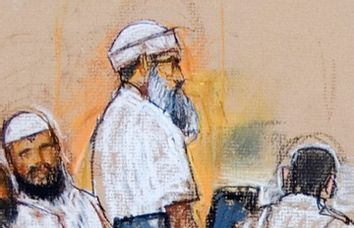
The hearings in the 9/11 case began with drama and ended in confusion. Outbursts from several defendants raised tensions in the morning, with Ramzi bin al-Shibh conducting a now-typical verbal attack on his military lawyer; Khalid Sheikh Mohammed launching into a short tirade about Iraq, Afghanistan and U.S. military abuses; and Walid bin Attash speaking so quickly and angrily at one point that little of what he said was translated. Even Mustafa Ahmed al-Hawsawi, usually the mildest of the bunch, seemed tense and upset.
“This is terrorism!” exclaimed Mohammed, without a hint of irony.
Lawyers took over during the second half of the day, debating military commission rules, constitutional and statutory requirements and myriad procedural issues. A relative calm came over the proceedings and defendants and audience members struggled to stay focused. When confusion over a missing motion led the judge to adjourn the proceedings early, most of the audience wasn’t sure what was next on the week’s agenda or when it would occur.
Compounding the uncertainty was the question of whether the new administration would take action. As the judge emphasized, in one of his repeated references to the possibility of interruption: “The next session, should it occur …”
In contrast, during the first day of the proceedings for Khadr, there was no hint that a new commander in chief would take charge. Rather, the defense argued that the trial should be postponed because it had not yet received sufficient access to discovery. The prosecution insisted it had provided all that was necessary.
The judge, Army Col. Patrick Parrish, whom some lawyers call “the rocket” for his expedience in the courtroom, began hearing arguments in a motion the defense had filed to suppress statements Khadr had made to interrogators while in U.S. detention. The court heard testimony from both a military interrogator, who questioned Khadr at Guantánamo, and an FBI agent, who interrogated him at the U.S. detention center at Bagram Air Base in Afghanistan.
Following Monday’s hearings, the Office of the Military Commissions held a press conference with several 9/11 family members, who had reportedly been selected by lottery to travel to the base to attend the hearings. Visibly angry, and holding up large photographs of their relatives who died on 9/11, they appealed to President Obama to keep Guantánamo open.
“Today we were in the presence of true evil,” said Donald Arias, who lost his brother Adam in the attack on the World Trade Center. “Mr. Obama needs to reexamine his decision and keep these tribunals going.”
Joe Holland, who lost his son in the World Trade Center, trembled with rage as he took the podium.
“My name is Joe Holland and I lost my son in 9/11,” he said. “When I said I was coming down here, people asked me what they could do. I said, ‘Write a letter to Obama saying that this place should stay open.’”
When journalists asked Holland about the possibility of trying the 9/11 suspects in federal court, he replied, “No, right here, at Guantánamo,” then excused himself from the podium as he fought back tears.
Shortly after proceedings commenced in the Khadr case Tuesday morning, Judge Parrish acknowledged that the changing of the guard in Washington might have some bearing on the schedule. To the relief of many in the courtroom, he called for a recess at 11 a.m. and promised to resume at 9 a.m. on Wednesday, “unless otherwise ordered by the commission.”
Like many at the base, we were eager to watch the inauguration and headed over to the mess hall, which has several televisions. As we sat down with plates of macaroni and cheese, several of the 9/11 family members took a seat at the table next to us. Tables of soldiers occupied several of the other tables around us.
As the camera panned to President Bush, some of the 9/11 family members clapped. As President Obama was sworn in, others in the galley clapped. A silence fell over the room as the new president began to speak.
Obama referenced terrorism at one point, stating, “For those who seek to advance their aims by inducing terror and slaughtering innocents, we say to you now that our spirit is stronger and cannot be broken; you cannot outlast us, and we will defeat you.” One of 9/11 family members cheered. “I like that! Now the man is talking.”
With the new president now in office, we checked in with the lawyers representing detainees who have hearings this week to find out whether they knew if we would be in court Wednesday morning.
Late Tuesday afternoon, we received an e-mail from Col. Peter R. Masciola, chief defense counsel at the military commissions.
“No news on delay,” he wrote. “Hearings are scheduled tomorrow for 0800 in Khadr; and 0800 (classified) and 1030 (public) in 9/11 cases.”
Several hours later, the state of play had changed again. And while a 120-day delay is not the end, it is a harbinger of what is yet to come.
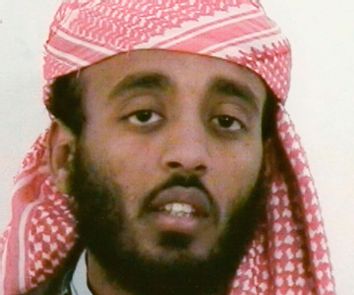
It was the second day of a round of pretrial hearings in the 9/11 case, and Ramzi Binalshibh, one of five accused al-Qaida operatives, was in an angry mood. He didn’t seem upset about facing the death penalty; in a previous round of hearings he had declared that he would embrace martyrdom. What bothered him were his lawyers’ efforts to save his life.
Complaining about his military defense counsel, Binalshibh, a Yemeni, stated categorically: “I refuse that she speaks on my behalf at all, in any way; she does not represent me!”
Doubts about Binalshibh’s competence to waive his right to counsel — and more generally, about his sanity — dominated much of last week’s proceedings at the Guantánamo military commissions. His occasional emotional outbursts were a contrast to the often technical legal arguments heard during the three days of 9/11 hearings, as prosecutors, defense counsel and the military judge struggled to resolve a series of complex legal issues.
That debate was wide-ranging. Among the questions raised were whether defendants in military commission proceedings enjoy basic constitutional rights; whether the military judge hearing the case was biased; whether unlawful command influence had tainted the proceedings (in particular, whether the timing of the case was chosen “in the service of political ends”); why the courtroom translation was so faulty; whether defense counsel would be granted reasonable access to communicate with their clients — and why a group of presumed CIA operatives were sitting in the back of the courtroom. By the end of the session, hardly any of these questions had been definitively ruled upon, but the two sides had at least begun to stake out their positions.
Binalshibh boycotted Day 1 of the proceedings, leading the judge to cut the hearing short. The other four defendants — Khalid Sheikh Mohammed, Walid bin Attash, Ali Abdul Aziz Ali and Mustafa al-Hawsawi — were sitting in their usual places that morning, but the judge hadn’t entered the courtroom until the afternoon. “I’ll note that Mr. Binalshibh, one of the accused, is absent at this time,” he said dryly, with a glance at the empty chair. He and the lawyers in the room then spent the next couple of hours debating what to do about Binalshibh’s failure to appear.
The key question was whether Binalshibh should be dragged out of his cell and brought forcibly into court, a practice that in prison lingo is known as “involuntary cell extraction.” The prosecution, predictably, thought this was a good idea.
But Binalshibh’s military counsel, Navy Cmdr. Suzanne Lachelier, argued strongly against the move. She said that the hearing should be postponed until concerns about Binalshibh’s mental competence — which had been raised but not yet resolved — were finally settled. She explained that given these concerns, Binalshibh’s presence in the courtroom would not be terribly meaningful.
“He might be physically present,” she said, “but it’s not true presence, because he’s not mentally present.” (“This is getting metaphysical,” commented one journalist who was watching from the visitor’s gallery.)
The military judge clearly agreed with the prosecution’s view of the matter. But he still seemed reluctant to issue the order that the prosecution was seeking, and wondered why the prosecution couldn’t just order the cell extraction itself. It was while the judge was pondering this question that Khalid Sheikh Mohammed, the alleged 9/11 mastermind, raised his hand and offered to help.
Mohammed’s lawyer explained that Mohammed and the other defendants would be happy to talk to Binalshibh in his cell and convince him to show up voluntarily for the next hearing. As another defendant, bin Attash, put it: Binalshibh “doesn’t trust anyone in government, but he does trust us.”
It seemed a remarkable and somewhat incongruous act of collaboration. How often does a group of defendants who are facing the death penalty — as all five defendants are — help the prosecution keep their trial proceedings on track? But while the judge didn’t question the defendants’ motives, he did insist that they write personal messages rather than make personal visits to Binalshibh. He also ordered that, whether voluntarily or involuntarily, Binalshibh would be present in court the next day. The hearing was adjourned early, giving the defendants time to draft their notes.
When journalists and human rights observers entered the courtroom’s visitor gallery the next morning, Binalshibh was already seated. It was the first time he had been seen in public without shackles on his legs, and he seemed, at first, to be calm and sedate. He sat stroking his thick black beard, reading news articles and rather ostentatiously ignoring the judge.
It was when Binalshibh’s military counsel remarked on her client’s apparent lack of interest in the proceedings that Binalshibh lost his temper. He started off his tirade in a lawyerly way — “I object to this comment by this lawyer” — but as his voice rose, his tone quickly devolved.
“The lawyer is not cooperating with me in any regard,” he told the court, his voice shaking with outrage. “She is acting against me. Everything she is doing is against me … She lies. She lied to me on more than one occasion. Not just her — they both lie!” he declared, referring to Tom Durkin, his civilian counsel. “They’re playing a game that is not good!” Almost yelling by this point, he concluded: “She acted against my interests. I want a lawyer who will defend my interests against her!”
Anyone who had watched the proceedings to date could tell that Binalshibh was wrong. Not only were Cmdr. Lachelier and Durkin playing a difficult defense hand with great professionalism and skill — how many defense lawyers in capital cases have to deal with clients who confess on their first day in court? — they had shown a passionate concern for protecting their client’s rights.
What damaged the lawyers’ relationship with Binalshibh was not any lack of concern for his interests, but rather the fact that defendants have a basic right not to be put on trial while mentally incompetent. A defendant has to be able to understand and follow the legal proceedings if he is to be prosecuted fairly. And it is obvious even to a layman that Binalshibh — who is taking a cocktail of psychotropic drugs, including those prescribed to persons with schizophrenia, and who has exhibited apparent signs of paranoia and emotional instability in court — may not be entirely rational.
Before he was brought to Guantánamo in 2006, Binalshibh was held by the CIA for four years in secret prisons. Like his co-defendants, some of whom the government acknowledges having waterboarded, Binalshibh was likely subject to torture and other abuse. The abuse may have damaged his psychological makeup, or exacerbated any preexisting mental condition that he had before his arrest. But while Binalshibh’s defense team has obtained his medical records dating from his time at Guantánamo, they have not been given any official information about his treatment while in CIA custody.
On defense counsels’ initiative, a process for assessing Binalshibh’s mental competency has been put into motion. Two psychiatrists were mandated to make the assessment, and they have already drafted a report to the military commission. At the end of the last hearing, however, the prosecution revealed that the psychiatrist who visited the facility where Binalshibh was held was unable to interview him. “The detainee refused to come out and talk,” the prosecution acknowledged.
Since it is unlikely that the psychiatric assessment team will find Binalshibh incompetent without having interviewed him, and since the legal presumption in military commissions is that the defendant is competent to stand trial, the odds are great that Binalshibh will remain a defendant in these proceedings. And he will no doubt want to represent himself at trial.
In the meantime, even while Binalshibh’s competency assessment is pending, pretrial proceedings in the 9/11 case continue. The government “is in a rush to proceed to trial,” Binalshibh’s defense lawyers claim — while their client, whose sanity is questionable, seems in a rush to be put to death.
Continue Reading
Close
It should have been a great day for justice. The alleged perpetrators of the Sept. 11 terrorist attacks were finally appearing in court. This was their arraignment, at which they were to be formally charged of conspiring to cause the death of 2,973 people in the United States.
But this was no ordinary court at all: It was a military commission, taking place more than six years after the terrorist attacks. And the quality of justice that the defendants were due to receive was in serious doubt.
“This military commission is called to order,” the judge, Marine Col. Ralph Kohlmann, announced on Thursday. Strangely, the movement of his lips and the sound of his voice were out of synch. For the press and human rights observers like me, sitting behind a glass wall in the gallery, there was a 20-second delay between the time something was said and the time we heard it. People in the courtroom would stand up to talk, but we wouldn’t hear them until after they had sat back down. The mismatch was disconcerting.
Judge Kohlmann told the courtroom audience that the purpose of the delay was to protect classified information. He explained that the defendants had been “exposed” to such information, and that any statement any of them made was “presumptively classified.” The 20-second delay was designed to give the security advisor, who was sitting in the courtroom listening intently, enough time to conduct the censorship deemed necessary.
Most of the daylong hearing went uncensored. Khalid Sheikh Mohammed, the self-proclaimed architect of the Sept. 11 attacks, was given free rein to describe his wish for martyrdom, to criticize President Bush, and even to chant Koranic verses in a surprisingly melodic voice.
Mohammed called the security measures “red lines” and said he understood that they were intended to prohibit the audience from hearing what they were not allowed to hear. “They explained them to me,” he announced, without saying who “they” were. “I don’t have to mention about the country names, [and] I don’t have to mention about the torture.”
The U.S. government’s sensitivity to those two topics is familiar to observers of these cases. The government fears that the defendants might divulge details about the way in which they were treated — or, more to the point, tortured — and about the countries in which they were held.
Mohammed and the other four detainees being arraigned Thursday were originally captured in 2002 and 2003, held for years in the custody of the CIA or the abusive foreign regimes working as its allies, and not transferred to Guantánamo until September 2006. In February 2008 the CIA director, Gen. Michael Hayden, acknowledged that Mohammed had been subjected to waterboarding, a form of mock drowning. Others were reportedly subjected to other abusive interrogation methods while in CIA custody, including extended sleep deprivation, the imposition of painful stress positions, and forced nudity.
Mohammed managed not to offend the censor during his interchanges with the judge, unlike two of his co-defendants. The censor twice muted the proceedings when defendant Ramzi bin al-Shibh — who, like Mohammed and the other three, faces the death penalty in this case –discussed the psychotropic medication he is taking. Another 90-second sound cut came when defendant Ali Abdul Aziz Ali was saying how he felt his treatment was “unfair and unjust.” He started describing the day of his arrest — and then his account dissolved into loud static.
Ali, the youngest of the five defendants, did manage to make a point about abuse in explaining his decision to refuse legal representation. He said that he was skeptical of the U.S. government’s desire to provide him “free-of-charge lawyers” since the government had “tortured [him] free of charge for years.”
Although torture was an inescapable backdrop to the case, the question of legal representation was the centerpiece of the day’s proceedings. And it was this issue, above all, that made the proceedings a failure.
“The matters that we’re going to be discussing today are fairly simple,” Kohlmann said at the outset, a comment that struck many observers as dismissive. The same attitude was apparent moments later when the civilian attorneys for Khalid Sheikh Mohammed and Ramzi bin al-Shibh tried to convince the judge that any ruling on the legal representation question should be postponed. The attorneys had previously tried to postpone the arraignment, describing how, because of the government’s delays in granting them security clearances, they had had only minimal contact with their clients. (Mohammed and bin al-Shibh had spent more time with their military counsel, but, as one military lawyer pointed out, there are obvious reasons for a prisoner at Guantánamo not to view a uniformed military officer as an advocate.)
After a testy exchange with the lawyers, in which Kohlmann showed little interest in hearing what they had to say, the judge abruptly indicated that he’d had enough. “Sit down,” the judge warned one of the attorneys, in a peremptory tone of voice that implied “sit down and shut up.” This was to be the first of several such exchanges over the course of the day.
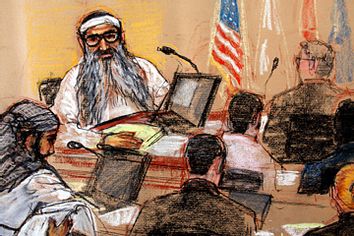
Wearing a white robe, thick black glasses and a white turban — and looking at least 15 years older than the age he claimed (43) — Khalid Sheikh Mohammed seemed confident and self-aware. Addressing him first, Kohlmann got straight to the point: “Do you desire to be represented by the lawyers who are seated at your counsel table today?”
After chanting for a while, invoking God, and promising not to name the countries in which he had been detained, Mohammed said: “I will not accept any attorney.”
And that was pretty much it, in terms of the outcome, although the judge did walk Mohammed through the required steps for asserting the right to self-representation. (Do you understand that you could be sentenced to death? Mohammed: “This is what I wish.” Do you understand that a lawyer knows the law better than you and is better able to keep an objective distance from the case? Mohammed: “God is all-sufficient.” And so on.)
Mohammed’s English was serviceable, if not fluent, and he seemed to enjoy the opportunity for verbal sparring with the court. The judge also allowed him to chat at length with his co-defendants, who were lined up at tables behind him on the left side of the room.
The content of these conversations jumped to prominence near the end of the day. From the perspective of proper justice, it was among the hearing’s most appalling moments. Maj. John Jackson, counsel for the defendant Mustafa Ahmed al-Hawsawi, informed the judge that before the hearing started, when the defendants were talking, his client had been intimidated by his co-defendants. As Jackson explained in greater detail after the hearing ended: “Khalid Sheikh Mohammed is saying to my client, ‘What are you, in the American army now?’ … It was clear that Mr. Mohammed was attempting to intimidate Mr. al-Hawsawi into not accepting me as counsel. He [al-Hawsawi] was shaking.”
In the end, al-Hawsawi told Kohlmann he wanted to represent himself, just as the four defendants interviewed before him had done. Although the judge decided to postpone ruling on al-Hawsawi’s request, he did rule that three of the other four defendants had freely relinquished their right to counsel. (Because of the medication concerns that were raised in Ramzi bin al-Shibh’s case, the judge also postponed ruling on al-Shibh’s request to represent himself.)
It is a defendant’s right not to accept legal counsel — but only if he does so knowingly and voluntarily. “Voluntarily” means, of course, that it should not be done out of fear, and “knowingly” means that he should have a good understanding of the consequences of what he is doing. While there may be good reason to believe that one or more of the defendants would decide to represent themselves even if given a fair opportunity to choose, the judge’s precipitous rush to address this question has badly harmed future prospects for the trial.
Five defendants who represent themselves are very likely to be five defendants who receive the death penalty faster. This may be a quick way to so-called martyrdom for those who declare they want it, but it is not justice.
Continue Reading
Close
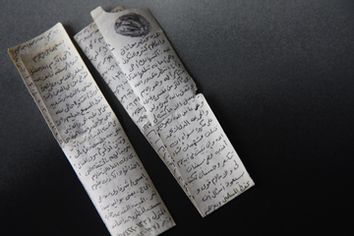
On a recent trip to Amman, Jordan, during a visit to the home of someone who had been detained by the Jordanian intelligence service in 2002, I was given two very thin strips of paper covered with Arabic writing and marked with a thumbprint. Curled up into a tight spiral, they were no bigger than the cap of a pen.
My contact, who had smuggled the papers out of intelligence detention a few years previously, told me that the message therein had been written by a prisoner who had been detained with him. He said it gave a detailed account of that person’s experiences.
That evening, in my hotel room, an Egyptian colleague translated the text, word for word. Stunned by its contents, I transcribed the message into electronic form and sent it into cyberspace for safekeeping.
The message’s author was a Yemeni terrorism suspect named Ali al-Hajj al-Sharqawi, who was arrested in Pakistan in February 2002. Though the message was undated, it was clear from the narrative that it had been written in October 2002.
Sharqawi said that he had been delivered to Jordan by the CIA. Unknown to the outside world, he was held as a secret prisoner by the Jordanian intelligence service: unregistered, cut off from all communication and hidden during visits by representatives of the International Committee of the Red Cross.
In the note, which he managed to slip to my contact without his captors noticing, he gave what he called a “short summary of my sufferings.”
“They beat me up in a way that does not know mercy,” Sharqawi wrote, referring to his Jordanian captors, “and they’re still beating me. They threatened me with electricity, with snakes and dogs … [They said] we’ll make you see death.”
Sharqawi described his interrogations, explaining that the Jordanians were feeding his responses back to the CIA. “Every time that the interrogator asks me about a certain piece of information, and I talk,” Sharqawi said, “he asks me if I told this to the Americans. And if I say no he jumps for joy, and he leaves me and goes to report it to his superiors, and they rejoice.”
I didn’t dare leave Sharqawi’s note in my hotel room, so I carried it in my purse for the two weeks that I remained in Jordan. During that time, I interviewed several Jordanians who had been held with Sharqawi and other prisoners who had been handed over to Jordan by the CIA. Former detainees spoke of a period, in 2002-2003, when the third floor of the intelligence service’s detention facility was “full” of foreign prisoners who had been delivered by the CIA. Although the prisoners had been held in solitary confinement, they had managed to communicate by knocking on cell walls and speaking surreptitiously through cell windows.
How did it come to pass that these men — non-Jordanians all — had been brought to Jordan? The practice of extraordinary rendition, or turning over terrorist suspects abroad, goes back to the Clinton administration, when the CIA transferred several Egyptian terrorist suspects from countries such as Albania and Croatia to Egypt. After Sept. 11, 2001, however, the CIA’s rendition practices changed. Rather than returning people to their home countries to face “justice” (albeit justice that included physical abuse and grossly unfair trials), the CIA began handing people over to third-party countries to be detained and interrogated — countries known to use torture.
Jordan is not the only country to which the CIA has sent prisoners for proxy detention. Egypt has held several such prisoners, and Morocco is believed to have held some. Yet the Jordanian intelligence service has long had an exceptionally close and cooperative relationship with the CIA, so the CIA relied heavily on Jordan for holding prisoners outside of the protection of the laws.
Largely through my interviews in Jordan — piecing together accounts by former and current prisoners — I was able to identify 13 other non-Jordanians who, like Sharqawi, were apparently rendered to Jordan from American custody in the years that followed the Sept. 11 attacks. In all likelihood, the actual number of rendered suspects was higher, given the secrecy of the detentions and the enormous difficulties that detainees faced in communicating. None of the detainees whom I learned of had been held after 2004 — though, again, the secrecy means that a full and comprehensive picture of the detainees and timeline will take time to emerge. There could be many more about whom we do not already know.
Responsibility for the renditions is truly international. While the United States and Jordan are most directly implicated, the countries in which the detainees were originally found are also complicit. Most of the rendered suspects were arrested in either of two places: Pakistan, particularly the city of Karachi; and Georgia, particularly from the Pankisi Gorge. One detainee reportedly said that he was held for three months at a U.S. prison in Iraq before being moved to Jordan, while many others later were held in secret CIA detention in Kabul or at the U.S. military base at Bagram, in Afghanistan.
A pressing question is where these men ultimately ended up. Since the rendered prisoners were not Jordanian, Jordan was a place of temporary detention and interrogation, not a permanent jailer. Even before my trip to Jordan, we knew that some of them — including Sharqawi — were now being held at Guantánamo Bay, Cuba. Sharqawi has been held there since late 2004 without ever being charged with any crime. A couple of others are believed to be in detention elsewhere, and at least one is free, but the whereabouts of other prisoners are unknown. It is possible that many or all of the remaining detainees — which include citizens of Algeria, Tunisia and Syria — underwent a second rendition, being transferred from Jordan back to their home countries without legal proceedings or any opportunity to challenge such a transfer. The treatment they may be enduring is unknown.
The Jordanian government continues to deny that it ever held rendered detainees. Not long after I received Sharqawi’s note, I met with a group of senior Jordanian intelligence officials and put our information to them. My two colleagues and I were sitting on one side of a long conference table; our Jordanian interlocutors were on the other side. It felt like a debate. I did not confront them with the note, for fear that it would be confiscated, but I did mention Sharqawi as an example of someone who had been transferred by the CIA to Jordan. They frowned — and categorically rejected the idea. Not only had Jordan never detained terrorism suspects delivered by the CIA, they asserted, but they had “disproved” such allegations in the past.
But the note from Sharqawi that I received is more than an allegation; it is tangible and compelling evidence. And the multiple, independent accounts I heard from former detainees are more than just allegations, too — they form a pattern of consistent testimony. Add to this the flight logs of CIA flights to Jordan, which correspond with the dates of detainee transfers, and a clear picture starts to emerge.
The Jordanians can continue to deny their involvement, and the CIA can refuse to comment, but the fact of CIA renditions to Jordan has been documented. We know that they happened. The key objectives, at this point, are to achieve some measure of accountability for these abuses and to make sure that they don’t happen again.
Continue Reading
Close