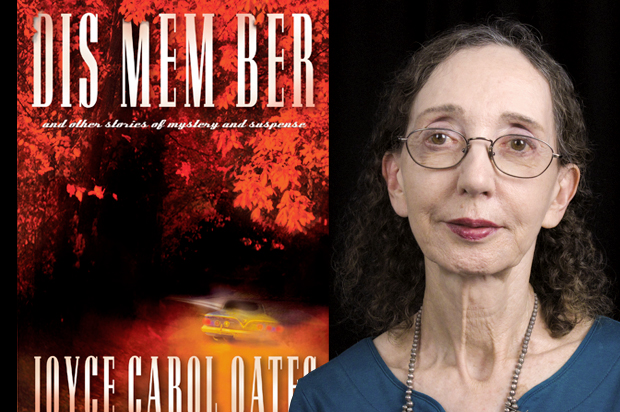
Joyce Carol Oates

The docu-novel

The author of "Bellefleur" selects five great "nonfiction novels."

The Executioners Song by Norman Mailer
A massive, 1,000-page documentary novel of numerous voices bearing witness to the troubled life and eventual death (by firing squad, in Utah) of convicted murderer Gary Gilmore; remarkably for Mailer, a novel in uninflected American vernacular, from which the author himself seems absent.

The World as I Found It by Bruce Duffy
Another massive but intellectually and stylistically rigorous novel of real-life individuals: Ludwig Wittgenstein, the most controversial philosopher of the 20th century; Bertrand Russell, Wittgenstein’s elder and, for a time, his mentor; and G.E. Moore, the celebrated Cambridge don. A bold and original work of fiction that imaginatively evokes a vanished world, populated by such men and women as Sigmund Freud, D.H. Lawrence, Lady Ottoline Morrell and Karl Krauss. “The World as I Found It” must be one of the most ambitious first novels ever published.

Dreamer by Charles Johnson
Succinct, slender, poetic rather than documentary in its language, this bold novel explores the private and public lives of Martin Luther King Jr. Like Johnsons fiction generally, “Dreamer” has a parable-like quality despite its historic subject.

Cloudsplitter by Russell Banks
Another massive, monumental work, an imaginative evocation of the life of our most controversial abolitionist, John Brown. Visionary martyr? Madman? Figure of destiny? The novel is recounted by Browns last surviving son, Owen Brown, from a fictitious perspective, in compelling, convincing 19th century-style prose.

The Hours by Michael Cunningham
One of the riskiest, most discussed and most successful of recent literary novels, this is a wonderfully imaginative, original blend of biography (the last days of Virginia Woolf, who commits suicide in 1941, in the poetically written prologue) and fiction (the interlocked lives of two contemporary American women linked by their connection with the Woolf novel “Mrs. Dalloway” and by their love for a young man dying of AIDS).

Classics Book Group

An essay by Joyce Carol Oates on Charlotte Bronte's 'Jane Eyre.

Jane Eyre” abounds in mysteries and surprises.

The most immediate, for Charlotte Brontk’s contemporaries, was the identity of the author of this controversial bestselling first novel of 1847. So far as readers knew, the novel was by a wholly
unknown individual named “Currer Bell” — whether male or female, no one seemed to know. Much discussion ensued in the press over the identity of “Currer Bell”; some reviewers believed the novel to be “coarse” (in its frank depiction of emotion and passion), but so intelligently conceived and written that “Currer Bell” had to be a man. (“Jane Eyre” went through several large editions before Charlotte Brontk publicly revealed herself as the author. Today, the author’s sensibility seems far more feminine than masculine in its attentiveness to details of girls’ and women’s private domestic lives and in its wholly sympathetic portrait of a young governess virtuously resisting her employer’s plea that she love him despite the fact he isn’t free to marry her.)

Thirty-one, the daughter of a rural Anglican clergyman, unmarried, inexperienced, diminutive, shy and “plain” as her heroine Jane Eyre, Charlotte Brontk, like her romantic hero Lord Byron, “awoke one morning to find herself famous.” Since its initial publication, this fame has never abated. “Jane Eyre” has been continuously in print and has long been established as a classic of English literature (alongside another brilliant first novel, “Wuthering Heights,” by “Ellis Bell,” Charlotte’s younger sister Emily, also published in 1847). Significantly, it is the sole novel of its era to be reprinted in Sandra Gilbert and Susan Gubar’s groundbreaking 1985 Norton anthology, “Literature by Women.”

The most immediate surprise of “Jane Eyre” for today’s readers is the directness, even bluntness, of the young heroine’s voice. Here is no prissy little-girl sensibility, but a startlingly independent, even skeptical perspective. At the age of 10, the orphan Jane already sees through the hypocrisy of her self-righteous Christian elders. She tells her bullying Aunt Reed, “People think you a good woman, but you are bad; hard-hearted. You are deceitful!” and “I am glad you are no relative of mine; I will never call you aunt again so long as I live. I will never come to see you when I am grown up; and if any one asks me how I liked you, and how you treated me, I will say that the very thought of you makes me sick.” (In fact, when her aunt is elderly and dying, Jane does return to visit her, and forgives her. But that’s far in the future.) With the logic of a mature philosopher, in fact rather like Friedrich Nietzsche to come, Jane protests the basic admonitions of Christianity as a schoolgirl: “I must resist those who … persist in disliking me; I must resist those who punish me unjustly. It is as natural as that I should love those who show me affection, or submit to punishment when I feel that it is deserved.” And this bold declaration, which would have struck readers of 1847 (in fact, of 1947) as radical and “infeminine”:

“Restlessness was in my nature; it agitated me to pain sometimes … Women are supposed to be very calm generally: but women feel just as men feel; they need exercise for their faculties, and a field for their efforts as much as their brothers do; they suffer from too rigid a constraint, too absolute a stagnation, precisely as men would suffer.”

Instead, the novel begins with the seemingly disappointed statement: “There was no possibility of taking a walk that [rainy] day,” and counters almost immediately with, “I was glad of it; I never liked long walks.” When excluded from Christmas revelries in the Reed household, the child Jane says, “To speak the truth, I had not the least wish to go into company.” Jane’s defiance, which doesn’t exclude childlike fears, strikes us as forthright in the way of the adolescent temperaments of other famous literary voices — Jo March of Louisa May Alcott’s “Little Women,” Huck Finn, Holden Caulfield and their now-countless younger siblings. Here is a voice, we believe, we can trust; and our trust is not misplaced.

Another surprise of “Jane Eyre” is the seemingly “real”– that is, non-romantic — nature of the lovers-to-be. “Jane Eyre” is many times described as small, plain, undistinguished; her mysterious, Byronic-tempered employer Rochester is pointedly not “handsome or heroic looking”; their conversations are, from the start, marked by an unusual directness, surely rare in 19th-century women’s fiction, with the underlying premise, which is never questioned, that the penniless Jane and the wealthy Rochester are equals in intelligence, character and worth. Their attraction to, and developing love for, each other is immediate, yet grows as naturally as it might in real life, characterized by such remarks as Rochester’s to Jane, “You are not pretty any more than I am handsome,” and at the novel’s end, after the lovers have been parted for a year, and suffered losses, an exchange that must have made readers gasp, and perhaps shed a tear:

“Am I hideous, Jane?”

“Yes, sir: you always were, you know.”

Today’s readers will find in “Jane Eyre” mysteries and surprises that Brontk’s contemporaries would have taken for granted: the strange, harsh treatment of mental illness (as a consequence apparently of syphilis); the “double standard” of sexual behavior (in which men like Rochester were allowed a kind of gentlemanly promiscuity while unmarried women like Jane had to conform to a narrow code of chastity); the unyielding conviction with which Jane Eyre, though she loves Rochester, flees him, even to the point of wandering homeless, and nearly starving, in the novel’s most disturbing, existential scenes of Chapter 28 when Jane is reduced to begging crusts of bread and ravenously devouring swill scorned by hungry hogs. (What a boldly non-Romantic portrayal of female, human want, to present to genteel English readers!)

Of course, “Jane Eyre” has a “happy” ending. Yet it is made to feel like a natural, even inevitable ending, though there are numerous melodramatic twists of the plot and coincidences beforehand. It is typical of Jane that she declares, “Reader, I married him.” (Not “He married me.”) It is typical of Jane that, though married at last to the man she loves, and now a mother, she looks back upon her still-young life from the perspective of mature wisdom. Why does “Jane Eyre” retain its appeal after so many decades, and so many intervening novels of virginal young heroines, Byronic moody mysterious elder men, and melodramatic disclosures? One answer is, simply, the quality of Jane’s and Rochester’s characters. They are believable. They are intelligent, yet emotional, superior beings who are human, even flawed; as the 19th-century reader would have discerned, they are models for us all.

Continue Reading Close

Personal Best: Alice in Wonderland

"Alice in Wonderland" by Lewis Carroll

no work of art so thrills us, or possesses the power to enter our souls deeply and perhaps even irreversibly, as the “first” of its kind. The luminous books of our childhood will remain the luminous books of our lives.

For me, it was Lewis Carroll’s “Alice’s Adventures in Wonderland and Through the Looking-Glass,” a Christmas gift from my grandmother when I was 8 years old. First of all, I was enchanted by the book as a physical object, for there were few books in our rural household: both Alice tales were published in a single, wonderful volume (Grosset & Dunlap, 1946) with reproductions of the famous illustrations by John Tenniel, almost as fascinating to me as the tales themselves. There was a dreamlike cover showing Alice amid the comical-grotesque Carroll creations that, to an adult eye, bear a disturbing kinship with the comical-grotesque creations of Hieronymus Bosch, and this cover, too, was endlessly fascinating. In my memory, this first important book of my life was quite large, about the size of what we call today a coffee-table book, and heavy; but when I investigate — for of course I still have the book in my 19th-century British bookcase, along with “The Hunting of the Snark,” Lewis Carroll’s “Bedside Book,” and other Carroll titles — I discover to my surprise that it measures only 6 1/2 by 9 inches! A quite ordinary-sized book after all.

What is the perennial appeal of the Alice books? If you could transpose yourself into a girl of 8, in 1946, in a farming community in upstate New York north of Buffalo, imagine the excitement of opening so beautiful a book to read a story in which a girl of about your age is the heroine; imagine the excitement of being taken along with Alice, who talks to herself continually, just like you, whose signature phrase is “Curiouser and curiouser,” on her fantastic yet somehow plausible adventure down the rabbit hole, and into the Wonderland world. It would not have occurred to me even to suspect that the “children’s tale” was in brilliant ways coded to be read by adults and was in fact an English classic, a universally acclaimed intellectual tour de force and what might be described as a psychological/anthropological dissection of Victorian England. It seems not to have occurred to me that the child-Alice of drawing rooms, servants, tea and crumpets and chess, was of a distinctly different background than my own. I must have been the ideal reader: credulous, unjudging, eager, thrilled. I knew only that I believed in Alice, absolutely.

The influence of the “Alice” books on my inner life is surely incalculable. I’d more or less memorized them as a child from repeated readings. (I’ve subsequently written on the subject, and have several times taught “Alice” in university courses.) At any time, in any place, appropriate or otherwise, including even listening as I’m being introduced to give readings or lectures, and often in social or professional gatherings, the Alice-voice rises to consciousness and I hear “Curiouser and curiouser” — “Who cares for you? You’re nothing but a pack of cards!” — “Twas brillig and the slithy toves/Did gyre and gimble in the wabe;/All mimsy were the borogoves,/And the mome raths outgrabe” — “Take care of yourself! Something’s going to happen!” Impossible to know if a fictitious character has provided me with a “voice,” or whether my natural voice was nearly identical with Alice’s.

To descend down a rabbit hole, to push through a mirror in a drawing room, to enter that “other world” of the imagination — this is Alice’s destiny, as it might be said to be our collective destiny, if only we value it and cultivate it. For the artist of any kind, the experience is life itself. What is most wonderful about the “Alice” tales, for a child reader at least, is that though they contain nightmare material, and are, intermittently, really quite frightening, Alice triumphs in the end; she retains a fundamental reason, fair-mindedness and sense of justice, as well as a necessary sense of humor, and at the end of both adventures she “wakes” to her real life about which we know nothing other than that she has a sister and there are several kittens in the household. Not for Alice, our Alice, the fate of children in the crueler of the fairy tales of the Brothers Grimm, for Alice is the self’s very obduracy, forever innocent, and blessed.

Continue Reading Close