Kenneth Cleaver
Those dashing Brits are ruining my love life
From the consumer correspondence of Kenneth H. Cleaver: American guys like me just can't compete with their irresistible accents.
November 17, 2000
Sir Christopher Meyer, KCMG
British Embassy
3100 Massachusetts Avenue
Washington, D.C. 20008
Dear Sir Meyer,
Living in New York is not easy for a young bachelor. Throw a rock in any direction and you will hit a man who is better looking, better dressed, better educated and just plain better than yourself. Sit at any given barstool and you’re rubbing shoulders with the poet laureate of Lithuania or the bungee-fishing champion of Norway. That’s what makes this town great. But how many times must I go out to find the finest examples of American womanhood married to, coupled with or fawning shamelessly over some dog-faced “bloke” from Devonshire?
“I hear that accent and my knees get weak,” my female friends say. Mind you, these women tear apart Proust like so many Tinker Toys. But unleash a British drawl, be it Liverpudlian, Cockney or the crisp cadence of an Eton boy, and their critical faculties fly out the window, as they turn from urbane sophisticate to swooning sycophant in seconds. This so-called British charm is nothing more than a continuation of the colonial relationship. While our country had a successful political revolution, it never fully unshackled itself from the culture of its colonial master, and it’s men like me that foot the bill.
At risk of seeming unduly xenophobic, I ask you to require all British males to be chaperoned by spouse, fiancée or their mums while in this country. I can compete with bungee fishers, I can run circles around investment bankers, but I cannot compete with that accent! Have you any idea what it’s like trying to construct an exotic mystique for yourself when you’re a native of Westchester County? Do you have any idea?
Help a brother out.
Sincerely,
Kenneth H. Cleaver
The British Embassy responds:
November 28, 2000
Dear Mr. Cleaver,
Thank you for your letter of 17 November.
I feel your pain, as they say here. I did not realise, until I had received your letter, that my married state had deprived me of a cornucopia of conquests that would have avenged New Orleans, Yorktown and the rest.
Do not despair. You too can have a knee-weakening accent. Just get a subscription to BBC America and take a pick of the plethora of British accents on display. It is easier than learning German. Do tell me when you have your first success and which British accent most helped.
Yours sincerely,
Christopher Meyer
Dear Apple: Where’s my iHat?
From the corporate correspondence files of Mr. Kenneth H. Cleaver. Also: Grizzly bear job prospects and rap lyric campaign contributions for Al Gore.
Dec. 10, 1999
Apple Computer, Inc.
1 Infinite Loop
Cupertino, CA 95014
Dear Apple:
Today is the second day of the rest of my life. Yesterday my iMac arrived. The iMac is a remarkably attractive computer. Its transparent CPU dome looks like something out of a candy store. Stunning as it looks alone, when paired with its user one’s eyes are drawn to a startling incongruity.
A headpiece, or iHat, made of the same plastic which houses the CPU would provide an aesthetic balance while serving to further integrate the CPU with the mind of its user. The iHat should come equipped with built-in headphones and horse blinders. Both devices could serve to prevent distraction from the outside world. Since Apple has been encouraging me to think different, I thought you’d be delighted by my efforts.
Continue Reading CloseMissives to corporate America
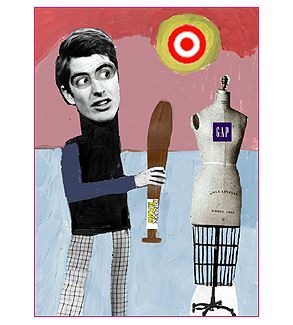
A consumer correspondent challenges SmithKline Beecham to start a Paxil softball league, wants Target-sponsored sunsets and confesses a desire for Gap mannequins.
August 29, 2000
Consumer Affairs
SmithKline Beecham
100 Beecham Drive
Pittsburgh, PA 15205
Dear SmithKline Beecham:
I enjoy your drug Paxil very much. While I occasionally hanker for the tart, fruity flavor of a Flintstones vitamin, I infinitely prefer the alleviation from desperate rumination your product offers. Despite the thousands of Americans who regularly take antidepressants, considerable stigma still surrounds their use.
Continue Reading Close