Lillian B. Rubin

The hard truth about getting old

Sixty isn't the new 40, and 80 isn't the new 60. I know it. You know it. So why do we buy into it?

  • more
    • All Share Services

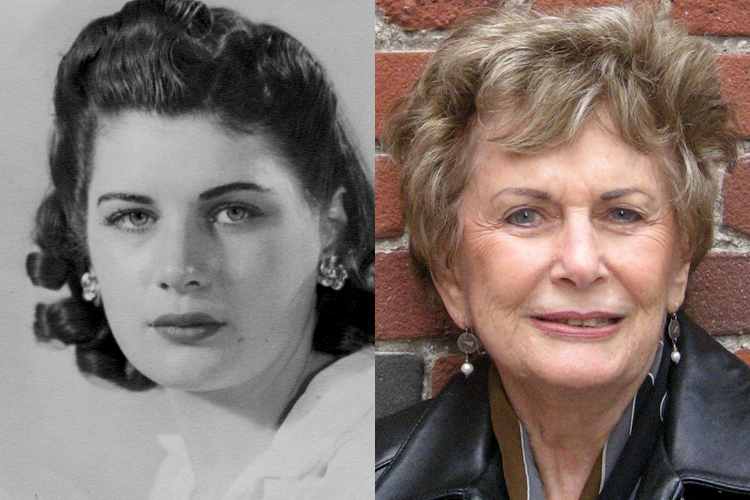
The hard truth about getting oldThe author as a young woman and as she appears now

I don’t know about you, but the chirpy tales that dominate the public discussion about aging — you know, the ones that tell us that age is just a state of mind, that “60 is the new 40″ and “80 the new 60″ — irritate me. What’s next: 100 as the new middle age?

Sure, aging is different than it was a generation or two ago and there are more possibilities now than ever before, if only because we live so much longer. it just seems to me that, whether at 60 or 80, the good news is only half the story. For it’s also true that old age — even now when old age often isn’t what it used to be — is a time of loss, decline and stigma.

Yes, I said stigma. A harsh word, I know, but one that speaks to a truth that’s affirmed by social researchers who have consistently found that racial and ethnic stereotypes are likely to give way over time and with contact, but not those about age. And where there are stereotypes, there are prejudice and discrimination — feelings and behavior that are deeply rooted in our social world and, consequently, make themselves felt in our inner psychological world as well.

I felt the sting of that discrimination recently when a large and reputable company offered me an auto insurance policy that cost significantly less than I’d been paying. After I signed up, the woman at the other end of the phone suggested that I consider their umbrella policy as well, which was not only cheaper than the one I had, but would, in addition, create what she called “a package” that would decrease my auto insurance premium by another hundred dollars. How could I pass up that kind of deal?

Well … not so fast. After a moment or two on her computer, she turned her attention back to me with an apology: “I’m sorry, but I can’t offer the umbrella policy because our records show that you had an accident in the last five years.” Puzzled, I explained that it was just a fender bender in a parking lot and reminded her that she had just sold me an insurance policy. Why that and not the umbrella policy?

She went silent, clearly flustered, and finally said, “It’s different.” Not satisfied, I persisted, until she became impatient and burst out, “It’s company policy: If you’re over 80 and had an accident in the last five years, we can’t offer you an umbrella policy.” Surprised, I was rendered mute for a moment. After what seemed like a long time, she spoke into the silence, “I’m really sorry. It’s just policy.”

Frustrated, we ended the conversation.

After I fussed and fumed for a while, I called back and asked to speak with someone in authority. A soothing male voice came on the line. I told him my story, and finished with, “Do I have to remind you that there’s a law against age discrimination?”

“Would you mind if I put you on hold for a few moments?” he asked. (Don’t you love the way they ask you that, as if you have a choice?) When he came back on the line, he told me he’d checked the file and talked to the agent who couldn’t recall saying anything about age, nor was there anything about it in the record.

“OK,” I said, “then sell me the umbrella policy.”

“No,” he was very, very sorry for the misunderstanding, but they never sell an umbrella policy to anyone who’s had an accident in the last five years, and their policy is “absolutely age-neutral.”

And if you believe that, I know a bridge in Brooklyn that’s for sale.

Makes you wonder, doesn’t it: Where are all those sources of personal power and self-esteem we keep hearing about as the media celebrate the glories of the “new old age”?

That’s one from my file of personal stories about ageism, but there are other older and bigger ones: discrimination against older workers in the job market among the most important. True, the law now offers a possible remedy in the form of an age-discrimination lawsuit, but who’s going to pay the legal and household bills during the years it will take to work its way through the courts? Who’s going to help those workers deal with the psychic wounds that come from being so easily expendable, so devalued just because of their age?

In her groundbreaking book “The Coming of Age,” published in the early 1970s, Simone de Beauvoir spoke passionately about the stigma of old age — about the loss of a valued identity, our fear that the self we knew is gone, replaced by what she called “a loathsome stranger” we can’t recognize, who can’t possibly be the person we’ve known until now.

Her words give life to a core maxim of social psychology that says: What we think about a person influences how we see him, how we see him affects how we behave toward him, how we behave toward him ultimately shapes how he feels about himself, if not actually who he is. It’s in this interaction between self and society that we can see most clearly how social attitudes toward the old give form and definition to how we feel about ourselves. For what we see in the faces of others will eventually mark our own.

As a sociologist, I have been a student of aging for four decades; as a psychotherapist during this same period, I saw more than a few patients who were struggling with the issues aging brings; as a writer I’ve written about the various stages of life, including a memoir about aging daughters and mothers. Yet until I undertook the research for my recent book, “60 on Up: The Truth About Aging in America” — until I began to read more deeply and to interview people more systematically — I didn’t fully realize how much ageism had become one of the signature marks of stigma and oppression in our society.

Nor did I really get how much the cultural abhorrence of old age had affected my own inner life. So it was something of a surprise when, as I listened to the stories of the women and men I met, I found myself forced back on myself, on my own prejudices about old people, even though I am also one of them.

Even now, even after all I’ve learned about myself, those words — I am one of them — bring a small shock. And something inside resists. I want to take the words back, to shout, “No, it’s not true, I’m really not like them,” and explain all the ways I’m different from the old woman I saw pushing her walker down the street as she struggled to put one foot in front of the other, or the frail shuffling man I looked away from with a slight sense of discomfort.

I know enough not to be surprised that I feel this way, but I can’t help being somewhat shamed by it. How could it be otherwise when we live in a society that worships youth, that pitches it, packages it, and sells it so relentlessly that the anti-aging industry is the hottest growth ticket in town: the plastic surgeons who exist to serve our illusion that if we don’t look old, we won’t be or feel old; the multibillion-dollar cosmetics industry whose creams and potions promise to wipe out our wrinkles and massage away our cellulite; the fashion designers who have turned yesterday’s size 10 into today’s size 6 so that 50-year-old women can delude themselves into believing they still wear the same size they wore in college — all in the vain hope that we can fool ourselves, our bodies and the clock.

If you still need to be convinced about the ubiquity of the assault on our sensibilities by the anti-aging crusade, try plugging the term “anti-aging” into Google. Last time I checked, it came up with 22,600,000 hits, among them the website of the recently spawned American Academy of Anti-Aging Medicine with a membership of tens of thousands of doctors whose business is selling the idea that aging is “a curable disease.” Never mind that the American Medical Association doesn’t accord legitimacy to this organization or its stated mission, it continues to laugh all the way to the bank.

There, also, you’ll find the latest boon to the American entrepreneurial spirit: a growing array of “brain health” programs featuring brain gyms, workshops, fitness camps and “brain healthy” food. And let’s not forget the Nintendo video game that, the instructions say, will “give your prefrontal cortex a workout.”

Will any of this help us remember where we left our glasses, why we walked into the bedroom, or the story line in a film we saw a few days ago? Not likely, as recent scientific evidence tells us.

Surely no one can live in a society that instructs us so relentlessly about all the ways we can overcome aging, without wanting to do something about it. I know I can’t. Why else do I go to the trouble and expense of dying away my gray hair when I hate to sit in the beauty shop? Why else does my heart swell with pleasure when someone responds with surprise when I say that I’m 87 years old? Why else do I know with such certainty that the minute they stop looking surprised is the minute I’ll stop saying it.

As I read, listen, talk, write, it seems to me we’re living in a weird combination of the public idealization of aging that lies alongside the devaluation of the old. And it isn’t good for anybody. Not the 60-year-olds who know they can’t do what they did at 40 but keep trying, not the 80-year-olds who, when their body and mind remind them that they’re not 60, feel somehow inadequate, as if they’ve done something wrong, failed a test.

We live in the uncharted territory of a greatly expanded life span where, for the first time in history, if we retire at 65, we can expect to live somewhere between 15-20 years more. But the story of this new longevity is both positive and negative — a story in which every “yes” is followed by a “but.” Yes, the fact that we live longer, healthier lives, is something to celebrate. But it’s not without its costs, both public and private. Yes, the definition of old has been pushed back. But no matter where we place it, our social attitudes and behavior meet our private angst about getting old, and the combination of the two all too often distorts our self-image and undermines our spirit.

Yet too few political figures, policy experts or media stories are asking the important questions: What are the real possibilities for our aging population now? How will we live them; what will we do with them? Who will we become? How will we see ourselves; how will we be seen? What will sustain us — emotionally, economically, physically, spiritually? These, not just whether the old will break the Social Security bank or bankrupt Medicare, are the central questions about aging in our time.

Lillian B. Rubin is an internationally recognized author and social scientist who was, until recently, a practicing psychotherapist. Her most recent work is “60 on Up: The Truth About Aging in America.” She lives in San Francisco. 

Mourning a husband who has not yet passed

As Hank disappears into dementia, I have to admit the unbearable: His death would be easier than this

  • more
    • All Share Services

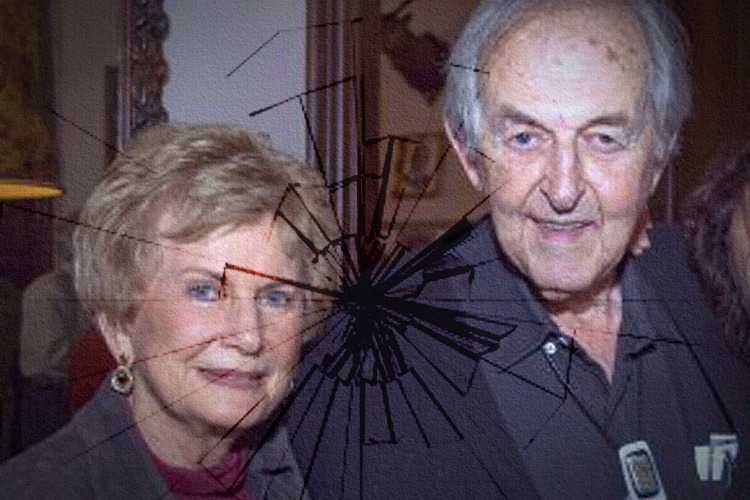
Mourning a husband who has not yet passedThe author and her husband

I had a life, and now it’s gone. No, I’m not writing from the grave. I’m alive, and even reasonably well, but I seem to have lost my life — you know, the one I’ve been living for the last five or six decades.

Can anyone really prepare us for the future? Does it really make a difference if someone tells a young girl that one day she’ll find blood oozing from her body, or a young boy that he’ll wake up with his PJs mucky from a wet dream, or a pregnant woman that birthing her child will be an experience of breathtaking agony, or a middle-aged person that one day she’ll notice that her pubic hair has thinned to near baldness, or that we’ll all get old and, one way or another, lose our life, even while we’re still live.

I lost mine six months ago when I could no longer care for my husband’s advancing dementia and sent him into care. Well, maybe I really lost it a couple of years before that, but I didn’t know it then. He was here, sleeping in the same bed, eating at the same table, sitting at the same desk — a living, breathing presence, if not a fully present one. His mind wasn’t working so well, but the familiar body was fine, and his heart still tried to be what he had been. Until one day, he couldn’t and I couldn’t, and we both lost our lives — only he doesn’t know it.

We were close, but I wasn’t one of those women of my generation who was defined by her marriage, by her husband’s life and status. I had an independent life — friends, work, travel — and so did he. A couple of decades ago, Christopher Lasch described the family as a “haven in a heartless world.” For us, it was such a haven, but our lives in the “heartless world” enriched and enlivened that haven and were a central part of the strength of our marriage and our family.

Now, he’s gone — and so is the haven. And the world does indeed seem more heartless. Yes, I still have my work, which can distract me from whatever pain and anxieties may beset me at the moment. But notice the language: It “can distract me.” Not enliven and enrich me, but distract me. Worse yet, I can’t always do it, can’t summon it up as easily as I used to before Hank’s dementia took a core part of my life.

I tell myself that I need to give in to the feelings, but I’m not even sure what they are. A certain emptiness, maybe fear. But fear of what? I can’t say truthfully that I didn’t feel some relief when Hank was safely settled in his new home, some sense of freedom to reclaim my life when he didn’t need my attention so insistently. I was (still am) grateful not to have to rush home, after an hour or two away, wondering anxiously what I’d find when I opened the door.

Nor can I say that living alone is without its compensations. I don’t feel that yearning loneliness I hear others speak of; I enjoy the solitude of it much of the time; and when I get tired of it, I have friends and family to lift me out. But I’m aware that there’s an empty space — not outside, not in the bed or at the dining room table, but inside me — the space that Hank occupied for nearly a half century and whose presence there I’d come to depend upon.

Over decades as a psychotherapist (never mind living life), I’ve dealt with people suffering loss, read the literature on mourning, thought about Elisabeth Kübler-Ross’s famous treatise on the subject, and wrote a response to it that was both admiring and critical. I remind myself of what I know, tell myself I’m in mourning, to let the feelings flow until they work themselves out and I come to terms with the new reality of my life. But mourning a real death is quite different from mourning a living one. Whatever one believes about death — it’s a passage into a kinder world, it’s entry into nothingness, or anything in between — it’s still an undeniable fact. Death is finite; life, as we know it, is over. Yes, I know, people awaken with visions of visitations, but eventually we come to accept death as an end to life. But when the brain dies and leaves the body intact, there is no end.

A few days ago, I talked with a seventy-something man who spoke tearfully about his wife’s recent death and his awkward attempts at coping with his new life as a widower and single man. I left our conversation feeling sad for him — and also envious. At least, I thought, he knows what’s ahead; he knows the meaning of the word “widower.” But I’m a widow with a husband who’s alive; I’m a single woman with the responsibilities of a wife; I have a future, but I have no idea what it will be or how to get there; and if my husband lives much longer, we’ll go broke.

There, I’ve said it, the thought we dare not speak: My life would be easier if Hank had died. My impulse is to take it back, to wipe the words off the page, to retreat from the thought, pretend I never had it, and hope you’ll forget I said it. But it would be adding another lie to all those words written these days about the selfless caretakers who think nothing of sacrificing their lives to a loved person who exists but doesn’t live.

In truth, I know from others in the same situation, that I’m not alone — knowledge that comforts me, normalizes my feelings somewhat, or at least makes them less monstrous and me less guilt-ridden. And I also know that, as with every other complex part of life, feelings are never so simple. So there are times when I actually get frightened at the thought of his death, fretting about what, at 86 years old, would give my life purpose if I didn’t have him to watch over.

My rational mind tells me I have plenty to keep me busy and purposeful. But there’s nothing rational about dementia. I thought before I lived with it that I knew something about this disease of the brain. I’ve seen it, worked with people who were slipping into it, others who were caring for someone suffering it. I’ve heard the stories about the weird, nonlinear way the disease shows itself — the way it seems to wax and wane, the way a person can slip from seeming something close to his old self to a helpless child, unable to articulate even a simple thought, from calm to unreasoning anger, from believing his caretaker is his lifeline to the paranoid conviction that she wants to murder him. It’s why it’s so hard to grasp the fullness of dementia’s complexity, why it’s so easy to deny what we see before our eyes. But I know now that, even reading the most compelling descriptions in the literature, even listening to the most poignant anecdotes from caretakers, you don’t really know dementia until you’ve actually lived with an afflicted loved one. And maybe not even then.

I look away from those words, gaze outside my window and see the western half of the city spread before me: the hills that define San Francisco, the bay sparkling in the sunshine in the foreground of my vision, in the background, a fleecy fog drifting in from the ocean and partially obscuring the graceful beauty of the Golden Gate Bridge, the ships peeking out of the fog as they pass under the bridge and into the sunshine. I love this familiar, yet ever-changing panorama and, on a day like this, when it looks as if it’s been scrubbed clean, I never fail to remind myself that I’m among the fortunate of the earth to live in sight of it. But the mournful sound of the foghorns that gives warning to the ships coming and going echoes with the sadness in my heart.

And I wonder: Why, when I have an engaged daily life, do I feel like I lost it. I see friends and family; I’m captured by events in the social and political world; I have work — writing, painting; I’m engrossed in the novels I’ve been reading almost obsessively since my husband is gone. Yet all these, even the words on this page, seem a distraction from the box called “real life” — the box that frames Hank and the institution in which he now lives.

Not that my visits to that life offer much reward. The place is beautiful, like one of those expensive boutique hotels — extra-wide carpeted halls, closed doors everywhere, the kind of calm quiet that soothes the soul. But if you’ve never been in a dementia unit, you can’t really know what a Kafkaesque experience it is.

I walk through the door — locked on the inside so residents can’t get out — and the show begins: Edward who, no matter what time of day, sits in the same chair near the door, head bowed as if asleep. I have the fantasy that he’s there in the hope that proximity to freedom will get it for him, but as I walk by, I say simply, “Hi, Edward, how are you?” He looks up, a blank acknowledgment that someone has called his name, and his chin drops to his chest again. As I turn the corner to Hank’s room, I see Molly, pushing her walker ahead of her and saying, “I have to go.” I smile at her, say hello, and ask her where she’s going. She stops, seems to be trying to figure out an answer, then repeats, “I have to go,” and sets off down the hall intoning, mantra-like, the same words over and over again. Then, Anna, who recognizes me with the same greeting every time, “You’re Hank’s wife.” I reply that I am, ask how she is. She stands silently for a moment, then repeats, “You’re Hank’s wife.” A few steps further along, I encounter Isabel, smiling the vacant smile that’s often a familiar feature of dementia. When I greet her, she bursts into song in a glorious operatic voice. She, of all of the men and women who live there, gives testimony to the complexity of the human brain. She doesn’t remember her name, but she can sing whole arias without missing a beat; she doesn’t recognize her grown children, but every Sunday morning, when a pianist plays old Broadway show tunes, Isabel’s voice accompanies the music with the words intact.

And Hank? If he’s not in one of the scheduled activities, I find him on his bed, surrounded by hundreds of pieces of paper. “Hi, sweetheart, what are you doing?” I ask as I walk through the door. “I’m working on my book,” he says — a book originally designed for cooks, professional and amateur, who, when confronting a recipe that calls for some foreign, unattainable ingredient, can find a local substitute on its pages. He started this project years ago, maybe a year or two after he’d been diagnosed with what the experts at the University of California labeled, “age related memory impairment.” When I trained in psychology over four decades ago, we called it “senile dementia.” Now dementia has a whole new array of diagnostic names, most of them sounding more “scientific” but meaning the same thing.

Over the nine years since that diagnosis, what was once a book has grown to an unwieldy 600 incoherent pages — an alphabetical list in tiny, illegible handwriting that has no meaning. And as he obsessively counts the entries and the pages, he proudly tells whoever is in earshot that he has 3,000 entries under the letter “C.” Maybe it’s a senseless exercise, but I prefer to think that, as with Isabel’s singing, it offers some connection, however thin, to the man he used to be, and gives some meaning to his largely empty days.

He puts down the paper he’s holding, looks at me lovingly, and says, “You’re so beautiful.” I smile, kiss him, tell him I’m glad he thinks so, and that I love him. Then we sit silently. I get edgy and make conversation, telling him what I did yesterday, what I plan to do today, recounting a conversation with our daughter, whom he still remembers, with an old friend, whom he does not. But there’s no one on the other side to send the conversation ball back. I know he’s becoming aphasic, that words don’t come easily to him anymore, and I try to be patient. I start to speak again, and he interrupts to ask, “What time is it where you live?” Where did the thought come from? I tell him that I live just a couple of miles from him and that the time is the same. He looks puzzled, checks the clock on his dresser, and says, “So what time is it there?”

Tears fill my eyes, I have no words, and we’re silent again. Not the companionable silence we used to know, but an awkward, uncomfortably empty one — a reminder that what we once had is gone. Sometimes after 30 or 40 minutes of this, he looks at his watch and says, “I guess you have to go”; sometimes it’s I who say it. What does it mean when he says those words? Is he as uncomfortable as I am with the silence? Is he also looking for something to carry the conversation forward and finding his incapacity to do it so intolerable that he’s relieved when I leave?

It’s one of the great difficulties in dealing with dementia: No matter how well you knew the person before, you have no idea what he’s thinking now. But since it’s a basic human impulse to try to make sense of our experience, we interpret what we see to give it meaning. If, as I have, you’ve spent decades helping decode a patient’s inner life, it’s as automatic as breathing. But I have no idea what to make of the fact that he seems happy with my arrival but is never distressed by my departure, indeed, seems at times to want to hasten it.

We’ve been married nearly 50 years — half a century. I believed I knew him as well, maybe better, than I knew myself. But that was another person, another life. I’m not a stranger to the feeling that I’ve had several lives, some of them painfully difficult. And although I don’t like living with the inevitable wounds of age, I’d rather be here than reliving any of those earlier times, places and experiences. Good or bad, I know they were necessary to my growth, to the development of the person I’ve been in these last decades, who I am today. But dementia is all about decline, not growth, and whether living inside it, as Hank does, or being a companion to it, as I am, it’s nearly impossible to make sense of it. If anything in this life can puncture the fantasy that we have some control over our lives, dementia may be the ultimate reminder, not just of its unpredictability but of its incomprehensibility. And its absurdity.

When, before these last months, I thought about why it’s so hard for us to learn from the experience of others, I would have said that it’s because we live in a society built on the myth that we’re in control, a “can-do” society and a culture that believes anything is possible, that to be “forewarned is forearmed,” even that we can continue to extend our lives well into our second century with no cost, social or personal. While I still believe that assessment is true, I also now understand another truth. Even when someone tells us what to expect, we can’t know it. It’s not that we don’t or won’t listen. It’s that the child can’t make any real sense out of the changes in her developing body until she experiences them; the young can’t grasp the rigors and meaning of the life of the old; our own mortality is nearly incomprehensible, even when we’re facing it. But unlike other life-changing moments, the demented by definition can’t understand what’s happening to them, while those who live alongside dementia, know it, but can’t see inside it, therefore, can never fully comprehend it.


Continue Reading Close