Nora Zelevansky

A guilty liberal confronts her stuff

Lately, I'm torn between recycling my old things -- and becoming a hoarder who can't throw away junk

  • more
    • All Share Services

A guilty liberal confronts her stuff

Have you ever spent 10 minutes staring at a box of discolored envelopes?

I have. Rest assured: I’m confessing here, not bragging.

Just the other day in my home office, I froze dumbly before a white Pottery Barn bookcase that doubles as a supply cabinet. My cat Waldo eyed me suspiciously from his nearby window perch, as if I’d lost my mind. He was probably right. I was caught in a heady internal debate. Was it more responsible to recycle the yellowed, unusable envelopes in my cabinet, as they monopolized space inside? Or would that act be wasteful? Maybe I should save a tree and try to use them for origami? After all, earthquake and tsunami victims in Japan might be entirely without stained office supplies!

What was worse: wasting paper or wasting space? I was stuck. And paralysis was becoming a familiar repose. I was definitely wasting something — my afternoon.

These days, we’re expected to be environmentally responsible. If you don’t want to be thought of as heartless, ignorant or, even worse, ultra-conservative, then you know the routine: Recycle, eat organic, drive hybrids, reuse metal water bottles, repurpose packaging, save documents in cloud space, compost and grow backyard and rooftop victory gardens. Well, maybe you do that. I actually murder plants.

But at the same time, we get frequent warnings not to let this “saving” and “repurposing” create clutter. The popularity of shows like A&E’s “Hoarders” and Style Network’s “Clean House” — not to mention the entire HGTV network — suggest a culture that desperately needs to get rid of its junk.

And what we do keep — from photographs to scuba gear — must be streamlined, organized or filed, if not digitally, then in recycled cardboard boxes or sustainable wooden cabinets handmade from naturally felled maple trees by blind Peruvian shamans. Our ideal homes resemble modern art museums with an antique touch or two to broadcast our bohemian roots. The message is clear: “Stuff” drags us down. (And “stuff,” by definition, does not include Apple products.)

But how do I make use of old things without living amid clutter? How can I make, say, a creative planter out of an old tire without first storing that tire in my garage? That’s the source of my angst lately: How can I throw something out — and put it to good use, too?

For me, this tug-of-war is nothing new. I was raised in a minimalist home by contemporary art world parents. (And, yes, I’m aware I make that sound like a condition. You would too if you had to sit on such uncomfortable chairs.) The immaculate design was geometric and spare with bursts of Alessi color from fluorescent orange nail clippers to acid green garbage pails. My parents discarded objects without sentimentality. They once threw out my Social Security card and, when confronted, shrugged: “You can always order another.”

My only living grandmother, Nana, was the opposite. She collected antique spoons, model shoes and truly creepy google-eyed baby dolls. Teasingly dubbed “the original flower child” by the family, she hocked knickknacks at flea markets, grew dahlias, picked berries for jam and knit blankets from balls of yarn, inevitably bought on sale. She saved Cool Whip bins in which she froze enough roasted turkey to feed an African village. And I can tell you from experience: There is nothing more disturbing for a child than opening a container with the expectation of whipped cream and discovering meat.

Though I inherited my mother’s discount-free taste, sometimes I related to my grandmother, too: I collected soaps, quarters and Strawberry Shortcake dolls and set them up as art installations to photograph in my childhood bedroom. Even as I derived incomprehensible pleasure from ogling my goods, though, I wondered what in the world was the point of such a collection. Why did I like them?

My grandmother’s health is just now truly failing and, lately, I sit at her bedside considering these lifestyle choices. What’s more beneficial to myself and to the world: a clean, calm, beautiful space or compiling every scrap to use and enjoy? What if I’m not capable of either?

At the supermarket checkout line, I stall for time. Do I choose plastic and enlarge a landfill, paper and kill a tree (while enduring judgmental glares from the Whole Foods checkout guy, who emits his own air pollution thanks to ineffectual natural deodorant) or bring hemp totes from home and accept “nerd!” taunting from my husband. When I clean out my closets, I’m loath to discard objects that might later come in handy. I rationalize: “I’ll eventually use those enormous solar operated headphones from that weird gift bag, right? These ballet flats don’t fit now, but I’m sure they might one day when it’s really cold out and my feet shrink!” Score one for Nana’s team.

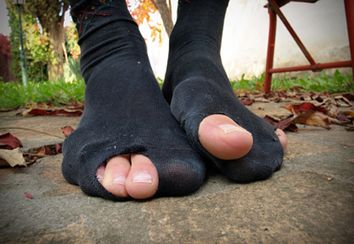
My husband Andrew feels so guilty about trashing old items — from tufts of gray contaminated fuzz once known as “pillows” to incomplete decks of cards — that he actually eulogizes them, thanking them for their service as he drops them sadly into the ugly plastic garbage bin. The other day, Andrew displayed a sock-clad foot with massive holes exposing his heel and big toe. He announced: “I need to go to the sock repair man.”

When I gestured toward the garbage, he shook his head. “Have some respect! These socks are vintage. They’re older than you!”

Witnessing Andrew’s pack-rat habits sends me into disposal mode. I regularly throw out his Swiss cheese socks. I gave away those weird solar headphones. After all, I don’t want to live like “Hoarders” subjects, who discover dead pets behind six broken-down stoves. But then I begin to fear the pendulum swinging too far in the other direction: One of my best friends is a professional organizer (code for OCD) who threw away all her skinny jeans after putting on some happy weight in a relationship. Months later, after the breakup — nature’s best diet — she was back to her old size with nothing to wear.

I suppose we are all a product of the time we live in. My grandmother emerged from the Great Depression, when squirreling away items for future use was tantamount to survival. My parents’ generation was rebelling against the chaos of antique collecting and bargain shopping with sharp lines, geometric shapes and clean surfaces. And I suppose my dilemma between tossing and collecting shows the conflict we face today: We’re living in an environment that is fragile and overburdened, in the midst of a recession, no less, but as good American consumers, it’s hard not to just want the latest upgrade.

Me, I want the immaculate home and the wild backyard garden. (I also want this season’s Chanel lip gloss.) So I guess I will just try my best to find a balance. I throw away old socks and don’t feel guilty. I can have garage sales and let other people hoard my junk. I can donate to charity organizations. I’ve decided it’s OK to discard those yellowed envelopes, as long as I do it via the recycling bin.

At least I’m not spending hours stressing about it. Because time is one resource none of us can buy again or recycle. Every generation can agree on that.

Why “The Biggest Loser” is the most American show

Plowing through bad press and scandal, the weight-loss competition captures our unflagging, fat-obsessed selves

  • more
    • All Share Services

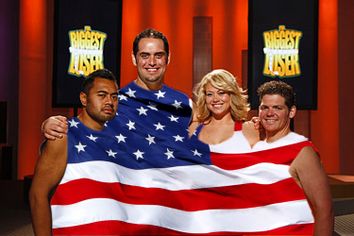
Why The finalists on "The Biggest Loser: Couples 3"

“America is watching,” proclaims tattooed celebrity trainer Bob Harper, veins popping from his temples with each syllable, as if even his skull is ripped with muscles.

“I want to inspire America,” says a still chubby young contestant in a bright T-shirt, huffing and puffing. He wipes his teary eyes and heads back toward the 24-Hour Fitness-sponsored gym’s treadmills.

On NBC’s “The Biggest Loser,” “America” is a primary character, constantly referred to and revered as an all-knowing Big Brother-like entity. America is weak and fat and needs guidance. America is strong and able and will persevere. America is watching, so do it for America.

I’d like to meet this America they talk so much about. Don’t get me wrong: America is definitely watching. “The Biggest Loser” is one of NBC’s most reliable ratings successes, despite its time slot against the juggernaut of “American Idol.”

But I can’t help wondering if — like me and my husband — America is watching smugly from a ratty old sofa, while eating massive piles of fried Chinese food and congratulating itself on being only 5 to 40 pounds overweight instead of 200. Even on a recent episode of “House,” the curmudgeonly doctor, for whom perversity is a religion, sits on his friend Wilson’s couch glued to an episode of the weight loss-based reality show with a tub of ice cream and a spoon.

But I suppose the contradiction between weeping with contestants through their workouts and success while stuffing our own faces in stubborn protest is American itself. Where else can you dream of having your cake and bingeing on it, too?

In fact, “The Biggest Loser” may be the world’s most American show, built on the same principles of capitalism and dreams that have long defined this country. As we prepare for the finale  of “The Biggest Loser: Couples 3″ tonight, here are 10 lessons about American culture we can learn:

1. America Loves a Franchise

As red, white and blue as the show may be, it has aired in about 15 other countries. The original U.S. program launched in 2004 and international versions abound, from Asia and Hungary to the Arabic version, “Biggest Winner Arab.” (Apparently, some people don’t like being labeled “Losers.”) In this incarnation, female contestants’ burqas obscure their “before and after” shapes, likely rendering makeover episodes and weight loss reveals less dramatic.

2. There’s No Such Thing as Bad Press

Despite pitfalls like a New York Times article exposing some contestants’ post-show weight gain and lodging criticism about pushing already sick contestants too hard, resulting in hospital visits, injuries and unsafe tactics, “The Biggest Loser” continues to hold strong in the ratings department. The series only gains momentum and viewers as each negative story breaks.

3. America Gets Back on Its Feet

The producers’ strategy in the face of criticism is genius and still manages to project a seemingly earnest agenda: In a recent episode on May 11, which followed the final week on “The Ranch,” two previous contestants returned to offer guidance about at-home maintenance: Still svelte Season 7 winner Helen Phillips shared her success story, while once-again-obese Season 3 winner Eric Chopin talked about the pitfalls of bad days and “giving yourself passes.”

While Chopin’s weight gain is seemingly emblematic of “The Biggest Loser’s” signature failure — to mistake unsustainable and short-term weight loss for long-term life changes or emotional resolutions — his attitude says otherwise: He is still grateful to the show, he willingly accepts personal responsibility for his lapse, and he’s back to losing weight again, down 70 pounds.

The show acknowledges the “regain” issue, thereby voiding criticism. See, America gains weight. But that’s OK because America can handle it. America is allowed to be imperfect. The only lesson America needs to learn is to love itself.

4. America Is Litigious

Trainer Jillian Michaels has lately also been plagued with scandal thanks to legal battles over her self-branded dietary supplements.

The label reads: “Two Capsules Before Main Meals and You Lose weight … That’s It!” People are suing for false advertising. Apparently, you have to get off your bum too and stop eating McDonald’s religiously — which, to be fair, is what Michaels explains on every damn episode. By the way, people, once you “pop” a Pringle, you really can stop. Campaigns aren’t always 100 percent literal.

On the flip side, Michaels is being criticized for hocking “diet pills” at all, especially with ingredients that some say are “dangerous,” others “ineffectual.”  Either way, she thrives. The fitness fascist — who is billed as “America’s toughest trainer” because of her famed temper and who, as resident “Life Coach,” is never satisfied until she draws tears — has a new spinoff debuting next Tuesday called “Losing It With Jillian!” 

5. America Is Not Afraid to Cry

During that same “last week on The Ranch” episode, I counted 30 instances of crying; 37 if you include my own blubbering. On this particular episode, some tears are happy (Sunshine feels beautiful!), some sad (Sunshine got sent home!), and some contagious (Sunshine’s father, O’Neal, is proud!). Weepy moments come in response to individually screened weight-loss montages. Others are told in flashbacks with “ye olde” camera filters, as if they happened in 19th century saloons. 

Crying is not specific to this episode, though. In fact, that week, the contestants felt so resolved/competitive that they were less apt to well up. But throughout the entire series, people sob constantly at makeovers, family reunions, confessions, breakdowns, moving realizations, lonely “fat kid” stories, sentimental goodbyes, triumphs, free cars, piles of untouchable doughnuts and, of course, weight fluctuation.

One major Michaels-induced meltdown is required for every contestant on the show. It may even be in the contract. During these intense moments, Michaels works out a contestant so hard that he or she “breaks” emotionally and collapses, sobbing about past traumas from family deaths to broken hearts. Despite a suspiciously unmoving forehead, the trainer sometimes chokes up too, having also “eaten her feelings” as a teen.

I suspect that some contestants keep trauma in their pockets to pull out on rainy days, so Michaels will give them sanctioned 15-minute breaks from working out. I would.

6. America Can Spin Virtuosity Into Capitalist Gold

The best thing about this show is that we get to feel virtuous about our TV viewing thanks to various “Biggest Loser” initiatives to fight hunger and educate America about healthy eating. The network even manages to create moneymaking brand tie-ins for these charitable endeavors. For instance, a commercial for its “Pound for Pound Challenge” announces over 5 million pounds of civilian weight loss pledged and explains that for each pound 14 cents has been donated to local food banks. A group from Walgreen’s of Southern California — which has pledged more than 2,000 pounds — is featured, as they volunteer to serve senior citizens at Feeding America’s St. Francis Center. Isn’t Walgreen’s just dreamy? Sigh.

But in an age of TiVo and commercials easily skipped, “The Biggest Loser” is also famous for having some of the most obvious plugs. Contestants are instructed robotically by Michaels and Harper to save themselves from a life of bottomless obesity by eating Subway sandwiches, working out at 24-Hour Fitness, drinking water from a Brita, saving Jennie O. turkey in Ziploc’s resealable bags and chewing Extra Sugarfree Gum. If that’s not capitalism successfully at work, then I don’t know what is.

7. America Is Obese

Surely, you know this already.

8. America Won’t Miss a Branding Opportunity

“The Biggest Loser” is not just a TV show. That would be child’s play. The brand — led and produced by Reveille LLC — also has a robust line of licensed merchandise that brought in an additional $50 million revenue in 2009, including workout DVDs, calorie-counting “bodybuggs,” hats, duffel bags, mugs, ’80s mixes, scales, water bottles, cookbooks, Wii Strength Kits, dumbbells, T-shirts, sport towels and the newest book: “Biggest Loser: Six Weeks to a Healthier You.”

As if that’s not enough, the brand also offers ways to enroll in the program via the Biggest Loser Club, an online fitness and nutrition tool that costs $19.98  for one month, $29.95 for three months, or $99 for a 12-month subscription.

Or, for the full experience (sans Michaels and Harper), viewers and their families can make reservations to visit the Biggest Loser Resort at Fitness Ridge in Utah, where a weeklong spa cuisine- and hiking-filled Boot Camp program starts at $2,195 per single individual.

 9. America Goes to Extremes

Weight loss is generally a pretty good idea for obese people, right? Getting as thin as possible in order to win $250,000 may not be quite as healthy. Admittedly, extra sagging skin formerly stretched around chunky necks and stomachs does not flatter anyone’s appearance, but certain contestants have returned to the finale looking a bit, well, anorexic. When Helen Phillips won the show, she was down 140 pounds to a mere 117 at 5-foot-6. And Season 8′s crazy-eyed (and behaving) Tracey Yukich looked a little like a meth head at the end, though she was 132 pounds. Maybe she got her hands on some of Michaels’ yerba mate and guarana-filled diet pills. 

10. For America, Anything Is Possible

Still, no matter how large or emaciated we get, as Americans we are taught that we’re never too old, too stupid or too downtrodden to change our social standings or our lives. That is the foundation for this TV hit and that is the foundation for this country’s belief system.

 As the theme song says:

It’s never too late to try. / What have you done lately to make you feel proud? / You could be so many people. / If you make that break for freedom!

 This show offers people the chance to “change their lives” and live the American dream, as long as they’re willing to face — and cry about — past troubles, change their eating habits (Yoplait Yogurt, anyone?), hock products, and exercise like crazy. The unfettered belief that one could at any point choose an entirely different existence is American at core. Only here do people believe that they’re not relegated to their lot. Fame, fortune and a 24-inch waist are all just a resolution — and a whole lot of squats — away.

For now, as the finale of “The Biggest Loser: Couples 3″ unfolds, I choose to eat orange chicken and white rice with my husband while watching reality TV. 

And, as I shed an empathic tear or two for contestants, maybe I’ll chew some Extra Sugarfree Gum. Maybe not. After all, America is a free country.

Continue Reading Close

May we congratulate you on your divorce

Couples are commemorating shattered vows with the same kind of fanfare accorded their marriage -- complete with announcements, parties and even vacation funds.

  • more
    • All Share Services

May we congratulate you on your divorce

Thirty ceremonies later, the wedding rush has finally slowed to a trickle. Wedding season may traditionally only last from May through October, but my experience says otherwise: “I do’s” have been constant since 2003, without so much as a winter break.

I can’t help rejoicing that no oversize invitations clog my tiny mail slot. I no longer choose three months in advance between chewy chicken and fishy salmon, design my portion of a “love quilt” or hop in a white stretch Hummer limo with 14 other grown women — all clad in mandatory purple — while sipping periwinkle “bachelorette” martinis from veiny, plastic, glow-in-the-dark, disembodied penis straws. These days, I check my in box without fear of blissful wedding Web sites sharing rose petal-filled proposal sagas and Pottery Barn, Tiffany and Target registries.

I thought I was finally safe. I didn’t know about divorce season.

Recently, my boyfriend Andrew opened a mass e-mail from his friend George, with the generic subject heading: “Please Read.” Expecting a forward about the latest dangerous cold medicine or recalled cat food, Andrew was shocked when confronted instead with a deeply impersonal divorce announcement. Having left his fabulous 30-something wife for a younger woman, George expressed sadness about the relationship’s dissolution and (to undisclosed recipients) sincere gratitude for years of camaraderie.

Though the sentiment had intimate — even life-changing — implications, the e-mail was deeply disposable. Reading (and rereading) the note from our swivel chairs, Andrew and I unwittingly bore witness — along with a larger anonymous group — to this relationship’s public demise, just as we had watched our friends seal their bond from a pew at their wedding years before.

Another divorce announcement arrived via mass e-mail soon thereafter. A rambling joint effort by the couple, it read like a separation form letter and waxed so profusely about eternal mutual admiration that I suspected the couple just edited their original wedding vows to cut down on writing time. Still, a special request that we (close personal friends) refrain from writing negative comments on their respective MySpace pages was probably a new addition. In fact, divorce announcements are now regular occurrences on MySpace and Facebook, where people constantly update their status, marital and otherwise.

It made us feel like intruders, as if we were guests at a wedding for anyone other than our dearest friends and family. If these couples didn’t feel close enough to share this significant and painful issue over the phone, in person or at least via individual e-mail, why did they need to treat acquaintances to a mass diatribe about how they’re still “cheerleading” for each other? As my deeply spiritual friend Tova admitted after a recent breakup, “I prefer to hate it out. In private.” I know what she means. All the saccharine sentiments, however well intentioned, make one yearn for a few good ole exclamations of “bastard” and “bitch.”

Actually, commemorating divorce with the kind of fanfare usually accorded a wedding, whether by e-mail or more formal snail mail, is now relatively common. Failed marriages may have been shameful 30 years ago, but now they are often celebrated as landmarks and new beginnings. Maybe the celebrity breakups that dominate tabloid rag headlines have made us blasé about public divorces. When Jennifer Aniston and Brad Pitt broke up, for example, trend-obsessed Los Angeles boutique Kitson sold “Team Aniston” and “Team Jolie” shirts, so strangers could express solidarity by sporting cotton tees. (Incidentally, “Team Aniston” sold out 2-to-1.)

T-shirts are generally reserved for more high-profile couples, but regular folks might send one of the various greeting cards that are springing up to mark the occasion. Most of them attempt to assuage potential awkwardness and sadness with humor: A Caddylak Graffix option depicts a pistol-toting cowgirl and reads, “Husbands are like guns … keep one around for long enough and you’re gonna want to shoot it!” An upbeat version from J. Treacy Designs features an elated woman throwing papers in the air, declaring, “It’s finally over! I just had to tell everyone! Call to congratulate me at (phone number).” And a male-oriented card from TheDivorceCards.com pictures a guy with his hand to his head, lamenting, “My wife left with my house, my car, my money and my best friend … and I miss him.”

Jill Conner Browne, author of “The Sweet Potato Queens’ Wedding Planner/Divorce Guide,” strongly recommends the humorous approach. “Sending out divorce announcements is tacky, but it’s funny tacky, so it’s a good thing. The parts in life that aren’t funny are the parts we need to laugh at most,” Conner Browne muses. Still, she groans at the impersonality of generic notes: “I want my own dadgum letter. I don’t want a mass e-mail about your wedding or divorce.”

Browne also sees value in another trend: Divorce parties/showers. “Divorce parties meet some genuine needs. Who needs your loving support more — your deliriously happy friend who’s planning her wedding or your friend who is lower than a worm’s belly over her divorce?” she asks. “The best group of friends I ever heard of had a party for their divorced buddy. Each woman invited the most attractive single man she knew to come meet their girlfriend — and nobody was allowed to dress cute or wear makeup but the honoree! Now that right there is what you call your best friend forever!”

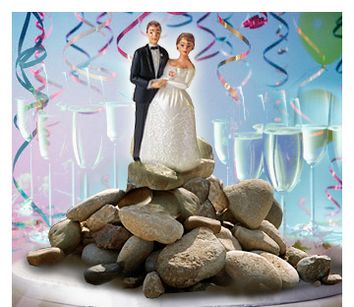
Probably the most notorious divorce party to date was hosted last November at Bellagio’s club Light in Las Vegas by Playboy Playmate Shanna Moakler, ex-wife of Blink 182 drummer and reality show “Meet the Barkers” co-star Travis Barker. The whole fete reeked suspiciously of an angry bachelorette party. When the musician heard about his ex’s upcoming festivities, he blogged on his MySpace page: “Shanna is having a divorce party in celebration of our failed marriage apparently … I mean, a party?” Barker’s concern was legitimate, as the event’s centerpiece was a three-tiered, pretty pink wedding cake with a murderous bride poised at the peak and a bloody groom, lying twisted on the plate below.

Not all Vegas divorce parties are so vengeance-oriented. Andrea Eppolito, director of special events and catering for Sushi Roku and Boa, two hipster restaurants at Caesars Palace, says requests for divorce parties started coming in sporadically about six years ago. In the last 12 to 18 months, demand rose astronomically — thank you, Shanna?

“I probably plan a divorce party once a month,” Eppolito estimates. Having begun her career as a wedding planner, Eppolito has organized weddings, divorce parties and then second weddings for the same clients. Separation events are usually customized weekends on a smaller scale, with between six and 20 people, hosted by siblings or best friends. “After people sign the paperwork, they want to decompress,” the planner explains. “Sometimes people want something cool, fun and sexy at Roku, and sometimes they want spa treatments.” Slumber parties are a new option with big s’more and cinnamon-dusted donut hole-filled dessert displays, liquor, hot chocolate and classic movies.

Eppolito is adamant that these events should promote catharsis rather than negativity, as at her own post-divorce coming-out party six years ago. She confides, “I had spent enough time being hurt, angry and disappointed. You want to mourn it, but you also want to celebrate what was and what’s to come.”

Some divorcees embrace announcements and parties as a way to put the word out on their own terms and with their own public spin. Christine Gallagher, the Los Angeles author of “The Divorce Party Planner,” agrees that “The tone of the announcement can speak volumes about what happened, so that others don’t feel it’s an unmentionable subject.” Gallagher believes a theme party is key to salving the soul; as a result, she’s organized everything from “Survivor”-themed beach parties to barbecues using the ex-husband’s golf clubs as spits.

Since divorce parties mirror nuptials, gifts are an inevitable all-American requirement. Just as at weddings, divorce presents must be “new beginning” appropriate. “Often a divorce means half the stuff is taken by the ex. Some people have a divorce registry, so that necessary items like coffee makers, etc., are replaced at the party,” Gallagher explains. “A toolbox is often the perfect gift for a woman. Everyone can chip in and buy a tool.” Vacation funds are popular too. Searching online yields a multitude of other suggestions such as lingerie (à la bridal showers) and gag gifts like a Boyfriend Pillow that puts its arm around you or a set of Venereal Disease stuffed animals, the former probably not likely to encourage a divorcee to “get back out there.”

When Phil and Barbara Penningroth — who literally wrote the book on divorce rituals, “The Healing Divorce” (2002) — separated after 25 years, the couple strove to find forgiveness through ritual. Their own personal ceremony included a slide show of old photos, a forgiveness vow and a ring return; they highly recommend discarding the ring as a cathartic experience, whether it’s buried, returned or tossed in the river. They also encourage couples or individuals to invite family and friends.

The rise of the divorce celebration comes at a moment when America’s “wedding industrial complex” is coming under some scrutiny. Earlier this year, Rebecca Mead‘s book,”One Perfect Day: The Selling of the American Wedding,” documented many of the worst excesses. Between ostentation, one-upmanship and lavish registries, weddings have become more like episodes of MTV’s “My Sweet Sixteen” than legitimate rites of passage, more about how the couple wants to be perceived than about an actual relationship.

In fact, high-tailing it to the altar has inspired myriad reality shows like TLC’s “A Wedding Story,” WE’s “Bridezillas,” ABC’s “The Bachelor” and MTV’s “‘Til Death Do Us Part: Carmen and Dave” — and we know how well that turned out for Electra and Navarro. Court TV broadcast its own series called “‘Til Death Do Us Part,” hosted by John Waters, which chronicled married couples whose relationships ended when one spouse murdered the other one.

Public divorce fanfare is seemingly the final frontier in the overblown wedding game, but these ceremonies and parties at least attempt to promote reflection and garner support during a painful time “Whatever works” is the understandable mantra of divorce veterans.

I vowed never to ride in another stretch limo, but then lo and behold, I actually recently got engaged myself. Now it’s my turn to torture friends with global flights for a weekend of terribly cheesy music and obligatory meals (though I draw the line at penis straws). My mother wondered about my “morbid curiosity about divorce,” when I’m supposed to be planning my wedding. Getting married these days — when “happily ever after” is nothing short of a holy grail — requires a leap of faith, and thorough evaluation, too. They say you should never marry someone you wouldn’t want to divorce.

While marks of separation like divorce announcements and parting gifts are generally taboo for a bride-to-be, there’s value in experiencing the event with eyes wide open. The ultimate objective is to avoid coming face to face with John Waters on “‘Til Death Do Us Part.”

Continue Reading Close