Priya Jain

The struggle for independents

The bankruptcy of a book distributor sent shock waves through the indie publishing world, leaving small presses like McSweeney's struggling to survive. Can the Internet help keep them afloat?

  • more
    • All Share Services

The struggle for independents

McSweeney’s is holding a garage sale of sorts. An e-mail sent out last week announced that, “for the next week or so,” the publishing house founded by Dave Eggers would be selling its new books at 30 percent off and its backlist at 50 percent off. It is also, by way of eBay, auctioning off donations from its more well-known contributors: One could bid on an original Chris Ware comics page, a personal tour of “The Daily Show” guided by John Hodgman, or a “one-sentence apology to your boyfriend/girlfriend, written and signed by Miranda July.”

But the excitement stirred by the McSweeney’s e-mail had less to do with the booty on offer than with the alarming news that McSweeney’s needed to raise money at all. For fans, and for those who follow book-trade news, the e-mail raised the possibility that the much-beloved publisher could become another casualty of a bankruptcy saga that has engulfed the independent-publishing world for six months.

The bankrupt company in question, Advanced Marketing Services, was the parent company of Publishers Group West, which distributed books for more than 130 independent book publishers. “For us the timing was particularly bad,” says Eli Horowitz, the publisher of McSweeney’s Books, which has lost about $130,000 in actual earnings as a result of the bankruptcy. “We had a new Nick Hornby book and [Dave Eggers'] ‘What Is the What’, which was our best seller of all time.”

McSweeney’s is far from the only publisher that’s taken a hit: As a result of the bankruptcy, either directly or indirectly, small publishers Soft Skull, Hugh Lauter Levin and Inner Ocean have been acquired by larger publishers, and Carroll & Graf and Thunder’s Mouth, two Avalon Publishing Group imprints, have folded. Tiny punk-rock publisher Re/Search puts out two titles a year, but this year it’ll be lucky to release one; publisher V. Vale was planning to update and reissue a book on William S. Burroughs for its spring title, “but we didn’t have the money even for the down payment on the printing cost,” he says.

Not every publisher is hurting so deeply, but the bankruptcy has left the small-press world at least temporarily wounded, and has probably changed it for good. “This was the biggest bankruptcy that’s ever happened in publishing history,” says Munro Magruder, the associate publisher of the new-agey New World Library, which publishes Deepak Chopra‘s books. “And its implications are going to be felt for some time.”

Horowitz says that part of the problem is the tenuous nature of the business. “For all of these publishers, it’s a break-even business at best; you just try to stay afloat to do what you love to do. If we found ourselves making money we’d probably take on more ridiculous projects we’d want to do. It’s not really a business that’s equipped to absorb a big chunky loss.”

The fact that AMS/PGW’s financial troubles could affect publishers so dramatically also serves as a reminder that, despite indie publishing’s do-it-yourself ethos, the one area in which it hasn’t been able to escape the middleman is in distribution. You can’t sell a book if no one knows where to find it, and in helping them overcome that problem, PGW had become indie publishers’ most indispensable partner.

“The beauty of PGW was that it allowed the publishing and editorial people to focus on publishing and editorial and not worry about being a marketing and sales organization,” says Charlie Winton, who started PGW 30 years ago and sold it to AMS in 2002. PGW also allowed bookstores to find independent book publishers easily and helped small presses put together large shipments they wouldn’t have been able to handle on their own. And it helped turn books like the Earthworks Groups’ “50 Simple Things You Can Do to Save the Earth” and Charles Frazier’s “Cold Mountain” into bestsellers.

Ironically, PGW — the largest American distributor of independent publishers — was by all accounts having its best year ever, and the financial troubles of AMS, a corporate giant that mainly distributed to wholesalers like Costco and Sam’s Club, brought it down. AMS filed for Chapter 11 on Dec. 29, a result of being unable to bounce back from SEC and FBI investigations into its advertising accounting practices — which led to three executive indictments — and a class-action suit on behalf of its shareholders. As Horowitz points out, “It wasn’t the indie distributor; it was a big, old-fashioned corporation with accounting problems.”

Or, as Soft Skull publisher Richard Nash puts it more bluntly, “The independents got fucked by the Enron of publishing.” When AMS filed for bankruptcy, PGW’s assets were frozen, which included book sales for the last quarter of 2006 that belonged to its clients. Instead of receiving that money on Jan. 1 as expected, publishers were left uncertain as to when — or if — they would get paid, an especially panicky situation considering that the sales in question covered the holiday season, the most profitable time of year for any publisher.

Then, at the end of February, the Perseus Book Group successfully took over the majority of PGW’s accounts, rescuing PGW’s employees and paying the publishers 70 percent of what they were owed. Although many publishers were quite happy that Perseus — a group that, like PGW, is focused on independent publishing — had taken over their accounts, they found themselves losing 30 percent of their sales for the fall of 2006.

Even for those publishers who could take the fourth-quarter hit, the new deal with Perseus meant shifting over to a different payment schedule, which will leave many publishers virtually penniless until August. “Over the very, very long run, it’s no big deal,” says Nash, “but in the short run it is, and the short run is how smaller independent publishers live.”

Nash, who has been running Soft Skull since 2001, was one of the publishers who couldn’t bank on the long run. “I remember seeing the new contract and thinking, This is going to be a pain, but not realizing the impact until putting numbers into a spreadsheet and [seeing that] I was going to be a quarter of a million in the hole by September and October,” he says. “Around then I started talking to Charlie Winton.” In May, Winton bought Soft Skull for his new publishing house, Winton, Shoemaker and Co., LLC. “For Soft Skull itself,” says Nash, “we ended up in an incredibly lucky version of an incredibly unlucky situation in that no one knows how to operate an independent business profitably better than Charlie Winton.”

Winton sold PGW to AMS in 2002 so that he could focus on his growing publishing house, Avalon Publishing Group. “People ask, ‘Do you wish you had kept PGW?’,” he says now. “At some point that question becomes personal, but the business had gotten so big that it was necessary for PGW to go to a new place.” In a feat of serendipitous timing, Winton was in the process of selling Avalon to Perseus when AMS/PGW went bankrupt. “The PGW bankruptcy occurred just as we were going into final papers in the Avalon sale,” he says, so “part of the opportunity was the fact that they were already in a deal mode with me.” Winton, however, couldn’t save Carroll & Graf and Thunder’s Mouth, two Avalon imprints that Perseus axed after buying Avalon from Winton. “I’ve been on the record that I’ve been very disappointed with the outcome there,” says Winton.

All of the publishers Salon spoke with were happy to be working with Perseus, which has kept the PGW sales and marketing team intact, thus making it easier for the publishers to transfer their businesses smoothly. The odd thing about this salve, however, is that it has forced independent publishing distribution to conglomerate like a big corporation. Perseus’ distribution arm now owns both PGW and Consortium, another independent-press distributor, which means it distributes books for more than 300 publishers.

If the demise of one corporation, AMS, could hurt indie publishing so badly, what does it mean that the majority of the indie-publishing world now relies on Perseus? “Not necessarily by intention, but by outcome,” says Nash, “in the Texas hold ‘em of independent press distribution, American independent publishing had collectively placed its entire pot in Perseus. If Perseus goes under, who knows what will happen.”

For those that survive, the AMS/PGW/Perseus story serves as a good reminder that independent publishers are best off when they’re self-reliant. Felice Newman, the co-publisher of Cleis — which specializes in sex and gender books from authors like Tristan Taormino and Violet Blue — estimates that Cleis lost about $100,000 in the bankruptcy and takeover, and had to sell off discounted books on its Web site and “cut everything to the bone,” she says. Thanks to the fact that Cleis also sells direct to sex-positive stores like Good Vibrations, and wholesale distributors, they were “able to go on without any distributor for a few months,” says Newman. “Cleis has been able to bounce back completely — which means if this hadn’t happened, we would be flush now.”

The best tool that indie publishers have is the Internet, of course. McSweeney’s was inspired to hold its online sale by a similar, successful move that comics publisher Fantagraphics made a few years ago when its distributor filed for Chapter 11. Like McSweeney’s, Cleis appealed directly to its readership and offered discounted books on its Web site. “We got this outpouring of love and support from our authors,” says Newman. “We asked them to send people to buy direct from our Web site, and sales increased a lot.” Munro Magruder says that New World Library, which acquired the smaller Inner Ocean as a result of the bankruptcy, was lucky in that “we’re a larger publisher, we’ve been around for 30 years, we simply had the financial resources” to deal with the bankruptcy. But it too asked some of its authors to do an e-mail blast and urge readers to buy directly from the publisher.

In this, at least, independent publishing is retaining its intimate, DIY flavor. Horowitz, who says McSweeney’s has received “thousands of orders in the last few days,” quips, “I don’t think Bertelsmann can send out an e-mail saying, ‘Hey, guys, we need to sell off some books so we can put out some more.’ In a way this feels like a whole town coming together, and to me, this is all of a piece with what we’re about.”

The mad Russian

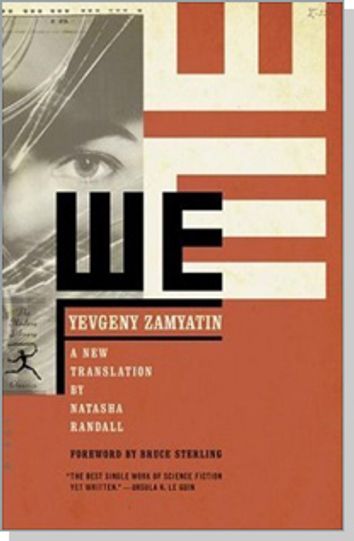
Years before "1984," Yevgeny Zamyatin wrote "We" -- a dystopian nightmare that remains eerily relevant even as Huxley and Orwell seem almost quaint.

  • more
    • All Share Services

The mad Russian

“True literature,” wrote the Russian author Yevgeny Zamyatin, “can exist only where it is created, not by diligent and trustworthy functionaries, but by madmen, hermits, heretics, dreamers, rebels, and skeptics.” In that case, Zamyatin was a truly mad heretic. The father of the dystopian novel, Zamyatin is widely recognized as the first writer to take H.G. Wells’ science-fiction vision and turn it on its head. If the novel, with its low-tech paper-and-ink delivery system, is rebellion against scientific progress, the dystopian novel has to be the greatest act of rebellion in existence. Technology is about making us more efficient and happier; the dystopian novel is about making us realize how important, and deeply human, it is to be lazy and unhappy.

Zamyatin wrote his masterpiece “We” in 1920-21 as a satire of the tyrannical bent institutionalized Bolshevism was taking — years before the worst features of the Soviet system truly became apparent. “We” served as the inspiration for George Orwell’s “1984,” and although Aldous Huxley swore he’d never read “We,” his “Brave New World” bears a resemblance to it. (“We” also probably influenced Ray Bradbury’s “Fahrenheit 451,” Ayn Rand’s “Anthem,” and Ursula K. Le Guin’s “The Dispossessed.”) And yet Zamyatin’s name is rarely mentioned when discussing dystopian literature outside of the classroom. Orwell and Huxley regularly top best-book lists; “Big Brother,” “newspeak” and “soma” are a part of our lexicon, but invoking terms from “We” brings up blank looks.

Hopefully, Natasha Randall’s new translation will earn Zamyatin the readers he sorely deserves. “We” is one of the few dystopian novels to invoke a nightmarish atmosphere that hasn’t aged. (Margaret Atwood’s “The Handmaid’s Tale” is another, though it’s still very young by comparison.) Now that we know that the biggest utopian ideas of the 20th century — communism, fascism, the perfectibility of mankind through technology — were not only insane but also destined to fail, the classics of the genre can seem a little outdated. “1984,” with its crumbling, post-blitzkrieg London, invokes a fear of rampant communism that is no longer a part of our lives. “Brave New World’s” child hatchery and whizzing airplanes call to mind “Gattaca” more than a foreseeable future; Huxley’s character names — Lenina, Bernard Marx — are quaintly mid-century. That doesn’t mean we should discount these novels; they are a part of our literary history. On the other hand, because there is nothing era-specific about “We’s” landscape, Zamyatin’s imagined future still feels sadly, scarily possible.

As the novel opens, it’s the 26th century A.D., and the Earth is under the power of the government of the dictator known as the Benefactor. A Two-Hundred-Years War has killed all but .02 percent of the world’s population, giving rise to the One State, which was partly created out of the need to ensure that there could be no more revolutions. The One State has discovered the equation for “mathematically infallible happiness,” which mostly consists of eliminating ego and desire. People no longer have names but numbers, and they’re taught to think of themselves not as individuals, but as parts of a whole, a unified “we.” They are referred to as “ciphers.” (A quibble with Randall’s Modern Library translation: In the 1993 Penguin Classics edition, “ciphers” are “Numbers,” and “the One State” is the compactly futuristic “OneState.” It may be that Randall’s choices are closer to the original Russian, but they’re much less evocative.)

In this mechanically minded future, a Table of Hours dictates every movement of the day; the ciphers get up, eat breakfast, and go to work in constant synchronicity. Their heads are shaved, and they wear matching unifs (uniforms) and gold badges on their chests announcing their numbers. There’s also a Table of Sex Days that ensures each cipher gets exactly as much sex as he or she needs. Thanks to the “Lex sexualis” claiming “Each cipher has the right to any other cipher as sexual product,” finding a partner is no longer a problem.

Without individuality, privacy ceases to be an issue. The city of the One State is surrounded by a Green Wall, made of glass, and within the wall, everything too is made of transparent glass — buildings, sidewalks, beds and chairs. (Only on Sex Days do the ciphers get to lower the blinds in their own rooms.) Even the space shuttle that the One State is set to launch — in the hopes of conquering whatever unknown societies exist on other planets — is made of glass. “We” takes the form of a diary started by the builder of that shuttle, a mathematician called D-503. When the Benefactor urges the ciphers to write something dealing with “the beauty and the grandeur of the One State” to send up in the shuttle — in the hopes that words, before arms, will convince the extraterrestrials to willingly subjugate themselves to the One States’ “beneficial yoke of reason” — D-503 decides to record his daily life, so that those living “in the savage state of freedom” will see how wonderful un-freedom really is.

D-503 is cheerfully aware that life in the One State might sound absurd. Comparing his diary entries to a 20th century novelist needing to explain the word “jacket,” he writes, “I am certain that the barbarian, looking at a ‘jacket’ would think: ‘What’s this for? Just more to carry on my back.’ I have a feeling that you will think exactly the same thing when I tell you that none of us, since the Two-Hundred-Year War, has been beyond the Green Wall.” But he soldiers on nonetheless: “I will just attempt to record what I see, what I think — or more exactly, what we think,” he writes, and he stays true to that goal even when his “I” begins to deviate from the “we.”

Soon after D begins his records, he goes on a “walk” — really a march of “hundreds and thousands” “in measured rows, by fours” — and meets I-330, a female cipher with “white — unusually white — and sharp teeth” who immediately gets under his skin: “There was a kind of strange and irritating X to her, and I couldn’t pin it down, couldn’t give it any numerical expression.” He hates her at first and then realizes that she’s infected him with the one thing that trumps all rational thought: love. And, as he soon discovers, I-330 is a rebel; before long she ensnares him in her plot to overthrow the One State.

Anyone who has read “1984″ can probably guess what happens, but Zamyatin’s plot is almost secondary to his playful character sketches and his poetic descriptions of D’s metamorphosis. Zamyatin’s characters are, on the surface, cartoonish, but that adds a gleefully surreal element to the novel. Almost every cipher magically contains the physical properties of his or her number: I-330 is “thin, sharp, stubbornly supple, like a whip”; O-90, the female Number D shares his Sex Days with, is short and round, and D refers often to her “pink circle of a mouth.” Even the X factor that D notices in I-330 expresses itself physically, in the sharp lines of her eyebrows and between the corners of her mouth and nose.

D himself doesn’t resemble the letter D, but he too is a caricature: He obsesses over his hands, which are “hairy and shaggy,” “monkey hands” — a portent of the transformation he’s about to undergo. And some of D’s thoughts are hilariously inhuman, like when O-90 tells him, “I would so like to come to you today and lower the blinds,” and D thinks it a sign of her dimness, writing with exasperation that she “knows as well as I do that our next Sex Day is the day after tomorrow.” But he is also overwhelmingly passionate — even when discussing math problems, his excitement nearly shakes the page — and when he starts to embrace the irrational, that passion turns him into a poet, and he experiences love, and all its accompanying terror and wonder, with heartbreaking rawness. Shortly after sleeping with I-330 for the first time, D finds “the air itself is a little rosy, all steeped in the sun’s gentle blood,” but later, suffering from her absence, the days become “the same yellow color, like desiccated, incandescent sand.” As a doctor tells him, when D goes to the Bureau of Medicine with the hopes of being cured, “How awful for you! By the looks of it, you’ve developed a soul.”

With his childlike confliction and confusion, D appears to share little with his creator, aside from their mathematical backgrounds. Zamyatin was born in Lebedyan, Russia, in 1884, the son of an Orthodox priest, and worked for most of his life as a naval engineer. The rest of his biography describes a man who was not only unafraid of a fight, but was perpetually looking for one. He was arrested several times, first in 1905, for being a Bolshevik student activist, and later for trying to publish satire critical of the regime that had risen from Bolshevism. He was also exiled repeatedly, and always managed to find his way back into the country. Thanks to his friend Maxim Gorky, he managed to land a literary job in 1917 and helped nurture the young literary talent that arose in Russia in the 1920s. “We,” naturally, was banned (it was first published in New York, in English, in 1924, and wasn’t allowed into the USSR until ’88 under glasnost). In 1931, tired of censorship, Zamyatin asked to be allowed to go into exile one more time, writing to Stalin, “I beg to be permitted to go abroad with my wife with the right to return as soon as it becomes possible in our country to serve great ideas in literature without cringing before little men” — and, amazingly, won his freedom. He fled to Paris, where the lack of conflict seemed to disagree with him: He died in 1937, unable to complete another novel.

D does embody one of Zamyatin’s most steadfast beliefs, that the dialectic between entropy and energy — dogma and revolution — propels history. By framing that dialectic as a psychological drama, Zamyatin also ensured that “We” would resonate long after he was gone, transcending mere parable or satire. Unlike Orwell’s Winston Smith or Huxley’s Bernard Marx, D starts off happy, a truly dutiful cipher who believes wholeheartedly in the One State. He acknowledges that there are kinks in the system — “even today  from the shaggy depths of things, you can here the wild echoes of monkeys” — but rejoices that these are “easily repaired, without having to stop perpetual, great progress of the whole machine.” And besides, as he’s writing, the powers-that-be are putting the finishing touches on the Great Operation, which will surgically remove every cipher’s imagination and complete the perfection of mankind.

Because he’s telling the story, much of the novel’s action takes place in D’s head, a Freudian battle between the superego and the id, which I-330 awakens in him. (And like so many innocent-seeming words in Zamyatin’s novel, the title “We” takes on this other layer, of the two different D’s fighting between love and reason.) The further he goes down the path to the irrational, the more forcefully he argues for the One State rationalism, as if he were trying to exert some control over his mind. Reading his defenses of the One State is to understand that tyranny isn’t the product of some monstrous impulse, but rather an extension of human reason, stretched, unchecked, until it’s gone too far. There’s a dispassionate, theoretical logic to D making fun of the “ancients” for knowing animal husbandry but allowing humans to procreate willy-nilly, or in proclaiming the hypocrisy of those same old governments for making it a crime to kill one person but allowing everyone to shorten their own lives through unhealthy habits.

Nor is it illogical to read the story of Adam and Eve as he does, as a choice between “happiness without freedom, or freedom without happiness,” and the “beneficial yoke” of the One State as returning mankind to the garden. And when love invades — what the mathematically inclined D first understands as the irrational number √-1 — and unhappiness, jealousy and yearning pervade him, it becomes impossible not to pity him and almost to wish that he could go back to his blissful, robotic state. As a character, D becomes far more interesting when he starts to live in the irrational world “where minus one has roots.” And yet, how can we not want him to be happy, even if that means subjecting him to the Great Operation? Zamyatin knows that the One State doesn’t just exist on the page, nor is it some evil plot concocted by an unknown they; that “we” encompasses all of us.

The tension between reason and the irrational doesn’t just exist in D’s head; each detail in “We” hums with hidden meaning, a compressed accordion of metaphors, jokes and symbolism. I-330 doesn’t just look like the letter “I,” she also represents the individual “I,” revolting against the “we,” and the irrational √-1, represented in math as i. Mathematicians tend to dismiss D’s social-mathematical defenses of the One State as overly simplistic and error-ridden “pseudo-math,” but because of Zamyatin’s engineering background, it’s probably wise to assume that his mistakes were intentional, signaling the faultiness of the One State’s happiness formula and adding another layer to D’s unstable psyche. For example, D writes that “bliss and envy are the numerator and denominator of that fraction known as happiness,” and that thanks to the “Lex sexualis,” “the denominator of the happiness fraction has been reduced to zero and the fraction becomes magnificent infinity.” Of course, dividing by zero yields nothing; it is an illegal operation — probably Zamyatin’s sly joke on the impossibility of ever really eradicating envy.

But if we’re safe from ever being rid of envy or desire, Zamyatin suggests that something equally scary could occur. One of the remarkable things about the One State is that it doesn’t seem to need to censor the past. There is an Ancient House at the edge of town, where D and I-330 meet up, that serves as a museum to the creaky history of opaque walls and jumbled apartments. Early in the novel, D attends a lecture on music that features a classical piano performance. He frequently refers to Kant and Pushkin, and he’s familiar with Shakespeare. Yet none of these things move him or the other ciphers to feel, to revolt. Orwell’s dystopian tyrants rewrote books, and Huxley’s simply destroyed them, because they feared such things might awaken the humanity in their citizens. The real-life tyrants under whom Zamyatin lived feared art’s power as well. There’s something comforting in that thought — that as long as we have books and music, religion and history, humanity can be brought back to itself. And yet Zamyatin gets at a scarier idea: For people without humanity, art has no effect. It’s not a theory we should put to the test. While “We” still has the power to hold our imaginations, we need to read it.

Continue Reading Close

Son of a preacher man

Kevin Jennings grew up gay in a strict Baptist household, taunted for being a "faggot" at his own father's funeral. So why does he still believe Christianity and gay rights can coexist?

  • more
    • All Share Services

Son of a preacher man

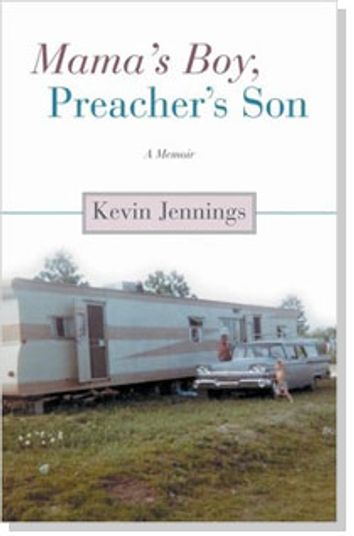
The Southern Baptist Church that Kevin Jennings grew up in taught him that his very thoughts would ensure him a place in hell. The son of a fundamentalist preacher, Jennings struggled with his attraction to men from an early age. It’s not surprising, then, that he has few happy memories of his childhood. When he lived in Lewisville, N.C., in the 1970s, Jennings’ classmates tortured him, and he endured games like “smear the queer” in gym class. His teachers picked on him or, at best, ignored him. Even when Jennings found himself, at 8 years old, crying at his father’s funeral, instead of consoling him, his brother just growled, “Don’t be a faggot.” Rather than closet himself into adulthood, though, Jennings grew up to found the Gay, Lesbian, and Straight Education Network (GLSEN) — a national organization working to stop harassment in schools.

“Mama’s Boy, Preacher’s Son” is Jennings’ memoir of coming of age, coming out and moving on, told without self-pity. Despite his woeful childhood, his story is a victorious one. Jennings describes abandoning Lewisville for a scholarship to Harvard; becoming a high school history teacher; and establishing, with his students, the first Gay-Straight Alliance student club (there are now over 3,000 around the country) before developing GLSEN. Along the way, he finds out that his family is not as close-minded as he expected: After Jennings comes out to his mother, she quietly starts a PFLAG (Parents, Families and Friends of Lesbians and Gays) chapter in her small town.

Jennings, 43, now runs GLSEN full time in New York. Salon talked to him by phone about his crusade to stop bullying in schools, and how fundamentalist Christianity and gay rights can happily coexist.

You write about how, in spite of marginalizing you as a gay man, the Southern Baptist Church actually prepared you for a life of activism. How did fundamentalism give you a structure to start thinking about advocacy education?

We were very much taught in the Southern Baptist Church that God was watching what you were doing with whatever gifts you’d been given. And if you didn’t use those gifts to help other people, he was going to remember, and you were gonna pay! There are many, many Bible verses that I would quote but there are two I’ll zero in on. One was my mother’s favorite, the story of the poor widow who put her only coin [into the temple offering box], and Jesus said it was the greatest gift because she gave all she had. And then there’s the famous story where Jesus says, “Whatever you’ve done to the least of my brothers you have done unto me.” So I was also taught to believe that it was how you treated the least valued people in our society that was going to determine your salvation. Those were very positive values I learned from growing up in a fundamentalist home.

A lot, of course, has changed for the better in schools since you were a kid, or even since you started teaching in the ’80s. Has anything gotten worse?

I think it’s a mixed bag. There are definite signs of progress, but there’s an interesting corollary to that. In the Harris Interactive poll we did last year, the largest ever poll done on bullying and harassment in American schools, 7 percent of high schoolers in the poll identified themselves as gay. Keep in mind those are the kids who are willing to tell a pollster, so there are actually probably more.

When I was a kid, you didn’t come out when you were in high school. You waited till you went to college, then you came home for Thanksgiving break and dropped the bomb over dinner. That was the plan. So we’re dealing really with a generation of young LGBT people who are doing what their straight peers have always done, which is coming out at the developmentally appropriate age of adolescence.

The problem is, given the example of the laws I just gave you, the systems haven’t caught up to that. And therefore we see the astoundingly high rates of harassment. Over two-thirds of gay kids are routinely harassed while in school. And fewer than one in 10 of those students says that their teachers have intervened effectively to do anything about it. So, is there greater visibility and greater support? Absolutely. But that greater visibility also makes you a greater target.

You say in the book that when you were a teacher, before you came out to your students, you were living in a “glass closet,” and that you realized that “by staying silent, I hadn’t fooled them into thinking I was straight: I had simply confirmed that this was indeed something too shameful to discuss.”

Absolutely. And if that was true for me when I was teaching in the ’80s and ’90s, you can bet it is doubly true now, in the era of “Queer Eye for the Straight Guy.” This year’s senior class was in first grade when Ellen [DeGeneres] came out. So we’re dealing with a generation that’s much savvier than their parents and teachers are on issues of sexual orientation, because they’ve always had gay people on TV, for instance. Any teacher who thinks that the kids haven’t figured them out is in complete denial. And so if the kids know, every day they’re seeing that closeted gay teacher up there and saying, “Hmm, this must be something bad you shouldn’t talk about. Look how Mr. Jennings never talks about it.” And I decided I couldn’t teach that lesson anymore.

Is there still a stigma to being straight and working actively for gay rights?

As I write about in the book, there was a special place in hell, in the South when I grew up, for so-called nigger lovers, for white people like me who stood up against racism. I think in many ways they were even more hated than black people who stood up against racism, because they had betrayed their group. I think there is an element of that for straight allies still. I mean, the young [straight] man who was co-chairman of [GLSEN's] National Advisory Council was knocked unconscious in his high school because he started a Gay-Straight Alliance and was speaking up on these issues. That’s part of why I have so much admiration for the young straight people in the Gay-Straight Alliances or the straight people on the GLSEN staff. They don’t have to do this. They’re choosing to put themselves at risk because they think it’s wrong that I’m at risk. I think there’s a special place in heaven for all of them.

Your book isn’t just about homophobia, it’s about racism, sexism, classism — just about every -ism I can think of is in here.

I was raised in a profoundly racist world, a racist family, where black people were considered bad. That was an unquestioned truth and there was no room for discussion. And it was my brother’s marrying Claudette [a black woman] when I was 8 that started me on the questioning process that leads me to where I am today. So they got married and suddenly my brother couldn’t come home anymore; it was completely unsafe. And in church every Sunday I was being told “love thy neighbor as thy self,” yet these same churchgoers were making it impossible for my brother to come home because he loved someone. So that experience, of seeing through the prism of racism the incredible gap between Christian ideals and the reality of Christianity as some people practice it — or the American ideals of liberty and justice for all, and the reality of the availability of those opportunities to people based on skin color — even at age 8 I realized, something’s wrong here. I could see how if it was race or class or sex or religion or sexual orientation, it was all the same thing, which was that we were saying treat people one way and we were actually treating them another.

Before you left your last teaching job, in the early ’90s, you gave a speech in which you said, “We must ignore the voices that say we should be grateful for how far we have come, because they are the same voices that, a few years ago, wanted us to be silent altogether.” It seems there’s still a gay-rights backlash going on; how do you respond to it?

The more visible we are, the more we’ll be attacked. And the more we are attacked, the more it will encourage people to organize and fight back and eventually win. So the kind of backlash we’re seeing right now in gay rights, and that we’ve seen in other issues in the past, is an inevitable part of the process, and that is a sign that you’re winning.

I always remind myself that Americans have all been raised to pledge allegiance to the ideal of liberty and justice for all. And eventually the disconnect between how we treat some people and those ideals becomes so overwhelming that the majority of Americans will say, “Enough, this has to stop.” That’s what led to the end of slavery, that’s what led to suffrage, that’s what led to the civil rights movement — it’s when people have the disconnect between the American reality and American ideals shoved in their face to the point they can no longer take it. That’ll happen on this issue too, no doubt in my mind.

Continue Reading Close

The untouchable

When Deepa Mehta's film "Water" challenged the traditionally harsh fate of India's widows, enraged Hindu extremists rioted. The director talks about fundamentalism, desire and the "long-suffering Indian housewife."

  • more
    • All Share Services

The untouchable

When “Fire,” the first film in Deepa Mehta’s elements trilogy, came out in 1996, it was a landmark moment. For my Indian parents and their friends, it was the first time they could walk into a multiplex in Atlanta and see a film in Hindi. The fact that it was by a female Indian director — a very rare breed — made it even more exciting. But “Fire” wasn’t an easy film for most Indians to love; it was about two women in unhappy marriages who enter into a lesbian relationship with each other — a subject that delighted a few but disturbed many. In India, Hindu fundamentalists attacked theaters playing the film, and “Fire” was eventually banned there and in Pakistan.

And so Deepa Mehta became one of India’s most visible and controversial filmmakers. Although in the 1970s she emigrated to Toronto, where she shot her first two feature films, her return to India to make “Fire” established her reputation. Now “Water,” the third installment in her elements trilogy — the second was “Earth” (1998), about the nationalism that led to the 1948 partition of India and Pakistan — is proving to be Mehta’s most controversial film to date.

“Water” takes place in 1938 Varanasi, the holy city on the Ganges, in an ashram where widows are sent to live out the rest of their days as ascetics. Widows’ ashrams are hidden places in India that serve both a religious purpose — according to Hindu text, a wife is half her husband, and when he dies she herself becomes half-dead — and a practical one: Families get to unload a burdensome and unmarriageable female member. It’s a spare and desperate existence; the women’s heads are shaved, they are allowed to wear only white, and if they’re lucky, they get one meal a day. It’s a fate preferable to committing suttee — an old custom in which a widow immolates herself on her late husband’s funeral pyre — but only slightly.

Two things shake up the ashram in “Water”: The first is the arrival of the 8-year-old Chuyia, played by a magnetic Sri Lankan girl named Sarala. Before she even realizes that she’s been married off, Chuyia’s husband dies, and her father drops her off at the ashram. Her inability to accept the religious concept behind the widows’ bleak lives wakes up the ashram’s tenants, particularly Kalyani (Lisa Ray), a young beauty who’s forced into prostitution by the head widow in order to finance the ashram, and who falls in love with an idealistic law student who doesn’t care that she’s a widow. At the same time, Gandhi, who believes that widows should be able to remarry, is gaining a strong following and bringing hope to young idealists all over India — a part of the film that is depressing given that widows’ ashrams still exist today.

“Water” is a lovely, atmospheric film, and its depiction of daily life on the Ganges — where women bathe and wash their laundry as funeral pyres burn on the banks — is fascinating to watch. And though Mehta (who both wrote and directed the film) is clearly criticizing the treatment of widows as untouchables, it’s not a film that’s trying to be overtly controversial. Which is why it’s surprising that “Water’s” shooting was plagued by death threats and riots.

Religious fundamentalism, rising around the world, dominated Indian politics in the late ’90s. By the time Mehta began filming in 2000, in Varanasi, India’s fundamentalist Bharatiya Janata Party was in full power, and the government’s cultural arm, the Rashtriya Swayamsevak Sangh, was working to transform India into a Hindu nation. Although the BJP had approved Mehta’s script, finding that it did not violate its censorship rules, the more powerful RSS was working to undermine the film. Fake excerpts of the script started circulating in the newspapers, and protesters chanted outside the set and burned Mehta in effigy. After the film’s sets were burned to the ground, production on “Water” was shut down. Mehta returned to Canada to make the comedy “Bollywood/Hollywood” and “The Republic of Love,” based on Carol Shields’ novel. Four years after she dropped it, Mehta picked up the script for “Water” again and headed to Sri Lanka, where she built her own Varanasi, recast the film, and managed to complete “Water” in a country twisted by its own politics but at least unfazed by hers. (Happily, the BJP was voted out of power in 2004, while Mehta was shooting in Sri Lanka.)

Mehta’s daughter, Devyani Saltzman, accompanied Mehta on the film shoot and wrote a memoir of the experience, “Shooting Water,” out now from Newmarket Press. Saltzman’s story adds another layer to the film, making “Water” not just about Indian widows, but about the rise of Hindu fundamentalism in the late ’90s and the particular difficulty of being any kind of outsider in India.

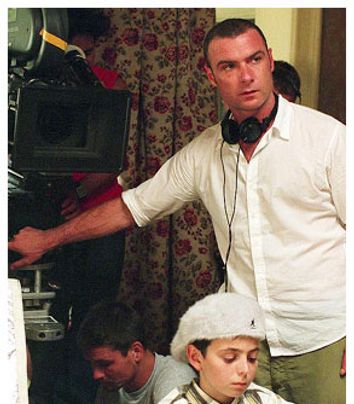
When I met with Mehta recently in New York, it was immediately clear how tough life has made her. Sitting erect in a black Nehru jacket, her long black hair parted down the middle, the 55-year-old director is quiet and intense when she talks about the protests that shut down the film, passionate while discussing how Indian women are treated, and happiest, it seems, when talking about filmmaking.

You made “Fire” and “Earth” not too long before “Water,” but you didn’t have problems shooting those, did you?

I had problems with “Fire,” but not with shooting. I had no problems with “Earth.” “Earth” did really well in India. It went through the censors, and played all over, and in fact it was India’s entry in the Oscars. “Fire” had problems after it was released in Mumbai and Delhi, but it continued to play everywhere else. So what happened with “Water” came as a big shock.

Do you know what changed in that short time that made “Water” such a problem to shoot?

Absolutely. It was the rise of fundamentalism. The BJP got into power, and it was the days of history books being rewritten and culture being redefined, people who were not Hindus being persecuted. Paintings by MF Hussein, who is one of our preeminent artists, being burned because Saraswati, one of the Indian goddesses he had depicted, wasn’t fully clothed. It was the flexing of muscles of Hindu extremists, the RSS in particular, and its affiliates. They saw themselves, and they continue to see themselves, as the protectors of Hinduism. What doesn’t fit in with their sense of what is Hinduism — and not only Hinduism, but Indian culture as defined by them — should be punished. And I think “Water” was a casualty of those times.

Many of the charges against the film that were circulating in the press were false, and a lot of the protesters didn’t even know what it was about before they started protesting. Even after the film was shut down, prostitutes were protesting in the street because they thought the film was about prostitution.

That was very strange! I arrived in Calcutta, and somebody said there’s a huge protest against what is happening with “Water.” And I said, Really, in Calcutta? And they said, Yes, traffic had been stopped because there were all these sex workers protesting. And I said, Why are they protesting? [laughs] Everyone had their own take on what “Water” was about; somebody said it was a relationship between a Brahmin and an untouchable girl that was so offensive. So somebody said it was caste, and somebody said it was anti-Gandhi, and that’s why it was unacceptable. There were so many versions of the script floating around.

But do you think that if people had known what the film was really about, there would have been so much outrage?

No, no, it had nothing to do with what the film was about. You can’t make a film in India unless you give it to the Ministry of Information and Broadcasting. So before we made “Water,” we had to submit the script. And they go through it with a fine-toothed comb and scrutinize each word. If there’s anything that’s derogatory to Indian culture or to Indians, they won’t give you permission to shoot that. And it got complete approval. They knew what the script was about, and it was their own cultural arm that was protesting.

The material itself is not terribly controversial.

There’s nothing in it! That’s why they gave us permission. Not only is it set in 1938, it [widows being sent to ashrams] still happens. So in what way is it controversial?

So this was really about fundamentalism rising.

And maybe on a certain level feeling like they [the RSS] didn’t want to say that this was not right that it happens to widows. That I was even questioning the way they are treated, that’s not right. So that was definitely a part of their agenda. According to Hinduism, or their interpretation of Hinduism, widows should be ascetics, and should atone for the sins that caused the death of their husbands by becoming ascetics, by being marginalized in society, by having their hair shaved and by being desexualized, by becoming pariahs in society. And they knew that the script in fact questioned that, because that is the very nucleus of “Water,” is a questioning of treating people according to the laws of manner, which are outdated, I think, and are really unfair to widows. So they didn’t like that, [questioning] that aspect of Hinduism which believes in women being subjugated, women being oppressed.

It surprised me to learn that many of the film’s protesters were women, who themselves might be tossed into an ashram one day.

Yes, there were huge groups of women. They had no idea what it was about. They were shaking their rolling pins up in the air and protesting, but they thought that somehow the film was going to be [spiritually] polluting the Ganges. Who knows what people are told? And that’s not just true of India; it’s true all over the world. You can really incite mobs in the name of religion the way you can’t with anything else.

By the time you were ready to shoot in Sri Lanka, many of the actors you ended up with are not what one would call full Indian — Lisa Ray is half Polish, John Abraham (who plays Kalyani’s love interest) is Syrian Christian and Irani, Manorama (who plays the head widow) is half Irish, Sarala is Sinhalese. Did you think about that at all? That the outcome of all that protesting and sabotage was not only that you re-created India outside of India, but that your casting constituted a subtle jab at the Hindu right, or the idea of Indian purism?

There’s something you must understand. When we were shut down, and we were invited by the government of West Bengal and the government of Madhya Pradesh to make the film there, after we were shut down in Varanasi, they were extremely generous and said we’ll give you full protection. They were wonderful. And I was ready to commit to one of them, and then I realized that I had been so badly burned by what had happened and I was still so angry about this experience. We were threatened every day with death threats, effigies being burned, the crew getting obscene calls and our sets being destroyed — it was horrible. It became about something larger, about the freedom of expression in a democratic country. It stopped being about “Water” and the extremists, it became about the arts and politics. And I thought if I brought my anger onto the script — for me, it’s a very fragile thing, and anger’s a very powerful tool. So I promised myself that I would not make “Water” until I stopped being angry. And that took four years. By the time it dissipated, and I looked at the script again, there was no feeling of vindication or wanting to take jabs at anybody.

There’s no person who is completely Indian. We have people whose ancestors come from Persia, or Mongolia. It’s a secular nation, that’s very important. There is no pure Indian as such. So Manorama being half Irish and Indian doesn’t make her less Indian. John was born in India, being half Syrian Christian — what you’re doing is by saying that you’re saying all of South India and Tamil Nadu and Kerala and Andhra Pradesh, which are filled with Syrian Christians, are not Indians. How can you say that?

I’m not personally saying that — I agree with you that there’s no such thing as “pure” Indian, but the fundamentalists who hounded you would say that there was.

I know, but I’m just really amazed. I’m not being critical of you, I’m just telling you that it wasn’t a jab at anybody; there was no anger, it was a desire to make the best film possible and to cast the most appropriate people that I thought were right for the characters. I’m just curious — what made you ask that?

I read your daughter’s book, and she called attention to the fact that so many of the actors in the film were from mixed backgrounds.

I think what Devyani was trying to do was show the secular nature of India. And I don’t think it was that important.

How did you feel, reading your daughter’s account of this experience?

It was great. I’m really proud of her. I’m a mom, what do you expect? [laughs] It’s really well written. Also, it’s really interesting to see her perspective. And I know the times were difficult for her. It was not easy for her to come there, to come to Varanasi, as an 18- or 19-year-old, and come there as a camera trainee and have to deal with this hell breaking loose and her mom being threatened and dealing with that. So reading that from her point of view was lovely, and I was very deeply moved.

I remember when “Fire” came out, and my parents and their friends were so excited, not just because it was one of the first Indian films that broke through to the West but because it was about Indian women. My mom complains about this concept of “susheel Hindu nari” –

[Laughs] I think I’d like your mom! Susheel Hindu nari, the epitome of the good Indian woman.

Right, the idea that a good Indian woman is one who understands her place in society and that suffering is her lot in life. “Fire” was one of the first Indian films that refused to buy into that concept. But most of the other Indian women that my mother talked to about the film, they liked it but they couldn’t relate to it. They were befuddled by the film, and I wonder if you’ve seen something similar, this inability to see, even among Indian women, that desire is important and that being the long-suffering Indian housewife –

Isn’t the be all and end all?

Right.

I think probably your mom’s reaction is right on. This susheel Hindu nari, that’s the epitome of what’s considered a good Indian woman. And we call India “Bharat Ma,” Mother India. So it’s interesting, we put the Hindu woman on a pedestal; we worship her like a goddess. And yet socially, she is so unequal. There’s a whole dichotomy going on about the way Indian women are perceived. And the way we are perceived, somehow, we almost subconsciously imbibe, and we start believing that that’s the way we are. So a lot of the reaction was, “I know I like it but I’m not supposed to like it.” That’s what happened with “Fire.” And it’s not because of not believing in desire; it’s because it’s too deeply ingrained that we shouldn’t believe in desire.

You definitely belong to the Indian art-house cinema tradition, which had its heyday in India from the 1950s to ’70s, but has been overshadowed by Bollywood in recent years. Art-house films like yours, though, have become more prevalent overseas. Do you think it’s becoming a crossover genre?

I really don’t like the word “crossover.” I think cinema’s cinema, and either it appeals to a lot of people — I think that’s what we mean when we talk about crossover, right? Something that’s indigenous and can actually work somewhere else. I think very few Indian films are so-called crossover. Probably “Monsoon Wedding” is one that was actually seen by a lot of people. I think “Bend It Like Beckham” was seen by a lot of people. I can’t think of any others. I think the ones that do get seen in the West are seen by the Indian diaspora, which I do not call crossover. So I don’t think there are many so-called crossover films.

Who are your influences? Your films have such a Western — or maybe I should say international — sensibility, that I sometimes forget that I’m watching an Indian film. Then in “Water” you have these song situations — the song sequences in Indian films that move the narrative forward. Those caught me a little off-guard, because I forgot for a while that I was watching an Indian movie.

I was influenced greatly by a filmmaker called Guru Dutt, who I think made some of the most lyrical films in India. I think the imagery [of "Water"] is very Bengali, in fact. The construction is very much a 1950s narrative, a humanist cinema narrative, which is flowing, which is not about the juxtaposition of images, but about trying to make them lyrical, which is very different from contemporary cinema. And to me that’s very Indian. And the construction is very Indian. Satyajit Ray has influenced me, and Guru Dutt has, and there’s an Indian director called Bimal Roy, again in the ’50s, who made very strong films. Ray, Ozu, Mizoguchi, Kurasawa, these have been my greatest influences, and to a certain extent Bergman as well, because to me they really are the epitome of humanist cinema. About human conditions, but told with a lyricism that’s breathtaking.

Continue Reading Close

The battle to ban birth control

Using bogus health facts to scare women about the "dangers" of contraception, a fledgling movement fights for a culture in which sex = procreation.

  • more
    • All Share Services

The battle to ban birth control

Ever since she was in her early teens, Mary Worthington has been vehemently opposed to contraception, which she regards as immoral and dangerous. To spread her anti-birth-control gospel, this month she launched No Room for Contraception, a clearinghouse for arguments and personal testimonials on this subject. NRFC joins other anti-contraception Web sites like Quiverfull and One More Soul.

Worthington, who wouldn’t reveal where she lives and works, or her exact age, is a recent graduate of Franciscan University of Steubenville, in Ohio, where she earned a B.A. in theology and a minor in human life studies. She is also opposed to abortion. But NRFC doesn’t even address abortion; its sole purpose is to “prove” that the pill and the IUD cause health problems and destroy women’s fertility, that condoms lead to the spread of sexually transmitted diseases by making people believe that sex can be completely safe, that contraception destroys marriages by rendering sex an act of pleasure rather than one of procreation. Emboldened by the fact that the president and the two most recent Supreme Court nominees are anti-choice, a recent antiabortion victory in South Dakota, and legislative success restricting access to emergency contraception, groups like NRFC are shifting their focus and resources away from abortion and putting their energy into restricting birth control.

On the face of it, their fight seems doomed. The vast majority of Americans support access to birth control: According to a National Family Planning and Reproductive Health Association poll last year, even 80 percent of anti-choice Americans support women’s access to contraception. And with the exception of a dwindling number of devout Catholics, a large majority of American women have used or regularly use some form of contraception. Perhaps most telling of all, no mainstream antiabortion organization has yet come out against contraception, a sign that they know it would be a political disaster.

Still, the anti-birth-control movement’s efforts are making a significant political impact: Supporters have pressured insurance companies to refuse coverage of contraception, lobbied for “conscience clause” laws to protect pharmacists from having to dispense birth control, and are redefining the very meaning of pregnancy to classify certain contraceptive methods as abortion. In increasing numbers, women and men opposed to contraception are marshaling health facts and figures to bolster their convictions that sex for anything but procreation is morally wrong and potentially deadly. Although its medical arguments are really just thinly veiled moral and religious arguments, using findings that are biased and unfounded, the rising anti-contraception movement, echoed by the Catholic Church, is making significant inroads. Leaders of the pro-choice movement know it, are worried about it, and realize they can’t take it lightly, as they mount their own strategies to battle it.

“It is very hard to awaken people to the threat,” says Gloria Feldt, the former president of Planned Parenthood, “because who can believe that something so accessible can be at risk? But that’s what [people] said when they started attacking Roe, and now look at how close we are to losing Roe.”

Nor is the fight against birth control only the province of a few zealots. While sites like Worthington’s may be new, many antiabortion activists have always been bitterly opposed to contraception. “After Roe v. Wade was decided,” says Feldt, “the debate focused on abortion instead of birth control. But [for anti-choicers] they are not separate issues.” She points out that what we’re seeing today is more of a revival of an old movement than a shift to something new. “It’s been there from the beginning. If you go back and look at the rhetoric against birth control from 1916, it’s exactly the same as the rhetoric now.”

And when you look closely, there is evidence to suggest that even the mainstream anti-choice groups are ready to make the battle against contraception part of their agendas. Many of the National Right to Life Committee state affiliates have opposed legislation that would provide insurance coverage for contraception. Iowa Right to Life even lists a host of birth control methods — including the pill, the IUD, Norplant and Depo-Provera — as abortifacients. And NRLC itself parses its language very carefully when it comes to contraception. A call to the organization resulted in an e-mailed statement on the group’s position that read in part, “NRLC takes no position on the prevention of the uniting of sperm and egg. Once fertilization, i.e., the uniting of sperm and egg, has occurred, a new life has begun and NRLC is opposed to the destruction of that new human life.” Such a position leaves the group plenty of wiggle room to argue, when it is ready to do so, that contraceptives prevent the implantation of a fertilized egg and are thus a form of abortion. (NRLC wouldn’t comment further, because, according to a media relations assistant, contraception lies outside of its purview. For the same reason, Feminists for Life refused interview requests. And at Concerned Women for America, a group that has been openly anti-contraception, a spokesperson told Salon twice that none of its experts were available for interviews.)

“The brilliance of the other side is that it’s such a wholesale attack, that it’s hard to find an entry point,” says Cristina Page, vice president of the Institute for Reproductive Health Access at NARAL Pro-Choice New York, and the author of “How the Pro-Choice Movement Saved America: Freedom, Politics, and the War on Sex.” While pro-choicers are busy trying to save Roe v. Wade, the anti-choice movement is “laying down their game plan for this next wave.” And, she adds, “On every single front, whether it be educational, whether it’s a matter of direct access, or whether it’s about funding, their campaign is on, and it’s effective.”

For those who are pro-choice, the idea of fighting to ban both abortion and contraception seems contradictory: Contraception, after all, lessens the number of abortions. But once one understands what the true social and moral agenda of activists like Worthington is, and their attitude toward sexuality, the contradictions vanish. For them, sex should always be about procreation; since contraception prevents conception, it is immoral. At a deeper level, they believe that women’s biological destiny is to be mothers.

Feldt says, “When you peel back the layers of the anti-choice motivation, it always comes back to two things: What is the nature and purpose of human sexuality? And second, what is the role of women in the world?” Sex and the role of women are inextricably linked, because “if you can separate sex from procreation, you have given women the ability to participate in society on an equal basis with men.”

The anti-birth-control movement has seized recent headlines about emergency contraception — and the fact that many people are unfamiliar with how it works — to put forth its view that E.C. is tantamount to abortion. Page sees the anti-choice movement using the “same exact arguments that they make for abortion for contraception,” which includes “reclassifying contraception to be abortion. As abortion becomes more constricted,” Page says, “these campaigns will begin to intensify, as we’re already seeing with E.C.”

Indeed, the anti-choice push to keep emergency contraception (such as Plan B) from being available over the counter, and to protect pharmacists who refuse to fill prescriptions for it, has centered on the argument that E.C. is an abortifacient. “Confusion is one of their strategies,” Page says, pointing out that anti-choice activists don’t bother to distinguish between RU-486, the “abortion pill,” which terminates an early pregnancy, and emergency contraception, which is simply a higher dose of the standard birth control pill and helps prevent pregnancy. “How many people hold the misunderstanding that E.C. is a method of abortion shows how effective this movement is,” she says. Indeed, in a 2003 survey of women in California, only one in four knew the difference between RU-486 and E.C.

“The emergency contraception debate has been in the news a lot lately,” notes Worthington, and “it got me thinking of the need for more resources like [NRFC].” Worthington, who also maintains an anti-contraception blog called the Revolution, says that she hopes to educate young people on the detrimental effects of contraception, and also give older women who have used birth control a forum to talk about how it harmed their marriages. (A section on the site, “Testimonies,” so far offers two personal stories, reprinted from the Priests for Life Web site. In both, the writers tell of the grief they felt when they discovered the “truth” about how the birth-control pills they were taking caused abortions.)

Worthington and other anti-choice activists simply don’t distinguish between E.C. and abortion. “Contraception is an abortifacient,” she says. “Look at the package insert for Plan B. It says it can act to alter the endometrial lining and prevent implantation. It’s not technically an abortion, because pregnancy has been redefined to mean ‘after implantation,’ but it’s still taking the life of a human.” But there is no proof that Plan B prevents a fertilized egg from implanting in the uterus; in fact, it’s scientifically unknowable, because it’s scientifically unknowable if an egg is even fertilized until it implants in the uterus. The American Medical Association defines pregnancy as the moment when implantation occurs; even if Plan B did prevent implantation, it still wouldn’t be ending a medically defined pregnancy.

“The anti-choice movement,” says Feldt, “completely ignoring scientific fact, is attempting to redefine pregnancy as the moment of conception, the moment when sperm and egg meet. At the root of that is the attempt to get the fertilized egg more status than a woman.”

And as Page points out, once a fertilized egg is considered a human life, it’s just a hop from there to concluding that the standard birth-control pill is an abortifacient, too. “Basically, it’s the same pharmacology,” she says, “so if you’re against emergency contraception and you’re lending validity to the argument that it’s abortion, you’re saying exactly the same thing about the birth-control pill. If somebody out there thinks Plan B is abortion, they think the birth-control pill is abortion.” And there’s proof that this argument is working: Some pharmacists and even physicians are not just denying patients E.C., they’re also refusing to dispense the pill.

Page also notes that the anti-choice movement has succeeded in pushing legislation that, though seemingly unrelated to contraception, helps support its cause. According to the National Conference of State Legislatures, at least 15 states have fetal homicide laws that apply to “‘any state of gestation,’ ‘conception,’ ‘fertilization’ or post-fertilization” — meaning that one can be convicted of manslaughter or murder for destroying a fertilized egg, even if it hasn’t implanted itself in a woman’s uterus.

Another successful campaign has centered on condoms. In 2000, at the behest of then-Rep. and anti-choice ally Tom Coburn, R-Okla., the National Institutes of Health convened a panel of experts to evaluate the condom’s effectiveness at preventing the spread of sexually transmitted diseases. The panel concluded that correct condom use definitively protected against the spread of HIV and gonorrhea, and that there was “a strong probability of condom effectiveness” for other STDs, including human papillomavirus (HPV). Coburn used the findings to declare that condoms don’t protect against HPV — a wild misappropriation of fact that has nonetheless become a big part of the anti-choice argument against the condom’s efficacy. Under pressure from Coburn and other anti-choice activists, the Centers for Disease Control was forced to revise its Web site fact sheet on condoms. There is now a box in the center of the page that reads, in part, “While the effect of condoms in preventing human papillomavirus (HPV) infection is unknown, condom use has been associated with a lower rate of cervical cancer, an HPV-associated disease” — not quite the same as saying, as the CDC previously did, that condoms protect against HPV.

Such subtle shifts in language have helped anti-choice activists to argue that condoms actually help spread STDs such as HPV by giving users a false sense of security. “When condoms are distributed to youth, they are more likely to engage in the activity,” says Worthington. And that’s why, she says, they’re at risk for everything from AIDS to unintended pregnancy. “In the real world, everyone knows that condom use is never 100 percent correct,” she says matter-of-factly.

While no one is suggesting that activists like Worthington will ever succeed in outlawing condoms or the pill, they are making incremental progress in passing laws that are making access to birth control more difficult. Of the 23 states that mandate employers to provide insured coverage for prescription contraceptives to their employees, 14 have exemptions for religious employers, and Missouri allows any employer, religious or secular, to deny coverage for any kind of contraception. During the 2005 legislative session, more that 80 bills in 36 states were introduced that would restrict minors’ access to birth control. On the federal level, the Health Insurance Marketplace Modernization and Affordability Act, currently being considered in Congress, would allow insurers to ignore state laws mandating contraceptive coverage. And then there is the matter of pharmacists and “conscience clause” laws. South Dakota, Arkansas, Georgia and Mississippi already allow pharmacists to refuse to fill contraceptive prescriptions. And at least 15 states have legislation pending that would allow not just pharmacists to refuse to dispense prescriptions, but would also protect cashiers who refused to ring them up.

“There are more laws on the books and proposals to welcome pharmacists to obstruct women’s access to birth control than there are pharmacists willing to do it,” says Page. “99.9 percent of pharmacists know their role is to fill prescriptions and not to make moral judgments.”

That doesn’t mean that a law on the books wouldn’t have a practical effect. “Once you have it as a law,” says Chip Berlet of Political Research Associates, a progressive think tank that tracks campaigns meant to curb human rights, “you organize more and more pharmacists to refuse dispensing pills.”

One reason for the new push to restrict birth control may have to do with changes in the Catholic Church — although this is hard to prove, because like many anti-contraception campaigners, Worthington insists that her site has nothing to do with Catholicism, even though she identifies herself as a Catholic and NRFC is filled with discussions of Catholic texts, like the “Humanae Vitae” and the Bible-study document “The Truth and Meaning of Human Sexuality.” Still, Berlet sees a connection to the appointment of Cardinal Ratzinger as pope — an appointment that radically conservative groups like Human Life International have enthusiastically supported. “I think they see in the Vatican some room to push this issue further to the right,” says Berlet.

Like the Catholic Church, NRFC opposes the use of contraception even within marriage. The “About Us” page on the site claims that “the constant promotion of and use of contraception leads to promiscuity, and a general lowering of morality and furthers the idea the sex has nothing to do with childbearing or commitment. When this attitude is brought into marriage, it can taint the relationship from the beginning.”

NRFC sees the availability of contraception as the root cause of the need for abortion. The “About Us” page also quotes a passage from the U.S. Supreme Court decision on Planned Parenthood v. Casey to argue that “In law and in practice, [contraception] led to the necessity of abortion because contraception proved not to be failsafe”: “[F]or two decades of economic and social developments, people have organized intimate relationships and made choices that define their views of themselves and their places in society, in reliance on the availability of abortion in the event that contraception should fail.”

In order to support the idea that contraception is dangerous, Worthington publishes articles on the site that take qualified language from scientific studies and distort their conclusions. One of them, “Oral Contraceptives declared carcinogenic by World Health Organization,” takes the news that the WHO found that estrogen-progestogen-based contraceptives increased a woman’s risk for breast, cervix and liver cancer while decreasing the risk for endometrial and ovarian cancers, and concludes: “It does not seem logical that any woman would place her body at risk for these deadly cancers, even if for the sake of reducing the risk of other cancers. Meanwhile, in the process a woman on The Pill is destroying her fertility. Medical doctors and researchers agree that one of the best ways to prevent some common cancers (such as breast cancer) in women is to conceive and bear a child and to breastfeed naturally. This is the body’s natural means of protecting itself from cancer.”

Worthington doesn’t mention that the WHO concluded, “Because use of combined estrogen-progestogen contraceptives increases some cancer risks and decreases risk of some other forms of cancer, it is possible that the overall net public health outcome may be beneficial.” Nor does she qualify her assertions with the fact that the WHO reviewed only previously published data, much of it gathered under studies conducted at a time when birth-control pills contained much higher levels of hormones than they do now. And her citation on breast-feeding comes from the anti-abortion group the Coalition on Abortion/Breast Cancer.

Finding these inconsistencies requires digging below the surface of the site — on the face of it, Worthington presents her cases persuasively, and couches her arguments in the rhetoric of women’s empowerment rather than that of morality. In another piece, titled “Chemical contraceptives kill her sex drive,” she takes as her starting point a January 2006 study in the Journal of Sexual Medicine about the relationship between the birth-control pill and sexual desire. Worthington notes that “the conclusion of the study states that while there is a link between chemical contraceptives and a decreased sex drive, more evidence is needed for an accurate correlation to be seen.” But then she blithely continues: “If The Pill is causing such trauma and stress in the lives of women, why is it promoted as the be-all, end-all for worry-free sexual relations?”

Worthington goes on to conclude: “Because of the use of hormonal contraceptives, men are equipped with the means to abuse women.”

When asked to clarify that statement, she replied, “Chemical contraceptives are promoted as a means by which a couple can have sex all the time with no worries, but how can you expect a woman to have sex if the man is making her take a pill that decreases her sex drive?”

Chip Berlet calls this kind of explanation “faux feminist rhetoric”: “It … changes the appearance of what side you’re on.” Indeed, if you ignore their ultimate conclusion that birth control should be eradicated altogether, many of Worthington’s arguments look a lot like feminist arguments. Concerns about the correlation between sex drive and the pill have been raised by pro-choicers, too, and on Worthington’s blog is a startling post railing about how unfair it is that a male birth-control pill will probably never exist because men don’t want to risk impotence, and women are expected to handle their side effects in stride. Take out the phrase “morally offensive” in relation to contraception in general, and there’s not much in the argument for a pro-choice feminist to disagree with.

Frances Kissling, president of Catholics for a Free Choice, points out that there is a conscious effort to appeal to that “segment of the women’s health movement who are suspicious of chemicals and IUDs and want to lead a natural life. There is that part of the [anti-choice] movement, and people who make Web sites like these see themselves as in alliance with women concerned with those issues.” Kissling says that this too is part of the Catholic movement against contraception. “This anti-birth-control stuff is part of two things: One, a conservative Catholic, mostly lay, movement to try to cast sexuality in attractive, natural terms,” meaning that “sex is beautiful, sacred, wonderful in the context of your body as a temple, only in marriage, and contraception is unnatural, chemical, dangerous.” Secondly, it’s an “attempt to promote natural family planning.”

Natural family planning is, in a nutshell, a more advanced, scientifically updated version of the rhythm method. Worthington says that NRFC doesn’t explicitly promote natural family planning, although it’s a “practical application” of her message against contraceptives. NFP is mentioned frequently on her site, and she is careful to correct any suggestion that NFP is a type of contraceptive practice: “Contraception destroys fertility while NFP works with fertility,” she says. It is “a scientific understanding of a woman’s body — recognizing when would be a good time to abstain, and when would be a good time to have a child”; she adds that it “requires self control and maturity.”

Kissling agrees that “the science has advanced as to knowing when ovulation occurs, which makes it reasonably reliable.” Just as we know when a couple trying to conceive should have sex, we know when one trying not to should abstain. “The problem,” she says, “is with ‘periodic abstinence,’ abstaining during ovulation with safety window on either side — the problem is abstaining from sex.” Realistically, very few couples are going to be able to follow a strict schedule of abstinence for very long, even if they sincerely want to try.

Still, says Kissling, because it doesn’t require hormones, and because proponents claim that NFP means that men have to be more in tune with a woman’s ovulation cycle, “there is a belief among Catholics that they could seduce feminists into using natural family planning.”

Yet, all evidence points to the overwhelming unpopularity of NFP. “The incidence of Catholic use of this method is no more than 5 percent [according to the 2002 National Survey of Family Growth],” says Kissling. “Catholics don’t want to use it, don’t accept this theology of the body. Very few people are buying what’s on these Web sites, but they have the same kind of appeal to young people as chastity pledges, or the Silver Ring Thing.” Basically, she says, it’s about the church finding “new ways to sell an unpopular contraceptive method.”

Further, NFP relies on the assumption that there is a period in a woman’s cycle when she’s not at risk for becoming pregnant, an assumption that may be false. Cristina Page points to a study that shows 40 percent of women may develop pre-ovulatory follicles as many as two to three times during one cycle, and thus it may be impossible to know exactly when they are ovulating. This helps explain why NFP has a whopping 25 percent failure rate.

Despite the unpopularity of NFP, the insistence on it and the taboo against birth control among some very strict Catholics — and evangelicals, an increasing number of whom oppose birth control at least outside of marriage — don’t seem to be preventing abortions. In a paper titled “From Patterns in the Socioeconomic Characteristics of Women Obtaining Abortions in 2000-2001,” researchers Rachel K. Jones, Jacqueline E. Darroch and Stanley K. Henshaw found that 40 percent of women in that year who had abortions identified themselves as either Catholic or evangelical.

“We know that birth control is 85 percent effective in reducing abortion,” says Cristina Page. “If it’s not [100 percent] effective even while legal, we’re moving onto a campaign that will exponentially increase the need for abortion.”

For those on the pro-choice side of the question, restricted access to birth control doesn’t just mean an increase in the number of abortions; it means the loss of other benefits as well. Contraception has given women the freedom to put off marriage, to go to college in greater numbers, to bring more wanted children into the world, and to find good jobs and thus bring more wealth into their families. Asked how he responded to the charge that banning contraception would turn back the clock on these advances, Ruben Obregon, Worthington’s co-founder in NRFC, responded: “Do you think a woman who has had an abortion feels that killing her unwanted child is an advance? My friends who have had abortions don’t exactly feel this way.” Obregon added, “It’s interesting how you fail to mention the high divorce rate, children of broken families, the spread of HIV and other STDs, all of which could arguably be linked [to] the impact of contraception on society.”

Obregon, who would only respond to questions via e-mail, and who refused to divulge his age, religion, location or line of work “out of respect for my family and my next of kin,” and because “it just opens things to ad hominem attacks,” also added, “And then there is the potential problem of not having enough gainfully employed workers to support those on social security.” Asked to clarify whether he meant that Americans needed to procreate more to create more workers, he replied, “No, you are saying that. Nice attempt to put words into my mouth.”

Any attempt to clarify Worthington or Obregon’s position, or to get them to back up their claims, led to more misdirection, fuzzy arguments, or, at best, questionable and clearly biased studies. To the suggestion that the problem with condom failure rates had to do with a lack of sex education, that distributing condoms without education was like throwing someone a deflated life jacket and not teaching them how to inflate it, Worthington responded, “What we’re talking about here is the difference between something that is morally wrong and something that is morally indifferent. What is morally wrong is having sex before marriage.”

Ultimately, Worthington and Obregon’s fight isn’t about birth control or abortion then, but about changing the way people live. Worthington admitted that she thought “sexuality is a gift from god,” and that she believes in “abstinence until marriage”; asked why she didn’t state that explicitly on the site, she hesitated before replying that it was “something we didn’t feel was important to mention, because what we felt was important to point out was the dangers of contraceptive use.”

According to Page, there’s no way to distinguish the anti-choice and religious arguments anymore. “The anti-choice movement has become a religious movement, and because of that, their interest isn’t in reducing abortion. In fact, reducing abortion has become problematic for them, because they want to strip Americans of using birth control, in effect to change the entire family structure.”

Page says she has noticed, too, that some anti-choice groups tend not only to oppose birth control, they also oppose child care. In her book she points to some troubling statistics and anecdotes: Ninety percent of senators who opposed the 1993 Family and Medical Leave Act are anti-choice; in the 2004 Children’s Defense Fund ranking of the legislators best and worst for children, the 113 worst senators and Congress members are all anti-choice; Web sites like Lifesite and that of the Illinois Right to Life Committee post reports linking child care and aggression; Focus on the Family, the Family Research Council and Concerned Women for America stress the damage that day care can have on a child. (Most of their information comes from the National Institute of Child Health and Human Development’s Early Child Care Report, which has been debunked again and again and again.) “The trifecta is ban contraception, ban abortion, make child care impossible,” says Page.

Frances Kissling agrees that the ultimate message is that “mommy should stay home and take care of the kiddies. This is bound up in this notion of men at the head of a family, of women’s identity as linked to their biological capacity, that men and women are complementary and different, that a woman’s primary function is motherhood.”

The site’s inconsistencies and seemingly pro-feminist viewpoint support that view. “If this was 1885, people reading this site would see it as very internally consistent,” says Chip Berlet. “It’s implicitly patriarchical, but it’s the Victorian patriarchical position — it’s not just pre-Vatican II, it’s pre- the last century: Put women on a pedestal; protect them from the dangers of the outside world.”

So why does it still resonate with some people? “For a lot of people it hasn’t been real good here in the post-Enlightenment — people have lost a connection to family and community, and they’re confused,” says Berlet. “The mythical reconstruction of the past where men were men and women were protected by the men is a cozy idea.”

But if the post-Enlightenment comes with its collateral damage, there’s collateral damage to pushing the ideals of traditional marriage as well. Martha Kempner, director for public information at the Sexuality Information and Education Council of the United States (SIECUS), points out that “for many young people, this completely ignores the reality they’re living in now. There’s no [room for an] alternative family structure. Say if your grandparents are raising you: You’re not as good, your family is not as good.”

Kempner thinks that, in the face of the anti-birth-control movement and Web sites like NRFC, the pro-choice side has to have “as many, if not more, places where [people] can get real information. And we have to teach critical thinking skills — one of the most important things a comprehensive sexuality education can do is teach you how to look at information and understand what makes it scientific, what makes it biased, and what makes it opinion.”

Kempner also thinks that, often, pro-choicers may be too quick to dismiss the importance of seemingly absurd claims. She points to a quote from Wendy Wright, president of Concerned Women for America, criticizing a study that correlated the increased availability of birth control with the decrease in abortion rate: “An ‘unintended pregnancy’ could be a wonderful surprise, not planned but welcome. Why should the government be in the business of ‘preventing’ a surprising but welcome pregnancy?” “Sometimes we look at statements like that and see them as completely ridiculous,” says Kempner, “and possibly wrongly assume that other people will see how ridiculous they are.”

Gloria Feldt says that the pro-choice movement needs to go even further. “Merely responding to attacks or even fighting back won’t do; in fact, it will make things even worse,” she wrote in an e-mail. Indeed, Feldt believes that even with its sly rhetoric and legislative victories, the anti-choice movement may finally have crossed the line, and given pro-choicers something to rally around. The pro-choice movement, she says, “must come roaring forward with a strong message, stirring policy agenda, and bold expansion of direct services. Motherhood in freedom is an ideal that is steeped in our highest values as a society. We own that ground, and if we claim it, it will not erode.”

Continue Reading Close

Years of magical thinking

Bestselling author Augusten Burroughs has built a fabulous career on his troubled childhood. Would it matter if he made it up?

  • more
    • All Share Services

Years of magical thinking

When it comes to milking fame out of a life story, few navel-gazers have been as successful as Augusten Burroughs. For close to 100 weeks, his 2002 memoir “Running With Scissors” has been sitting on the New York Times bestseller list, alongside longtime bestsellers from fellow memoirists Dave Pelzer (“A Child Called It”) and David Sedaris (“Dress Your Family in Corduroy and Denim”). Next year, a long-awaited film version of “Scissors” starring Gwyneth Paltrow and Annette Bening will hit the big screen, and an earlier Burroughs book, the novel “Sellevision,” is also being made into a movie.

Although he’s only 40, Burroughs’ life story seems to contain no end of salable anecdotes: After “Scissors,” he published the follow-up memoir “Dry” (2003) and a collection of personal essays, “Magical Thinking” (2004); he writes a monthly autobiographical column for Details (his writing has also appeared in Salon) and frequently contributes to NPR’s “Morning Edition.” According to his Web site — a vision of salesmanship that helpfully reminds you on every page that Burroughs is a “#1 BESTSELLING AUTHOR” — he’s also working on a collection of essays and a holiday book. All of this would be only vaguely interesting if Burroughs were regarded as simply a wildly popular mass-market hack. But Burroughs’ memoirs consistently generate glowing reviews and flattering comparisons to David Sedaris’ work. And yet, he is a terrible writer.

To say that Burroughs is a writer akin to Sedaris is so befuddlingly off-course that the suggestion smacks of sheer laziness, akin to the tired P.R. game that creates suspect book-jacket blurbs (for “Joycean,” read “long-winded and obscure”) and overzealous movie marquees (If you liked “Some Like It Hot,” you’ll LOVE “White Chicks”!!!). And to proclaim that Burroughs and Sedaris should share a fan base suggests that literary merit has nothing to do with craft, that a tenuous similarity of substance — both writers trade in autobiography and humor — trumps the quality of the writing.

Sedaris’ essays are careful constructions of artful manipulation; like a good composer, he understands that where you place the notes is as important as what notes you use, and he perfectly times his tricks — the witty one-liner; the more expansive, subtle joke; the somber, introspective moment that tugs out your heart. Not so for Augusten Burroughs. His narratives are shapeless lumps of clichid sentiments, boring dialogue and tortured metaphors. As an authorial voice, Burroughs has a third-grader’s wit and the introspective wisdom of a stone; as a crafter of stories, he possesses an ear for tone and pitch as flat as William Hung’s. Still, this lack of literary flair doesn’t bother many readers. Stories of sex, abuse, valium overdoses and bizarre spiritual beliefs offer us an opportunity to gawk at a grisly scene, to make us feel glad our childhoods weren’t that bad, and to warm the cockles of our hearts with what is, ultimately, a happy-ending story about overcoming adversity.

But how does Burroughs snow the critics? For one thing, to pick on the memoir of a junior-high dropout, one who claims not to have read a book until he was 24, might feel downright mean. Burroughs positions himself in his books as a victim — of parental neglect, of a pedophile’s advances, of alcoholism — pleading for a little kindness, and it seems likely that many otherwise-shrewd critics have willfully overlooked his books’ flaws and extended the hand of friendship out of sheer pity. Yet there are glimpses of a secret dislike, snippets of doubt, in otherwise positive reviews of “Scissors.” In the New York Times, Janet Maslin conceded that the book “slips occasionally into hackneyed territory”; Virginia Heffernan, in her Times review, admitted that it “lack[s] the fire and art that make literature different from life”; Stephen J. Lyons wrote in the Boston Herald that in “Scissors,” “the writing advice ‘show, don’t tell’ is taken too literally.” But it’s one thing to personally forgive Burroughs for writing like an adolescent, another to lower the bar on writing altogether — especially when it comes to a genre that, like fiction, relies on critics to uphold a meritocracy that the marketplace ignores.

This critical charity, like that of readers, is based on the idea that Burroughs’ books are completely true, a concern that has also occasionally cropped up in reviews and then been quickly paved over. “Can you, reader, suspend disbelief?” Virginia Heffernan archly asked, before succumbing to pity: “But let’s not inflict more therapy on Burroughs.” That the question still lingers says something about the vulnerability of Burroughs’ work. Disbelief isn’t an issue in Sedaris’ essays; one suspects that the underlying true-story details have been filed down and rearranged anyway, to create something better than true, something that’s qualifiably art. If it turned out that Sedaris had, say, never worked as a Christmas elf at Macy’s, “Santaland Diaries” would still make great fiction, because it is charming and funny and well-crafted. Burroughs’ work, on the other hand, resembles less a mosaic construction than a coughed-up hairball: It’s gross, primitive and smacks of something that needed to be released for the creator’s own health, but really shouldn’t have been shared with others. As dismal as his writing is as memoir, it would make for unforgivably awful, boring fiction that no one would bother to read, much less recommend.

So imagine this: What if Burroughs made it all up? What if he isn’t the train wreck, the victim, the innocent bystander who overcame the odds? In late July, the surviving members of the family with whom Burroughs once lived, and who gave him the fucked-up childhood he writes about in “Scissors,” filed a lawsuit against him alleging defamation, fraud, emotional distress and invasion of privacy. The Turcottes are claiming that most of “Scissors” is composed of Burroughs’ “own bizarre, imagined scenarios and exaggerated descriptions,” and, in addition to seeking unspecified monetary damages, they’re asking that the book be reclassified as fiction.

Burroughs, born Christopher Robison, grew up in the Pioneer Valley in Western Massachusetts, with a stoic, alcoholic father and an egotistical poet of a mother, the quality of whose verse was inversely proportionate to how extraordinary she believed it to be. According to “Scissors,” when Burroughs was 11, his parents divorced, and at 12, his manic-depressive mother had left him in the care of her psychiatrist, Dr. Finch, who “looked exactly like Santa Claus,” who had a “Masturbatorium” in his office, and who taught Burroughs such things as how to fake a suicide attempt to get out of school. By the time Burroughs was 13, Finch had become his legal guardian, and the 33-year-old Neil Bookman, Finch’s former patient and adopted son, had become Burroughs’ lover — to the approval of Burroughs’ mom and Dr. Finch.

Burroughs describes life in the Finch house as a social worker’s worst nightmare: The kids play with an old electroshock therapy machine; Finch’s grandson defecates on the carpet while the older children cheer him on; one of Finch’s daughters, the 14-year-old Vickie, lives with a pack of roving hippies; and another, Natalie, 13, lives with her 42-year-old “legal guardian,” a former patient of Finch’s and, it is eventually revealed, Natalie’s lover. The family’s spiritual practices consist of asking God questions via “bible-dips” (in which the questioner points blindly at a word in the Bible and then interprets the answer from that word) and clustering around the toilet to divine messages left in Finch’s feces.

But according to the lawsuit, Burroughs ”fabricated events that never happened and manufactured conversations that never occurred.” It also asserts that Burroughs’ editor at St. Martin’s Press and literary agent (both of whom are listed as defendants) encouraged Burroughs to “sensationalize and exaggerate” in order to have “a more commercially viable ‘true story’ to market to the book-buying public,” and that Burroughs meant to ”knowingly caus[e] harm and humiliation to the Turcotte family.”

(Neither the defendants nor their lawyers would comment on the case for this story.)

Whether he meant to hurt them with his portrayal, Burroughs does take pains to describe the Finch household in the most simplistic and shocking way, leaving nothing of the squalor to the reader’s imagination. He calls Finch’s wife, Agnes, “a lady hunchback with kinky, grayish, almost purple hair,” and when he first meets Vickie and Natalie he notes their “long, greasy, stringy hair and dirty clothes.” Of the house itself, from the outside it “was pink and seemed to sag”; inside there was “the overturned sofa in the living room, the dog shit under the grand piano [and] the moving blanket of roaches that covered all the dishes and pots and pans that were piled on the sink and on the kitchen table.”

On the other hand, many of the details about Dr. Finch do correlate to Burroughs’ real guardian, Dr. Rodolph Turcotte, who died in 2000 at the age of 80. Like Finch, Turcotte looked exactly like Santa Claus (even occasionally wearing a Santa hat), and was a former psychiatrist at Northampton State Hospital. In the early ’80s, Turcotte’s psychiatrist’s license was revoked when he was accused of sending his 13-year-old daughter to live with a former patient, which jibes with Burroughs’ account of Natalie’s lover/guardian (though the real former patient was in his 30s, not 42 as Burroughs claims).

Yet, a reporter for the Republican in Massachusetts who had interviewed Turcotte in 1989 doesn’t remember the Turcottes’ house being squalid. And the suit also implies that there’s something suspect about Burroughs’ chronology. According to the Turcottes, Burroughs’ entire family was in therapy with Rodolph Turcotte starting in 1971. Assuming Burroughs doesn’t lie about his age, that would make him 5 years old, not 10, as he claims in the book, which would make the sequence of events leading to his life with the Finches less of a whirlwind and more, perhaps, of a gradual progression. Although it’s a small detail, it’s one that supports the contention that Burroughs exaggerated for effect.

And of course Burroughs stretched the truth; all memoirists do. The problem is that his exaggerations, if that’s what they are, have damned an entire family. The Turcottes’ explanation of how Burroughs came to live with them is so mundane that it’s easier to swallow than the one Burroughs offers in “Scissors”: According to the suit, when, around 1979, Burroughs was having difficulty at his Amherst school, “he, with his mother, asked Dr. Turcotte to become his legal guardian so that he could attend school in Northampton.” Rather than a matter of abandonment, the story of Burroughs’ childhood upheaval, in the Turcottes’ telling, becomes a situation of school zoning.

Burroughs has acknowledged that, of course, there are times when one must “creatively recreate,” though he claims to be able to back up everything he’s written with his childhood journals, and in a 2003 Bookslut interview, he basically threw down the gauntlet: “With my own memoirs, they are truthful, and I write everything fully expecting to some day end up televised on Court TV, and I’m fully prepared to be challenged legally on it,” he said. “Everything I write is the truth and I know that I would win. I know I would win.” But could he really have recorded — or worse, remembered — such banal conversation as this? “‘Well, I gotta go,’ Hope said. ‘Dad needs me at the office. We’re behind on the insurance forms. See you guys later?’ ‘Yup. Catch you later,’ Bookman said. Hope opened the front door to leave. ‘Bye, Augusten. Have fun.’ ‘Okay, see ya.’”

And if that seems like a trifle of an exchange to make up, consider that the vast majority of Burroughs’ dialogue is equally vapid and useless. Or that every character in the book, unless he or she has a funny accent to comically exaggerate, sounds the same, like Burroughs himself — shiny-eyed and dull, full of clichis and snapless comebacks. “‘Knock it off you two, I’m trying to sleep,’ Hope would sometimes complain in the middle of the night.” Who the hell cares? If this is the type of thing Burroughs recorded in his journals, then perhaps he does deserve our pity — for being the most boring child on earth.

Throughout “Scissors,” there is a childishness to Burroughs’ writing, a lack of self-reflection or analysis evident in the vague and redundant ways he tries to explain how certain moments affected him. Although it’s clear from the get-go that the affection-starved Burroughs latches on to the pedophilic Neil Bookman as a source of attention, he repeatedly explains his desire — “Secretly I wanted revenge, but I also wanted his companionship, and that won out”; “Bookman was the only person who gave me attention, besides Natalie and Hope”; etc., etc. — as if we just might not get it that a 13-year-old never really consents to sex with an adult. Burroughs may have taken much of “Scissors” from the journals he kept as a child, but his attempt to explain how he felt after anal sex is so juvenile, it sounds like a spoof of a kid’s diary entry: “On the one hand, I had gotten used to the sensation of him up there, even if it made me feel really full and like I needed to take a big shit. But on the other hand I didn’t like doing it because I didn’t like him anymore and I didn’t like being on my back like that and it just seemed so weird.” As irritatingly vague as these passages are, they play perfectly into Burroughs’ victim persona; by refusing to analyze, he forces the reader into the role of therapist, sharply diagnosing abuse where the patient can’t see it and moving us to pity his innocence.

To connect with a book like “Scissors,” one has to believe Burroughs’ story — has to believe in him. In his tendency to defend the absolute truth of what he writes, Burroughs sounds a lot like his other neighbor on the Times bestseller list: Dave Pelzer, whose line of memoirs starting with “A Child Called It” (1995) also recounts a tortured childhood, and who is the guy widely credited with shepherding in the memoir craze. (Pelzer has yet to be legally challenged on his books, but that may be because his mother, who he claims abused him when his siblings weren’t looking, is dead. At least one of Pelzer’s four brothers has disputed his books, while another has come out with a memoir of his own, claiming he too was abused by their mother.) This isn’t to suggest Burroughs is a hustler on the level of Pelzer — whose bulk buying of his own books may be responsible for his bestseller status. But both writers rely on the horror of what they describe — not the felicity and power of their writing — to entertain readers.

Burroughs’ fans tend to use phrases like “darkly funny” and “wildly entertaining” to describe his writing, but it seems what they’re responding to most is the fact of the story and not the way it’s told. Humor is subjective, sure, but there is nothing witty about Burroughs’ punch lines — sentences like “Ours had become a seesaw relationship, and right now it was all saw,” or “I was lit from above, the most unflattering light, like a hamburger at a fast food restaurant.” What surprises readers into laughing are the unfortunate events happening around the bad lines — in this case, Burroughs’ relationship with Neil Bookman — coupled with the jokey tone in which they are related. Burroughs’ sunny narration of dark events, the same cheery lack of introspection that turns the reader into a therapist, obscures his positioning of himself as a victim; because he doesn’t seem to be self-pitying, because he tries to crack jokes about his horrible childhood, the hoodwinked reader admires his plucky optimism and, once again, forgives him his utter lack of wit.

Also like Pelzer, Burroughs — whose first job, not so incidentally, was in advertising — has created a brand of himself: In “Scissors” he presents himself as a generally agreeable and all-around nice guy, an adorable eccentric who only does bad things because he’s victimized (or later, in “Dry,” because he’s an alcoholic); he is never mean, and there is always someone close by to remind him (and us) that he is talented and sweet and funny. In “Scissors,” the only texture to the young Burroughs’ personality is a desire for fame: “I craved fan letters and expensive watches,” he writes, and thinks up schemes involving his own brand of hair-care products to achieve his goal.

Could memoir be the grown-up Burroughs’ hair-care line? It’s hard to know. But regardless of whether his product claims are true or not, his books have always been made with the crudest ingredients. In the beginning of “Dry,” a memoir that Burroughs initially wrote as a novel, he offers an author’s note: “This memoir is based on my experiences over a 10-year period. Names have been changed, characters combined and events compressed. Certain episodes are imaginative re-creation, and those episodes are not intended to portray actual events.” What would have happened if “Scissors” had carried a similar warning? Jonathan Yardley, perhaps the lone critic to resist pitying Burroughs, wrote in the Washington Post, “If you insist on reading “Dry” — and for the life of me I cannot imagine why you would — read it as a novel. If you do that, you’re going to end up thinking: ‘So what? ’” The same has to be said of “Scissors.”

So as Turcotte v. Burroughs gets underway, while the lawyers fight about whether Burroughs is truthful, let a shadow tribunal spring up, composed of Burroughs’ fans and critics, to judge why truthfulness is so important to his writing, and what it means to his place on the literary ladder. Let them think about why David Sedaris gets away with describing his work as “true enough” and freely admitting to exaggeration, and why Burroughs can’t. Even though mediocre memoirs that appeal to voyeuristic urges will probably sell big for a long time to come, conflating these with literary memoirs is not only absurd, it has spawned an entire movement of limp, I-had-a-wacky-childhood tell-alls — and who needs them? Isn’t it time to put an end to this madness?

Continue Reading Close

Page 1 of 5 in Priya Jain