Rob Mank

Humanitarians or terrorist supporters?

U.S.-based Muslim and Arab foundations say they're feeding orphaned children. Critics say they're aiding Palestinian extremists.

  • more
    • All Share Services

Humanitarians or terrorist supporters?

Photographs lining the walls of Abdulrahman Odeh’s dark, wood-paneled office testify to the Holy Land Foundation’s charitable works: handing out supplies amid the devastating earthquake in Turkey; opening the foundation’s food pantry in Paterson, N.J.; building a 150-bed hospital in Gaza.

But mounted among the snapshots of charity projects are a series of stomach-churning photos. One is a close-up on the bloody, mangled flesh of victims of the 1994 Hebron massacre, when a Jewish settler gunned down 29 praying Muslims.

“They push me to work more,” Odeh says of the gory pictures hanging across the room from his desk. He gestures to one particularly horrific shot of a man’s head so mutilated that parts of his brain spill out: “That man sacrificed his life.” The graphic photos, and the boost in motivation Odeh gleans from them, have less to do with charity than with politics.

That conflation highlights the difficulties surrounding U.S.-based Muslim and Arab humanitarian organizations working in contested areas like the West Bank and Gaza. Several, including the Holy Land Foundation for Relief and Development, which raises millions of dollars each year, have been under investigation by the U.S. government for links to terrorist groups, according to documents filed at Federal District Court in Washington. No charges have been filed against the group. But the investigation itself has spawned two unusual lawsuits.

The first accuses the Holy Land Foundation and five other organizations with ties to the Middle East of aiding Palestinian terrorists responsible for the slaying of an American teenager in the West Bank in 1996. The lawsuit, filed by the parents of David Boim, a 17-year-old yeshiva student in Israel at the time of his death, seeks more than $600 million in damages.

It charges the Holy Land Foundation and the other organizations with being “fronts” for Hamas, the Palestinian Islamist movement. The suit, which relies heavily on information gathered by the U.S. and Israeli governments, alleges the American-based groups raise and channel money through an elaborate global network to Hamas, which uses the funds to engage in terrorist activities.

The State Department lists Hamas as a foreign terrorist organization, and Israel holds the group responsible for a series of fatal attacks on civilians, including suicide bombings. In 1997, Israel closed the Holy Land Foundation office in East Jerusalem because of alleged ties to Hamas.

The Holy Land Foundation denies any association with Hamas or its representatives, and the group condemns any acts of terror. “If Hamas is killing, if there is any terror being done, we’re against it,” says Dalell Mohammed, a spokeswoman for the Holy Land Foundation. “We’re in the business of saving and preserving life, not destroying life.”

Which leads to the second suit. The Holy Land Foundation in April filed a libel suit against the Dallas Morning News, its corporate parent, Belo, and four reporters. The foundation accuses the paper of an “organized campaign” to defame it, citing a series of articles by metro reporter Steve McGonigle. Reporting from Gaza City and Jerusalem, McGonigle wrote about orphaned families supported by the foundation, including one whose father was a renowned Hamas military commander.

Complaints about the paper’s coverage extend beyond the Holy Land Foundation. Many Dallas-area Muslims have been critical of the paper’s take on their growing community. More vocal members held a series of protests at the Dallas Morning News headquarters through the spring, and a group calling itself “Muslims Against Defamation” set up a Web site to counter what they perceive as the paper’s anti-Muslim bias.

After the lawsuit was filed, the paper ran a series of follow-up stories about the Holy Land Foundation’s activities in the Palestinian territories.

“Those articles were fair but long overdue,” says the Holy Land Foundations Mohammed. She contends the legal action led to more sensitive reporting from the paper and from McGonigle. “The only thing that prompted him was the lawsuit.”

McGonigle says he can’t comment about the Holy Land Foundation or his reporting on it because of the libel suit. But Dallas Morning News executive editor Gilbert Bailon dismisses the idea that the paper’s coverage responded to the suit. “It didn’t change the kind of coverage we did,” Bailon says. The paper did hold a workshop with area Muslim leaders to educate its staff on Islam and aspects of the faith community, he says. The Dallas Morning News has no Muslim reporters.

Bailon says it’s not uncommon for the Dallas Morning News to send metro reporters abroad to follow up on stories that began locally. He sent McGonigle to the Middle East so that the paper wouldn’t have to rely so much on “third-hand” information in its reporting on the region.

As the U.S. looks into financial or logistical ties between the Holy Land Foundation and Hamas, the larger question concerns the near impossibility of isolating humanitarian aid from politics. The issue has come up in U.S. ties to other parts of the world as well. In the 1970s, the British government accused the New York organization Noraid of funding arms for the Irish Republican Army.

Established in 1989, the Holy Land Foundation generates funds in Arab and Muslim communities nationwide through mosques and cultural centers. Odeh coordinates the group’s East Coast operations from his New Jersey office. The group’s humanitarian efforts focus on the West Bank and Gaza, where it builds and funds hospitals and sponsors education programs. Currently, the group provides $55 monthly stipends to nearly 2,900 orphans and $100 to 360 families, according to Motaz Hindawi, director of social services. The money is distributed locally from offices in Hebron, Jenin and Gaza, he said.

The Holy Land Foundation has worked in other regions, as well, with projects in Chechnya, Turkey and the Balkans. Odeh recently delivered ambulances, flour and a bread-making system to Kosovo. A food bank at the organization’s East Coast office in New Jersey feeds more than 100 families. The foundation also has a Chicago area office, as well as offices in Beirut, Lebanon, and Amman, Jordan. But it’s the organization’s Palestinian focus that draws criticism.

Most controversial is the organization’s financial support to families of Hamas members who died during acts of terrorism. “Some of the orphans we are supporting are the children of Hamas martyrs,” Odeh says. “But I have nothing to do with their fathers.”

Supporting these families isn’t a political act, according to Odeh, because the Holy Land Foundation has no knowledge of or involvement in the activities of Hamas. “The kid shouldn’t pay for the father’s mistake,” he says.

But critics charge that politics and charity are conflated in such instances. Evan Hochburg of the Anti-Defamation League (ADL), a group that monitors anti-Semitism and terrorist activity, is one of many who believes that any humanitarian organization that provides financial support to a family whose breadwinner died while committing a terrorist act is promoting terrorism.

“If you’re going to say to families of suicide bombers, ‘He’s a martyr,’ someone who’s killed innocent civilians, and give them a pension,” Hochburg said, “that’s giving an incentive. It rewards terrorism.”

A Washington attorney for the parents of David Boim, Thomas B. Carr, agreed: “Anyone who gives money to a group who in any way, shape or form, in any of its facets, supports terrorism is responsible for that terrorism.”

While the Holy Land Foundation supports families who are affiliated with Hamas, it doesn’t support Hamas itself, Mohammed said. And the group doesn’t screen aid applicants for background or political affiliation, she said. “We don’t ask,” she said of a family’s political leanings,” just like social welfare here doesn’t ask.”

The Holy Land Foundation’s Palestinian focus or sympathy is not a valid basis for criticism, argues Hussein Ibish of the American-Arab Anti-Discrimination Committee, a Washington civil rights group. Such attacks are “based on a guilt-by-association model which does not focus on the specific criminal behavior of an individual but rather on their view and associations,” Ibish said. “It is abhorrent to democratic processes.”

Ibish believes that the U.S. has in effect criminalized humanitarian fundraising. “It is now illegal to express support for the lawful, humanitarian work of a group politically associated with so-called ‘terrorist organizations’ according to the State Department.”

Despite its terrorist status, Palestinians and some Arab-Americans consider Hamas a legitimate political voice in the ongoing effort to establish a Palestinian state. And while the idea of Palestinian statehood may be abhorrent to some, it’s certainly not illegal to support it, Ibish said. Banning political and humanitarian groups based on the principle of guilt by association “creates a category of political, thought and speech crime,” he said. Ibish also believes it violates free and robust political discourse guaranteed by the First Amendment.

Odeh said the Holy Land Foundation has been targeted because Israel and American Jewish organizations, including the ADL, oppose any form of humanitarian aid to the Palestinians. Hochburg of the ADL calls that charge “ridiculous.” Because the group is still under investigation by the State Department, the ADL hasn’t taken a position on the Holy Land Foundation, he said.

Despite being under fire for its ideology, the foundation remains legitimate by U.S. nonprofit standards, and it continues to grow. In 1998, the organization raised more than $5 million, spending slightly more than it brought in, according to information filed on its IRS Form 990. It raised more than $6 million in 1999. The foundation far exceeds minimum standards established by the Better Business Bureau, with overhead and fundraising costs well below the 35 percent limit.

Odeh will keep responding to critics with the conviction that his organization does not exist to do harm. “They believe if I’m supporting an orphan, he will grow up and will be another fighter,” Odeh said. “But how do you want me to fight back but to do good works?”

Harlem's un-Sharpton

Rudy Giuliani finds an ally in Imam Pasha, a black Muslim leader with a pro-Giuliani, pro-police message.

  • more
    • All Share Services

Harlem's un-Sharpton

Praise for Mayor Rudy Giuliani is in short supply these days. Following the death of Patrick Dorismond, the fourth unarmed black man killed by New York police officers in just over a year, the mayor’s popularity is in free fall.

Giuliani’s decision to release Dorismond’s juvenile arrest record provoked outrage in minority communities, as did his incendiary comments days after the shooting, which included the portrayal of the slain man as a violent, hotheaded criminal. Even some police officers said his aggressive rhetoric makes their job more difficult.

Two polls released in the past week show Giuliani’s Senate rival Hillary Clinton with a slight edge for the first time as a result of the Dorismond uproar. Even the much-exalted drop in New York’s murder rate, which Giuliani has taken credit for, has begun to reverse. Homicides rose 13 percent between January and the end of March, making his leadership even more vulnerable to attack.

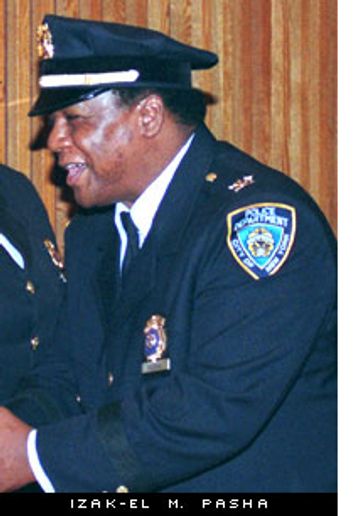
But the mayor hasn’t alienated everyone. The police department’s staunchest defender has an unwavering ally of his own — a high-profile African-American, no less. Imam Izak-El M. Pasha, spiritual leader of 8,000 African-American Muslims in Harlem, offers an uncommon assessment of Giuliani: “I think the mayor is a great man.”

With that statement, delivered the day after police arrested 27 protesters at Dorismond’s funeral, and with his unflagging support for the mayor, Imam Pasha has further cemented an unlikely, but durable, political alliance. But by standing behind the mayor, the imam has also distanced himself from most other African-American leaders, who have criticized Giuliani’s handling of the Dorismond incident.

“We have to struggle to move away from a more emotional basis to working with the mayor,” he says, implicitly disparaging Giuliani’s nemesis, the Rev. Al Sharpton. Pasha leaves no doubt about his distaste for Sharpton. “Though tragic things happened,” he says, “a respectable leader won’t blow up the whole building to get to one rat.”

Pasha is emerging as a social leader in his own right. He has become a spokesman not just for black Muslims, but for the Islamic community at large. The imam’s moderation is due in part to his shift away from the anti-white, separatist beliefs of the Nation of Islam, the controversial sect to which he formerly belonged, and his embrace of the mainstream, orthodox faith of Sunni Islam, the fastest growing religion in the United States.

He disassociates himself and his followers from the very movement that built his mosque, the Malcolm Shabazz Masjid. (Malcolm Shabazz is the Muslim name that black militant leader Malcolm X adopted just before his death.) From his bully pulpit at the intersection of 116th Street and Lennox Avenue, the imam spreads his pro-Giuliani, pro-police message.

In his conciliatory leadership style and philosophy, Pasha couldn’t be more different from Sharpton and from the militant legacy of Black Nationalism, a movement that often advocated destroying the government. “Times have changed,” he said. “Government is not actively falling into white supremacy and using religion to justify it. Government was anti-Negro, anti-black, so those things were necessary and they had a framework. And they made a difference.”

Preaching personal responsibility, the imam cautions his congregation to avoid taking an us-vs.-them attitude toward the mayor’s administration and the NYPD. “I don’t always agree with the government,” the imam says. “But you have to have a relationship with the mayor of New York.”

The relationship between Giuliani and Pasha has been fruitful for both men. It dates back to at least 1994, when the imam helped settle a dispute between the city and vendors on 125th Street in Harlem. He had assumed leadership of the mosque the previous year; with that settlement he emerged as an advocate of racial harmony and local economic development. The vendors eventually relocated to a market on 116th Street. More recently, the imam has been instrumental in the development of a 240-unit housing complex now under construction across the street from the mosque.

Recognizing Pasha’s mollifying influence in Harlem, and his loyalty, Giuliani rewarded him with an appointment as New York’s first Muslim police chaplain in June 1999. It coincided with another difficult, race-tinged chapter in the Giuliani administration — five months after the shooting of Amadou Diallo, and during the closing days of the trial of police officers for the torture of Abner Louima.

“You want somebody who doesn’t predict floods,” Police Commissioner Howard Safir told CNN after the imam’s appointment. “You want somebody who builds arks. And Imam Pasha is somebody who builds arks.”

But now, in the wake of Dorismond’s death, the imam is increasingly alone in his loyalty to Giuliani. Even moderate African-American leaders have joined Sharpton in criticizing the mayor’s handling of the case.

Rev. Michael Faulkner, a longtime backer, withdrew his support for Giuliani’s Senate bid last week. Appearing on CNBC’s “Hardball,” Faulkner labeled the mayor’s ongoing problem “a dysfunction in his relationship to the African-American community.” And the Rev. Floyd H. Flake, who supported Giuliani in the last election, signaled his discontent in a sermon the day after the funeral.

But Fred Siegel, a political analyst at the Cooper Union, downplays the impact of the defections. “The anger and the hysteria have grown, but I think those votes were lost long ago,” he says. Though the mayor increased support among black voters in the 1997 election, anger over the Diallo shooting cost him those gains. Siegel predicts Giuliani will probably garner less than 10 percent of the black vote, with results similar to the 1993 election.

Citywide, the mayor’s approval rating dipped to 45 percent, according to a New York Daily News/NY1 poll last week, down from 54 percent six months ago. The dissatisfaction with his response to the Dorismond shooting crosses ethnic and racial lines, and is especially strong among voters who traditionally voted for Democrats but have supported Giuliani in his two mayoral victories.

Continue Reading Close

Hunger strike in Jericho

Fighting Yasser Arafat and a rival branch of the Russian Orthodox Church, Sister Maria Stephanopoulos hopes the pope will help in one of the many religious turf wars in the holy lands.

  • more
    • All Share Services

Hunger strike in Jericho

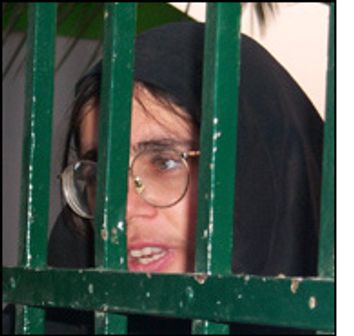
As Sister Maria Stephanopoulos stepped toward the gate of the Jericho Garden monastery to receive several visiting journalists, two armed Palestinian Authority guards pulled the gate closed and rattled the metal bars menacingly.

“Why can’t they come in?” she protested.

One of the guards waved his arm dismissively: No visitors. Despite the Palestinian Authority’s pledge to allow Sister Maria to receive guests inside the compound, she settled for talking through the bars.

This has been the situation for more than 60 days at this Russian Orthodox monastery, where Sister Maria Stephanopoulos has barricaded herself among the crumbling buildings to protest Yasser Arafat’s decision to transfer the property to a rival church.

Sister Maria, whose brother is former Clinton aide George Stephanopoulos and whose father is one of the most influential priests in the North American Greek Orthodox community, has been drawing international attention to an arcane struggle between two branches of the Russian Orthodox Church.

Now, during the pope’s historic state visit to the Holy Land, Sister Maria hopes John Paul II will lend his influence to pressure Arafat to resolve the conflict. In an effort to catch the pope’s attention, Sister Maria is consuming only bread and water in a symbolic hunger strike coinciding with Lent, which began this week.

“I would hope this issue’s going to resonate with him,” she said. “He was in Poland and he really had a lot to do with the downfall of communism there, so he should certainly understand.”

The standoff began in January when Sister Maria slipped past Palestinian security forces carrying out orders to take the 3-acre monastery from the U.S.-based Russian Orthodox Church Outside Russia and hand it to the Moscow Patriarchate in Russia. Both churches claim to be the official Russian Orthodox church and both say they can prove ownership of the monastery. The Moscow-based church has enjoyed a close relationship with Arafat since his guerilla fighter days, and Arafat initially agreed to place the property safely in the hands of the Moscow church.

John Paul II has no plans to meet with Sister Maria or to intervene on her behalf, according to Bishop Kamal Bathish, the Vatican’s ambassador to Jerusalem.

But that hasn’t slowed her efforts. Even with her rigorous religious lifestyle, Sister Maria has shown the Stephanopoulos public relations savvy. In the first weeks of the standoff, though she had no running water, she used a cell phone to communicate with reporters and U.S. consular officials in Israel.

Almost daily she hand writes eloquent, passionate descriptions of her situation, which she slides through the bars of the monastery gate to Sister Martha Malikoff, who has taken over Sister Maria’s headmistress duties at the Bethany School. Sister Martha then types the letters and e-mails them around the world to hundreds of informally networked friends and church colleagues.

The dusty streets of Palestinian Jericho stand in stark contrast to the overgrown monastery grounds inside the walls. There Sister Maria sleeps in a broken-down trailer, which she calls “Noah’s Ark” because it sinks into the mud during rain storms. Tall palms line the compound’s main road, and citrus and date trees planted by a monk evicted at the outset of the conflict dot the grounds. Much of Sister Maria’s day is spent in prayer. “A good day to me is when things are relatively calm and quiet,” she wrote in one of her e-mail updates recently. “I can sit peacefully a bit among the fruit trees.”

In addition to brusque treatment at the hands of the Palestinian Authority guards, Sister Maria says she is often harassed by the Moscow Patriarchate monks who occupy the other half of the compound.

Sister Maria grew up in a prominent family within the tightly knit Greek Orthodox community. Nikki Stephanopoulos, her mother, handles communications for the church’s North American Archdiocese. Her father, the Rev. Robert Stephanopoulos, leads the New York congregation, the country’s most prestigious diocese. Her brother, George, a former Rhodes scholar and White House aide, is now a political commentator for ABC News.

In an e-mail to Salon News, George Stephanopoulos said he plans to meet with his sister in Jericho in the next few days. “My greatest concern, as her brother, is that Sr. Maria remains safe and healthy, and I admire her determination,” he wrote.

The Greek Orthodox community is well-educated, largely affluent and nimbly networked, and its religious principles call for action in the secular world as well as for prayers. Since the start of the conflict, church members have sought the influence of several members of Congress. Peter Doukas, a church member who mounted an unsuccessful campaign for Congress in 1988, contacted Sen. Charles Schumer. Nikki Stephanopoulos enlisted friend Rep. Carolyn Maloney, who represents New York’s Upper East Side. Maloney quickly shot off an angry letter to Arafat, and later introduced a resolution in Congress calling on the Palestinian Authority to protect Christian holy sites and to resolve the conflict through an outside arbitrator.

Last month, a fact-finding delegation that included Nikki Stephanopoulos and representatives from the offices of Maloney, Rep. Tom Lantos and Sen. Daniel Patrick Moynihan journeyed to Jericho. They met with officials from the Palestinian Authority, the U.S. consulate and the Moscow Patriarchate, reaching an agreement that allows Sister Maria greater access to the property, specifically to the compound’s chapel.

The agreement also guaranteed freedom of movement for Sister Maria and Sister Xenia Cesena, a San Francisco nun who until recently was holed up with Sister Maria. Despite the agreement, Sister Maria said the Moscow Patriarchate monks still prevent her from worshiping in the monastery’s chapel. “Anytime we get close they close the door in our face,” she said. “There’s no such thing as equal access.”

Officially, the Greek Orthodox Church is not in communion with Sister Maria’s “White” Russian church, which split from the Moscow Patriarchate after the 1917 revolution. That breakaway group formed the exile Russian Orthodox Church Outside Russia after accusing the official Russian Church of submitting to communist rule, and is now the most conservative branch of Russian Orthodoxy. The White Russian church considers the Romanov family saints and follows the old Russian calendar.

As the Muslim call to prayer echoed across the darkening streets of Jericho, one of the Palestinian Authority guards locked the gate with a final metallic clang. Sister Maria’s blue habit dragged across the dirt path as she retreated into the monastery grounds. “I believe in the new martyrs, what they stood for,” she said, renewing her pledge to continue the protest. “The freedom of the church in the end is what it’s about.”

Continue Reading Close

A visit to “no-man's land”

An endless stream of refugees waits in desperate limbo between Kosovo terror and crowded camps.

  • more
    • All Share Services

Early Wednesday morning, 200 or so weary Kosovar refugees remained under the canopy at the Macedonian border checkpoint. They were the last of 22,000 who had crossed in the previous three days. Some had been waiting outside for more than 24 hours.

Relief workers at the Blace border crossing breathed a sigh of relief.

Before heading back to Skopje, Ron Redmond, a field officer with the United Nations refugee agency, decided to make a final check of the road between the Kosovo and Macedonian borders. Called “no-man’s land,” the half-mile stretch resembles the entry road to a prison. Two lanes wide and lined by tall barbed-wire fences, no-man’s land is the final stop for refugees before they cross into Macedonia.

The road jogs right, putting the Kosovo border and the farthest section of no-man’s land out of view from Blace, in Macedonia. The most recent refugees are often held there, out of sight from journalists and relief workers on the Macedonian side, and just a few feet from Yugoslav police. With often spotty communications between Macedonian border officials and the United Nations High Commissioner for Refugees, the only way for relief workers to find out if refugees are waiting in no-man’s land is to go look.

Redmond set out with a half dozen colleagues, including an official from the British embassy in Skopje. Journalists aren’t usually allowed to visit no-man’s land, but I tagged along. Refugees who had crossed earlier told of thousands more behind them. We walked in silence for several minutes, not knowing what to expect on the other side.

And suddenly, there they were. As we rounded the corner, the scene before us was as familiar as it was alarming. About 1,500 Kosovar Albanians were huddled together on the asphalt, so tightly packed together it was difficult to distinguish where one family ended and the next began.

A dozen Macedonian border police stood over the refugees, ensuring the crowd remained still in its position near the Kosovo border. As Redmond and the other relief workers approached the group, the enormous, indistinguishable mass splintered into a thousand different lives. Many had arrived sick or battered. All were hungry and exhausted.

Small emergencies popped up one after another. One man pushed through the crowd and rushed forward, explaining that his anemic son urgently needed medical attention. Several women had given birth in the previous 48 hours. A young girl had had an epileptic seizure. And those with diarrhea had to continue waiting; there are no toilets in no-man’s land.

Relief workers scrambled to meet the refugees’ needs. A Macedonian Red Cross nurse and doctors treated the most ill, but they were stretched thin. The medical workers had been on duty for two days straight, treating the previous wave of refugees.

A team of young men wearing vests emblazoned with “Action Against Hunger” handed out bottles of water and boxes of crackers. Minutes later they brought out diapers, baby food and wool blankets.

In a scene that, under different circumstances, would have been reminiscent of a weekend outing, one family of eight sat together on a wool blanket. But instead of a grassy park underfoot, their blanket lay on wet asphalt. Behind them, coils of barbed wire were illuminated by floodlights. They had arrived at the border the day before, they said, and Serbian police at the last stop, in the village of General Jankovic, had held them on the train for 10 hours.

A man standing nearby said his neighborhood in Pristina had been completely emptied of ethnic Albanians. He had traveled to the border with another family, which included friends of his children, and hoped to be reunited with his wife, children and mother-in-law, all of whom were living in the Cigrane refugee camp. He had spent the previous two nights holed up in an empty house in General Jankovic. He also said one woman and a young child weren’t as fortunate — they had died on the overcrowded train.

The refugees wore expressions of patience, and quiet resignation. They had made it, for the most part. As mothers breast-fed, and small children struggled to stay awake, they continued to wait for the Macedonian border officials to take down their names before they were ushered into tents in the Blace transit camp near the border. Mercifully, the authorities processed the newcomers quickly. Within a couple of hours of Redmond’s arrival, the initial 1,500 were moved past the Macedonian border.

In the empty road where they had been, the detritus of 1,500 beleaguered lives lay scattered about: dozens of empty plastic water bottles; stray clothes that had been dropped and forgotten; packs of cigarettes crushed under 1,500 pairs of feet. But minutes later, as soon as that initial group had filed through, 1,000 more Kosovars poured in, a hundred at a time. A column of refugees could be seen stretching back into the darkness beyond the border checkpoint, as far back into Kosovo as could be seen from no-man’s land.

And it all started again.

Continue Reading Close

Hillary does Brazda

Another day, another celebrity visit to Macedonian refugee camps

  • more
    • All Share Services

Richard Gere, Bianca Jagger, Vanessa Redgrave: They’re names one might expect to find on the guest list of a swanky Hollywood party, not on the list of official visitors to a southern European backwater. Add UNICEF representative Roger Moore to the mix and it’s just an average week in Macedonia.

They have all traveled to the Balkans in recent days as good will ambassadors, bringing to the refugees messages of hope and compassion. But Friday was an exceptional day at the refugee camp known as Brazda. Liridon Maliqu, a 15-year-old Kosovar refugee who volunteers with the Catholic Relief Services in the camp, was posted at the rear gate, charged with security detail. Chief among Maliqu’s duties was keeping the children clear of the vehicles in the entourage of Friday’s celebrity visitor — Hillary Rodham Clinton.

Of the quarter million or so Kosovar Albanians who have fled to Macedonia since the beginning of Slobodan Milosevic’s “ethnic cleansing” campaign, more than 82,000 continue to be housed in camps here. Young Maliqu said the mood of the camp was elevated because the refugees had gotten word about their famous visitor. He watched over a group of children, who splashed about gleefully in a stream near the gate, before Clinton arrived.

To the ethnic Albanians occupying these vast, dusty tent cities, just as important as the politics and kindness of these visits is the ceremony and the excitement they bring — for even on the best days, when the temperatures remain bearable, food lines aren’t quite as long and the vast bureaucracy of the place doesn’t overwhelm, life in the camps is unspeakably boring.

Waves of staff and security preceded Clinton’s arrival. Press sections were cordoned off, and refugees who didn’t live in the area she was to visit were kept behind fences. Workers in the camp had been preparing for days. “I spent three days excusing myself, entering tents and explaining the importance of this visit to people here,” said Aurvasi Patel, a UNHCR field manager.

Shefqet Qerimi, 45, an elementary school teacher from Gilan before he left Kosovo, stood nearby and surveyed the preparations for Clinton’s visit. He said he believes celebrity visits are important to the refugees’ morale. “The atmosphere changes at the camp,” he said, “It’s a thrill.”

Clinton stopped over at the camp for just about an hour Friday, visiting with Kosovar refugees as well as with the relief workers that run Brazda. She toured a small section, paying a visit to camp B-214; briefly its inhabitants were the focus of world media attention.

After the First Lady’s departure, Sadik Prunaj, who lives in B-214 with his family, was grateful for their famous visitor, and her message. “I thank Mrs. Hillary for visiting us in this hard circumstance,” he said, “She gives us hope about going back to Kosovo.”

Surrounded by a group of refugees, the first lady emphasized the need for empathy from those who experience the Kosovo crisis only though the media. “It’s easy when we see these pictures [of refugees] … to get immune to what it’s like … I keep putting myself in the faces and the stories … we all should,” she said.

Meanwhile, the relief community took pains to welcome her, as it has the rest of its high-profile visitors. The UNHCR’s Patel admitted the relief organizations need the attention brought by celebrities as much as the refugees. “That’s where we get our funds,” she said. The UNHCR is a media-savvy organization, she added, “well aware of how public perception is shaped.”

Continue Reading Close

Refugees protest treatment by Macedonians

Kosovar Albanians are clashing with police as refugee camps reach their saturation point.

  • more
    • All Share Services

Aurvasi Patel was caught in an
unenviable position. In front of her, she faced an agitated crowd of
hundreds of Kosovar Albanians, angry at the alleged mistreatment at the
hands of camp police. Behind her, a phalanx of beefy Macedonian policemen,
arms folded, stood shoulder-to-shoulder in defense of their headquarters.

Intermittently, the crowd shouted “NAH-TO, NAH-TO,” calling for the return
of the international military alliance that constructed and first ran the
camp. The NATO soldiers are viewed as heroes by the refugees here — both as
their military supporters in Kosovo and as a benevolent presence as camp
stewards.

New tensions between Kosovar Albanian refugees and Macedonian police are on the rise as refugee camps reach their saturation point. The stand-off at Brazda Monday showed the Kosovo conflict in microcosm, highlighting the ethnic tension in
Macedonia, where ethnic Albanians comprise nearly one-quarter of the population, according to government figures. The recent flood of refugees has greatly increased that figure, while the government has continued to allow refugees to pour into their country. Finally last Wednesday, the Macedonian government sealed the border.

This has only made the situation worse at Brazda. As Brazda’s camp manager, defusing the conflict fell on Patel’s shoulders. She is a United Nations High Commissioner for Refugees field officer, and Monday she served as Brazda’s chief arbitrator, forced to
mediate between the camp’s occupants and its police force.

The crowd gathered at the police headquarters had been galvanized by an incident a few
minutes earlier. A man identified only as Gashi, a 44-year-old refugee, had
been apprehended by camp police. According to the police, he had been
pulled from under the camp’s fence, caught trying to escape. Gashi claimed
he was only trying to get a leather jacket. He said an officer had
smashed his head while taking him into custody. The police said he had resisted arrest, but denied any abuse.

Working with an interpreter and colleagues from UNHCR and the Organization for Security and Cooperation in Europe, Patel
formulated a plan. She would convene a meeting of representatives from the
refugee community with a delegation from the police. Through an
interpreter, who spoke with the aid of a megaphone, she announced the plan to the crowd.

Patel said she hoped the hot temperature would help disperse the crowd. With the initial fervor of the demonstration dying down, she took a deep breath and looked around. “These people have been here a long time and they are venting their frustration,”
she said.

The nerve-fraying job of an UNHCR field officer includes a fair amount of managing ethnic tensions in this de facto city, where each day around 24,000 inhabitants eat, sleep and carry on their daily lives. In this world circumscribed by chain-link and barbed wire, the daily life is monotonous at best.

On Tuesday, Patel said the issue of the beating that sparked the demonstration had been resolved. A delegation of refugees had aired their complaints to the police commander, with Patel on hand to mediate.

But one man, an ethnic Albanian from Skopje who was handing out free
newspapers to the camp’s inhabitants, wasn’t aware of the meeting between
police and the refugee representatives. Avni Ibrahimi, a 22-year-old
volunteer with a group called “Spike of Goodness,” said abuse at the hands of
Macedonian police is commonplace.

For the Kosovar Albanians at Brazda and the other refugee camps, the
Macedonian police are hardly better than the Serbian police who
forced them from their homes. One Kosovar Albanian man at the demonstration
described a litany of police abuses, including police officers illuminating the walls of the plastic
bathrooms with their flashlights when women were inside.

In an effort to placate the government and alleviate stresses caused by the
huge number of refugees, the UNHCR began busing refugees from Macedonia to
Albania. On Monday the first three bus loads of ethnic Albanians left
Brazda, Stankovic and Cegrane camps for Qatrum, in Albania. Though the
number was small, about 150, it was an important symbolic gesture of catering to the wishes of the Macedonian government by the UNHCR. “It was a trial run,” said Ron Redmond, a UNHCR spokesman on hand at the Stankovic camp.

Redmond says he hopes more busses will follow. “These camps are overcrowded and we
have pressure from the Macedonian government to move people out. And
Albania has expressed a willingness to take more,” he said Monday.

Redmond said no refugees were obligated to leave a camp in Macedonia for
one in Albania. “It’s got to be voluntary. There’s no way we’re
going to force people,” he said. That policy probably accounts for the
scant number shipped out Monday. Many among the 150 who did go to Qatrum
said they had relatives in Albania.

But the longer the Kosovo conflict continues, and as the ethnic Albanians
refugees are confined to camps patrolled by indifferent or even antagonistic
guards, in a country led by a hostile administration, the more likely it
becomes that refugees will elect to take one more journey.

Continue Reading Close

Page 1 of 2 in Rob Mank