Samantha Gillison

Flameout

A friend remembers the short, scary, brilliant life of novelist Robert Bingham.

  • more
    • All Share Services

Flameout

It was the New York book party to be at last month. The divine Katie Couric was there in her Manolo Blahniks, Peter Jennings, too, relaxed and smiling — the two TV stars graciously mingling in the crowd of literary types. This year’s National Book Critics Circle prizewinner for fiction, Jonathan Lethem, and legendary editor Nan Talese were there, the head of the Natural History Museum, too — everyone drinking expensive liquor and munching on shiitake beggar’s purses in the lower lobby of the Whitney Museum. The Doubleday authors being launched at the party were easy to pick out of the crowd: kind of dressed up, a little awkward, but happy, too, basking in the glow of the book party. The only author from Doubleday’s lineup who was conspicuously absent was Robert Bingham, or thelaterobertbingham, as they referred to him all night. Rob died of a heroin overdose in November at age 33 while the galleys of his first novel were sitting on his desk.

You couldn’t help imagining Rob at this party, a little nervous, probably a little tight, embarrassed at the goofy gimmicks the Doubleday people foisted on the crowd — first a painful reading and then a spelling bee (“That’s rrright!” Jennings’ Canadian tenor boomed through the Whitney’s lobby when someone got “lepidopterist” on the first try) — but proud, too. After all, his first and only novel, “Lightning on the Sun,” doesn’t need any gimmicks to sell it. It’s the real thing — intense, poetic, infinitely sad and compelling. Even where the book, a thriller set mostly in Southeast Asia, stumbles it’s still interesting, much like Rob’s brilliant and inexplicably overlooked book of short stories, “Pure Slaughter Value,” published in 1997.

“I bumped into Bingham a lot, at book parties, you know, and I always thought he was kind of annoying, like one of those trust-fund kids who think they own the world,” a young novelist at the Doubleday party said to me. Well, yeah. Rob was the scion of a mythic Southern newspaper family and had a mind-bogglingly huge trust fund — granted, more mind-boggling in the days before dot.com bazillionaires roamed the Earth, but still, he had a lot of money. Plus his blood was about as blue as it gets in America; he was overprivileged and then some. But he was also blessed, or cursed, depending on how you look at it, with unusually acute insight, the kind of intense psychological sensitivity that makes people like Oedipus poke their own eyes out. He saw into the people around him and most of all deep into his own soul, and wrote it down as best as he could.

Rob also understood that having all that money did make him different — and in many ways an unsympathetic, threatening person to almost everyone he met. The stench of filthy lucre permeated his writing, his humor, his insights into his characters, politics, literature and the complex and fragile emotional webs that friends and lovers weave around one another. There wasn’t a relationship Rob wrote about in his short stories or in “Lightning on the Sun” that wasn’t profoundly affected by money. Much like a Marxist revolutionary, Rob reckoned that very few human interactions were unscathed by the power of capital.

Rob chose to use people’s complex and often overwhelming emotional reactions to great wealth as material for his art. And as tempting as it is to make the comparison, Rob’s writing was not Fitzgeraldian in style or content. There is no room for lightness or hope, charm or melancholy, in Rob’s view of money. Money and the desire for it loom threateningly over his characters, propelling them into physical and moral danger, relentlessly exposing them in all their vainglory and emotional fragility. The idea that money leads to death (both literal and emotional) is most explicit in “Lightning on the Sun” and in a brilliantly subtle short story, “The Other Family,” that Rob first published in the New Yorker when he was only 26. But even in his other stories, where money is not an overt presence, there is a pervasive despair, sometimes broken by humor or farce, that characters who want for nothing materially are unable to be happy.

But not only was Rob different from you and me, he was also different from other rich people. He was without a snobbish bone in his body, able to empathize with people completely different from himself and extraordinarily (one might say compulsively) generous with anyone he loved, believed in, pitied, admired or was flattered by persistently enough. Unlike the very few other very rich people I have met, Rob was not rigid or conservative; he did not require that a private school admissions committee or a family retainer screen the people he met, worked with, slept with, befriended and became vulnerable to.

He valued artistic talent and ambition, courage, intelligence, humor and athletic prowess. He was fascinated by archaeology and funded digs in Crete, and wrote in the New Yorker about the brutalizing of Cambodia’s Angkor Wat by dealers in black market antiquities. The metaphor of archaeology appealed to him on a visceral level; the concept of digging one’s way to a buried, obscured truth was exactly how he saw the work of the fiction writer.

This is not to say that Rob didn’t have an extremely complex relationship with the trappings of his social class, as evidenced in his writing. Compelled to participate in many of the primal rituals of the upper crust — like the Head of the Charles (the ur-crew event, an elite international race, something like the Kentucky Derby of crew racing) — he was often in an obsessive rage over preppiness. He’d show up drunk and snarling, or lusting over grotesquely uptight tennis ladies. He could be found at the Racquet Club, gleefully working off hangovers earned in the sleaziest titty bars in Manhattan, loving and hating his own kind with a vehemence that often freaked out his companions. “That’s so fucking prepeee!” he would shout at some event, opinion or person — and you were never quite sure what exactly he meant.

Rob loved rock music and his aesthetic sensibility was punk, vintage East Coast, early 1980s. As an artist (and person) he was much closer to, say, Dee Dee Ramone than to people like Michael Chabon or Jeffrey Eugenides (writers whom he has been compared to). He adored the work of Robert Stone, Dylan Thomas and Graham Greene but he reveled in Pavement. Rob believed that what he was looking for could be found in the hardest, ugliest places in our culture and psyche. And when he couldn’t stand what he saw there, he sought escape in pure adrenaline-saturated sensation by (for just a few examples) driving too fast, moshing too enthusiastically at hardcore shows, inserting himself into politically unstable Third World countries, telling people what he thought of them to their faces, gambling huge sums of money, shooting guns and taking drugs.

Rob’s particular sense of humor, with its finely tuned and occasionally sophisticated appreciation for the bizarre, the revolting and the absurd, was often manifested in the literary journal Open City, which he co-founded and bankrolled. Open City was a witty, provocative and often dark magazine that published exactly what Rob and his co-editors, writers Tom Beller and Daniel Pinchbeck, really loved and nothing else. Like Gertrude Stein on the Rue des Fleurus, Rob delighted almost as much in discovering new counterculture talent — and encouraging and promoting it — as he did in working on his own writing.

A memory of Rob: It is summer and we are visiting him in Nantucket, at his beautiful wide-gabled house that sits alone in the midst of acres and acres of rose-hip- and sea-grass-covered dunes, looking out at the brooding Atlantic. We have been listening to Pavement at full blast all weekend, drinking too much, arguing about fiction and playing endless backgammon games. Rob is wearing a black knitted watch cap, cat-burglar style, and has a cashmere blanket wrapped around his shoulders in a “homage” to the insanely annoying pashmina.

Rob, a committed Democrat who routinely donated tens of thousands of dollars to the Democratic National Committee, has his rifle hoisted in the air and is explaining to us, at the top of his lungs, about Al Gore’s electability problem: “Gore is a fucking fake Southerner, just like me. He has no fucking clue about anyone who didn’t go to fucking St. Alban’s!” He then clomps downstairs into the dark Nantucket night and shoots Heineken cans off the fence until his girlfriend, the thoughtful Vanessa, persuades him he might hit someone barbecuing on the beach.

It is hard to know how to convey Rob without flattening him. Like most people who are worth knowing, he was many contradictory people at once, some of them appealing, some of them loathsome. He struggled with alcohol addiction for most of his adult life and most recently with heroin. He could be a vicious drunk, too, spewing devastating remarks at his friends and then disappearing before they could respond. Alcohol seemed to eliminate his understanding of limits, both physical and emotional. Drunk, Rob tended to be terrifyingly self-destructive. However, he did not mean to die last November. He had “Lightning on the Sun” in galleys, he had just gotten married that summer to his longtime girlfriend, he was ready to take off. Rob was an infrequent heroin user — “chippers,” they’re called — who was just terribly unlucky, and alone, one night.

Rob’s most distinctive quality, for me, in his art and life was his ambition to convey what he really felt, poetically and realistically. His work was sometimes brilliant and not always successful, but it was never about the bland, self-conscious cleverness that is the hallmark of so much of the writing of his contemporaries. He dared to reveal himself in his fiction and, for that matter, often in the first five minutes you knew him.

Rob was just beginning. His talent, and his life, were only in bud. He wrote two excellent books, but he would have written more; he would have dug even deeper and rocked the house with his brilliance, his humor and his magnificent voice.

Too close for comfort

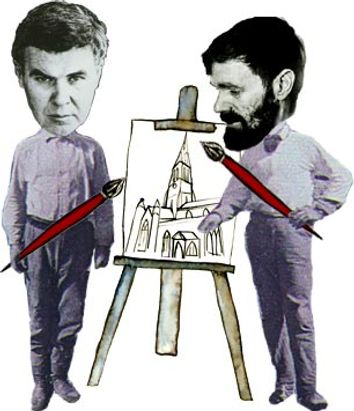
Why is Raymond Carver's masterpiece, "Cathedral," so much like a little-known D.H. Lawrence story?

  • more
    • All Share Services

Too close for comfort

What would you do if you made the uncomfortable discovery that the most imitated writer in America might have lifted the plot, characters and theme of one of his most famous stories?

Well, for starters, you might try to dismiss the charges. Any old literary saw would do the trick. After all, everyone knows that Shakespeare cribbed his plots, that good writers borrow and great ones steal, and that all literary artists struggle under what Harold Bloom calls “the anxiety of influence.” Maybe, as some have said, there are really only a few basic narratives, and a writer can only come up with different ways of telling them. But what if the similarities between two stories by two acknowledged masters were just too close to be easily brushed aside? If you were D.H. Lawrence scholar Keith Cushman and believed you had stumbled upon a brilliant rewrite of one of the master’s tales you might draft a letter to the most influential short-story writer of your time. And Raymond Carver just might write you back.

In 1918 the British author D.H. Lawrence wrote “The Blind Man,” a brilliant short story that would eventually be published in a collection of his war-themed tales entitled “England, My England.” Passionate and subtle examinations of the psyche, these stories can leave you astounded by the power of Lawrence’s vision. And while perhaps not every reader reacts to the stories in “England, My England” with the intensity of intimate recognition, it seems that Carver most likely did. He must have been so moved by “The Blind Man” that it became lodged in his soul, only to reemerge when he started working on his masterpiece, “Cathedral,” in 1980.

Recently while reading “The Blind Man,” I was reminded of “Cathedral.” Although at first the two authors seemed worlds apart, I wondered if Carver had read Lawrence. Superficially, at least, they share common biographical points, enough that I could imagine Carver being drawn to Lawrence’s writing. Both were born into decidedly “unliterary” lives; raised in rural backwaters, they grew up in poor, working families headed by mostly absent fathers who labored at dangerous, back-breaking jobs: Lawrence’s in the coal mines of Nottingham, England, and Carver’s in the sawmills of Washington state. They both had a burning ambition to write that propelled them through difficult lives. And, ironically, both writers died on the brink of middle age from lung disease. However, although I suspected there might have been some influence at work, I wasn’t prepared for the extraordinary similarity of “Cathedral” to “The Blind Man” when I read the two stories back-to-back. They have an almost identical plot, premise, construction, characters and timing of crucial narrative events.

Both tales involve a triangle: A husband and wife in a troubled marriage get a visit from the wife’s close (but sexually unthreatening) male friend who takes a train to get to their house. In Carver’s tale the friend is blind; in Lawrence’s it’s the husband, but in both stories the climax is the communion between the two men while the wife is absent: In “Cathedral” she’s asleep, in “The Blind Man” she’s in another room. “What is it?” the wife in Lawrence’s story asks, rejoining the two men to usher in the denouement; “What’s going on?” says Carver’s. The slight action unfolds identically over the same time expanse in both stories: The wife’s friend arrives from the train station, there’s a strained greeting between the two men, at dinner they break the ice and after dinner the two men (at the blind one’s instigation) touch and have an intense reaction to their contact, wherein lies the “epiphany” of the tales.

I was so surprised at the affinities of structure, plot and theme that “Cathedral” has to “The Blind Man” that I wondered why no one else had noticed it. After all, “Cathedral” is a very well-known story, considered the Jewel in the Crown in the opus of the most revered American writer of recent memory. But, of course, someone had. Professor Keith Cushman, a distinguished D.H. Lawrence scholar who teaches at the University of North Carolina- Greensboro, had corresponded with Carver about the two stories’ similarities in 1987 and had published a paper about them in France in 1988.

Intriguingly, Carver wrote to Professor Cushman in the fall of 1987 that he hadn’t read “The Blind Man” before writing “Cathedral,” although he had “read those three or four stories of [Lawrence's] that are always anthologized — ‘The Horse Dealer’s Daughter’ and ‘Tickets, Please’ and one or two others.” He further wrote that when he did finally read “The Blind Man,” he liked it “a good deal” but did not “recall noticing any or many similarities” to “Cathedral.” He even went on to supply Professor Cushman with an account of the genesis of “Cathedral”: “The thing that sparked the story was the visit of a blind man to our house! It’s true. Well, stories have to come from someplace, yes? Anyway, this blind man did pay a visit and even spent the night. But there all similarities end. The rest of the story was cobbled up from this and that, naturally.”

Somewhat disappointed, Cushman who felt that “Cathedral” was a “brilliant re-write” of “The Blind Man,” accepted Carver’s explanations. But he couldn’t ignore the resemblance between the two tales and wrote his paper anyway. Now, more than a decade later, Cushman says that, “At the time I had to take [Carver] at face value … Though I can make a case for his not lying, it’s easier to imagine he was.”

It certainly seems that Carver was a bit more interested in D.H. Lawrence than he let on during the course of his correspondence with Professor Cushman: Journalist Jim Naughton, a former student of Carver’s, wrote a commemorative article in “The Washington Post” shortly after Carver died, reminiscing about the famous short-story writer: “I wanted [Carver] to be a literary guru, I suppose, but I think he lacked the ego for it. I remember only two occasions on which he spoke with any heat. On the first he said that D.H. Lawrence was one of the best writers in the language and one of the worst, and sometimes in the same story …”

Naughton also dates Carver’s short European fiction course at Syracuse University in the fall of ’81. Carver told Cushman that he first read the story and distributed it to his class in 1982. (Syracuse University confirms Naughton’s account.) In addition, poet Tess Gallagher, Carver’s wife, says that she first showed her husband “The Blind Man” in 1980: “I showed it to Ray after we had finished working on his story ["Cathedral"] … there were some correspondences between the stories that meant he would have to know about it.” While perhaps Carver’s vagueness about dates isn’t significant, it is notable that he never mentioned to Cushman that his wife had shown him Lawrence’s story because she, too, thought that it had similar elements to “Cathedral.”

However, although Gallagher thought there were similarities between the two stories, she did not think they were significant. She says definitively that Carver had not read or heard of “The Blind Man” until after he wrote “Cathedral.” To top it off, she adds, “I think I liked it ["The Blind Man"] more than Ray did.”

Carver himself identified “Cathedral” as “totally different in conception and execution from any [of his] stories that have come before” to Mona Simpson in a 1983 interview in the Paris Review. He went on to describe writing “Cathedral” as an almost rapturous experience: “When I wrote ‘Cathedral’ I experienced this rush and I felt, ‘This is what it’s all about, this is the reason we do this.’ It was different than the stories that had come before. There was an opening up when I wrote the story. I knew I’d gone as far the other way as I could or wanted to go, cutting everything down to the marrow, not just to the bone. Any further in that direction and I’d be at a dead end — writing stuff …I wouldn’t want to read myself, and that’s the truth.” He went on to explain, “In a review of the last book, somebody called me a ‘minimalist’ writer. The reviewer meant it as a compliment. But I didn’t like it. There’s something about ‘minimalism’ that smacks of smallness of vision and execution that I don’t like.”

But can the startling similarities between “The Blind Man” and Carver’s breakthrough masterpiece really be a matter of pure coincidence? And if so, why did Carver pretend that no one else had noticed them before Cushman did? Dr. Paul Skenazy, professor of American Literature at the University of California at Santa Cruz, who worked with Carver in the early 1970s, says, “The similarities [between the two stories] — the temporal frame is exactly the same, there are other parallels and a kind of echoing of Lawrence in the Carver story that makes it clear that somewhere in the back of his mind was this story. So why deny it? ‘Cathedral’ represents the move Ray made to open up. It was his first major story after he stopped drinking, after he was with Tess — it’s a major transition.” And if Carver intended to make a deliberate departure from “minimalism,” who better to inspire him than Lawrence?

Once the similarities had been brought to his attention by as unconfrontational a scholar as Professor Cushman, it’s hard to see why Carver would stonewall. “Cathedral” was an immensely successful, influential story and there were and are many people who couldn’t care less whether Carver had lifted “Lawrence’s scaffolding” in Cushman’s words. Perhaps Carver felt pressured to maintain that the piece was uninfluenced, aware that, as Professor Bloom has written, it is originality that marks artistic genius, that marked Carver’s own literary heroes like Lawrence, Joyce and Chekhov. Or perhaps Carver truly could not see how closely his story resembled Lawrence’s. Whatever the case, writers are notoriously unreliable commentators on their own writing. “An artist is usually a damned liar,” D.H. Lawrence wrote in “Studies in Classic American Literature.” “Never trust the artist. Trust the tale.”

Yet the similarity between these two stories raises some interesting questions about how we read Carver. That he is adored as few late-century American writers are is not news — as Bloom points out there’s almost a cult of Carver. Readers treasure not only his taut, bleak, deeply moving short stories but the legend of his life, as well: unhappy, alcoholic, stifled by frustrating poverty and saddled with the overwhelming responsibilities of teenage parenthood (“[My wife and I] didn’t have any youth” he told Simpson), Carver’s singular talent didn’t have room to develop until relatively late. His eventual triumph over adversity, a story of late, spectacular blooming against all odds, has given him a rare hold on his readers’ affection.

Carver chronicled the lives of the lumpen proletariat and the demoralized white working class with a sensitivity and eye for detail unmatched in his contemporaries and, many would argue, his followers. He is commonly thought of as a truly American writer, perhaps stylistically indebted to Sherwood Anderson, Stephen Crane and Ernest Hemingway (he himself suggested the link to Hemingway in his book “Fires”), but in a sense sui generis — a talented, sensitive soul who rose up out of the deadening laundromats and strip malls of the great, dreary American suburban wastelands and wrote beautiful, sad stories in clipped, stripped prose. The minimalism and domestic realism of his short stories made his work read very differently from the cerebral literary styling of his contemporaries, the university-ensnared postmodernists.

But perhaps Carver’s work wasn’t as unfettered or as American (in his literary influences, at least) as all that. It seems that he read (and taught) the European modernists very carefully. Bloom says that, “Carver was a very literary writer and his work is full of echoes of other writers, some of them unintentional. He’s a derivative writer — vastly overrated.” Or, as Tobias Wolff wrote, admiringly, in the introduction to “The Best American Short Stories of 1994:”

The picture of Gabriel Conroy [in James Joyce's' "The Dead"] watching his wife Gretta on the staircase above him as she listens to a tragic ballad … has become for me … the very emblem of that final distance which a lifetime of domestic partnership can never overcome. I wonder if there isn’t an echo of this image in Raymond Carver’s “Will You Please Be Quiet, Please?” when Ralph, returning from a walk on his honeymoon, sees his bride, Marian, “leaning motionless on her arms over the ironwork balustrade of their rented casita … she was looking away from him, staring at something in the distance.

But unacknowledged, unconscious “borrowing” or no, what does all of this matter when Carver’s fiction has given so many people so much pleasure? All artists (from great to lousy) in all media from time immemorial have borrowed and stolen, reinterpreted and reworked the art and ideas of their predecessors and contemporaries. It’s the nature of creativity. So who cares if Carver shoplifted some ideas? Isn’t Lady Chatterly herself a descendant of Emma Bovary? Isn’t the most famous blind man of them all Oedipus Rex? And, as Professor Cushman suggests, isn’t Lawrence himself working closely with Sophocles’ ideas in his story? Yet, in the end, isn’t there a line between being influenced and knocking off someone else’s work?

Nevertheless, to suggest such an influence and to note Carver’s denial of it can’t fail to be seen as throwing down a gauntlet. Even in our era of sampling, of pastiche as high art and of the endless Hollywood remake, we still cherish originality as a cultural ideal, especially when it comes to the hallowed practice of literature. As recent events in publishing illustrate, the accusation of plagiarism or covert idea-theft can bring down a career and humiliate those involved with the accused project. It’s all right if an author is up front about riffing on an earlier work, as Peter Carey was with his most recent novel, “Jack Maggs,” or Michael Cunningham with “The Hours.” But we feel fooled when something presented as original isn’t. And we still see the history of literature (as well as those of art and architecture) as a narrative chronicling a series of innovations, starring the artists who shocked the world with the “new.”

Any writer striving for greatness, as Carver clearly was, worries that his claim on immortality may be tenuous. Carver’s refusal to acknowledge the obvious similarities between his own story and Lawrence’s speaks to the depths of his insecurity — as a working class writer in a literary world run by an Ivy-League-educated elite — about his own place in the canon. That “Cathedral” was hailed by no less than Anatole Broyard in the New York Times as “perhaps Carver’s best work to date” would have made its provenance even more of a loaded issue.

And while, to a more objective outsider, the debt to Lawrence might not seem like such a big deal, Carver could not afford to acknowledge that the centerpiece of his new book, the beating heart of his move “toward a greater ease of manner and generosity of feeling” (in the words of reviewer Irving Howe), was after all not solely and entirely his. As Professor Skenazy puts it, “‘Cathedral’ is one of Ray’s trademark stories, and if you say, ‘I borrowed [it] from someone else,’ well, it seems less original.”

Near the end of his interview with Mona Simpson, Carver disparaged art, his own and literature in general, as essentially inconsequential: “After all, art is a form of entertainment, yes? For both the maker and the consumer. I mean in a way it’s like shooting billiards or playing cards, or bowling — it’s just a different, and I would say higher, form of amusement …”

What then to make of this man who clearly saw himself as first and foremost a writer of literature, an art that he in turn claimed was of little more significance than bowling a rubber on a Saturday night? Nothing Carver himself didn’t already identify and write in his stories for us: ambivalence, insecurity, ambition, need, cowardice and hope — all the demons that beset the soul who wants to be Somebody. But judging from Carver’s enduring popularity and beloved status with a whole new generation of short-story writers and readers, he needn’t have worried.

Continue Reading Close

Writer beware

Publishing that first novel often brings more terrors than thrills.

  • more
    • All Share Services

Writer beware

Last spring, shortly after I published my first novel, I met a very famous author who referred dismissively to a fiction writer’s first work as autobiographical throat-clearing. “You must get beyond it and get over yourself to find your true work,” he told me. “Even first published fiction that has great artistic merit is only valuable to its author as a stepping stone in her creative life.”

Seeing your first publication is supposed to give you a vantage on a career, on how to construct a lifelong project of a body of work. But, as I had just learned from my own initiation, many writers experience their first publication as a profound letdown that obscures many of the original reasons they wanted to write. Some authors whose first work is greeted with great excitement (or lack thereof) find that it permanently freaks them into silence or worse (much worse), mediocrity.

“There is an expectation now that the writer’s first effort must be their best or at least spectacular, that you must cash in while you can, and that the whole culture is rooting against you when you’re established in your career,” says Newsweek book critic David Gates, the author of two highly acclaimed novels and the recently published short story collection, “The Wonders of the Invisible World.” “Many of the [current] literary biographies tell the story of early promise and some success and then the long slide down, and now writers dread acting it out.”

Lan Samantha Chang, author of the award-winning short story collection “Hunger,” was so wary of the phenomenon Gates describes that, she says, “I delayed showing anyone my work for five years from when I could’ve. I wanted to be old enough to be certain of my artistic vision, to be able to withstand whatever happened when my first book came out.”

What is it about the publication process that can be so disorienting? “Shortly after my book came out I realized that my relationship to my writing had changed forever,” says Jhumpa Lahiri, author of the widely praised story collection “The Interpreter of Maladies,” whose work was selected for the New Yorker’s 20 under 40 summer fiction issue. “There were so many people attached to getting my book established in the world, so many new people who were in my life. All of a sudden my writing acquired a [new] seriousness … I started feeling that all of those eccentric, hibernating writers made sense. They weren’t weird anymore.”

Yet, if by definition an artist wants to communicate with an audience, shouldn’t getting her work out there be thrilling, especially for a first-time writer who’s been dreaming about being published for years (if not most of her life)? Not necessarily: Even when the world responds in a good way, the noise can threaten to creep into a writer’s head and silence her talent. This is famously the case with writers like Thomas Pynchon and J.D. Salinger — the latter told Joyce Maynard that he left New York because he couldn’t stand going to one more cocktail party and having someone come up and tell him about his characters.

For some writers, the rigors of publishing a first book harden their resolve. The late Robert Bingham, author of the edgy short story collection “Pure Slaughter Value” and the forthcoming novel “Lightning on the Sun,” said, “One of the darker experiences of my book tour was walking into the Cambridge Barnes & Noble with my friend Ed Hemingway [Ernest's grandson] and being greeted by a sea of empty gray folding chairs, with only two people sitting up at the front waiting for me to read … It was an image of complete horror.”

Bingham used the mixed reception his first book received to fuel his artistic and career ambitions: “Some of the negative reviews of my book that I took to heart, that hurt, [said] that my characters were unsympathetic … I didn’t necessarily feel that this criticism was unfounded. Ultimately, I used the criticism … But when I sat down to write my next book, I didn’t think about the marketplace. I thought about my heroes in literature, Graham Greene and Robert Stone … and I had their rhythms in my head.”

When Ernest Hemingway published his first novel, “The Sun Also Rises,” the New York Times gave it a two-line mention. According to Hemingway biographer Michael Reynolds, the book’s publication provoked barely a ripple in the literary pond; the future god-king of American letters was merely promoted from a pool of authors publishing in small literary journals to the slightly more exclusive someone-worth-watching category. On the other hand, F. Scott Fitzgerald’s first book, “This Side of Paradise,” made a huge splash critically and commercially, transforming him into a celebrity “overnight.” Which proves exactly nothing.

Success or no, once your first book is published you are forced to confront, head on, the reality of what you’ve decided to do with your life. You get an up-close look at the world of turn-of-the-millennium publishing, with all its grim, market-driven pragmatism — the genteel, gin-soaked, word-loving world of Max Perkins and Edmund “Bunny” Wilson is long gone. “The literary culture has gotten tied up with the rest of the entertainment culture,” says Newsweek’s Gates. “Which is why there’s such an emphasis on young and gorgeous writers.”

And so, as a freshly published writer, you find yourself contemplating such things as the mega-advances you will never get; the inscrutable decisions by big book-selling chains that so profoundly influence your publisher’s feelings about your book; the hideous “sales rankings” on Amazon.com; and perhaps most dishearteningly, the fact that, as Gore Vidal has pointed out, American fiction long ago stopped playing a vital role in our TV-saturated culture.

So, are you in or out? And if you decide that you don’t care how your book is received, that from now on you’re going to be like Emily Dickinson in her attic — and to hell with all those horrible publicists! — a nagging fear develops in the corner of your mind. If you don’t care about your book’s reception in the world, is that a first step in the direction of not caring about your book? Exactly why is it that you’re spilling your life’s blood to write if no one’s going to read it?

Aspiring writers who haven’t yet published a book often worry that, as Gates puts it, “somehow you’re delusional, that you’re not really a writer” — but when your career exists mostly in the realm of fantasy, at least you have control. In your head you could be anyone, enjoying any kind of literary success, and because you don’t suspect that there are people waiting for you to fall on your face, you have the self-granted freedom to write your heart out. The aging Hemingway fetishized his early, hungry days in Paris in “A Moveable Feast,” yearning for the time when he was broke and unknown and the writing came easy: “I worked better than I had ever done. In those days you did not really need anything, not even the rabbit’s foot, but it was good to keep it in your pocket.”

The newly published writer usually develops a stinging self-consciousness that may make her keenly identify with Adam just after the first bite of the apple — there’s no way to fake innocence. You can never write again without the understanding of what’s in store for your manuscript when you finish it. The world will make terrifying judgments about your talent and your vision, praise or dismiss your efforts or, perhaps worst of all, completely ignore them. Even a brave-hearted writer can feel, in these dark moments, a doubt or two about whether she has something worth showing this planet-sized jury.

The first-time author who’s been turned into a “hot” commodity can feel stifled and set up to fail rather than encouraged by the attention. Danzy Senna, who wrote the critically acclaimed, bestselling novel “Caucasia,” has recently completed a first draft of a second novel. She says that it wasn’t easy to feel comfortable writing again, and describes experiencing a sense of immense, stultifying pressure at the critical enthusiasm that greeted her first book. “I felt, ‘I’ll never be able to live up to this accidental success,’ and it really did feel accidental because I wrote ["Caucasia"] in graduate school — it was a very private thing,” she says. “I’m wary of being seduced by the publishing industry. I feel like I’m still learning to write, I’m still developing as writer … It’s so hard to be positioned in a place where you’re really not ready for it.”

No matter if publishing that first book is a good, bad or indifferent experience, it tends to jolt a writer’s infamously delicate internal landscape. You will never be the same writer again. Whether you first publish at 24 or 44, you come of age when those bound galley proofs arrive in the mail. Like it or not, you must learn to reckon with your writing, and therefore yourself, as a marketable product. “There cannot be more than a handful of great or very good writers at any one time,” Gates points out. “And that’s exceptionally cruel because we all see ourselves as the leading actor in the drama … We all want to be T.S. Eliot and not Conrad Aiken, Auden and not Isherwood.”

Just lately I have realized what my next novel is about — not the external plot, which I have known for a while but the real heart of the matter. I’ve been walking around like a newly pregnant woman, giddy and nauseated. Now, all I need to do is keep my head on straight while I get the first draft down. Funnily enough, I’m just as exhilarated, terrified and insecure as I was the last time around. And for that I’m grateful.

Continue Reading Close