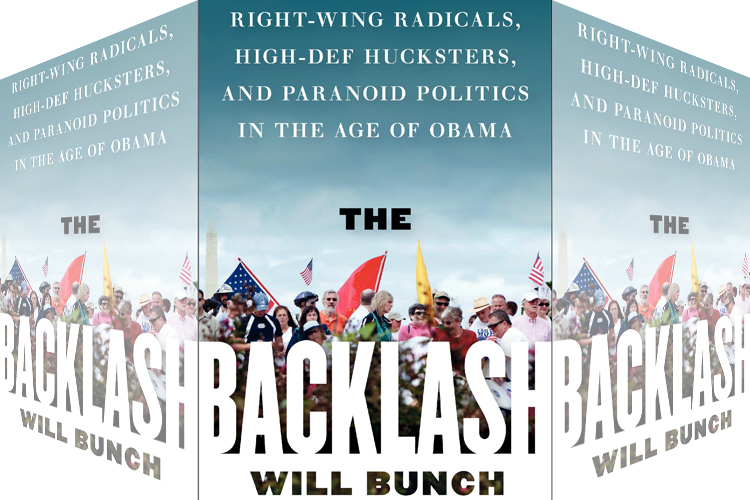
Will Bunch

No, Jon Stewart, you’re not just a comedian

When he's not actually doing it on his show, the "Daily Show" host's media criticism can come across as trite

  • more
    • All Share Services

No, Jon Stewart, you're not just a comedianJon Stewart

This originally appeared at Attytood, Will Bunch’s blog at Philly.com

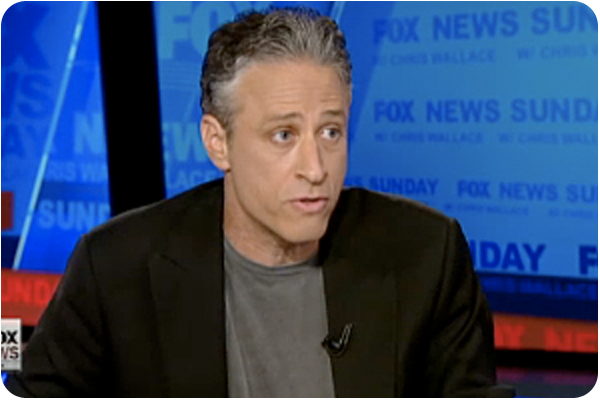
TV funnyman (I love that phrase) Jon Stewart is back in the news again, as he so frequently seems to be. For reasons I don’t fully understand, Chris Wallace thought it would be a good idea to invite the host of Comedy Central’s “The Daily Show” on his program, “Fox News Sunday,” and Stewart agreed to come on. Of course, Stewart showed his gratitude by telling Wallace that he was “insane” and saying that FNC is disproportionately responsible for poisoning the discourse in this country.

Stewart called Fox News a “relentless agenda-driven 24-hour news opinion propaganda delivery system” — that sounds about right. But then he added this:

“Here’s the difference between you and I. I’m a comedian first. My comedy is informed by an ideological background, there’s no question about that. But the thing that you will never understand … is that Hollywood, yeah, they’re liberal, but that’s not their primary motivating force. I’m not an activist. I am a comedian.”

Longtime readers know I have a tangled view of Jon Stewart and his role in our vast and all-powerful media universe. Like a lot of folks who love both politics and the absurdity of politics, I live for the arrival of Stewart and “TDS” at 11 p.m., and I get anxious and uneasy during those way too many weeks the show is on vacation, as it was last week. That’s because I think when he’s doing his “day job” during those 30 minutes he is — bizarre as it sounds — the best working journalist in America. The examples are many — his legendary takedown of CNBC that shone light on the financial crisis in a way that mainstream media wasn’t capable of doing, his relentless fact-checking of the TV news, and — most nobly of all — his fight for the 9/11 rescue workers when it became clear that our politicians and journalists were too craven to do anything.

But outside of “The Daily Show,” in interviews like the one he gave to Chris Wallace and even his famous 2004 confrontation that may or may not have killed CNN’s “Crossfire,” I find that Stewart (and it pains me to say this, as such a fan) can come across as kind of lame, his “media criticism” beyond trite. In interviews, his complaints against the media tend to be an unsophisticated “pox on all of your houses.” I thought his largely pointless D.C. mall rally in late October repeated the mistake he makes in these interviews — trying to argue that our discourse is too loud while ignoring the real point that he hammers home on “The Daily Show,” that our politics is irrational.

But the lamest thing of all, frankly, is Stewart trying to absolve responsibility from the gravitas of what he does — and make no mistake, the gravitas is there — by claiming that merely, “I am a comedian.” That’s true, but he fails to see what many others realize, which is that he is also much more than a comedian. In a world where far too much of highly paid professional journalism, especially inside the Beltway, has become a joke, it has fallen on the comedians — Stewart, Stephen Colbert and Bill Maher perhaps the most prominent — to say what on-one-hand, on-the-other hand journalists are too tied up in knots to tell you, that much of America’s discourse in 2011 is bat-guano insane.

Actually, Jon Stewart, you are an activist, and the cause you fight for is most worthy because — as you do correctly note — it is not a purely ideological one, but the cause of reason. And the fight against illogic is not a “fair and balanced” one, that the most dangerous bogus ideas may be concentrated in the spots where global warming doesn’t exist and the way to balance a budget deficit is more tax cuts for rich people. For whatever reason, in the past your friend and colleague Colbert — who coined “truthiness” and said that reality has a known liberal bias — has gotten it a lot better than you do.

Maybe Stewart is starting to get it, too. He did say on Sunday that he has an ideology that “is non-partisan and focuses on ‘absurdity,’ ‘anti-corruption’ and ‘anti lack-of-authenticity.’” That sounds exactly right, so now it’s time to drop the “just a comedian” shtick, which comes off like a giant cop-out, exactly the kind of thing that you normally expose so very well, night after night.

Watch the latest video at video.foxnews.com

The right-wing congressman made for the Obama age

Paul Broun is the perfect embodiment of the right-wing backlash that has greeted Barack Obama's presidency

  • more
    • All Share Services

The right-wing congressman made for the Obama age

On Oct. 17, 2009, there was a black-tie gala dinner at a luxury hotel in Atlanta, Georgia, where guests dined on balsamic-laced flank steak and mango coulis. After dessert was served, the mostly men in black ties and dinner jackets, and a few women in their Saturday-night best, in the ballroom leaned back in their seats to hear the night’s main event — a speech by a member of the United States Congress. Nothing remarkable about that … in theory.

Except that the gala was held to celebrate the notorious, conspiracy-minded right-wing political group the John Birch Society, the band of Commie hunters made famous in the early 1960s, who’d seemingly vanished, only to burst back onto into the newly mainstreamed paranoid fringe within months after the election of Barack Obama as president. Rather than back away from its divisive views — most notably that popular U.S. president and World War II hero Dwight Eisenhower was somehow an agent of international Communism — the Birchers were doubling down in the age of Obama, still maintaining that a planet-wide conspiracy hatched some 200 years ago by the ultra-secret Illuminati in search of a so-called “New World Order” continues to flourish today.

The congressman addressing the John Birch Society get-together was a relatively obscure Georgian in his first full term in office — Paul Broun Jr. of the state’s 10th Congressional District, which starts in the liberal-for-the-Deep-South bastion of Athens, Broun’s hometown, but fans out into northeast Georgia across rolling red Appalachian foothills over some of the most conservative real estate in the United States. Amid the thundering hooves of a 24/7 news cycle, Broun has achieved about 45 minutes’ worth of fame here and there, especially when amid the mostly raised hopes in the days following Obama’s election he stunned some people — even in his Georgia district — when he remarked that the president-elect’s ideas for a national service corps smacked of Adolf Hitler. But with much less fanfare, Broun has been working quietly with a coalition of extreme right-wing outfits — not just the Tea Parties but even with groups on the more out-there fringe like the John Birch Society and members of the Oath Keepers. In doing so, Broun is now in a race with the libertarian Ron Paul of Texas to be the most extreme right-wing member of the 111th Congress. And in 2009-10, that is quite an achievement.

In fact, the John Birch Society grew so fond of Broun that there was even talk of paying him to speak at its 2009 gala. In an online announcement of the event, a Birch Society activist named Jim Sandman from Tennessee asked attendees to consider an additional donation of $100, $250 or $500 for the event, in part because it “will help with the honorarium for Dr. Broun.” Congress had in fact moved to ban such honoraria during its ethics reforms of the 1990s. When contacted by telephone, Sandman confirmed there was an initial understanding he was raising money for such a payment but after checking with Birch higher-ups he called back to report that no payment was offered or made.

Meanwhile, Broun’s fall 2009 speech to the Birch gala is a pretty good overview of where the congressman’s head was at in the first year of the Obama administration. What was happening in the nation — the government bailout of banks and efforts to save the auto industry and create jobs through an $800 billion spending plan — was not a response to the worst economic crisis in 80 years, Broun said, but rather “the steamroll of socialism that’s being driven by Nancy Pelosi and Harry Reid and that is fueled by Barack Obama.” Larded with quotes from and references to the Founding Fathers — especially George Washington — Broun’s speech to the John Birch Society argues that the system of taxation that the American government uses to raise revenue is socialist to the core. Our government, he argued, “is taxing those it believes make too much money, and redistributing it to other people. We must stop that trend.”

The way to do that, according to Broun, is to enact policies that would make George W. Bush’s tax cuts for the rich look like chump change. “It is not the government’s place to redistribute wealth,” he told the men in their tuxedos and women in evening gowns. “I believe that death taxes should be zero, I believe that corporate taxes should be zero, that dividend taxes should be zero, and that all taxes should be very low.”

Broun’s economic theory — which would destroy government as, for better or worse, we have come to know it in 21st-century America — is kind of like the National Review on steroids, a brand of anti-tax talk that had lost its ability to shock in an era of Reagan revisionism. But it is nothing compared to Broun’s embrace of conspiracy mumbo jumbo — implying that even a former Republican president, George H. W. Bush, was part of a plot to destroy America from within. Broun started with an indictment of man-made climate change theory, adding:

They used to talk about global warming — y’all might remember a few years ago they were talking about an ice age was coming. It’s the same folks, the folks who want to change America, want to rule America. They want to change us to a New World Order. President George Herbert Walker Bush, remember, very openly said he wanted to have a New World Order. And all of these things are a progression of their outward efforts to destroy America, to destroy our freedom … The John Birch Society is trying very hard to get the right people elected to Congress. There are very few of us –very few.

Broun — who when he’s not hobnobbing with Birchers is just as likely to be speaking at a Tea Party rally or talking to members of far-right fringe groups as doing the traditional meet-and-greet grunt work of a congressional district — may be an extreme case, but he’s also very much part of a rhetorical three-step to the far right among many Republicans in Congress in the Obama era. That is the willingness of so many elected officials to go on national TV and move the boundaries of political dialogue, to the point where a year into Obama’s presidency the term “socialist” now seemed tame compared to the other things that were being said or implied about the commander-in-chief or some of his Democratic allies. In 2008, before Obama’s election, Minnesota Rep. Michele Bachmann — en route not just to reelection but status as a heroine to the soon-to-arise Tea Party movement — caused a stir when she said on MSNBC’s “Hardball” that Obama “may have anti-American views” and even called upon journalists to investigate whether or not members of Congress were “pro-American.”

The rise of cable TV-friendly-but-governing-averse pols like Broun and Bachmann has become a hallmark of the backlash against the Obama presidency. After the GOP lost control of the government over the second half of the 2000s, the party’s direction and indeed its very life force has been seized by a new breed of political huckster — who saw that the paranoia and anger of the extreme political right is the only thing passing for a pulse in the modern conservative movement these days. This cynical ambition of high-ranking elected officials not to tamp down the paranoid style but to adopt its latest fashions was a successful strategy … for the politicians who might have been unknown back-benchers if they had acted more responsibly. Their mainstreaming of the political fringes made them into darlings of cable television and helped ensure reelection within their deep-red conservative districts.

In the wake of election debacles for Republicans in 2006 and 2008 that put Obama in the White House and created large majorities of Democrats in Congress, there was a GOP leadership vacuum, and talk radio — with its message of no compromise, as celebrated in Rush Limbaugh’s famed pre-inaugural wish for Obama that “I hope he fails” — raced to fill it. Republican back-benchers who felt that Limbaugh and his colleagues, like the up-and-coming Glenn Beck, were moving their party too far to the right, too fast, found themselves flattened in the stampede. When one of Broun’s Republican colleagues in the Georgia delegation, Rep. Phil Gingrey, made the mistake in the first week of Obama’s presidency of saying that entertainers like Limbaugh weren’t real leaders and that “it’s easy if you’re Sean Hannity or Rush Limbaugh or even sometimes Newt Gingrich to stand back and throw bricks,” he soon found himself backpedaling faster than an NFL cornerback. The very next day, Gingrey called Limbaugh’s show to grovel on live radio, pledging to the audience that he “actively opposed every bailout, every rebate check, every so called ‘stimulus.’ And on so many of these things, I see eye-to-eye with Rush Limbaugh.”

Arguably, no member of Congress has ridden anger and paranoia against Barack Obama from the back bench of the Capitol to the front of the headlines louder than Paul Broun Jr. Practically no one outside the winding tin-roof-rusted highways east of Athens had even heard of Broun, until the days that immediately followed the election of that first African-American commander-in-chief. In early November 2008, Broun — who’d only been in office for about 18 months — told a reporter for the Associated Press that he was worried that President-elect Obama had the potential to put America on the path to a dictatorship in the style of Marxist Russia or Nazi Germany.

“It may sound a bit crazy and off base …” Those are nine words that a congressman should never say to a journalist, but now Broun was rolling. He insisted he was alarmed by a suggestion that then-candidate Obama had uttered that summer for a national service corps, and that he was worried that such a corps could be used to take away guns from citizens. “You have to remember that Adolf Hitler was elected in a democratic Germany,” he said. “I’m not comparing him to Adolf Hitler. What I’m saying is there is the potential of going down that road.” The comments created a minor, brief firestorm with all the usual hallmarks — liberal blog outrage, and Broun’s statement that he apologized “to anyone who has taken offense at that,” quickly followed by his insistence that his apology wasn’t really an apology. In fact, Broun had achieved maybe the greatest accomplishment of his congressional career, which was shifting the so-called Overton window — a political theory on how extreme statements can shift the boundaries of what become acceptable speech (adopted by Glenn Beck as the title of his 2010 novel) — on what could be openly said about the new president.

Meanwhile, some people around the country — joined by some voters in Broun’s own 10th District — were starting to ask, just who is this guy, anyway? There was a time when Paul Broun Jr. asked the same question of himself. It happened in 1986, when the 40-year-old baby boomer was into booze and into his fourth marriage already — and having problems with both. Broun was at an NFL football game and drinking heavily when he noticed the fan who was a quasi-celebrity back during the Reagan years, the guy with the crazy rainbow-haired wig who stood in the end zone seats with the sign, “John 3:16.” Broun said in a speech on the floor of Congress after his election to Congress two decades later that he was captivated by this “gentleman with this big type hair wig on.” A few weeks later, after another fight with his new wife, he took out a Bible, read the verse, and decided to dedicate his life to Christ. (Ironically, it was the exact same year and at the same age that George W. Bush quit drinking as well.) Broun now considers his odyssey to the corridors of power the result of Jesus’ calling. He fails to add the kicker to the story, that the wig-wearing fan, a fellow named Rollen Stewart, is currently serving three life sentences for kidnapping.

But the creation story of Paul Broun Jr. is also a powerful illustration of the political evolution that has taken place in the Deep South. His father, Paul Broun Sr., who died in 2005, was a Democrat who served in the Georgia Senate for 38 years, arriving in Atlanta in 1962 as a moderate from the university town, in the era of segregation and Lester Maddox. Broun Sr. was a Southern populist who fought to have government dollars spent inside his district to build up the infrastructure for a booming economy. One of his greatest bricks-and-mortar achievements is the perimeter highway that now circles the congested downtown of Athens; today that road is named the Paul Broun Sr. Highway. The father’s success and those road signs provided priceless name recognition and a kind of free advertising for Paul Broun Jr. — even though the son is an ultra-conservative Republican who is dedicated to fighting to kill the types of government projects that his father had championed.

Today, Paul Broun Jr. talks of his dad as someone with whom he differed politically at times but for whom he had enormous respect. The favor wasn’t always returned. “His father denied him,” a Democratic state lawmaker from junior Broun’s congressional district — Alan Powell of Hartwell, Georgia — says. Powell was a close friend of the father who initially doubted the two men could even be related to each other when he heard of the Republican Broun’s extremist views in the 1990s. “That’s my crazy-ass son,” Powell says his colleague sighed after he asked Broun Sr. about it at lunch one day.

A family doctor who treated Jimmy Carter’s relatives in South Georgia for a number of years, Broun declared bankruptcy in the early 1980s. A federal judge ruled — according to news accounts in Athens — that Broun “falsified financial documents in an effort to obtain a loan and misrepresented his assets and debts during bankruptcy proceedings” and ordered him to pay nearly $70,000 to an Americus bank. According to a bankruptcy complaint, the young family doctor “has a reputation of having an extravagant lifestyle evidenced by the acquisition of a number of expensive rare hunting books, expensive rare ceramic items related to hunting, safari to Africa, expensive gun collection and the acquisition of the very best in everything purchased.” He had to pay more than $61,000 in back taxes to the IRS, and one of his ex-wives even took him to court for alimony and child support. There was a time when that kind of résumé would have sunk a would-be politician, but the 21st century has proven to be remarkably kind to past sinners who adopt the language of 12-step recovery — just ask Glenn Beck how that works — and even awards bonus points when Christianity is involved.

Broun joined the Baptist Church, sobered up, but failed dismally in his early efforts in GOP politics, losing two congressional primaries and receiving a dismal 3 percent in a 1996 bid for the U.S. Senate. Still, Broun entered a 10-candidate special election when that district’s longtime Republican congressman, Charlie Norwood, died of cancer in 2007. He gained the runoff with a surprising second-place finish, but was universally predicted to face crushing defeat by the Republicans’ handpicked candidate, a state senator named Jim Whitehead. In fact, Whitehead — from Augusta at the other end of the district — was so cocky that he didn’t campaign in Athens for the runoff, even after it was dredged up that he’d once joked he’d like to see all of the University of Georgia bombed, except for the football team. Broun won a stunning narrow upset thanks to 90 percent of the vote from Athens. The most liberal city in Georgia had just unwittingly elected the most conservative congressman in America. Conservative-watching journalist David Weigel, then with Reason magazine, called Broun “the accidental congressman.”

Voters soon found out just how conservative Broun really was. He was one of only four member in Congress to vote against a $20 million program to help kids in drug-infested neighborhoods and even joined just two other colleagues on opposing money for a registry for Lou Gehrig’s disease, or ALS. Asked about that by Weigel, Broun whipped out his pocket Constitution and insisted there was nowhere that it was written that the federal government could do these things. “I’d say most of the things this Congress does, we don’t actually have the authority to do,” the freshman insisted.

There was one thing, however, that the born-again congressman did think the government had the authority to do — ban the sale of Playboy and other racy magazines on U.S. military bases. Broun’s Military Honor and Decency Act — which an aide boosted by touting the congressman’s medical qualifications as an “addictionologist” — was the only piece of legislation that he authored in that first term. What’s more, it turned out that Broun’s aversion to government spending applied to legislation but not to taxpayer dollars that could help him out politically. In 2008, during his tough reelection battle, Broun spent so much on taxpayer-funded mail to his constituents that his office nearly ran out of money to pay staff and maintain district offices.

- – - – - – - – - -

The 10th District of Georgia that Broun represents is hurting in the Great Recession more than many of its neighbors. During a three-day visit to the district in March, talking to many frustrated unemployed workers and small businessmen — the real-estate appraiser with a history degree who is now looking for a supermarket checkout job, the copy center owner who’s laid off everyone except his own daughter — they voice concern and even anger at Broun’s shunning of practical politics for the paranoid style. Catching up with Broun himself is not easy, until a rare public event appears on his calendar — the annual Eggs and Issues Breakfast of the Hart County Chamber of Commerce, where about 80 small-business types and local pols are here in the basement learning center of the public library, piling cheesy scrambled eggs and biscuits onto plastic plates and gulping down coffee from Styrofoam cups before the politicking begins in earnest.

Rep. Paul Broun Jr. ambles down the steps a few minutes after 8, making sure that everyone knows he was on a very late flight back from Washington. He declares he wants Georgians to know that he knows that they’re hurting. He relates that an official in Lincoln, Georgia, told him that unemployment dropped there from 14 percent to 10 percent but when he asked what jobs had been created, he learned the answer was none. “People have just stopped looking because there aren’t any jobs,” Broun says.

For about 15 minutes, Broun stands in front of this breakfast club while he verbally dances in circles — zigzagging back and forth between touting his bill that he believes would create jobs by the two-year elimination of capital gains and dividend taxes and deep cuts in payroll taxes as the same time he is sponsoring a balanced budget amendment. “We’ve got to stop the outrageous spending,” he says. He attacks Obama and Democratic leaders for putting the focus onto health care and away from jobs — but then he keeps doing the exact same thing. He also seeks to reconcile his Bircher-inspired views on the Constitution with his own lifelong struggle against addiction and for control that he finally answered for himself with Jesus Christ. “Liberty is freedom bridled by morality,” he explains, adding that “we have to have something to control our freedom — which is morality.”

Who defines what is moral was not clear.

“I apologize — I have to run, I have to go to Atlanta,” Broun says, but then stops to talk to reporters outside the rear entrance. He makes it sound like what is happening in the Tea Parties is a lot more energizing than his duties in Congress: “The sleeping giant is rising up and I’m excited because freedom-loving Americans all across this country are saying no to this huge growth of government,” says Broun, who speaks repeatedly of the backlash movement as “lighting grassfires” and calls himself at one point “a freedom fighter.”

He acknowledges that he’s certainly aware of the Oath Keepers but is unable to elaborate much — “I look more across the board and not at specific groups.” He is more explicit in his defense of the John Birch Society: “The thing about the John Birch Society is they’ve been promoting constitutional government for a long, long time — so yes, I think they have a very strong place to play to try to educate the American people.”

And how does he view Obama now? He seeks to explain away the Hitler controversy but also insists that the president has changed little from his college days, when Obama had written in his autobiography that he was drawn to Marxist professors. He also cites “[h]is mention in speeches of basic Marxist doctrine — ‘from each to his own ability to each according to his need’ — which came right out of Karl Marx’s writing,” although there is in fact no evidence that Obama has ever cited that passage. You ask if Obama is an authoritarian, and Broun launches into a monologue about the auto takeovers, his aide who’s been described as a “car czar,” and on health care. “So, yes, I see that he wants to set up authoritarian rule. Whether it’s based on Marxism or purely socialistic, I don’t know.” He goes on to add his displeasure that the president (in Broun’s worldview, anyway) seems to believe that America is part of a family of nations, that it is not special. “We’re the only superpower in the world — we’re the only exceptional country.”

Back inside the Eggs and Issues breakfast, the citizens of “the only superpower in the world” are still beseeching their local elected officials for help, trying to figure out how Georgia would cope with the looming massive cuts in higher education, or whether any local companies might be expanding instead of laying people off for a change, or why their state spends more money on incarcerating citizens than other states.

Meanwhile, Congressman Broun misses most of his constituents’ economic complaints by heading off — even though his event in Atlanta actually isn’t until 3 o’clock that afternoon. It’s a Tea Party rally organized by the pro-business FreedomWorks on the steps of the state capitol — 90 minutes removed from where the economically battered constituents of Broun’s 10th Congressional District live and look for work.

Continue Reading Close

Hosie Miller: Shirley Sherrod’s dad, and a casualty in a forgotten war

The story of her father's 1965 shooting death is a reminder of how many died in the fight for equality

  • more
    • All Share Services

This original appeared at Attywood, Will Bunch’s blog

For all the over-warped speed in initially getting that bogus version of the Shirley Sherrod story out there and pushing her our the door at the U.S. Department of Agriculture, other details in this story have been surprisingly slow to emerge. In particular, I’d been waiting to hear more about a comment from Sherrod on CNN that her father had been murdered by a white farmer in 1965.

Now we know a few details. Her dad was named Hosie Miller, and he was a deacon at Thankful Baptist Church in Newton, Ga., toward the southwest corner of the state. He was also a farmer who, according to CNN, grew corn, peanuts, cotton and cucumbers and raised hogs, cows and goats. Forty-five years ago, Hosie Miller was shot to death — in the back, no less — by a white farmer in what his daughter now describes as ostensibly a dispute over a few cows, although the exact circumstances were murky.

A grand jury investigated the case, and no one was charged. All of the grand jurors were white, as was typically the case before the passage of the landmark civil rights legislation of the mid-1960s. From that incident, a movement was born. Indeed, according to this article, Shirley Sherrod’s mother — Grace Hall Miller — became the leader of the civil rights movement in Baker County after the killing, organizing marches and other protests from her home. The then 17-year-old Shirley Miller decided to stay in the South and become an activist; she soon married one of the leaders of the Student Non-Violent Coordinating Committee, or SNCC, a man by the name of Charles Sherrod. Shirley Sherrod told CNN that “I decided to stay in the South and work for change.”

How unusual was it for a black man to be killed by a white man in the Deep South up through the mid-1960s with no one brought to justice. Way too common. We hear a lot about one particular killing in Mississippi — the 1964 murder of a trio of civil rights activists that included two white college kids from up North — but in reality dozens of black men were killed for taking a stand, for trying to vote or just on a whim. If you want to read something sobering, check out this letter from 2007 from the Southern Poverty Law Center, asking the FBI to investigate some 74 additional unsolved deaths from the era.

For example:

Banks, Isadore – Marion, Ark., 1954

Banks’ charred corpse was found chained to a tree. Black press reports speculated he was killed by whites who wanted his land. His property was later rented by white farmers.

Bolden, Larry – Chattanooga, Tenn., 1958

Bolden, 15, was shot by a white policeman. No arrests were made.

Brazier, James – Dawson, Ga., 1958

Brazier was beaten to death in front of his wife and children by two police officers. County Sheriff Z.T. Matthews was later quoted in the Washington Post saying, “There’s nothing like fear to keep niggers in line.”

Brewer, Thomas – Columbus, Ga., 1956

Brewer was instrumental in forming a local chapter of the NAACP in 1937. He was shot seven times outside his office by white politician Lucio Flowers. A grand jury failed to indict.

Brooks, Hilliard – Montgomery, Ala., 1952

Brooks was shot by a police officer after initially refusing to get off a city bus when the driver claimed he had not paid his fare. A coroner said the murder was justified because Brooks resisted arrest.

Brown, Charles – Yazoo City, Miss., 1957

A white man shot Brown, who was visiting the white man’s sister. The Justice Department handed the case over to the state.

Brown, Jessie – Winona, Miss., 1965

The 1965 NAACP annual report claimed white farmer R.M. Gibson killed Brown.

Brumfield, Carrie – Franklinton, La., 1967

Brumfield was found shot to death in his car on a rural road. He was shot once in the chest with a .22-caliber revolver.

Brumfield, Eli – McComb, Miss., 1961

Police officer B.F. Elmore alleged self-defense after shooting Brumfield. Police claimed Brumfield jumped from his car with a pocket knife after police pulled him over for speeding.

Now that’s just the letter, “B”, OK? There’s 65 more. And you’ll notice that Hosie Miller — gunned down by a white man in a dispute over cows — isn’t even on the list. You have to wonder how many more Hosie Millers there were in a place like Georgia.

Which I think puts an exclamation point on this week’s hysteria over Shirley Sherrod. We’ve talked and written so much in the last decade, in the context of the Middle East especially, about the cycle of violence — about how death and destruction and watching loved ones die sow the anger that causes the tragic pattern to repeat.

But there was a war right here in this country, too, not so long ago, with a surprisingly long list of victims. That violence is what started Shirley Sherrod on the road to who she is today — it compelled here to stay in the South and fight, which is understandable, but then it led to her redemptive vision and her notion of transcending race, which — given what happened to her own flesh and blood — is nothing short of remarkable. Ironically, a surprising number of positive things have come out of this bizarre Sherrod tale — but nothing more positive than resurrecting the forgotten memory of Hosie Miller.

Continue Reading Close

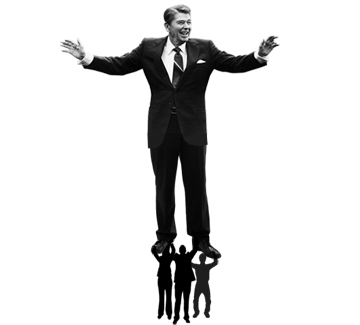
How Republicans created the myth of Ronald Reagan

With the Gipper's reputation flagging after Clinton, neoconservatives launched a stealthy campaign to remake him as a "great" president.

  • more
    • All Share Services

How Republicans created the myth of Ronald Reagan

The myth of Ronald Reagan was already looming in the spring of 1997 — when a highly popular President Bill Clinton was launching his second-term, pre-Monica Lewinsky, and the Republican brand seemed at low ebb. But what neoconservative activist Grover Norquist and his allies proposed that spring was virtually unheard of — an active, mapped-out, audacious campaign to spread a distorted vision of Reagan’s legacy across America.

In a sense, some of the credit for triggering this may belong to those supposedly liberal editors at the New York Times, and their decision at the end of 1996 to publish that Arthur Schlesinger Jr. survey of the presidents. The below-average rating by the historians for Reagan, coming right on the heels of Clintons’ easy reelection victory, was a wake-up call for these people who came to Washington in the 1980s as the shock troops of a revolution and now saw everything slipping away. The first Reagan salvos came from the Heritage Foundation, the same conservative think tank that also had feted the 10th anniversary of the Reagan tax cut in 1991. After its initial article slamming the Times, the foundation’s magazine, Policy Review, came back in July 1997 with a second piece for its 20th anniversary issue: “Reagan Betrayed: Are Conservatives Fumbling His Legacy?”

The coming contours of the Reagan myth were neatly laid out in a series of short essays from the leaders of the conservative movement: that the Gipper deserved all or at least most of the credit for winning the Cold War, that the economic boom that Americans were enjoying in 1997 was the result of the Reagan tax cut (and not the march toward balanced budgets, lower interest rates and targeted investment), and that the biggest problem with the GOP was, as the title suggested, not Reagan’s legacy but a new generation of weak-kneed leaders who were getting it all wrong. The tone was established by none other than Reagan’s own son, Michael, now himself a talk-radio host, who wrote: “Although my father is the one afflicted with Alzheimer’s disease, I sometimes think the Republicans are suffering a much greater memory loss. They have forgotten Ronald Reagan’s accomplishments — and that is why we have lost so many of them.”

Michael Reagan, like most of the others, mentioned Reagan’s frequent calls for less government — presumably his accomplishment there was simply in calling for it, since he never came close to achieving it. Gary Bauer, another former Reagan aide who later ran for president as an antiabortion “family values” candidate, took a similar tack on the speaking-out issue, noting that Reagan “spoke of the sanctity of human life with passion” — again regardless of his lack of concrete results on that front. One of the writers argued: “On the international scene, Reagan knew that only America could lead the forces of freedom” — it was former assistant Secretary of State Elliott Abrams, who’d pleaded guilty in a deal to withholding information about Iran-Contra from Congress and was pardoned by President George H.W. Bush. Oklahoma Gov. Frank Keating even went the distance and compared Reagan to the 16th president with his argument that “Reagan’s achievement can be compared to Lincoln’s, because he faced immense challenges in an era characterized by deep and fundamental philosophical divisions among the people he set out to lead.” Of course, Keating’s analogy implied that stagflation and a left-wing government in Nicaragua were on an equivalent plane with slavery and a civil war that killed hundreds of thousands of Americans on our own soil — dramatizing the rhetorical extent to which conservatives were now willing to go in order to salvage their movement.

One of the more down-to-earth tributes was written by Norquist, who said: “Every conservative knows that we will win radical tax reform and reduction as soon as we elect a president who will sign the bill. The flow of history is with us. Our victories can be delayed, but not denied. This is the change wrought by Ronald Reagan.” Norquist all but revealed one of his missions in the coming two years — finding a presidential candidate who would assume the Reagan mantle in a way that neither Bush 41 nor Dole ever could — but not the other. His second big push was practically a guerrilla marketing campaign to make sure that the less-engaged Middle America would get the message that Reagan belonged in the pantheon of all-time greats right next to Lincoln, Washington and FDR. Norquist had learned the lessons of Normandy and of the Brandenburg Gate, which was that powerful symbols can mean a lot more than words (especially in a little-read policy journal), that a motorist under the big Sunbelt sky of Ronald Reagan Boulevard will absorb the message of the Gipper’s greatness without ever pondering if ketchup should be a vegetable in federally funded school lunches or if “the moral equivalent of our Founding Fathers” in Central America were drug-dealing thugs, the kind of stubborn things that popped up in those newspaper articles ranking the presidents.

The Ronald Reagan Legacy Project was hatched in the spring of 1997 — and perhaps like any successful guerrilla operation, there was an element of surprise. There was no formal announcement, nothing to tip off any alarmists on the left. Rather than incorporate the Reagan project as a separate entity, which carried the potential of greater scrutiny of its operations and its finances, it was simply a unit of the group that Norquist had been overseeing for more than a decade, the Americans for Tax Reform. The Reagan Legacy Project would not even get its first mention in print until October 23, 1997 — by then its first bold proposal had two key backers in Georgia Rep. Bob Barr and that state’s Republican Sen. Paul Coverdell. They had endorsed legislation that would rename the Capitol region’s busy domestic airport, Washington National, as Reagan National. The renaming would not only mean that millions of air travelers would pass through the facility named for the 40th president, but a disproportionate number would be from the nation’s liberal elites, especially in Big Media, who used the airport’s popular shuttle service. Simply put, Reagan National Airport would be a weekly thumb in the eye of the Yankee elites who were still belittling the aging Gipper’s presidency.

The announcement didn’t even get coverage in the hometown Washington Post until exactly one month later, when Norquist’s behind-the-scenes lobbying push had already bagged the endorsement of the influential Republican Governors Association — including George Allen, the governor of the state where the airport is located (in Arlington, Va.) on federal land — as well as House Speaker Gingrich. With Reagan out of public view with Alzheimer’s for three years now, advocate Barr cast the measure as a feel-good proposal that surpassed partisanship. “People appreciate how Ronald Reagan gave voice to Americans’ basic good feelings, including a lot of Democrats, ” he said. Democrats, in fact, did what you would expect them to do … they hemmed and hawed. The mayor of Washington, D.C., at the time — with thus the largest presence on the regional panel that ran Washington National — was Democrat Marion Barry, a bitter foe of Reagan’s politics, who could only fret that there were a “host of other” people who should be considered, too; in a later article, Geraldine Ferraro, who was Walter Mondale’s running mate in 1984, said that Reagan’s real legacy was the mountain of debt, but then she offered a verbal shrug: “The man was president of the United States; he served two terms.” It almost brought to mind Reagan’s cruel remark about Michael Dukakis a decade earlier, that “I’m not going to pick on an invalid.”

After a couple of years in the wilderness with the rest of the inside-the-Beltway right wing, Norquist had found a new cause that not only advanced the movement but that he could also have fun with. “The guy ended the Cold War; he turned the economy around,” Norquist told the Baltimore Sun. “He deserves a monument like the Jefferson or the FDR — or the Colossus at Rhodes! National Airport is a good place to start.”

Norquist was the leader of a new breed, the College Republican-trained version of a bomb thrower. Molded by the 1970s and that political void between the hangover of campus radicalism and the Carter malaise, he was a true believer, with an iconoclastic outlook, who called the countercultural drug-overdosing rock star Janis Joplin a hero even as he forged political ties with the Christian Right. Like most political junkies, his ideas were a mix of heredity — his father, a Polaroid executive who raised Norquist in the Boston suburbs, taught his young son to hate taxes at the Daily Joy ice-cream parlor by taking the first two licks of his son’s cone and calling it the income and sales tax — and generational rebellion. But that rebellion was against the liberal norms at Harvard, which he attended in the mid-1970s, even while working on the left-leaning Harvard Crimson. When he escaped to Washington in 1978, it was still as an outsider; he would later tell the Washington Post that the sight of the more opulent federal buildings there made him “physically ill” because they were built with taxpayer dollars, that they were a kind of “neo-American fascism,” that “[t]hey took people’s money to build those things, people who were just getting by, [they] stole their money and built those things out of marble…”

Ronald Reagan came three years later to rescue Grover Norquist, to take a young single Republican nerd and make him a player, albeit a small-time one at first. It was through Reagan’s team that Norquist came to launch the Americans for Tax Reform in 1986, to win support for that year’s overhaul (even though, as noted earlier, the bill raised taxes on corporations substantially — one of the early contradictions among many that would pile up over Norquist’s long career). During those days, the geeky 20-something took strength from Reagan’s support of so-called freedom fighters like Jonas Savimbi in Angola, a right-wing rebel backed by South Africa’s then-apartheid government — his office would be lined with pictures of Norquist’s gun-toting days in the jungle, interspersed with the Joplin memorabilia.

By the 1990s, Norquist was in a new political mode, survivor. He served as a close ally of Gingrich, helping to draft and promulgate the 1994 Contract with America, but the bitter chain of events that seemed to start the day his heroic Gipper headed into the California sunset — followed by Bush 41 and his betrayal on taxes and then the anti-Gingrich backlash — caused him to again focus on the presidency as the place where the action was. Of course, by now Norquist was not so much a rebel as a conglomerate, enmeshed in a tangled web of alliances, sometimes for money. By 1997, Norquist was a registered lobbyist for what was becoming the most powerful business monopoly of the computer era, the software giant Microsoft Corp., while his ATR umbrella group was being probed for its multimillion ad campaign on behalf of GOP candidates in the 1996 elections. In fact, the very spring that Norquist launched the Reagan Legacy Project, his fellow conservative Tucker Carlson wrote a scathing profile that accused the activist of cynically selling out — the article that ran in the left-leaning New Republic (after the conservative Weekly Standard rejected it) carried the headline “What I Sold at the Revolution” and said that, among other things, Norquist was now receiving $10,000 a month from the left-wing strongman who controlled the African nation of Seychelles, the polar opposite of the type of anti-communist rebels he once supported.

So maybe the Reagan project was a little escape for Norquist, a little getting back to his roots, with the kind of in-your-face surprising ploy that had been his youthful trademark. From the start, he handed the task of running the legacy project to a young aide named Michael Kamburowski, who had recently arrived from his native Australia with a kind of zeal for Reaganism that maybe only a newcomer could carry. A decade later, it would come out that Kamburowski — who also lobbied with Norquist on issues such as immigration reform — was here in the United States illegally (and even jailed for a time in 2001, which somehow didn’t prevent Kamburowski from landing a subsequent job as chief operating officer of the California Republican Party). But while he apparently was in the United States as an illegal alien, Kamburowski still seemed to “get” the Reagan Legacy Project from Day One, that it wasn’t just about honoring Reagan but enshrining Reagan’s conservative principles as the American ideal. “Someone 30 to 40 years from now who may never have heard of Reagan will be forced to ask himself, ‘Who was this man to have so many things named after him?’” Kamburowski said to the left-oriented magazine Mother Jones in 1997, writing about Norquist’s legacy scheme. The initial media coverage of the idea tended to range from bemusement to amusement. People magazine — the ultimate vehicle for connecting with the Silent Majority of unengaged voters — covered an early effort of the legacy campaign that was a six-foot portrait of Reagan made from 14,000 jelly beans. The item was headlined: “Reagan’s Sweet Legacy.”

All the sweetness and yuks masked a somewhat startling fact — that by enshrining a national myth about Reagan so soon after his presidency, while he was still alive (albeit incapacitated), and for purposes that were essentially partisan in nature, Norquist, Kamburowski and their powerful and growing list of conservative allies were pulling off a maneuver that was unprecedented in American history. Other presidents and leaders had surely been mythologized — a walk from Norquist’s office near K Street to the National Mall would show that — but not while they were still living, or in a manner so blatantly calculated in the very spirit of a presidency built around effective public relations. This may have been American history, circa 1984 — but as if the textbook had been authored by Orwell himself. As young Kamburowski said flatly to the Hartford Courant in December 1997: “The left has been far better at rewriting history. Conservatives just haven’t paid that much attention to this kind of thing.”

Excerpted from “Tear Down This Myth:  How the Reagan Legacy Has Distorted Our Politics and Haunts Our Future” by Will Bunch. Copyright © 2009 by Will Bunch. Reprinted by permission of Free Press, a division of Simon & Schuster, Inc.

Continue Reading Close