

President Donald Trump will not let his enemies go without a fight. He wants to punish those who speak out against him, who present cases against him and who, in doing their jobs to the letter of the law, go against his wishes. To an objective observer, they are perceived enemies. To him, they are as real as the “crimes” they commit against him.
But Trump’s interim U.S. attorneys are failing one by one. Alina Habba, his embattled top attorney for New Jersey, resigned on Monday. A former lawyer for Trump, she was found to be illegally serving in her interim role after continuing past her 120-day mark. Since Congress never approved her, New Jersey’s Democratic senators axed her outright. After losing her appeal, she finally resigned on Dec. 8 to “protect the stability and integrity” of the position, a rare public defeat for the Trump administration.
When Habba’s days were numbered, Trump could still count on a tried and true ally: a former insurance lawyer from Florida with absolutely no experience securing grand jury indictments.
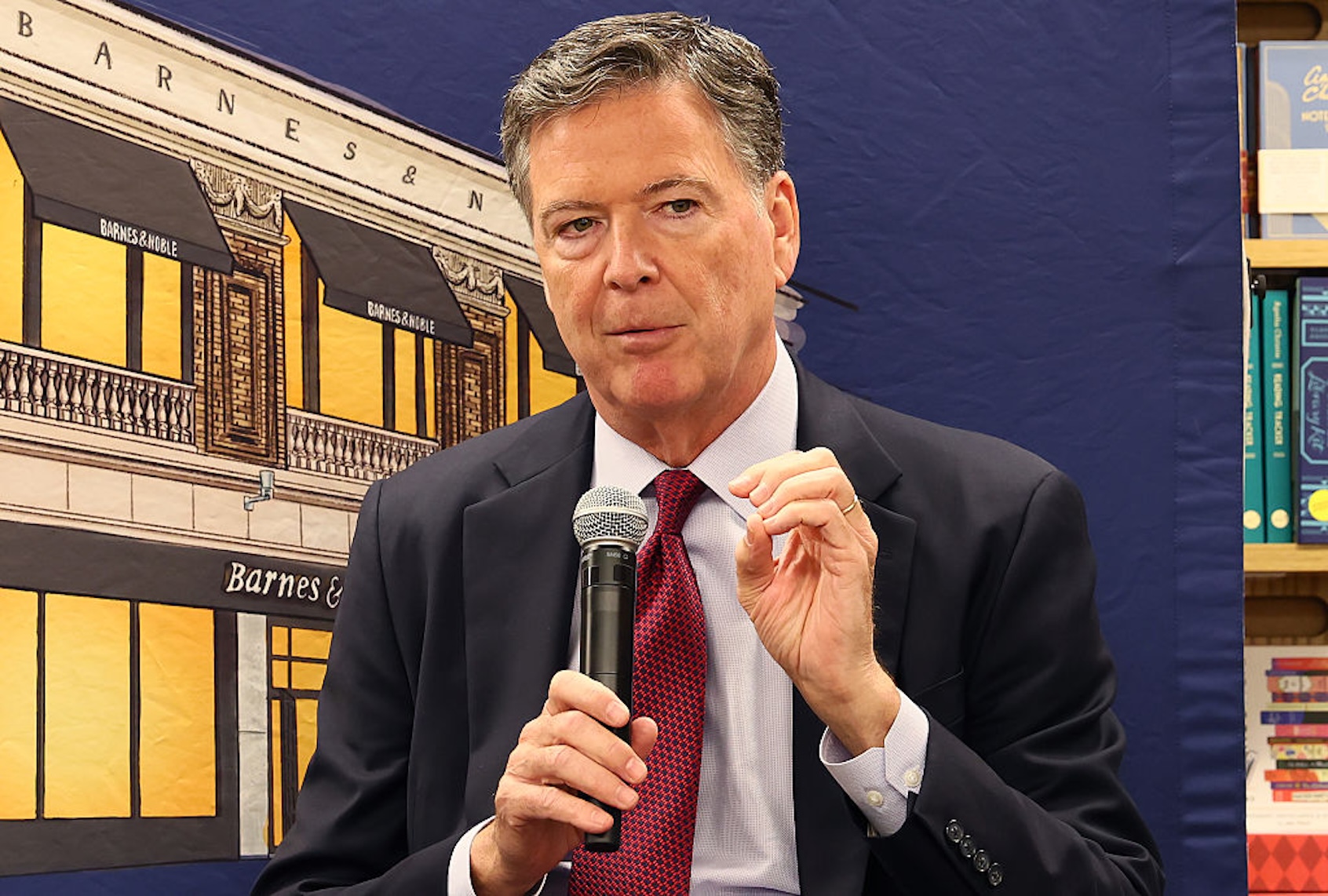
Lindsey Halligan, the president’s former personal lawyer, was explicitly picked to indict and prosecute two of Trump’s most high-profile enemies: former FBI Director James Comey and New York Attorney General Letitia James. When Erik Seibert, the previous interim U.S. Attorney for the Eastern District of Virginia, found that prosecuting James would be difficult without sufficient evidence, Trump forced him out of his role in September, just days before Halligan was appointed.
Comey is likely to face follow-up strikes from the Trump administration. While a new indictment against him has yet to materialize, he may face charges similar to obstruction of justice and lying to Congress.
James was ready to face a new indictment surrounding alleged mortgage fraud. But on Dec. 4, a grand jury declined to indict her. The Justice Department then attempted to indict her for a third time — and the second time in one week — but they failed again.
When the department will follow up with Comey is unclear. For the moment, it is missing a lawfully serving U.S. attorney.
After she was appointed, Halligan quickly secured a grand jury indictment of Comey just before the five-year statute of limitations expired. She obtained one against James later that month. Despite apparent doubts from Attorney General Pam Bondi and her deputy, Todd Blanche, Halligan appeared to be off to the races.
But they were right to be worried. For starters, prosecutors at the Justice Department cautioned against charging Comey due to insufficient evidence. Halligan did it anyway. Besides, an interim U.S. attorney does not have the same legal powers as one who has been confirmed by the Senate. But in true Trumpian fashion, Halligan used her authority as such anyway.
Then, the missteps began to come to light. Judges heard challenges from lawyers for Comey and James to the effect that Halligan was politically appointed by a vindictive president. It didn’t help matters for the Trump team that Halligan told the grand jury that indicted Comey that relevant evidence would come at trial and suggested that it would be on the former FBI director to prove his innocence, not her to prove his guilt. Worse yet, the grand jury never even voted on his final indictment. Instead, only the foreman signed off on it — the legal equivalent of pulling a fast one on the judicial process.
Want more sharp takes on politics? Sign up for our free newsletter, Standing Room Only, written by Amanda Marcotte, now also a weekly show on YouTube or wherever you get your podcasts.
In a desperate attempt to give Halligan some cover, Bondi said that she was a “special attorney” the whole time. This gave Halligan the broad legal standing she needed to continue the case. But there was a problem: Halligan was never supposed to be in the position in the first place. Trump had already got his shot at an interim attorney with Seibert. After that, he needed congressional approval for a full-time attorney.
In November, William Fitzpatrick, a magistrate judge for the Eastern District of Virginia, accused Halligan of “profound investigative missteps” that could “potentially undermine the integrity of the grand jury proceeding.”
“The prosecutor made statements to the grand jurors that could reasonably form the basis for the defense to challenge whether the grand jury proceedings were infected with constitutional error,” Fitzpatrick wrote.
Just a week later, Senior District Court Judge Cameron McGowan Currie threw the cases out entirely, finding that Halligan had been “unlawfully appointed” in what amounted to a political revenge operation. “It would mean the government could send any private citizen off the street — attorney or not — into the grand jury room to secure an indictment so long as the attorney general gives her approval after the fact,” Currie wrote. “That cannot be the law.”
Halligan was disqualified from her role in Virginia’s “rocket docket.” Now, another federal judge is calling on her to resign.
But there’s a problem: Currie did not kill the cases in her dismissal. Despite the wishes of Comey’s lawyers, she dismissed the cases without prejudice, which means they can be refiled within six months if the Trump administration wishes to continue the fight.
They most certainly do. Bondi wants to appeal Currie’s decision, but hasn’t filed yet, which leaves Comey in legal limbo. But this time, there’s a catch: Trump cannot appoint a loyal lawyer to take the case. It will be up to the Eastern District of Virginia to pick a prosecutor for the cases.
That may not be a chance Trump wants to take. If he can’t oversee the case himself and an attorney with no legal loyalty to him is at the helm, then the entire political nature of the case could fall apart.
That may not be a chance Trump wants to take. If he can’t oversee the case himself and an attorney with no legal loyalty to him is at the helm, then the entire political nature of the case could fall apart.
The Justice Department has no clear prosecutor. Instead, it has questionable cases, indictments made possible only by manipulation that have drawn the ire of federal judges and cast what Trump wanted to be a highly-publicized case of political revenge into a fly-by-night legal circus. This is to say nothing of a lawsuit from a close friend and former lawyer of Comey that could bring it all to a grinding halt.
Daniel Richman, a law professor at Columbia University, said that his personal information was illegally obtained by the government in its investigation of Comey, beginning in 2017 under the first Trump administration. The prosecution claimed that Richman was secretly speaking to the press on Comey’s behalf during the investigation, which the former FBI director denied to Congress. After that investigation concluded, the prosecution was supposed to return or dispose of the emails, communications and images obtained from Richman.
That apparently didn’t happen. Instead, they relied on them for Comey’s indictment and ordered an FBI agent to dig through more of Richman’s personal files for anything incriminating. It just so happened that this FBI agent was the sole witness in Comey’s grand jury indictment.
Trump’s lawyers would have needed a new search warrant for Richman’s information — but apparently they didn’t get one. A judge agreed with Richman, ruling that his Fourth Amendment rights had likely been violated.
But this legal trainwreck involving interim U.S. attorneys is not just confined to the East Coast. It also stretches west. In October, U.S. District Court Judge David Campbell in Nevada found Sigal Chattah, the interim U.S. Attorney for the District of Nevada, to be unlawfully serving. Despite efforts by the administration to keep her in the role, the judge demanded that Chattah be removed from her duties.
We need your help to stay independent
That same month, Judge J. Michael Seabright of the Federal District Court in Hawaii, disqualified Bill Essayli, the U.S. Attorney for Los Angeles, from prosecuting cases, ruling that he had continued to serve in his role without congressional approval. The situation provided a real setback to the Trump administration, which had assumed Essayli had a golden opportunity to prosecute immigration protesters in Los Angeles, but he didn’t have much success. After a judge gave Essayli the boot, he was quietly shuffled to serve as First Assistant to the U.S. Attorney for the Central District.
John Sarcone III, the interim U.S. Attorney for Northern New York, is also the subject of scrutiny for his handling of federal cases. In a full-circle moment, it is none other than James who is arguing for him to be removed. Despite Bondi’s moves to keep Sarcone on as a special prosecutor and first assistant, which might technically work, James’ team sees it as more of the same: unlawful. “Sarcone exercised power that he did not lawfully possess,” a lawyer for James said.
Nearly a year into his second term as president, Trump has yet to realize that running a meritocracy requires much more than blind loyalty. His hopes of his legal loyalists having the skills necessary to punish his enemies is a mistake of grave hubris. Four attorneys — Habba, Halligan, Chattah, Essayli — all appointed to serve Trump in one form or another. With the exception of Sarcone, they have all been found to be doing it illegally.
Trump is running out of time. The more times grand juries refuse to indict James, and the more evidence against Comey gets thrown out, the more the laughable legal circus continues. If the indictments don’t come, then the president’s handpicked attorneys have failed. Never mind that Trump’s cases were bound to fall apart; he picked the attorneys, which means he was wrong.
Read more
about this topic
