
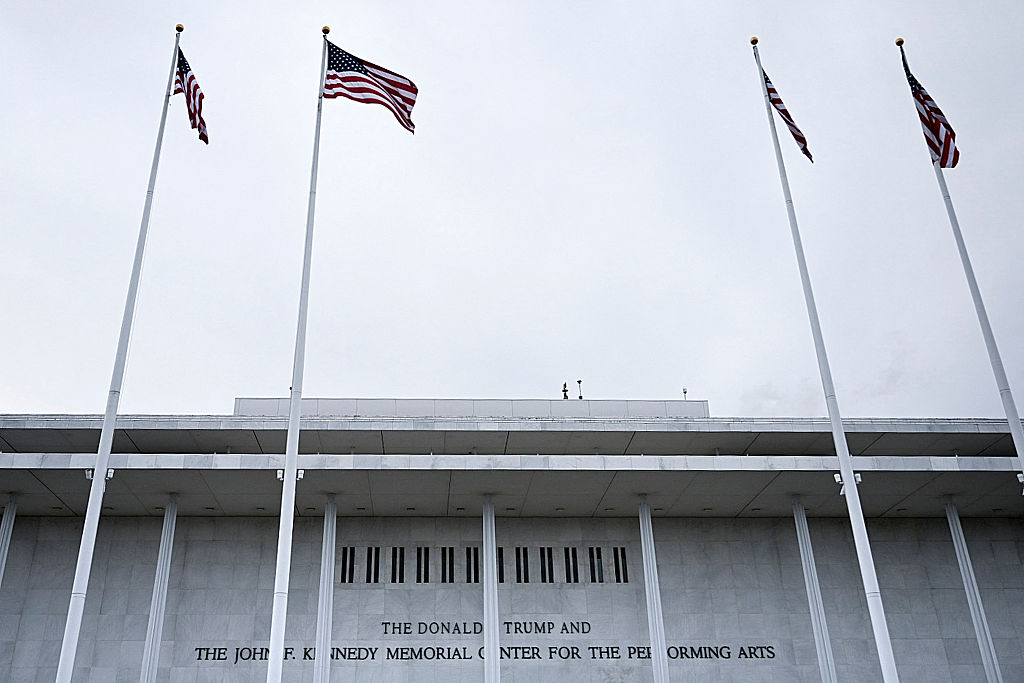

President Donald Trump has found a new way to leave his mark on a public institution: marble armrests.
In a Truth Social post this week, Trump bragged about “potential Marble armrests for the seating” at what he called “The Trump Kennedy Center,” declaring the design “unlike anything ever done or seen before.” The post included photos of the proposed armrests, a detail that quickly drew mockery, confusion and criticism across social media.
The announcement fits neatly into a pattern. Trump has long treated public spaces as opportunities for personal branding, favoring luxury materials and aesthetic flourishes that signal wealth and permanence. In the same post, he also highlighted renovations to the White House’s Palm Room, emphasizing its expanded use of marble, as if to underscore that this isn’t a one-off idea, but a guiding design philosophy.
Critics argue that marble armrests are less about improving the audience experience and more about spectacle. Cold stone, after all, does little to enhance comfort during a long performance. What it does do is communicate excess, a visual shorthand for power that prioritizes appearance over function.
The Kennedy Center, historically positioned as a nonpartisan cultural institution, has increasingly become a political flashpoint under Trump’s influence. Allies have pushed to more closely associate the center with his name, while arts advocates warn that the institution’s mission risks being overshadowed by politics and ego.
Start your day with essential news from Salon.
Sign up for our free morning newsletter, Crash Course.
Supporters frame the changes as bold upgrades meant to modernize an aging venue. Detractors see something else: a public cultural landmark slowly being reshaped into a monument to one man’s taste.
Whether the marble armrests ever materialize remains to be seen. But the impulse behind them is already clear. Trump isn’t just renovating spaces — he’s asserting ownership over them. And in that sense, the marble isn’t the story. It’s the message.
