
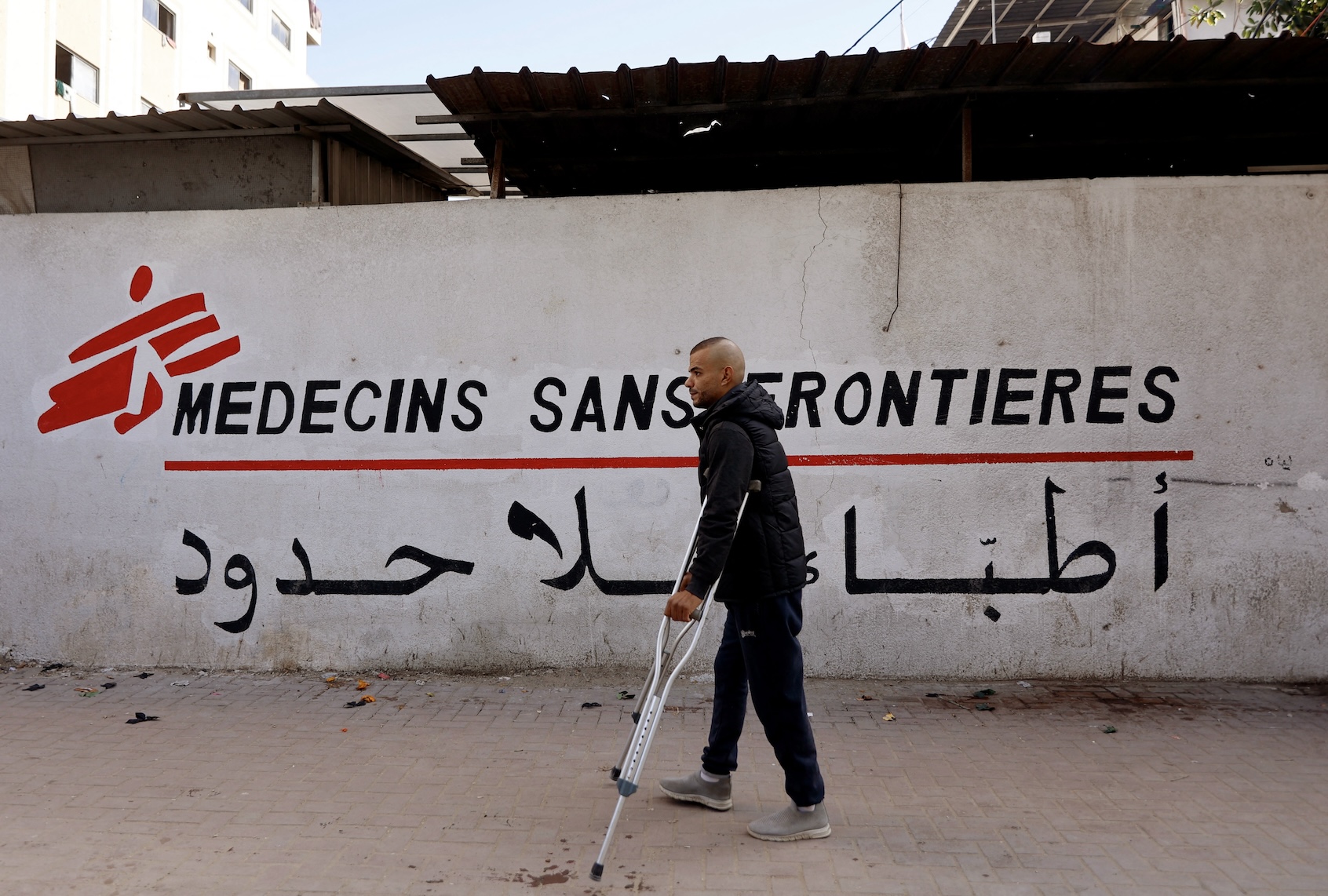

Two weeks after Israel issued a ban on at least 37 humanitarian groups from working in Gaza, thousands of staff members already in the strip are still distributing food and supplies despite a complete blockade of any additional aid and members that could provide help.
Officially, the Israeli government is demanding that banned aid groups provide lists of staff members and funding information; when those groups expressed concern over staff members’ safety, officials did not respond. Among the tens of thousands of people directly killed by Israeli forces over the last two years include around 400 people working for humanitarian organizations.
Israel has already prohibited any further movement of aid workers and supplies from those groups into Gaza; if the groups fail to meet Israeli demands by March 1, the workers still in Gaza will be evicted, or perhaps targeted. Many of the aid workers already killed by Israel were accused by the government of being terrorist operatives.
With only 18 of 36 hospitals in Gaza still functioning at any level, Doctors Without Borders (Medecins Sans Frontieres, or MSF) is trying desperately to help fill in the gap. According to MSF Emergency Coordinator in Gaza Claire Nicolet, the organization is currently supporting one in five hospital beds in Gaza and assisting one in three mothers during childbirth, in addition to providing specialized care that is otherwise completely unavailable.
“MSF has engaged in the registration process in good faith and has made efforts to respond to the requirements communicated to us,” she told Salon. “Before the deadline we repeatedly reached out to Israeli authorities in the attempt to find answers, but did not receive a response to our requests.”
“Forcing us to leave would deprive hundreds of thousands of people of essential medical care, with devastating consequences amid already overwhelming needs and catastrophic shortages of basic items.”
Despite much touting by President Donald Trump of a nominal ceasefire agreement signed last October, Palestinians in Gaza continue to suffer from food shortages, a medical system hollowed out by Israeli attacks, and continued airstrikes that Israel has claimed are responses to militant harassment. The inhabitants of Gaza are near fully reliant on outside aid, but that corridor to life is now in jeopardy.
“In the past few days, all our supply and staff movements into Gaza have been refused,” Nicolet said. “Forcing us to leave would deprive hundreds of thousands of people of essential medical care, with devastating consequences amid already overwhelming needs and catastrophic shortages of basic items.”
Many aid groups had been preparing for some kind of crackdown, especially since the Israeli government implemented a new registration process in March 2025 after more than a year of apparent “backlog” at the Ministry of Welfare and Social Affairs, which had effectively ceased processing permits. Applications submitted as early as May 2025 — technically subject to a mandated 45-day review window — have languished for months without response.
Start your day with essential news from Salon.
Sign up for our free morning newsletter, Crash Course.
According to an aid organization worker who asked to be unnamed over fears of reprisal, the Israeli government swept their group alongside others targeted for a ban in a broad bureaucratic purge that had little to do with specific regulatory failures. In doing so, the government has effectively reset the clock on groups that have operated in the region for decades, treating established entities as if they were unknown applicants.
“There’s been quite a lot of confusion in the last week and a half amongst the [international non-governmental organization] community, trying to sift through for each individual agency what actually legally applies,” the worker told Salon. “Also, it’s worth noting that while they sent this out, they have not actually contacted us directly to say that we are not authorized to perform this work.”
“I think it is intentionally vague and it is a deliberate attempt to cause pressure and confusion,” they continued. “They still wouldn’t have to make a formal decision, yet in the meantime they can see what the reaction is from the international community to the initial statement and intended rejections.”
We need your help to stay independent
Aid groups have expressed frustration that news media organizations have been winding down their coverage of Gaza since the nominal ceasefire, even as Israeli forces continue their deadly stranglehold on the enclave of 2 million people. Israel has taken some pains to do just enough to maintain a sense of relative normalcy and avoid any pushback, which has included tangling up NGOs in bureaucracy rather than banning them outright, though they are still not letting international journalists into Gaza. In this way, they can claim internationally that a legal pathway for aid still exists, while simultaneously choking off the actual flow of operations.
“There is aid getting through, and it’s certainly better now than where it was in essentially June and July – where blockage to all aid between March and May led to the broader issues around starvation and just severe deprivation for Palestinians,” the unnamed worker said. “But I think ‘better’ is a really challenging word to use, because when you compare it to a pre-war dynamic and what would have been sort of a normal situation, we are still far, far below the norm, and the volume of requests they receive versus the request approved is an indicator that this is not being facilitated well.”
The policy change comes as winter cold and rains pound Palestinians crowded in shelters, encampments, or the ruins of their homes, increasing the risks of respiratory disease. While not as loud as bombs and tank fire, the bureaucratic management of violence is just as deadly.
Read more
about the Israel-Gaza war
