

If you’ve got a holiday season gift card burning a hole in your pocket and would like some new (or new-ish) music books to read, here are some potential choices for your reading list.
“What Doesn’t Kill Me Makes Me Weirder and Harder to Relate To” (Mary Lucia)
While visiting Minneapolis years ago, I turned on the local NPR music station, The Current (89.3), and stumbled into one of the best radio shows and hosts I’d heard in eons: DJ Mary Lucia, in the afternoon drive time slot. Thanks to the magic of the internet, I was able to keep listening to her awesome show once I’d returned back home. She had an obvious depth of knowledge and command of her subject matter, and even despite the constraints of modern radio programming, her shows stood out because the craft behind them was obvious, and she is one of those people who was born to be on the radio because of her ability to connect with listeners. It’s a lost art.
There’s an elegant economy to Lucia’s prose that reads as both skill and survival mechanism.
I wish this book was Mary Lucia writing about her love of music and how she put her radio shows together, or about the many artists she’d conducted great interviews with—and don’t get me wrong, some of this is in here. But the title isn’t ironic, and it gives you a hint as to what’s contained within. Because of her incredible skill at relating to listeners, one of those listeners became convinced she was communicating with him directly, and thus began a campaign of stalking and harassment—we’re talking about a dude who began by mailing ten pounds of raw meat to the Current’s studios, and it only ratcheted up from there—that terrorized her life and was part of the reason (not the only one, regretfully) she left radio.
Unplanned, I read this book in one afternoon because I could not put it down. There’s an elegant economy to Lucia’s prose that reads as both skill and survival mechanism (which is also a skill, but not in the same way). Interwoven amongst the heart-dropping accounts of what she needed to do to keep herself safe, there are also fabulous stories about rock and roll, about her dysfunctional family, about dogs (the entire stalker incident began the day her pug died and she talked about it on the air), how her entire record collection was destroyed by a leaking pipe, about making out with Liam Gallagher and the Prince story she will never tell. (I respect her more for not telling it.) You will be furious at law enforcement (the police at one point suggested that they didn’t think she was attractive enough to be stalked), the stalker himself, the radio station’s management (who could have taken decisive action, but — surprise!–did not), the legal system, and the world at large, for allowing someone this smart and talented to be so definitively sidelined.
p.s. Yes, I’m aware that her brother is pretty famous.
“The Uncool” (Cameron Crowe)
Nobody needs to be told that Cameron Crowe lived a magical life, and yet there’s still an audience that wants to hear more than what he shared in his semi-autobiographical film, “Almost Famous.” While the tl;dr for this book is that you can use it to decode the rock star sagas in that movie and find out what was true (and who the culprits were), it also lets the reader into the family stories as well, and they’re almost as interesting.
The fun of the book is finding those ah-ha! moments where you can piece together the parallels between Crowe’s life and “Almost Famous,” so I won’t give away any of them here. But if you think that means you have to be a Stillwater (the fictional band in the movie) devotee to enjoy the book, you don’t, at all. If you’re interested in the music business or Southern California in the ’70s or the history of the alternative press (for example), you’ll still enjoy this book because Crowe was on the front lines, and he has no qualms about telling the stories now.
Of special emphasis is his retelling of his relationships with David Bowie, the Eagles, and (heartbreakingly) Lynyrd Skynyrd. (Bowie fans absolutely need to at least check this out of the library.) It is irksome that Crowe elides some things, like the reason that Led Zeppelin based themselves in Los Angeles and flew to their shows across America (that reason being Jimmy Page’s alleged relationship with an underage groupie and the Mann Act). “The Uncool” is not the great, definitive book about his career that Crowe would certainly be entitled to write, but it’s the book he wanted to write, and it’s an enjoyable, easy read, but not necessarily an essential one.
Want more from culture than just the latest trend? The Swell highlights art made to last.
Sign up here
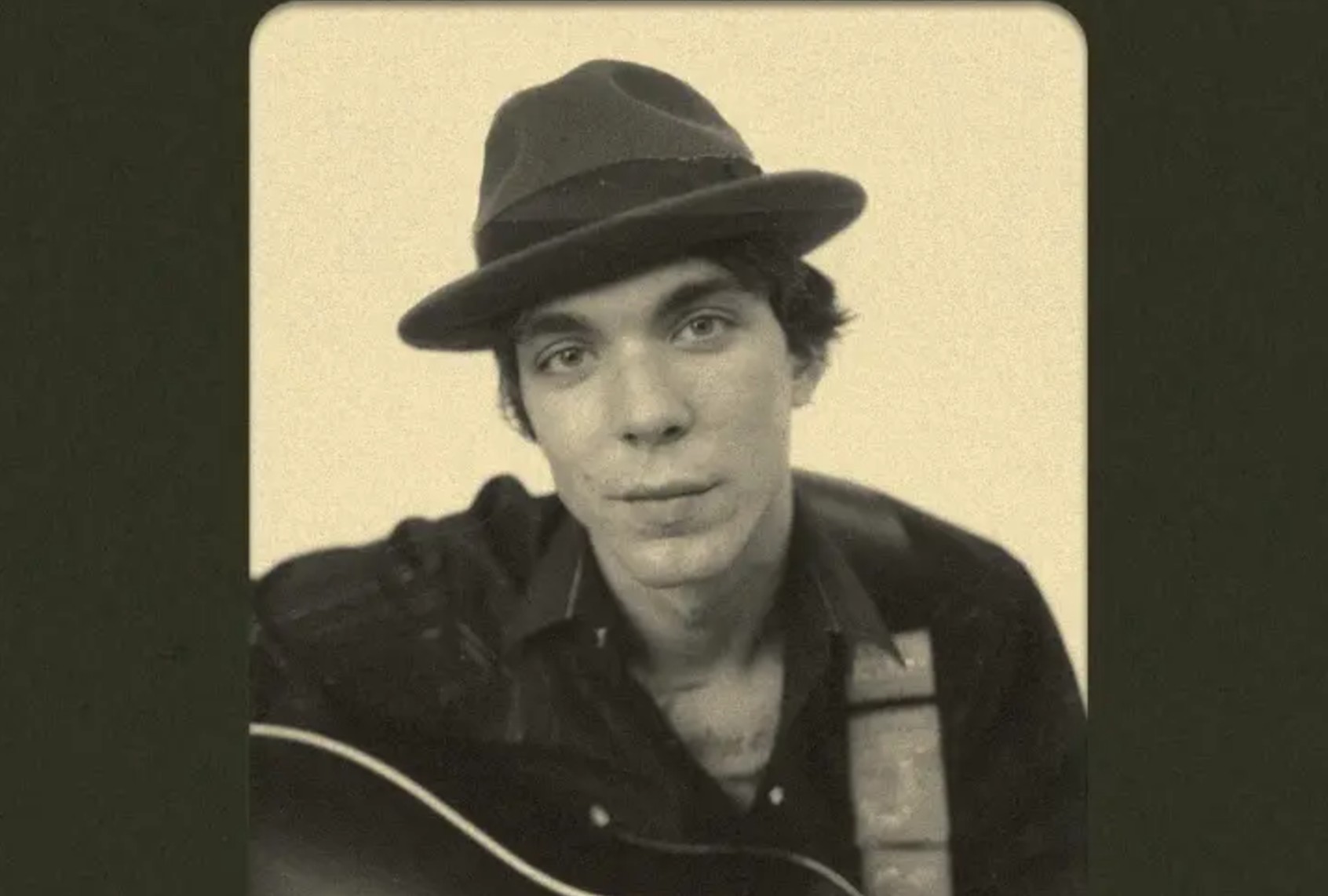
“What Do You Do When You’re Lonesome: The Authorized Biography of Justin Townes Earle” (Jonathan Bernstein)
The best music books are the ones written by the people for whom getting it right is their primary driver. They will over-research, they will do deep dives into material that will maybe end up wafting through the background of a chapter, and they will painstakingly build not just an account of a career but write the story of a life. That’s what Jonathan Bernstein’s done here with “What Do You Do When You’re Lonesome.”
If you’re thinking that you only sort of know Justin Townes Earle’s work, or you’re not really into Americana, or any other excuse that you could offer for skipping this book, I have to tell you right now that you need to ignore all of them and buy this book immediately. Those descriptors would apply to your columnist; I saw Justin Earle once, opening for John Doe and Exene Cervenka on one of their Johnny & June tours at the Music Hall of Williamsburg, and was one of two people singing along to his cover of The Replacements’ “Can’t Hardly Wait.” I bought his record at the merch table and we talked about the ‘Mats and he thanked me and my companion for joining in, but that is the extent of my involvement. I still could not put this book down.
The fact that the book is authorized is both a positive and a challenge. It meant that many people would speak with him, and Bernstein talked to everyone who would. As he notes in the book, some of these individuals knew Earle well, but others only had brief contact with him. This goes back to the statement in the first paragraph about the strengths of a great music book.
This book is absolutely heartbreaking. It’s about one young man, but it’s also about families and divorce and addiction and alcohol and drugs and American life, about the music business and trying to survive as an artist, and it absolutely painstakingly breaks down all of the ways Justin Earle failed and was failed by and ultimately succumbed to a disease that was monstrous. Even though you open the book knowing how it ends—the eternal curse of biography — there are so many moments where Justin seems like he’s going to make it this time, that he won’t make the same mistakes he has in the past, that he will be able to triumph and get through to the other side, because Bernstein takes you on the journey with him and he has the skill and the ability to relay the information at a pace and at a level that lets you, the reader, slowly accumulate the knowledge and understanding that the author already holds.
I particularly appreciated the skill with which Bernstein was able to explain — or at least illustrate, I don’t know the city well, so admittedly I am relying on the information presented—the social and geographical intimacies of Nashville. This knowledge is fundamental to being able to understand Justin Townes Earle’s life and work and the fact that Bernstein is an outsider works to his advantage; like Bob Mehr’s great Replacements book, “Trouble Boys,” sometimes it takes someone who isn’t from a place to ask the questions no one else would think of, and to see the elements that everyone who actually live there take for granted. Bernstein takes the reader to Justin Townes Earle’s Nashville in a deep and immersive way because it is crucial to the story, and he has the skill to weave that information into the story he is telling instead of just plunking down facts and data and depending on the reader to place those aspects correctly. That’s the writer’s job, but it’s hard to get it right, much less do it so seamlessly you don’t even realize that’s what’s happening until you’re in the middle of it.
Bernstein takes the reader to Justin Townes Earle’s Nashville in a deep and immersive way because it is crucial to the story, and he has the skill to weave that information into the story he is telling instead of just plunking down facts and data and depending on the reader to place those aspects correctly.
This book does not spare the feelings of anyone involved. It’s not cruel, but it’s not mincing words, another aspect that someone deeply embedded in Nashville might have trouble doing. In the chapter about Justin’s move to New York City in 2009 — something that he mentioned as often as possible — Bernstein notes, “Left unspoken in Justin’s Big Apple boasting was the other role model for his move: Steve Earle, who’d first decamped to New York City four years prior, in 2004, and had similarly not shut up about it since.” Not unique to these two transplants, but accurate.
There’s also a great story that got repeated over the years by both Justin and his father (Steve Earle, in case that wasn’t clear) about the time that Steve heard Justin listening to Nirvana’s cover of “Where Did You Sleep Last Night” (also known as “In The Pines”). Steve told his son it was a Lead Belly song; his son didn’t believe him, they listened to Lead Belly together, and it ended up being a key moment of Justin’s musical awakening. At this particular point in his life, Bernstein quotes Justin Earle as saying, “I thought music was the reason my family was broken up.” But Bernstein also notes that although Steve Earle had missed many other key moments in his son’s life, he didn’t miss this one, and: “Is the fact that he didn’t miss it, that he’d been present for that moment, one of the reasons both father and son so loved telling this story? Is that why Justin and Steve both crystallized this instance as the beginning of the Justin Townes Earle story?” Sometimes the truth is hard to face and it’s even harder to write. You’ll be thinking about this book for a long time after you’re done reading it.
We need your help to stay independent
“Girl to Country: A Memoir” (Amy Rigby)
This is singer/songwriter Amy Rigby’s second memoir; her first book, 2019’s “Girl to City,” was the beginning of her journey, and although the world (early NYC in the ’80s!) of her first volume was more immediately and personally interesting to me, “Girl To Country” is the one that stuck with me for a long time afterwards, which is why it’s making this list even though it’s been out for a few months. (It will be published in the UK and Europe in March of 2026.)
Songwriting is essentially about compression, how economical you can be with your words and phrases and sentences. That’s a skill that can serve you well when you’re writing longer-form prose, or it can get in the way. Rigby — who Robert Christgau called “one of our finest songwriters for a quarter century” back in 2019 — has definitely honed her chops (and her weapons of choice) since her first book. “Girl to City” was an enjoyable, easy read, but with “Girl to Country,” Rigby has written something with real staying power.
The writing is clear, decisive, brutal, and beautiful, and her eye for the same small details that make her songs memorable serve her well in this story, and she immerses the reader into every setting immediately — getting a life-changing phone call while standing at a gas pump in the winter chill, imagining what it would be like to work in the offices she drives by on her way to perform a concert — the same way a great songwriter pulls a listener in immediately.
The reward in this one is the happy ending you either know—or sense, she definitely gives you enough clues if you aren’t already familiar with her life — is coming, and you’re rooting for her all the way.
Read more
from music columnist Caryn Rose
