
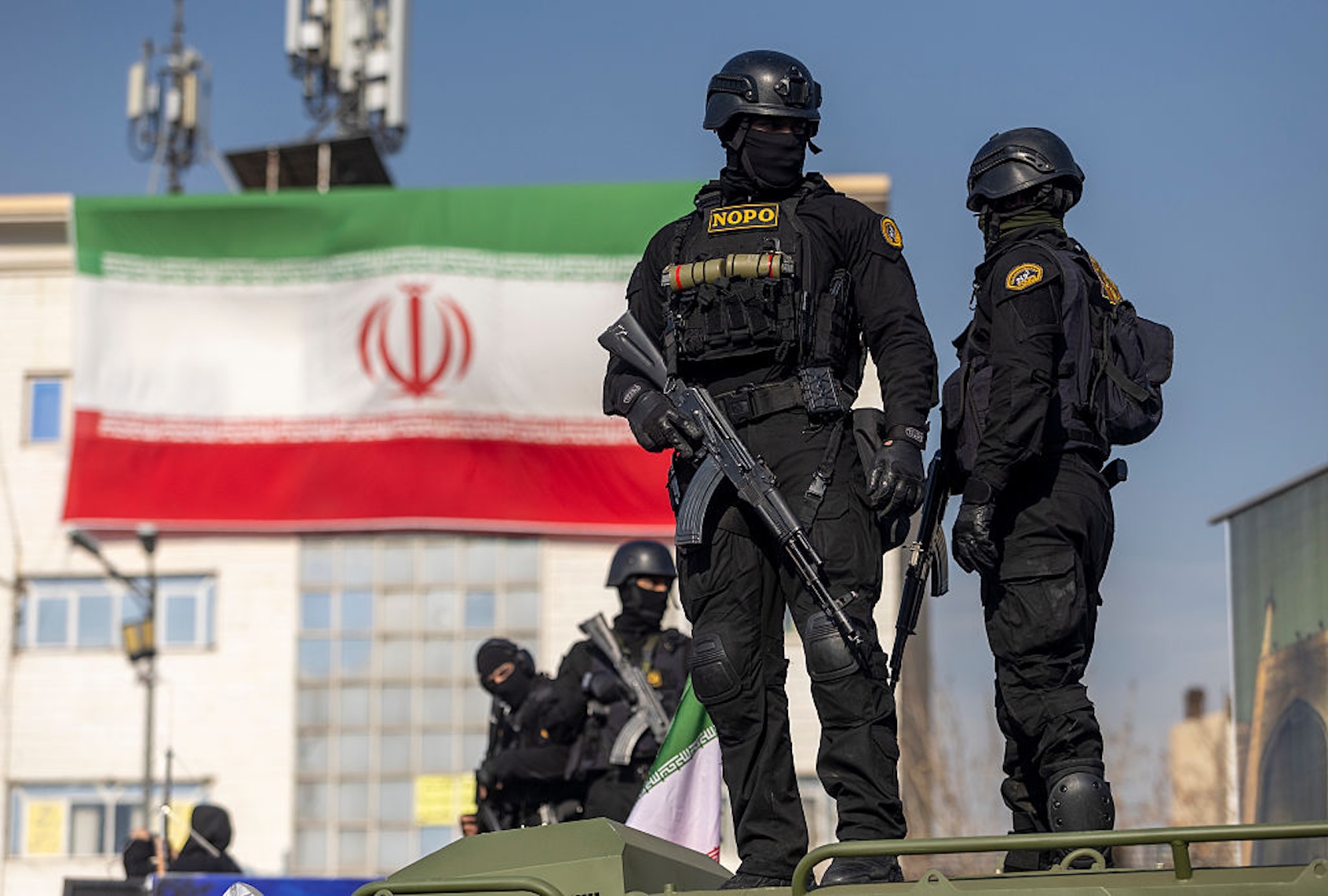

Like nearly every other Iran expert, until three weeks ago veteran war correspondent Scott Anderson thought the Islamic regime was stronger than ever. Despite mounting economic problems, which included rampant inflation, Israel’s 12-day war against the country, assisted by the United States, appeared to have caused what he calls a “rallying around the flag” effect in favor of the regime and stymied Iran’s opposition movement. Then the rial, Iran’s currency, began to collapse. And as things are wont to do in the Islamic Republic, the situation changed fast.
Mass protests grew in size and intensity, becoming the largest and most serious since the Iranian Revolution in 1978-79 that ushered in Ayatollah Khomeini and a repressive theocracy. The country’s ayatollahs, under the leadership of Khomeini’s successor Ali Khamenei, instituted a swift and deadly crackdown on the demonstrations and reportedly began executing protesters. Meanwhile, Donald Trump acted as cheerleader for the protests, promising Iranians on Truth Social that “HELP IS ON ITS WAY” and threatening the regime with everything from cyberattacks to military action.
Then things changed again. Trump announced he had received word that the regime’s executions — which numbered at least 2,403 according to Human Rights Activists News Agency but that inside observers, including an Iranian journalist with whom Anderson is in touch, report is significantly higher — were stopping. He backed off on his threats to attack the country, reportedly at the urging of Israel and Arab nations. An uneasy quiet fell. Many fear the killings are now being carried out in secret.
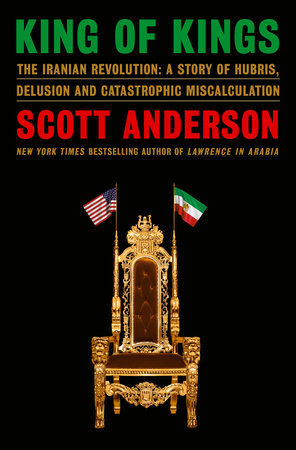 As a war correspondent and author of best-selling books chronicling everything from chronicling the exploits of CIA spies during the Cold War and Lawrence of Arabia, Anderson knows his way around conflict. His latest book, released in August, is “King of Kings: The Iranian Revolution: A Story of Hubris, Delusion and Catastrophic Miscalculation,” which received the 2025 Kirkus Prize for Non-Fiction, was long-listed for the 2025 National Book Critics Circle Awards and has proven incredibly timely. With a novelist’s gaze, turn of phrase and instinct for deeply drawn characters, Anderson depicts a restive, pompous and dithering shah, isolated by his royal status and incapable of making hard choices, and his wife Farah, the perceptive shahbanou who pushed back against the confines of the monarchy to grasp what was happening in her country and the need for reforms. A revelatory book — a term that is thrown around too often — “King of Kings” charts the rise of Khomeini and the growth of religious nationalism, and offers a warning to the United States, which made shocking blunders and failed to understand the mood of a country that was one of its closest allies.
In a conversation on Jan. 15, I spoke with Anderson about the current protests and the Iranian government’s brutal, bloody crackdown; how they compare to the demonstrations in 1978-79; the Trump administration’s reaction and what will likely come next. This interview has been edited for length and clarity.
The protests in Iran appear to be the most widespread and violent since the revolution. You spent years researching and writing “King of Kings,” which culminates in the shah’s overthrow in 1979. How are you viewing what’s happening right now?
I’ve heard numbers [on Thursday] that at least 12,000 were killed, and if that’s true, that’s over four times [the number] killed in the Iranian Revolution — and that took place over 14 months. I think what struck me at first was the number of parallels and dissimilarities between the revolution and what’s happening now. It seemed to me that what finally took people to the streets, so much of it was the same things that they were complaining about the shah — official corruption, economic collapse, lack of political liberties, civil liberties. The huge difference, of course, is that last time the revolution galvanized around Khomeini and [a] kind of religious fervor, and this seems to be very much a rejection of that.
[E]veryone’s had a gut punch economically. Even the wealthy class that have always been somewhat immune from the Islamization of the country, they’ve taken it on the chin also. That’s always been their go-to thing: that these protests are being spawned by foreigners. That’s just not going to work this time.
What’s different this time from the earlier four or five upheavals in Islamic Iran, going back to 2009, is that because it’s economically based, it’s hit everybody. And so in the past, the regime was pretty adept at being able to play off one segment of society against another — the more urban and secular against the rural and religious, blaming ethnic minorities like the Kurds or foreign saboteurs. But no one’s buying it this time because everyone’s had a gut punch economically. Even the wealthy class that have always been somewhat immune from the Islamization of the country, they’ve taken it on the chin also. That’s always been their go-to thing: that these protests are being spawned by foreigners. That’s just not going to work this time.
In the book you write about how the flow of information between American diplomats in Iran and the State Department in D.C. [in 1978-79] “had more in common with the world of 200 years prior than that of today” and impeded the Carter administration’s understanding of what was taking shape. Right now we know that Iran is mostly under an internet blackout, so information is, yet again, hard to obtain and verify. How do you see this hindering our understanding of what’s happening on the ground?
It’s huge. I’ve been saying for the past six months, as I’ve been out talking about my book, that Iran is not North Korea. But all of a sudden it’s as shut down as North Korea… It’s so complicated, because — why has Trump now turned around said, “Oh, you know, they’ve stopped the killing. It’s all over with”? My feeling is that he got out ahead of his skis, and then the saner voices in the administration realized that there’s very little they can do. I mean, what — they’re going to bomb Iran again? They’re certainly not going to put troops on the ground. So, you know, what are they going to do?
I think that it’s this idea of trying to cut a deal and letting things kind of go on as before… Down the road, when — if — the regime feels secure enough that they lift the internet ban, we’re going to hear how bloody this thing really was… I was talking with an Iranian who’s quite well connected, and she was saying that a friend of hers [who is] reporting inside Iran [said] the 12,000-dead figure is just from the major cities. It’s not from the countryside. So who knows how many are dead, but everything is kind of seeping out. It really sounds like a bloodbath.
My feeling about the Revolutionary Guard is that [their allegiance] is not [based on] theological or political grounds. The Revolutionary Guard are an economic force unto themselves. They own refineries and cement plants and hotels, and so it really comes down to money. And what I was thinking [three or four days ago], and this may still play out, is I would not be totally surprised if the ayatollahs get pushed to the side and you have a military junta takeover [with] the Revolutionary Guard, and so you have a military dictatorship rather than a theological [one], and that might be the deal that they’re trying to cut with the Americans right now. Who knows what’s going on behind the scenes, [but] it’s quite a turnaround for Trump to be saying, “Oh, it’s all over.” So there has to be some reason for that.
Donald Trump urged Iranians to keep protesting. He threatened everything from cyberattacks to military action. What effect do you think that what he was saying in public, his warnings, his threats, had on the Iranian government or on the protests?
I’ve been in touch with quite a few people in the Iranian opposition, and [after] the American-Israeli bombings in June, [they] were really quite despondent because the bombings had really kind of caused this rallying around the flag effect in favor of the regime. And so they were feeling like, if we protest, we just get painted as lackeys of the Israelis and the Americans, so there’s nothing we can do. So really, up until about three weeks ago, that’s what I was hearing from the opposition — [that] internally, the regime is stronger than it’s been in a long time. And then with the currency collapse, everything changed.
Want more sharp takes on politics? Sign up for our free newsletter, Standing Room Only, written by Amanda Marcotte, now also a weekly show on YouTube or wherever you get your podcasts.
All through the Middle East, [they] admire strongmen, and so there’s this weird, begrudging respect for somebody like Trump. And I think that there’s a certain segment of the opposition that is hoping the Americans come in on the ground. I don’t think it would work; I think it would make the invasion of Iraq look like child’s play.
What really stunned me, frankly, was [that] I’ve been hearing from a lot of people [about] this “Javid Shah!” — this rallying around the crown prince, Reza [Pahlavi, the late shah’s son]. My feeling is it’s because he’s the only kind of identifiable, prominent opposition figure out there. There’s nobody in the country, of course, and in the diaspora. Reza is the recognizable one [and] I kind of wonder how much, then, it’s almost a f**k you to the regime because, for 45 years [of] vilifying the shah, and now they’re saying, Long live the shah. It’s like the ultimate f**k you.
It sounds like you think — at least at this point, and we know how quickly things can change — that the regime is probably more likely to be transformed into something else than overthrown.
Yes, that’s kind of my prediction. Again, [there] is a massive asterisk with this. But my feeling is that if there’s kind of a deal being made behind the scenes with the Trump administration, basically you’re going to have the ayatollahs put to pasture and…the Revolutionary Guard [will take] over. And it’s not going to be an American ally, but the “Death to America” stuff is going to stop, and then maybe they even bring Reza in to talk about coming democracy…
[According to an exclusive report by Axios, Trump’s Middle East envoy Steve Witkoff met with Pahlavi last weekend to discuss the protests.]
[T]hey just went, by all indications, so brutal over a 72-hour period… It’s a reflection of how serious they took the threat. This is, by far, the most serious threat they’ve ever faced. And likewise, the brutality is far more than it’s ever been.
You know what happened with the shah. You started seeing desertions, and really not in huge numbers until about eight months into the revolution. This [time], everything was speeded up. Because the level of bloodshed was so high, you might have started seeing desertions after say, 10 days, 14 days. But instead they just went, by all indications, so brutal over a 72-hour period that [there] wasn’t even time for that. You [didn’t] have the corrosive effect [on the] morale of soldiers killing countrymen… It’s a reflection of how serious they took the threat. This is, by far, the most serious threat they’ve ever faced. And likewise, the brutality is far more than it’s ever been.
Do you have any sense that there is support for Reza among the opposition to return in some capacity, and how widespread that would be?
You know, it’s funny. If we’d talked yesterday, I would have said that he has very little support, very little chance. But again, in talking with this Iranian journalist, she said — the people she’s been talking to, both the people in exile and [in Iran] prior to this last week of everything shutting down, Reza is kind of seen as the one recognizable opposition figure of any prominence.
It’s interesting, the parallels between him and Khomeini, in that they’re both voices of exile, so they could kind of say whatever they wanted, where any other opposition [figure] that’s remained inside Iran has had to work around the margins of the ayatollahs. And very similarly with Khomeini, because he was in exile he could say anything he wanted, and it was really extreme. Basically what the shah ran inside Iran was a vast patronage system. And so if you were in the political opposition, or you’re a conservative cleric, he’d put you on a sinecure. He’d build a dam in your region or give you money for a mosque or whatever. So everybody was bought, essentially. Yes, there were a few political prisoners, especially on the left, but by and large, he just paid people off and the Iranian people knew that.
So Khomeini, being on the outside, was immune from that. He couldn’t be bought, and so he had this image of purity. And you might be seeing something somewhat similar happening with Reza in that there’s this nostalgia for this era that most Iranians don’t know at all. What they do know about it is that the regime they now hate has been beating up their predecessor for 46 years, so it must have been good in their minds. So there’s an interesting parallel there between, I mean, at least as far as why there is this support for the exile. Because, you know, you’re internally. Everybody has to cut deals. Everybody kind of works the margins of things.
We need your help to stay independent
I’d love for you to play fortune teller for a moment, which I realize is always dangerous. But five years from now, what will Iran look like? What will we be saying?
It’s hard to imagine this current situation continuing. If you dismantle the clerical hierarchy, if you shift a few people around in the Revolutionary Guard or whatever that that government looks like, I think the one thing that the Iranians have to realize now is that the world’s never going to let them be a nuclear power. [They] are kind of caught at the moment in this kind of national pride thing. They keep saying they’re going to do it, and it doesn’t matter the cost of it. But I’ve got to believe that a certain point — even if the regime stays as it is and we have a new supreme leader — someone is going to cut a deal and lift the sanctions, and the nuclear program just kind of quietly goes by the wayside.
[But] what ensures the regime staying in power is this idea that they’re besieged by the outside world — and that can be powerful. And if Iran starts opening up, if its sanctions are lifted, if it joins the village of nations, then its own grip could start weakening.
I’ve always felt that engagement is better and more corrosive to a dictatorship than isolating them… Secret police never go hungry, armies never go hungry. You’re just handing the dictator that much more power…
Five years from now, Iran’s day as a regional power is over. Their proxy allies are not going to come back. Pretty much all of them have been knocked out. Their economy is in shambles. I just can’t imagine things continuing on the way they have been. But I also think people have been saying that for at least the last 25 years about Iran, [that] they can’t continue…
I don’t think it’s going to be a democracy. But I also don’t think it’s going to be a theocracy anymore. I think going to end up being sort of a dictatorship, military dictatorship, maybe with a patina of Reza [coming] back and they have a kind of a rubber-stamp Parliament, and they have the kind of trappings of, say, a dictatorship-light, like Jordan or something. I could see that happening. It’ll stay cohesive. It won’t be like Iraq, which is now essentially three countries. Iran has territorial integrity going back millennia, so I think it will stay as one country.
Read more
about this topic
