
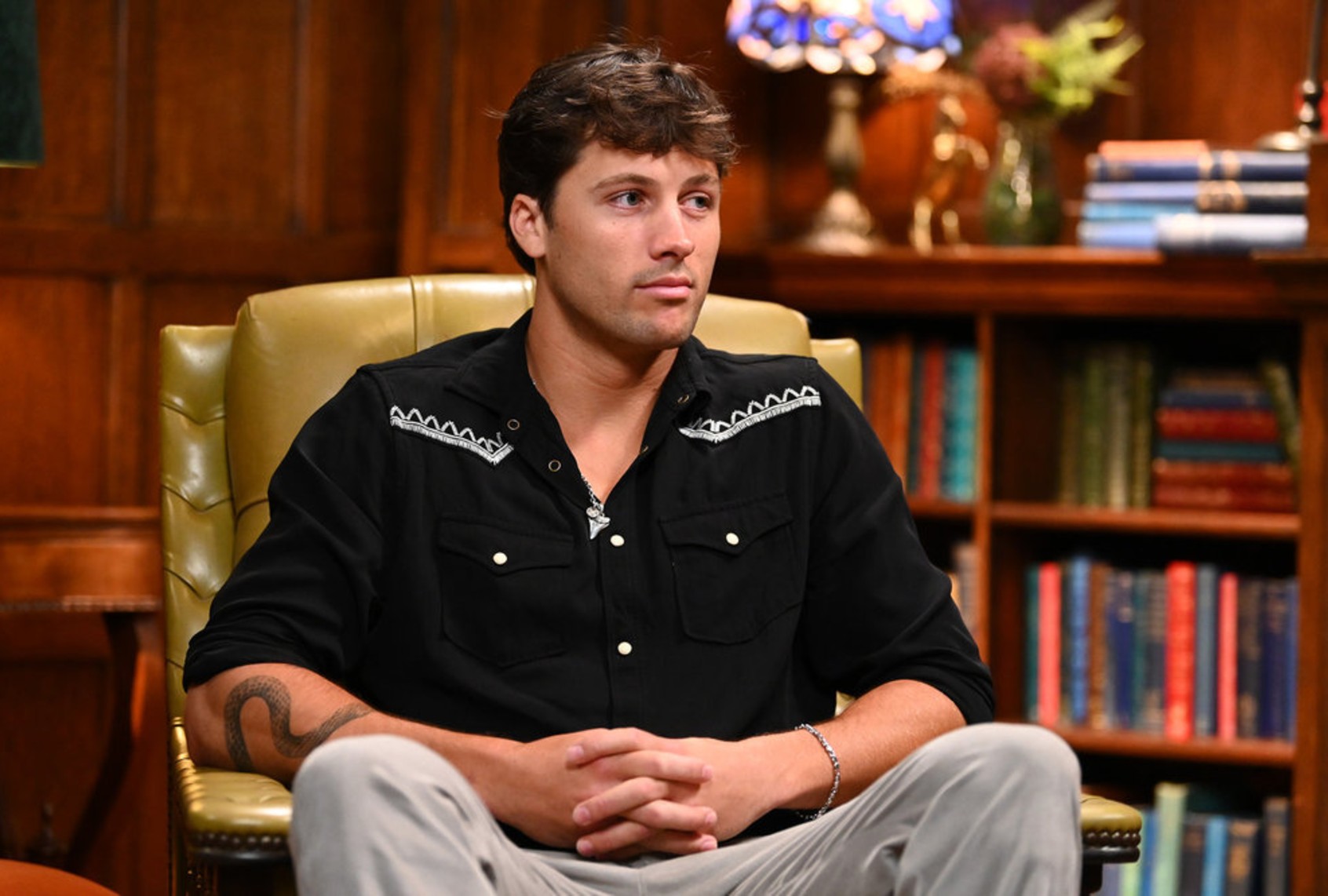

The moment Alan Cumming taps Rob Rausch to join his secret circle of murderers in the fourth season premiere of “The Traitors,” a faint grin crosses what we can see of Rausch’s half-obscured face. Since he and everyone else are blindfolded, Rausch is confident no one will notice that tell. Thus far, it has been the only diabolic flicker he’s displayed.
“I’m hard to read. I’ve been told that by every girl I’ve ever dated. And I’m extremely competitive,” Rausch says in the confessional interview that follows, where he says he’s as happy as can be and knows he’ll make a good Traitor.
In the middle of a villain era, good people can feel like members of an endangered species reclassified as huntable and left to fend for themselves.
By the sixth episode, Rausch has proven that by secretly executing several players, even in plain sight, without showing up on anyone’s radar — including that of comedian Ron Funches, the season’s instant underdog with whom he’s struck up a friendship. Their closeness derails Rausch’s “three steps ahead” scheming.
Funches came to Ardross Castle to play as aggressively as the other protagonists, called Faithfuls. But where they loudly announce their intentions, he keeps his to himself. Distrust is the topmost requirement to go the distance in this game, after all.
Meanwhile, Rausch is making the most of people’s low expectations of a “Love Island” contestant, let alone one from Alabama who enjoys catching snakes and quietly strolls around in denim overalls, bare-chested. The Faithfuls can barely look at him, and he likes it that way because he’s perceived as a safe sponge for their secrets – including their kneejerk suspicion of Funches.
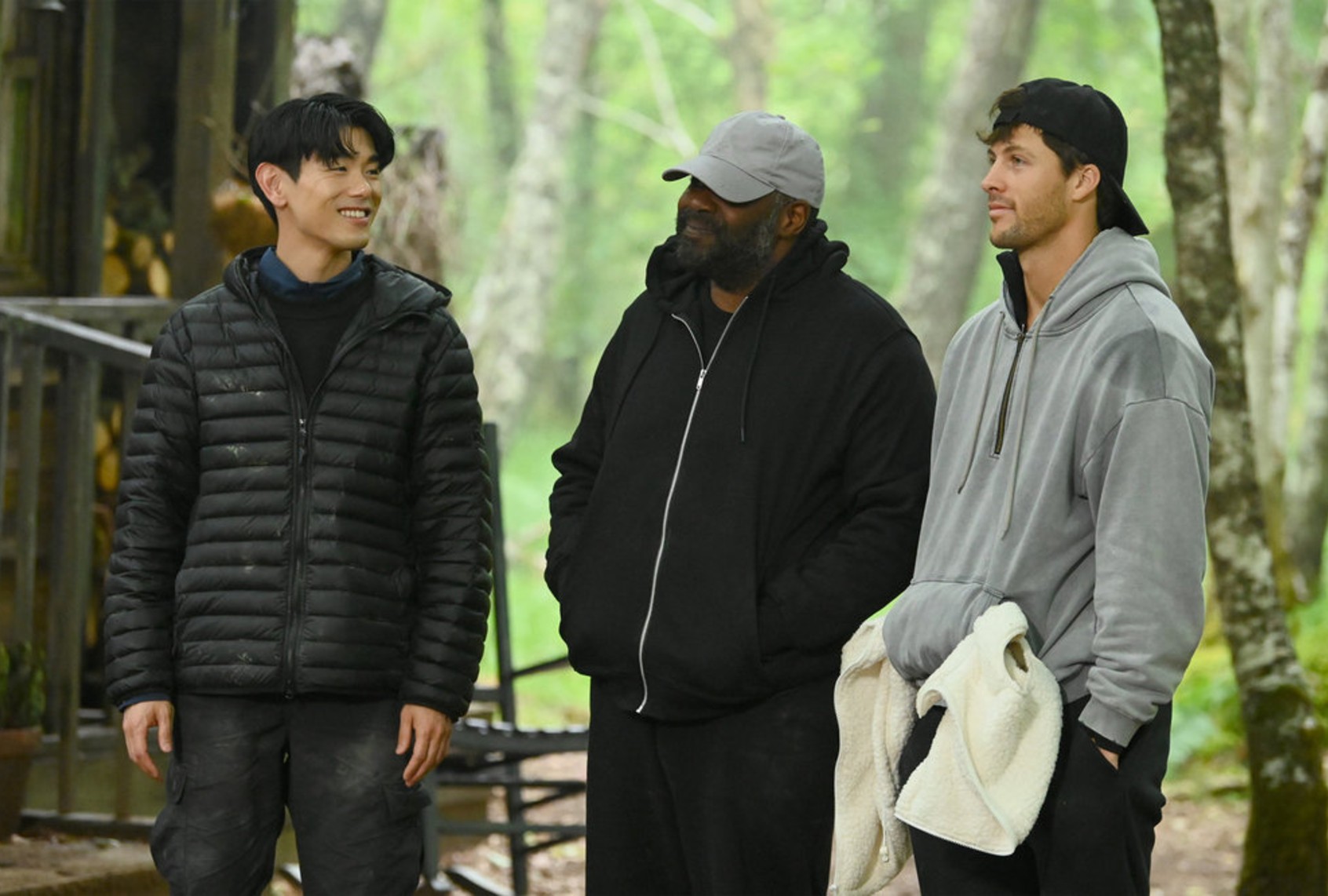
(Euan Cherry/Peacock) Eric Nam, Ron Funches and Rob Rausch in “The Traitors”
“The Traitors” is a social game, so when Funches’ early big swing at another contestant misses terribly, the rest of the players instantly ostracize him. No matter what he does to help his teammates, his doom is common knowledge — compounded by “The Real Housewives of New York City” star Dorinda Medley’s campaign to portray him as an aggressive Housewife hunter. (It seems his main sins are a lack of interest in her family and an ignorance of the Housewives franchise.)
Those unfamiliar with Funches’ reputation as a sweetheart might have easily swallowed that, but people who love Funches really love him and rose to his defense on social media. Once those viewers noticed that other players’ outsized negativity was linked to Funches’ personality as opposed to his actions, their observations gently prodded him to seek a possible autism diagnosis, which he made public via his Instagram page.
Throughout these episodes, Rausch isn’t any more aware of Funches’ likely neurodivergence than the comic was when the season was in production. All he sees is Funches’ discomfort, and that’s enough to move him in an unexpected direction.
“The game is definitely getting harder for me,” Rausch says later. “The Traitors’ plan is to banish Ron, but I don’t have that in me . . . This game sucks.”
Most of those selected to wear the killer’s cloak in “The Traitors” come to this conclusion, but not as woefully as Rausch. Others of his kind fail to go the distance because of a detail misspoken or a slip of the mask. What trips up Rausch, though, is his moral fiber.
In the middle of a villain era, good people can feel like members of an endangered species reclassified as huntable and left to fend for themselves. The most principled may preach strength and survival in numbers, but there are always a few willing to sell out the pack for a chance to feast with the predators instead of sharing scraps with the rest.
The empathic distance that reality TV affords still allows us to not only delight in the Traitors’ impressive murder run but perhaps fantasize as to how well we’d perform in their place.
Life as we know it reminds us of this every day. Two American citizens brave enough to peacefully place their bodies on the line to help their neighbors were gunned down by masked ICE jackboots empowered by their president to flout legal constraints.
That this government tries to justify these senseless killings by labeling the victims’ actions as “domestic terrorism” isn’t surprising. Neither are recent surveys showing that a majority of Republicans — 54%, according to a recent Ipsos poll — feel Renee Nicole Good’s shooting represented a necessary use of force even though the mother of three was unarmed and driving away from the gunman.
True villainy is a matter of perspective.
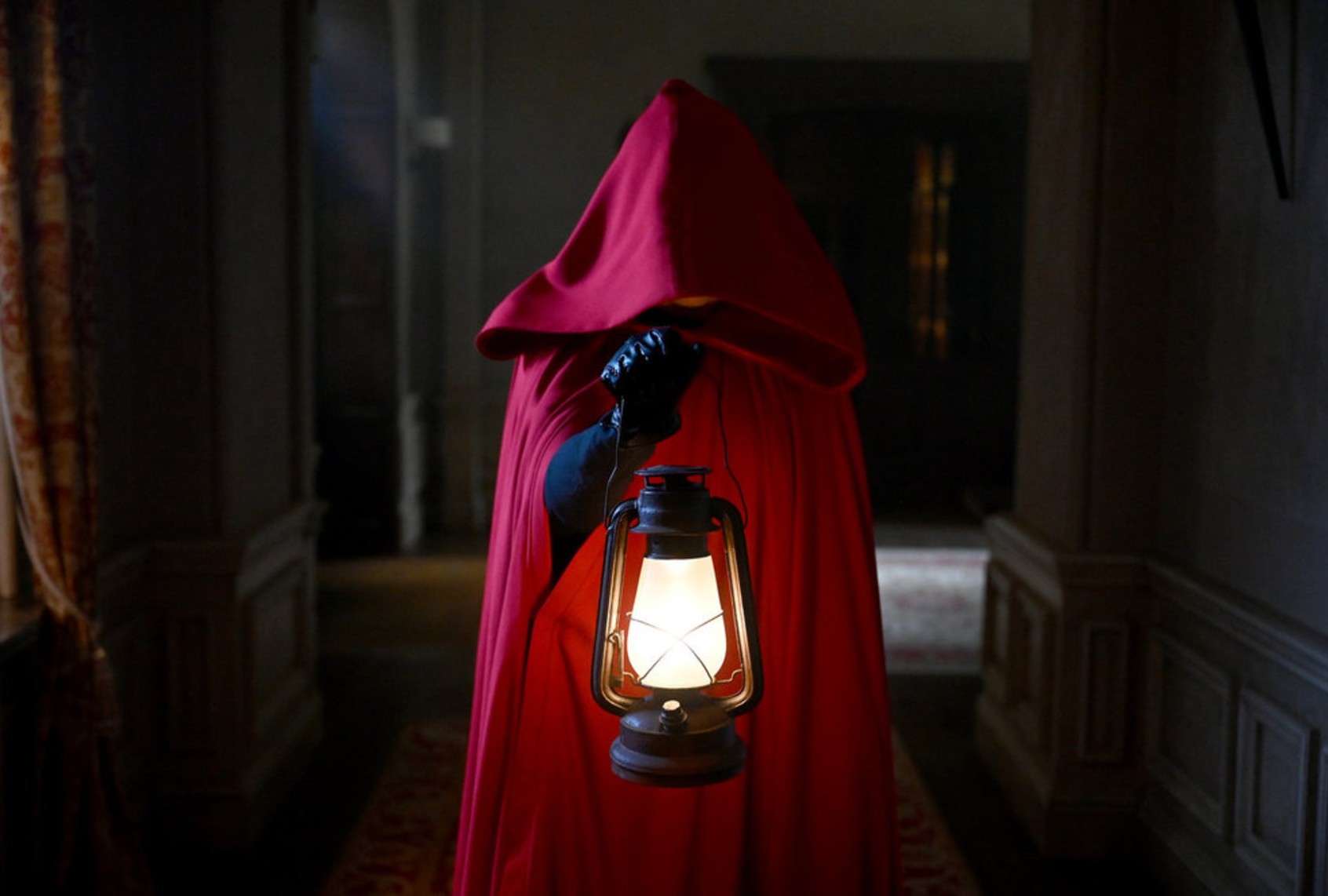
(Euan Cherry/Peacock) “The Traitors”
In contrast, the empathic distance that reality TV affords still allows us to not only delight in the Traitors’ impressive murder run but perhaps fantasize about how well we’d perform in their place. Every Disney movie raises us to recognize that villains always get the best lines, the edgiest wardrobes and, sometimes, the most darling pets. Cumming’s host persona may not be evil per se, but he is wicked enough for his beloved pooch, Lala, to look absolutely angelic trotting next to him.
Here, the evildoers receive sumptuous cloaks along with their metaphorical daggers. This week, Rausch’s fellow Traitors, Housewives Candiace Dillard Bassett and Lisa Rinna, get to peacock in a massive crown and, for Rinna, a brooch as bewitching as it is deadly. Their challenge is to lure someone to touch it, sealing their fate.
We’ve also reached a point in the season at which previous groups of Traitors turned on each other for reasons similar to those that do in tyrannical cabals: mutual envy, paranoia and greed. We eagerly drink in the discord because the stakes are illusory, even if the high-strung emotions turn out to be real.
We need your help to stay independent
“The Traitors” shapes its heroes and villains in the edit. As players frequently remind themselves and us, beneath the histrionics and interpersonal drama is simple gameplay. Nobody thinks Travis Kelce’s mother, Donna, is a terrible person despite being outed as a Traitor at the beginning of the season.
Similarly, not all Faithfuls are gallant, as is confirmed by Michael Rapaport’s rabid behavior. In the second week and fourth episode, his fellow Faithful banished him for hurling an accusation at former “Bachelor” Colton Underwood, Rausch’s main ally, that was widely perceived as homophobic. (Rapaport denies that he meant it to be taken as such.)
Still, until Rausch gets to know Funches, he approaches the reality competition as simply something else to conquer. And as much as any broadcast reality competition can be legitimately considered to be an experiment, the twist Rausch delivered in this season’s third week and sixth episode is remarkable for its common clarity.
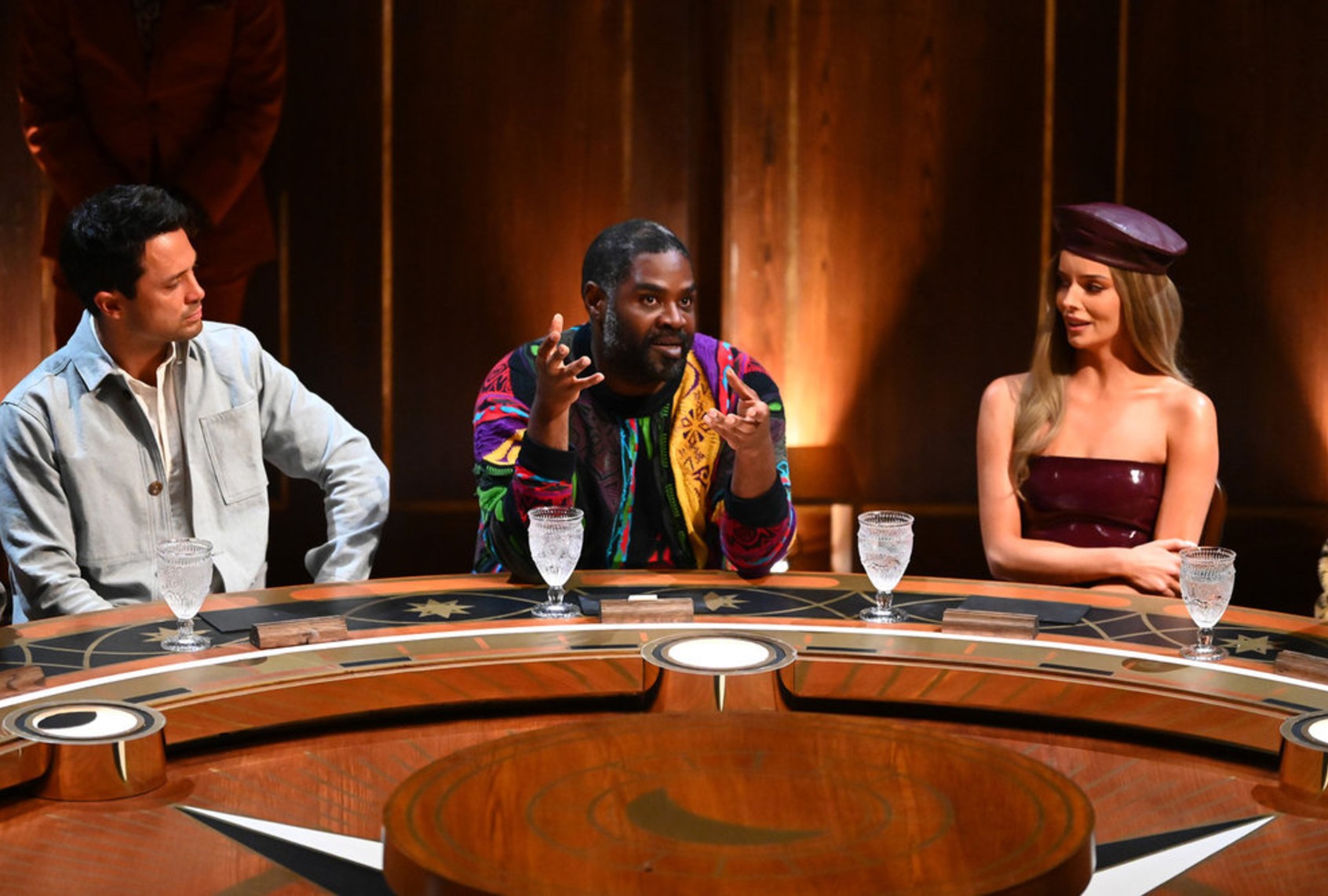
(Euan Cherry/Peacock) Stephen Colletti, Ron Funches and Maura Higgins in “The Traitors”
“Ron is an introvert, and I feel where he’s coming from. I was always the odd man out, growing up: Quiet, did my own thing, kind of kept to myself. And it can be lonely,” Rausch said. “I mean, sometimes the loneliest place for someone like that is in a crowded room.”
When it comes time for the players to banish someone else, Rausch finds he can’t stick with his fellow Traitors’ agreed-upon strategy to push out Funches. As Funches later revealed on Threads, Rausch knew that would negatively impact his friend’s mental health. Neither can he turn against Underwood, to whom he’s also grown close, and is another Faithful who has tossed out a slew of wrong names but, owing to his charisma, has evaded suspicion for the most part.
So he joins a slim minority in accusing Rinna, Underwood’s favored Traitor candidate – and the right suspect, finally – risking his trusted place among the small circle of the guilty. That doesn’t save Funches, but maybe it preserves a shred of Rausch’s values.
Nevertheless: “Once more you drown one of your own in the inky depths of democracy,” Cumming intones after Funches poignantly exits.
Want more from culture than just the latest trend? The Swell highlights art made to last.
Sign up here
Striving for heroism is a common expectation of ourselves and others in a decent society. But recent events have proven how many would surrender to the dark side when doing so is financially or socially profitable. Our elected officials and the billionaires behind them make that choice easy by twisting the system to their benefit, trusting their faithful will do nothing to stop them.
When possibly one of the best Traitors in the show’s four American seasons remembers that winning a game driven by manufactured circumstances allowing him to lie and backstab to get ahead isn’t worth selling out his real feelings for a sensitive person, we should pay attention.
In this poisonous time, those who grin at the notion of playing a Traitor may think twice about the potential cost to their principles. Those who never would might draw solace from this tiniest dose of that antidote to evil called hope, and its evidence that basic goodness still endures.
On Tuesday, when a Threads user observed that Funches is receiving as much love as he would have if he actually won the game, the comedian replied, “Feels like I did. Stayed faithful to me.”
“The Traitors” streams Thursdays on Peacock.
Read more
of our reality TV coverage
