

Leonardo Garcia Venegas went to work on a Wednesday at a private construction site in Foley, Alabama. It was a rainy day in May, and upon returning to the site with plastic sheets to protect freshly poured concrete, ICE had trespassed onto the development. He began filming and was promptly tackled to the ground, with no verbal commands. “I am a U.S. citizen,” he repeated over and over.
Venegas was detained for over an hour after showing his ID, according to the complaint from a lawsuit filed in federal court Sept. 30, 2025. “The officers told Leo that his STAR ID was fake, handcuffed him, removed him from his jobsite,” the complaint stated. His situation is not unique.
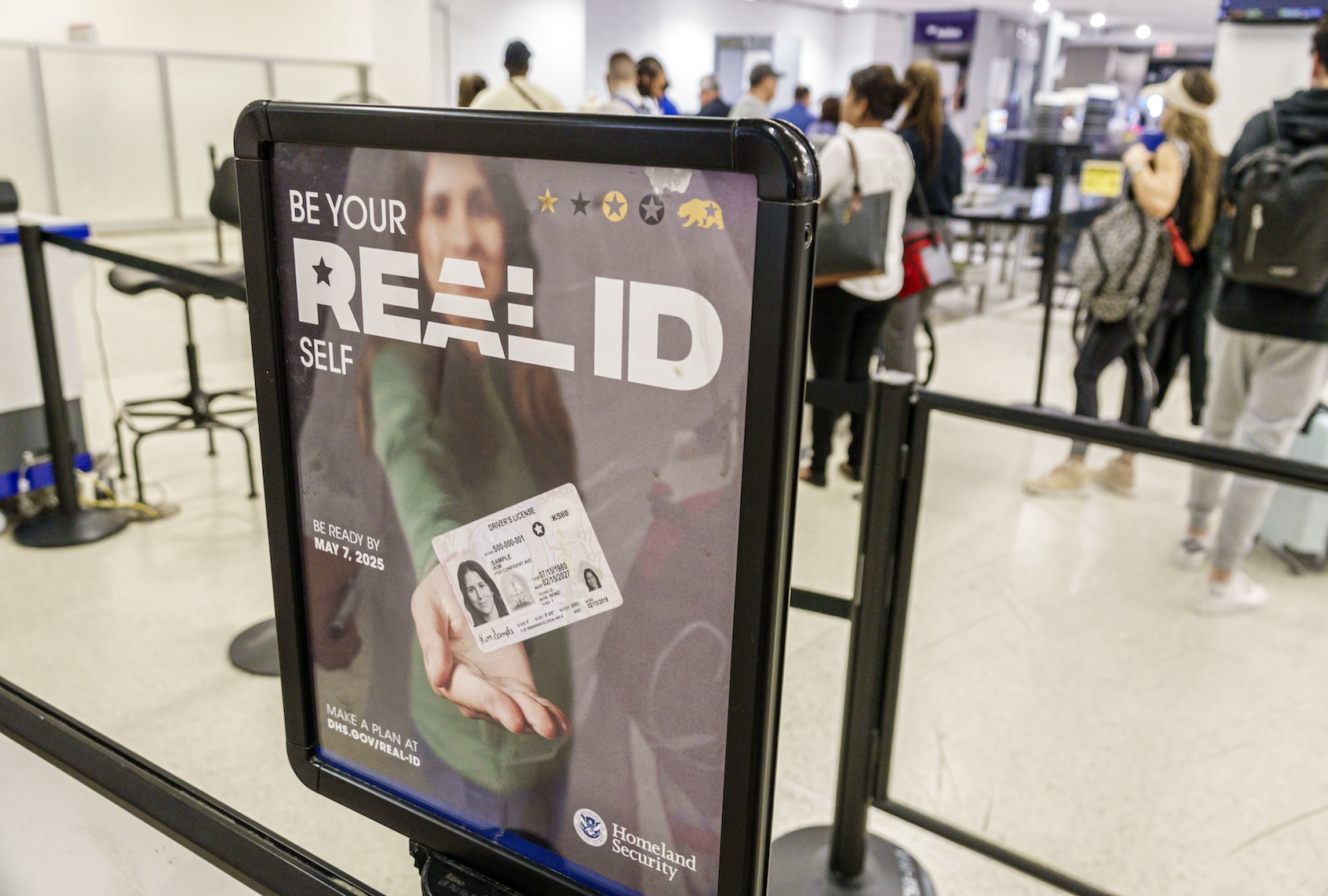
A STAR ID is Alabama’s name for their REAL ID complaint licenses that require applicants to provide various documents proving date of birth, social security number (SSN) and address of principal residence. Venegas was only released upon the officer’s confirmation of his SSN though he provided his license, which he needed his SSN to obtain.
Two weeks later, he was detained again. His STAR ID was again not immediately accepted.
Proving lawful residency with a REAL ID is apparently not enough for the Department of Homeland Security’s immigration enforcement officers as evidenced in this and at least three other cases cited in the lawsuit.
It may be then confusing to learn that the DHS itself regulates state’s requirements for obtaining a REAL ID including proof of lawful residence. As per law and DHS’s execution of the law, someone must prove they are either a U.S. citizen or lawfully in the country to receive a REAL ID compliant license.
The REAL ID Act of 2005 was passed in the wake of the Sept. 11 terrorist attacks when domestic security concerns were at an all time high. In an era where Americans — whether they knew it or not — exchanged civil liberties and privacy for perceived protection, the REAL ID Act proposed an interstate database of driver’s license information accessible to law enforcement across the country. Requirements to obtain a certified license included proof of name and birth date, SSN, address of principal residence and status of citizenship.
“The idea that they don’t know how their own laws and regulations work seems fanciful to me.”
Fifteen years after the passage of the act, the REAL ID Modernization Act was passed. It backtracked on creating a nationalized database, removed the requirements of principal address and physical SSN card, and updated the law to include mobile driver’s licenses that can be displayed digitally on cell phones.
The Venegas lawsuit claims that immigration officers are entering private construction sites without warrants, detaining lawful residents and citizens on presumption they’re undocumented and continue holding them, even after they present proof of legality like REAL IDs. Attorneys have also filed for class certification, which would allow the case to represent not individual plaintiffs, but an entire group of people — in this case U.S. citizens or lawful residents working at private construction sites.
A declaration submitted by the defense provides testimony from Philip Lavoie, an acting assistant special agent in charge of the Mobile, Alabama Homeland Security Investigations (HSI) office. In Venegas’ first detention Lavoi said an officer “needed to further verify his U.S. citizenship because each state has its own REAL ID compliance laws, which may provide for the issuance of a REAL ID” to a noncitizen.
While some states may have higher requirements for receiving a REAL ID than others, the federal law enforced by DHS sets a minimum requirement for issuance that includes proof of lawful residency.
The Transportation Security Administration, an agency within DHS, has a frequently asked questions page that states, “Noncitizens lawfully admitted for permanent or temporary residence, noncitizens with conditional permanent resident status, noncitizens with an approved application for asylum, and noncitizens who have entered the United States as refugees are eligible for a full-term REAL ID license or identification card.”
Unless a documented immigrant has been previously convicted of a specific crime or is a current suspect of a crime, immigrants with legal residency cannot be rounded up simply on the basis that they are not naturalized Americans.
“Based on HSI Special Agent training and experience, REAL ID can be unreliable to confirm U.S. citizenship,” Lavoie attested in an exhibit presented by the state.
Start your day with essential news from Salon.
Sign up for our free morning newsletter, Crash Course.
“ It all seemed sort of pretextual, DHS is both the agency enforcing these immigration laws and the one responsible for certifying REAL IDs and making sure IDs are REAL ID compliant,” Jared McClain, an attorney from the Institute for Justice representing Venegas, said in an interview with Salon. “The idea that they don’t know how their own laws and regulations work seems fanciful to me.”
“If DHS isn’t going to honor REAL IDs, then they’re going to continue to hold people without the suspicion or the legal justification that they need to justify the stop,” McClain said. “We think that the initial stop was unlawful but as soon as he showed his REAL ID, even under the government’s theory, the stop should have ended.”
By “government’s theory,” McClain is referencing a concurring opinion by the U.S. Supreme Court Justice Brett Kavanaugh from September 2025. The opinion that defended an immigration officer’s ability to pursue and detain individuals based on “articulable facts” that could point toward them being a non-citizen such as being construction workers who speak little English. The opinion then states, “If the officers learn that the individual they stopped is a U. S. citizen or otherwise lawfully in the United States, they promptly let the individual go.”
These “Kavanaugh stops” essentially provide immigration officers the right to profile based on “apparent race or ethnicity” and have been the justification for raids on areas like private construction sites without warrants because there is a chance undocumented immigrants may be present.
Kavanaugh seemed to quietly walk back this language in a footnote of a Dec. 23 concurrence blocking President Trump from deploying the National Guard in Illinois. In a statement of direct contradiction to his previous concurrence, he wrote, “officers must not make interior immigration stops or arrests based on race or ethnicity.” This brief reference has not stopped Kavanaugh stops or the subsequent violations the Venegas lawsuit claims.
“It brings the politics of the border to domestic flying everywhere.”
Other legal analysis on the topic came back in 2012 when U.S. Supreme Court Justice Samuel Alito wrote, “when the Real ID Act takes effect … One requirement is that any identification be issued only on proof that the applicant is lawfully present in the United States,” in his partial concurrence in Arizona v. United States. “I anticipate that most, if not all, states will eventually issue forms of identification that suffice to establish lawful presence.”
DHS has claimed that cases where citizens were detained happened only because they were interfering with other arrests or otherwise breaking the law. “We have said it a million times: ICE does NOT arrest or deport U.S. citizens,” Tricia McLaughlin, an assistant secretary for public affairs at DHS, said. “Any U.S. citizens arrested are because of obstructing or assaulting law enforcement.”
“During a targeted worksite operation, Garcia Venegas attempted to obstruct and prevent the lawful arrest of an illegal alien. He physically got in between agents and the subject they were attempting to arrest and refused to comply with numerous verbal commands,” the press release said. “Anyone who actively obstructs law enforcement in the performance of their sworn duties, including U.S. citizens, will of course face consequences which include arrest.”
Multiple videos submitted by the plaintiffs counter these claims, showing Venegas far from any other “subjects” and tackled quickly.
Another U.S. citizen represented by the Institute for Justice in a separate lawsuit was called out in the DHS press release. George Retes, 25, is a U.S. citizen and Iraq war veteran, who was detained by ICE for three days in July 2025 after officers refused to look at his ID. He was taken to a detention center where he was provided no attorney, phone call or hearing before a judge.
Retes spoke to The Atlantic in September 2025 of the experience, describing chaos and officers giving contradictory orders in a raid at Glass House Farms, one of the largest legal cannabis growing sites, where Retes worked as a security guard. “I’m a U.S. citizen,” he recounted telling ICE officers at the road block. “I’m just trying to get to work.”
Eventually, Retes tried to exit the area after being told to get back in his car and leave, but was caught up in the chaos. Officers threw a tear gas canister at his car, shattered his driver’s side mirror and pepper sprayed him. From there he was detained, transported and kept in a facility with no outside access or ability to wash the tear gas and pepper spray from his face and body.
In the same press release in which DHS claimed Venegas “attempted to obstruct officers,” they said, “George Retes — a U.S. citizen — became violent and refused to comply with law enforcement. He challenged agents and blocked their route by refusing to move his vehicle out of the road. The release says Retes was arrested for assault, but he was not charged and says he wasn’t informed of why he was arrested the entirety of his detention.
We need your help to stay independent
The entire point of REAL ID was to standardize and secure U.S. travel, but that doesn’t seem to matter when people of a certain skin color, profession or language proficiency aren’t believed when they present compliant identification.
“It brings the politics of the border to domestic flying everywhere,” Alexis Hancock, the director of engineering at the Electronic Frontier Foundation, said in an interview with Salon. The EFF is a nonprofit organization that promotes digital security and privacy and has been covering REAL ID since 2006.
Hancock explained that the continued pursuance of REAL ID has more to do with stubborn legislators than a security necessity. “ We went without real ID for nearly 20 years, and were generally safe in airports,” she said.
Hancock believes policies like REAL ID and programs that require payment for more lenient security checks — TSA PreCheck, CLEAR, Global Entry — are only there to separate passengers by class and now citizenship status.
“ At some point it feels like TSA and DHS wants to expand beyond their scope of what and who’s considered safe on domestic soil, and framing who can and can’t fly based off this REAL ID standard feels somewhat arcane,” Hancock said. When discussing REAL ID refusal in ICE detainments, she said, “ it goes to show that their definition of who is valid and who is not will be nebulous and change with context.”
“The fact that they’re engaging in that while arguing for a unified sense of documentation shows the hypocrisy,” Hancock said.
Read more
about immigration
