
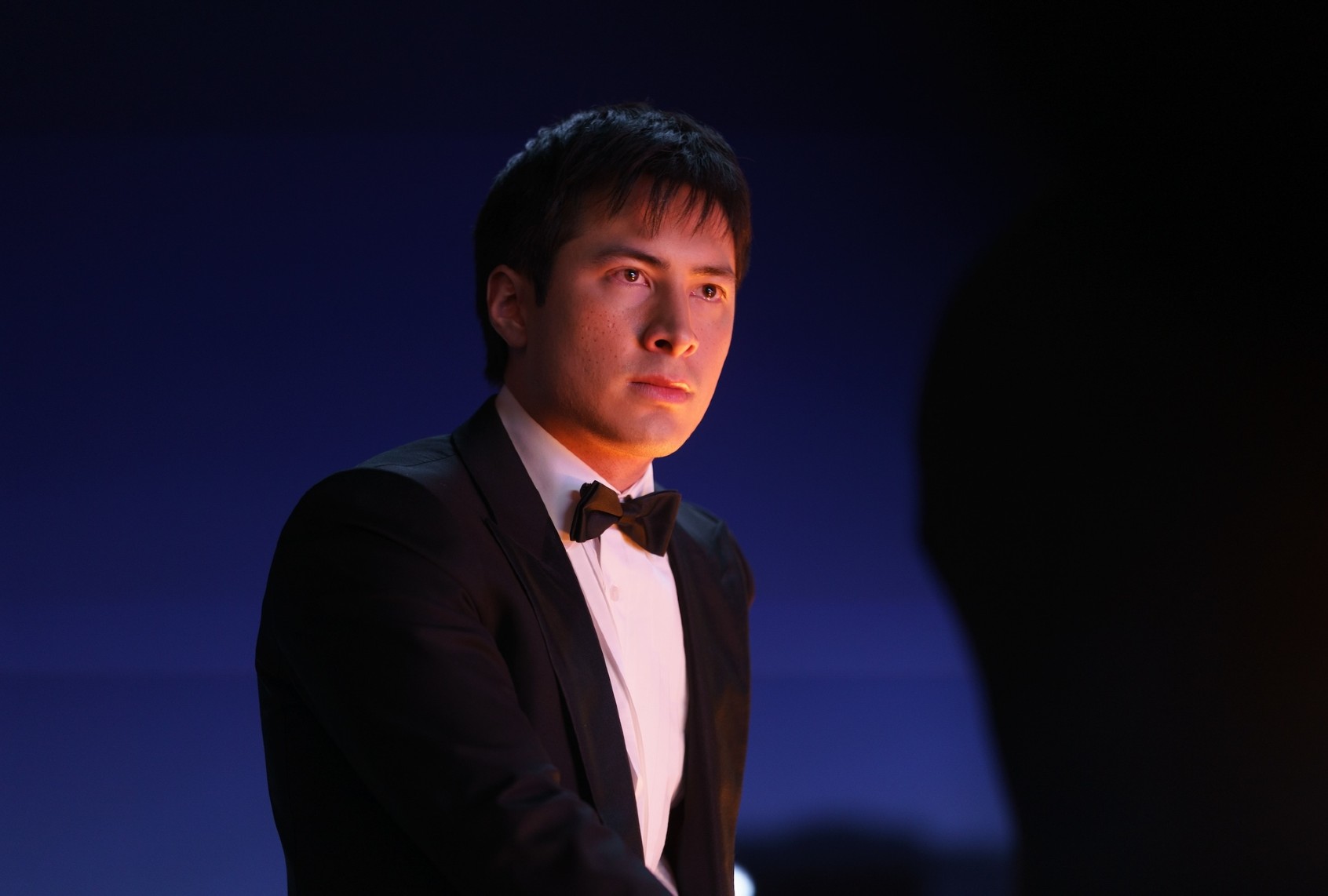

Hudson Williams, the 24-year-old actor who plays hockey player Shane Hollander in “Heated Rivalry,” has amassed an unexpected fanbase: lesbians on the internet. While both straight women and gay men are obsessed with the Canadian series, the sapphic adoration for Williams is rooted in a deeper desire for romantic queer representation. If “Heated Rivalry” is a fairy tale for fulfilling relationships in an era of hookup culture, as some sex therapists have claimed, then Hollander is the princess that queer women can relate to. In his seven-figure Olympian existence, we can step out of our solitary pining into an enviable characterization, one that is seldom offered to characters that look and love like us.
The WLW craze for Williams began in January, when beloved celesbian Reneé Rapp reposted a TikTok of the 24-year old Canadian actor with the comment “sorry but yum.” Her comment sparked an online trend, #lesbians4hudsonwilliams, where fans revel in playful adoration for the actor who has dampened underwear across the gender and sexuality spectrum.
The sapphic adoration for Hudson Williams is rooted in a deeper desire for romantic queer representation.
Some Gen-Z lesbians have gushed that they are “so feral” over the 24-year-old actor, while others joked that they would hide all evidence of their lesbianism if they met Hudson in real life. The unbridled thirst going on in certain corners of the sapphic internet has sparked criticism from other users, mainly that those lusting for Williams are not-so-secretly attracted to men.
Of course, retweeting photos of attractive male celebrities doesn’t mean you’re attracted to men in real life — I have saved more fan edits of Al Pacino and Michael B. Jordan than I’d like to admit. My proclivity towards fangirling over enigmatic male protagonists began when I was a closeted teenager in New Jersey, reading smutty YA and Tumblr blogs just to feel something (John Green has done irrevocable damage to my psyche, I’ll admit). At the time, I believed my fixation with August Waters from “The Fault in Our Stars,” Tobias Eaton in “Divergent,” and yes, even the gentle Peeta Mellark in “The Hunger Games,” was rooted in the desire for these characters to sweep me off my Doc Martens. It took coming out and years of evaluating my gender identity to uncover the question stirring at the root of my fixation: Do I want Augustus Waters, or do I want to be Augustus Waters?
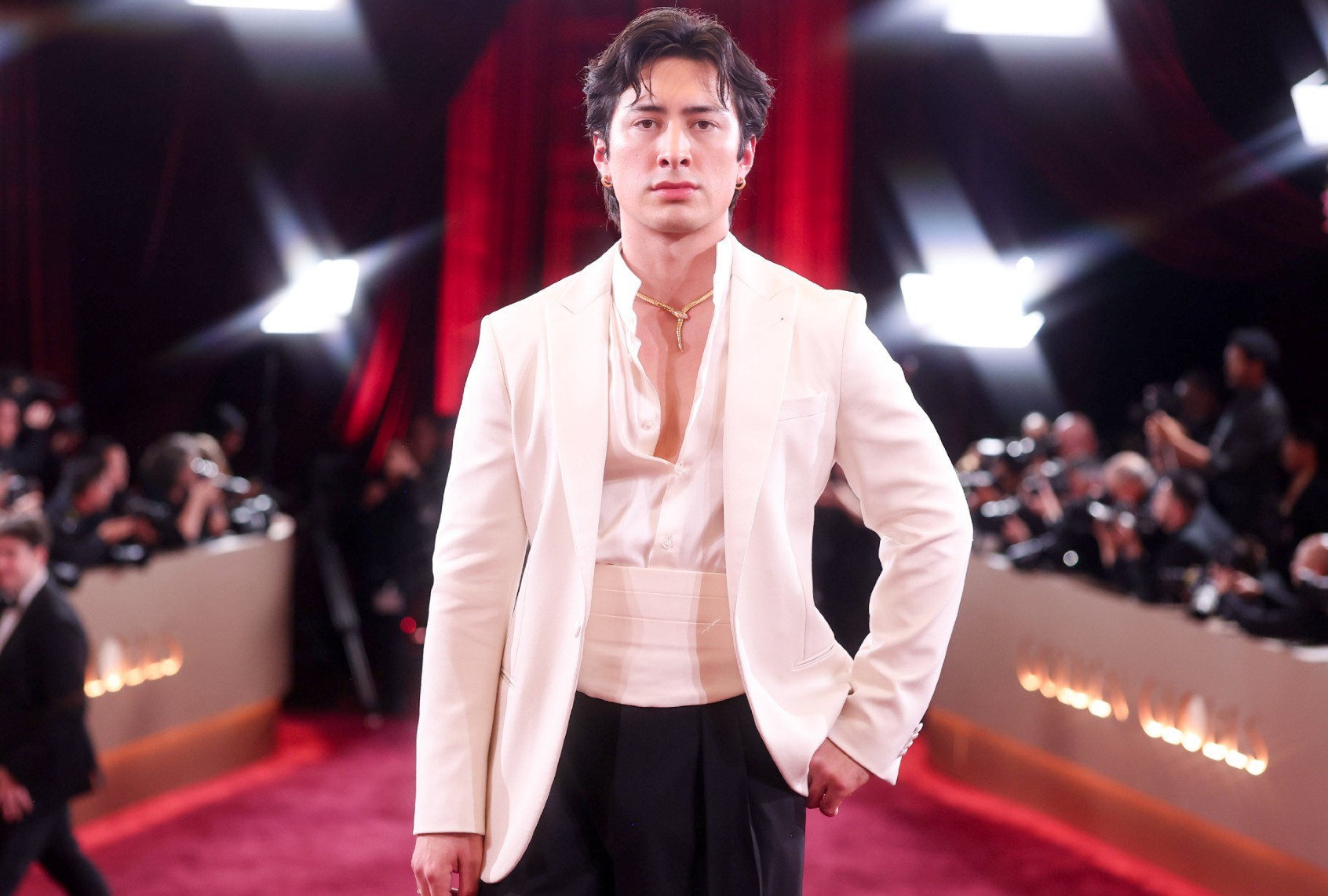
(Christopher Polk/2026GG/Penske Media via Getty Images) Hudson Williams at the 83rd Annual Golden Globes
Until I witnessed Bette Porter in all of her toxic femme glory in “The L Word,” I didn’t realize that women of color, not just fictional men, could represent what I wished to become: a main character who was successful, complicated, and had passionate sex at least once every other episode. But “The L Word” aired when I was still in diapers and ended when I was eight. In the absence of desirable queer vixens through which to live vicariously, I’ve turned to hit shows about queer men, like “Interview with the Vampire” and “Fellow Travelers,” to fill the void. “Heated Rivalry” — which began as a romance book by novelist Rachel Reid (who is married to a man) before being adapted for the screen by gay showrunner Jacob Tierney— is my latest fixation.
We need your help to stay independent
For all the critiques that “Heated Rivalry” is glorified gay smut, emotional complexity and glamour define the romance between Shane Hollander (Hudson Williams) and Ilya Rozanov (Connor Storrie). Both star hockey players are well off, conventionally attractive, and widely adored — Hollander is a Rolex cover girl and owns at least three luxury properties that we know of, and Rozanov’s multi-million dollar salary supports his entire family in Russia.
In the absence of desirable queer vixens through which to live vicariously, I’ve turned to hit shows about queer men to fill the void.
Against this lavish backdrop, Hollander and Rozanov’s relationship follows an arc that all lesbians have hoped for at some point: a drawn-out situationship that develops into mutual passion. Hollander falls quickly for Rozanov, a bisexual equipped with nine inches and witty charm who could pull anyone on Earth. For much of the season, audiences wonder if Hollander’s feelings for Rozanov may be one-sided. Rozanov maintains that their years-long affair isn’t serious, deflects emotional intimacy with sex or biting humor, and often tops Hollander without so much as a kiss afterwards. The longing that Hollander feels for Rozanov — not only for risky sex, but to be chosen by him and develop something real — is a nearly ubiquitous experience for queer women.
Countless butches and femmes have courted straight girls who only entertain them when they’re drunk or brokenhearted (why do you think “Good Luck, Babe!” was so popular?), and many more (myself included) have lost years off their lives trying to decipher the intentions of hookups who avoid labels or long-term commitment.
The most painful part of the Lesbian Talking Stage is the hope that our crushes will stop playing with our internal organs by confessing their love and dreams of siring IVF twins with us. This outcome is rare in the contemporary dating scene, but “Heated Rivalry” gratifies the hope that such a future is possible. By the end of the season, Rozanov comes to terms with the fact that he also can’t live without Hollander. At the dinner table with Hollander’s parents, Rozanov reveals Hollander is the only person he’s ever loved. Then he calls himself Hollander’s boyfriend — without prompting or a five-hour “what are we” conversation! Modern lesbians could only hope to be so fortunate. We have no choice but to tune in and watch the fulfillment of our most intimate desires.
While “Heated Rivalry” took somewhat of a gamble with such an explicit love story, softcore sex between muscular, white and biracial cis men generates fanfare across the sexuality spectrum.
“Heated Rivalry” has already been renewed for a second season and hailed for forging a new path in the gay zeitgeist. Hudson Williams and his IRL bestie Connor Storrie have secured appearances at the Golden Globes and the 2026 Winter Olympics, where they carried the torch of the ceremony and a brighter era of LGBTQ+ visibility. However, the Canadian hockey series’ ostensibly novel trail has already been paved by sapphic television shows, many of which were slashed after one or two seasons by major streaming services. One particularly tragic cancellation was “A League of Their Own,” a 2022 series from Amazon Prime about a league of women softball players during World War II. The series, created by queer screenwriter Abbi Jacobson, also confronted the pressures of being closeted in elite sports through an all-female ensemble. It even featured a compelling storyline about Max, a Black non-binary lesbian who finds chosen family through their trans uncle’s underground soirees. It was sexy! It was bingeable! It was the exact sort of charming, erotic television gay girls had been craving since “The L Word,” and yet it only lasted for a brief, yet glorious, eight episodes. Over a hundred other popular series, including “Queer Ultimatum,” “Gentleman Jack,” and “First Kill,” met a similar fate.
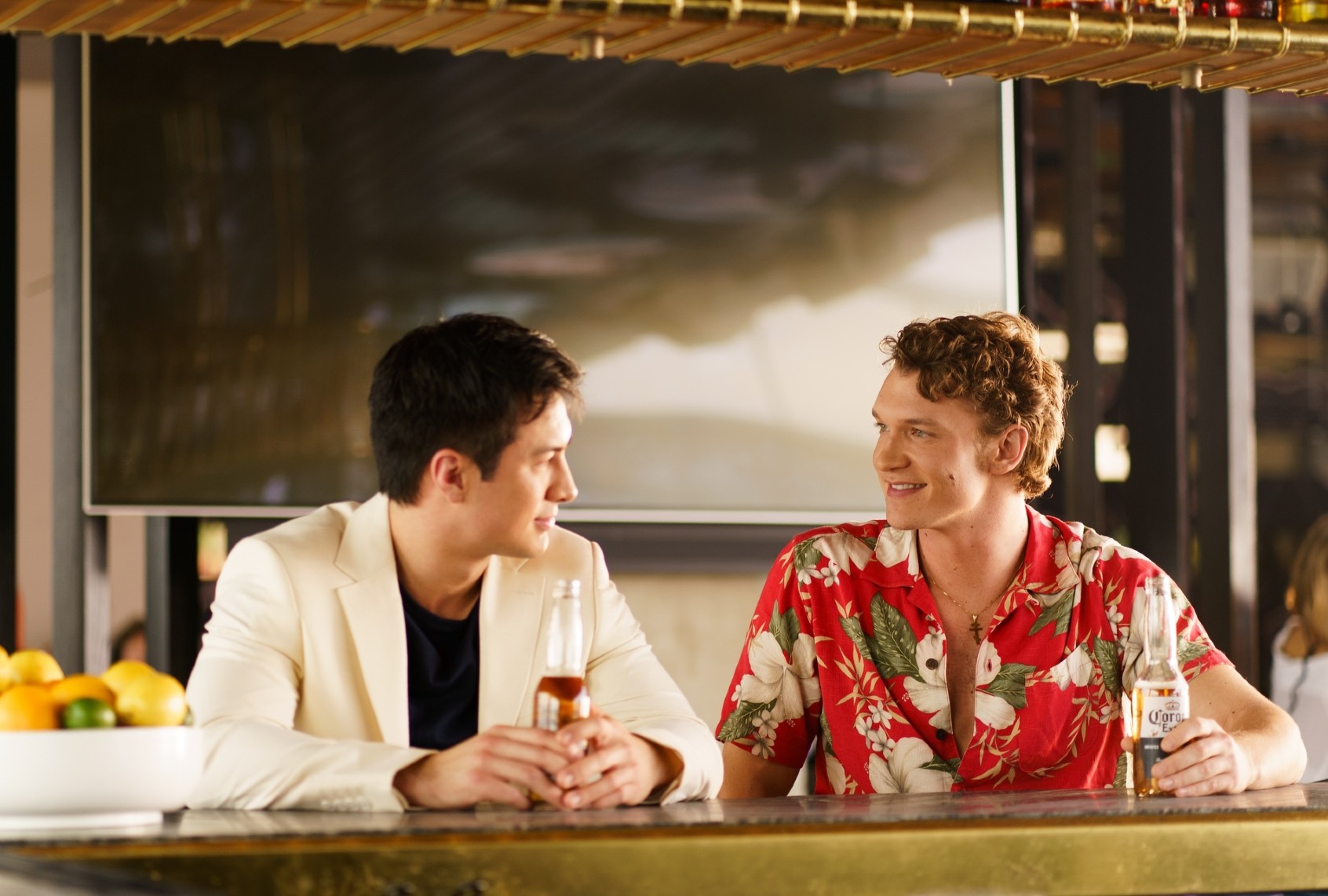
(Sabrina Lantos/HBO Max) Hudson Williams and Connor Storrie in “Heated Rivalry”
Media conglomerates like Netflix and Amazon prioritize shows with mass appeal to drive profits and beat competitor ratings. While “Heated Rivalry” took somewhat of a gamble with such an explicit love story, softcore sex between muscular, white and biracial cis men generates fanfare across the sexuality spectrum, which then delivers revenue and adoring viewers to studios. Although lesbians were the top PornHub category in 2025, shows about queer women — especially those who are trans, fat, disabled, or people of color — exist further outside of the male gaze and conventional tastes, and therefore are not worth the cost it takes to produce them (allegedly). The two-headed hydra of lesbophobia and misogyny limits what sort of romance stories streamers deem marketable for white, straight, and male audiences. According to YouTube creator @bittnia’s viral video essay on Netflix’s cancellations of lesbian series, “Anything that is not primed to be turned into an amusement park or have a podcast spin-off is just not going to cut it in today’s landscape . . . Streaming services want mainstream, and frankly, that means they need the straights to like it too.”
Want more from culture than just the latest trend? The Swell highlights art made to last.
Sign up here
Yet one cannot deny that the amount of lesbians onscreen has increased drastically over the past couple of years, driven by acclaimed series such as “Pluribus,” “Yellowjackets,” “The Last of Us,” and a growing collection of lesser-known films and television shows. With the exception of recent shows such as “Sex Lives of College Girls” (which only lasted for three seasons) and “Sex Education,” many of these plotlines — which I am eternally grateful for, let’s be clear — are portrayed as B-plots or stolen moments in a grim universe. “Yellowjackets” is a thriller in the wilderness, “The Last of Us” takes place in the ruins of the apocalypse, and even “Pluribus’” compelling lead, Carol Sturka (Rhea Seehorn), isn’t exactly dating around after her wife dies and a virus transforms humanity into a hivemind. Instead of penthouse hookups and heartwarming finales, lesbians are either relegated to dystopian universes or buried by the end of the season (“Killing Eve”’s writers ought to pay for their crimes), leaving little room to actualize our hopes of being known and desired.
What makes “Heated Rivalry” so special is that its queer characters are allowed to embrace joy and take their time to develop a connection without deadly viruses and cannibals at their door. In an essay about “Heated Rivalry”’s anti-dystopian appeal, Jenka Gurfinkel writes, “every vision that has, for decades, depicted the future as a dissolute, perverted, joyless world fallen from grace has conditioned us to expect this inevitable, hopeless fate.” In a time where queer women are facing disproportionate rates of poverty, rollbacks of federal funding for LGBTQ+ organizations, and increasing isolation, television has the power to impart visions of WLW desire beyond suffering.
There are early signs that television is catching on to the needs of women-loving audiences: Crave, the Canadian streaming service behind “Heated Rivalry,” is delivering another queer sports show with “Slo Pitch,” a mockumentary-style series about a women’s softball league (sound familiar?), co-produced by Elliot Page. Rumors are stirring that author Meryl Wilsner’s sports romance novel, “Cleat Cute,” will be adapted for TV. Last week, Sophie Nélisse, who plays Rose in “Heated Rivalry,” said she’s “here for” a “little spinoff” about Rose and Svetlana, Rozanov’s childhood friend in the series. The future of sapphic representation is promising, and confirms what lesbians have known long before “The L Word” dawned in 2004: queer women are far more than porn categories or side characters in a male-dominated world, and our seasons in the spotlight are far overdue.
Read more
about queer romance
