

A panel of four retired judges and legal scholars on Thursday decried President Donald Trump‘s “contempt” for the nation’s judiciary, describing the Trump administration’s attacks on federal judges as “very dangerous.”
The event, titled “An Unprecedented Attack: Federal Judges Threatened with Impeachment for Blocking Executive Power,” was held by the
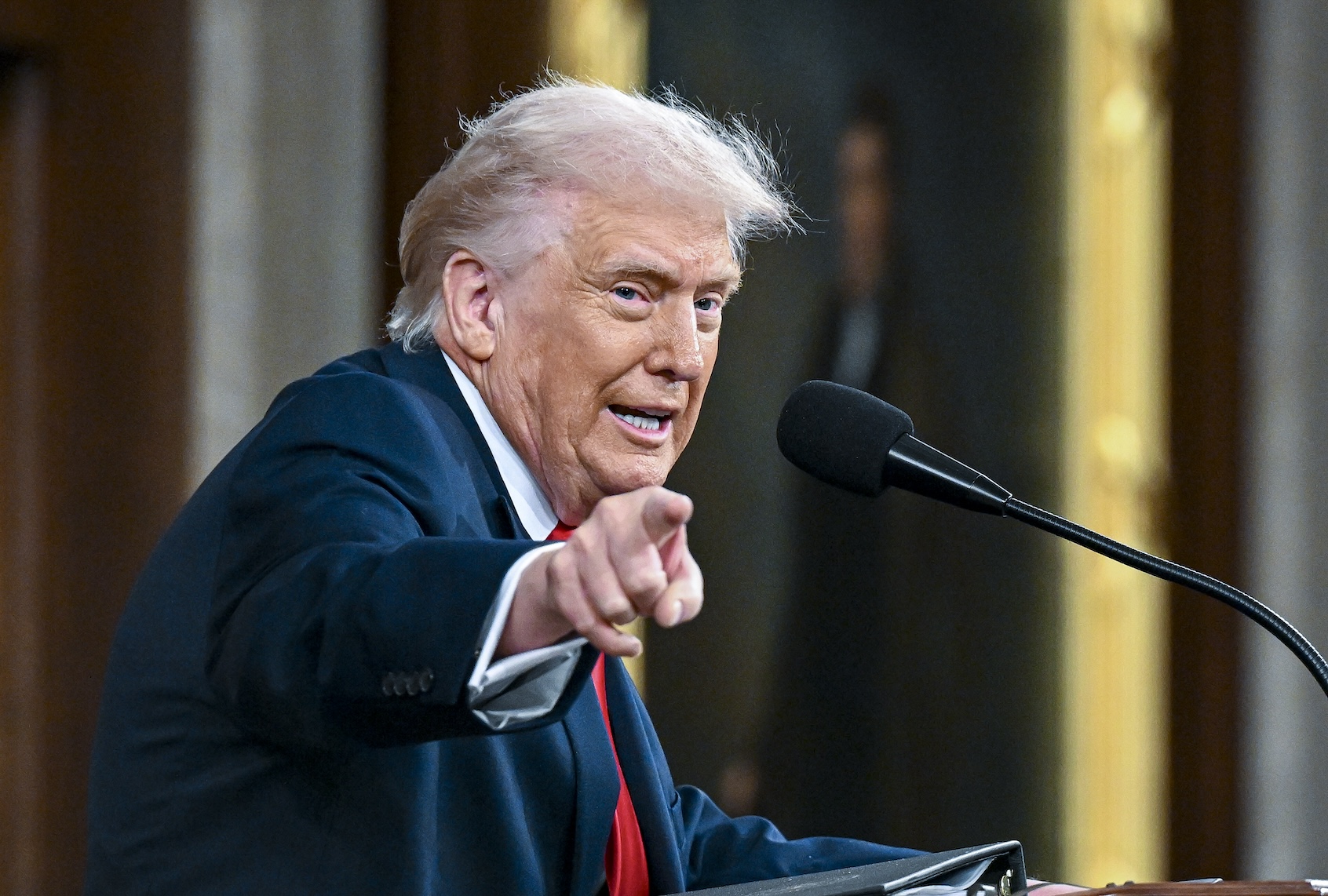
“The Supreme Court’s ruling on tariffs is deeply disappointing, and I’m ashamed of certain members of the court, absolutely ashamed for not having the courage to do what’s right for our country,” Trump said in remarks at the White House.
The pressing concern for the panel, however, was the ongoing efforts to impeach two federal judges. The first is Chief Judge James Boasberg of the U.S. District Court for the District of Columbia, who ruled against Trump’s attempted use of the Alien Enemies Act in some deportations, while also presiding over a contempt of court case against Trump.
The other is Judge Deborah Boardman of the U.S. District Court in Maryland, who sentenced the would-be assassin of Supreme Court Justice Brett Kavanaugh to eight years in prison, which was less than prosecutors’ request of at least 30 years. This was seen by some House conservatives as a “refusal to comply with the law.”
In addition, six other judges have faced calls for impeachment, and Trump’s Department of Justice “solicited” all 93 US attorneys to find examples of “judicial activism,” what it calls “the most egregious examples of … obstruction.”
“Federal district courts have been the principal obstacle to this administration doing whatever it wants.”
“The one thing that those eight judges have in common — it’s not where they went to law school, it’s not who appointed them to the bench, it’s not what kind of misconduct they’re accused of — it’s that they all ruled against President Trump,” Stephen Vladeck, a law professor at Georgetown and scholar on U.S. courts, told Salon.
As to whether those trying to impeach Boasberg and Boardman have validity, Vladeck said, “They don’t,” adding that assertions of “abuse” against the judges are “not true.”
“Federal district courts have been the principal obstacle to this administration doing whatever it wants,” Vladeck told Salon.
Vladeck can point to numerous rulings made by lower courts that have hamstrung or frustrated Trump’s legal ambitions. For example, a federal judge ruled in December that the administration must remove federalized National Guard troops from Los Angeles in the wake of immigration protests. In November, a federal judge threw out a politically motivated case against former FBI Director James Comey, whom Trump has long seen as an enemy.
Ursula Mancusi Ungaro, former U.S. Federal Judge for the Southern District of Florida, said that district courts are “still functioning,” but warned that her colleagues are growing frightened in the current climate, which she called “very dangerous.”
Start your day with essential news from Salon.
Sign up for our free morning newsletter, Crash Course.
“When I speak to my former colleagues, they are very concerned about social media, about the proliferation of threats on social media. When the administration makes these kinds of comments, it generates more threats,” Ungaro said during the discussion.
The concern about threats is well-founded. Deputy Attorney General Todd Blanche said in November that a “war” was being waged by the Trump administration against “rogue activist judges.”
“It is a war, and it’s something we will not win unless we keep on fighting,” Blanche said at the annual Federalist Society conference.
While Ungaro chalked some of the administration’s rhetoric up to “political theater,” she said it wasn’t all for show. “I fear that this is part of a campaign to erode the rule of law and the ultimate objective of undermining the electoral process and/or upcoming elections,” she said.
For Paul Grimm, a former U.S. Federal Judge for the District of Maryland, Trump’s attacks on the judiciary are far more than theatrical. “It is intended to intimidate, demean and to turn the public opinion against the courts,” Grimm said on Thursday, calling the tactics of the Trump administration “unprecedented.”
Grimm, who also served in the U.S. Army’s Judge Advocate General’s Corps, blasted the impeachment attempts.
“You do not impeach a federal judge because you don’t like the ruling they made,” Grimm told Salon prior to the panel discussion, calling the attempts “an attack on judges.” Grimm also noted that Supreme Court Chief Justice John Roberts himself opposes the impeachment of Boasberg.
That has not stopped the attacks by the Trump administration. In October, White House Deputy Chief of Staff Stephen Miller claimed “a large and growing movement of left-wing terrorism” was sweeping the country, which was being “shielded by far-left Democrat judges, prosecutors and attorneys general.”
“The only remedy is to use legitimate state power to dismantle terrorism and terror networks,” Miller wrote in a statement. Miller also said that the U.S. had a right to exert its strength over nations, akin to the notion of “might makes right.”
“We live in a world, in the real world,” Miller told CNN in January, “that is governed by strength, that is governed by force, that is governed by power,” he said. “These are the iron laws of the world that have existed since the beginning of time.”
We need your help to stay independent
Law professor and constitutional law expert Michael Gerhardt, of the University of North Carolina, Chapel Hill, called out the comments made by Miller and Trump.
“There’s one thing clearly absent in everything they said: that is the rule of law,” Gerhardt said. “The rule of law in this country is what protects every citizen from governmental abuse. If we don’t have that protection, then all bets are off.”
Grimm warned against the continuing threats against the judiciary.
“The minute you make the judges afraid to rule, the judiciary has ceased to do its fundamental job, and it cannot fulfill the protections the founders thought were essential to preserve our underlying principles,” he told Salon.
Vladeck felt much the same way and highlighted the need for Congress to do more to oppose Trump and defend the court system.
“We live in an era when Congress is not asserting itself constitutionally against the president or the courts. The courts are not above fault or immune to criticism,” he told Salon. “But the remedy in the system is to appeal them, not to personally attack judges with whom you disagree.”
“Judges should not have to worry when they rule against the president that the ruling will engender real personal threats,” Vladeck concluded.
