

Donald Trump is an instinctive authoritarian. This is the defining feature of his personality and political life. Since his return to power, he has become much more extreme, ambitious and dangerous. Such leaders know that controlling the past is how you win the present — and lay the groundwork for commanding the future. These types of bad actors will never be satisfied in their quest to remake society in their ideological and personal image.
To control society, you must first control how people think. But such attempts are almost always contested.
This explains why authoritarians and other enemies of democracy systematically target schools, universities, science, the arts, libraries, the independent news media and Fourth Estate, museums — anywhere knowledge is produced and critical thinking is taught. To control society, you must first control how people think. But such attempts are almost always contested.
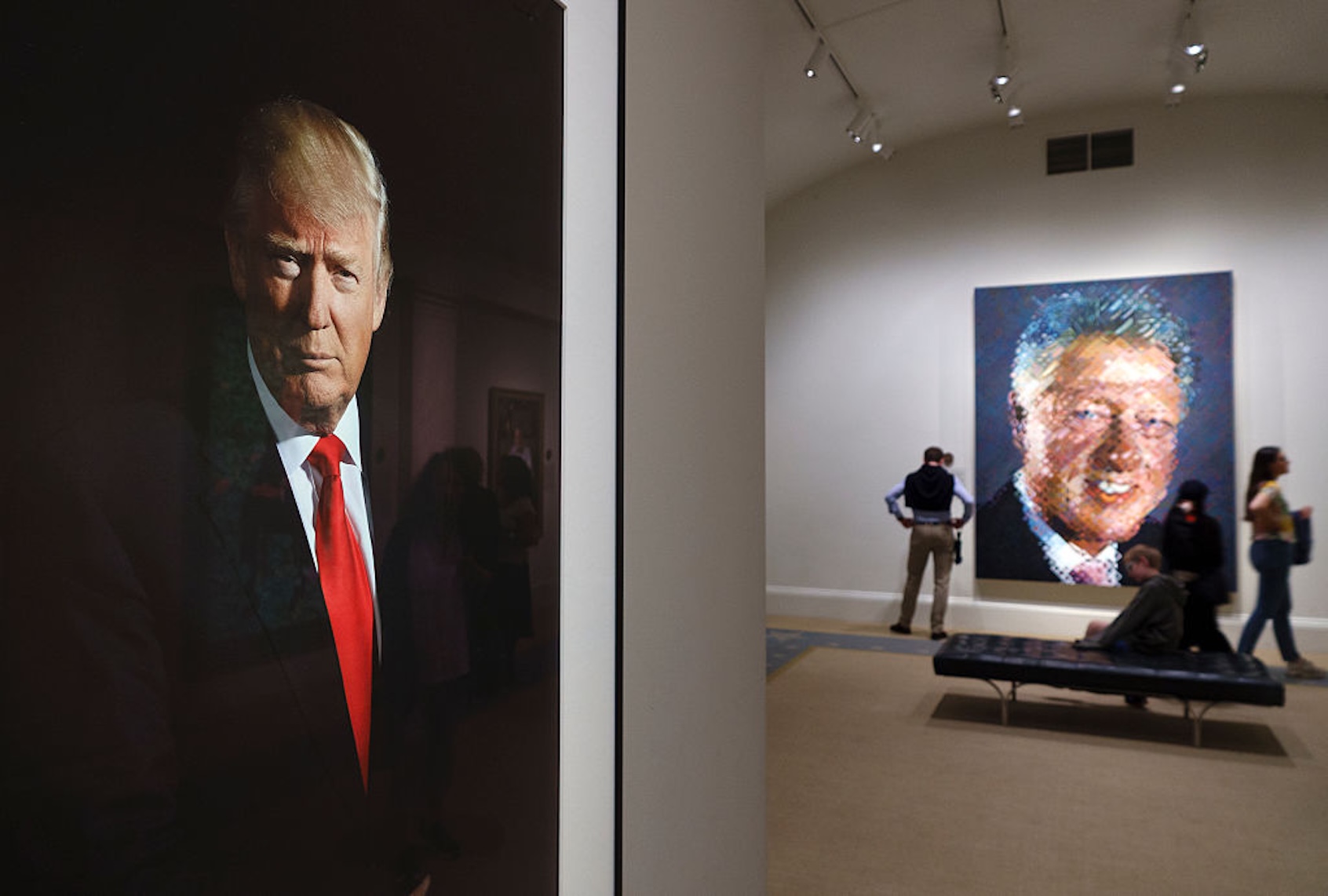
A recent Washington Post story documents how a group of historians, scholars and volunteers are pushing back against the Trump administration’s attempts to remake the Smithsonian museum system in the name of patriotic education — what is in practice a Trump-MAGA indoctrination program — and to purge “divisive narratives” and “improper ideology” from other sites of public memory, such as memorials and national parks.
References to Trump’s impeachment and role in Jan. 6 and attempts to nullify the 2020 Election, had been removed by Smithsonian National Portrait Gallery. But this winter, James Millward, a 64-year-old historian, decided to turn the museum into a teaching space where he corrected the historical record by handing out printouts which told the truth: Trump was “impeached twice, on charges of abuse of power and incitement of insurrection.”
Millward, the Post reported, had “no sense of the drama that was about to unfold.” But being an expert on Chinese history, he knew what censorship and state propaganda looks like. Feeling “unease at seeing history being ‘snipped and clipped and disappeared,’” he dubbed his process “guerrilla teaching.”
Millward co-founded Citizen Historians for the Smithsonian, which “spent thousands of hours documenting every corner of the [museums]” to document the changes being made under pressure from the administration. But his efforts at teaching the truth quickly attracted attention.
A group of guards appeared, some with guns and handcuffs, and told Millward it was against policy to hand out literature or engage in protests in the museum. They closed the gallery. Millward decided to leave, disturbed and troubled “that something as dramatic as clearing the whole gallery could happen simply by me trying to tell people what had been on the wall the week before.”
Henry Giroux, social theorist and author of “Assassins of Memory,” a book that examines the politics of erasure, was not surprised. He framed what happened to Millward in even starker terms, calling it “not merely an administrative dispute over what counts as art or what is culturally important.” Giroux said, It is an attempt to discipline public memory by intimidating those who refuse to narrate the nation as innocent. History must serve authority rather than interrogate it. The Smithsonian is being turned into an apparatus of ideological containment.”
Want more sharp takes on politics? Sign up for our free newsletter, Standing Room Only, written by Amanda Marcotte, now also a weekly show on YouTube or wherever you get your podcasts.
What’s happening at the Smithsonian is part of a larger project in which Trump and the larger white-right want to create a fictionalized version of American history and life where the only people who have a legitimate claim on the country are wealthy white men. This is history as an authoritarian exercise in narcissism. In this alternate reality, Black and brown Americans, women, LGBTQ people, the disabled, immigrants, non-Christians, the poor and working class are at best a supporting cast. At worst, they are erased entirely, or cast as the anti-citizen, the Other, the enemy.
Real history and real facts terrify authoritarians. The triumphs of the Civil Rights Movement and long Black Freedom Struggle, the women’s rights movement, the LGBTQ rights movement, the labor movement and other peoples’ movements in the United States and around the world are threats, reminders of the potential of collective action. They must be deleted, distorted or ignored. A usable past is a dangerous past.
But such attempts at censorship and rewriting the past are not strengths — they are weaknesses. “Only a regime uncertain of its legitimacy must police the past so aggressively,” Giroux said. “Authoritarian regimes — the Nazis, Stalin, Pinochet — have always understood that memory, culture, and education are crucial battlegrounds. Each appeared omnipotent, yet their obsession with silencing historians and artists revealed a profound fragility. Only insecure power fears memory.”
We need your help to stay independent
Millward and his compatriots are occupying a vital part of the growing resistance against Trumpism. “They are modeling democratic vigilance,” said Peter McLaren, emeritus professor of education at the University of California, Los Angeles. “The Smithsonian Institution does not belong to transient administrations but to historical time itself. If memory is reduced to décor, democracy will breathe shallowly.”
As the president’s authoritarian project expands, Americans who believe in democracy and freedom of thought will face a daunting reality: that having no museums at all will be better than lie-filled ones.
In the future, resistance against Trumpism could very well mean taking photos of truth-telling exhibits before they are whitewashed or removed, hiding banned books and so-called degenerate art and secreting away important historical, cultural and artistic materials the regime wants erased. In ways small and large, the American people will have to become protectors of truth and reality itself.
James Millward showed us what that looks like. He knows that democracy is not an abstraction. It is something we do and live.
Read more
about Trump’s war on history
