
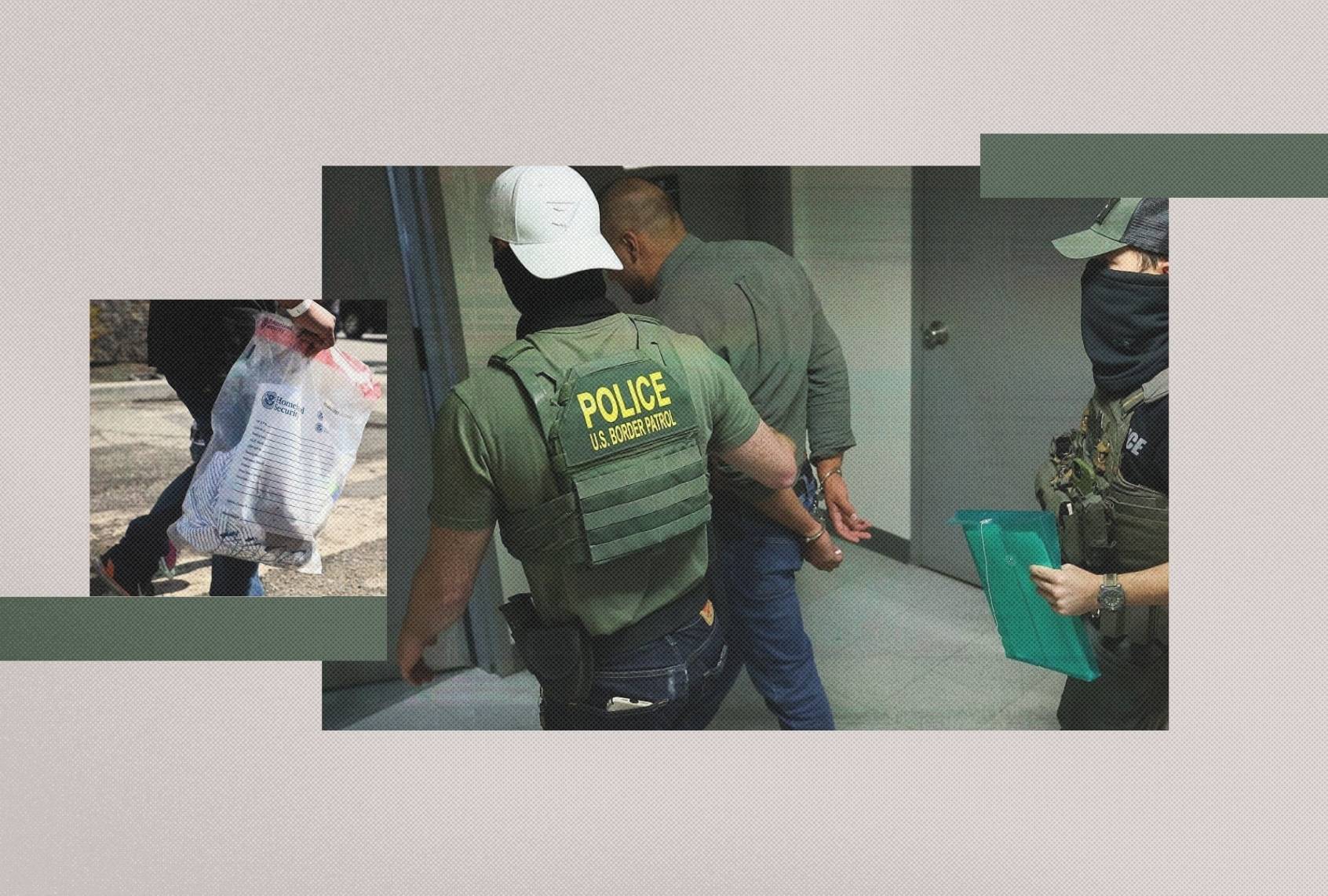

Many immigrants detained and then released by Immigration and Customs Enforcement or Border Patrol have found that release was not the end of their problems. Across the country, government agents have been losing government documents, personal effects, medical devices, and other belongings after confiscating them, effectively turning released immigrants into legal non-persons.
According to lawyers and formerly detained immigrants who spoke to Salon, ICE and Border Patrol officers never admit to trashing or keeping these items, but that they have not been found anywhere. Only a call from a persistent lawyer might motivate officers to actually find those items and return them by mail. Even if an immigrant reunites with some or all of the belongings confiscated, the intervening time often takes its toll and leaves them in a vulnerable state. Mo Goldman, an Arizona immigration attorney whose clients have often been bereft of their things, told Salon that not returning confiscated belongings has been a pattern in practice for a long time.
“Obviously, the more recent mass arrests have amplified it. Especially with just how many people are being arrested, negligence on the part of the officers can certainly be a problem,” Goldman said. “But to me, it also seems like it’s somewhat intentional. Because why wouldn’t you as an agency, provide people their their personal documents or personal effects when they get released?”
“Anything on the person’s body is going to be taken. I had a case where a woman had a necklace that had been in her family for 20 years, and she never got it back,” he continued. “But legal documents are what we really do have to get back. Without identification, you can’t prove that you’re not so-called ‘illegal’ in this country. You don’t have your safeguard against another arrest.”
Federal law requires non-citizens to carry proof of their lawful status. While personal documentation has not deterred federal agents from arresting a person anyway, they might make a police officer in a routine stop less likely to report them to ICE.
The Department of Homeland Security did not return requests for comment over their alleged mishandling of people’s documents nor did they comment on whether or not they had updated their publicly available 2011 guidance on how to store items taken from people they have arrested.
“Without identification, you can’t prove that you’re not so-called ‘illegal’ in this country. You don’t have your safeguard against another arrest.”
While the 2011 guidance suggests that immigrants’ belongings are held in a “secured locker” in a field office or processing center, that process has not been verified by observation and the reality is largely hidden in a metaphorical black box. The constant transfer of human beings creates further barriers between them and their belongings. An immigrant might be arrested in New York, processed in New Jersey, and abruptly flown to a detention center in Louisiana. Nominally, their property should go with them. But somewhere along the way, their things might go missing, be left behind or discarded.
According to a recent federal class action lawsuit, a group of refugees arrested in Minnesota and flown to Texas were let go of the detention center without any documents or means of getting home.
One immigrant who came to the U.S. for political asylum in 2021 and was detained from August 2025 to February 2026 recounted to Salon how after being taken from his car, his clothes were trashed and his documents taken, only to be returned a month after his release. His pending asylum hearing had been delayed, but according to this immigrant, who wished to remain anonymous for fear of reprisal, the agents arrested him anyway for being “late” to court.
Start your day with essential news from Salon.
Sign up for our free morning newsletter, Crash Course.
“I gave them my social security card, work permit, and driver’s license, and they never returned it to me. They also took all my clothes out of the car and threw it away in front of me. When I was released, they said, no, we don’t have anything of yours. My sponsor — my cousin — had to find a lawyer for me, and only after he called, they sent me my documents,” he said.
For a month, this person rarely left his place for fear of being re-arrested and having nothing to show the officers — he couldn’t work or earn money to survive on his own without his permit. When he attempted to obtain a new ID from the local department of motor vehicles, officers told him that he could not do so without presenting his old ID, still presumably “lost” by ICE. If he had applied to obtain a new work permit before the return of the documents, he might have been waiting for months before that permit would be issued, if at all. The permit process typically costs hundred of dollars for the applicant.
In some cases, lawyers took ICE to court over the unreturned belongings. But even when judges ruled in favor of an immigrant, the government, which has racked up a record of ignoring court orders on an array of immigration and other issues, hasn’t always complied.
We need your help to stay independent
The longer the process drags out, the more costly it is for immigrants. “One of my clients was trying to get his car back, and that was costing, I think, around $4,000 because there’s a $1,200 impound fee plus $600 per day that they held it,” said Goldman. Towing and impounding companies may auction unclaimed vehicles within a certain amount of time.
According to Delia Salvatierra, an immigration attorney based in Phoenix, Arizona, the work of having to claw back immigrants’ belongings from federal agents has had an attritional effect on their ability to get as many migrants out of unlawful detention as possible.
“If they’re being released in the United States, and the court order determined that their detention was unlawful, it would behoove the government to return them to the status that they had at the time prior to being arrested,” she said. “In those cases, I’ve had to file a habeas [corpus] for them, and the district court would grant the habeas, there’s a whole process. These things are important. They have to work, they have to drive, they need some kind of security.”
Salvatierra and Goldman are part of digital communities that facilitate connecting immigrants to lawyers, but the sheer volume of arrests and potential abuses, as well as the precarious state of many victims, means that not every immigrant can benefit from outside help. And so they walk away from family heirlooms, basic necessities, and the vital documents required to rebuild their lives.
Read more
about immigration detention
