
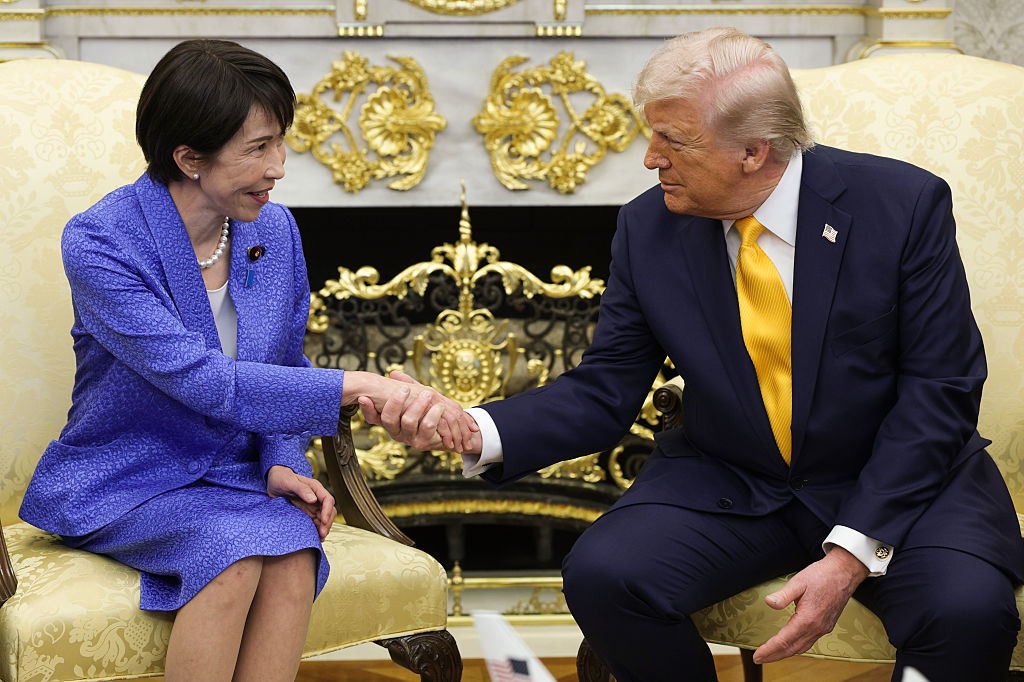

A comment by Donald Trump invoking Pearl Harbor is drawing backlash — but the reaction says as much about the moment as the remark itself. This week, Japanese Prime Minister Sanae Takaichi wisited the White House that ended with a press gaggle. While discussing the U.S. military campaign involving Iran, Trump referenced Pearl Harbor in the context of surprise and strategy, directing the concept of attacking by surprise toward Takaichi, seemingly unsure whether it was supposed to be a joke or not.
The comparison immediately raised eyebrows.
On MSNBC’s Morning Joe, host Mika Brzezinski put her head in her hands on air, a moment that quickly spread online and captured a broader sense of unease. Late night shows from “The Daily Show” to Jimmy Kimmel also capitalized on the moment that seemed poised for a joke
The discomfort isn’t just about historical sensitivity. Pearl Harbor occupies a singular place in American memory — a devastating, unprovoked attack that propelled the United States into World War II. Invoking it in the context of a modern, ongoing conflict risks collapsing crucial distinctions between past and present.
But the episode also underscores a deeper issue: the administration’s shifting and often contradictory messaging around the war itself. Trump has alternated between projecting control and suggesting the conflict may soon wind down, even as military activity intensifies. Against that backdrop, the use of charged historical analogies can feel less like explanation and more like improvisation.
Start your day with essential news from Salon.
Sign up for our free morning newsletter, Crash Course.
Media reactions like those of Brzezinski and Kimmel reflect more than partisan disagreement. They signal a growing uncertainty about how the war is being framed — and whether the language coming from the top matches the reality on the ground. This comes on the heels of an FCC warning on how the media reports coverage of the conflict.
In a moment defined by escalation abroad, words matter. And when those words reach back into some of the most painful chapters of American history, they carry weight that extends far beyond a single news cycle.
Read more
about the Iran War
