
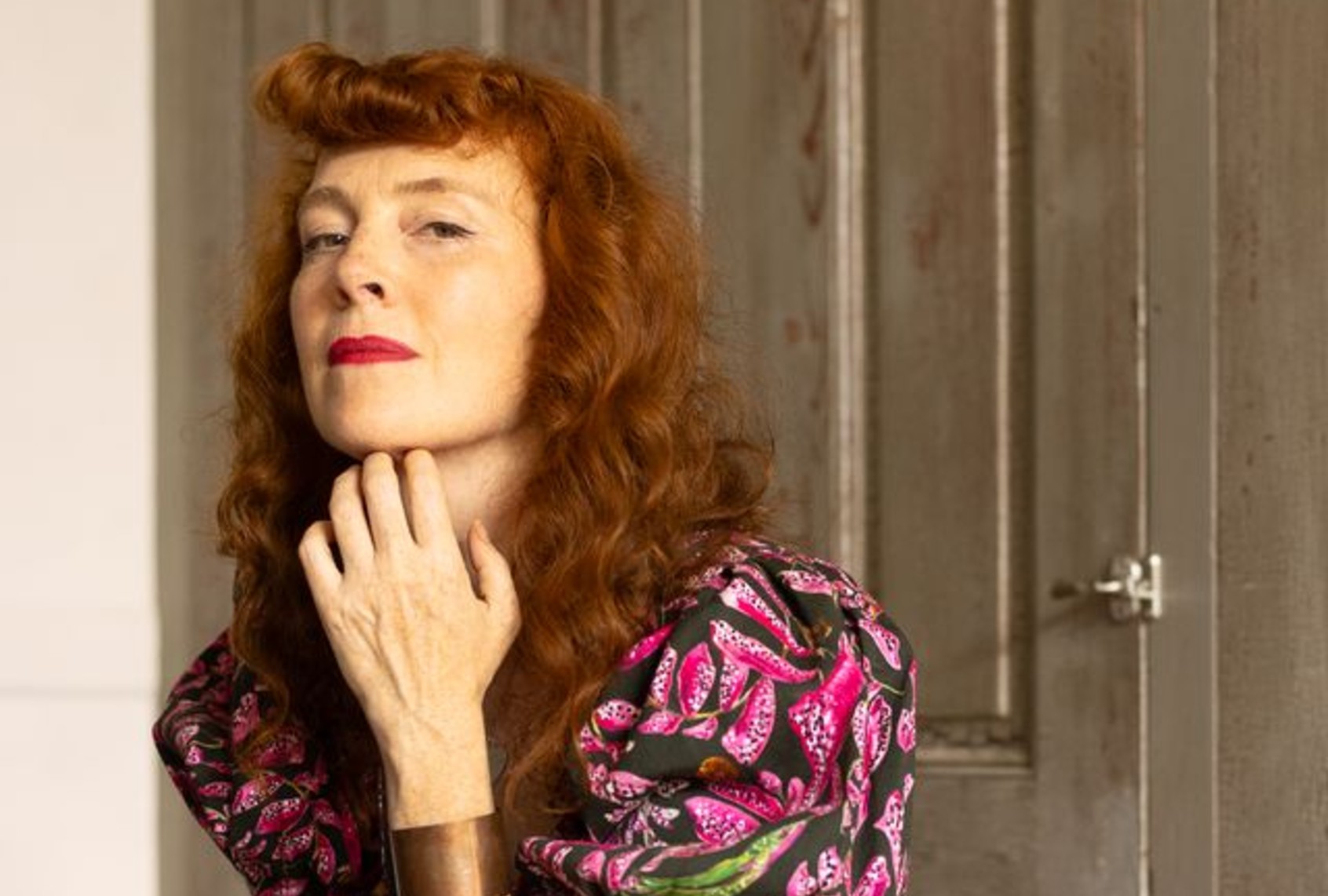

If you’re a music fan, especially if you are young enough to remember the ’90’s, you know who Melissa Auf der Maur is, even if you don’t recognize her name. She’s the woman who stepped into the bass spot in Hole when Kristen Pfaff died literally moments after “Live Through This,” Hole’s first album, was about to be released, which also happened to be not long after Kurt Cobain decided to leave the planet. It was an intense and disorienting time if you were simply a fan of the music; multiply that by approximately a gigaton if you were anywhere adjacent. Auf der Maur takes everyone along on the ride with the publication of her expansive memoir “Even the Good Girls Will Cry.”
But this isn’t just 400+ pages of stories about Courtney Love and Billy Corgan and Lollapalooza (although there is a lot of that, and plenty of people will be picking this up just to read these stories). Auf der Maur had a life and a presence before playing in Hole (and later, Smashing Pumpkins), or she wouldn’t have been even considered. She came of age in Montreal’s alternative scene, the child of unconventional parents, and fell in love with rock and roll.
It was that obsession with music that led to her connection with Corgan, apologizing to him on behalf of the entire city of Montreal after the Pumpkins’ first gig ended with an audience member throwing a beer bottle at his guitar. Auf der Maur doesn’t hide her love for Corgan and his music — it would be impossible both because it is genuine and beautifully organic — and because of his role as her “spiritual fu*king cowboy.” He was the one who told his ex-girlfriend Courtney that she should hire “Melissa from Montreal” as her bass player. It is one of those moments of universal synchronicity that changed the course of many lives, not just Auf der Maur’s.
The ’90’s are everywhere right now, the hot topic du jour because if you were in your teens or 20s in that era, you are now at the age where you are starting to feel the weight of age and years, and inclined to indulge in a little nostalgia. Courtney Love is posting on socials, the Smashing Pumpkins are headlining Lollapalooza (this is not a typo), you can’t flip through Instagram without hearing “Iris” by the Goo Goo Dolls. Flipping the telescope to the large end is not unique to this particular cohort, nor is it anything to criticize or demonize. But it is a context under which this book is being published.
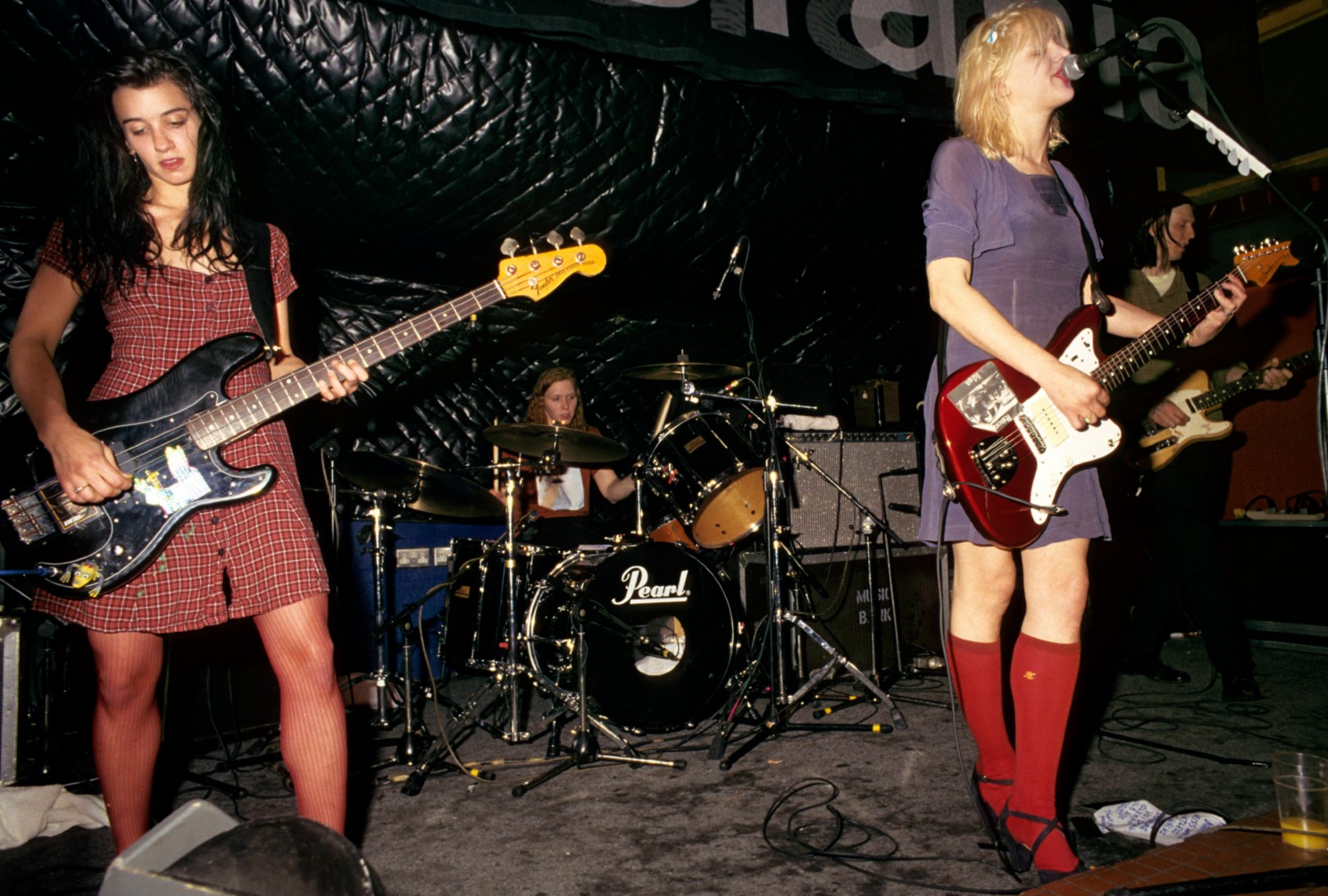
(Erica Echenberg/Redferns/Getty Images) Melissa Auf der Maur, Patty Schemel, Courtney Love and Eric Erlandson performing as Hole
The ’90’s! A world without social media and without everyone walking around with a camera in their pocket, where leaving your house was more interesting than staying home. People sent each other things via the U.S. postal service on the regular, much like Auf der Maur when she wrote to Corgan at the physical address he’d given her at that first meeting, enclosing a demo tape of her band and asking if they could open for the Pumpkins at their next gig in Montreal. Her band thought she was insane — surely this would never work — until the word came down via the local promoter that “Melissa’s band” was indeed going to open for the Pumpkins at that show. She’d only played live seven times before joining Hole. Her first gig? The Reading Festival.
“I didn’t choose to join Hole; it chose me.”
The reader is going to encounter that sentence on page four of “Even the Good Girls Will Cry” as Auf der Maur describes what it was like in the band’s trailer in that hour before they went onstage for their first show of the tour and their first show since Cobain’s death. You might roll your eyes at the quasi-hippie assertion, but 100 pages later, you will nod your head sagely in agreement. There is honestly no other explanation.
Want more from culture than just the latest trend? The Swell highlights art made to last.
Sign up here
Auf der Maur has had a rich and fantastic life. This book should have been two books, if not three. Her childhood, and her relationship with her mother, Linda Gaboriau (a feminist who took her daughter around the world and worked as a journalist), and her father, Nick Auf der Maur (a larger-than-life character who was a journalist and a politician), probably needs its own book, as does her life post-Hole. But instead, what feels like absolutely everything — including 50 never-before-seen photographs taken by Auf der Maur over the decades — has been crammed into this book. You will likely need to read it in small segments because so much is going on and there is so much to process. This is a blessing for the author, but it requires a commitment from the reader. “Even the Good Girls Will Cry” is not an easy read, but it is definitely a fascinating one.
Auf der Maur has had a rich and fantastic life. This book should have been two books, if not three.
If you are in the target market for this book, you know that there was a point in the summer of 1991 where no one had heard “Smells Like Teen Spirit” and then there was the moment where it was just bubbling under and you were probably trying to tell your friends about this incredible song that you heard: this band on Sub Pop, no, not that record, it’s a new record, it’s on Geffen, actually. And then there was seemingly one day where it was everywhere, and everyone knew it, and then the video was on MTV, and it was the literal manifestation of Pete Townshend’s greatest lyric: “sadly ecstatic that the heroes are news.” (If this wasn’t the last manifestation of a collective cultural moment in rock and roll, it’s at least on the list.)
“What do you think is going to happen to our scene now that this has arrived?” Auf der Maur walked around asking people in her small but healthy underground scene in Montreal. She played the album nonstop: “I was known not to take requests, but now I wouldn’t even change the album. Everyone in the bar was obliged to bathe in the sounds of the future.”
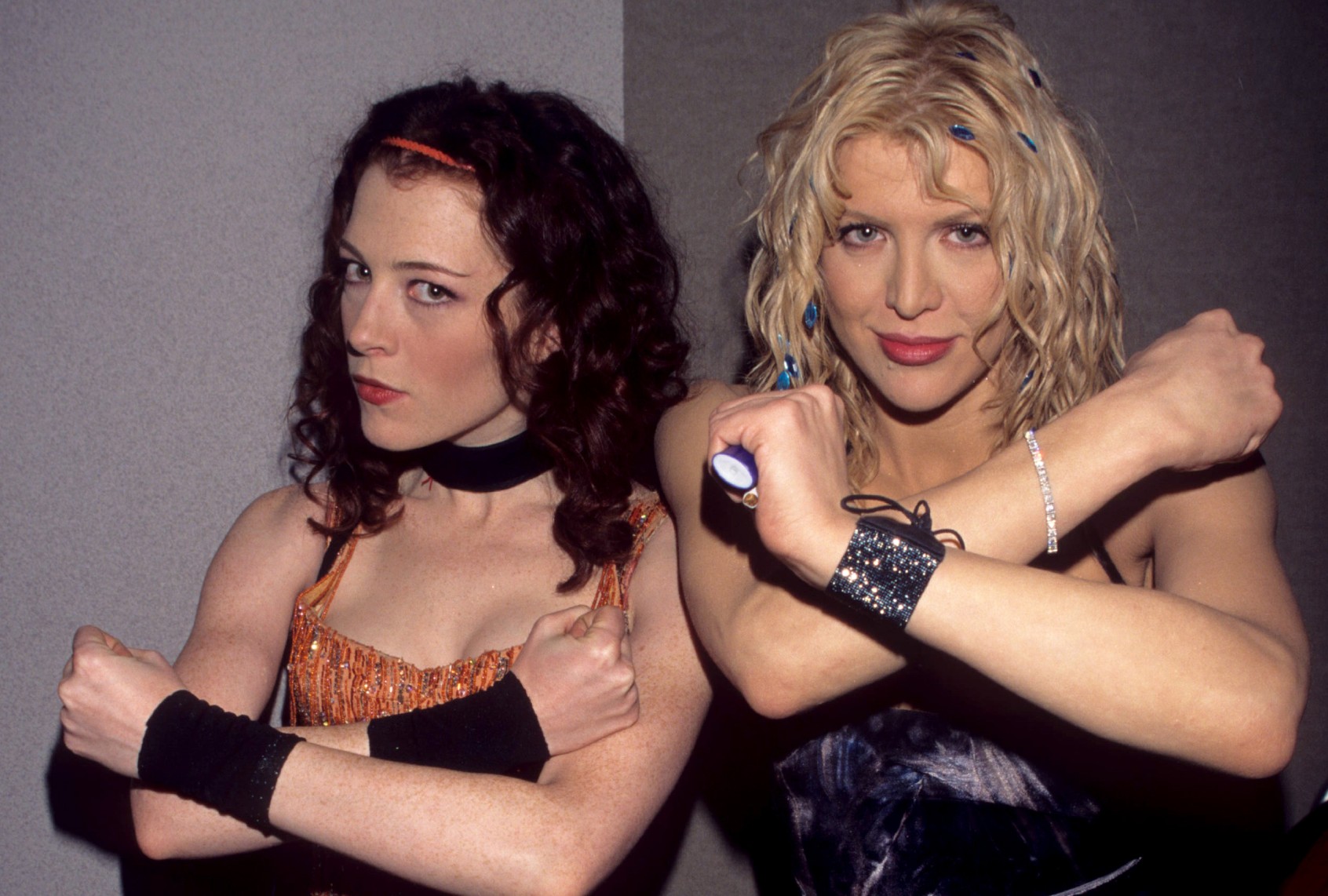
(Ke.Mazur/WireImage/Getty Images) Melissa Auf der Maur and Courtney Love
She saw what was coming; so did others, but not everyone did; she’s not wrong at all about that, it’s not self-aggrandizement. She just didn’t realize that she herself was going to get swept up into its vortex.
“Vortex” is a good word to describe everything that followed. “Maelstrom” would probably be more accurate. Everything you think you know about Courtney Love and Hole’s trajectory will be affirmed or corrected (or both). Auf der Maur does the impossible job of both offering incredibly candid testimony while also being a fierce defender. It’s not so much a rollercoaster as it is a Tilt-a-Whirl; you can see the giant hill in the distance but it’s the teenager with the summer job who decides when to hit the buttons that make the Tilt-a-Whirl spin or stop or roll backwards, and just when you think you’re safe and the ride is winding down, you get sent careening in another direction.
That’s what it feels like to read this book.
“Courtney Love called. Twice. She really wants you to call her back.” That’s what Auf der Maur’s roommate told her the night she came home after thinking that she had offered a sincere but thoughtful declination to the suggestion that she become the bass player in Hole. “No fu*king way am I entering that chaos storm of pain,” she writes. But no one in her life agreed with her; even her dad offered that it would give her an opportunity to see the world. Auf der Maur insisted that she was happy with her life, that she wanted to finish art school and get her MFA in photography. She was a big fish in a small and comfortable pond.
We need your help to stay independent
But at the end of the week, she packed up her Sunburst Precision bass and her Walkman and got on a plane to Seattle, listening to the newly-released “Live Through This” for the duration of the flight. And you know how this ends, even if you aren’t familiar with Auf der Maur’s career trajectory, because this book exists.
If you want to hear about the dirt and the lore and the legends, all of it is here, and it’s all pretty unvarnished. If you’ve heard a story about Courtney Love, you’ll probably find it; if you only kind of know the legend, you can fill in the gaps. You will develop (or reinforce) your hatred of the music business, because at no point did anyone in charge think, “You know, maybe we should put this album on hold.” The machine has to keep rolling.
Everything you think you know about Courtney Love and Hole’s trajectory will be affirmed or corrected (or both). Auf der Maur does the impossible job of both offering incredibly candid testimony while also being a fierce defender.
There’s a chapter about a Hole show in Chicago — already a tour stop bound to be full of drama as it is Billy Corgan’s hometown — and Auf der Maur uses this one show as a way to talk about what a Hole show could be like. Courtney’s outfits, the thigh-high stockings and garter belts and slips and baby-doll dresses that would invariably be ripped to shreds when she would dive into the audience and crowd-surf at the end of the show. “You do that to the guys?” Auf der Maur relates Courtney asking. The names left out there being Kurt, Eddie Vedder and Chris Cornell, also fond of the same kind of very physical interaction with the audience. She notes that very few people in the audience “realize we are witnessing the exorcism of a powerful, witchy woman who is processing unfathomable loss and shock.”
The unspoken end of that sentence (at least for this reader, a charter member of the alt.fan.courtney-love newsgroup): and we let her.
Auf der Maur is clear and direct when she discusses what it was like to be on the road with someone who was a heroin addict. A whole string of tour dates in France gets cancelled because Courtney has “an abscess the size of a football on her ass.” Probably from dirty needles. Auf der Maur and the band’s drummer, Patty Schemel, spring Love from a Paris hospital because if she stays there much longer, she’ll start going through withdrawal. Courtney rips the IV from her arm and escapes, barefoot and in a hospital gown. “Why are we on tour?” Auf der Maur writes a few pages earlier. But the next day? The European tour kicks off in Toulouse. “The show must go on.” This all happens before page 200.
It is interesting to observe what stories get told, who is mentioned by name and who is not. The truth is an absolute defense, but no memoir like this gets published without armies of lawyers getting involved. Male rock stars get to be messy and unpredictable and cost their record companies money; they can take as many drugs as they want and sleep with as many women as they can, and are lauded for that behavior. Female musicians have to be perfect. Auf der Maur has obvious affection for Courtney, but also presents an unfiltered view of what it was like to work with her.
Exhibit A: the band decamps to New Orleans to record their next record. They stay in a rambling Victorian house in the Garden District and record in a studio that’s haunted. The energy is odd and disjointed. Courtney is AWOL. “We can’t write songs without Courtney, and it’s not our job to. Hole’s songs are conceptually and lyrically driven. We need our lead singer and bandleader to, in a word, lead us,” Auf der Maur writes. She describes a glimmer of light when the band is asked to contribute a cover to a movie soundtrack, and it temporarily pulls the musicians together. “Shivers of what we can become course through me.”
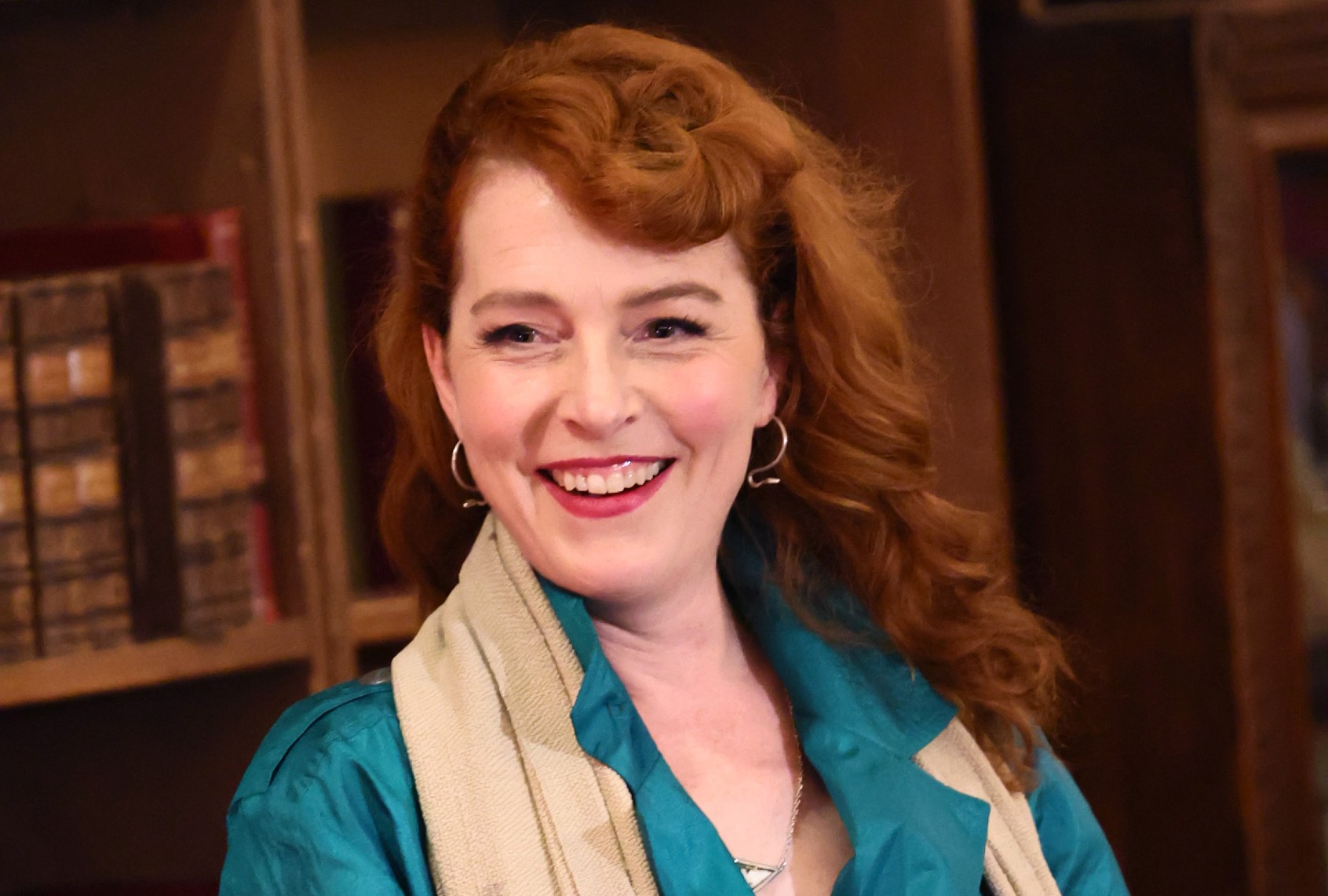
(Theo Wargo/Getty Images) Melissa Auf der Maur discusses her new book “Even The Good Girls Will Cry” at Strand Bookstore
But if you’re wondering which Hole record was recorded in New Orleans, the answer is that the record was never finished. The house the band was staying in caught on fire and that was the end of that chapter. Auf der Maur is simultaneously furious, protective, scared, and relieved when it’s over and the band admits defeat and everyone flies home.
When she finally decides to leave Courtney’s band and join her “spiritual fu*king cowboy,” Corgan has to bail her out because she leaves owing Hole’s management money. He paid it as a signing bonus. The end of the book compresses multiple major events: She lasts a year in the Pumpkins, falls in love with Dave Grohl, and stands by her father as he dies of cancer. Her two solo albums are only mentioned in passing.
Auf der Maur is undeniably talented, accomplished and creative; but even after being in two huge bands and co-founding an important venue (Basilica Hudson), the narrative in the book still feels at times like she feels as though she needs to prove her importance and her value, which is partially a symptom of being a woman in a man’s world. But there are definitely moments where it feels like an editor could have helped her avoid violating that old writing adage of “show, don’t tell.” It’s a challenge because this book is trying to encompass a universe, and so the writer has to make choices. It’s a shame because when she does bring the reader along with her, those instances are what make this book not just interesting but deeply meaningful and important.
It’s critical to hear about this decade from a woman who was very much present and contributing to the culture. It’s vital that Auf der Maur wanted to step up and be counted and that she wrote the book she wanted to write. It’s not unimportant that a book publisher decided her voice and her story were worth investing in. Men with lesser contributions and less talent get book deals all the time and write terrible books, which still sell. “Even the Good Girls Will Cry” is a very, very good book and the simple fact that it exists in this world will make a difference. Every woman who had a band in the ’90s should write a memoir, to be honest: the Deal sisters, Shirley Manson, Natalie Merchant, Alanis Morissette (just to list a few) — let’s get everyone writing! Let’s tell all the stories. You never know who needs to hear them.
Read more
from music columnist Caryn Rose
