

Last year, 7 million people around the world, 600,00 of them children, died from a slow-moving, silent and largely invisible killer: air pollution. In the U.S. alone, that number was 135,000 people, roughly the population of Dayton, Ohio. Poor air quality also accrues an economic cost of about $800 billion each year. And of course pollutants get trapped in the atmosphere, causing global heating and climate change that threatens to upend all life on the planet. Critics are now warning that deregulation at the federal level threatens to make this issue even worse.
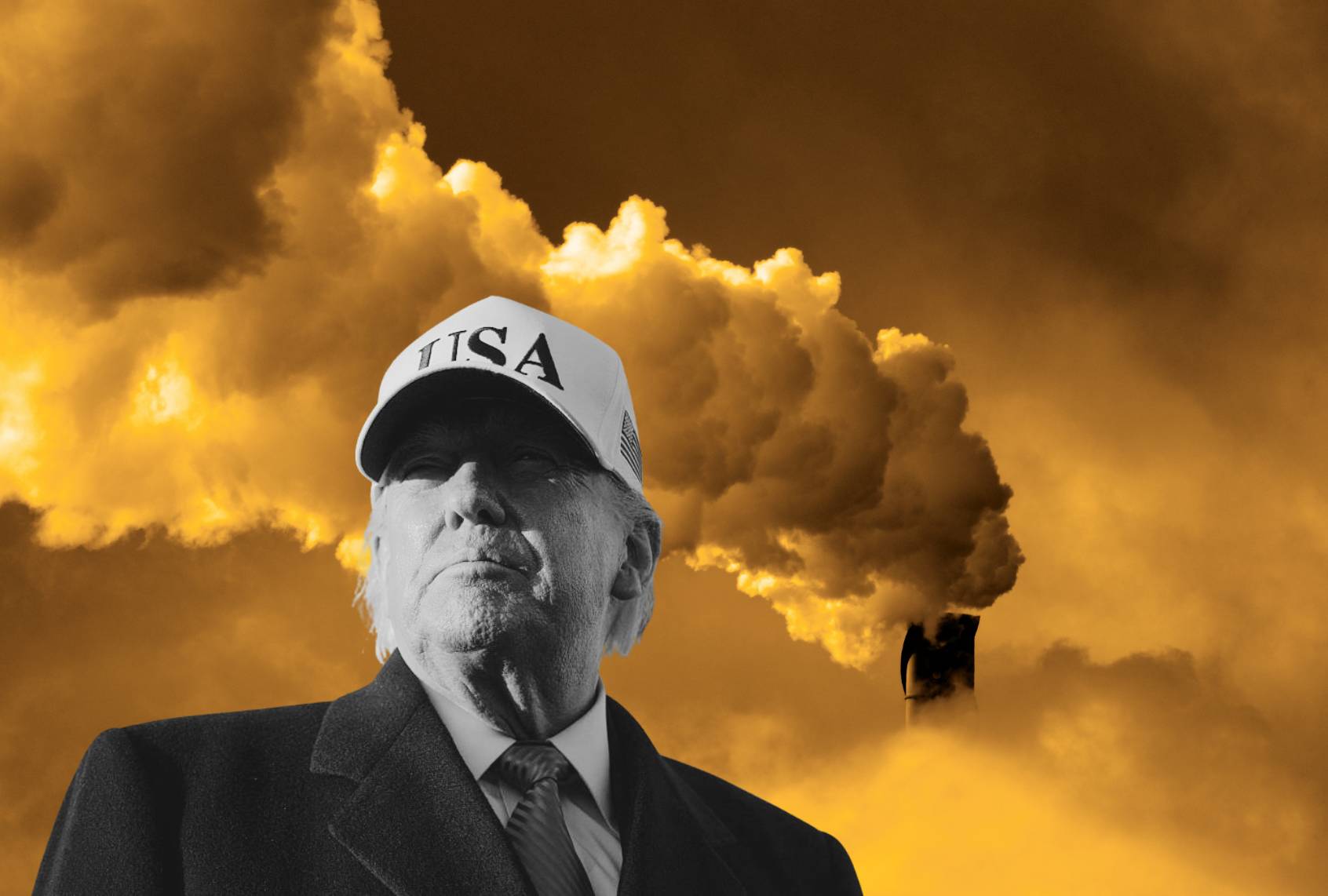
One of President Donald Trump’s very first acts in his second term was to repeal long-established environmental protections aimed at protecting public health and mitigating climate change. The Environmental Protection Agency’s decision to roll back the “endangerment finding,” which allowed the organization to regulate motor vehicle greenhouse gas emissions has drawn outrage from a panoply of parties. On March 19, 24 Democratic-majority states, plus D.C., the U.S. Virgin Islands and 12 cities and counties filed a lawsuit against the EPA, joining nearly 20 other organizations.
“Today, I am leading a coalition of cities, counties and states from across the country to fight back,” New York Attorney General Letitia James said in a statement Thursday. “The American people need their leaders to be honest and pragmatic about the threat of the climate crisis. We will not let the federal government abandon its responsibility to the people.”
“Instead of helping Americans face our new reality, the Trump administration has chosen denial, repealing critical protections that are foundational to the federal government’s response to climate change,” James said.
Immediately after the final rule repealing the endangerment finding published in the federal register on Feb. 18, the American Public Health Association, Natural Resources Defense Council and 15 other groups filed a petition of their own.
“The Trump administration has been signaling from pretty close to day one of this term that they were coming after the endangerment findings, so it’s no surprise that it’s come to this,” Kate Sinding Daly, senior vice president for law and policy at Conservation Law Foundation, told Salon.
The 17 health and environmental organizations have been preparing to sue the EPA since Trump’s Jan. 20, 2025 executive order calling to reconsider the endangerment finding. The EPA officially proposed rolling back the endangerment finding in August 2025.
The endangerment finding is a scientific conclusion that the EPA instituted in 2009 which found greenhouse gases like carbon dioxide and methane endanger public health and welfare. (These gases linger in the atmosphere, trapping heat like a greenhouse.) It allowed the EPA to regulate emissions from all vehicles under the Clean Air Act. A 2007 Supreme Court case, Massachusetts v. EPA, found the act was “unambiguous” in including greenhouse gases as air pollutants providing precedent for the endangerment finding.
“Collaboration and research do not conflict with any thoughtful regulatory effort; they complement it,” Justice John Paul Stevens wrote in his Massachusetts v. EPA opinion.
“Massachusetts has long led the way in protecting our communities from the dangers of greenhouse gas emissions and we are proud to stand up once again to lead this fight for our future,” Massachusetts Attorney General Andrea Joy Campbell said in a statement released Thursday.
Now, however, the EPA argues it does not have the statutory authority to regulate greenhouse gases, and none of the justices who voted in the majority then remain on the court today.
It is expected the cases filed will be combined along with any other petitioners who join before the April 19 deadline, making this one of the largest lawsuits the Trump administration’s EPA will face. On March 6, 25 Republican-majority states filed a motion to join the respondents and defend the EPA’s rollback of the endangerment finding. The only state that has not gotten involved on either end of this lawsuit is New Hampshire.
“The Trump administration has been signaling from pretty close to day one of this term that they were coming after the endangerment findings, so it’s no surprise that it’s come to this.”
The case will be heard before the D.C. District Court of Appeals as stipulated in the Clean Air Act and is likely to end up at the Supreme Court, which will give final ruling to whether the EPA can regulate greenhouse gas emissions.
“I think there’s no doubt that the [government’s] strategy here is to get this case to the Supreme Court in the hopes that it will reverse its prior decision in Mass v. EPA, and that in doing so it would tie the hands of future administrations,” Daly said.
“Although they’re claiming that they’re not disputing the science of climate change, it really requires them to do exactly that,” Daly added. The final rule states greenhouse gas emissions “do not impact in any material way the public health and welfare.”
Dr. Georges Benjamin, the executive director of the American Public Health Association, begged to differ.
“I mean, you’ve got over $800 billion in health care costs from this, millions of lives are lost every year due to climate change,” Benjamin said in a Feb. 18 press conference. “The reality is, if they didn’t do this based on science, then what did they do this on? If they did this on economics, they would lose. If they did this on health, they lose.”
The EPA has argued that the Clean Air Act doesn’t explicitly mention greenhouse gases, so their hands are tied.
Start your day with essential news from Salon.
Sign up for our free morning newsletter, Crash Course.
“Unlike our predecessors, the Trump EPA is committed to following the law exactly as it is written and as Congress intended — not as others might wish it to be,” a spokesperson for the agency said in a statement to Salon. “Congress never intended to give EPA authority to impose GHG [greenhouse gas] regulations for cars and trucks.”
The Trump administration cites two cases — West Virginia v. EPA in 2022 and Loper Bright Enterprises v. Raimondo in 2024 — as the legal justification for rolling back the endangerment finding. The West Virginia case addressed power plants, not vehicle emissions, but found that the major questions doctrine must be followed. This essentially means that Congress must explicitly outline regulations in certain cases and some discretionary powers for regulating policies were removed from the EPA. This explains the argument that the government is using, outlining that Congress did not intend to regulate greenhouse gases — however environmental lawyers argue this logic doesn’t apply.
“ If an agency is doing something that’s new, and that would involve a big social change, a transformational change in the economy, and they’re relying on some tiny portion of law no one’s ever used or thought of before, in that case, Congress needs to authorize this new thing,” David Pettit, a senior attorney representing the Center for Biological Diversity against the EPA, told Salon.
“Here you’ve got a situation where these rules have been in effect for many years, and not EPA’s not relying on some new hidden provision that they just found. They’re relying on the fundamental basis of the Clean Air Act and pollutants,” Pettit said.
The other case, Loper Bright Enterprises v. Raimondo reversed a precedent called the Chevron deference, which gave the EPA authority to act on and regulate ambiguous statues. Pettit argues this still doesn’t affect the endangerment finding.
We need your help to stay independent
“If a statute is ambiguous, then it’s the court that makes the call about what the statute means, not the agency,” Pettit explained. “In this case, the Trump administration is saying the Clean Air Act is ambiguous, so the court needs to make the call about what it means. The problem with that is that it’s not ambiguous — there have been a number of court cases on this and they’ve all said it’s within the Clean Air Act to represent GHGs.”
Neither of these cases directly overturn the precedents in Massachusetts v. EPA, which says the Clean Air Act is “unambiguous” in including greenhouse gases as air pollutants. Lawyers representing various environmental organizations believe both science and the law is on their side.
“I feel very confident that EPA has taken the wrong interpretation of the Clean Air Act and is doing so in a way that is abandoning both its authority, but also its mission and obligation to regulate greenhouse gases,” said Marvin Brown, a senior attorney at Earthjustice, a law firm representing six organizations in the lawsuit.
With even more parties anticipated to join the lawsuit before the April 19 deadline, EPA has a big fight on its hands and is almost guaranteed to hit the Supreme Court’s docket. While Daly is confident they have a strong case, “ it’s dangerous to be in the business of trying to predict what the Supreme Court does on anything.”
Read more
about the environment
